
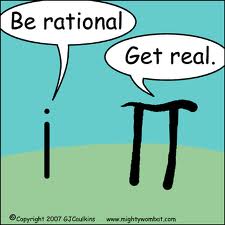
 At the end of our first year at University we had to sit Exams.When revising with another girl I realised she had confused the symbols for alpha and for infinity.So most of what she heard in lectures must have seemed like nonsense to her.I was so dumbfounded I just stared at her.Life might be even worse than we know, listening to mumbo jumbo for 3 years then sitting an exam!
Month: May 2018

THAT SEEMS MEAN.
I’ve got a bad back
How come?
My wife liked aural sex.
I don’t get it.
She has made me put our bed next to the party wall so she can hear the neighbours. better
And does it work?
I don’t know.I have to sleep on a board in the living room
That seems mean.
Please don’t mention statistics.I feel bad enough already.
What is enough?
Share this:

The window
Share this:

Edward Lear
 https://www.poetryfoundation.org/poets/edward-lear
“Vivien Noakes fittingly subtitled her biography of Edward Lear The Life of a Wanderer. On a literal level the phrase refers to Lear’s constant traveling as a self-proclaimed “dirty landscape painter” from 1837 until he finally settled at his Villa Tennyson on the San Remo coast of Italy in 1880. But wandering, in that it suggests rootlessness, aimlessness, loneliness, and uncertainty, is also a metaphor for Lear’s emotional life and for the sense of melancholy that so often peeps through the playfully absurd surface of his nonsense verse.
The uncertainty began with his birth. Born 12 May 1812 in the London suburb of Holloway, Lear was the twentieth of twenty-one children (and youngest to survive) of Ann Skerrett Lear and Jeremiah Lear, a stockbroker. Many of the Lear offspring did not live beyond infancy, so Edward’s very survival had something of the fortuitous about it. Even though he lived to be seventy-five, his health was always delicate; he had poor eyesight and suffered from chronic respiratory problems. At the age of five he experienced his first epileptic seizure. For Lear this “Demon,” as he dubbed his affliction, was a mark of shame. Much of his self-imposed isolation from those he loved derived from his need to hide his condition from them.
The year before the onset of the disease had brought trauma of another sort. Jeremiah Lear underwent severe financial reverses—in later years Lear repeatedly told friends his father had gone to debtors’ prison, but no evidence substantiates this claim—and the family had to rent out their home, Bowman’s Lodge, for a time. Mrs. Lear entrusted Edward to the care of his eldest sister, twenty-five-year-old Ann, and when financial stability returned, she did not resume her maternal duties. Ann never married and devotedly acted the mother’s part to Lear as long as she lived; yet he never recovered from the hurt of his real mother’s rejection, as the ambivalence about mother figures in many of his poems indicates.
Lear received little, if any, formal education. Ann tutored him at home and encouraged a talent for drawing and painting that he had early exhibited. When Jeremiah Lear retired and moved south of London in 1828, Edward and Ann remained in the city, taking up lodgings off the Gray’s Inn Road. The sixteen-year-old Lear supported them by selling miscellaneous sketches; he soon moved on to anatomical drawings and then to illustrations for natural history books. His skill in this latter capacity led to the publication in 1832 of a volume of twelve folio lithographic prints of parrots, Illustrations of the Family of Psittacidae. This volume brought him to the attention of Edward Stanley, later thirteenth earl of Derby, who wanted an artist to draw the animals in his menagerie at Knowsley, the Derby estate in Lancashire. Lear accepted Stanley’s offer of residency at Knowsley Hall while the work was in progress; he stayed there off and on from 1832 to 1837.
The Knowsley days shaped the course of Lear’s entire subsequent career. In addition to gaining the unflagging patronage of the earl of Derby, he met and charmed many aristocrats who would later buy his paintings and provide entrée to a level of society usually unbreachable by a man of Lear’s impecunious middle-class origins. In 1837, when failing eyesight and lungs forced Lear to abandon the detailed work of natural history draftsmanship and the English winters, the earl provided funds and introductions to establish him in Rome to pursue a vocation as a painter of topographical landscapes. He remained in Rome for ten years, during which time he first established himself as a nonsense poet and formed several of the deepest of his many intimate friendships.
Lear had initially produced poems, drawings, alphabets, and menus for the entertainment of the children at Knowsley; these “nonsenses”—and Lear’s charming conversation and piano improvisations—had soon ingratiated him with the adults as well. In 1846 he gathered together some of his limericks, a verse form he had first encountered in the joke book Anecdotes and Adventures of Fifteen Gentlemen (circa 1822), and had them published with his own illustrations in A Book of Nonsenseunder the pseudonym Derry down Derry.
The Learian limerick focuses on the singular individual, an old or young “Person,” “Man,” or “Lady,” who is distinguished by unusual appearance, behavior, talents, diet, or dress. In its most typical form it announces the existence of the eccentric, notes his dwelling place, and describes his distinctive features; then it explains the consequences of his peculiarity and concludes with an apostrophe:
There was a Young Lady of Norway,
Who casually sat in a doorway;
When the door squeezed her flat, she exclaimed “What of that?”
This courageous Young Lady of Norway.
The limerick generally has a closed structure, repeating the final word of the first line at the end of the last rather than utilizing the unexpected, punch-line rhyme that characterizes the successful modern limerick.”
A great number of Lear’s limericks set the eccentric in conflict with “they,” the faceless, conformist, officious members of society at large. Many times “they” unfairly persecute the individual; at other times he provokes and deserves their hostility. But the primary theme of the limericks remains the problems anyone with the slightest idiosyncrasy has in feeling comfortable among the mass of men. Since these eccentrics often have the oversized noses and long legs Lear gave himself in deprecatory self-caricatures, as well as his affinity for all animals except dogs, the poet probably saw himself as a sharer of their misfit status.”
On a less subjective level, the limerick protagonists provided for the didactically surfeited Victorian child examples of bizarre, misbehaving adults, with no blatant moralizing attached. What intrinsic morality the verses contain is conveyed largely in terms of eating habits. Food is often a symbol in Lear’s poetry: the sharing of food indicates affection and selflessness, while gluttony denotes egotism and lack of concern for others. Gluttony also receives harsh punishment:
There was an Old Man of the South,
Who had an immoderate mouth;
But in swallowing a dish, that was quite full of fish,
He was choked, that Old Man of the South.
The year before the publication of the Book of Nonsense, Lear formed with Chichester Fortescue, later to become Lord Carlingford, one of the firmest of his many lifelong friendships. Their delightful correspondence, compiled in two volumes by Lady Strachey, is the largest collection of Lear letters published to date. Also in Italy, in 1848, Lear was befriended by another future peer, Thomas Baring, later Lord Northbrook. (Later, in 1873 and 1874, Lear journeyed to India and Ceylon as Northbrook’s guest.) Returning to England in 1849, Lear met Alfred and Emily Tennyson. Lear admired Tennyson’s poetry, setting several pieces to music and leaving a projected volume of illustrations of the laureate’s works unfinished at his death; Tennyson addressed an admiring poem “To E. L., on His Travels in Greece.” Their personal relations were nevertheless rarely more than cordial. Lear, however, adored Emily, and she gradually superseded Ann (who died in 1861) as his confidante and surrogate mother. He also formed a close friendship in 1852 with Holman Hunt, the Pre-Raphaelite painter.”
Lear’s most fervent and most painful friendship involved Franklin Lushington. He met the young barrister in Malta in 1849 and then toured southern Greece with him. Lear developed an undoubtedly homosexual passion for him that Lushington did not reciprocate. Although they remained friends for almost forty years, until Lear’s death, the disparity of their feelings for one another constantly tormented Lear.”
In 1850 Lear decided to remain in England to take the ten-year painting course at the Royal Academy Schools in order to improve his untrained technique in oils and figure drawing. He also had the first two of three illustrated journals of his travels published. But his low resistance to the English climate curtailed his stay. After three and a half years he abandoned England for the sunny Mediterranean, and in 1855 he resolved that he would never return to Britain permanently. In October of that year he established a home on Corfu, where Lushington’s government position had stationed him.”
The next years were the most hectic and unsettled of Lear’s life. He traveled incessantly throughout the Mediterranean and Near East, moved from Corfu to Rome to Corfu again and then to Cannes, and visited England eight times. He came close to marrying the one eligible woman with whom he ever maintained a long-term friendship, the Honorable Augusta “Gussie” Bethell of London, whom he had met in the early 1840s, when she was a child. But in 1866 he unwisely consulted her sister Emma about the advisability of a proposal. Emma firmly discouraged him, and he never approached Gussie, who by all accounts would have accepted. Despite his many long-distance friendships, Lear was doomed to a solitary life. His only constant companions were his manservant Giorgio Kokali from 1856 to 1883, and his cat Foss from 1871 to 1887.”
Lear did not have any new nonsense published for fifteen years following the appearance of A Book of Nonsense. In 1861, however, a new, expanded edition was brought out under his own name. Its enthusiastic reception gratified but also perplexed Lear, who always hoped to gain fame as a painter and regarded nonsense only as a source of fun and money. His success as a poet did encourage him to compose more complex nonsenses, which appeared in three volumes during the 1870s after he had settled in San Remo, Italy.”
The first, Nonsense Songs (1870), contained longer poems in which characterization is more realistic and emotions are less distanced than in the limericks. The characters are nonhuman, and the central actions frequently involve a pair or group taking off on a journey. The Owl and the Pussy-cat go to sea in a beautiful pea-green boat; the Jumblies depart in a sieve; the Duck and Kangaroo hop around the world; and even a nutcracker and some tongs, a table and a chair, go out to take the air. These first lyrics seem clearly to constitute Lear’s reflections on his own life as a wanderer. At their happiest they also describe a joyful togetherness that he never attained. The elements of this Learian epiphany–song, dance, food, the shore in the moonlight–are established in “The Owl and the Pussy-cat” and recur frequently in later poems:
They dined on mince, and slices of quince,
Which they ate with a runcible spoon;
And hand in hand, on the edge of the sand,
They danced by the light of the moon.
More Nonsense (1872) contained additional limericks of the earlier kind but no new songs. Several songs did appear in his last volume of verse, Laughable Lyrics (1877). The volume is misnamed, for the tone is melancholy; a majority of the poems deal with some sort of loss. The Pobble loses his toes; the pelicans lose their daughter. Most poignant are those lyrics dealing with the loss of love: “The Dong with a Luminous Nose” and “The Courtship of the Yonghy-Bonghy-Bò.” Laughable Lyrics also contains the bulk of Lear’s invented nonsense creatures such as the Dong, the Bò, the Pobble, the octopod Discobboloses, and the Quangle Wangle. Lear frequently sets these poems in his nonsense landscapes on the Hills of the Chankly Bore or the Great Gromboolian Plain. It was only by creating such unreal beings and settings that Lear could write with unrepressed emotion about his own unhappiness and sense of isolation.”
In 1886 Lear contracted a severe case of bronchitis, from which he never fully recovered. In that same year he wrote his last nonsense poem, “Incidents in the Life of My Uncle Arly.” Transparently autobiographical, it sums up in a few brief lines the essence of his life:
Close beside a leafy thicket:–
On his nose there was a Cricket,–
In his hat a Railway-Ticket,–
(But his shoes were far too tight.)
Lear was a wandering nonsense minstrel, never completely free of physical and emotional pain. His health steadily deteriorated until he died, alone except for a servant, on 29 January 1888. His last words expressed gratitude for the kindnesses of all his absent friends.”
Lear’s poetry shares many elements with the nonsense verse of Lewis Carroll, Thomas Hood, W. S. Gilbert, and other Victorians, particularly in the use of verbal play and other distancing devices to derive humor from cruelty, pain, and death. Like nonsense verse as a whole, it influenced such twentieth-century aesthetic movements as surrealism and the theater of the absurd. It also, however, contains themes unique to Lear’s personal experience. It is above all an expression of the inmost longings, frustrations, and wish-fulfillment dreams of a lovable and intensely loving man who, despite the fond affection of numerous relatives, friends, and readers–children and adults–was never beloved in the intimate, exclusive, constant manner he so fervently desired.
POEMS BY EDWARD LEAR
R
Share this:

Missing you
Some days I’m missing,missing you.
Oh, dear,love, I don’t know what to do.
The air is soft,the trees are green
Oh,tell me ,tell me where’ve you gone?
Some days are slow yet full of peace.
Some days are slow with tears and grief.
I look up at the books you wrote,
I see your scarf and overcoat.
The sky’s soft blue folds gently round.
Oh,won’t you tell me where you’ve gone?
These days,I miss your tender touch.
These days I know you meant so much.
I hear the birds sing in the trees.
I hear the humming honey bees.
The strawberries ripen in your pot,
I think I hear you,I forgot.
The air is mild,the rain falls now,
Life is going on somehow.
Some days I’m missing you so much,
I miss your glances and your loving touch.
The cat sits by your old black shoes,
As he washes his front paws.
The air glows with reflected light
I see you at the edge of sight.
Some days,some days,I feel I can’t go on.
Some days I want just your person.
Our trees are waving in the breeze,
I wish the whole wide world would freeze.
No-one else can fill this gap…..
You’ve strayed right off my lifetime map.
Goodbye,goodbye I sing your song.
Goodbye,goodbye,love’s never wrong.
The sun is high in this June sky
I wish that lovers never died.
I wish that you were by my side.
I’ll sit and grieve by these new leaves
How golden sunlit days deceive.
Share this:
It was a wig so it fell off and Emile bit it!
 Mary had made a Christmas cake with marzipan but no white icing.Stan was diabetic so she had opted for a middle way.Like some Zen Buddhists.You don’t either cut it completely nor have a 6-inch layer of icing.No, you find a middle way.Like 5 inches of icing!
Mary like almonds so she went for marzipan with her home ground almonds and some sugar.The raw egg part was worrying but so far nobody had died after eating her cakeStil,l if you are dying , enjoy the cake while you can!
Annie arrived for a cup of coffee.
Wow, that cake is large.You will get fat if you eat it
I am not planning to eat it all myself, Mary said merrily.
In fact, if I could find a way of cutting an infinitesimally small piece I could have on every day forever.
Would the cake not shrink ?asked Annie with a puzzled smile
No, because a real number times an infinitesimal is itself infinitesimal Mary answered.
So it must be zero, Annie decided.
No , said Mary.All of the calculus is based on the idea that they are not zero.Then, at the end, we pretend they are zero and cross them out.It’s like magic or sleight of hand
I thought maths was logic, Annie said in an angry voice, tossing her purple hair over her shoulder.Alas it was a wig so it fell off and Emile bit it!
Gosh, Annie why are you wearing a wig? Mary asked.
I am involved with a Jewish man so he won’t make love unless I wear a wig.
Surely if he is Orthodox he should not sleep with you unless you get married.
We can’t get married, Annie said boldly.
Why not?
He is already married….Annie muttered
Well, that seems wrong.
What, being married?
No having an affair.I know Stan is old.Can’t you find a single man?
Women can’t go running after men.Men enjoy the chase.They despise women who run after them.
Well, can’t you ask them if they are married?
No, it seems too cheeky, Annie smiledAnyway in fuzzy logic you are not either married or single.You are married to the extent of some decimal number in between 0 and 1
Some folk are 0.999 married and some are 0.34 married.
But who measures it? God? It’s not much use.
You have to guess , said Annie.I like Jewish men
How many do you know, Mary asked.
Three said Annie triumphantly.
You can’t generalize from three, Mary said.
If I test a larger sample I shall never get to find one till I am 99, Annie wept.
Think of the fun, though, Mary said teasingly.And you’d have to travel a lot as many live in the USA, France and other places including Israel.How do you fancy Bibi Netanyahu?
Annie was silent, then burst out: life is not science nor technology.It’s an art like watercolor painting.Why do you call him Bibi? Do you know him?
Not biblically, Mary said humorously.I’ve never even met him.He’s just been in the News because of Trumpelstiltschein
Does Bibi know Donald is half German?
No, but the Queen is too.More than half,maybe.
Where does that take us logically?
Off to Boots to buy some expensive makeup and then to have a manicure and tea in a cafe
If only politicians did this life would be much easier and kinder/
And so say all of us!
Share this:

Who reads poetry?


And that was the end of the world tonight.

Hello,Mrs Blogge.What can I do for you this nice morning?
Oh,I’ve got a nasty odd pain in my conundrum,doctor.
Are you being careful in your speech?
I’m always careful.
No,I mean, are you using a euphemism?
No,I am on the pill.Is a euphemism better for preventing babies?
Look here, tell me what is really wrong with you?
It’s a complete conundrum to me and my family
Well,it will be so for me as well unless you tell me where and what it is.
It’s a pain in my testicle.
But you are a lady.
That’s what people think.
Well,surely somebody would have seen before now.
It’s only just dropped.
That’s very odd.
Yes,it is as usually testicles come in pairs.
I don’t know what to say.
Well,it’s just a conundrum.
Maybe I should examine you.
I am in a hurry and you need a chaperone.
No,I can use gloves.
What,put a glove on my testicle!
Well,let’s just wait and see whether it progresses.Come back if you feel worried about it.
Is it wrong to be a hermaphrodite?
What a stupid question.How can it be wrong when you can’t control it.You didn’t make the testicle grow.
Yes ,being a hermaphrodite does give one stronger sexual desires as like with a worm there’s more possibilities.
I really don’t fancy sex with a worm myself
But if you loved it the worm then you might cuddle it
They have no faces so they all look the same.
They used to say all black people looked the same to the whites even though they have eyes and faces and expressions.
Oh,I’ve got a nasty odd pain in my conundrum,doctor.
Are you being careful in your speech?
I’m always careful.
No,I mean, are you using a euphemism?
No,I am on the pill.Is a euphemism better for preventing babies?
Look here, tell me what is really wrong with you?
It’s a complete conundrum to me and my family
Well,it will be so for me as well unless you tell me where and what it is.
It’s a pain in my testicle.
But you are a lady.
That’s what people think.
Well,surely somebody would have seen before now.
It’s only just dropped.
That’s very odd.
Yes,it is as usually testicles come in pairs.
I don’t know what to say.
Well,it’s just a conundrum.
Maybe I should examine you.
I am in a hurry and you need a chaperone.
No,I can use gloves.
What,put a glove on my testicle!
Well,let’s just wait and see whether it progresses.Come back if you feel worried about it.
Is it wrong to be a hermaphrodite?
What a stupid question.How can it be wrong when you can’t control it.You didn’t make the testicle grow.
Yes ,being a hermaphrodite does give one stronger sexual desires as like with a worm there’s more possibilities.
I really don’t fancy sex with a worm myself
But if you loved it the worm then you might cuddle it
They have no faces so they all look the same.
They used to say all black people looked the same to the whites even though they have eyes and faces and expressions.
Do we need faces to love
We need them to kiss.
And what is life without a kiss?
Ask a worm.They seem to have a good life with no wars and worries.
No,they can’t use guns,can they?
Well,not to shoot with.
So the answer is to get rid of people and just have worms. and beetles.
The way the world is going this may happen quite soon.
It’s a terrible conundrum..
Well,I am very euphemistic.
Do you mean optimistic?
Bang
And that was the end of the world tonight.
Share this:

Losing things
Jesus was very wise.If we gave all our possessions to the poor then we would not have the worry of losing things.
Share this:
Creative alternatives
Peace is not the absence of conflict but the presence of creative alternatives for responding to conflict – alternatives to passive or aggressive responses, alternatives to violence. Dorothy Thompson
Read more at: https://www.brainyquote.com/quotes/dorothy_thompson_135066?src=t_passive
Share this:
Queen save our God
The word God evokes many different feelings;
not just in a cross section of the world’s people
but in me.
From fear and hate to indifference
To Love
That sacrifices itself for humanity.
What shall we make of it?
How shall we live with it
Oh,Queen,save our God.
Share this:
Indifference is the death of hope
Indifference is the death of hope
Some will say it’s hate
To me indifference still connotes
Lost desire and witless notes
Without the will to read or write
Hate has fire and will burn strong
Destroying all in its red might
Curdling love, with blackness hung
Its sarcasm bites
Share this:
I solved the key problem
 The problem was that my bus pass kept falling out of the key case.Luckily it usually happened on the doorstep/The postman finds it and puts it through the letterbox.
But after much thought I reexamined the key case and found there is another pocket with a zip on it.So if I use that I hope it will be safer.I think some of is don#t remember to fasten these zips.
I think in my case the bus driver would let me on anyway as they see I am hobbling along
Share this:

Is it inadequacy?
It must be self help day

God helps those who help themselves
https://www.taramohr.com/8-ways-women-undermine-themselves-with-their-words/
Drop the “just:” “I’m just wondering …” “I just think …” “I just want to add …” “Just” demeans what you have to say. “Just” shrinks your power. It’s time to say goodbye to the justs.
. While you are at it, drop the “actually.” “I actually have a question.” ” I actually want to add something.” “Actually” communicates a sense of surprise that you have something to say. Of course you want to add something. Of course you have questions. There’s nothing surprising about it.
Share this:

Finding misplaced keys and other small items.
 https://gretchenrubin.com/2014/04/lost-your-keys-again-8-tips-for-finding-misplaced-objects
My ideas
Never lock your doors so you won’t need keys
Buy an old car without electronics.Do not lock the door.Nobody wants it
Never wear lipstick ,nail varnish, or eye cream
Carry a toothbrush in your bag.
Never use expensive pens.Buy a bag of cheap ones.
When menstruating ,use large leaves from the nearest tree.
Keep one drawer for s much loved cards,letters and ? bills
Buy a very large red phone and keep it charged with a portable battery when out all day
But 24 combs on offer and keep them in the drawer with the screwdrivers.
Where to put your oyster card?? I am thinking
Share this:

The fire, the smoke
We’ve seen the tear gas for five weeks
We saw the smoke
If might could let the people speak
Although the issue’s intricate
They would not choke
If Solomon would bring his knife,
And cut the land so cold, so broke,
Would he end the cruel strife
The fire, the smoke?
Share this:
Can one catch paranoia like a bug ?

Can one catch paranoia like a bug
Feeling insecure and ill at ease
Noone near to offer you a hug?
Being skinless makes it hard to love
The heart unwrapped can never take a tease
Can we catch paranoia from above?
The nerves exposed, the shoulders cannot shrug
Nothing seems like fun or a mere wheeze
Neighbours will not let you walk their dog
Is it a disease, is there a drug,
That makes your skin like rubber in the breeze,
Repelling paranoia, that old bug?
Sensitive to danger, the heart tugs
Signals fight or flight or final freeze
Noone near allowed to give that hug
Can one learn to trust when panic leers
See through the futile fantasies of fear
Can one kill paranoia like a bug?
Resolve to live with fear and make it good
Share this:

When men use the wrong word
 In the NYT women are asking how to respond when men at work call them “sweetheart”
One person suggests calling them “darling” but be careful.I did that once and the man was really happy and thought I loved him.
Another time I was having lunch with some colleagues.Several left to g9 to q meeting.The man remaining then said
I want to have an affair with you.My wife said she doesn’t mind
I nearly fell off my chair.He was a very nice person and I just pointed out that I was married.
It seemed strange though to come out so bluntly.Did I somehow give the impression I was wanting lovers? There’s no point even thinking as there could be a million reasons.But that approach is a bit strange even if I were looking for someone.It can happen more easily on blogs but only once to me where I got a message saying,I know you love me!
Well, it was news to me.Then the blogsite closed down.I didn’t do it.The owners got fed up.
Share this:

At sunset
The sunset is pale
Coral with grey finger marks~
No bird sang today
The leaves wait like mouths
Now they are shutting their lips
They don’t get night feeds
All is calm and still
The moon is singing Mahler
Dead babies whisper.
Lullaby,the heart
Enfold all infants’ pathos
Dies with them daily
Forget not at night
Those for whom the sun is dead
They are stiff like dolls
Share this:
The little cat
The little cat lies on my garden chair
Yellow and distinctive is her stare
Off she leaps and finds her hiding hole
She drinks rain water from a plastic bowl
She’s dark like coal with no white patch of fur
I wish the cat would stay,I am prepared
But she is shy and does not ever dare
Here’s the sun umbrella and its pole
The sound of birds in shrubs will make her bold
The little cat
How well designed she is, for wear and tear
Whatever scientists say,I know God’s here.
Oh, on the desperation of a human soul
He will send out rays of marvellous gold
Yet to such visions we must not aspire
Just little cat
Share this:
Confidence and women
https://www.theatlantic.com/magazine/archive/2014/05/the-confidence-gap/359815/
“Even as our understanding of confidence expanded, however, we found that our original suspicion was dead-on: there is a particular crisis for women—a vast confidence gap that separates the sexes. Compared with men, women don’t consider themselves as ready for promotions, they predict they’ll do worse on tests, and they generally underestimate their abilities. This disparity stems from factors ranging from upbringing to biology.
A growing body of evidence shows just how devastating this lack of confidence can be. Success, it turns out, correlates just as closely with confidence as it does with competence. No wonder that women, despite all our progress, are still woefully underrepresented at the highest levels. All of that is the bad news. The good news is that with work, confidence can be acquired. Which means that the confidence gap, in turn, can be closed.”
Share this:
Ariel, from The Tempest
http://nfs.sparknotes.com/tempest/page_48.html
|
|
|
| ARIEL
(sings)
Full fathom five thy father lies.
Of his bones are coral made.
Those are pearls that were his eyes.
Nothing of him that doth fade,
But doth suffer a sea-change
Into something rich and strange.
Sea-nymphs hourly ring his knell
|
Share this:

Patience
 The more you know yourself, the more patience you have for what you see in others.
Share this:

Barmecide
https://en.oxforddictionaries.com/definition/Barmecide
-
A person who offers benefits that are illusory or disappointing.
Example sentences
Origin
Early 18th century (as a noun): from Arabic Barmakī, the name of a prince in the Arabian Nights’ Entertainments, who gave a beggar a feast consisting of ornate but empty dishes.
Share this:
Enjoy taking care
“Fresh words could help us arrive at fresh ideas, for there is an intimate connection between thought and word. Careful use of words requires careful thinking.”
Thomas Moore
Share this:
In Italy, the Holy See.And sinners see as well.
In Israel they have the Dead Sea and in Italy the Holy See.And sinners see as well.
Don’t tell Aviv I read Hebrew between the lines
My husband told me in a dream to move to Ealing. So I went to A & E and then to a spiritual healer.After all my husband is in heaven.So I am going to the beauty salon for a full body massage.And my body is very full.It will be like Heaven to me
My dread is the freezer breaking down while I am in Malaga
O,slow dear.Don’t let the bloomsbury set swallow you.
Oh, you are such a rotter,damn!
He asked if Nick could see her but she’s in Malta.
So,hoe my field and plant my panorama in the British Library.
She’s just a little Minx tonight
Will Brussels sprout again?
What are Vichy potatoes?
But a pest is not needed here.We have more than we can use.
Ici ma tante,ici mon oncle and ici monaco.Ou est ma tomato?
I feel as if I have Riga mortis.
Warsaw is an apt name for this sad city and the Jews who rose from the Ghetto and fought so bravely.And the Poles who fought the Nazis while the Russians stayed away,
She wore a short dress and a cape in town.Before she discovered Bikini
There’s an ambush, a rose bush and then there is Stellenbosch.What does it mean?
Meaning is not innate nor in Innsbruck
Share this:
Where to store your bits and pieces…a few at least

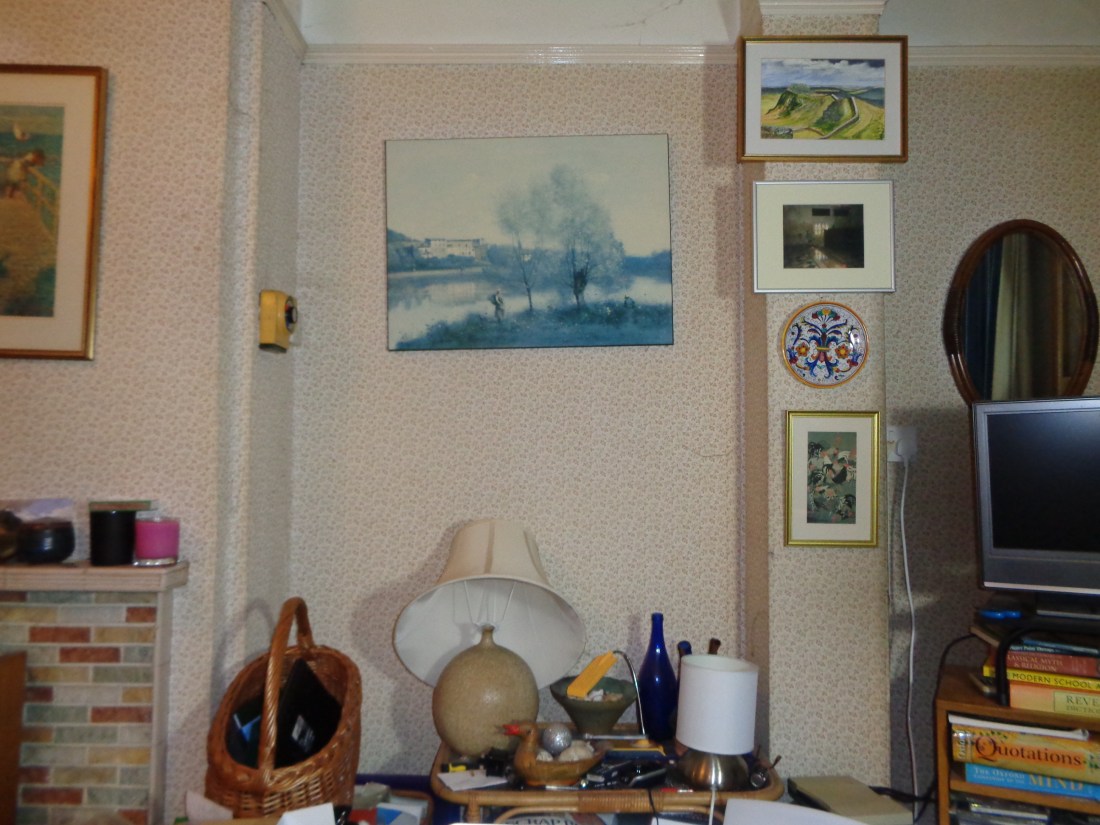

Like many of you,I have a lot of cables,chargers,pencils for drawing, other art materials and so on.I have a really nice wicker basket with a lid on wheels which I can’t get on the bus anymore.I thought one day,if I got some polythene bags in different colours I could put some of these things inside.And it does work for me and holds a lot.Not recommended as shared storage with a family member!
Sewing boxes with compartments are useful.Maybe fishing bags?
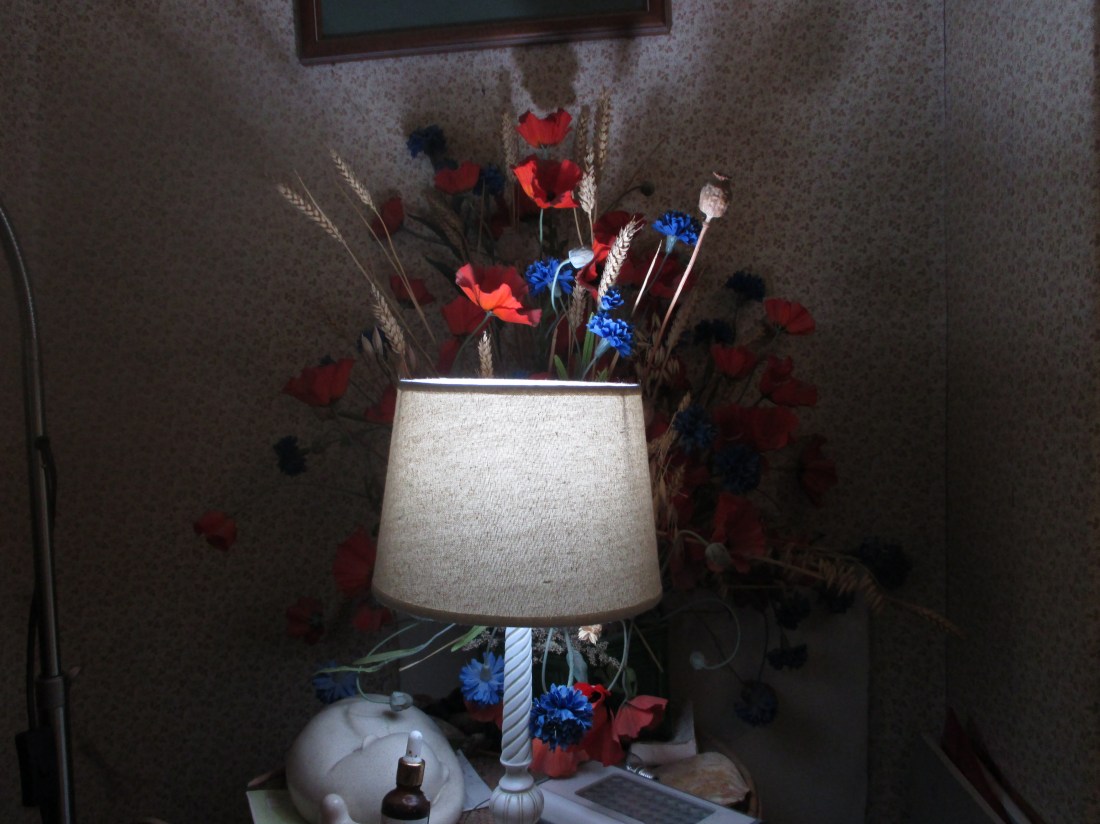
As you can see I have a broken lamp which my husband bought and I keep hoping I can mend it but maybe soon I will decide it can’t stay,His family always have a lot of ornaments and pottery and so on.Meanwhile I use the lamp from IKEA.
Emotionally I find it hard to remove things we bought together.I am sure if I were a bit stronger I could fix that lamp
I realise as well that keeping these things is a way of clinging to his presence.But I don’t have that much space.I have spent many hours drawing that lamp before and after it was broken.So it holds a lot of emotions for me
I suppose it’s books that I have collected over the years.I gave away my textbooks and mathematics ones but I want to keep enough to feel I can take a little break from life by immersing myself in them.
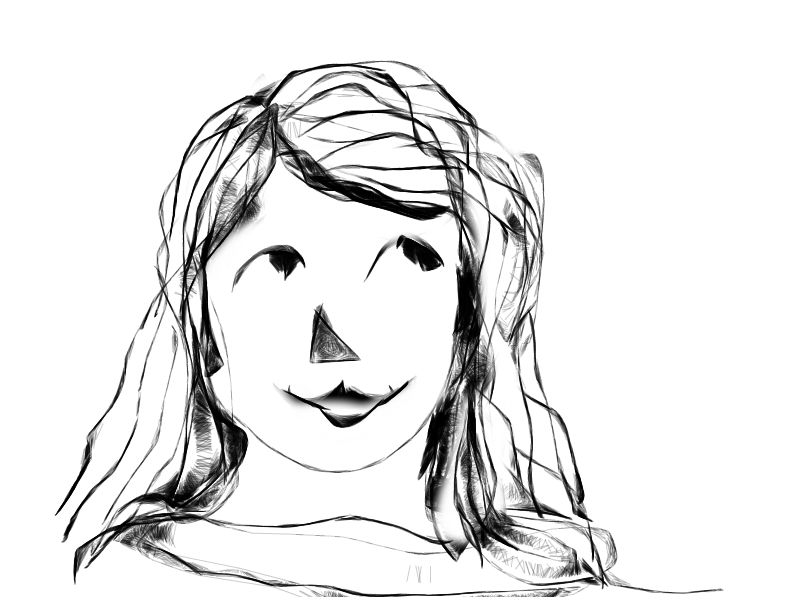
My art teacher said never throw your work away.I was the least able person in the class but when I look at my creations I think they are better than I feared.Words come to me easier than images.I still feel nervous but it helped me to do digital art
I think I must be the eternal student.But I recommend it as it helps me through hard times when I can sit and write or draw.I feel lucky I’ve been able to start writing so late and got to enjoy it very much.I am sad when I hear people say,I can’t write poetry or draw.If you learned to write with a pencil at the age of 5 ot 6 then you can learnt to draw.. as long as you are prepared for the peculiar images you might produce and also for the odd bit of envy or cruelty or truth
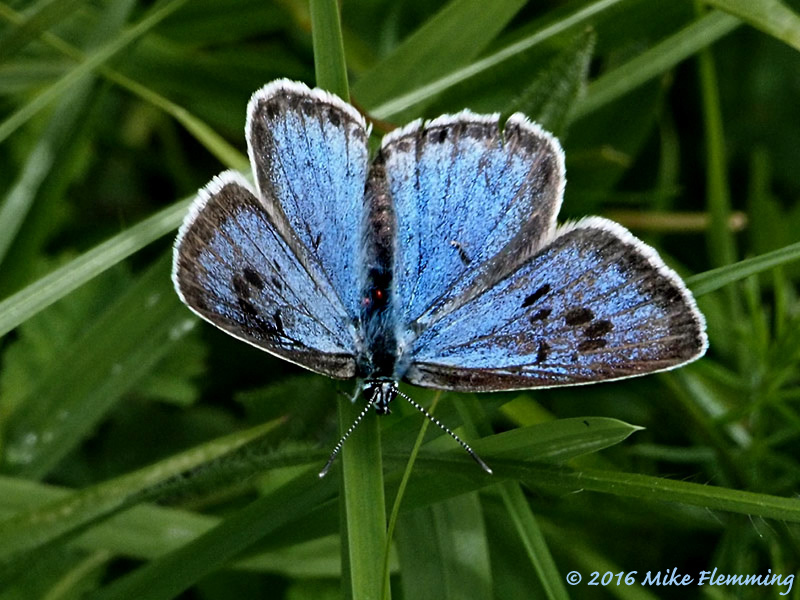
I have also been fortunate in being able to use Mike Flemming’s photographs and been encouraged by his enthusiasm for nature, books,poetry and music.A pleasure to have a younger brother like Mike.I hope you enjoy his images as much as I do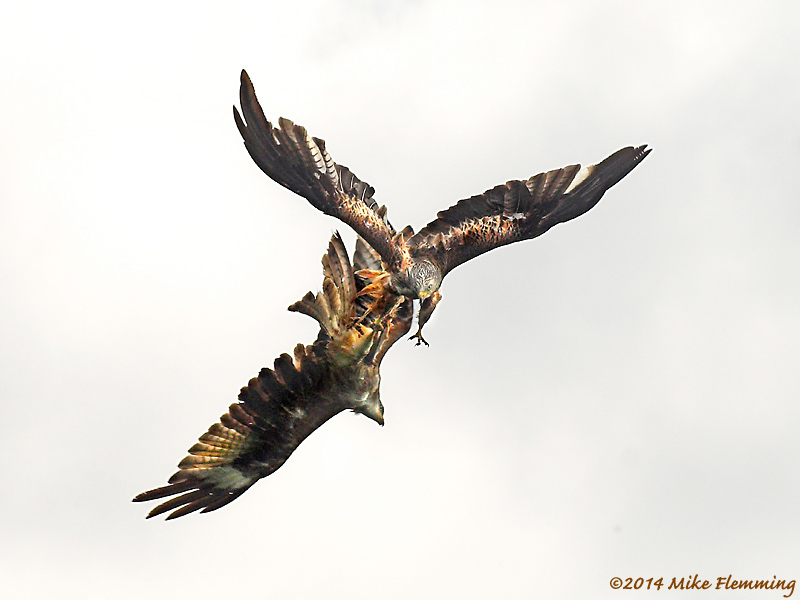


Share this:

Writing as play:one of India’s foremost poets

“Who are some of your biggest influences in your poetry?
My influences are as varied as Wallace Stevens, TS Eliot, Adrienne Rich, Basho, Tukaram, Akka Mahadevi, Sangam poetry, Denise Levertov and Neruda! I admire AK Ramanujan as poet and as translator, and Arun Kolatkar as well. And there are many poets whose work I enjoy, who are too numerous and varied to name from John Burnside to Savithri Rajeevan and Manglesh Dabral!
What is the state of contemporary poetry in India?
Contemporary Anglophone poetry in India seems to be bristling with activity. There are lit fests, poetry competitions, performance poetry sessions, spontaneous addas, and quite a flurry on the internet and in social media, in particular. Something’s definitely in the air. And that’s to be celebrated.
Of course, when a form is suddenly on the upswing, there will be a fair amount of indifferent verse as well. That’s inevitable. There do, however, seem to be several distinct, self-assured and skilled voices that have emerged on the scene and that’s exciting.
On another level, it takes time for even the most assured voices to truly become themselves. For craft alone does not make a poem, and neither does mere inspiration. There’s a particular mix of innocence and experience, of assurance and bewilderment that is integral to a creative process – and that takes a long time to arrive at. Probably a lifetime. It’s part of the much larger journey of growing into yourself.”
“Give me a home
that isn’t mine
where I can slip in and out of rooms
without a trace”“Airport lounges, flights – those are good places to scribble random lines. And my bed is a good place to revisit those lines and work with them. I like the process to seem as undoctored as possible, so that it feels like play rather than work, doodling rather than penance. So, no desks for me – that would be too formal, too deliberate. You need a studied carelessness to write a poem. A kind of lazy guile. And ball point pens and books that allow me to scribble in the margins – that’s my thing. Many of my poems have been birthed in the margins!
Quiet definitely helps. I need a lot of it anyway, more than most people I know. But on occasion, a bustling café can offer just the right mix of dynamism and stillness. While others are busy leading their lives, you can quietly follow the course of your poem. That’s fun!”
Share this:

Elusive
 https://www.macmillandictionary.com/dictionary/british/elusive
-
an elusive person or animal is difficult or impossible to find or catch
Synonyms and related words-
a.
difficult or impossible to achieve
Synonyms and related words -
b.
difficult to remember or understand
elusive memories
Synonyms and related wordsWords used to describe memory and memories:a memory like a sieve, a trip/walk down memory lane, blurred…
Synonyms and related words
-
Share this:

In human hearts
 In human hearts there is an unhealed wound
From such loss no person is immune
Mine I feel.with yours I empathise
For finding we are like is no surprise
In close up. the horror seems to loom
In perspective, it is no High Noon
And from another angle, perhaps a boon
Arriving by some mystery in disguise
In human hearts
By envy grief and anger we’re consumed
Until we wish to die to end our doom
Yet should we look again with different eye
We shake our heads and shiver at the lie
As if perception’s shackled onto zoom
In human hearts

 How my heart speaks