
Day: May 29, 2018

Shame?
To live without experiencing some shame and blushes of admiration would surely be a wretched life.
Share this:

Mal-education
I was 16 when we began to study a simplified version of the writings of Thomas Aquinas.I believe now it was a very badly written book as I could see flaws in the arguments.But the most striking effect on me was that I had never questioned the existence of God.
When I began to study the book I thought:So they are not sure!
I think the nuns would have been horrified if I had said that.We were also told that we must not apply to University to do philosophy as they would not allow it.Because it might makes us lose our Faith
So I learned God might not exist and that people like myself might lose their Faith.That book we had we read over and over for 2 years.Eventually I lost the type of Faith they had tried to defend but I did not entirely lose the notion of spiritual or religious experience being possible.And also I am sure there is a God of some sort but there are many ways to find him/her/them including becoming an atheist after going to a school like mine which would open one to other possibilities.
Share this:

The need for idleness

Extract
Our contradictory fear of being idle, together with our preference for sloth , may be a vestige from our evolutionary history. For most of our evolution, conserving energy was our number one priority because simply getting enough to eat was a monumental physical challenge. Today, survival does not require much (if any ) physical exertion, so we have invented all kinds of futile busyness. Given the slightest or even a specious reason to do something, people will become busy. People with too much time on their hands tend to become unhappy or bored.
Yet, Smart argues, boredom is the key to self-knowledge.
What comes into your consciousness when you are idle can often be reports from the depths of your unconscious self— and this information may not always be pleasant. Nonetheless, your brain is likely bringing it to your attention for a good reason . Through idleness, great ideas buried in your unconsciousness have the chance to enter your awareness.
Share this:

The butterfly effect

This is a very good account with extracts from two novels as well as some graphs.Be not afraid.You can understand most of it without too much effort
The Butterfly Effect: Everything You Need to Know About This Powerful Mental Model
Extract
The Basics
In one of Stephen King’s greatest works, 11/22/63, a young man named Jake discovers a portal in a diner’s pantry which leads back to 1958. After a few visits and some experiments, Jake deduces that altering history is possible. However long he stays in the past, only two minutes go by in the present. He decides to live in the past until 1963 so he can prevent the assassination of President John F. Kennedy, believing that this change will greatly benefit humanity. After years of stalking Lee Harvey Oswald, Jake manages to prevent him from shooting Kennedy.
Upon returning to the present, he expects to find the world improved as a result. Instead, the opposite has happened. Earthquakes occur everywhere, his old home is in ruins, and nuclear war has destroyed much of the world. (As King wrote in an article for Marvel Spotlight, “Not good to fool with Father Time.”) Distraught, Jake returns to 1958 once again and resets history.
In addition to being a masterful work of speculative fiction, 11/22/63 is a classic example of how everything in the world is connected together.
The butterfly effect is the idea that small things can have non-linear impacts on a complex system. The concept is imagined with a butterfly flapping its wings and causing a typhoon.
Of course, a single act like the butterfly flapping its wings cannot cause a typhoon. Small events can, however, serve as catalysts that act on starting conditions
Share this:

The War’s not over when the fighting stops
 We sense the sacred in these peaceful walls
Yet men have died in places that appal
Women too and children then unborn
Fell into cold dark earth in lands forlorn
As our weapons grow, our hearts are hard
The people live in Gaza behind bars
The water all polluted as taps drip
Is this war or is it vengeance fit?
In Britain, it’s the poor who lose the war
As it was when Jesus Mary bore
Yet here are clerics blessing marching bands
A military show for all the land
The genocide in Europe of the Jews
The self destructive actions of the proud
The fields of France filled sick with blood and bone
Who are we to cast judgemental stones?
The War’s not over when the fighting stops
The soldiers and the tortured suffer shock
The widows and the parents all bereaved.
The unborn children hover in unease
We let the prisoners out from camps of death
But who would take them in or take their path?
The injuries will travel down the years
As still we fight and still we live in fear
It’s Europe’s grasp and greed which was the cause
Of death in Gaza, Syria, in long wars
Yet we judge we are more civilised
When we self defend with bitter lies
Share this:

~Why does Britain glorify its violent past?
Extract
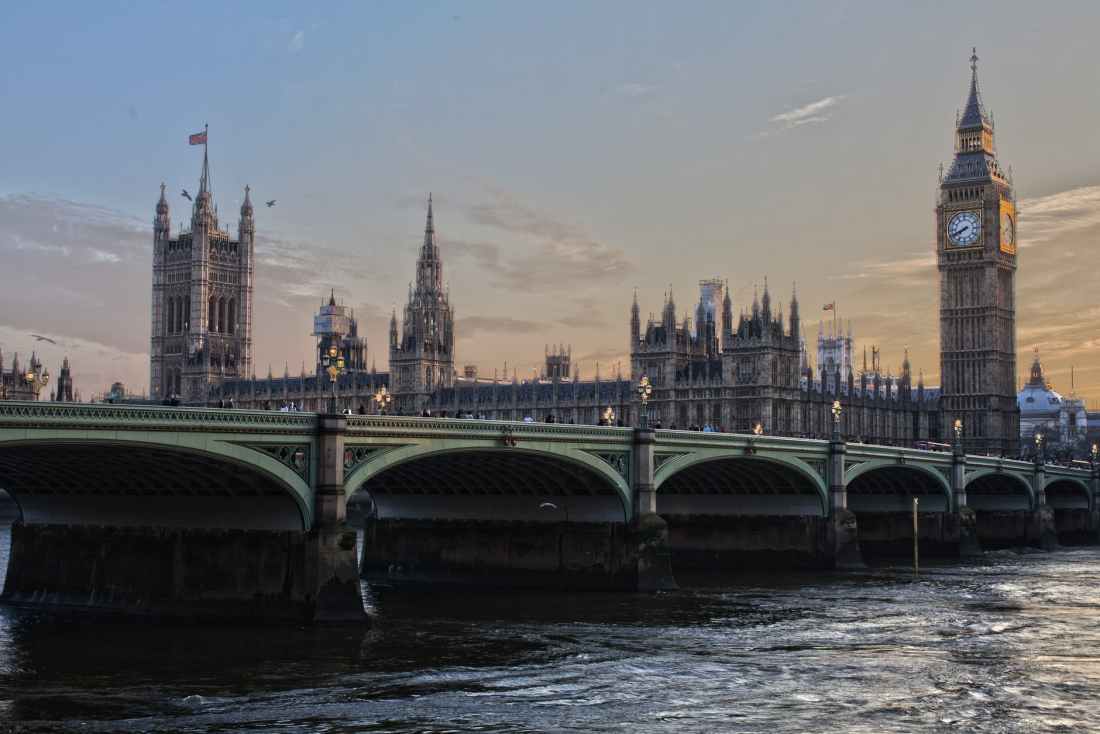
“It feels like I live in the middle of a culture war. On one side is a kind of state-sponsored amnesia. It’s pervasive. It’s an Oscar-winning movie perpetuating the idea that Winston Churchill stood alone, at the Darkest Hour, as Nazi fascism encroached, with Britain a small and vulnerable nation isolated in the north Atlantic. In reality the United Kingdom was at that moment an imperial power with the collective might of Indian, African, Canadian and Australian manpower, resources and wealth at its disposal.”
Share this:

Busy with a friend
I have had my friend Phil here all day so I have postponed writing much as we had a lot to discuss and I also got him to put my green bin out!?Men are very good with green wheelie bins.And the recycling ones as well.He even makes a pot of tea or two as he knows where the tea is.What a change in the last 40 years;men were unable to even fill the kettle back then and as for boiling an egg! Katherine
Share this:

Summer comes and goes by happenstance
In England now the seasons seem to dance
To quick music brightness comes and goes
Summer comes about by happenstance
Gales and lightning wound the outstretched branch
Apples cannot ripen when it snows
In England now the seasons seem to dance
Eating in the garden, storms by chance
Ruin all the party as drink flows
Summer comes about by happenstance.
Summer came too early, out it flounced
As the lightning in the dark sky glowed
In England now the seasons seem to dance
The joy inside the heart was well aroused
The nestling birds were learning how to fly
Summer came and went by happenstance.
True hope comes and settles without lies
Faith is all enduring,never dies
In England now the seasons seem to dance
Summer flaunts her goods but somewhere else
Share this:
Poetry and cross cultural perceptions

Extract
Despite the fact that human nature has evolved little since the dawn of humankind, our most basal emotions remaining largely unchanged for tens of thousands of years, one of history’s constants has been our general inability to truly understand one another. While humans have changed in both appearance and ability – from walking upright to developing the technology to walk on the moon – we still feel the same primal things we felt so long ago: happiness, sadness, pleasure, pain, pride, guilt.
However, our inability to establish human connections has, to an extent, remained just as constant. This much is evident in the various wars humans have engaged in, whether between nations (World Wars I and II, for example) or between different sides of the same country (America’s Civil War). It seems people have overlooked our overwhelming similarities with one another, allowing comparatively small differences – cultural distinctions, religious differences, variations in skin color and sexual orientation – to dictate human relationships or the lack thereof.
Over time, as people have populated different areas of the world and simultaneously encountered others who are not exactly the same, stereotypes have developed and, whether as a consequence or cause of these judgments, discrimination has emerged as a growing problem worldwide. This issue takes place on a large scale and is all-inclusive and encompassing: no one is safe from some sort of misperception or misunderstanding by someone else from a different background. America, long proudly called “the Melting Pot,” is certainly not exempt from the mistreatment – emotionally if not physically – of immigrants and other foreign visitors. We have labeled the Irish angry, the Jewish cheap, the French pompous, the Spanish overemotional, the Russian entirely unfeeling, Mexicans incompetent, and the list goes on and on.
Share this:

The emotional side of our nature
The loss of these tastes [for poetry and music] is a loss of happiness, and may possibly be injurious to the intellect, and more probably to the moral character, by enfeebling the emotional part of our nature.
 How my heart speaks