
Anything to declare, they  bluntly asked
Gold or silver, drugs stuffed up your ass?
Just war, the shadow answered, that’s my task.

Do you believe a  just war can exist?
You’ll find that out when you have let me pass.
Anything  else,  they bluntly, coldly, asked

No, nothing, you can search me if you must.
My declaration,  reason has surpassed
More wars, the figure ranted, that’s my task.

I declare the world is  done and bust
Though Jesus died and  we’ve just been to Mass.
What did that do for Hitler, the guards asked?

What we choose has existential risk
As if we  live enclosed in walls of glass
Bombs, the figures chanted, they’re our task.

Shall we let these strange, black figures pass?
War is coming, guns and poison gas
Anything to declare,  the guards  just asked?
Another war and starting it’s unjust
Month: May 2018

The waterlily pond

Share this:

May time



Share this:

From raw sense data to thoughts or images in human experience

Give homage to Maria Callas
Share this:
Don’t sing this as I pass by or out!
Share this:
Men seranading me.Was it harassment?
About 10 years ago we were on holiday and drove to Southwold.
I was wearing a dress, sunhat and sunglasses so not much of my face was visible.We parked in a street near the sea front.When I got out of the car, three men who were painting a house began to sing very loudly some opera.It may have been,O sole mio.
Now, should I report this to the police? I fear they won’t believe me and my husband didn’t do anything to protect me like suggesting I wear a Niqab [Is that right?]
I doubt if it happens nowadays anyway!
What a beautiful thing is a sunny day!
The air is serene after a storm,
The air is so fresh that it already feels like a celebration.
What a beautiful thing is a sunny day!
But another sun, even more beauteous, oh my sweetheart,[10]
My own sun, shines from your face!
This sun, my own sun,
Shines from your face; It shines from your face!
Your window panes shine;
A laundress is singing and boasting about it;
And while she’s wringing the clothes, hanging them up to dry, and singing,
Your window panes shine.
When night comes and the sun has gone down,
I almost start feeling melancholy;
I’d stay below your window
When night comes and the sun has gone down.
Share this:
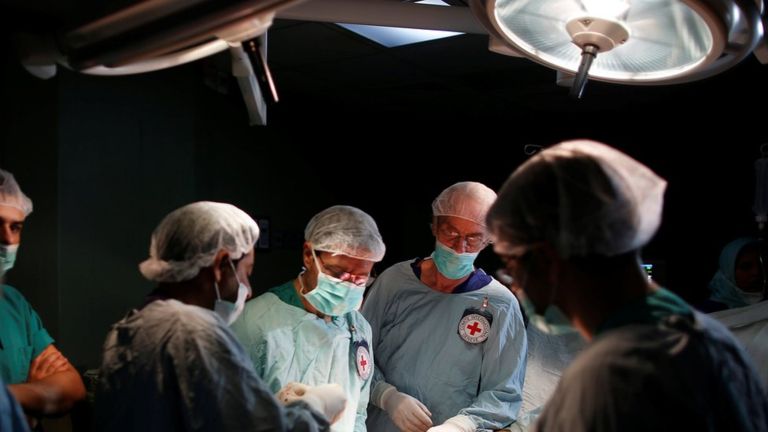
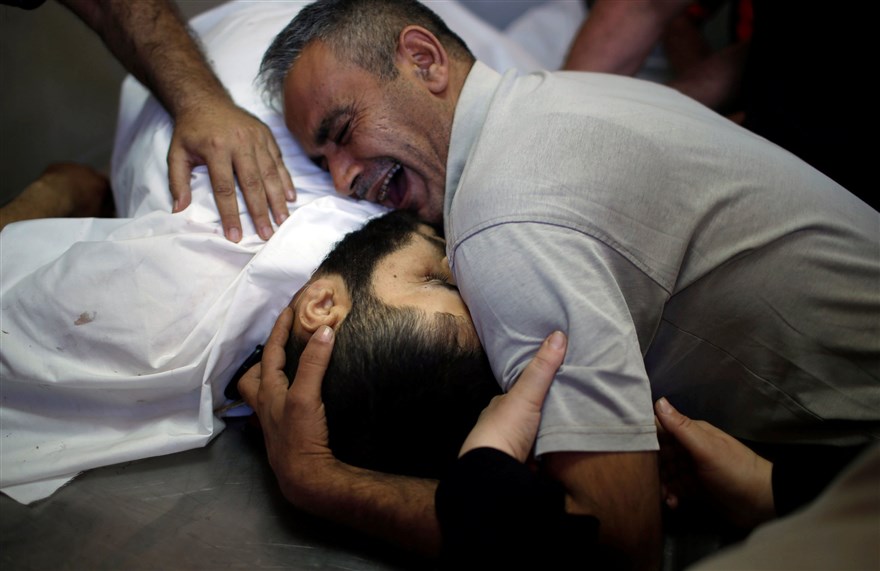
The Red Cross need money to help in Gaza


The Wm Blake Archives

Share this:

The visions of Wm Blake


https://www.poets.org/poetsorg/text/visions-william-blake
“In 1779, Blake began his formal art education at the Royal Academy of Art’s Schools of Design, where he was encouraged to study painters such as Rubens instead of the Renaissance works that his teacher called “stiff and unfinished.” Blake pursued his own artistic goals, and a short time afterward published his first book of poems, Poetical Sketches.
In later works, including Songs of Innocence and Songs of Experience, the engravings and verses are inextricably intertwined, part of a singular vision where neither word nor image is privileged over the other. He produced them with the help of his wife, using a method called relief engraving (which he is credited for inventing) and hand-coloring each plate. His poetic and artistic work is characterized by a unique commitment to imagination as opposed to reason, and the visionary, almost terrifying, and sometimes grotesque nature of his subject matter.
Drawing on religious themes, and preferring a loose, expressive style, his book Songs of Innocence has the quality of a children’s book, with darker, adult political themes just beneath the surface. Angels are depicted alongside men, women, and children, and in the poem “London” he imagines the city as a dark, unreal realm, illustrated with an old man bent toward a child in a shadowy doorframe. The poem begins:
I wander thro’ each charter’d street,
Near where the charter’d Thames does flow,
And mark in every face I meet
Marks of weakness, marks of woe.”
Share this:

Compassion
 Bu
Bu
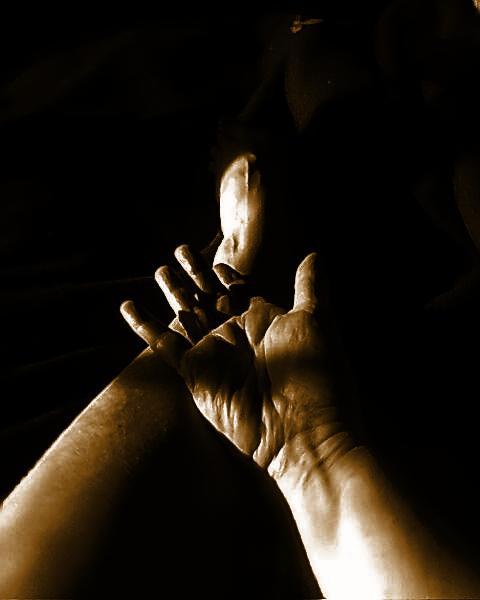
By Katherine using Artweaver on a photograph she took Copyright
The outstretched open hand shows you my heart
And those of people near and far apart
The vulnerable, the needy, the war torn
Let’s contemplate what we can do for these forlorn
When we’re loved we open up and show
The vulnerable true self and undertow
When abandoned we may die in fear
Let us look around and find those near
Trust may be for God and his strange ways
We lose it as we traverse arduous days
But then we never feel the love and joy
That enters those who trust despite deep flaws
Naked we are born and yet are here
Trust in the Unkown and all that’s dear.
Share this:

Fortune,luck and fate
The human trauma is our love and hate
Inevitable in long infancy and need
They interact with fortune,luck and fate
If we cannot bear imperfect states
When hatred makes us grab and gulp in greed
The human trauma is our love and hate
We try to hide our knowing till too late
Then we see our enemy can bleed
The curse of fortune,luck and dreaded fate
The blocked out feelings come to dominate
Through unknowing, we do evil deeds
The human trauma is our love and hate
The more we block ,the more we speculate
What others’ wicked hearts have now achieved
Who curses our own fortune, brings down fate
Denied but living like those monstrous weeds
Whose flowers create so many corrupt seeds
The human trauma is our love and hate
They interact with fortune,luck and fate.
Share this:
Give me your hand
A mood of stillness like a nesting dove
A lack of wind, vast silence gives repose
Symbolises blessings from above.
My trees mature now form a holy grove
The sorrow ruling me has been deposed
To give me stillness with the nesting dove
In such moods, there’s space to think, compose.
To learn the ways of energy and love
Symbolised by blessings from above.
In the crowded Mall, the shoppers shove
The special mood of peace I fear eludes
We lose the sense of silence and the dove
In public life, we quarrel and oppose
We lose the way to our loved treasure trove
We lose the symbols and the deep repose.
Give me your hand without its heavy glove
As we caress, we value human love.
A mood so stilled, oh, fluttering of the dove
No wind to destroy peace nor rain to flood
Share this:
Mentally ill people die sooner and the gap is widening in the USA.
 Art by Katherine
Share this:

The universe is volatile ,are we?
The universe is volatile and free
Nature was not made for humankind
As wild as eagles, stripe backed buzzing bee
See the storm demolish favoured trees
See the wrecks and breakage left behind
The universe is volatile ,are we?
We hear ourselves compose our misery
The sun is shrouded,rain darts through the wind
The eagles strong hide in the mountain’s lea.
The particles of life ride on in glee
Regardless of our wishes or our minds
The universe is volatile and free
When we look out,our wish is what we see
But we are minute specks which much may learn.
From eagles, cats and striped soft buzzing bees
With shutters on the eye , we’re sad and blind
And knocked by savage grief , undignified
The universe is merry,cruel and free
As wild as rage, as kind as a calm sea.
Share this:
To exercise the art of patience

I have seen many storms in my life. Most storms have caught me by surprise, so I had to learn very quickly to look further and understand that I am not capable of controlling the weather, to exercise the art of patience and to respect the fury of nature.
Share this:

Love affair between poetry and psychology?

Beginning:
Romanyshyn references the psychologist/researcher frequently in his book, The Wounded Researcher (link is external)as being “the failed poet” suggesting he or she stands at the gap between the conscious and unconscious, and bears the tension between knowing and not knowing. Romanyshyn also admits that the psychologist who keeps the soul in mind is closer in sensibility to the poet, even if he or she is not a poet. Essentially, he’s acknowledging that poetry is an art of the soul, something which has been tangentially addressed over the years. Interestingly, he also references a number of poets in his book, such as Homer, Keats, and Rilke, while identifying some of the common threads between psychologists and poets, the important one being that they tend to be individuals who are able to identify the truths of any given moment. Needless to say, they both play an invaluable societal role and without tooting my own horn, if both exist in one person, well, that’s even better.
As a transpersonal psychologist and poet, each day I see more clearly the power and influence these two professionals have on one another. Every morning I read poetry, oscillating between Rumi and more contemporary poets like Pablo Neruda, Mary Oliver, Sharon Olds,
Reference
Romanyshyn, Robert. (2007). The wounded researcher. New Orleans, LA: Spring Journal Books.
Share this:

The nuclear elegy
The weather’s gone bipolar, so have we
Uncertainty has made us feel enraged
We thought we could hand Europe back its key
Long negotiations mixed up do not free
We want the process finished,disengaged
The weather’s gone bipolar, so have we
No-one in the Government agrees
Old allies now start on a rampage
We thought we could hand Europe back its key
Narcissistic, we think me,me ,me
Where have gone the wise ones and the sage?
The weather’s gone bipolar, so have we
See Al Jazeera and the BBC
Arms are being sold to all who pay
We thought we could hand Europe back its key
Watch the nations as their weapons lie
Save the world for peace and bang,goodbye
The weather’s gone bipolar, so have we
We think we hear the nuclear elegy
Share this:
The way they speak to you
 After my husband died I knew I would be paying less Council Tax.When the bank statement came I saw it was the same as before.When I phoned the Council about a month after my husband had died, the man said,For all we know you have got another man now.I wonder that they could speak to me like that.
E-on want to read my metre so I sent them a note did they mean meter.No reply
I am reading the 6 Lives of Henry the Eighth.So far there’s only been one.Will he rise fron the dead and stop Brexit? That would be fun
I can’t understand a war about roses.I thought gardening was good for us,Will we have a war of the tomatoes?
Richard 3rd is still famous long after he died.What do I have to do?
I see we accepted the Normans because they were fierce conquerers. So should refugees start a war?
The war against benefits has been going on and on.Why don’t they just shoot us all?
It’s too late for breakfast and too late for lunch.I’ll go back to bed and try again tomorrow.If you start on the wrong foot it’s difficult to get it right,or left
Share this:

Joan Baez is now on her last tour
Share this:
Shame?
To live without experiencing some shame and blushes of admiration would surely be a wretched life.
Share this:

Mal-education
I was 16 when we began to study a simplified version of the writings of Thomas Aquinas.I believe now it was a very badly written book as I could see flaws in the arguments.But the most striking effect on me was that I had never questioned the existence of God.
When I began to study the book I thought:So they are not sure!
I think the nuns would have been horrified if I had said that.We were also told that we must not apply to University to do philosophy as they would not allow it.Because it might makes us lose our Faith
So I learned God might not exist and that people like myself might lose their Faith.That book we had we read over and over for 2 years.Eventually I lost the type of Faith they had tried to defend but I did not entirely lose the notion of spiritual or religious experience being possible.And also I am sure there is a God of some sort but there are many ways to find him/her/them including becoming an atheist after going to a school like mine which would open one to other possibilities.
Share this:

The need for idleness

Extract
Our contradictory fear of being idle, together with our preference for sloth , may be a vestige from our evolutionary history. For most of our evolution, conserving energy was our number one priority because simply getting enough to eat was a monumental physical challenge. Today, survival does not require much (if any ) physical exertion, so we have invented all kinds of futile busyness. Given the slightest or even a specious reason to do something, people will become busy. People with too much time on their hands tend to become unhappy or bored.
Yet, Smart argues, boredom is the key to self-knowledge.
What comes into your consciousness when you are idle can often be reports from the depths of your unconscious self— and this information may not always be pleasant. Nonetheless, your brain is likely bringing it to your attention for a good reason . Through idleness, great ideas buried in your unconsciousness have the chance to enter your awareness.
Share this:

The butterfly effect

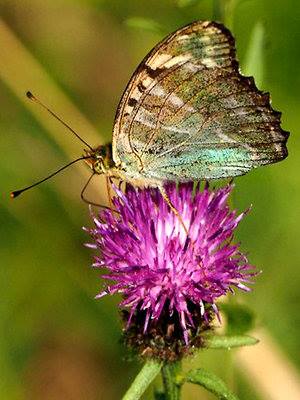
This is a very good account with extracts from two novels as well as some graphs.Be not afraid.You can understand most of it without too much effort
The Butterfly Effect: Everything You Need to Know About This Powerful Mental Model
Extract
The Basics
In one of Stephen King’s greatest works, 11/22/63, a young man named Jake discovers a portal in a diner’s pantry which leads back to 1958. After a few visits and some experiments, Jake deduces that altering history is possible. However long he stays in the past, only two minutes go by in the present. He decides to live in the past until 1963 so he can prevent the assassination of President John F. Kennedy, believing that this change will greatly benefit humanity. After years of stalking Lee Harvey Oswald, Jake manages to prevent him from shooting Kennedy.
Upon returning to the present, he expects to find the world improved as a result. Instead, the opposite has happened. Earthquakes occur everywhere, his old home is in ruins, and nuclear war has destroyed much of the world. (As King wrote in an article for Marvel Spotlight, “Not good to fool with Father Time.”) Distraught, Jake returns to 1958 once again and resets history.
In addition to being a masterful work of speculative fiction, 11/22/63 is a classic example of how everything in the world is connected together.
The butterfly effect is the idea that small things can have non-linear impacts on a complex system. The concept is imagined with a butterfly flapping its wings and causing a typhoon.
Of course, a single act like the butterfly flapping its wings cannot cause a typhoon. Small events can, however, serve as catalysts that act on starting conditions
Share this:

The War’s not over when the fighting stops
 We sense the sacred in these peaceful walls
Yet men have died in places that appal
Women too and children then unborn
Fell into cold dark earth in lands forlorn
As our weapons grow, our hearts are hard
The people live in Gaza behind bars
The water all polluted as taps drip
Is this war or is it vengeance fit?
In Britain, it’s the poor who lose the war
As it was when Jesus Mary bore
Yet here are clerics blessing marching bands
A military show for all the land
The genocide in Europe of the Jews
The self destructive actions of the proud
The fields of France filled sick with blood and bone
Who are we to cast judgemental stones?
The War’s not over when the fighting stops
The soldiers and the tortured suffer shock
The widows and the parents all bereaved.
The unborn children hover in unease
We let the prisoners out from camps of death
But who would take them in or take their path?
The injuries will travel down the years
As still we fight and still we live in fear
It’s Europe’s grasp and greed which was the cause
Of death in Gaza, Syria, in long wars
Yet we judge we are more civilised
When we self defend with bitter lies
Share this:

~Why does Britain glorify its violent past?
Extract
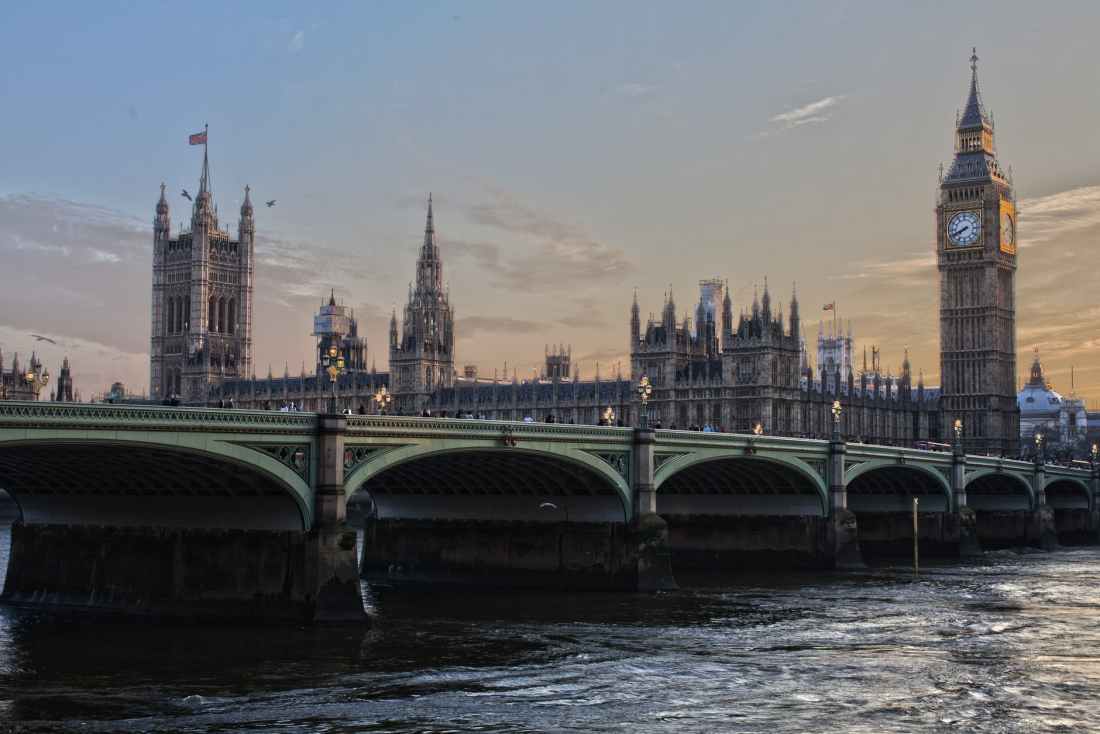
“It feels like I live in the middle of a culture war. On one side is a kind of state-sponsored amnesia. It’s pervasive. It’s an Oscar-winning movie perpetuating the idea that Winston Churchill stood alone, at the Darkest Hour, as Nazi fascism encroached, with Britain a small and vulnerable nation isolated in the north Atlantic. In reality the United Kingdom was at that moment an imperial power with the collective might of Indian, African, Canadian and Australian manpower, resources and wealth at its disposal.”
Share this:

Busy with a friend
I have had my friend Phil here all day so I have postponed writing much as we had a lot to discuss and I also got him to put my green bin out!?Men are very good with green wheelie bins.And the recycling ones as well.He even makes a pot of tea or two as he knows where the tea is.What a change in the last 40 years;men were unable to even fill the kettle back then and as for boiling an egg! Katherine
Share this:

Summer comes and goes by happenstance
In England now the seasons seem to dance
To quick music brightness comes and goes
Summer comes about by happenstance
Gales and lightning wound the outstretched branch
Apples cannot ripen when it snows
In England now the seasons seem to dance
Eating in the garden, storms by chance
Ruin all the party as drink flows
Summer comes about by happenstance.
Summer came too early, out it flounced
As the lightning in the dark sky glowed
In England now the seasons seem to dance
The joy inside the heart was well aroused
The nestling birds were learning how to fly
Summer came and went by happenstance.
True hope comes and settles without lies
Faith is all enduring,never dies
In England now the seasons seem to dance
Summer flaunts her goods but somewhere else
Share this:
Poetry and cross cultural perceptions

Extract
Despite the fact that human nature has evolved little since the dawn of humankind, our most basal emotions remaining largely unchanged for tens of thousands of years, one of history’s constants has been our general inability to truly understand one another. While humans have changed in both appearance and ability – from walking upright to developing the technology to walk on the moon – we still feel the same primal things we felt so long ago: happiness, sadness, pleasure, pain, pride, guilt.
However, our inability to establish human connections has, to an extent, remained just as constant. This much is evident in the various wars humans have engaged in, whether between nations (World Wars I and II, for example) or between different sides of the same country (America’s Civil War). It seems people have overlooked our overwhelming similarities with one another, allowing comparatively small differences – cultural distinctions, religious differences, variations in skin color and sexual orientation – to dictate human relationships or the lack thereof.
Over time, as people have populated different areas of the world and simultaneously encountered others who are not exactly the same, stereotypes have developed and, whether as a consequence or cause of these judgments, discrimination has emerged as a growing problem worldwide. This issue takes place on a large scale and is all-inclusive and encompassing: no one is safe from some sort of misperception or misunderstanding by someone else from a different background. America, long proudly called “the Melting Pot,” is certainly not exempt from the mistreatment – emotionally if not physically – of immigrants and other foreign visitors. We have labeled the Irish angry, the Jewish cheap, the French pompous, the Spanish overemotional, the Russian entirely unfeeling, Mexicans incompetent, and the list goes on and on.
Share this:

The emotional side of our nature
The loss of these tastes [for poetry and music] is a loss of happiness, and may possibly be injurious to the intellect, and more probably to the moral character, by enfeebling the emotional part of our nature.
Share this:
The poetic imagination
 https://opinionator.blogs.nytimes.com/2012/12/02/philosophy-and-the-poetic-imagination/
“Most importantly, the example shows that we cannot draw a sharp boundary to distinguish some language as intrinsically poetic. We can apply our poetic attention to commonplace language, and thereby give that language unexpected depth and importance. Indeed, poets such as William Carlos Williams purposefully challenge us to extend our sensibilities and find the poetry in everyday language, whenever they construct poems with familiar vocabulary and cadence.
How do we cultivate the poetic imagination? We must attune ourselves, however we see fit, to the features we notice in a poem, as a prompt to experience its language more deeply. This search for significance can target any noticeable feature of the poem—regardless of the meaning, if any, the feature might literally encode. We can listen to the sounds and rhythm of the poem. We can feel its syntax and structure. We can even attend to its visual shape and layout before us, as the poet e. e. cummings often invited his readers to do.
However, even when we explore the familiar domains of sound, meter, rhyme and line, we must be prepared to explore the variable and open-ended significance of each observation. We saw, for example, the different effects of lineation in the Missed Connections poem. There is no one meaning or effect for parsing lines; for annotating lines; or in juxtaposing the two. What we find in all these cases is just a formal contrast, an echo of further differences, which we can appreciate more deeply only by probing the poem further. This variability underscores the creativity poets and readers bring to their art.”

 How my heart speaks