
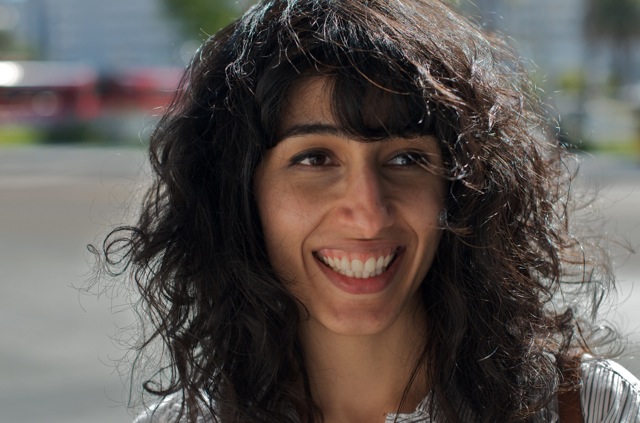
In 2014, I heard Solmaz Sharif read “Look,” the title poem from her debut collection. Look inserts military terminology into intimate scenes between lovers, refashioning hollow, bureaucratic language from the U.S. Department of Defense Dictionary of Military and Associated Terms with a human touch. (Even the collection’s title has an alternate military meaning: per the Department of Defense, a look means “a period during which a mine circuit is receptive of influence.”) At a time when the U.S. automates acts of murder, Sharif insists that war is still personal—perhaps today more than ever. In one of its most quoted passages, she writes, “Daily I sit / with the language / they’ve made / of our language / to NEUTRALIZE / the CAPABILITY OF LOW DOLLAR VALUE ITEMS / like you.”
“By simply placing words from the Defense dictionary in small caps, and deploying them in scenes of intimacy,” John Freeman wrote in the Los Angeles Times, “Sharif has begun the process of renaturing them, putting them in the readers’ hands for examination.” Look confirms what I’ve known since 2014: Sharif is poised to influence not only literature but larger conversations about America, war, and the Middle East. I spoke with her about her influences, the role of the poet in today’s world, and the stories behind Look.
INTERVIEWER
In an essay you wrote for the Kenyon Review, you said, “When I am asked to describe my poetry on airplane flights, at dinner parties, I describe it first as ‘political.’ Then, ‘documentary.’ And these two things seem to, for some, preclude aesthetic rigor.” There’s a popular conception that overtly political can’t have aesthetic value—that a political message degrades the aesthetics. Is your work a deliberate effort to rebut this notion?
SHARIF
Clichéd, bad writing often means clichéd, bad politics, and vice versa. Aesthetics and politics have a really vital and exciting give-and-take between them. I think June Jordan is an exciting example. She was politically astute and radical, but she was also a classically trained pianist, so when you’re reading her work, it’s incredibly music driven and decided. It’s exciting for me to think of poets that are allowing their politics to also be shaped by these aesthetic considerations, and wondering when the poetic will lead you to the kind of political surprise that a dogmatic approach wouldn’t allow. These are the artists that live on the fringes of what is aesthetically and politically accepted.
When I say “living on the fringes,” I’m thinking of Edward Said’s idea of the “exilic” intellectual pursuit. It’s this artistic presence continually outside, questioning and speaking back to whatever supposed “here” or “we” or “now” we’ve created. The word fringe is belittling in a way I don’t intend—I mean a nomadic presence, or a mind that is consistently on the run, and preventing these political moments from calcifying.

 How my heart speaks