On fire with emotion

I told him my soul was on fire so he threw a jug if water over me.

I said it’s raining in my heart so he put a tin helmet on my head . He’s not a surgeon you see. Andyl likes Cornwall

I said I feel like a drowned rat.

He said you’re so cruel. You’ll be eating mice next.

I said I’ve got gastric reflux.

He said well at least it’s not a heart attack.

Why do hearts attack anyway ?

I said you  have got a beautiful soul.

You said yes I got these shoes in Freeman Hardy and Willis

. So I said I expect they were £29/19/11.Pay £30 we will give you a penny. It’s daylight robbery. Now those  old copper pennies are probably quite valuable.0

That was the end of the conversation because we didn’t do decimal in our day.

What a duo

I like the picture

Grief has washed my heart like melting rain

Now I’m pure as silk without a stain 

I’m thin as grass and green as any leaf

All is well above but not beneath. 

Grief can cleanse us if we bear the pain 

And when the rest are gone what will remain?

They say that Jesus died between two thieves. 

I like the picture though I’ve no belief.

For two long years I in a bed did lie.

Until I told my heart we must not die

Please accept my sentiments request 

That when we die there will be no more tests

And so we come again to grief and loss

In my hell hot bed I  burn and toss 

How long for rain how long for the ice.

Ask me once but never ask me twice.

Thoughts

Sometimes beauty only needs to be skin deep

Even fresh air is not original.

How can someone else define your duty?

Why is it wrong to feel strong emotions if you are English?

Would you change your DNA if you could?

Would be nice if I could borrow some DNA for a few days

There’s an atom bomb with only one atom in it. But I can’t see it.

No more will the Bedouins dwell in the desert

Evoking the beauty, the stars so far away,
I like to watch geese at the end of day.
Patterns and poems disclose other worlds.
Feel the hand of a baby with the fingers all curled

See the trust and the smile when the mother is home,
To create entire worlds for the one she has borne.
For chaos and panic or not far away
Even in adults who don’t care to say.

The little hands touch me so deeply, so well;
How come the world is diving to hell?
How can we kill little wains by the score
Was it for this that I opened your door?

Was it for this that love electrified us,
And we were lost in each other, in the holy white dove.
Was it for war that we gave love our wombs
Making more soldiers and filling more tombs?

The bombs are a-loading they’re having parades.
It’s not North Korea, it’s Washington, dude.
Let the tanks roll on Corrie and the Bedouin tribes.
Let the allies laugh blindly as the Lord Jesus dies.

O take me, dear mother.Please take me away
I can’t see no point in saying my prayers.
The leaders’ religions are making God frown.
The desert is empty, the tents all dragged down.

The centuries of living so free , so mobile;
The holy land blessing as they pause for while.
The little black tents like wombs of the night
Are all gone to shredders as we sing, Silent Night.

He is alive

In my dream, I gave birth to a child
The doctor said that he would die quite soon
My feelings overwhelming made me wild

The Nazi doctor threw him on a pile
I lay nearby unmoving as I keened
In my dream,I gave birth to a child

A week passed by,I knew that death beguiled
Frozen lips made no sound, song or tune
My feelings overwhelming made me wild

I had to rise and say my black goodbye.
My baby with the others;horror loomed
In my dream I gave birth to a child

I picked him up , when suddenly he smiled
I held him to my breast, my songs I crooned
My feelings overwhelming drove me wild

I had to carry him, the landscape gloom
A desert grey aand rocky like some moon
In my dream I gave birth to a child

In terror I had walked yet love consoled

The garden of the heart

Abandon not the wildness of your heart

In the unreformed, creation starts

There is no privilege in wealth nor gain.

In the rejected fragments life remains.

Remember man you are the dust and corpse

In all thats gone before there lingers hope.

Golden rod shall flourish and grow tall

In the gardens of our hearts its dust shall fall

Poets and perception

Extract from the book by Marion Milner

An experiment in leisure

But if man’s salvation depended on his capacity to see the facts, both about himself and the outside world, and if the poets were the pioneers in this, what were the conditions under which poetry could grow? For a long time I had been puzzled by the continual recurrence of images from the Bible in my thinking. Then I find this note in my diary: Just supposing this is what the Gospel story is partly about? All this year it’s been growing in my mind, the possibility that the Gospel story is concerned, not with morals at all, not with what one OUGHT to do, because someone (God, father). expects it of you, but with practical rules for creative thinking, a handbook for the process of perceiving the facts of one’s own experience – and, of course, in this sense, with ‘salvation’, for it is ignorance and blindness which lead to the City of Destruction. And the central truth, is it that only by a repeated giving up of every kind of purpose, plunging into the void, voluntary dying upon the cross, can the human spirit grow, and achieve those progressive fusings of isolated bits of experience which we call wisdom, truth?

The walking frame and the smile

I saw you struggling with your walking frame
Guessed that you must suffer too much pain
I smiled because you caught my sidewards glance
Then  your face too by  smiling was enhanced

So  often older people are ignored
Lost and lonely hidden at the core
Once this man  fought in a  major war
I hope by some fine friend he was  restored

I saw him disappearing  down the  road
His posture more erect,  his back less bowed
And in my heart I felt the smiling too
 Enchanted by the essence , by the cue.

I got on a bus,  ignored my phone,
Smiling   still I  pushed the door key home

E-nailed with flowers

photo02251 photo1357


From stan.tan@tandem.com To Mary@tandem.com

Hi Mary,I recollected you are my wife.I do not require a wife who is interested in philosophy but as you are so perfect in all other ways,I guess I can’t throw you over yet.Besides I am 99 next week and probably senile.So just ignore my rude jokes and stupid answers From your adoring husband Stan .. as to what I adore,let’s keep it a secret.

Reply to senderphoto17081 photo1352 photo1346

Hi Stan,I can’t remember why the hell I married you as you are the opposite of all i need and desire.Would you mind if my boyfriend moves in.He is doing a D,Phil on Wittgenstein and food so it could be quite stimulating at dinner time.Not that Wittgenstein ate much but Tom had to find a new angle,as it were,on the great man…I also wondered of he could bring in Lacan but as I find him so implacably  hostile to understanding i have refused the thoughts.As you and i no longer share a bed,you won’t even notice Tom is with me.. I hope not as men can be very jealous even if they don’t want their wife,they don’t want another man to enjoy her sumptuous appeal.as it were,in a manner of speaking.you get my drift.Well,to cut a long story short i slept with Tom and he smells good…so he;s coming to stay for the weekend.I hope you have done the baking

The Conference is the most boring I’ve ever endured on numbers.Irregular,regular,passive,impassive,neutral,live, it’s not mathematics as I have known it before,more like a tabloid newspaper.Still, it’s probably some post modern slant.. wonder what comes after postmodern… Prefuture? Premature,Pre stupid…

i wonder if I can continue.Please pump  up my tyres and clean the computer and I’ll see you Friday as per norm,therm an derm

A hug from your devoted wife,Mary

Can poetry change your life?

img_20190529_143523

http://www.newyorker.com/magazine/2017/07/31/can-poetry-change-your-life

Extract

His other idea is that the key to the real-world effectiveness of poems and songs is “form.” The invocation of form is awkward, for the same reason that advanced-pop criticism itself is inherently awkward, which is that most popular music, and especially popular music categorized as rock, is magnificently and unambiguously hostile to everything associated with the word “school.” And form is a very academic concept. It’s the shell in the game teachers play to hide content.

The phrase “equipment for living” is taken from Kenneth Burke, who also wrote that form is “a public matter that symbolically enrolls us with allies who will share the burdens with us.” Robbins likes this. I think it means that the experience of poems and songs is shared with other people, even if often implicitly, and so it can be a means of achieving solidarity. Form “grounds us in a community,” Robbins says.

This might be a little wishful. Reading poems is normally a solitary pastime, and so is a lot of music listening, except at concerts, where the emotions aren’t really your own. In any case, form cuts no political ice. The Rolling Stones’ “You Can’t Always Get What You Want,” once an anthem of antiwar protesters, is played at Trump rallies. I assume it instills feelings of solidarity among his supporters.

With aesthetic experience in general, after a certain age, the effects are probably as much a product of what you bring to it as what you get from it. “Records are useful equipment for living, provided you don’t expect more from them …………

Extract from politics and poetry

5d6397cedda4c8cf588b462b


As radical as empathy and imagination can be, these qualities exist in the mind. But there is also a poetic language of embodied experience, one that uses poetry to seek out the body. In “Feeld,” the trans poet Jos Charles bends language, via willful spelling, to a place where it must be parsed slowly, struggled through, read not so much with the brain as the mouth. Language becomes a felt thing, a terrain to be crossed. The title itself toys with such a transformation, the word feeld being a marriage, perhaps, of feelfelt and field. Reading lines like “i care so / much abot the whord i cant / reed / it marks mye bak / wen i pass / with / a riben in mye hayre,” I can’t help feeling that the body — itself a shifting and malleable possibility — is the target for these poems.

Through the strange labor of deciphering the text, I come to understand that Charles is transmitting an experience that I must allow to travel from her body into mine. When I do, the distance between us alters. It grows smaller and strangely charged. I’m made to realize that the very vernacular of the poems also tampers with history; it announces a continuum where Chaucer and 19th-century enslaved blacks and a 21st-century white trans woman seem quite effortlessly to share a lexicon.

Justin Phillip Reed, whose “Indecency” received the 2018 National Book Award in poetry, writes close to the flesh. His poems take up the body in desire and violence, and they do so by thrusting the reader into a stark visceral encounter with their material. The poem “Portrait With Stiff Upper Lip” is graphically rendered so that it can’t be read line by line; the page must be turned, repositioned so that text, overlapping and running every which direction, can be seen. Beyond typography, the poem asks the reader to take on the physical and emotional sense of a black man hearing himself, or someone like him, discussed via fragments. A reader staggers through a field of statements like “looks like planet of the apes” “probably has / a huge” “probably has a parent” “in / prison” “NO” “[in / the / pen]” “I’ve never had” “with a really hot BLKguy.” The reader, dragged forward yet afraid to keep reading, is made to feel caught in a hostile gaze, shoved around by heedless voices.

Hostile?

Suzette Haden Elgin

https://en.m.wikipedia.org/wiki/Suzette_Haden_Elgin

Recognizing language that escalates

Acknowledging that there are times when escalating a conflict is the appropriate thing to do, if your ultimate goal is discussion and some kind of mutual agreement, how you bring that conflict into the open and force others to deal with it–the language you choose, the process you follow–will make or break your chances of productive engagement.

  • Blaming others.
  • Being over-apologetic or accommodating. “That’s okay, you just go ahead and have a good time without me.”
  • Asserting one’s rights, stating one’s perspective with absolute certainty, globalizing (what’s true for me is true for everyone else).
    Everyone knows that he steals. No one has a right to talk to me like that.
  • Attacking someone’s personality or morality, someone’s motivations. You knew we had a different plan yet you went ahead unilaterally just to spite everyone. That manager is out to get us. I know you meant well, dear, but you lack judgment.

Never aid a fool

As hidebound as a leather chair-

As thoughtless as a broom;

He is more stuck  than is despair

Which hovers round his room

Hurt by  bullies in his school.

He made protective rules.

Never go out  with a girl

Never aid a fool.

Never vote in case you err

Never wear red  socks.

Be angry that life’s  so unfair

Live inside a box.

Always say your prayers at night#

Never read in bed

And never ever think about

What  you might do instead.

His menu was so regular,

From  change he gained no pleasure

He cut his meat up with  an axe

To make it hard to measure.

He counted every step he took

And every time he  wheezed.

He wrote it in his diary

And this act made him sneeze.

He was allergic to the air;

Allergic to the sun;

At least the tickle in his throat,

Made him laugh in fun.

He had a job with a big bank

He always wore a suit

Till one day his colleague said

That only plants had roots.

The implication seemed to be

He was in stasis glued.

He always wore the same old clothes

And ate the same old food.

Could he help himself and how?

Could he be softer skinned?

He dreamed he climbed up a great cliff

Despite  the gale and wind.

And so he  left the bank and moved

To work in a coal mine.

He crawled along the tunnels black

And measured them with twine

.

Top Posts & Pages

MTWTFSS
 123456
78910111213
14151617181920
21222324252627
28293031 

«

Passive or receptive

Nuneham_2016-3 1111[800x600]

http://www.tandfonline.com/doi/full/10.1080/10509585.2014.899763?src=recsys,

Extract:

I argue that the oft-discussed connection between Wordsworth’s “wise passiveness” and Keats’s “negative capability” has led scholars to overlook Keats’s own notion of passivity as a persuasive, as well as receptive, force. I argue that Keats saw passivity as an embodied, and even physically demanding, attitude, that could prompt the interest and attention of others – an understanding that builds on the theatrical attitudes adopted by Romantic stage actors, who struck exciting poses to suspend dramatic intensity.

What is poetic truth?

http://www.literary-articles.com/2010/02/wordsworths-views-on-poetic-truth.html?m=1

0

Aristotle was the fist who declared poetic truth to be superior to historical truth. He called poetry the most philosophic of all writings. Wordsworth agrees with Aristotle in this matter. Poetry is given an exalted position by Wordsworth in such a way that it treats the particular as well as the universal. Its aim is universal truth. Poetry is true to nature. Wordsworth declares poetry to be the “image” or “man and nature”. A poet has to keep in mind that his end (objective) is to impart pleasure. He declares poetry will adjust itself to the new discoveries and inventions of science. It will create a new idiom for the communication of new thoughts. But the poet’s truth is such that sees into heart of things and enables others to see the same. Poetic truth ties all mankind with love and a sense of oneness.

https://googleads.g.doubleclick.net/pagead/ads?npa=1&gdpr=1&gdpr_consent=CQCGxsAQCGxsAEsACBENA9EoAP_gAEPgAAIYINJB7C7FbSFCwH5zaLsAMAhHRsAAQoQAAASBAmABQAKQIAQCgkAQFASgBAACAAAAICZBIQIECAAACUAAQAAAAAAEAAAAAAAIIAAAgAEAAAAIAAACAAAAEAAIAAAAEAAAmAgAAIIACAAAhAAAAAAAAAAAAAAAAgCAAAAAAAAAAAAAAAAAAQOhSD2F2K2kKFkPCmwXYAYBCujYAAhQgAAAkCBMACgAUgQAgFJIAgCIFAAAAAAAAAQEiCQAAQABAAAIACgAAAAAAIAAAAAAAQQAABAAIAAAAAAAAEAAAAIAAQAAAAIAABEhCAAQQAEAAAAAAAQAAAAAAAAAAABAAA&addtl_consent=2~70.89.93.108.122.149.196.236.259.311.313.323.358.415.449.486.494.495.540.574.609.827.864.981.1029.1048.1051.1095.1097.1126.1205.1276.1301.1365.1415.1423.1449.1514.1570.1577.1598.1651.1716.1735.1753.1765.1870.1878.1889.1958.2072.2253.2299.2357.2373.2415.2506.2526.2568.2571.2575.2624.2677~dv.&client=ca-pub-3572750319083694&output=html&h=849&adk=846380710&adf=4077370812&pi=t.aa~a.1557449866~rp.4&w=388&abgtt=3&lmt=1720070834&ecr=1&rafmt=9&to=qs&pwprc=1002264111&format=388×849&url=https%3A%2F%2Fwww.literary-articles.com%2F2010%2F02%2Fwordsworths-views-on-poetic-truth.html%3Fm%3D1&host=ca-host-pub-1556223355139109&crui=pedestal&fwr=1&fwrattr=1&pra=3&rw=368&wgl=1&fa=30&uach=WyJBbmRyb2lkIiwiMTQuMC4wIiwiIiwibW90byBnNzMgNUciLCIxMjYuMC42NDc4LjEyMyIsbnVsbCwxLG51bGwsIiIsW1siTm90L0EpQnJhbmQiLCI4LjAuMC4wIl0sWyJDaHJvbWl1bSIsIjEyNi4wLjY0NzguMTIzIl0sWyJHb29nbGUgQ2hyb21lIiwiMTI2LjAuNjQ3OC4xMjMiXV0sMF0.&dt=1721555940599&bpp=4&bdt=4206&idt=4&shv=r20240717&mjsv=m202407150101&ptt=9&saldr=aa&abxe=1&cookie=ID%3Df09ae5ff20ed2797%3AT%3D1721555940%3ART%3D1721555940%3AS%3DALNI_MbS8Cvohi_Z9U55l79xyYSuuWOhNg&gpic=UID%3D00000e9b23d244c5%3AT%3D1721555940%3ART%3D1721555940%3AS%3DALNI_MagCX96o-jj3vsS0At4MJxZInVAVQ&eo_id_str=ID%3Dc42c8c9e519f76e3%3AT%3D1721555940%3ART%3D1721555940%3AS%3DAA-AfjZjDzIRKbXI0wEbYAtfx8tK&prev_fmts=388×323%2C388x323%2C0x0%2C388x323&nras=3&correlator=2008952149170&frm=20&pv=1&ga_vid=1333163568.1721555939&ga_sid=1721555939&ga_hid=561743858&ga_fc=0&u_tz=60&u_his=1&u_h=861&u_w=388&u_ah=861&u_aw=388&u_cd=24&u_sd=2.788&dmc=8&adx=0&ady=1912&biw=388&bih=715&scr_x=0&scr_y=0&eid=44759875%2C44759926%2C44759842%2C44795922%2C95331687%2C95334527%2C95334829%2C95337869%2C95338256%2C31078663%2C31078665%2C31078668%2C31078670&oid=2&psts=AOrYGsliasLrcMyMjgun1zMKMzSBx_bXAnLlhyxVtIfAkRiLvUXER3L00TnNUnxZUGP5r32QEiY1dMOMhc6FmMqifujK4pc&pvsid=3695229132756401&tmod=841754135&uas=3&nvt=1&fc=896&brdim=0%2C0%2C0%2C0%2C388%2C0%2C388%2C715%2C388%2C715&vis=1&rsz=%7C%7Cs%7C&abl=NS&fu=128&bc=31&bz=1&td=1&tdf=2&psd=W251bGwsbnVsbCxudWxsLDNd&nt=1&ifi=5&uci=a!5&btvi=3&fsb=1&dtd=17

NYTimes: If You Want to Understand Why Democracy Is Under Attack, Read This Book

If You Want to Understand Why Democracy Is Under Attack, Read This Book https://www.nytimes.com/2024/07/30/books/review/ellen-reeve-black-pill.html?smid=nytcore-android-share

Sarcasm Spurs Creative Thinking | Scientific American

OLYMPUS DIGITAL CAMERA

https://www.scientificamerican.com/article/sarcasm-spurs-creative-thinking/

The problem with sarcasm or even irony it is that people don’t always realize that you are being sarcastic.

But in a small amount maybe it’s ok

My cat’s paw

Her little paw  was delicate to hold

I pressed the pads to make the claws come out

She didn’t mind but stretched luxuriously

A happy  sigh came from her mouth.

She  wriggled slightly all over

Then subsided back into the deep sleep

I think cats must dream the same way we do and for the same reasons.

Why are we afraid to write poetry?

By Katherine

https://www.thepoetrysalon.com/tps/2019/06/21/why-are-people-afraid-to-write-poetry/

Most people don’t realize that writing poetry is less about Allen Ginsberg’s, “ancient heavenly connection to the starry dynamo in the machinery of night,” and more about everyday truths, small happenings and fleeting human moments (which, when you feel them deeply enough, are equivalent to that ancient heavenly connection). In an age when telling the truth is a revolutionary act and face-to-face contact comes through a screen, just taking time to talk about something commonplace like, let’s say, “a narrow fellow in the grass” (Emily Dickinson) whom we spotted on our way to work, well. Damn. You’d think a writer with that much observational power must have a special pipeline to deeper, unfathomable mysteries.

Word for Android

I  thought I’d take a photograph of you.
You were sitting in the garden full of smiles
But now you’ve gone and I am sadly  blue.
I wonder if there’s any hint or clue
Even our policemen have no files
I thought I’d take a photograph of you
What’s a human being supposed to do?
Even copying this takes such a while.
But now you’ve gone and  I am feeling blue
The power that runs my mind has broken, fused
Sometimes even women feel quite frail
I thought I’d take a photograph of you


My brain is held together with some glue
I am well bewildered, I am riled
Everybody else  is gone so I feel blue
By your love this lady was beguiled.
And even now my love has never failed
I meant to take a photograph of you.
But now you’ve gone and I feel  sad and blue

Pat Barker and Benjamin Myers in conversation: ‘I’m absolutely intolerable when I’m not writing’

https://www.theguardian.com/books/article/2024/jul/27/pat-barker-benjamin-myers-voyage-home-rare-singles-in-conversation-im-absolutely-intolerable-when-im-not-writing?CMP=Share_AndroidApp_Other

Hit the bed

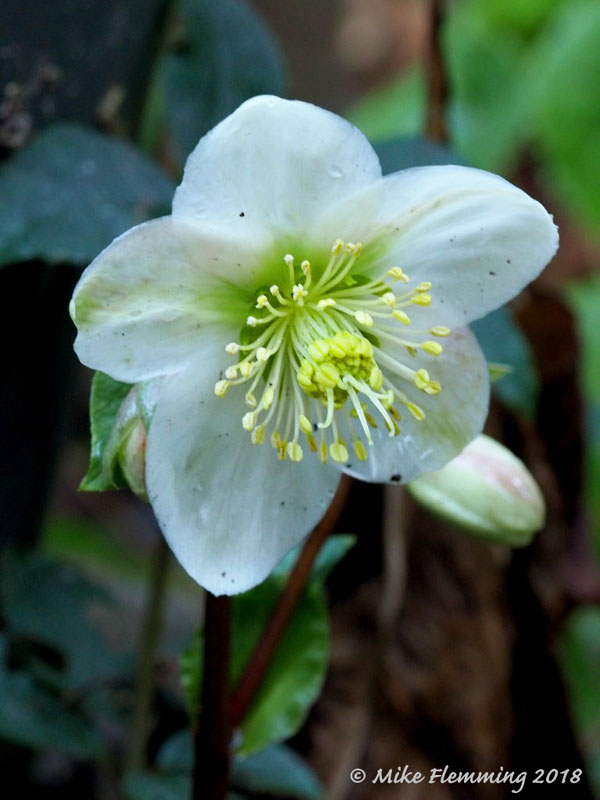
Helleborus_EricSmithii2018.jpgHumour usually helps us,It helps physical illness,tension,depression,stress.It helps people to forgive each other and it helps our minds to function better,There are lots of books with collections of humour from different sources, different people and different cultures even religions.You can also get good sources from the internet if you want to save money.
Then,think about games we played as children.They were often funny although children can be cruel.Why not make up some jokes yourself as a kind of game.That can be more beneficial than just reading them.Writing also helps when we are ng online.On Penzu you can share too if you wish.
I find my own humour makes me laugh even though I made it up myself
Scientific humour
When you are courting a  handsome man an hour seems like a second. When you sit on a red-hot cinder a second seems like an hour. That’s relativity.
Alberta MacEinstein [Ms]
When you are making her tea with parboiled water, remember that she might empty the pot on you and then where would you be?
That’s uncertainty.
Wendy Heisenberg.{Dr}
I was raised as a Catholic,taught always to commit at least one sin prior to Confession,never to eat before taking Communion and especially never to Confess before or after eating left over Communion wafers whilst having sex with a rubber man.
Pope Jane 1
A minute reading some blogs seems like it’s been raining for a year, and a minute reading a naughty joke makes women wet themselves in seconds.
That’s uncommon sense
Tea Leafe.[Mrs]
A man and a woman make love.Then there are three.That’s family life.

They say using your hands is good for you so I hit the bed with a stick and ten mice ran out and asked for asylum.They  already spoke English and knew who Meghan Markle is so I reckon they are British.

The funny way of algebra

Get on with mathematics

So why do we use letters in algebra?

Numbers have no phones.

What would happen if parallel lines met,?

Trains would crash

What is the square root of minus 1,?

I didn’t even know numbers had any roots square or circular.

How many degrees are there in a right angle?

I thought you got degrees at Uni .

I don’t understand what this right angle is.

It means :Looking at the world in the best possible way.

What is trigonometry for?

Measuring triggers.

What is topology?

The height of wisdom

Why do we need numbers?

It takes two to tango.

Dad’s smokey jacket

In my dreams I travel deep and low
Into the happy world of long ago
The jacket on the chair that smelled of smoke
The funny tales, he sang, he laughed, he spoke

So faint the memory yet ,strong are its remains
Security and love in our domain
The brushes and the stipplers all stood by
For noone told his tools that he would die.

On his shoulders, like a queen I rode
So safe and happy on the path he trod.
His voice was clear and he could whistle too
In those days men were used to do

And love shone from him on my mother dear
She laughed and made us cakes for Sunday tea
What tragedy to leave his children five
But in that distant space he is alive

The fire as red as any glowing rose
We were dressed so well in home made clothes
Too happy, needing no words to relate
Our sense of being in this generous space

I can’t get back to them I cannot swim
The passages too wet, the light so dim
Yet I feel it in my body faint and clear
Death is not the end of those so dear.

Deep inside our minds , ancestors live
And to out hearts a depth and breadth they give
Yet missing him,I hover near the place
Where I might dive into his lost embrace

The table where we banged our little heads
The chairs to close together like a bed
The teapot  always full, the sugar bowl
The fire, the kettle , pussy cat and coal

The fireplace had its oven nice and warm
Looking at red coals made me feel calm
The children seem to play in that far space
All around is love  am so on I gaze

What is irony?


pair of leather boots hanging on sconce
Photo by Helena Ije on Pexels.com

https://simple.wikipedia.org/wiki/Irony

Extract

Irony is a term for a figure of speech.[1] Irony is when something happens that is opposite from what is expected. It can often be funny, but it is also used in tragedies. There are many types of irony, including those listed below:

  • Dramatic irony, when the audience knows something is going to happen on stage that the characters on stage do not.
  • Socratic irony, when someone (usually a teacher) pretends to be stupid in order to show how stupid his pupils are (while at the same time the reader or audience understand the situation).
  • Cosmic irony, when something that everyone thinks will happen actually happens very differently.
  • Situational irony e.g. Mr. Smith gets a parking ticket. This is ironic because Mr. Smith is a traffic warden.
  • Verbal irony is an absence of expression and intention. Sarcasm may sometimes involve verbal irony.
  • Irony of fate is the misfortune in the result of fate or chance.
  • The difference between of things seem to be or reality.

Examples[change | change source]

  • In Shakespeare’s play Romeo and Juliet, Juliet takes a potion that will put her to sleep, making her look dead. She does this in the hopes of being reunited with Romeo. He incorrectly learns of her death, and kills himself. This is an example of dramatic irony, as the reader/viewer knows she is not dead, but Romeo does not.
  • A common example of cosmic irony could be that a child wants some kind of pudding, and misbehaves to try to get it. The parent withholds it because of the child’s behavior.
  • Verbal irony can be found in sarcasm, but not just that.
  • In Sophocles‘ play Oedipus Rex, Oedipus acts out based on the knowledge of his fate which in turn leads to the fulfillment of the tragic fate. This is an example of how fate plays on irony.

Humour and poetry

img_20190510_163949https://www.poetryfoundation.org/harriet/2010/04/humor-and-poetry

Extract:

In 1993, I took a left turn one day out of my MFA program and found myself at the National Poetry Slam in San Francisco. There I discovered several poets who were funny for the sake of being funny. Particularly Hal Sirowitz from New York (“don’t stick your arm out the window, mother said” and Matt Cook from Milwaukee (“it was easy to write the Great American Novel, back when there were only five American novels”) Both poets initially delighted me and confounded me: There are no similes, a voice in my head said. What would Tom Lux (my first teacher) say? the voice continued. Despite my resistance, I believe those poets gave me a kind of permission to explore humor a little more vigorously in my second book, The Forgiveness Parade (1998), for “I thought the word loin and the word lion were the same thing. I thought celibate was a kind of fish”. Perhaps in that book there were places where I was too vigorous in my pursuit: looking back there are a few poems that are just a little too jokey somehow, a little one-dimensional.

I am becoming aware of how some humor can set a roadblock for the poetic speaker, making it impossible for the speaker to get back to a serious place. And how some other (less frequent) uses of humor can leave that door open. I want to leave that door open

Geese and God

I remember all the  funny things we did
Peering into windows lit by lamps
Climbing cliffs then chased by geese and dog

Walking down from Redcar, sea so still
After Saltburn Pier, the cliffs high jump
I remember all the funny things we did

Wandering Whitby in a sea grey smog
Eating a pork pie cut into lumps
Climbing cliffs then chased by geese and dog

Old Hunstanton , white sands where we’d sit
The wild spikes of the gorse spread out unclamped
I remember all the colours,scents, and that

I feel the joy inside my heart is lit
Woe is leavened by old nature’s stamp
Climbing high then chased through mud by dogs

We see in shadows shades are not so stark
In Studland Bay astonished by skylarks
I remember all the humour and the love
Climbing cliffs then caught by geese and God

( We were chased by geese in Devon after climbing a cliff.No doubt chased by a man after we peered into his garden)