
I feel as older people we may be less worried about what others say or think.But the main reason writing poetry could be easier is we have a bigger vocabulary if we have read interesting books and poetry throughout our lives.I do not know before I have written a poem quite what I am going to say.But the structure provides a limiting frame.Then the first sentence determines much of what can follow.But what can follow also depends on what is inside our own head and also on conversations we have had, things we noticed when out for a walk.These may enter us like the air does, without effort or will.So should the poems we read and the novels and the other books we love.Even Euclid might come in handy… a bit of logic does no harm and geometric shapes can be symbols for more than mathematics, where they are more likely signs in fact [ My mistake!]
Month: May 2023

Love gives the soul her appetite.
 Signs and symbols guide the route.
Love gives the soul her appetite.
Though the night is black and starless,
The inner guide is never careless.
The notes are struck,the tune is played,
Plain melodies are overlaid.
In this chant and benediction,
Healing comes for desolation.
Though the passage way is narrow,
This road is the one to follow.
Struggling through the mud and mire,
We see,in darkness, tongues of fire.
The sacred centre of our life
Is never found without some strife.
Just then, the dark and light combine.
To create a symbol for the mind
Share this:

The oxymoron class
There is a sentence often spoke
In jest or repartee:
“See how the cookie crumbles,mate.
Why don’t you have more tea?”
But my cookies don’t crumble
They bend in multi-ways.
Why here are some I made for you
Only yesterday.
You want to know why cookies bend?
Well,mine are made from rubber.
They look impressive on the plate…
As good as any other.
But when you pick one up to start
And press it in your hands
It does not crumble,but just falls
Into a thousand rubber bands.
The guests suffer embarrassment
As they gaze down in dismay.
But the children and the dogs and cats
are happy as they play.
I gave my lover,one cookie
I gave him three or four
But he was never satisfied
Until I gave him more.
Then when I met him later on
He seemed to be in pain…
And claims his doctor told him off
For eating food again.
So now I’m having lessons
In how to bake real fakes.
It’s called the Oxymoron Class
And you should see our cakes.
I made one,I made two,
I made fifty four.
But now the freezer’s full right up
So I can’t make no more.
I want some crumbly cookies,
But mother doesn’t know.
She has gone to heaven above…
Oh,how I miss her dough!
Share this:
BVD Can Cause Anxiety – Optometrists.org

Z
How does BVD lead to anxiety?
In severe cases of BVD, symptoms like dizziness may be so intense that a panic attack can be triggered just by walking outside.
This is especially true for those who don’t know they have BVD — the unexplained dizziness and disorientation only exacerbate their anxiety.
Anxiety from BVD can even cause agoraphobia, a fear of leaving the home. Visually-busy environments, such as a grocery store or mall, can cause sensory overload and lead to panic attacks.
When BVD leads to reduced attention….
Share this:

Stan and the Brillo pad
Yes, my husband is a changed man since he died
I have dreamed of him so frequently he hides
One night we knelt down on the kitchen floor
With brillo pads in hand we scrubbed the door
Then we cleaned the oven for two hours
Death has given him such odd new powers
He never speaks nor asks me what to do
Thank the Lord our fireplace has no flue
I see more of him now that he is dead
For every night these dreams live in my head
He does not go to work nor write more books
He goes to Ealing and he wants to cook
Should I buy some ground in the church yard?
I have his ashes standing by the lard
In the fridge the suet waits for me
To make an apple dumpling for our tea
Oh, yes he likes to know what I shall eat
He starved to death,his heart was far too weak
But yet he likes to see me eat and sleep
And have a little cat next to my feet
So far I do not love another man
I shall become pan-sexual if I can
For then I need not worry who to please
I hate to lose myself but like to tease
Should my husband see me in the bed
With another pillow and a head
He might feel unwanted and be sad!
Yet he left me and now I’m feeling mad
Why clean the oven, clean the kitchen sink?
Why change the plugs and make the cat drink ink?
Why have breakfast, why eat bread and jam?
Why cook bacon in the frying pan?
Why go to bed when I shall have to rise?
Why get up when I shall later lie?
Why get washed when dirt comes back again?
Why wash my hair and use a fountain pen?
I wonder why the floor is full of mud
And whether nature gave me enough blood.
Life is so precarious use it well
Before all hear the tolling of the knell
Share this:
Browse Poems | Poetry Foundation


My husband has a rubber face
- My husband has a rubber face,
He’s from a subspecies of the human race.
Some men have faces fixed and set
My husband’s face is not like that - He imitates our politicians,
Just like Rory Bremner can.
Though he has no wig or hair piece,
He can look like anyone. - Some nights I waken for I am laughing
While I am quite sound asleep.
I am dreaming of his mobile features,
Contorted to a different shape.He is skilled at telling jokes.
And he loves a good cartoon.
If I am feeling flu type blueness
Hhe can get me up again.- He has a rather noble visage.
He gets attention he abhors.
In the bar on King’s Cross Station—
I was asked was he a Lord!He’s a Lord of Fun and Humour.
He’s a Lord at Listening Well.
He’s unique, but so are you,
And all creatures that on earth do dwell
Share this:
The ancient holy song
Although it’s dark, out there the blackbird sings
His territory is the same as in the past
An ancient ,holy sound begins the Spring.These birds are little dinosaurs with wings
Like the spider they adapt so last
Although it’s dark, out there my blackbird sings.What other pleasures will the season bring?
The crocus flowers the daffodils,long grass
An ancient ,holy sound begins the Spring.In my leafy wood, birds wisely throng.
We have no cat nor greenhouse with its glass
Although it’s dark, out there my blackbird sings.In my heart, for Northern moors I long;
The heather where we loved, the sheep shorn grass
As ancient ,holy sounds began the Spring.Yet I am rarely mournful for the past
God lives in each moment,Life’s our Mass
Although it’s dark out there the blackbird sings
An ancient ,holy sound begins the Sprin
Share this:
Shut the door to refugees
Where have all the cowards gone?
Wrong time passing
Where have all the cowards gone
Wrong rhyme ago?
Where have all the cowards gone?
In the government half of them
When will they pay and go?
When will old Satan show?
See him in a liar’s eyes
See him in the murky skies
See him laugh as children die
See him,hear him by and by
when will we ever learn?
Let children drown in warm blue seas
Shut the doors to refugees
Like we did to Europe’s Jews
Just buy red poppies and feel pleased
When will we truly mourn?
When will we ever grieve?
Share this:
Taunt no more the hints of man

Taunt no longer idiots on these isles
For like the Lord they are not English pure
They voted for the stupid and the wild
In appearance, May looks fairly mild
For old men, she has a faint allure
Being the headless sweeper of church aisles
Boris Johnson Turkey has defiled
He cooked his goose in rapeseed oil uncured
As befits the madmen and the wild
Michael Gove’s own head his heart beguiled
What saves him from the deserts of the sewer
Taunt no longer morons on these isles
The NHS is poorer mile by mile
It’s good if you are dying on the wires
Even when it’s suicide to smile
Mrs Thatcher never paid the toll
She wrote a cheque and signed the counterfoil
Taunt no longer MPs on these isles
We chose among the cunning, the most vile.
Share this:

Mr Putin s mind is very cold
The freshness of spring air soothes human souls
Except there is a war a Russian start
So our happy feelings can’t take hold
Though late,spring air does soothe our anxious souls
Mr Putin’s mind is very cold.
Nothing but a bomb gives him delight
Soft the sunny air on stricken souls
The freshness of such air soothes human souls
Except, forever lost, old Russians fight
Share this:
The river wide
Praise me with your song and I will smile
Praise me with your sentences unveiled
Comfort me with honey and your kiss
Did God create the world to create this?
Praise me through the thoughtfulness of words
Aid me with the singing of sweet birds
Bring forth the wild blossom on the trees.
Every creature, every plant takes
ease
In your arms, enfold me when it’s dark
In your arms I waken to the lark
Pray for me with singing these your songs
In your tender arms I once belonged
Pray for me when I have gone to rest
The worms will not be hungry when I’m blessed
On the River share my boat and guide
The Water’s deep and dangerous on the tide
Share this:
A war doctor turned poet
 https://www.vice.com/en_uk/article/8gdygp/healing-soldiers-with-literature-427
Extract
“Gunners in Sevastopol, Ukraine, had unhinged the gates of hell on a battalion of British troops. On October 25, 1854, cannonballs flattened dozens of men a pop, and warhorses sank to their hocks in the splatter. When the smoke cleared 110 were dead, making the Battle of Balaclava one of the most notorious suicide missions of the Crimean War.
Six weeks after the massacre Alfred, Lord Tennyson, Britain’s poet laureate, hailed the soldiers’ valor in 55 lines of verse and enshrined them in legend. A tragic ballad with a biting sense of futility (“Theirs not to reason why, / Theirs but to do and die”), “The Charge of the Light Brigade” became the ambivalent banner cry of this and so many subsequent wars of questionable cause. But Rudyard Kipling’s postscript to the poem, “The Last of the Light Brigade,” written years later, went nearly unnoticed. His largely forgotten effort considered the battle’s forgotten survivors, who, “limping and lean and forlorn,” had inherited from their country nothing but shell shock, pained deformity, and crippling unemployment. Though Kipling wrote the essential poem about Crimea, Tennyson wrote the crowd favorite, as the public wants the battle but not the aftermath, like a child loath to clean up its mess.
If the war poet Frederick Foote has a mission, it would be to unite Tennyson’s gift for elegy with Kipling’s sense of debt. His debut collection, Medic Against Bomb, has enjoyed considerable acclaim since its quiet release last fall, receiving the Grayson Books Poetry Prize, earning applause from the National Endowment for the Arts and the Library of Congress, and being named by the Progressive as a best book of the year. An account of Foote’s time as a US Navy doctor in Iraq and Afghanistan, the book is a tonic for the genre. A relic of the sickbay rather than the battlefield, it prefers the guts of war to the glory, lamenting the wounded on both sides with Hippocratic impartiality.
Like Kipling, Foote knows he is here not to eulogize but to heal. And his interest in the intersection of art and war doesn’t end with his poetry collection. After studying humanities at the University of Chicago, Foote trained in neurology at Georgetown and Yale. When he returned from Iraq and Afghanistan he dedicated himself to finding new ways of treating veterans beset with brain injury and post-traumatic stress disorder. His approach has been auspiciously atypical. With military funding, Foote founded the Epidaurus Project, which researches and advocates the use of holistic medicine throughout the armed forces, and his writing group, the Warrior Poets Project, puts verse at the center of this practice. In other words, his writerly endeavors are inseparable from his pastoral care, devoted as it is to the therapeutic power of art. If his work as a poet focuses on the literature of medicine, his work as a doctor focuses on the medicine of literature.”
Share this:

The broken lamp?
He fellhr broke our lamp, a sphere of stone
Made by potters on the Suffolk Coast
The lamp was silent, it was he who groaned
I was not angry, though I may have moaned
I loved our lamps but I loved him the most
He fell so broke our lamp, a sphere of stone
For human time on earth is just a loan
And of it’s wasting, who am I to boast?
The lamp was quiet, the man it was who groaned
Like a candle when the flame is blown
His life force waned, I saw as I was close
He fell so broke our lamp, a sphere of stone
By the following week, his soul had flown
I heard the music of a distant Host
The room was quiet, my love no longer groaned
Of the love of God, I long to boast
Despite that, devils my heart froze
Why go down and break that lamp forlorn
The lamp is silent, now I am alone
Share this:
Your breakfast menu
Fried Weetabix and assembled eggs with ruses..
Roast buttered bread and milk from gnats
Corncakes and grass seeds with cheese sorcery if desired.
Freaking eggs blended on tortoise.
Grilled bacon burnt to beds.
Your choice of juice please remember that grape juice takes a very long time to make so be sure you restrict consumption
We have orange marmalade : this is not made from Russian oranges. They were sold as red grapefruit. Just think that I could commit it a war crime without even trying. The psychiatrist is coming. It may be an hallucination but sometimes they are better than the real things
Please feel flea to ask for toast and Marmaduke
You do not need to give the waitress tips because she knows everything already.
Please do not admire the women’s figures as mathematics is now viewed as sexual harassment. The geometry of the spheres is secret.
We know that you can get grapefruit marmalade. But we just don’t get it.
English is not my worst language.
If you start please finish before hand.


You can have porridge when you have picked the oats from the shelf at Jiggles. Good night
Share this:

The agony of Ukraine
Is it mental illness to feel down
When we see a hospital destroyed
Little children plunged into the void
Mr Putin smiles more than he frowns
God himself was cruel in the past
Destroyed Gomorrah full of wicked men
He used to be be more active way back then
Is it Satan gloating in the blast?
We can’t believe a war is close at hand
We don’t want to lose our own dear men
Babies with. no fathers cry in vain
Ukraine’s agony to the world expands
Share this:
The mystery of the world

Whatever evil humankind may do
The sun will rise and shine on one and all.
Mercy ,grace and love are spread anew
As apples ripen and the sweet birds call.
What is the mystery of the world we know;
That God looks with dispassion on us all?
And what his wondrous virtues are to show
When wolves attack and murder us appalls
Will heaven compensate the refugees
Who starve in camps when money is withheld.
From those who gave us prophets and great seers
We see confusion,fear then ethics felled.
So often we are blind to wider views
And get mere entertainment from the News
Share this:

How one person affects history:Martin Luther
Martin Luther’s Anti-Semitic Legacy—500 Years Later
April 28, 2017 in Featured,
By Marilyn Cooper
Five hundred years ago, legend has it that a renegade Catholic monk named Martin Luther (1483-1546) angrily strode up the steps of the Castle Church in Wittenberg, Germany and defiantly nailed Ninety-Five Theses harshly critiquing the Roman Catholic Church to the chapel door. It was the proverbial shot heard round the world. Due to a game changing new piece of technology—the printing press—copies of the Ninety-Five Theses spread through Germany within two weeks and throughout Europe in the next two months. The document catalyzed the Protestant Reformation, a revolutionary movement that resulted in a permanent schism in the Christian Church and radically altered the entire course of history in Western Europe.
The 500th anniversary, which numerous conferences, museum exhibits and special events and publications are commemorating throughout 2017, has a much darker significance for Jews. While Martin Luther initially had a relatively positive relationship with German Jews, he eventually adopted vociferously anti-Jewish rhetoric and promoted violence against Jews. His views helped shape centuries of anti-Semitic attitudes in Western Europe, and the Nazis later used his writing to stir up anti-Jewish sentiment.
During the first decade or so of his career, Martin Luther personally identified with the plight of Jews in Europe and declared that both he and the Jews had suffered at the hands of the Catholic Church. Luther broke with the then-prevalent view that the Jews had killed Christ and in his 1523 essay “That Jesus Was Born a Jew” condemned the harsh treatment of the Jews. “If I had been a Jew and had seen such dolts and blockheads govern and teach the Christian faith, I would sooner have become a hog than a Christian,” he wrote. “They have dealt with the Jews as if they were dogs rather than human beings; they have done little else than deride them and seize their property.” Luther’s motivations were not entirely altruistic, he hoped to persuade German Jews to join his anti-Catholic crusade and convert to Christianity.
Failing at that and following an epic case of food poisoning in 1528 brought on by eating a kosher meal—Luther was convinced that the Jewish community had tried to poison him—in a dramatic about face, Luther denounced the Jewish religion and called for severe persecution of Jews. This culminated in his infamous 1543 pamphlet, “Concerning the Jews and Their Lies” in which he urged Christians to “set fire to their synagogues or schools” and ordered that Jewish “houses also be razed and destroyed” and additionally declared that, “their rabbis [should] be forbidden to teach on pain of loss of life and limb.” Even on his deathbed, Luther raged that the Christians had failed to slay the Jews.
Luther’s writings incited violence against Jews for the next half-millennium; this culminated in the 1930s and 1940s. In 1933, pro-Nazis in the Lutheran Church formed the German Christian’s Faith Movement. This virulently anti-Semitic movement adhered to the Nazi doctrine of a German super race and the inferiority of all other races, especially the Jews. This “Reich Church” banned the use of the Hebrew Bible because of its Jewish origins, barred Christians with “Jewish blood” and eventually replaced the cross with the swastika. On December 17, 1941, seven Lutheran regional confederations issued a statement supporting the laws that forced Jews to wear a yellow star writing that “Luther had strongly suggested [such] preventive measures against the Jews.” Deeply devoted to Martin Luther’s anti-Judaism, this church dominated German Protestantism and Lutheranism throughout World War II.
The ideas and writings of Martin Luther impacted Hitler’s regime well beyond the “Reich Church.” According to historian Robert Michael, almost every anti-Jewish book published in the Third Reich referred to, and quoted from, Martin Luther. Similarly, British historian Diarmaid MacCulloch argues that Luther’s 1543 pamphlet was the “blueprint” for Kristallnacht, noting that Lutheran Bishop Martin Sasse in his published compendium of Luther’s writings rejoiced in the coincidence that Kristallnacht took place on Luther’s birthday. The Nazi Party forcefully asserted that Adolf Hitler was continuing the work of Luther. Bernhard Rust, the Nazi Minister of Education, echoed this when he wrote, “I think the time is past when one may not say the names of Hitler and Luther in the same breath. They belong together—they are of the same old stamp.”

After the end of World War II and the revelations of the horrors of the death camps, a slow process of reconciliation began. The Roman Catholic Church renounced its theological anti-Semitism at the Second Vatican Council of 1965, but took another 50 years to withdraw its official support of missionary work aimed at converting Jews. In 1994, the 5-million-member Evangelical Lutheran Church in American recognized and renounced Luther’s “anti-Judaic diatribes” and rejected “the violent recommendations of his later writings against the Jews.” The European branches of the Lutheran church have gradually followed suit. After Josef Schuster, head of the Central Council of Jews in Germany, called upon the Protestant church to disavow Luther’s anti-Jewish writings, in November of 2016 the Lutheran Church in Germany issued a statement condemning Luther’s anti-Semitism and acknowledging, “the part played by the Reformation tradition in the painful history between Christians and Jews.” The state Lutheran churches of Norway and the Netherlands have since made similar declarations.
Today, two images displayed on the outside wall of Castle Church in Wittenberg, German aptly reflect the complex legacy of the protestant Reformation. The first is a Judensau or “Jew-Pig,” a sculpture from the late 14th century that disparagingly depicts a rabbi pulling up the tail of a female pig and looking into its backside while other Jews kneel down to suckle on the animal’s teats—Martin Luther praised the sculpture in one of his pamphlets. Directly below the Judensau is a Holocaust memorial plaque. The Castle Church installed it on the 50th anniversary of Kristallnacht to counteract the anti-Semitic sculpture. There have been demonstrations and repeated calls for the removal of the Judensau and 30 other similar “Jewish pig” sculptures on churches around Germany, but local Jewish leaders in Wittenberg want the Judensau to remain as a testimony to the anti-Semitism of Germany’s past. When viewed together, they contend, the two images ensure that today’s Germans will recognize and grapple with the totality of their troubling past.
Share this:

The Diameter Of The Bomb by Yehuda Amichai
The diameter of the bomb was thirty centimeters
and the diameter of its effective range about seven meters,
with four dead and eleven wounded.
And around these, in a larger circle
of pain and time, two hospitals are scattered
and one graveyard. But the young woman
who was buried in the city she came from,
at a distance of more than a hundred kilometers,
enlarges the circle considerably,
and the solitary man mourning her death
at the distant shores of a country far across the sea
includes the entire world in the circle.
And I won’t even mention the crying of orphans
that reaches up to the throne of God and
beyond, making a circle with no end and no God.
and the diameter of its effective range about seven meters,
with four dead and eleven wounded.
And around these, in a larger circle
of pain and time, two hospitals are scattered
and one graveyard. But the young woman
who was buried in the city she came from,
at a distance of more than a hundred kilometers,
enlarges the circle considerably,
and the solitary man mourning her death
at the distant shores of a country far across the sea
includes the entire world in the circle.
And I won’t even mention the crying of orphans
that reaches up to the throne of God and
beyond, making a circle with no end and no God.
Share this:
Between the lines, the eyes
The sexual smile the birth and death of kings,
The Plathian axe, the tree, and how it rings
The horse unsaddled throws its mistress off
The ending of a life, the voice that scoffs.
Even the saddest man can tell good lies
How a woman’s beauty hurt men’s eyes.
The hint of promise paralysed his smile
The sexual smile the enemy,the child
Share this:
Is there sacredness in this world now?
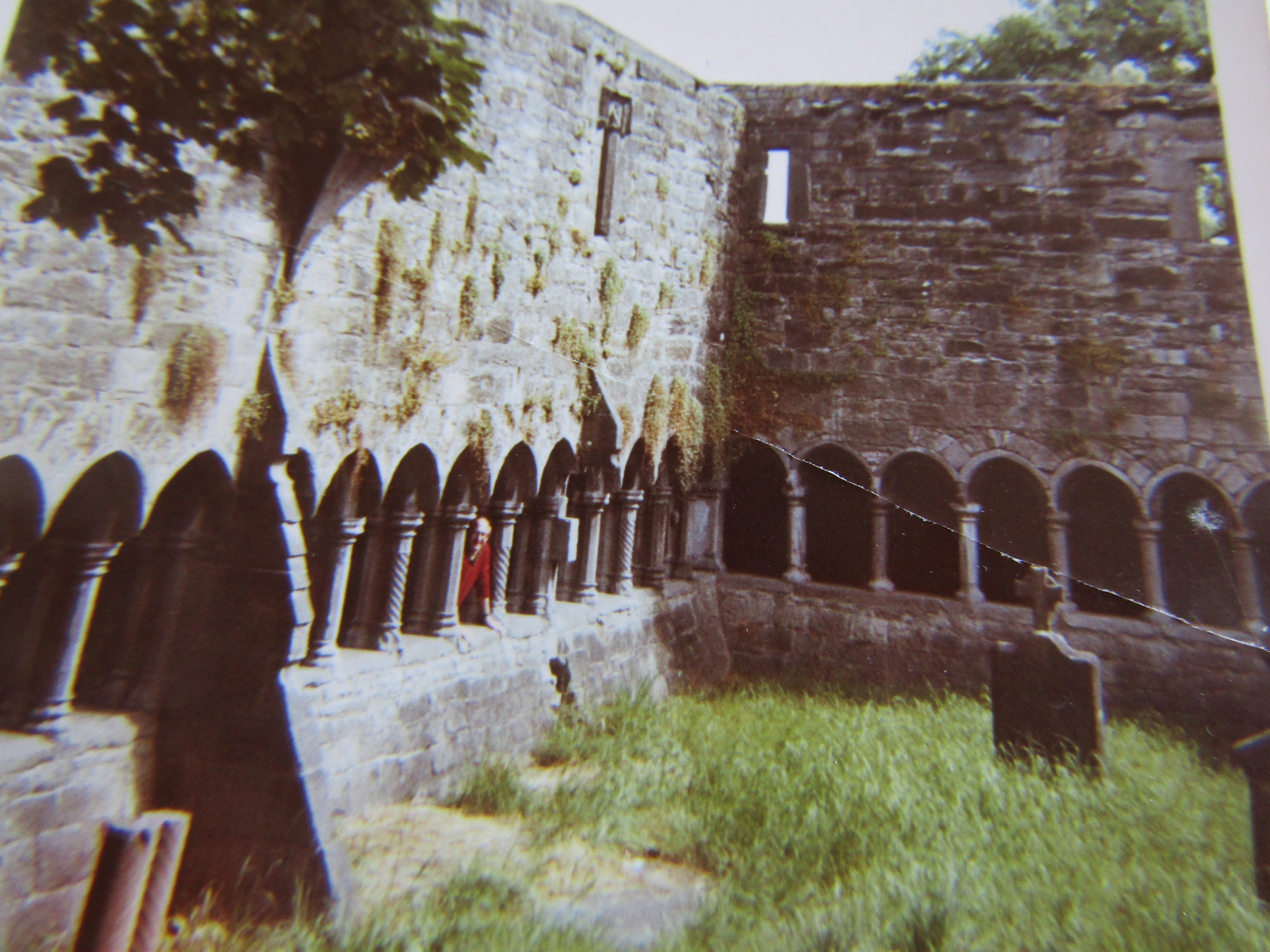

We sense the sacred in these peaceful walls
Yet men have died in places that appal
Women too and children then unborn
Fell into cold dark earth in lands forlorn
As our weapons grow, our hearts are hard
The people live in Gaza behind bars
The water all polluted as taps drip
Is this war or is it vengeance fit?
In Britain, it’s the poor who lose the war
As it was when Jesus Mary bore
Yet here are clerics blessing marching bands
A military show for all the land
The genocide in Europe of the Jews
The self destructive actions of the proud
The fields of France filled sick with blood and bone
Who are we to cast judgemental stones?
The War’s not over when the fighting stops
The soldiers and the tortured suffer shock
The widows and the parents all bereaved.
The unborn children hover in unease
We let the prisoners out from camps of death
But who would take them in or take their path?
The injuries will travel down the years
As still we fight and still we live in fear
It’s Europe’s grasp and greed which was the cause
Of death in Gaza, Syria, in long wars
Yet we judge we are more civilised
When we self defend with bitter lies
Share this:

I will hurt your feelings every day
I’m flattered that you want to marry me
Yet you are very thin and I am large
When we went to bed I’d squash you flat
You are just a Kayak Im a Barge
I always tell the truth however cruel
So I’ll hurt your feelings every day
For truth is beauty to a mind like mine
So leave me now or never go away.
You like to climb up mountains I believe
A woman is a mountain to a man
Hold my hand and give me kisses three.
I think we met before the world began.
Let’s love each other all the ways we know.
I will not marry now,but never go
Share this:
A blogger post 2011..
I used to have a blog on Google blogger probably finishing about 2012. And this is not visible now because I don’t write something anymore but obviously I am a source of danger to the innocent.
But now they have decided I am not. Since nobody is going to see it I don’t know why they bother.

We have re-evaluated the post titled ‘Fifty more green sexpots please’ is
against community guidelines https://blogger.com/go/contentpolicy. Upon
review, the post has been reinstated.
I can breathe easy now I don’t think that they’re aware of irony or sarcasm or huour or world play.
I assumed that these are people in the USA but would it really harm someone to see the words
50 green sexpots
If this is removed I will know that WordPress has the same kind of regulations and I don’t want to offend anybody or make them lose their faith or corrupt them.
Share this:

Pleas either do or don’t read this this gets a warning on Blogger (after 12 yes)
I have discovered how to make a blog which few read
Please don’t read this
I have discovered it but why should I tell you.
Email me with your complete questions and thoughts at
onceoponarhyme@poetsareus.org
or at
shethoughtshewasclever@littledeadriding hood.net
or even at
womenandmen@freehermaphrodites.com22:33
Share this:

Poetics (Aristotle) – Wikipedia
https://en.m.wikipedia.org/wiki/Poetics_(Aristotle)
ReferencesEdit
- ^ Aristotelis Opera by August Immanuel Bekker (1837).
- ^ Dukore (1974, 31).
- ^ Janko (1987, ix).
- ^ Aristotle Poetics 1447a13 (1987, 1).
- ^ Battin, M. Pabst (1974). “Aristotle’s Definition of Tragedy in the Poetics”. The Journal of Aesthetics and Art Criticism. 33 (2): 155–170. doi:10.2307/429084. ISSN 0021-8529. JSTOR 429084.
- ^ Carlson (1993, 16).
- ^ John Moles, ‘Notes on Aristotle, Poetics 13 and 14,’ The Classical Quarterly 1979 Vol. 29, No. 1 1979, pp. 77–94
- ^ Sheila Murnaghan, “Sucking the Juice without Biting the Rind: Aristotle and Tragic Mimēsis“, New Literary History Autumn 1995 Vol. 26, No. 4, pp. 755–773.
- ^ Garver, Eugene (1994). Aristotle’s Rhetoric: An Art of Character. p. 3. ISBN 0226284247.
- ^ Haskins, Ekaterina V. (2004). Logos and Power in Isocrates and Aristotle. pp. 31ff. ISBN 1570035261.
- ^ Habib, M.A.R. (2005). A History of Literary Criticism and Theory: From Plato to the Present. Wiley-Blackwell. p. 60. ISBN 0-631-23200-1.
- ^ Jump up to:a b c Kennedy, George Alexander; Norton, Glyn P. (1999). The Cambridge History of Literary Criticism. Vol. 3. Cambridge University Press. p. 54. ISBN 0521300088.
- ^ Jump up to:a b Janko (1987, xx).
- ^ Watson, Walter (2015-03-23). The Lost Second Book of Aristotle’s “Poetics”. University of Chicago Press. ISBN 978-0-226-27411-9.
- ^ Janko (1987, xxi).
- ^ The Basic Works of Aristotle. Ed. Richard McKeon Modern Library (2001) – Poetics. Trans. Ingrid Bywater, pp. 1453–87
- ^ Silvia Carli, Poetry is more philosophical than history: Aristotle on mimesis and form, The Review of Metaphysics, December 2010, Vol. 64, No. 2 pp. 303–336, esp. pp. 303–304, 312–313.
- ^ Scott (2018)
- ^ Halliwell, Stephen (1986). Aristotle’s Poetics. p. 270. ISBN 0226313948.
- ^ Gregory Michael Sifakis (2001) Aristotle on the function of tragic poetry p. 50
- ^ Aristotle, Poetics 1448a, English, original Greek
- ^ Northrop Frye (1957). Anatomy of Criticism.
- ^ (1449b25-30) Janko (1987, 7). In Butcher’s translation, this passage reads: “Tragedy, then, is an imitation of an action that is serious, complete, and of a certain magnitude; in language embellished with each kind of artistic ornament, the several kinds being found in separate parts of the play, in the form of action, not of narrative; through pity and fear effecting the proper catharsis of these emotions.”
- ^ Scott 2019
- ^ (1449a10-13) Janko (1987, 6). This text is available online in an older translation, in which the same passage reads: “At any rate it originated in improvisation—both tragedy itself and comedy. The one tragedy came from the prelude to the dithyramb and the other comedy from the prelude to the phallic songs which still survive as institutions in many cities.”
- ^ Hardison, 81.
- ^ Ezzaher, Lahcen E. (2013). “Arabic Rhetoric”. In Enos, Theresa (ed.). Encyclopedia of Rhetoric and Composition. pp. 15–16. ISBN 978-1135816063.
- ^ Ezzaher 2013, p. 15.
- ^ Minor, Vernon Hyde (2016). Baroque Visual Rhetoric. University of Toronto Press. p. 13. ISBN 978-1442648791.
- ^ Eco, Umberto (2004). On literature. Harcourt. p. 236. ISBN 9780151008124.
- ^ Destrée (2016); Scott (2018).
Sources
Share this:

Emile goes to the corner shop
Mary had ordered all of her groceries but she forgot to put tea on the list So she sent Emile to the corner shop with a note tied to his collar
Please give the bearer your best tea.
Emile went off and managed to get into the shop after some children who were getting sweets with their pocket money or debit cards
He went up to the counter and mewed, Mother has sent you a note.
One of the children laughed
Is your mother a girlfriend of Mr. Kumar?
No, she is not, Emile growled with a loud throbbing voice
Mr. Kumar led Emile behind the counter into his living room and spoke to his wife
She asked Emile to sit down as she went into the kitchen and poured him some tea from her China teapot
.Do you want it on a saucer, she enquired thoughtfully?
Yes, please, said Emile. This is very kind.
He leaped onto the rug and began sipping the Ceylon tea. This makes a change, he murmured.
I didn’t know you could just walk in and get free tea!
After a few minutes, the shop door crashed open and he heard Mary’s voice
Oh, Mr. Kumar, I am so stupid. I sent Emile out to buy some Twinings tea and he has not come home! What shall we do? She started crying and dabbing her eyes with Stan’s hanky.
Come through, he whispered politely. Do not weep, dear. All is well
Mary came in and saw Emile drinking his tea and winking at Mrs. Kumar.
Emile, you stupid cat. I was going crazy worrying.I’ll strangle you!
Is it my fault, he replied. I only gave them that note you sent.
But is it not obvious what I intended? she said plaintively
These days you never know, the cat muttered. I try to be obedient as far as I can.
Mrs. Kumar came out and gave Mary a cup of tea.
Sit down, dear. Worry is so bad for you. Why did you not phone us?
Since it was just a packet of tea I thought Emile could carry it. He is very intelligent normally.
Yes, I am, thought Emile as he looked at Maisie, the Kumar’s lovely cat who was asleep on a chair.
I wonder if I can wake her up, he asked himself.
Does she drink tea?
Would she like to start a family? It’s not too late for me to become a parent.
Maisie opened her eyes
What’s that cat doing here?
I only came for the tea, Emile told her. But you look very beautiful. Shall we meet tonight
I’m washing my fur, she told him with a smile
How about tomorrow?
Have you got a phone?
No, he said, I’ll just caterwaul at dusk and if you are free I’ll be under the red maple tree waiting for you
Good grief thought Mary.
This cat is very cunning. Just one chance and he is making the most of it.
Mr. Kumar gave her some tea and she wandered home in a daze after asking them for a drink on Sunday.
My social life is looking up but there’s no-one who will hug me. If only Emile were bigger!
His legs are too short!I should get a donkey instead
Share this:
No hostility allowed here
For the honeymoon we enjoyed the marriage bed too much to get off
The menu was homemade bones with gem for afternoon tea. And for dinner it was lamb drops on a bed of tomatoes and scullions.
When we came back to breakfast the next morning they were staring drilled bacon with eggs of the tide. As you can imagine we were very hungry but we could not co- ruminate well.
Co-rumination is quintessential in any marital situation. Please phone me for more information or email me at the following addresses one only per lesson
cellocat@strungup.org
primenumber8@cuboid.rum
marrymother@electricbill.com
If you are still a virgin after a week in this hotel please inform the manager immediately and he will try to recharge. Guests must be married but not necessarily to each other.
Funerals on request

 How my heart speaks