
https://www.nytimes.com/2022/09/26/style/andres-valencia-art-paintings.html
Month: Oct 2022

In case you have got covid-19 you might like to read this helpful article
WILD GEESE ARRIVE


Though we use the language we were born into, maybe creating a completely new vision or description of our worlds; we may even invent new words but we are born into a society and a language which structures our perceptions and relationships from infancy onward
English is a very rich language as it has been formed out of a large number of languages of different peoples who have lived here [invaded] from the Romansonwards. Celtic tribes ,Ancient Britons, Anglo Saxons,Vikings,Normans,Flemish immigrants etc etc.We also have many words emanating from classical Greek.
I think that is because until a hundred years ago Education,for those privileged to have access to it,was almost entirely studying Latin and Greek,[ both language and philosophy from the works of Plato,Aristotle etc]
It you wanted to do maths at Cambridge you did Classics first.So all those higher up,educated, wealthy people were familiar with these languages and the classical authors.They would also be very familiar with the writings in The Bible,but probably not Hebrew,Aramaic and related tongues.The Bible was probably read in Latin until the Reformation.So the English Bible is a translation of a translation at the very least
WILD GEESE FLYING OVER OUR GARDEN
Leaves have gone so suddenly
Small birds float on the wind
Like boats astride a choppy sea.
Their swaying soothes my mind.
Wild geese fly past at dusk again,
They head towards the North.
The holly berries glow in sun,
Holy is joy’s birth.
I gaze intently at the sky,
The clouds hang dark and low.
If I were a mere wild goose
I’d know which way to go
But I am left with just these words
To tell my destination.
Words can carry down to me
Wisdom from past generations
We use old words in unique ways.
We structure them to form
A new design not seen before
A new sentence is born
I send my words with love to you
I hope you safely catch them.
Give me answers from your heart
And I’ll do my best to match them.
Share this:

Talking makes it go up

We are going to take your blood pressure 10 times
Thank you for warning me I’ve got my gun here and it’s loaded.
In any case why 10 times? You seem over fond of the decimal system where’s I will prefer you to take it 12 times as 12 as a much more interesting number than 10 since You can divide it by 234 and 6.
Please don’t talk it will make your blood pressure rise.
Well the world was coming through and we couldn’t talk l
It depends on how 0l high it is
I keep mine very high on purpose so that you won’t be able to reach it I also have a booby trap so beware.
And it’s going up
Do you stop talking?
Only when I’m listening
Would you like me to tell you a story?
Did you write it yourself?
I haven’t ever tried that.
Go write and leave my blood pressure alone
Share this:

Living with loneliness

The Yale Review | Kieran Setiya: “Correspondence”
Billy Bragg – The World Turned Upside Down
Share this:
Blood pressure
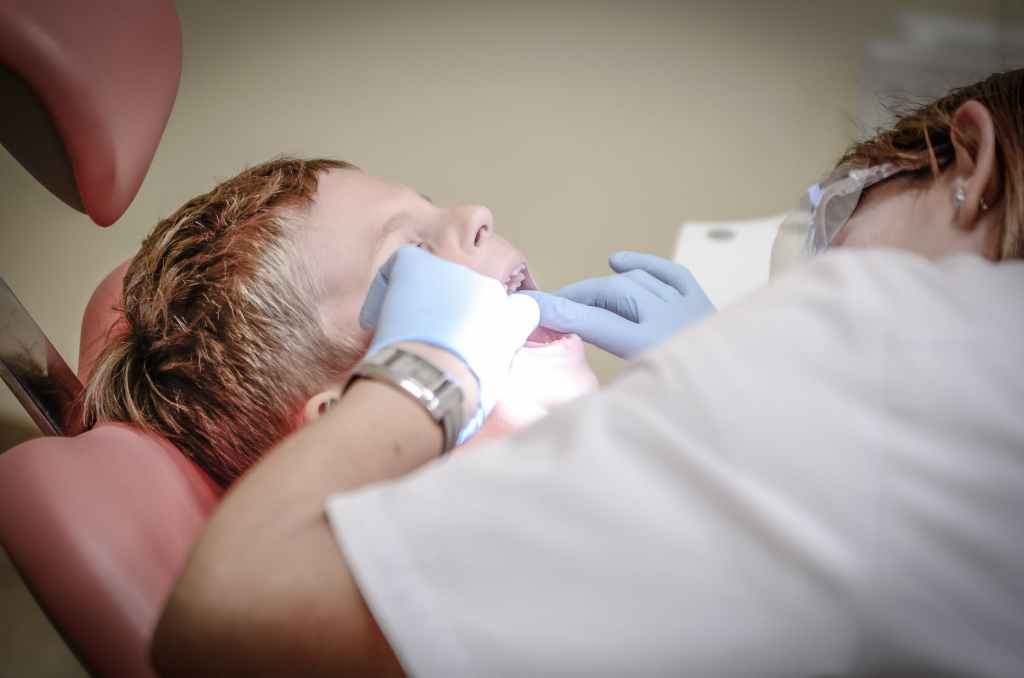
The doctor wants to take your blood pressure
Where to?
The doctor wants to take your blood pressure.
I always knew he was a thief
The doctor wants your blood pressure
Tell him I don’t have any.
I have to take your blood pressure 10 times
Can you count up to 10?
The doctor asks me are you very hot?
Show me his photograph.
Share this:

Sick Sunday Scares


The Art of “Negative Capability”: Keats on Embracing Uncertainty and Celebrating the Mysterious – The Marginalian
https://www.themarginalian.org/2012/11/01/john-keats-on-negative-capability/

Re
On the art of remaining in doubt “without any irritable reaching after fact & reason.”
BY MARIA POPOVA

AaaDespite his short life, the great Romantic poet John Keats (October 31, 1795–February 23, 1821) endures as one of the most influential creative geniuses humanity has produced. Writing to his brothers, George and Thomas, in a December 1817 letter found in Selected Letters (public library), Keats coins the phrase that has come to be the single most emblematic phrase of his entire surviving correspondence, even though he only makes mention of it once: “Negative Capability” — the willingness to embrace uncertainty, live with mystery, and make peace with ambiguity. Triggered by Keats’s disagreement with the English poet and philosopher Coleridge, whose quest for definitive answers over beauty laid the foundations for modern-day reductionism, the concept is a beautiful articulation of a familiar sentiment — that life is about living
Share this:

Mary Oliver Reads Her Beloved Poem “Wild Geese” – The Marginalian


Mary Oliver on What Attention Really Means and Her Moving Elegy for Her Soul Mate – The Marginalian


Mental health in the pandemic


Anticipatory Grief Guide: What Is It? – Forbes Health
https://www.forbes.com/health/mind/what-is-anticipatory-grief/

B
Conventional Grief: What’s the Difference?
Think of conventional grief as “grieving backward,” says Werner-Lin—mourning a loss that has already happened. Anticipatory grief is forward-looking. We’re grieving “what we still believe we might lose,” she says.
This leaves space for hope, however unrealistic, that the loss may not occur. Anticipatory grievers might find themselves “hanging on to possibilities” in ways that may not be helpful, Werner-Lin says. Conversely, in
Conventional Grief: What’s the Difference?
Think of conventional grief as “grieving backward,” says Werner-Lin—mourning a loss that has already happened. Anticipatory grief is forward-looking. We’re grieving “what we still believe we might lose,” she says.
This leaves space for hope, however unrealistic, that the loss may not occur. Anticipatory grievers might find themselves “hanging on to possibilities” in ways that may not be helpful, Werner-Lin says. Conversely, in
Share this:

What To Do When You Can’t Sleep | Sleep Foundation
https://www.sleepfoundation.org/insomnia/treatment/what-do-when-you-cant-sleep
- Place the tip of your tongue near the ridge behind your front two teeth and hold it in this location throughout the breathing exercise.
- With your mouth closed, slowly inhale through your nose while counting to four.
- Hold your breath while counting to seven.
- Open your mouth and exhale while counting to eight. Because of the location of your tongue, exhalation should cause a whooshing sound.
- Repeat this 4-7-8 cycle three more times.
Who It’s Great For:
Controlled breathing is excellent for people just getting started with relaxation techniques or who have difficulty using other objects of focus like imagery or mantras.
Meditation and Mindfulness
Why It Works:
Mindfulness is centered around slow, steady breathing and a non-judgmental focus on the present moment. By reducing anxiety and rumination, it has been found to have sweeping health benefits7, including an ability to help reduce insomnia8.
How to Do It:
There are many variations of mindfulness meditation for different situations. One easy to use style is the body scan meditation9.
- Focus on slowly inhaling and exhaling at a comfortable pace.
- Notice the position of your body on the bed.
- Notice any sensations, good or bad, in your legs and feet. Let your legs be soft.
- Continue the “body scan,” observing, from your legs up to your head, each region of your body and its sensations. The goal is to stay present and observe your body without judging or reacting and then letting each part of your body relax.
- After scanning each part of your body, reflect on your body as a whole and allow it to relax.
This version is adapted from UC-Berkeley’s Greater Good in Action (GGIA) program that offers audio recordings for this and other mindfulness meditations10.
Who It’s Great For:
Anyone can meditate, including with mindfulness meditation, but it can take more practice to get used to. As a result, it usually works best for people who can devote at least five minutes per day to increase their comfort with it.
Progressive Muscle Relaxation
Why It Works:
Progressive muscle relaxation11 (PMR) creates a calming effect by gradually tightening and releasing muscles throughout the body in conjunction with controlled breathing.
How to Do It:
- With your eyes closed, slowly breathe in and out.
- Starting with your face, tense your muscles (lips, eyes, jaw) for 10 seconds, then release your muscles and breathe deeply in and out for several seconds.
- Tense your shoulders for 10 seconds and then relax and breathe.
- Continue tensing and relaxing the following body parts, skipping any area where tensing the muscles causes pain:
- Shoulders
- Upper arms
- Lower arms and hands
- Back
- Stomach
- Buttocks
- Hamstrings
- Calves
- Feet
Who it’s Great For:
Studies have found that PMR can help people with insomnia12, and when done carefully, may be beneficial13 for people who are bothered by arthritis14 or other forms of physical pain. PMR is not recommended for people with uncontrolled cardiovascular problems.
Imagery
Why It Works:
Visualizing a peaceful image from your past and all of its details engages your attention in order to promote relaxation.
How to Do It:
- With your eyes closed and in a comfortable position, think about a place or experience in your past that feels relaxing, such as a quiet natural setting.
- While slowly breathing in and out, reflect on the details of this setting and how it looks.
- Continue focusing on this image by adding details relating to your other senses (smell, sound, taste, touch) and experiencing the calmness of this mental imagery.
Who it’s Great For:
Visual thinkers who easily recall past scenes replete with details are ideally suited to using imagery as part of their bedtime relaxation.
Are There Downsides to Relaxation Techniques?
Negative consequences are rare for relaxation techniques, but a small number of people find that they can provoke anxiety. Anyone with concerns about trying these methods should talk with their doctor for specific advice before getting started.
What to Do About Mind Wandering
Even experts in meditation find that their minds can wander during these relaxation techniques, so don’t worry if it happens to you. Instead, stay calm, keep breathing slowly, and try to bring your mind back to the main focus of attention.
What If I Still Can’t Fall Asleep?
If you get into bed and cannot fall asleep after 20 minutes, get up, go to another part of your house, and do something soothing, such as reading or listening to quiet music.
Lying awake in bed for too long can create an unhealthy mental connection between your sleeping environment and wakefulness. Instead, you want your bed to conjure thoughts and feelings conducive to sleep.
Make Healthy Sleep a Priority
Get sleep tips, expert information, deals and more delivered to your inbox.SIGN ME UP!
Your privacy is important to us.
Pre-Bedtime Tips to Help Fall Asleep Quickly
Before you actually get into bed, a few simple tips can help make sure your mind and body are prepared to fall asleep easily:
- Wind down for at least half an hour before bedtime. Reading, light stretching, and other relaxing activities are ideal during this time.
- Disconnect from close-range electronic devices like laptops, phones, and tablets because they can stimulate the brain and make it harder to fall asleep.
- Dim the lights to help your eyes relax, and make sure you’re in comfortable clothing.
- Make sure your bedroom is set to a pleasant temperature. The cooler the better.
- Consider a calming scent, like lavender essential oils, that can generate a calming effect.
- Avoid big meals, spicy foods, caffeine, and alcohol in the lead-up to bedtime.
Big-Picture Tips to Fall Asleep Easily
Beyond the immediate run-up to bedtime, incorporating fundamental sleep tips can aid in falling asleep and prevent serious sleeping problems.
- Follow a consistent sleep schedule with the same wake-up time every day, including on weekends. This helps fine-tune and entrain your internal clock for more regular sleep.
- Make time for physical activity. Regular exercise benefits the body in many ways, and facilitating better sleep is one of them.
- If you have a hard time sleeping, start keeping a sleep diary to identify trends that could be throwing off your nightly rest.
- See a doctor. If your sleeping problems are severe, long-term, or worsening, it’s important to see a doctor who can work with you to try to identify a cause and recommend optimal treatment.
About Our Editorial Team

Eric Suni
Staff Writer
Eric Suni has over a decade of experience as a science writer and was previously an information specialist for the National Cancer Institute.

Dr. Abhinav Singh
Sleep Physician
MD
Dr. Singh is the Medical Director of the Indiana Sleep Center. His research and clinical practice focuses on the entire myriad of sleep disorders.


- Share:
References
+17 Sources
- 1.National Center for Complementary and Integrative Health. (2016, May). Relaxation Techniques for Health. Retrieved June 11, 2020, fromhttps://www.nccih.nih.gov/health/relaxation-techniques-for-health
- 2.A.D.A.M. Medical Encyclopedia [Internet]. Atlanta (GA): A.D.A.M., Inc.; c1997-2019. Relaxation techniques for stress. Updated March 31, 2020.. Retrieved June 11, 2020. Available from:https://medlineplus.gov/ency/patientinstructions/000874.htm
- 3.Lichstein, K., Taylor, D., McCrae, C., & Thomas, S. (2010). Relaxation for Insomnia. In M. Aloia, B. Kuhn, & M. L. Perlis (Eds.), Behavioral Treatments for Sleep Disorders: A Comprehensive Primer of Behavioral Sleep Medicine Interventions (Practical Resources for the Mental Health Professional) (1st ed., pp. 45–54). Retrieved fromhttps://www.med.upenn.edu/cbti/assets/user-content/documents/Lichstein_RelaxationforInsomnia-BTSD.pdf
- 4.Jerath, R., Edry, J. W., Barnes, V. A., & Jerath, V. (2006). Physiology of long pranayamic breathing: Neural respiratory elements may provide a mechanism that explains how slow deep breathing shifts the autonomic nervous system. Medical Hypotheses, 67(3), 566–571.https://www.sciencedirect.com/science/article/abs/pii/S0306987706001666
- 5.Jerath, R., Beveridge, C., & Barnes, V. A. (2019). Self-Regulation of Breathing as an Adjunctive Treatment of Insomnia. Frontiers in psychiatry, 9, 780.https://www.ncbi.nlm.nih.gov/pmc/articles/PMC6361823/
- 6.WEIL. (2016, May). Three Breathing Exercises and Techniques. Retrieved June 11, 2020, fromhttps://www.drweil.com/health-wellness/body-mind-spirit/stress-anxiety/breathing-three-exercises/
- 7.National Institutes of Health. (2012, January). Mindfulness Matters. Retrieved June 11, 2020, fromhttps://newsinhealth.nih.gov/2012/01/mindfulness-matters
- 8.Ong, J. and Sholtes, D. (2010), A mindfulness‐based approach to the treatment of insomnia. J. Clin. Psychol., 66: 1175-1184.https://onlinelibrary.wiley.com/doi/abs/10.1002/jclp.20736
- 9.Greater Good in Action. Body Scan Meditation. Retrieved June 11, 2020 fromhttps://ggia.berkeley.edu/practice/body_scan_meditation
- 10.Greater Good in Action. Discover New Practices. Retrieved June 11, 2020 fromhttps://ggia.berkeley.edu/#filters=mindfulness.
- 11.Healthwise Staff. Stress Management: Doing Progressive Muscle Relaxation. University of Michigan Medicine Health Library. Updated December 15, 2019. Retrieved June 11, 2020, fromhttps://www.uofmhealth.org/health-library/uz2225
- 12.Morin, C. M., Hauri, P. J., Espie, C. A., Spielman, A. J., Buysse, D. J., & Bootzin, R. R. (1999). Nonpharmacologic treatment of chronic insomnia. An American Academy of Sleep Medicine review. Sleep, 22(8), 1134–1156.https://pubmed.ncbi.nlm.nih.gov/10617176/
- 13.Vickers, A., Zollman, C., & Payne, D. K. (2001). Hypnosis and relaxation therapies. The Western journal of medicine, 175(4), 269–272.https://www.ncbi.nlm.nih.gov/pmc/articles/PMC1071579/
- 14.Arthritis Foundation. (n.d.). Progressive Muscle Relaxation. Retrieved June 11, 2020, fromhttps://www.arthritis.org/health-wellness/treatment/complementary-therapies/natural-therapies/progressive-muscle-relaxation
- 15.National Center for Complementary and Integrative Health. (2016, April). Meditation: In Depth. Retrieved June 11, 2020, fromhttps://www.nccih.nih.gov/health/meditation-in-depth
- 16.Klein, J. (2018, October 23). Lavender’s Soothing Scent Could Be More Than Just Folk Medicine. The New York Times. Retrieved June 11, 2020, fromhttps://www.nytimes.com/2018/10/23/science/lavender-scent-anxiety.html
- 17.Harada, H., Kashiwadani, H., Kanmura, Y., & Kuwaki, T. (2018, September 25). Linalool Odor-Induced Anxiolytic Effects in Mice. Retrieved July 29, 2020, fromhttps://www.frontiersin.org/articles/10.3389/fnbeh.2018.00241/full
Learn more about Insomnia

InsomniaUpdated ByEric Suni|October 7, 2022
- Types of InsomniaByEric Suni|June 24, 2022
- What Causes Insomnia?ByEric Suni|August 29, 2022
- Stress and InsomniaByAlexa Fry|June 24, 2022
- Postpartum InsomniaByDanielle Pacheco|June 10, 2022
- PMS and InsomniaByEric Suni|October 7, 2022
- Symptoms of InsomniaByDanielle Pacheco|April 19, 2022
- Diagnosing InsomniaByDanielle Pacheco|April 19, 2022
- Treatments for InsomniaByAustin Meadows|August 29, 2022
- What to do When You Can’t SleepByEric Suni|August 29, 2022
Load More Articles
Other Articles of Interest
- How Sleep Works
- Shift Work Disorder
- Children, Teens & Sleep
- Circadian Rhythm Sleep Disorders
- Sleep Solutions

Sleep Information
Sleep Foundation
- About Us
- Who We Are
- Contact Us
- In the News
- Editorial Policy
- Product Research Methodology
- Advertising Disclosure
- Privacy Policy
- Accessibility Statement
Get the latest sleep news, information and research.
Sign Up
Your email address will only be used to receive SleepFoundation.org newsletters. Further information can be found in our Privacy Policy
The content on this website is for informational purposes only. SleepFoundation.org does not provide medical advice, diagnosis, or treatment options.
© 2022 OneCare Media, LLC. All rights reserved.
Want to Sleep
Share this:

The River Styx
Sad already
I’m missing you already we can’t talk
You are feeling breathless, I can’t walk
Overwhelmed by grief I called your name
Then I wondered if I were to blame.
Perhaps you’re lying to me for some fun.
I’m getting paranoia, you’re no con
Still mazed by unbelief I cannot think.
I read between the lines I found some hints.
You are walking onward still with hope.
Dont cross that final river where death gapes.
Share this:
Managing Your Feelings 101 – The New York Times
Living in little spaces in Japan
Love will need no trick
In my despair I felt that I was stuck
Paralysed by grief and guilt I failed
By the end I had tried every trick
From prayer unthought to deeps of logic black
My life, my engine ,juddered off the rails
I hated God and of “his” Church was sick
Starving and alone I was in shock
The death of one I loved had made me frail
By the end I had tried every trick
I felt Love’s arms around me, death to block
I knew this goodness, why else would I wail?
I thought I hated God but Love had struck
Warm and golden light that did me hold
Where are you now when Evil has grown bold?
Kind despair that made me long time sit
By the end I learned Love needs no trick
Share this:
How to Prevent Memory Loss – The New York Times
https://www.nytimes.com/2022/07/06/well/mind/memory-loss-prevention.html
The second way our relationship with technology is detrimental for memory is because it often takes our focus away from the task at hand. “In our day, the greatest impediment of memory is distraction,” Dr. Restak wrote. As many of these tools have been designed with the aim of addicting the person using them, and, as a result, we are often distracted by them. People today can check their email while streaming Netflix, talking with a friend or walking down the street. All of this impedes our ability to focus on the present moment, which is critical for encoding memories.

Share this:

How to Prevent Memory Loss – The New York Times
Exploring the Health Effects of Ageism – The New York Times
Researchers: Improving Eyesight May Help Prevent Dementia – The New York Times
https://www.nytimes.com/2022/07/03/health/dementia-treatment-behavior-eye-care.html

B
Why would hearing and vision loss contribute to cognitive decline? “A neural system maintains its function through stimulation from sensory organs,” explained Dr. Rojas, a co-author of an accompanying editorial in JAMA Neurology. Without that stimulation, “there will be a dying out of neurons, a rearrangement of the brain,” he said.
ADVERTISEMEN
Share this:

Funny Medical Acronyms—Decoded | The Healthy
Fortune
The pathways to the heart are learned by love
And those who find this knowledge never lose.
Though virtue and her graces help us from above
All we see are hills and rocky views.
With willingness to cross the seas of mud,
To drag ourselves through tangled briar-filled woods.
Our soul shows us the truth and what is good,
For trees that looked quite dead are now in bud.
With wild flowers kissing feet and blessing toes
Encouragement is finally received
And as we smell the fragrance of the rose,
We know our gladdened hearts were not deceived.
For Virgil, fortune favours those with steadfast feet.
The journey may be long, the end is sweet.
Note: The saying “Fortune favours the brave” is attributed to several people..Virgil, Pascal, Montaigne are ones I have found
Share this:
Bought for a shilling
We bought Dad a biro for 12 pence
He told us children we were very dense
When something is new it may have many flaws
In any case a pen is not a toy
I was quite surprised by his desire
I thought toys were for children, I’m a liar
I had seen seeing him playing with my toys
Doing jigsaw puzzles, I’m annoyed.
Can I love a man who loves my dolls.
In the winds of age I hear him call
I am older now than he was then
A biro could be useful to man
He played like a child for half an hour
I should not judge others when I’m sour.
Daddy died of cancer I was nine
So the long sad days of mourning were no crime
Share this:
I Witnessed a Murder. Is It Wrong to Write About It?
https://www.nytimes.com/2022/05/24/magazine/true-crime-ethics.html

It’s worth recalling that “tragedy,” a word we use to describe events like this one, originally designated a literary genre, a form of storytelling. Whatever is going on in us when we experience a tragic narrative — Aristotle wasn’t the last to speculate about it — we surely learn something about our own emotional repertory; it may serve as a rehearsal of our responses to actual horrors. Classic novels have taken inspiration
Share this:

In between the silence and the song
The beach between the low tide and the high
Treasures gather on the pale washed sands
Driftwood shells beneath remorseless clouds
Adults play for safety staying dry
Lightly loved the children’s little hands.
I don’t like the raw sand of the dunes
The tide fling salty water to the sky
Smashing shells make modernistic tunes
Creation and destruction undismayed.
Co-creators in the healing seas
All the laws of gravity obey
Inspiring music as the waters breath
.In between the silence and the song
The pity of the heavens in mercy hangs
 How my heart speaks