
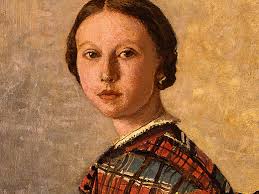
 Corot
Corot

The face to face encounter and its ethical meaning/implications is at the heart of the philosopher Levinas‘ thought possibly based on his experience of the Holocaust.He had previously studied with Heidegger which is ironic as Heidegger joined the Nazi Party in 1933.This shows intelligence is not enough in making decisions especially in politics
One day I was thinking over some personal events relating to this.
Before my husband died,I went shopping and then went into a cafe and found myself just behind an ex-colleague whom I regard [note the word] as friend.I could see her husbandsitting at the back of the cafe.She did mutter,
Hello,but instead of meeting me eye to eye and saying
“My husband wants to be alone”,she went through an elaborate pantomime of mime indicating rejection or keep a distance…which was unpleasant.I would been much happier with a straightforward look and a few words.
Later I had a similar event.I met a woman who used to be my physiotherapist again in a queue.She looked at me full on and greeted me with pleasure.As she picked up her tray she asked me to join her and her husband plus a grandchild.We had a pleasant time.But if she had said,we are with our family and want to be alone,or whatever,that would have been fine too.because she looked at me
I am not saying the first woman ought to have done that.But what interests me is the lack of a willingness to “meet” me with her gaze.I am entirely happy if people wish to be alone whilst the have coffee but I prefer them to say so.I was always in a hurry then and finished before they did.But they didn’t know then about our problems.
Some individuals with autism are almost unable to make eye contact…. and this is because others are not real to them; they are afraid.
So this made me think about Levinas and about Martin Buber‘s I and Thou
There is also an expression,”he looked right through me”which is also a negative way of facing someone.And also,Cutting someone dead.
Essentially not looking at someone is a form of killing them as you imply they are not part of society.Like not responding to someone verbally or in writing.You are saying,You do not exist.At one time in the distant past people did actually die when they were excluded from the community
Related articles
Eye Contact (hannahandharriet.wordpress.com)
You only have 7 Seconds to Make a First Impression!(top2toestyliestadotme.wordpress.com)
- The Art of Connecting to the Other (huffingtonpost.com)
- Eric Frydenlund: To know someone requires we meet them in the present(lacrossetribune.com)
- At Wit’s End: Delmore Schwartz’s Poetic Reflections on the Other(schlemielintheory.com)

 How my heart speaks
That Corot portrait is extraordinarily arresting!
The first woman you met seems to have been afraid of being seen with someone she knew, at that time and place, for reasons we cannot guess. She was flustered and gave an instinctive response, like those people who hold up their hand to a camera, as though it will make them disappear. The wrong response, perhaps, but, in my opinion, a plausible spur-of-the-moment response.
I did think that later on,as if she were too startled to speak.But it’s better if people can.Still,we should give them the benefit of the doubt.We never know what others are going through even when we are close to them.