

Month: Dec 2022

In between the high tide and the low
I wish we were in Kent in cliff top sun
Butterflies float gently overhead.
With loving thoughts my mind is overrun
I wish you were at home and in my bed.
I wish we were on Portland Bill today.
The violent sea the rocks the seabirds near.
Yet we loved the peace of Studland Bay.
Silence with small sounds that few can hear.
The music of the sea the tides don’t lie
Sucking shingle runs back to the sea.
In between the low tide and and the high
Children play forever, always free.
In Old Hunstanton we walked on the beach.
Now you are gone far out of my love’s reach
Share this:

The Virtue of Aristotle’s Ethics | Reviews | Notre Dame Philosophical Reviews

https://ndpr.nd.edu/reviews/the-virtue-of-aristotle-s-ethics/
The book is divided into two parts. In the first part, comprising chapters 1-5, Gottlieb presents her own account of how Aristotle’s virtues of character should be understood. She singles out the doctrine of the mean as the key to that understanding. A virtue of character is an action-guiding disposition to hit the mean between two extreme emotions within a certain field. Courage, for instance, is the disposition to hit the mean between cowardice and rashness in the field of danger. The mean is determined not by the extremes alone, but by these in relation to the demands of the particular situation, including facts about the agent herself. She also defends Aristotle against misgivings about the virtues of character …….
Share this:

Hill walkers in UK urged not to rely on smartphones


The last time I saw your face

Is obedience a good idea?
I wonder why why we were made to spend hours solving quadratic equations using the formula so it was not in any way using thought let alone creative thought.
There was no discussion about what quadratic equations are useful for and for people leaving school at 16 in those days they never would discover any possible use of these equations.
I don’t think the learning that we returns will be transferable to any other subject.
But we learnt to obey the teacher and do things which seemed meaningless. And not just once but for 45 minutes we were ordered to keep on doing more and more of these equations.
In that way school is like a prison where you do tasks the other people have decided are necessary. And if you can’t see any meaning in them you are not allowed to say so.
I have often wondered why obedience is considered to be such a wonderful thing.
Share this:

Margaret Atwood: Your Feelings Are No Excuse – The Atlantic
https://www.theatlantic.com/books/archive/2022/04/margaret-atwood-hitchens-prize-speech/629443/
The moderate center is a preferable place to live. There’s more respect for the individual, or that is the idea. There’s at least some desire for human rights for everyone, or that, too, is the idea. There’s less fear, and that is the idea as well. But the moderate center is also the hardest position to defend. It lacks a Big Slogan. It lacks hordes of robotic followers. It’s untidy. It resists the homogeneous. And it’s under constant attack from both extremes, those on the so-called right and the so-called left.
It is this dream of a moderate democratic center that Ukraine has been defending, and that defense has had a broad effect. Suddenly, the recent detractors of democracy are concluding—or some of them are—that maybe democracy is a system worth fighting for, because the alternatives are so much worse

Share this:

The ingredients for a meaningful life


Some People Turn Suffering Into Wisdom
Turning suffering into wisdom

https://www.nytimes.com/2022/04/21/opinion/suffering-trauma-wisdom.html
Share this:

How to be more patient
https://www.nytimes.com/2018/11/05/smarter-living/how-to-be-a-more-patient-person.html
Patience, the ability to keep calm in the face of disappointment, distress or suffering, is worth cultivating. The virtue is associated with a variety of positive health outcomes, such as reducing depression and other negative emotions. Researchers have also concluded that patient people exhibit more prosocial behaviors like empathy, and were more likely to display generosity and compassion.
A 2012 study in the Journal of Positive Psychology identified three distinct expressions of patience: 1. Interpersonal, which is maintaining calm when dealing with someone who is upset, angry or being a pest. 2. Life hardships, or finding the silver lining after a serious setback. And 3. Daily hassles, which is suppressing annoyance at delays or anything irritating that would inspire a snarky tweet.
The good news is that same study found that patience as a personality trait is modifiable. Even if you’re not a particularly patient person today, there’s still hope you can be a more patient person tomorrow. So if you find yourself getting exasperated more than you’d like, here are ways to keep those testy impulses in check.
ADVERTISEMENT
Share this:

UK wildlife ‘devastated by litany of weather extremes’ in 2022



I dreamed I was in church
I dreamed I was in church the other night
I prayed along with others and the priest
I still believe that I will see the light
The-depths of love the breadth and then the height
I thought that prayer might act on earth like yeast
I dreamed I was in church the other night.
God enjoys the humble without might
In the stable Jesus slept with beasts
Do you believe that we shall see the light
The Jews of Europe burnt with Christian spite.
Jesus was a Jew I do believe
I dreamed I was in church the other night.
Hitler took communion, was this fate!1
Satan’s not the proudest at the feast
One day someone else will see the light
Dreams are strange with messages that bite
Dreams put conscious fantasies to flight
I dreamed about the synagogue that night
I saw the broken glass smelled gelignite.
Share this:
The answer
La résponse est le Malheur de la question” is translated as, “The answer is the misfortune of the question.”
W Bion
Share this:

Negative capability: how to embrace intellectual uncertainty – Ness Labs
https://nesslabs.com/negative-capability

D
The benefits of negative capability
Despite its name, negative capability is not harmful. It is only negative because it exists counter to false dichotomies, fixed mindsets, and complete confidence in your thoughts. It is about resisting quick explanations, sitting with our doubts, and questioning our assumptions. Not only can it lead to better creativity, but negative capability can also help us become more curious and more humble.
You can think of negative capability as the negative pole of an electric current. Passive and receptive, the negative pole receives current from the positive pole. In the same way, we can train ourselves to receive impulses from a world — inspiration which cannot be fully understood, but can be channeled into creativity
Share this:

Writing Can Help Us Heal from Trauma


“In my land,called holy, Yehuda Amichai
http://www.tabletmag.com/jewish-arts-and-culture/books/195955/amichai-israels-national-poet

Yet Amichai found ways of keeping those pressures at arm’s length. Take, for instance, the remarkable sequence of poems he wrote after the Six Day War, “Jerusalem, 1967.” These were exalted, intoxicating days, when the conquest of Jerusalem brought the Jews’ holy city under Jewish sovereignty for the first time in 2,000 years. The country was singing Naomi Shemer’s song “Jerusalem of Gold,” with its triumphant verse: “The wells are filled again with water,/ The square with joyous crowd,/ On the Temple Mount within the City, / The shofar rings out loud.” But here is how Amichai writes about the city where he lived most of his life:
Jerusalem stone is the only stone that can
feel pain. It has a network of nerves.
From time to time Jerusalem crowds into
mass protests like the tower of Babel.
But with huge clubs God-the-Police beats her
down: houses are razed, walls flattened,
and afterward the city disperses, muttering
prayers of complaint and sporadic screams from churches
and synagogues and loud-moaning mosques.
Each to his own place.
This section of “Jerusalem, 1967” demonstrates that Amichai evaded the claims of the national by viewing Israeli history in a perspective at once smaller and larger than the nation. On the one hand, he is less a poet of the state than a poet of the city, of Jerusalem. He writes about Jerusalem with the intimacy of a disillusioned lover, a friend who remains faithful despite repeated trials and impositions; he empathizes with the very stones. And Jerusalem, while it is a Jewish city, is also a Christian and Muslim city, irreducibly multicultural. “The city plays hide-and-seek among her names: Yerushalayim, Al-Quds, Salem, Jeru, Yeru,” Amichai writes.
What unites these cultures is the ardor of faith, the belief that in Jerusalem you are closer to God than elsewhere. “In my land, called holy, / they won’t let eternity be: / they’ve divided it into little religions, / zoned it for God-zones,” Amichai writes in “North of San Francisco.” This is the other half of Amichai’s double vision—his wary, wry intimacy with God, which is to say, his Judaism. Like the city of Jerusalem, the faith of the Jews is much older than the State of Israel and offers a release from contemporary political obsessions.
***
Share this:

Loss,the winter of the heart
I found it interesting to find a link between being able to be aware of other people as real people like ourselves and being secure in our inner being.That security or trust enables us to have an attitude called,”Submission to the will of God” in Christian teaching.I am sure it is common to many other religions especially Judaism.
Without trust in others life is much harder as we are always concerned with keeping ourselves safe.I am not sure how much we can change our attitude from Fear to Trust.
I recall a friend of mine dying when I was 15.We were taken to the Requiem Mass.I just recall the priest saying in the sermon something from the Bible
The Lord has given and the Lord has taken away
Blessed be the name of the Lord.
In other words,we can’t understand.Life and death are a mystery but we accept this is the will of God
At the time I’m not sure if I believed it.But i think acceptance of pain and grief helps us to cope with it even with the terrible suffering with losing a child.I was the last classmate to see her.It was late October.We left school and walked about 1/2 mile.I lived there but she had to then catch a bus fo ra 4 mile journey
I still see her smiling face.Eight days later she died.
When you suffer a lot it’s hard to trust God,the Universe and all else.And depending on the circumstances it’s easy to be bitter or vengeful.But that will not help.
What I am wondering is:
How much can we change our attitudes by will power.Pr is there another way of changing?
Changing the way we see something may give us a different attitude.Talking to a good person may help.Sometimes we can only endure patiently.Sometimes God comes to us in the wilderness of tragedy,grief and pain.Because he can get in when we are still and silent.
I suppose going to the desert or on a Retreat may give us the same opportunity.Sometimes we can’t verbalise our suffering but that is not a problem.I found after seeking many ways out that as many people have said:
The way out is through.
But we struggle like hell to avoid it!
Share this:
How one person affects history:Martin Luther
Martin Luther’s Anti-Semitic Legacy—500 Years Later
April 28, 2017 in Featured,
By Marilyn Cooper
Five hundred years ago, legend has it that a renegade Catholic monk named Martin Luther (1483-1546) angrily strode up the steps of the Castle Church in Wittenberg, Germany and defiantly nailed Ninety-Five Theses harshly critiquing the Roman Catholic Church to the chapel door. It was the proverbial shot heard round the world. Due to a game changing new piece of technology—the printing press—copies of the Ninety-Five Theses spread through Germany within two weeks and throughout Europe in the next two months. The document catalyzed the Protestant Reformation, a revolutionary movement that resulted in a permanent schism in the Christian Church and radically altered the entire course of history in Western Europe.
The 500th anniversary, which numerous conferences, museum exhibits and special events and publications are commemorating throughout 2017, has a much darker significance for Jews. While Martin Luther initially had a relatively positive relationship with German Jews, he eventually adopted vociferously anti-Jewish rhetoric and promoted violence against Jews. His views helped shape centuries of anti-Semitic attitudes in Western Europe, and the Nazis later used his writing to stir up anti-Jewish sentiment.
During the first decade or so of his career, Martin Luther personally identified with the plight of Jews in Europe and declared that both he and the Jews had suffered at the hands of the Catholic Church. Luther broke with the then-prevalent view that the Jews had killed Christ and in his 1523 essay “That Jesus Was Born a Jew” condemned the harsh treatment of the Jews. “If I had been a Jew and had seen such dolts and blockheads govern and teach the Christian faith, I would sooner have become a hog than a Christian,” he wrote. “They have dealt with the Jews as if they were dogs rather than human beings; they have done little else than deride them and seize their property.” Luther’s motivations were not entirely altruistic, he hoped to persuade German Jews to join his anti-Catholic crusade and convert to Christianity.
Failing at that and following an epic case of food poisoning in 1528 brought on by eating a kosher meal—Luther was convinced that the Jewish community had tried to poison him—in a dramatic about face, Luther denounced the Jewish religion and called for severe persecution of Jews. This culminated in his infamous 1543 pamphlet, “Concerning the Jews and Their Lies” in which he urged Christians to “set fire to their synagogues or schools” and ordered that Jewish “houses also be razed and destroyed” and additionally declared that, “their rabbis [should] be forbidden to teach on pain of loss of life and limb.” Even on his deathbed, Luther raged that the Christians had failed to slay the Jews.
Luther’s writings incited violence against Jews for the next half-millennium; this culminated in the 1930s and 1940s. In 1933, pro-Nazis in the Lutheran Church formed the German Christian’s Faith Movement. This virulently anti-Semitic movement adhered to the Nazi doctrine of a German super race and the inferiority of all other races, especially the Jews. This “Reich Church” banned the use of the Hebrew Bible because of its Jewish origins, barred Christians with “Jewish blood” and eventually replaced the cross with the swastika. On December 17, 1941, seven Lutheran regional confederations issued a statement supporting the laws that forced Jews to wear a yellow star writing that “Luther had strongly suggested [such] preventive measures against the Jews.” Deeply devoted to Martin Luther’s anti-Judaism, this church dominated German Protestantism and Lutheranism throughout World War II.
The ideas and writings of Martin Luther impacted Hitler’s regime well beyond the “Reich Church.” According to historian Robert Michael, almost every anti-Jewish book published in the Third Reich referred to, and quoted from, Martin Luther. Similarly, British historian Diarmaid MacCulloch argues that Luther’s 1543 pamphlet was the “blueprint” for Kristallnacht, noting that Lutheran Bishop Martin Sasse in his published compendium of Luther’s writings rejoiced in the coincidence that Kristallnacht took place on Luther’s birthday. The Nazi Party forcefully asserted that Adolf Hitler was continuing the work of Luther. Bernhard Rust, the Nazi Minister of Education, echoed this when he wrote, “I think the time is past when one may not say the names of Hitler and Luther in the same breath. They belong together—they are of the same old stamp.”

After the end of World War II and the revelations of the horrors of the death camps, a slow process of reconciliation began. The Roman Catholic Church renounced its theological anti-Semitism at the Second Vatican Council of 1965, but took another 50 years to withdraw its official support of missionary work aimed at converting Jews. In 1994, the 5-million-member Evangelical Lutheran Church in American recognized and renounced Luther’s “anti-Judaic diatribes” and rejected “the violent recommendations of his later writings against the Jews.” The European branches of the Lutheran church have gradually followed suit. After Josef Schuster, head of the Central Council of Jews in Germany, called upon the Protestant church to disavow Luther’s anti-Jewish writings, in November of 2016 the Lutheran Church in Germany issued a statement condemning Luther’s anti-Semitism and acknowledging, “the part played by the Reformation tradition in the painful history between Christians and Jews.” The state Lutheran churches of Norway and the Netherlands have since made similar declarations.
Today, two images displayed on the outside wall of Castle Church in Wittenberg, German aptly reflect the complex legacy of the protestant Reformation. The first is a Judensau or “Jew-Pig,” a sculpture from the late 14th century that disparagingly depicts a rabbi pulling up the tail of a female pig and looking into its backside while other Jews kneel down to suckle on the animal’s teats—Martin Luther praised the sculpture in one of his pamphlets. Directly below the Judensau is a Holocaust memorial plaque. The Castle Church installed it on the 50th anniversary of Kristallnacht to counteract the anti-Semitic sculpture. There have been demonstrations and repeated calls for the removal of the Judensau and 30 other similar “Jewish pig” sculptures on churches around Germany, but local Jewish leaders in Wittenberg want the Judensau to remain as a testimony to the anti-Semitism of Germany’s past. When viewed together, they contend, the two images ensure that today’s Germans will recognize and grapple with the totality of their troubling past.
Share this:

I dreamed about religion
I dreamed I was not Catholic last night
I was in a church,unlit by candlelight
The clergyman had got no vestments on
She gave an long and Lutheran sermon
We had no Consecration then at all
But later we had Tizer and played ball
Apparently we have Communion now and then
After an extremely lengthy and Lutheran sermon
We don’t kneel in a Confessional and admit
We kicked our little brother in the butt
So we have got no penance then to come
After an extremely lengthy, long and Lutheran sermon
We sang these great old hymns by Bunyan
I loved them each and every single one.
But where had all the ceremonial gone?
Instead it’s extremely lengthy, long and boring Lutheran sermon.
We mayn’t pray to Jude for hopeless cause
Nor ask Our Lady’s aid from hellish maws
We speak direct to God when we feel glum
On a stunning, Lutheran smartphone .
So God must have got alot pairs of ears;
Lots of eyes to weep about what he hears
He can’t have any helpers, even nuns;
What an extremely lengthy, long and trying carry on.
I woke up in the middle of the dream
And gave a loud and highly penetrating scream
My boyfriend said he knew sex was a sin
He rang St Francis on his mobile phone
Now I go to Mass on weekdays if I can
Although I’m so unattractive I’ve been banned
But any ritual is really better than
That extremely lengthy, long and tedious,boring Lutheran Protestant, learned,unexciting , super superfluous sermon.
Share this:
Enjoy your Christmas holiday with the daily telegraph UK. Short of board games?
Families urged to spot signs of dementia at Christmas
Memory slips such as forgetting to put the turkey in the oven could be an indicator of conditions such as Alzheimer’s disease, say experts
ByLaura Donnelly, HEALTH EDITOR26 December 2022 • 6:00am
Families are being urged to seek help from the NHS after spotting signs that could mean dementia during Christmas festivities.
Health experts said memory slips – such as forgetting to put the turkey in the oven, or forgetting names and presents – could be an indication of conditions such as Alzheimer’s disease.
The NHS is embarking on a drive
Share this:
Change your email address on WordPress
if you want to change your email address on your WordPress blog you must use an email address that you have not used for a different blog on WordPress because I thought I had change mine but find that it was not changed because I used to have a philosophy blog 9 years ago and I had forgotten that that was the email address I used 4 that blog.I left the blog open
Share this:
Creating tragic plays and untold wars
In my sleep I dream my unthought thoughts
Creating tragic plays and loathsome wars
I feel the feelings which i have not sought
Healing is not created with an ought
Neither does it come from Santa Claus
In my sleep I dream my unthought thoughts
When I waken up my dreams feel short
They’re more akin to poetry than prose
I feel strange feelings which I have not sought
I feel the pain in my unclothed heart
How little children suffer loss uncaused
In my sleep I dream my unthought thoughts.
I will feel the feelings I abhorr
This is love and we must feel far more
In my dreams I think my unthought thoughts
I will feel the feelings I’ve not sought
Share this:
When grit isn’t great: letting go rather than pushing through can help our wellbeing

Deny and become: the radical ethos of negative capability | Aeon Essays


A Poem by Richard Wilbur: ‘A Black Birch in Winter’ – The Atlantic
There are a few lucky people who survived very dangerous illnesses and scientists are studying their blood to see if they can find the reason
Patient 82 should be dead. At the age of 63 he was diagnosed with pancreatic cancer. In most cases, he would not have lasted a year. But seven years on, patient 82 is alive. Not merely alive — thriving.Patient 82 should be dead. At the age of 63 he was diagnosed with pancreatic cancer. In most cases, he would not have lasted a year. But seven years on, patient 82 is alive. Not merely alive — thriving.
Share this:
He bent down on his right knee
-
Oh,John Joe was a farmer’s son.
- He lived up in the hills
- When he went to tend his sheep
- He saw the cotton mills.
- The rivers ran with water pure
- And so provided power
- Yet over these dark ruined towns
- The heathered hills did tower.
-
Mary was a local girl
- Se walked out on the moors
- She wore a dress of silky cloth
- Printed with small flowers.
-
John Joe saw Mary
-
When he was dipping sheep
-
She peered over a dry stone wall
-
And saw the new lambs leap.
-
Her hair was long.Her hair was gold
-
Her eyes were sapphire blue.
-
In John Joe’s eyes she was so fair
-
What was a man to do?
-
He watched her walking all alone
-
Was she sad or sick?
-
He showed her how his dog behaved
-
And showed her shepherds’ tricks.
-
So one day,he held her hand
-
As they walked to the Pike.
-
They stood up there and gazed all round
-
So John thought he would strike.
-
He bent down on his right knee
-
And spoke to Mary then.
-
I’ve loved you Mary since we met
-
I hoped we’d meet again
-
Mary smiled with her blue eyes;
-
Her lips were pink and bright.
-
I love you too and love the hills
-
And. love the summer light.
-
The next year they were married
-
Mary wore white lace.
-
She looked so happy then
-
To know she’d her own place.
-
The church bells rang,the people sang
-
John and Mary wed!
-
And naturally, when evening came,
-
At last, they went to bed.
-
When Mary lay in John Joe’s arms
-
She knew this was her home.
-
And so for many, many years
-
About the hills they roamed.
-
They cared for sheep and hens and goats
-
They cared for children three.
-
They never had a falling out…
-
But talked beneath a tree.
-
From youth to age the years went by
-
But John still loved his bride.
-
And Mary too was happy
-
With John Joe by her side.
-
Their faces,lined, were full of cheer
-
Their hair as white as snow
-
And everywhere that JJ went
-
Mary too did go.
-
Until the day came for his death
-
He lay down in the grass
-
Mary ran and held him close
-
And thus sweet John did pass.
-
The muffled bells rang from the tower
-
John Joe was carried in.
-
The parson prayed and hymns were sung.
-
The sheep dog made a din.,
-
In the dark earth John was laid
-
And Mary wept and cried.
-
what will I do now,my sweet John ,
-
without you by my side?
-
So Mary grieved and wept and sighed
-
And thus she spent two years…
-
The loss was great and bent her back
-
with the weight of care.
-
For when we open up our hearts
-
We feel both joy and woe.
-
This is the pattern of our love,
- Which like the river flows
Share this:
Wilfred Bion and The Importance of Not-Knowing
https://www.therapysummit.com/article/wilfred-bion-and-the-importance-of-not-knowing-part-1/
The image is a common one: a child crying due to some unseen force. The mother enters and, through words or touch, soothes the child to the point that he ceases to cry and goes on being. What happened here? Sometimes the child will be soothed without even the slightest touch from the mother (no changing of a diaper or offering of the breast), and yet something material has changed within the baby. For Bion, what happened is that the child’s experience was contained by the mother (Szykierski, 2010). The child has not yet been able to put his experience into thoughts for himself, and has therefore used the mother’s thinking ability to make his experience more palatable. Bion believed that, through the mother’s presence and reverie (which is to say, her ability to perceive what is going on for the child), she can take in the child’s experience, use her mental capacity to digest the child’s intolerable experience, and give it back to the child in a form that he can now tolerate. The mother has now contained the child’s experience (Brown, 2012). The child is then left in a much more manageable state

D
Share this:

Is there sacredness in this world now?
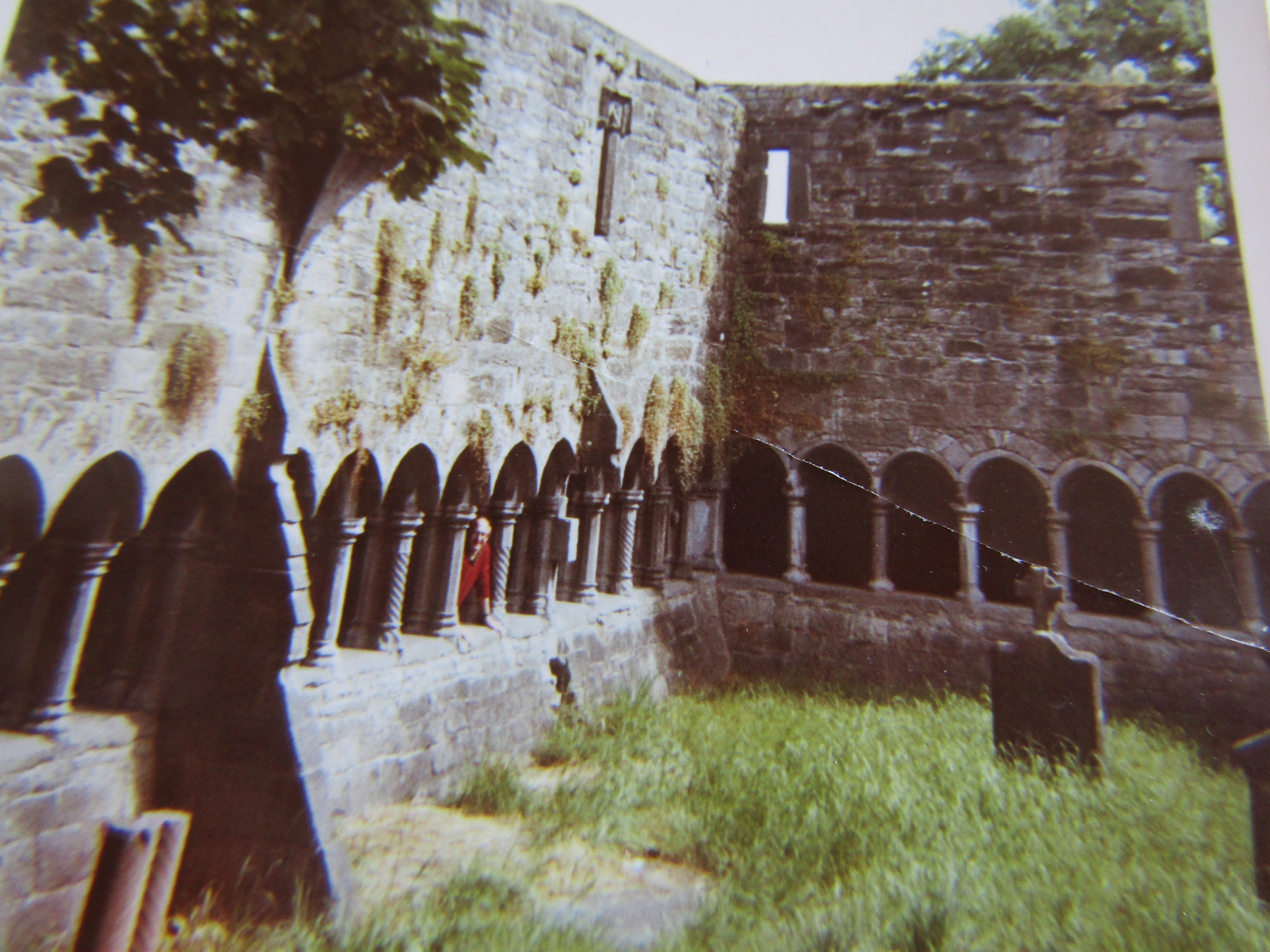

We sense the sacred in these peaceful walls
Yet men have died in places that appal
Women too and children then unborn
Fell into cold dark earth in lands forlorn
As our weapons grow, our hearts are hard
The people live in Gaza behind bars
The water all polluted as taps drip
Is this war or is it vengeance fit?
In Britain, it’s the poor who lose the war
As it was when Jesus Mary bore
Yet here are clerics blessing marching bands
A military show for all the land
The genocide in Europe of the Jews
The self destructive actions of the proud
The fields of France filled sick with blood and bone
Who are we to cast judgemental stones?
The War’s not over when the fighting stops
The soldiers and the tortured suffer shock
The widows and the parents all bereaved.
The unborn children hover in unease
We let the prisoners out from camps of death
But who would take them in or take their path?
The injuries will travel down the years
As still we fight and still we live in fear
It’s Europe’s grasp and greed which was the cause
Of death in Gaza, Syria, in long wars
Yet we judge we are more civilised
When we self defend with bitter lies


 How my heart speaks