I don’t believe,I won’t believe


It doesn’t matter what the doctors said.
I know you’d never leave me here alone.
I don’t believe , I  won’t believe you’re dead.

You’ve always like a nice lie down in bed
And never, ever answered your iphone
It doesn’t matter what the doctors said.

The doctors  scanned   your  heart ,your feet and head.
The priest said you are going across to Rome
I don’t believe ,I  won’t believe you’re dead.

I know your friends  are pleased I keep you fed
And snatch an hour  or more for  writing poems
It doesn’t matter what the doctors said.

My family  told me that I should be glad.
I have free time and all the world  to roam
I don’t believe,I  won’t believe you’re dead.

They say to  find another man instead.
And through the  lonely hearts club, their eyes roam
It doesn’t matter what the doctors said.
I don’t believe , I  won’t believe you’re dead

War artists: why do we have them?

Grey Tube Shelter 1940 by Henry Moore OM, CH 1898-1986
Grey Tube Shelter 1940 Henry Moore OM, CH 1898-1986 Presented by the War Artists Advisory Committee 1946 http://www.tate.org.uk/art/work/N05706


http://www.tate.org.uk/learn/online-resources/glossary/w/war-artists

Agony Aunt

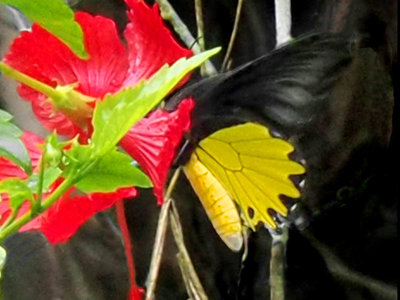
Troides_helena-1

Dear Aggie Aunt

When I visited my new boyfriend’s home, I found he has eyes in the back of the bed.He said it stops mice or other creatures from mating there but I have my doubts.What do you think? Is he dangerous?

Thanks
Worried lady

Dear Worried
Whatever made you look at the back of his bed? Leave that till he proposes or he might make you hoover the entire room.And if he is is  so new why are you in his bed already?
I suggest that you have a semi-Platonic, more romantic relationship for now and should you eventually marry insist on moving into a brand new home with a new bed.
However, it does seem a bit odd.Where did you meet him?Are you ever subject to hallucinations? Maybe you need to break away before he has arms in the bed and a gun at your head…
Remember that, when older, many ladies are becoming gay these days.Think about it.Do you really prefer a man? How about a rabbit in bed instead plus some companions and friends in the day time.I do and I prefer it this way.Rabbits are easier than men but men do have some advantages if you find a decent one.Let me know!

Take care
Aggie Aunt

Stan in Neasden

P1000051 q qqq

Mary woke up on Tuesday feeling dazed.She had been dreaming of Arnold,her student boyfriend.so sweet and shy.
I wonder where he is now, she thought.Then she recalled he was  in fact a world famous cancer researcher.She hoped he had found a shy sweet partner>
Emile was yowling on the landing despite the large bowl of Superior Cat Food  he was standing next to by the bookshelf
I believe that people and animals like not just to eat,but to be fed,Mary  thought.Stan used to make the dinner but he always wanted her to serve.Emile would  eat his food after she stroked him.But who would stroke, Mary?This was a hard and topical  question because Mary had stopped eating.However, as she was quite large, she could live for a few weeks on water only.So she mused
Mary put on a pair of purple trousers and a  lomg lavender coloured top.She gazed into the mirror wondering why 3 hairdressers had failed to help her style   her fair hair.

Now,she recalled Arnold was a  Russian Jew by inheritance though he had lived in the USA all his life until taking up research into cancer at the ancient university Mary attended.If she had married Arnold she could have pretended to be religious,converted and then worn  a wig.
Annie came running upstairs.
Whatever are you doing,she yelled.It’s 11 oclock! Her make up was melting despite being Max Doctor’s All Day Creme Mousse
I was wondering if I could find a Jewish man who would marry me, purely legally, just so I could wear a wig.
What a  load of tripe,Annie retorted.No wonder you’ve had no breakfast.If the man was
religious he could not marry a lapsed Christian. Or an agnostic.
If  you want a wig just go online.
You have no imagination,Mary answered,I spend half my time wondering what would happen if I did A,B or C.And what I might wear
And then you do D,Annie joked merrily.Or X.
Where are you going in purple trousers,she continued.You should not wear them at your age.
Do purple trousers have a meaning,asked Mary.I got them in Windsmoor’s sale for £12.
I refrained from buying a jersey jumpsuit as it looked like a burkini and I am a bit nervous now of racists coming into the open.
Very sensible ,Annie told her.I bet the French are jealous because Muslim women and certain Jewish women don’t get skin cancer nearly as often as Christian or agnostic English women.Should we convert?
I don’t think they would like it if it were only to save ourselves from cancer,Mary mused.
True,said Annie,dully

IMG_0042
Mary felt hot so they went into the kitchen and made some tea.Annie was wearing snakeskin pyjamas and black patent shoes.
Do you sleep in those pyjamas,Mary asked?
Oh,no.These are day pyjamas or leisure suits ,Annie smiled.They are comfy.You can get them in the market for £2.
Mary heard a strange noise.Stan ,her late spouse ,appeared in the kitchen carrying a big leather bag,
Hello,he grinned.I’ve just come to say I have bought a  detached  house in Ealing.
But you are dead,Mary whispered thoughtlessly
Yes,I am a ghost but I have bought the house via Dave.I paid cash.
Why Ealing,Mary asked suspiciously
I like  that song,Neasden and it’s quite  near on the North Circular.And Ealing is healing!
So that’s where you’ve been while I have been grieving,Mary said.On the North Circular  Road enjoying Willie Rushton’s songs as you drive
And besides, I want to re-marry and get a wig.
Well,you can get the wig,Stan told her handing her £4,000 in cash from his pocket.But don’t get married until I am in heaven
When will that be,the ladies asked.
Dunno,he cried.It’s such  fun in Purgatory where the ladies are naughty but not actually evil.
And so say all the men.Ah,men

Discover the International Institute of not doing very much

nico-tondini-arabic-coffee-dubai-united-arab-emirates-middle-east


http://slowdownnow.org/letters-2/confidential/


From the same site

FOUR RHETORICAL FIGURES OF SPEECH

Metaphor is used to make a comparison by explaining one thing in terms of another. This is a way of introducing a new concept in terms of something already existing. So don’t bring your bucket and spade to a sandpit for start-ups.

Metonymy is a change of name with an association of the same meaning. Churchill is using this device when he refers to his book as a monster. Hollywood refers to the movie industry. Washington means the government.

Synecdoche refers to something by the name of one of its parts. The pen is mightier than the sword. (But don’t insist on that when facing a swordsman.) The pen stands for the power of the written word, and the sword is military might.

Irony is used for comic effect by saying the opposite of what is meant.  Irony pokes fun at the status quo because values have shifted. It has elements of play, the stage seeking to emerge. Irony is a trigger for generating new meaning.

2012-10-29 20.10.27

When the sky turns black

An old poem but ,unfortunately ,apposite
When he went away,
He said,”Lehitraot,mama.”
Do vstrechi.
He died but I’m still here
Yes,in my heart I feel his love.
But why did I live,
And he did not?
Auf wiedersehen
Lehitraot.
Yes,darling,I’ll see you later,
When the sky turns black and all the stars blaze bright
I’ll see you shining in the night.
I’ll see you in my dreams alas.
Do vstrechi.
But why you and not me too?
Araka
I can’t understand.
Lehitraot,beloved.
A plus tard
Some where in this world,you fell
But no-one,not even God, can tell.
God was absent then or in some other place
He’s gone again.
They said He’s died too,
But He didn’t have a mother like you.
Do vstrechi.
My breasts ache and my heart and soul,
My breasts were made to make you whole.
To feed, give love and to console.
A plus tard
And now they ache with grief as my tears fall.
A bientot
My body trembles in the night
As dreams may bring my lost ones to my sight.
A plus
I’d walk across the roughest bleak terrain
If l I could find my loves and hold your hands again.
Do vstrechi.
The bell rings on the ancient clock
As time goes on as normal ,it doesn’t stop.
Araka
I wish the hands of time could be reversed,
And I was not living with this curse.
People forget that I once had a son.
They think my grieving has been done.
Araka.
But grief and loss and pain will never end
Until the curtain of my death descends
Auf wiedersehen.
Meantime I look at flowers and birds and trees,
But it’s really you my deepening insight sees.
Lehitraot.
Th inscape of my heart is shown to few,
An artist of the lost would know this view.
I know I want to see just you.
Do vstrechi.
But for me there is no
Auf wiedersehen
Never again will you say
What you said that day
Lehitraot,
Mama.
Papa
A plus tard
Tot ziens.
See you later
See you soon.
See you.
You
beloved

Smile at me

I miss the hand that used to hold  my hand
I miss the eyes that  used  to  comfort me
The needs of love don’t  feel like a demand
I miss the hand that  caressed  my  held hand
I miss your love  and miss you as a  friend.
When you gazed , your eyes lit what you’d see.
I miss the hand that used to warm  my hand
I miss the eyes that  used  to smile at me.

I miss your arms around me in the dark
I miss the early morning,  thoughts unspoke
On Purbeck Hills; the  Easter singing lark
I miss your arms around me in the park
Poole Harbour’s beauty is a living spark
Sharing silent glances as we walked
I miss your arms around me in the dark
I miss the mornings, though we   rarely spoke

Silent sharing ;  company in  love.
With strangers,  we must  manufacture talk.
To be silent ;the dome of sky above
To be silent ;  the  spaciousness of    love.
With strangers, how their talk can jolt and shove
I held your hand and stroked it when we walked
Silent   caring;  sympathy of  love.
Not strangers blindly   snatching in the dark.

Mary may date online but her shoes are no good

Annie the nubile ex-mistress of Stan   and colour fancying neighbour  of Mary has persuaded Mary that as Stan has run away she should find someone else.Mary is doubtfulIMG_0012First of all,Annie cried,you need some brand  new  delicate shoes.No man will be charmed by those chunky ,comfy flatties.Nor do your socks show sophistication.Though a farmer might be happy with themShe herself wore a pink tweed suit and some high heeled boots in purple patent leather over a blue silk  pair of socks.
Well,Mary,answered,I thought I should be myself because they might be annoyed being tricked.I would be.
That’s their  problem said Annie  somewhat rudely.
Well.where do I get the sort of socks a man would like,if indeed all men are the same in that way?
I’d stick with silky black ones,said Annie kindly.Then some smart black pumps.That simplifies  life.
But if I look at Soul-mates online the men will not know what shoes I have got on nor socks
That’s true,said Annie.At least until you meet one if you ever do.
Anyway if it is called Soul-mates,why does my body matter?
Don’t be so literal,dear.You know it’s just a way of indicating they want a lover.
Well.in that case it’s my lingerie that matters more than my shoes.
See here,said Annie bossily.With those shoes and socks nobody will want to see your lingerie.

LeatherOTKboots179.99

Just as well ,said Mary calmly.I don’t have any.
Are you telling me  you have no  underwear on,Annie cried with shock in her tone.Your trousers will need washing more often!!
I am wearing some woollen vests and underpants I got for Stan,Mary said shyly.I like wool.
What do you think a man will assume if you wear that?
That I can’t afford to have the fire on,Mary  queried timidly.
He might think you are transgender.
I have heard of transcendence but not transgender,Mary admitted ruefully.I did used to have  a purple bra, she continued distractedly.
Anyway, what about my learning and job  as a maths prof?
Don’t put  anything about maths on the form.They hate clever women.
Surely they are not all the same,Mary answered.Mary Archer is very clever and she’s been married 50 years
You can’t generalise from one example ,Annie informed her statistically
How about my love of Wittgenstein?Shall I mention it?
If you wear men’s woollen underwear and love a  dead,gay philosopher it will cut down the pool of men available.
I don’t think I’ll bother,Mary whispered.I don’t like fishing.I’d rather have a cup of tea.
Really.said Annie.I don’t know why you decided to try this.
I never did it was you.I am quite happy as I am given the dangers of this world.
And so say most of us.Amen.


What is an Ode?

photo0333_001

ode
əʊd/
noun
noun: ode; plural noun: odes
  1. a lyric poem, typically one in the form of an address to a particular subject, written in varied or irregular metre.
    • a classical poem of a kind originally meant to be sung.
Origin
late 16th century: from French, from late Latin oda, from Greek ōidē, Attic form of aoidē ‘song’, from aeidein‘sing’.

Like startled flowers

The hailstones pounded the window
as violently,as if they had minds
bent on killing;soldiers in rows and ranks rushing onwards;
as each fell another and another took its place.
Cold and mathematical they had a simple precise force and geometry.
Into this warlike scene,floated two white butterflies
Crossing and recrossing the spaces between the hail
they followed a random path;now together.now apart
Their unplanned,loving dance leads to mating, procreation and a future
while the hailstones can only die.
Seems that fragile freedom is more productive
than the fierce mechanical modern world can imagine.
I see the butterflies now like startled flowers
hunting for the sun

Can we find the space between the words?

How like a prison is this cubicle
So small I’m like a fish inside  a net

My heart beats with a rhythm unmusical
As with sharp terror, I am now beset.

We humans were not made to be en-walled
Our ancestors were gatherers in the woods.
Now  industry  demands freedom be stalled
For production and  consumption of  their goods.

And  executives in advertising   work
In  offices  where they  combine their words
Religiously like members of the Kirk
Yet envying the freedom of wild birds.

Can we  be ourselves in such a world?
Can we find the space between the words?

When my love’s gone

When  my love's gone and doom hangs over head
When life runs like a river to the sea
Then shall I take new lovers to my bed.
And with their carnal touch consoled be?


When true loves lie and break my woman's heart.
When life seems grey and rocks bestrew my path.
Then, shall I my life of evil start
And on the world shall I bestow my wrath?


When true loves lie and wreck all loyalty.
When puzzlement makes all the world seem mad.
Then I shall upend causality
And let myself do deeds which make me glad.

For I will not  retaliate   in hate
Despite my  grief, a new life I'll create


o

The uncanny is a space which I avoid

The uncanny is a space which I avoid
I do not wish to meet with spirits  vile.
Though with a man ,it’s true that I have toyed.
I  dropped them all and sane was I the while.

Yet when I met your eyes so dark  and strange
A force more strong than my own pulled me in.
A   premonition that my life would change,
Before I knew your double,your dark twin.

In dreams and  in my nightmares he will come
To capture me and take me  to his land.
I do not know what choice to make of man
Nor how to count infinity by hand

The double is an augury of death
Yet in this space uncanny is a path

It may not be this me

The  small birds are singing above me
Two  hearts are entwined in my dreams
I shall need  to be here when you call
For I have a vocation for life.
And I need to write  at  least fifty poems
Before    autumn weather arrives

The  man in the raincoat  bereaved
Had a large parcel for me.
It was the  book of your mother’s   new poems
Just as I saw in my dreams
There were sonnets and tercets of sorts
I did not recognise others  at all


I wonder will my  cousin  call
I so  want  to see him arrive
After   a meta- journey by horse and by cart
Is  the poetry reminiscent of me?
My nightmare and all of my dreams
Contribute to the themes of my poems


The illusions I create in my  dreams
Have their voices and they play  their part
But illusions are not aimed to  decide
They are soporific   nightmares on TV
I roam all around in my rhymes
Till a metaphor arrives to oblige.


I wonder if the schema of dreams,
More often our wishes distort;
So it  is transcribed in our poem
What possibility drives
The collection of folk I call me?
But it may not be this me at all.

Ode to My Socks

Pablo Neruda, 19041973

Maru Mori brought me
a pair
of socks
which she knitted herself
with her sheepherder’s hands,
two socks as soft
as rabbits.
I slipped my feet
into them
as though into
two
cases
knitted
with threads of
twilight
and goatskin.
Violent socks,
my feet were
two fish made
of wool,
two long sharks
sea-blue, shot
through
by one golden thread,
two immense blackbirds,
two cannons:
my feet
were honored
in this way
by
these
heavenly
socks.
They were
so handsome
for the first time
my feet seemed to me
unacceptable
like two decrepit
firemen, firemen
unworthy
of that woven
fire,
of those glowing
socks.

Nevertheless
I resisted
the sharp temptation
to save them somewhere
as schoolboys
keep
fireflies,
as learned men
collect
sacred texts,
I resisted
the mad impulse
to put them
into a golden
cage
and each day give them
birdseed
and pieces of pink melon.
Like explorers
in the jungle who hand
over the very rare
green deer
to the spit
and eat it
with remorse,
I stretched out
my feet
and pulled on
the magnificent
socks
and then my shoes.

The moral
of my ode is this:
beauty is twice
beauty
and what is good is doubly
good
when it is a matter of two socks
made of wool
in winter.

A very bad poem

As rolling stones gather no moss
At this point in time,  one must get started
Or the best part of the day will be gone.
I think many poems are gross
Like many young lovers are parted.
And I’m answerable to no-one.
Actually, I don’t give a toss.
My  vocation has been somewhat thwarted.
I could just eat two sponge cakes or one.
Many folks suffer a loss
And  maybe some are hard hearted
Actually I just  ate your scone.
Writing like this is like floss
Ing your teeth when they are bartered
I feel like a biscuit or ten


If I no longer love you

If I no longer  love you when you die
And quickly fill your space with a new man
Then perhaps my  claiming love was  but a lie
And I can fill  you place  with anyone.
Are not our  friends unique and therefore lost
When death pulls them away to darker shores?
Yet we  will love each one despite the cost.
And when we weep,  is this not  what life’s for?
Loss and gain and loss and gain again
A pattern from the infant to the sage
So joy and pain and joy and pain remain.
Who knows what is inscribed on the page?
To feel,to suffer, then feel joy once more
Will open up  to show us Heaven’s door

Is writing poetry good for you?

http://www.positivityblog.com/index.php/2008/07/30/five-reasons-to-write-poetry/

“The power of the metaphor, simile, parallel… figurative language is not only a good way to put things into perspective, but metaphors are easier to remember than a complex set of interactions.  This is a way to grasp deeper meaning from perhaps a very mundane, or complex identity.

It builds an understandable identity with which to contrast that is easier to grapple and engage in, in the process building pathways in your brain that would have been stopped cold otherwise.

And poetry exercises this muscle by encouraging figurative language providing a sounding ground for your ideas, feelings, reminiscences by putting them into a concrete perspective.

A cat ponders

My images


I’m sitting under the coffee table.By rights ,I should be given some cafe au lait in a traditional French style wide cup with a silver brim plus a matching saucer.I am shocked that Stan has never asked me to partake.I need a coffee break..it’s hard work spying all day!
I heard Anne talking on her mobile while Stan was looking for the graph paper.She must be talking to another woman…. she said she’s just bought some Revlon primer lotion to put under her light beige mousse foundation.Ye Gods,it sounds as if she’s painting the wall.She was moaning she can’t afford Lancome any more.Mousse foundation..that sounds tasty! She wants some heather coloured lipstick but she couldn’t find any.She’s put a new one on anyway and Stan came in to give his opinion:
Congratulations,Anne.You have found some  lipstick that’s exactly the same colour as your own lip .She was mortified.I could see tears in her eyes but luckily she had her waterproof mascara and purple eyeshadow on.
Well,it makes me glad to be a cat…we have no need for skin products
and we have no lips as such.Why do humans have lips?Is it mainly for kissing?
And perfume………we like the natural odors but I’ve never seen Stan go up and sniff Anne’s netherregions…though I admit I took a sniff and she smells very intriguing… probably some musk she’s bought.
I envy Stan in a way.Because I’d like to kiss Anne but my lips are too small….I could lick hers with my little raspy tongue!
Maybe if she falls asleep i’ll have a go.i love that woman so..
A cat may look at a king,but can he lick a lady’s lips?
Well,must go and take a walk around my territory and sniff out who’s about….face primer.What next.Paint stripper? What a waste of time and money.I could be chasing dandelion clocks round the garden

Her eyes faltered.

It appears the world is a verb not a noun.
I’ve had my suspicions of course,
I know that’s how I see,
Not yet having achieved object constancy
I see afresh,which is alarming until one adapts.
I see the way you see on Heroin,
But for me,it’s free.
I never knew if mother was the same person today,
Or some new other mother.
She did have the same hands
But her eyes faltered.
I gave them all the same name,
Like a folder on the computer.
Let’s see how many mothers I created!
In the end I had to go to school
To get some kind of safety net.
We had alternative explanations there
Like we were saved from sin.
But who can save us from multiple mothers?
I never let on,though I felt stressed sometimes
By all the changes.
Couldn’t things be more fixed?
Dreams end,but life goes on
Being a verb it has to act, you see.
If it were a noun it would be enclosed
By many parameters,grids like stunning geometric orgasms,
Quite beautiful to look at it but never felt.
Feeling is the art of life.
Art is the life of the feelings.
What are the feelings of the feelings?
Who understands the heart of Ar

In heaven I’ll be whole

The sun is shining brightly
Shall I sit by the pool?
No,I always live my  life by
Rigid personal rules.

Last week’s unruly weather
Let rain fell down in spools
I might have had the heating on;
Oh,those rigid personal rules.

Wear a dress from Mayday
Wear  coats when winter’s cool
Only wash your hair on weekends
That’s a personal rigid rule

But,Ma ,my hair is oily
The girls all point in school.
Don’t be such a  cry baby
Don’t  be such a fool.

Ma,I’ve done my homework
I’m top of all my year!
Can I have an hour alone?
She thwacked me on the ear.

I was her little puppet
And she controlled my strings
Till I caught my Guardian angel
And I stole her sturdy wings.

Well,Ma died  half my life away
But  she is now a ghoul
Watching me so patiently
With her chart of rigid rules.

She didn’t leave me no money
She didn’t leave me no jewels.
She just left me a message
All my rules are  yours.

I cried ,Holy Moses
She is worse than God
She made rules for everything
From  love to  boiling cod.

Don’t bath when you’ve your period
Don’t let your brothers see
You are now a woman
But  you’re still under me

I think I’ll leave those rules behind
And if it makes me fear
God will send a devil round,
I’ll hit  him with this spear.

Flexible  our bodies
Flexible our minds
We must climb the mountain
And leave those rules behind.

Following personal rules
Can make us feel secure
But  our vocation calls to us
And cares not if we’re   pure.

Steal  and purloin all you need
From books and people too.
Follow your own calling
While you share our human zoo.

And share your learning freely
Give as well as take
Oh,my Lord ,I see some men
Carrying a stake.

They are going to burn my body
But they can’t touch my  soul
Wrap me well in flax,  my dear.
In heaven ,I’ll be whole

The meaning of modern poetry from the Telegraph

The meaning of modern poetry

Contemporary poetry is lacking something, argues Jeremy Noel-Tod

“The best contemporary poetry”, wrote TS Eliot, “can give us a feeling of excitement and a sense of fulfilment different from any sentiment aroused even by very much greater poetry of a past age.” The judges who awarded the annual TS Eliot Prize last week, for the best collection of new verse published in the UK or Ireland, will know what he meant. In awarding the prize to Jen Hadfield for her Canadian travelogue, Nigh-No-Place, they rewarded the freshness of a new voice. Only time will tell whether it will take its place alongside great poetry of the past.

Most poetry readers tend to be time travellers: browsing among anthologies and old favourites, and only occasionally setting foot in the futuristic present. This is understandable. Poetry is the richest history we have of our inner life. But the history of the present is still being written, and the excitement of the new can be bewildering: every poem about using a microwave starts to look sexier than Shakespeare’s sonnets. Eliot’s “sense of fulfilment” is less easily had. Ezra Pound, his severer friend, used to lament that “the thought of what America would be like if the classics had a wide circulation troubles my sleep”. But the thought of what the world would be like if everyone only read “Now That’s What I Call Poetry 2009” is equally worrying.

The effort that goes into widening the readership for contemporary poetry, therefore, often seems misplaced. The late Adrian Mitchell used to say that “most people ignore most poetry because most poetry ignores most people”. But the solution is not to lower the common denominator. The problem with much modern poetry is it plays down what people really like in the arts: mystery and drama. As WB Yeats discovered in his own search for the formula of “popular poetry” in the 20th century, true folk poetry delights “in rhythmical animation, in idiom, in images, in words full of far-off suggestion”. The idea of poetry that ought to be popular is the diluted elixir of a later age, which has never sold to the masses.

Children still like real poetry. A recent anthology of playground songs edited by the poet Richard Price reported this sublime lyric from Aberdeen: “Under the black bushes, / Under the trees, / Boom boom boom / Under the blue berries, / Under the sea.” There’s not much to do with that but enjoy its rhythm, its rhyme and its far-off suggestiveness. But when, as teenagers, children start to have to explain literature to pass exams, the homebrew of skipping rhymes gets left under the hedge.

When I was young and easy and doing my GCSEs, the poem I enjoyed most was Dylan Thomas’s “Fern Hill”. It is also the poem I remember learning least about, apart from the fact that – according to my teacher – Thomas would get very drunk before he wrote anything. I could believe it when I read these bubbling memories of a childhood farm: “All the sun long it was running, it was lovely, the hay / Fields high as the house, the tunes from the chimneys.”

Seamus Heaney, of course, ploughed the same furrow, but more soberly, and always with a moral at the end of the field. In “Fern Hill”, Thomas left his younger self in a state of tragic innocence: “Time held me green and dying / Though I sang in my chains like the sea” – an unexpected and almost inexplicable closing image. Heaney’s final metaphors came with the meaning conveniently clarified: the blackberries of boyhood went off; the poet’s pen dug up meaning like a spade; his frail old father reminded him of a child.

Now more than 40 years old, these poems are still on the GCSE syllabus as touchstones of best practice in contemporary poetry. Heaney’s evocative economies of language have earned the appreciation of readers. But as a model of poetic writing the weakest point of these early works – the patness of the meaning – has been artificially prized by a system that tests literal rather than lateral thinking.

The more recent beneficiaries of this situation have been Simon Armitage and Carol Ann Duffy. Both, again, poets whose ears are worth listening to. But in the school anthologies they tend to be represented by poems that offer a neat personal story for dissection. This template also informs the selection of poems from “Different Cultures” . Cultures can be considered different if the people they feature are poorer and more exotic than the average British schoolchild: “Island Man”, “Two Scavengers in a Truck, Two Beautiful People in a Mercedes”, “Night of the Scorpion”, “Presents from my Aunts in Pakistan”.

Segregation by identity inevitably favours poems cast in the form of relatively stable monologues. The idea that poetic language might be a way of imagining modes of being and emotions that won’t sit still has to wait outside until playtime. Then it returns in the form of popular music, the lyrical abstraction of which would look worryingly avant-garde in an exam board anthology. Even a radio-friendly couplet such as Coldplay’s “Lights will guide you home / And ignite your bones” fuses sound, feeling and sense more interestingly than the simple onomatopoeic “squelch and slap” of Heaney’s spadework.

Yet the rationalised critical model now runs right through the system, from schools to university and on to publishing and arts funding. Contemporary poetry is praised and approved, but rarely loved as much as the other arts. The American poet Frank O’Hara saw what was happening 50 years ago: “Too many poets act like a middle-aged mother trying to get her kids to eat too much cooked meat, and potatoes with dripping (tears) .” Wisely, he took the children’s side: “If they don’t need poetry bully for them. I like the movies too.”

But music and movies are no substitute for what poetry can do as an art, and that is to display the life of language with wit and intensity. Barack Obama – who promises to be more attuned to the life of language than his predecessor – chose to have the poet Elizabeth Alexander read at his inauguration. Her definition of poetry identifies the characteristic curiosity of versified words about their own power: “Poetry (here I hear myself loudest) / is the human voice, / and are we not of interest to each other?”

Unfortunately, reforming the poetic culture of Great Britain is not on Team Obama’s to-do list. But there are plenty of poems out there that would fruitfully complicate the current GCSE anthologies, and possibly even enthuse turned-off students. The late Mick Imlah’s The Lost Leader(2008), for instance, takes the Heaney-esque story about the child-poet into darker territory with “Railway Children”. Daljit Nagra, himself a secondary school teacher, included a clever satire on the “Different Cultures” section in his 2007 debut, Look We Have Coming to Dover!(“My boy, vil he tink ebry new / Barrett-home muslim hav goat blood-party / barbeque?”) And Alice Oswald’s Dart, which won the TS Eliot Prize in 2005, presents real modern voices mingling in an evocation of the Devon landscape.

All these poets, however, still work within the frame – albeit towards the edges – of the stable monologue, where words flesh out the fiction of an overheard speaker. Working beyond that frame there are poets who, like Dylan Thomas, let language run away from the everyday into unexpected meanings. Of the younger generation, Keston Sutherland’s poetry especially impresses as a passionate and satirical incantation of English now (“Some cops boo. Evidently run about pin / airbag down make a ripped off picket / stunned. If you want to change the / tick alright”).

One of the classics of early 21st-century English poetry, however, is the work of RF Langley, a retired Suffolk schoolteacher, whose Collected Poems were shortlisted for the Whitbread (now Costa) Prize in 2000. He has published a fine follow-up, The Face of It (2007). Langley’s meditations on the natural world make English strange with Shakespearean animation, jumping from rhyme to rhyme and thought to thought. As TS Eliot also said, “there is a logic of the imagination as well as a logic of concepts” – and it can follow patterns as involved as 50 swifts on a summer evening.

from Tom Thumb

We should accept the obvious facts of physics.

The world is made entirely of particles in

fields of force. Of course. Tell it to Jack. Except it

doesn’t seem to be enough tonight. Not because

he’s had his supper and the upper regions are

cerulean, as they have been each evening

since the rain. Nor just because it’s nine pm and

this is when, each evening since we came, the fifty

swifts, as passionately excited as any

particles in a forcefield, are about to end

their vesper flight by escalating with thin shrieks

to such a height that my poor sight won’t see them go.

Though I imagine instantly what it might be

to separate and, sleeping, drift so far beyond

discovery that any flicker which is left

signs with a scribble underneath the galaxy.

RF Langley

‘Tom Thumb’ appears in R?F Langley’s ‘Collected Poems’, published by Carcanet at £6.95

Railway Children

After the branch line went to Ochiltree –

I would have been fifteen – two men were shut

In the station waiting-room, and one of them

Brought out his pocket anecdote of me:

“The boy’s a splurger! – hey, when Danny Craig

Passed him a flask on the train the other day,

He gulped it, just for the sake of showing off.

And he’s a coward too, for all his face.

For after he’d taken the drink, he noised about,

And Dan, to clip his wings, made up a threat

To hang him out o’ the window by his heels –

You know Dan didn’t mean it, but the boy

Grew white at the very idea o’t – shook

Like a dog in the wet – ‘Oh!,’ he cried, and ‘Oh! –

But how would tha ground go flying past your eyes;

How quick tha wheel beside your face would buzz –

Would blind you by quickness – how tha grey slag

Would flash below ye!’ – Those were his actual words;

He seemed to see it all as if for real,

And flinched, and stopped, and stared, like a body in fits,

Till Dan was drawn to give him another drink;

‘You’d spew with dizziness,’ he said, shut

His eyes where he sat, and actually bocked himself.”

Mick Imlah

‘Railway Children’ is taken from ‘The Lost Leader’, published by Faber & Faber at £9.99

The poison tree by Wm BLAKE

My feeling is he told his friend not that he shouted and yelled at him though with a good friend it might be possible for them to help you when you get angry,even when you berate them


I was angry with my friend;

I told my wrath, my wrath did end.
I was angry with my foe:
I told it not, my wrath did grow.
And I water’d it in fears,
Night & morning with my tears:
And I sunned it with smiles,
And with soft deceitful wiles.
And it grew both day and night.
Till it bore an apple bright.
And my foe beheld it shine,
And he knew that it was mine.
And into my garden stole,
When the night had veil’d the pole;
In the morning glad I see;
My foe outstretched beneath the tree.

How softly sweetly,gently flowers pose

How softly sweetly,gently flowers pose
Carnation,orchid ,daffodil and rose.
Their intricate petals form a shield
Yet bees with  much striped force shall make them yield.
Appearances,both natural and contrived,
Mixed with the wiles of human nature thrive.
As, knowing not, we pluck the apple rare
And bite its flesh,with teeth we have to bare.
We too deceive the innocent who pass
Not seeing watchers hid behind the glass.
The windows break,the deep earth quakes;
Seized is the maiden ,he  her virtue takes.
Beneath the surface,force and fierceness thrive.
What fearsome, burning God enjoys our lives?

Evocation

480 From Oxford dictionary online

evocation

Pronunciation: /ɛvəˈkeɪʃ(ə)n

NOUN

[MASS NOUN]

1The act of bringing or recalling a feeling, memory, or image to the conscious mind:the vivid evocation of stillness in the title poem the evocation of deep emotions

1.1[COUNT NOUN] An account or work of art that brings or recalls a feeling, memory, or image to the conscious mind:his 560-page epic is a detailed, moving evocation of childhood

1.2The action of eliciting a response:the mutual evocation of responses through body language
2The action of invoking a spirit or deity:the evocation of wandering spirits