The basics of iambic pentameter

shakespear1

Shakespeare Wiki

https://poemshape.wordpress.com/2008/11/30/what-is-iambic-pentameter-the-basics/

A useful point:

Elision

[There are two more commonly used symbol to consider]. One is the symbol for elision. Elision means that instead of pronouncing a word as having, say, two syllables, it is pronounced as having one. Likewise, a word that appears to have three syllables, might be pronounced as two.

elisionThis symbol denotes elision.

Consider the following line:

scansion-with-elision

An extract which is amusing:

Almost every major poet , prior to the 20th Century, wrote Iambic Pentameter when writing their best known poetry.  Exceptions would be poets like Walt Whitman (free verse), Robert Burns (who wrote a variety of metrical lines – mostly iambic), and Emily Dickinson (whose meter is derived from hymn tunes, which is why so many of her poems can be sung to Yellow Rose of Texas).

We feel our love absurd

Art though my own and may I now love thee?
Art though my own and shall I  thy wife be?
As waiting long  lays waste to love and joy
Art though mine,  or with me do’st thou toy?

O treat me not like  stuff disposable
O treat me not  as one intolerable.
For if  thou touch then thou hast made a claim.
And from  the heart, to lose is to be maimed.

For  women are not like  to sheep or goats
We have hearts to feel what thou hast wrought
And if  thou come to steal then  thou’rt a  thief.
One of many , causing women grief.

Do not touch with hand or with sweet words
For  if thou  lie, we feel our love  absurd

I blocked cookies all my life


I  love you and you love me!
Believer!
Where on earth should I be?
Whenever.
I blocked cookies all my life
If you want one,ask the wife.
I eat spam, and google then,
I begin all over again.
whatever.

I ban websites for a living
But my wife is very forgiving,
Men ever!
I eat splogs and gurgle blogs
Then I cut up all the logs.
Whenever.
I’ve been married fourteen times,
They divorce me for my rhymes,
Whatever.
I eat cookies if I can,
If I can’t I get them banned,
Forever!
I’m the God of Monster Space,
I’ll destroy this human race,
Moreover.
If you meet me you won’t know
‘Cos I look like old so and so,
Whoever.
But I am mad and I’ll get you
I eat up this human zoo;
Together.
Whenever.
Can’t forgive,erhhhh.

Trust the Unknown Force that grew us

 Trust the unknown force that grew us,

From the joining of two cells;
An act of love and of self giving;
 Thus we can grow a newer self.

Trust the dark,the unseen aspects
Of the life we here do live.
Trust that there is Wisdom elsewhere;
Who to your empty self will give.

Wait in patience for the new  time
When inspiration  comes at last
Trust in darkness,silence,  lowness.
Oppostion forms the cross.

Pain is bearable in lowness,
Like the worm in earth I dwell.
When I look I see the sunrise

And I trust all shall be well.


I thanked him for being so intensely unkind.

I went to the doctor, he said I’d pre-flu.
I said “My dear doctor, what shall I do?”
Next time I went, he said “It’s pre- shock.”
And then I had pre measles,pre mumps and pre-pox
I ran to the doctor,he said ” You’re pre-well”
I said “Are you sure it’s not just a pre-quel?”
Next time I turned up,he’d gone out for a walk
It’s hard for a doctor who wants to pre-talk.
I went to the optician, who said I’m pre-blind
I thanked him for being so intensely unkind.
I went back to the doctor,and these words I said
“I’m pre -blind, pre-deaf,pre-ill and pre-dead!

23 Pilchard’s Avenue Knittingham KM2 0DEAR, Europe.


goodfriday1

Dear Anne,Please forgive me for not writing  especially  after I got such an intriguing missive from you.Emile had eaten all my stamps and Stan used to post things for me.I am afraid I have got very lazy
To save money in the long run, I have bought some nail clippers as I don’t really need the chiropodist,She came  to see Stan’s feet owing  to his diabetes.
I got a shock when I found my toe nails have gone very tough.It is quite difficult to get one foot on my knee with out dislocating my knee joints.I did it so now I am wondering if I can cut my own hair.Have you ever tried that? The choice seems to be to cut it all to  about 1/2 inch and let it grow how it will
Or just cut the sides as they seem longer than the back.
How can one get both sides to the same length? I thought of cellotaping my hair to my cheek and then measuring  say 1 inch  with more  tape and cutting off what lis below.As you know I like experimenting but  in this case it  might be trial and horror as an old physicist once said to me.
I get these weird ideas and can’t get them out of my head.
Emile’s coat does not grow ,which is extremely fortunate.imagine the expense of cuts and blow dries! He seems well and claims he talks to Stan in the night. He eats  robustly and sometimes I am tempted to  share his meal because it looks like the potted meat we used to have when I was a child.Not to mention I often forget to cook myself a meal and end up with a bowl of porridge.
I am planning to write a book for Kindle but so far all I have done is get Word 2016 as I was blackmailed  into getting more storage on One Drive and that came with Office 2016.
I also had to find my NI number in case  my book sells  because I will have to pay tax.Having done that I   have been too lazy to learn how to use it.
Now the hot spell has ended it feels really cold so I must find some socks.I bought some trousers in the Sales for £12 and they are fully lined.I  have been planning how to keep warm in winter and I had a brilliant idea.Wear two pairs of pants.  2 vests and some wool socks underneath 2  long sleeved tops and some trousers/long skirt.Then if it gets icy add a cardigan.Or two cardigans… 2  light coats and two wool hats. Then if one is too hot one can remove the layers gradually .
Which might mean being at a dinner party in  just two vests and two paits of knickers.So they will have to be in bright colours.
So far only  two men have befriended me.If  one  develops int a full relationship  imagine the thrill of  him undressing me layer by layer.He will probably die before getting  them all off.Is that what we call a  “defense machanism”?
It would be easier to ask him what he thought of Ray Monk’s book,The Duty of Genius…  a life of Wittgenstein.How many men will have read that and still the   energy to chase  women?.I suppose I’d better read the Daily Mail so I know what are the hot topics and TV  programmes like that Bakery Programme…. then they blame us for getting fat.
I am afraid I’ll have to stop here but will write again when I have bought some more Quink.
I do  hope Cambridge was not flooded last week and you are ready for the new term or is it a semester now? And  let me know about your book “Absence and the Love of God” I am desperate to read it.

Sending my  love

Mary xxx

and Emile xxxx


The Kingdom of God by Francis Thompson

jacobs-ladder-byzantiumimage002


http://www.themint.org.uk/z021.htm

245. The Kingdom of God
By Francis Thompson  (1859–1907)
O WORLD invisible, we view thee,
O world intangible, we touch thee,
O world unknowable, we know thee,
Inapprehensible, we clutch thee!
Does the fish soar to find the ocean,         5
The eagle plunge to find the air—
That we ask of the stars in motion
If they have rumour of thee there?
Not where the wheeling systems darken,
And our benumbed conceiving soars!—        10
The drift of pinions, would we hearken,
Beats at our own clay-shuttered doors.
The angels keep their ancient places;—
Turn but a stone, and start a wing!
‘Tis ye, ‘tis your estrangèd faces,        15
That miss the many-splendoured thing.
But (when so sad thou canst not sadder)
Cry;—and upon thy so sore loss
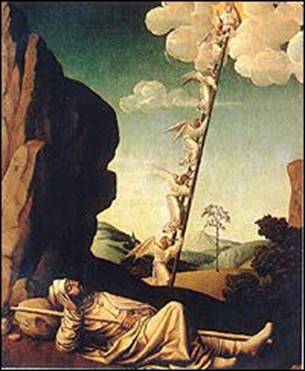
Shall shine the traffic of Jacob’s ladder
Pitched betwixt Heaven and Charing Cross.        20
Yea, in the night, my Soul, my daughter,
Cry,—clinging Heaven by the hems;
And lo, Christ walking on the water
Not of Gennesareth, but Thames

From Dante’s Inferno

One night, when half my life behind me lay,
I wandered from the straight lost path afar.
Through the great dark was no releasing way;
Above that dark was no relieving star.
If yet that terrored night I think or say,
As death’s cold hands its fears resuming are.
Gladly the dreads I felt, too dire to tell,
The hopeless, pathless, lightless hours forgot,
I turn my tale to that which next befell,
When the dawn opened, and the night was not.

(“Inferno” by Dante Alighieri)

Birches by Robert Frost

This is blank verse.It is written in iambic pentameter like a sonnet but it has no rhymes

2012-01-22

When I see birches bend to left and right
Across the lines of straighter darker trees,
I like to think some boy’s been swinging them.
But swinging doesn’t bend them down to stay.
Ice-storms do that. Often you must have seen them
Loaded with ice a sunny winter morning
After a rain. They click upon themselves
As the breeze rises, and turn many-colored
As the stir cracks and crazes their enamel.
Soon the sun’s warmth makes them shed crystal shells
Shattering and avalanching on the snow-crust–
Such heaps of broken glass to sweep away
You’d think the inner dome of heaven had fallen.
They are dragged to the withered bracken by the load,
And they seem not to break; though once they are bowed
So low for long, they never right themselves:
You may see their trunks arching in the woods
Years afterwards, trailing their leaves on the ground
Like girls on hands and knees that throw their hair
Before them over their heads to dry in the sun.
But I was going to say when Truth broke in
With all her matter-of-fact about the ice-storm
(Now am I free to be poetical?)
I should prefer to have some boy bend them
As he went out and in to fetch the cows–
Some boy too far from town to learn baseball,
Whose only play was what he found himself,
Summer or winter, and could play alone.
One by one he subdued his father’s trees
By riding them down over and over again
Until he took the stiffness out of them,
And not one but hung limp, not one was left
For him to conquer. He learned all there was
To learn about not launching out too soon
And so not carrying the tree away
Clear to the ground. He always kept his poise
To the top branches, climbing carefully
With the same pains you use to fill a cup
Up to the brim, and even above the brim.
Then he flung outward, feet first, with a swish,
Kicking his way down through the air to the ground.
So was I once myself a swinger of birches.
And so I dream of going back to be.
It’s when I’m weary of considerations,
And life is too much like a pathless wood
Where your face burns and tickles with the cobwebs
Broken across it, and one eye is weeping
From a twig’s having lashed across it open.
I’d like to get away from earth awhile
And then come back to it and begin over.
May no fate willfully misunderstand me
And half grant what I wish and snatch me away
Not to return. Earth’s the right place for love:
I don’t know where it’s likely to go better.
I’d like to go by climbing a birch tree,
And climb black branches up a snow-white trunk
Toward heaven, till the tree could bear no more,
But dipped its top and set me down again.
That would be good both going and coming back.
One could do worse than be a swinger of birches.

In proud confusion

When red sun  drops and  cooling night  rolls in
Darkness masks both danger and our vision
Ancient minds fear   day won’t come again

Courage for the  delicate   seems thin
We  wrestle  with  our horrid indecision
When   sun  drops deep and   night   rolls  softly in

But now , new stricken by   a dread of sin
Who shall doubt  the soul’s   derision?
Our  ancient minds fear   day won’t come again

When  we sleep we’re entertained within
Dark dreams squander all   illusion
When  deep sun  drops and   gentle night  rolls in

In reverie we’re loved  and  so our hearts open
Then  fancy turns to full communion
While ancient minds fear   day won’t come again

And so  it was that our own life began
When sperm leaped up in  proud confusion.
When  deep sun  dropped and  a   new night  rolled in
When  ancient  hearts cried  “Day  shall come again”


Officious or official?

6351118_f260


http://www.merriam-webster.com/words-at-play/the-difference-between-officious-and-official

 Usage Notes

‘Officious’ vs. ‘Official’

Plus, a limerick to help you distinguish between these two commonly confused words


The words officious and official are often confused, which is reasonable enough, since we frequently have this habit with words that share a beginning. But they needn’t bedevil, and by looking at the history of each word it becomes fairly simple to distinguish between the two

As an adjective, ‘official’ means “of or relating to an office, position, or trust.” ‘Officious’ describes an annoying person who tries to tell other people what to do in a way that is not wanted or needed.

The words share a parentage in the Latin word officium, which could mean either “a helpful act,” “duty or obligation,” and “a person’s regular employment or position.” Officium gave rise to two distinct words in Latin, each one of which subsequently became one of these two English words under discussion here. Officiosus came from adding the suffix –osus, indicating “full of,” and the word took the meaning of “eager to serve or help.” The suffix –alis (meaning “relating to”) when added to officium brought about the word officialis, which in Latin initially had the meaning of “relating to duty or obligation,” and later took on the meaning of “a magistrate’s assistant.”

When officious came into English, in the 15th century, it retained the meaning that it had had in Latin. The earliest sense of the word was “dutiful,” but it also had the meaning “eager to serve or help” at about the same time. It did not take long, however, for the word to take on the additional, and now most common, meaning (“volunteering one’s services where they are neither asked nor needed”); there is evidence that this sense was attached to officious by the end of the 16th century.

Official came into English somewhat earlier than officious; it has enjoyed a wider range of meanings and seen greater popularity than its meddlesome cousin. The earliest use of official, beginning in the 14th century, was as a noun, referring to a person who has been appointed to an ecclesiasticalcourt. It began to see use as an adjective soon after, with the now-obsolete meaning of “performing a function or service.”

If you are uncertain about how to distinguish between these two words there are a couple of ways to tell them apart. The first, and most obvious one, is that officious will typically only function as an adjective in English, and not as a noun; official, on the other hand, hopscotches between these parts of speech with aplomb. Additionally, words that are formed with the –osus suffix (as officiousis) tend to be more likely to be used to describe unfortunate characteristics than those words that are formed from the –alis suffix. The former group includes such specimens as contentious, bilious,flagitious, and meretricious; the latter group includes such specimens as fiscal, hebdomadal, andlittoral.

It is perhaps a stretch to say that one is incorrect in using officious as a synonym for official, since the word did indeed have that meaning at some point in the past, and there are many instances of writers in English referring to “officious capacity” or “officious role”. However, it is highlyanachronistic, and if your goal is to be readily understood you are advised to eschew this use in your writing.

In the event that you still have trouble keeping these two words straight in your mind we offer the following limerick.

An official may well be officious,
(or tendentious, even malicious)
While the words may share roots
They are not in cahoots
And conflating them is injudicious.


Smoke all day and make sure that they’re tipped

Movement helps the mind by sorrow  gripped
New thoughts  help us  leap from out  the rut
Exercise  and kiss your  own red  lips

Smoke all day and make sure  your cigs  are tipped
Drink some whiskey,beer and grow  a gut
Movement helps the mind by sorrow  gripped

Beat your walls and bedclothes with a whip
Move out now and buy  a hermit’s hut
Exercise ,why! Kiss  your lover’s lips

Walk ten miles and  write a thousand quips
Decorate your place with  smokey soot
Movement helps the mind by sorrow  gripped

Go to port and snap the line of ships
Keep your chin up,even make it jut!
Movement helps the mind by sorrow  gripped
Exercise   and kiss    a thousand lips!

Mary writes a letter

The Pilchards.
23,Sweetnames Avenue
Knittingham
Near Nottingham.
England
Dear Jane

Hope you are keeping well in this unusually hot s weather.

Stan has had flu.It made him so bad tempered and waspish
that I took up the Duraglit polish and got him to polish all the brass, except the front door knob, as that doesn’t come off.
Mind you,it made the bedroom smell odd… a mistake,perhaps…
so I sprinkled lavender oil around.
He seems to get thinner and I seem to get fatter.
So our average w eight remains constant.
What a relief.I’d like to be weighed as a married woman.
Can you believe this..
I’ve got chilblains! It’s those dratted blood vessels of mine.
Still,I polished some old plum colored leather and wear them in the house.
We seem to be doing polishing frequently here.. boots,furniture,apples.
How is your new book “Nonsense:A.N.Whitehead and Lewis Carroll” coming on?
Hope it’s progressing….to a nonsensical ending.
I’ve got a new book of poetry coming out in April
[from Polar bears publishers]
It’s called,”An unpolished performance.”
My fourth book on Wittgenstein‘s cats is almost finished.
And the publishers can’t wait for the photographs…I’ll get a friend to do those for me!!
It gives me a change from all that polishing.
I’ve begun to talk to myself out loud…. in the street.
Just seeing if I can still do my old Lancashire accent.
I suppose it might  worry people but no one has said anything as yet.They may be afraid.
“That which is unsaid can,nevertheless,still be heard.
Stan is still involved romantically with Anne, our next door neighbor.
I can’t blame him as chilblains and Wittgenstein not very romantic.
When I think of how we used to be,it makes me smile and feel sadness too.
I wonder if I can find someone new for a romance,myself… someone with Asperger’s syndrome
possibly…as I’ve just been diagnosed.It’s quite common in mathematicians.It may be an
advantage in concentrating a lot
I need a boyfriend with weak eyes as my clothes are all full of moth holes
and I’m damned if I’m going to buy new ones.
I can’t see well enough to darn but I’ve sewn the holes up neatly thus
giving a strange pleated effect to my clothes.
On my merino wool knitted trousers, one hole was right on the ass.
It looks now as if I’ve been shot in the rear…
but I can’t see it.So it does not exist.
Sometimes in the past I would iron on those motifs like
butterflies…but
I think it would look odd having a butterfly just there…. or indeed
anything else like wild rose.
I could make a little sign saying
“Keep clear,from my rear.This is a hole where a moth scored a goal.”
Still,not many people are going to look there now I hope….
I seem to have stopped knitting but am still drawing.
Meantime I’ve just ironed some of my winter clothes as it’s  gone chilly..
and am planning to iron all my pink and blue  lingerie
as I believe it kills any germs left when you wash at 30 deg.I got those colours in case I should change sex or is it gender?
I wonder if I should iron the sheets?
Could I do it while they are on the bed?
I don’t wash them much as it wears them out and me too.
I am going to take up baking again because Stan is getting so thin.
I fancy a Russian cheesecake as it had a lot of protein in it.
I have a genuine Russian cookbook and also am waiting for a delivery of a
Jewish cookery book as I have lost mine..no it fell down onto my head last week
.God only knows where that came from.
but I believe there were good cheesecakes as Jewish cooking has much in
common with Russian,perhaps because once many Jews lived in Russia.I just
made friends with one here….he is charming and like me he hates golf.
I have got almost all the Penguin cookery books ever printed but mislaid a
few.
In fact it’s quite hard to get into the kitchen
with all these books on the shelves.And a little food.
I was comforted to read that the parent’s of John Burra,the artist,
had books piled every where in their large house….
and he was very untidy too.
So all I need is  talent and practice and I’ll be an artist.
After all,anyone can be untidy but not everyone will practice their Art.
I’d like to practice the arts of love.
They say you should love your neighbor as yourself,
but personally I prefer the neighbor or even the milkman to myself.
Meanwhile I’m happy with Emile our cat
and my 500 photos of Wittgenstein.
I shall make Stan a lemon sponge pudding.
That is the love he wants…Food.
“If music be the food of love I’ll cohabit with a pure white dove.
And while he coos and sings for me.
I’ll try not to :fall out of the tree,
Get stung by a bee,
Have psychotherapy
Make more  enemies
Let my thought free,
Hurt my knee.
Let moths frighten me.
Well,time for some tea.
Now Jane, please write to me soon.
I love to see your so strangely beautiful handwriting
and to hear about Whitehead and Cambridge and all the weird dons.
I hope it’s not too damp and cold there near that river.
Keep warm and make a note of any intriguing happenings to relate to me.
And anything beautiful you can see or hear.I hope Edward is writing
regularly..where is he doing his research now… did you say Stanford?
Maybe you should install Skype..then again,perhaps not as you would have to
wash your hair too much… and comb it too…perhaps we could wear wigs.
Do write soon
,Love always,Mary.

Horatius at the bridge

Without boasting [!] I  will reveal I got a bag of sweets for writing a  long  compostion on this when ~I was 6 years old and in the Infants’ School

Bliss Carman, et al., eds.  The World’s Best Poetry.
Volume VII. Descriptive: Narrative.  1904.
Narrative Poems: II. Rome
Horatius at the Bridge
Thomas Babington, Lord Macaulay (1800–1859)
LARS PORSENA of Clusium,
  By the Nine Gods he swore
That the great house of Tarquin
  Should suffer wrong no more.
By the Nine Gods he swore it,         5
  And named a trysting-day,
And bade his messengers ride forth,
East and west and south and north,
  To summon his array.
East and west and south and north         10
  The messengers ride fast,
And tower and town and cottage
  Have heard the trumpet’s blast.
Shame on the false Etruscan
  Who lingers in his home,         15
When Porsena of Clusium
  Is on the march for Rome!
The horsemen and the footmen
  Are pouring in amain
From many a stately market-place,         20
  From many a fruitful plain,
From many a lonely hamlet,
  Which, hid by beech and pine,
Like an eagle’s nest hangs on the crest
  Of purple Apennine:         25
From lordly Volaterræ,
  Where scowls the far-famed hold
Piled by the hands of giants
  For godlike kings of old;
From sea-girt Populonia,         30
  Whose sentinels descry
Sardinia’s snowy mountain-tops
  Fringing the southern sky;
From the proud mart of Pisæ,
  Queen of the western waves,         35
Where ride Massilia’s triremes,
  Heavy with fair-haired slaves;
From where sweet Clanis wanders
  Through corn and vines and flowers,
From where Cortona lifts to heaven         40
  Her diadem of towers.
Tall are the oaks whose acorns
  Drop in dark Auser’s rill;
Fat are the stags that champ the boughs
  Of the Ciminian hill;         45
Beyond all streams, Clitumnus
  Is to the herdsman dear;
Best of all pools the fowler loves
  The great Volsinian mere.
But now no stroke of woodman         50
  Is heard by Auser’s rill;
No hunter tracks the stag’s green path
  Up the Ciminian hill;
Unwatched along Clitumnus
  Grazes the milk-white steer;         55
Unharmed the water-fowl may dip
  In the Volsinian mere.
The harvests of Arretium,
  This year, old men shall reap;
This year, young boys in Umbro         60
  Shall plunge the struggling sheep;
And in the vats of Luna,
  This year, the must shall foam
Round the white feet of laughing girls
  Whose sires have marched to Rome.         65
There be thirty chosen prophets,
  The wisest of the land,
Who always by Lars Porsena
  Both morn and evening stand.
Evening and morn the Thirty         70
  Have turned the verses o’er,
Traced from the right on linen white
  By mighty seers of yore;
And with one voice the Thirty
  Have their glad answer given:         75
“Go forth, go forth, Lars Porsena,—
  Go forth, beloved of Heaven!
Go, and return in glory
  To Clusium’s royal dome,
And hang round Nurscia’s altars         80
  The golden shields of Rome!”
And now hath every city
  Sent up her tale of men;
The foot are fourscore thousand,
  The horse are thousands ten.         85
Before the gates of Sutrium
  Is met the great array;
A proud man was Lars Porsena
  Upon the trysting-day.
For all the Etruscan armies         90
  Were ranged beneath his eye,
And many a banished Roman,
  And many a stout ally;
And with a mighty following,
  To join the muster, came         95
The Tusculan Mamilius,
  Prince of the Latian name.
But by the yellow Tiber
  Was tumult and affright;
From all the spacious champaign         100
  To Rome men took their flight.
A mile around the city
  The throng stopped up the ways;
A fearful sight it was to see
  Through two long nights and days.         105
For aged folk on crutches,
  And women great with child,
And mothers, sobbing over babes
  That clung to them and smiled,
And sick men borne in litters         110
  High on the necks of slaves,
And troops of sunburned husbandmen
  With reaping-hooks and staves,
And droves of mules and asses
  Laden with skins of wine,         115
And endless flocks of goats and sheep,
  And endless herds of kine,
And endless trains of wagons,
  That creaked beneath the weight
Of corn-sacks and of household goods,         120
  Choked every roaring gate.
Now, from the rock Tarpeian,
  Could the wan burghers spy
The line of blazing villages
  Red in the midnight sky.         125
The Fathers of the City,
  They sat all night and day,
For every hour some horseman came
  With tidings of dismay.
To eastward and to westward         130
  Have spread the Tuscan bands,
Nor house, nor fence, nor dovecote
  In Crustumerium stands.
Verbenna down to Ostia
  Hath wasted all the plain;         135
Astur hath stormed Janiculum,
  And the stout guards are slain.
I wis, in all the Senate
  There was no heart so bold
But sore it ached, and fast it beat,         140
  When that ill news was told.
Forthwith up rose the Consul,
  Up rose the Fathers all;
In haste they girded up their gowns,
  And hied them to the wall.         145
They held a council, standing
  Before the River-gate;
Short time was there, ye well may guess,
  For musing or debate.
Out spake the Consul roundly:         150
  “The bridge must straight go down;
For, since Janiculum is lost,
  Naught else can save the town.”
Just then a scout came flying,
  All wild with haste and fear:         155
“To arms! to arms! Sir Consul,—
  Lars Porsena is here.”
On the low hills to westward
  The Consul fixed his eye,
And saw the swarthy storm of dust         160
  Rise fast along the sky.
And nearer fast and nearer
  Doth the red whirlwind come;
And louder still, and still more loud,
From underneath that rolling cloud,         165
Is heard the trumpets’ war-note proud,
  The trampling and the hum.
And plainly and more plainly
  Now through the gloom appears,
Far to left and far to right,         170
In broken gleams of dark-blue light,
The long array of helmets bright,
  The long array of spears.
And plainly and more plainly,
  Above that glimmering line,         175
Now might ye see the banners
  Of twelve fair cities shine;
But the banner of proud Clusium
  Was highest of them all,—
The terror of the Umbrian,         180
  The terror of the Gaul.
And plainly and more plainly
  Now might the burghers know,
By port and vest, by horse and crest,
  Each warlike Lucumo:         185
There Cilnius of Arretium
  On his fleet roan was seen;
And Astur of the fourfold shield,
Girt with the brand none else may wield;
Tolumnius with the belt of gold,         190
And dark Verbenna from the hold
  By reedy Thrasymene.
Fast by the royal standard,
  O’erlooking all the war,
Lars Porsena of Clusium         195
  Sat in his ivory car.
By the right wheel rode Mamilius,
  Prince of the Latian name;
And by the left false Sextus,
  That wrought the deed of shame.         200
But when the face of Sextus
  Was seen among the foes,
A yell that rent the firmament
  From all the town arose.
On the house-tops was no woman         205
  But spat towards him and hissed,
No child but screamed out curses,
  And shook its little fist.
But the Consul’s brow was sad,
  And the Consul’s speech was low,         210
And darkly looked he at the wall,
  And darkly at the foe;
“Their van will be upon us
  Before the bridge goes down;
And if they once may win the bridge,         215
  What hope to save the town?”
Then out spake brave Horatius,
  The Captain of the gate:
“To every man upon this earth
  Death cometh soon or late.         220
And how can man die better
  Than facing fearful odds
For the ashes of his fathers
  And the temples of his gods,
“And for the tender mother         225
  Who dandled him to rest,
And for the wife who nurses
  His baby at her breast,
And for the holy maidens
  Who feed the eternal flame,—         230
To save them from false Sextus
  That wrought the deed of shame?
“Hew down the bridge, Sir Consul,
  With all the speed ye may;
I, with two more to help me,         235
  Will hold the foe in play.
In yon strait path a thousand
  May well be stopped by three:
Now who will stand on either hand,
  And keep the bridge with me?”         240
Then out spake Spurius Lartius,—
  A Ramnian proud was he:
“Lo, I will stand at thy right hand,
  And keep the bridge with thee.”
And out spake strong Herminius,—         245
  Of Titian blood was he:
“I will abide on thy left side,
  And keep the bridge with thee.”
“Horatius,” quoth the Consul,
  “As thou sayest so let it be,”         250
And straight against that great array
  Went forth the dauntless three.
For Romans in Rome’s quarrel
  Spared neither land nor gold,
Nor son nor wife, nor limb nor life,         255
  In the brave days of old.
Then none was for a party—
  Then all were for the state;
Then the great man helped the poor,
  And the poor man loved the great;         260
Then lands were fairly portioned!
  Then spoils were fairly sold:
The Romans were like brothers
  In the brave days of old.
Now Roman is to Roman         265
  More hateful than a foe,
And the tribunes beard the high,
  And the fathers grind the low.
As we wax hot in faction,
  In battle we wax cold;         270
Wherefore men fight not as they fought
  In the brave days of old.
Now while the three were tightening
  Their harness on their backs,
The Consul was the foremost man         275
  To take in hand an axe;
And fathers, mixed with commons,
  Seized hatchet, bar, and crow,
And smote upon the planks above,
  And loosed the props below.         280
Meanwhile the Tuscan army,
  Right glorious to behold,
Came flashing back the noonday light,
Rank behind rank, like surges bright
  Of a broad sea of gold.         285
Four hundred trumpets sounded
  A peal of warlike glee,
As that great host with measured tread,
And spears advanced, and ensigns spread,
Rolled slowly toward the bridge’s head,         290
  Where stood the dauntless three.
The three stood calm and silent,
  And looked upon the foes,
And a great shout of laughter
  From all the vanguard rose;         295
And forth three chiefs came spurring
  Before that deep array;
To earth they sprang, their swords they drew,
And lifted high their shields, and flew
  To win the narrow way.         300
Aunus, from green Tifernum,
  Lord of the Hill of Vines;
And Seius, whose eight hundred slaves
  Sicken in Ilva’s mines;
And Picus, long to Clusium         305
  Vassal in peace and war,
Who led to fight his Umbrian powers
From that gray crag where, girt with towers,
The fortress of Nequinum lowers
  O’er the pale waves of Nar.         310
Stout Lartius hurled down Aunus
  Into the stream beneath;
Herminius struck at Seius,
  And clove him to the teeth;
At Picus brave Horatius         315
  Darted one fiery thrust,
And the proud Umbrian’s gilded arms
  Clashed in the bloody dust.
Then Ocnus of Falerii
  Rushed on the Roman three;         320
And Lausulus of Urgo,
  The rover of the sea;
And Aruns of Volsinium,
  Who slew the great wild boar,—
The great wild boar that had his den         325
Amidst the reeds of Cosa’s fen,
And wasted fields, and slaughtered men,
  Along Albinia’s shore.
Herminius smote down Aruns;
  Lartius laid Ocnus low;         330
Right to the heart of Lausulus
  Horatius sent a blow:
“Lie there,” he cried, “fell pirate!
  No more, aghast and pale,
From Ostia’s walls the crowd shall mark         335
The track of thy destroying bark;
No more Campania’s hinds shall fly
To woods and caverns, when they spy
  Thy thrice-accursèd sail!”
But now no sound of laughter         340
  Was heard among the foes;
A wild and wrathful clamor
  From all the vanguard rose.
Six spears’ length from the entrance,
  Halted that mighty mass,         345
And for a space no man came forth
  To win the narrow pass.
But, hark! the cry is Astur:
  And lo! the ranks divide;
And the great lord of Luna         350
  Comes with his stately stride.
Upon his ample shoulders
  Clangs loud the fourfold shield,
And in his hand he shakes the brand
  Which none but he can wield.         355
He smiled on those bold Romans,
  A smile serene and high;
He eyed the flinching Tuscans,
  And scorn was in his eye.
Quoth he, “The she-wolf’s litter         360
  Stand savagely at bay;
But will ye dare to follow,
  If Astur clears the way?”
Then, whirling up his broadsword
  With both hands to the height,         365
He rushed against Horatius,
  And smote with all his might.
With shield and blade Horatius
  Right deftly turned the blow.
The blow, though turned, came yet too nigh;         370
It missed his helm, but gashed his thigh.
The Tuscans raised a joyful cry
  To see the red blood flow.
He reeled, and on Herminius
  He leaned one breathing-space,         375
Then, like a wild-cat mad with wounds,
  Sprang right at Astur’s face.
Through teeth and skull and helmet
  So fierce a thrust he sped,
The good sword stood a handbreadth out         380
  Behind the Tuscan’s head.
And the great lord of Luna
  Fell at that deadly stroke,
As falls on Mount Avernus
  A thunder-smitten oak.         385
Far o’er the crashing forest
  The giant arms lie spread;
And the pale augurs, muttering low
  Gaze on the blasted head.
On Astur’s throat Horatius         390
  Right firmly pressed his heel,
And thrice and four times tugged amain,
  Ere he wrenched out the steel.
And “See,” he cried, “the welcome,
  Fair guests, that waits you here!         395
What noble Lucumo comes next
  To taste our Roman cheer?”
But at his haughty challenge
  A sullen murmur ran,
Mingled with wrath and shame and dread,         400
  Along that glittering van.
There lacked not men of prowess,
  Nor men of lordly race,
For all Etruria’s noblest
  Were round the fatal place.         405
But all Etruria’s noblest
  Felt their hearts sink to see
On the earth the bloody corpses,
  In the path the dauntless three;
And from the ghastly entrance,         410
  Where those bold Romans stood,
All shrank,—like boys who, unaware,
Ranging the woods to start a hare,
Come to the mouth of the dark lair
Where, growling low, a fierce old bear         415
  Lies amidst bones and blood.
Was none who would be foremost
  To lead such dire attack;
But those behind cried “Forward!”
  And those before cried “Back!”         420
And backward now and forward
  Wavers the deep array;
And on the tossing sea of steel
To and fro the standards reel,
And the victorious trumpet-peal         425
  Dies fitfully away.
Yet one man for one moment
  Strode out before the crowd;
Well known was he to all the three,
  And they gave him greeting loud:         430
“Now welcome, welcome, Sextus!
  Now welcome to thy home!
Why dost thou stay, and turn away?
  Here lies the road to Rome.”
Thrice looked he at the city;         435
  Thrice looked he at the dead:
And thrice came on in fury,
  And thrice turned back in dread;
And, white with fear and hatred,
  Scowled at the narrow way         440
Where, wallowing in a pool of blood,
  The bravest Tuscans lay.
But meanwhile axe and lever
  Have manfully been plied:
And now the bridge hangs tottering         445
  Above the boiling tide.
“Come back, come back, Horatius!”
  Loud cried the Fathers all,—
“Back, Lartius! back, Herminius!
  Back, ere the ruin fall!”         450
Back darted Spurius Lartius,—
  Herminius darted back;
And, as they passed, beneath their feet
  They felt the timbers crack.
But when they turned their faces,         455
  And on the farther shore
Saw brave Horatius stand alone,
  They would have crossed once more;
But with a crash like thunder
  Fell every loosened beam,         460
And, like a dam, the mighty wreck
  Lay right athwart the stream;
And a long shout of triumph
  Rose from the walls of Rome,
As to the highest turret-tops         465
  Was splashed the yellow foam.
And like a horse unbroken,
  When first he feels the rein,
The furious river struggled hard,
  And tossed his tawny mane,         470
And burst the curb, and bounded,
  Rejoicing to be free;
And whirling down, in fierce career,
Battlement and plank and pier,
  Rushed headlong to the sea.         475
Alone stood brave Horatius,
  But constant still in mind,—
Thrice thirty thousand foes before,
  And the broad flood behind.
“Down with him!” cried false Sextus,         480
  With a smile on his pale face;
“Now yield thee,” cried Lars Porsena,
  “Now yield thee to our grace!”
Round turned he, as not deigning
  Those craven ranks to see;         485
Naught spake he to Lars Porsena,
  To Sextus naught spake he;
But he saw on Palatinus
  The white porch of his home;
And he spake to the noble river         490
  That rolls by the towers of Rome:
“O Tiber! Father Tiber!
  To whom the Romans pray,
A Roman’s life, a Roman’s arms,
  Take thou in charge this day!”         495
So he spake, and, speaking, sheathed
  The good sword by his side,
And, with his harness on his back,
  Plunged headlong in the tide.
No sound of joy or sorrow         500
  Was heard from either bank,
But friends and foes in dumb surprise,
With parted lips and straining eyes,
  Stood gazing where he sank;
And when above the surges         505
  They saw his crest appear,
All Rome sent forth a rapturous cry,
And even the ranks of Tuscany
  Could scarce forbear to cheer.
But fiercely ran the current,         510
  Swollen high by months of rain;
And fast his blood was flowing,
  And he was sore in pain,
And heavy with his armor,
  And spent with changing blows;         515
And oft they thought him sinking,
  But still again he rose.
Never, I ween, did swimmer.
  In such an evil case,
Struggle through such a raging flood         520
  Safe to the landing-place;
But his limbs were borne up bravely
  By the brave heart within,
And our good Father Tiber
  Bare bravely up his chin.         525
“Curse on him!” quoth false Sextus,—
  “Will not the villain drown?
But for this stay, ere close of day
  We should have sacked the town!”
“Heaven help him!” quoth Lars Porsena,         530
  “And bring him safe to shore;
For such a gallant feat of arms
  Was never seen before.”
And now he feels the bottom;
  Now on dry earth he stands;         535
Now round him throng the Fathers
  To press his gory hands;
And now, with shouts and clapping,
  And noise of weeping loud,
He enters through the River-gate,         540
  Borne by the joyous crowd.
They gave him of the corn-land,
  That was of public right,
As much as two strong oxen
  Could plough from morn till night;         545
And they made a molten image,
  And set it up on high,—
And there it stands unto this day
  To witness if I lie.
It stands in the Comitium,         550
  Plain for all folk to see,—
Horatius in his harness,
  Halting upon one knee;
And underneath is written,
  In letters all of gold,         555
How valiantly he kept the bridge
  In the brave days of old.
And still his name sounds stirring
  Unto the men of Rome,
As the trumpet-blast that cries to them         560
  To charge the Volscian home;
And wives still pray to Juno
  For boys with hearts as bold
As his who kept the bridge so well
  In the brave days of old.         565
And in the nights of winter,
  When the cold north-winds blow,
And the long howling of the wolves
  Is heard amidst the snow;
When round the lonely cottage         570
  Roars loud the tempest’s din,
And the good logs of Algidus
  Roar louder yet within;
When the oldest cask is opened,
  And the largest lamp is lit;         575
When the chestnuts glow in the embers,
  And the kid turns on the spit;
When young and old in circle
  Around the firebrands close;
When the girls are weaving baskets,         580
  And the lads are shaping bows;
When the goodman mends his armor,
  And trims his helmet’s plume;
When the goodwife’s shuttle merrily
  Goes flashing through the loom;         585
With weeping and with laughter
  Still is the story told,
How well Horatius kept the bridge
  In the brave days of old.

When crazy ,tinted,wild blow all the leaves

Of all the seasons, I love most the Fall
When crazy ,tinted,wild blow all the leaves
They love to  toast themselves in summer sun
And want no shelter from the Western wind.
While squirrels   hide their  nuts and batten down
For winter on this  European isle.

For  those who wish there is the Shopping Mall
Where they forget  thin nature now bereaved.
For children  playing ball is joy and fun,
With grazed  legs and knees forever skinned
Meanwhile the rich put on their evening gowns
And after dinner, dance  and woo a  while.

But many like myself  desire the call
Of  knotted hedge  and bent aslant small trees
Of damp long grass and hares wild on the hunt
For  winter   madness  makes all  beasts grow  thin
We in  old wool coats   will crouch and frown
In camera,  waiting with our hearts docile.

Yet,there is a threat in    hearing, Fall
As if our forebears could  have lived quite free
Unclothed and loving,   dreams  of human’   haunt
As if we could wind back the reel and  film again.
Knowing this impossible we’re drawn
To  fall ourselves and sleep  and never smile.

The world itself is dance,  it is a Ball
If we lose our thoughts  and merry be
Give ourselves what we most truly want
This world was made for us to span and scan
Every plant for you  and me is grown
And so we smile and smile on Europe’s  isle

How to write a sestina

dscn0038dscn0035dscn0034


http://www.wikihow.com/Write-a-Sestina

This form originates from the songs of troubadours around the 12th Century.It is quite complex with six stanzas of six lines and an ending envoi of three.
The end words of the first stanza must be repeated in different  orders  in all the other stanzas so clearly those 6 words must be carefully chosen.No doubt reading some sestinas before we  begin  is a good idea.

Feelings drift  in summer heated air

Feelings drift  in summer heated air
As silent reverie gives minds  their ample space
 Trees more heavy with excessives leaves
Droop like shades across their garden home
Sun near   horizontal in its streams
Creates deep shadows where it cannot reach.

The ripened plums are almost out of reach
Their fragrance lends a splendour to the air
And as their leaves fall gently by the stream
More gaps are made and sunshine gets  ripe space
Such a cherished  respite  is a   home
Hear small  wild creatures rustle in the leaves.


Yet even here the world outside can reach
Despite our music sonorous  in the air
For News we hear,so pity  from us streams
We cannot stay for always in  this space
Technologies now stamp  around the  home
Take up our mind and good thoughts outward leave

And yet we must still reach  for   mental space
Streams of mercy leave   homes  aired with grace.

I got all the 6 words in the last 2  lines!


Paysage Moralisé byWysten Hugh Auden

Author: Wysten Hugh Auden
Title: Paysage Moralisé
Source: The Collected Poetry of W. H. Auden. New York: Random House, 1945. Pp. 47-48.


1  Hearing of harvests rotting in the valleys,
2  Seeing at end of street the barren mountains,
3  Round corners coming suddenly on water,
4  Knowing them shipwrecked who were launched for islands,
5  We honour founders of these starving cities
6  Whose honour is the image of our sorrow,

7  Which cannot see its likeness in their sorrow
8  That brought them desperate to the brink of valleys;
9  Dreaming of evening walks through learned cities
10 They reined their violent horses on the mountains,
11 Those fields like ships to castaways on islands,
12 Visions of green to them who craved for water.

13 They built by rivers and at night the water
14 Running past windows comforted their sorrow;
15 Each in his little bed conceived of islands
16 Where every day was dancing in the valleys
17 And all the green trees blossomed on the mountains
18 Where love was innocent, being far from cities.

19 But dawn came back and they were still in cities;
20 No marvellous creature rose up from the water;
21 There was still gold and silver in the mountains
22 But hunger was a more immediate sorrow,
23 Although to moping villagers in valleys
24 Some waving pilgrims were describing islands …

25 “The gods,” they promised, “visit us from islands,
26 Are stalking, head-up, lovely, through our cities;
27 Now is the time to leave your wretched valleys
28 And sail with them across the lime-green water,
29 Sitting at their white sides, forget your sorrow,
30 The shadow cast across your lives by mountains.”

31 So many, doubtful, perished in the mountains,
32 Climbing up crags to get a view of islands,
33 So many, fearful, took with them their sorrow
34 Which stayed them when they reached unhappy cities,
35 So many, careless, dived and drowned in water,
36 So many, wretched, would not leave their valleys.

37 It is our sorrow. Shall it melt? Ah, water
38 Would gush, flush, green these mountains and these valleys,
39 And we rebuild our cities, not dream of islands.

The cheque book

I got a  cheque book  after you had died
With only my name  printed on the page
I  lost this new one even though I tried
To keep apart from life, my grief and rage .

I do not like that statements  come to me
They emphasis what I’d like to forget
There is no “us,”  it’s sadly” I “not “we”
These little signs, emotions  sad beget

Though I hate arithmetic and rules
I always  cooked  the finance and the meal
You didn’t want to suffer as at school
Mostly   you left me to do  these deals

I rarely use a  paper cheque today
I find  impersonal,nameless ways to pay

Can we break the rules of grammar in poetry?

good_luck_sign


Breaking Grammar Rules in Poetry Writing


Quote:As the poetry canon grows beyond measure, poets increasingly reach for creative devices to make their work stand out.

Toying with grammar rules is one such device, but it is not something that can be approached carelessly. If you choose to forgo the rules because you don’t know them rather than as a creative technique, your lack of knowledge will show and the poem will present as amateurish. Of course, that’s true for all types of writing: learn the rules, and only after you have learned them, go ahead and break them.

I salute anyone who breaks the rules in the interest of art and great poetry writing just as much as I admire poets who craft meter and verse within the confines of grammar. So for this language-loving poet, either way is the right way. Walk the tight rope or jump from it and see if you can fly.

He has a mind as warm as it is deft

He has a mobile face with rubber skin
I guess he loved me much before I  loved  him
As proofs in mathematics wear minds thin
And doctrines of religion make us sin
He makes me laugh   and Q.E.D we’re kin.
He touched me deeply where our souls begin
He has a mobile face with rubber skin
He loved me much , and soon  I   much loved him.

He has a   mind    as warm as it is deft
Wise men perceive their own  and our desire.
When he goes, all’re sad  that he has left
He has a   mind    as warm as it is deft
His smile’s a wind  warm from the ocean blessed
As   blessed his soul was  from the Holy Fire
He has a   mind    as warm as it is deft
Wise men perceive and own   their soul’s desire.

I’m lonely just for you

I didn’t know I’d love you
With both my heart and mind
Every love is different
Each is a special kind


I didn’t know I’d miss you
In quite the way I do.
For we can’t  feel emotion
Before its time is due.


And are you missing me now
Despite angelic hosts?
They  may care for you ,dear heart
But I think I care the most.


Yet all human lovers
Must part and go their ways.
Some may die and fall to dust
Some may go astray.


I didn’t know I’d love you
And hurt invade my heart.
I didn’t know that  you’d love me.
But  we would have to part.


From mother and her bosom
From father and his strength
We  lose and gain throughout our life
Whatever is its length.


I didn’t know I’d miss you
With all my loving heart.
But . as we’re made of fragile flesh.
Humans  must  sadly part.


If you had been a sadist
If you had been unkind.
I would not now be grieving
And half losing my mind.


So maybe I should be grateful
For being found and known.
I wish you were still sitting here.
And I were not alone.


When we feel so lonely
No-one else will do.
It’s not that I’m just lonely.
I’m lonely, just for you.


In the wet and stony
Pathways we must go
We must keep on walking;
Be patient  when we’re slow.


The inner force is working
To make new maps for me.
Wherever they shall guide my steps,
With you I’ll  long to be.

How like a dream

How like a dream this world appears to me
My mind unfocussed spreads itself about..
No details, just an outline I can see.
And  this vague dimness fills my mind with doubt.

The early sun made joy rise in my heart
As I looked out upon the gardens gold.
Of nature and each season we’re a part.
As with patience we let all our self unfold.

We are as nothing in the vast space of this sky
Where stars send light from deeps of long ago.
And yet despite my nightmares I shall try
As fears make fences if we don’t say “No.”

We have to make our dreams a home on earth;
From there creative thoughts are given birth

I’ve lost the cordless handset and my specs.

I’ve lost the cordless handset  and my specs.
I   put them down   right when the doorbell rang
I  can’t phone out nor read a message  texted

To lose more than a partner makes me vexed
Already in my heart I feel a pang
I’ve lost the cordless handset  and my specs.

I wonder what possession I’ll lose next
The knell is waiting anxious to be rung
I can’t moan nor read a message  texted

I’ll have to go next door on some pretext
But must not keep them talking for too long
I’ve lost the cordless handset  and my specs.

I feel if I continue I’ll be wrecked
But all us humans need to use our tongue
I  can’t weep nor read a message  texted

I must not rumimate nor thoughts dissect
I ‘ve been careless but I ‘ve done no wrong
I’ve lost the cordless handset  and my specs.
I  can’t speak nor read a message  texted

How to write a better sentence


IMG_0082http://www.newstatesman.com/books/2011/02/write-sentence-comes

This is from the New Statesman.Many journals  or newspapers produce style guides.They tell us what kind of sentence they like to see in their articles.But it may vary slightly.
I think this is a very good piece even if you are writing a novel not  an article.

IMG_0067