So you are gone

So you are gone  who once declared your love
For that phantasm conjured in your mind
For onto me you brought down from above
A torment bitter and your words unkind.

Used to  friendship from within your books

You did not understand that I was real
Irritation grew as you did look;
You threw your poisoned arrows at my heel.

What once you loved then you began to hate
If not perfect then intolerable I must be
And then you cursed me with this  sorry fate
Our child was born and him you’ll never see.

Illegitimate and born in desert grey.
I carried him alone from death’s dark way

Without your love, I’m nobody I know.

Without your love, I’m nobody I know.
Our inter-self, dismembered,  broke apart
Give me courage on the journey slow

In good times , we may lose our self in flow
To be self-conscious makes shame rule my heart
Without your love, I’m nobody I know.

Do we have no self when partners die?
Bewildered, can I find the way to start
Give me courage on the journey slow

Where is my best path to discover
The way to mend a self,  holed by grief’s darts?
Without your gaze, I’m nobody I know

Like a ship   strikes rocks deep down below
I risk getting hit without some charts
Give me courage on the journey slow

Will I know myself when new betrothed
To mirrors unfamiliar to me old?
Without your love, I’m nobody I know.
Give me courage in the darkness gross.

About Nick and the Candlestick by Plath

Bucknell_Valesina-uns

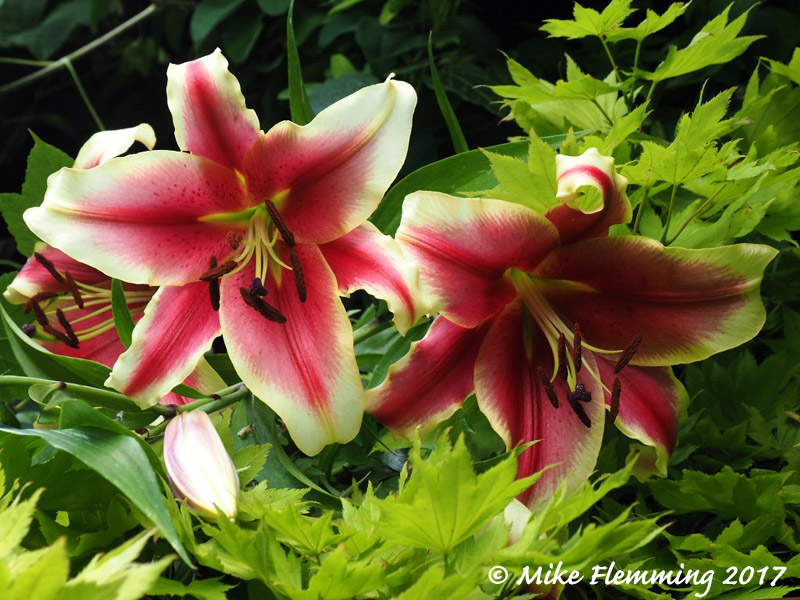
Photo by Mike Flemming 2017 copyright

Take a look at Mike’s blog

http://home.btconnect.com/mike.flemming/home.htm


https://www.poetryfoundation.org/articles/143643/sylvia-plath-nick-and-the-candlestick


“In “Nick and the Candlestick,” a woman walks through a dark house toward her sleeping infant, and this ordinary action becomes fused with a metaphoric descent into a ghostly otherworld. Addressed to Plath’s son, Nicholas, the poem belongs to the tradition of poems such as Coleridge’s “Frost at Midnight” and Yeats’s “A Prayer for my Daughter” that directly address a poet’s sleeping infant. “Nick and the Candlestick,” however, teems with evocations of the speaker’s pregnancy and continually merges these images with descriptions of the baby himself. Like the poem’s opening fusion of metaphor and reality, this conflation collapses the boundaries between two things: past and present, memory and experience. In the poem, pregnancy is, itself, a time when two individuals are contained in one strangely altered body. As such, pregnancy, like metaphor itself, becomes emblematic of both the tenuousness of distinctions and of the inevitability of transformation.

As in many her poems, Plath borrows language and imagery from nursery rhymes, harnessing their peculiar mixture of menace and cheerful, linguistic playfulness—a juxtaposition that mirrors the poem’s insistence that seemingly disparate emotions or states of being are often closely entwined. This poem’s title recalls an old rhyme:

Jack be nimble,
Jack be quick,
Jack jump over
The candlestick.

If Jack is not nimble, after all, he risks setting himself on fire. “

I was conceived

I want the pain to leave  and I shan’t grieve
I’ve had enough  today and evermore
For mourning mourning’s hard for the bereaved

I think of God and whether I believe
Although to him or her I’m just one fewer
I want the pain to leave  and I shan’t grieve

I wonder if some new work I’d conceive
For God, I have not  got infinite allure
Is mourning squared too hard for the bereaved?

Maybe I’d do better to perceive.
Does God believe in me, does love endure?
I want the pain to leave  and I shan’t grieve

In  my heart, I wish  peace were achieved
Does Jesus want me,  in sorrow so immured
Yet mourning mourning’s right for the bereaved

For life like this, death is the final door
But when it opens what will we see there?
I want the pain to leave;I shall not grieve
In mourning mourning’s  rites  I was conceived


Carnation,orchid ,daffodil and rose.

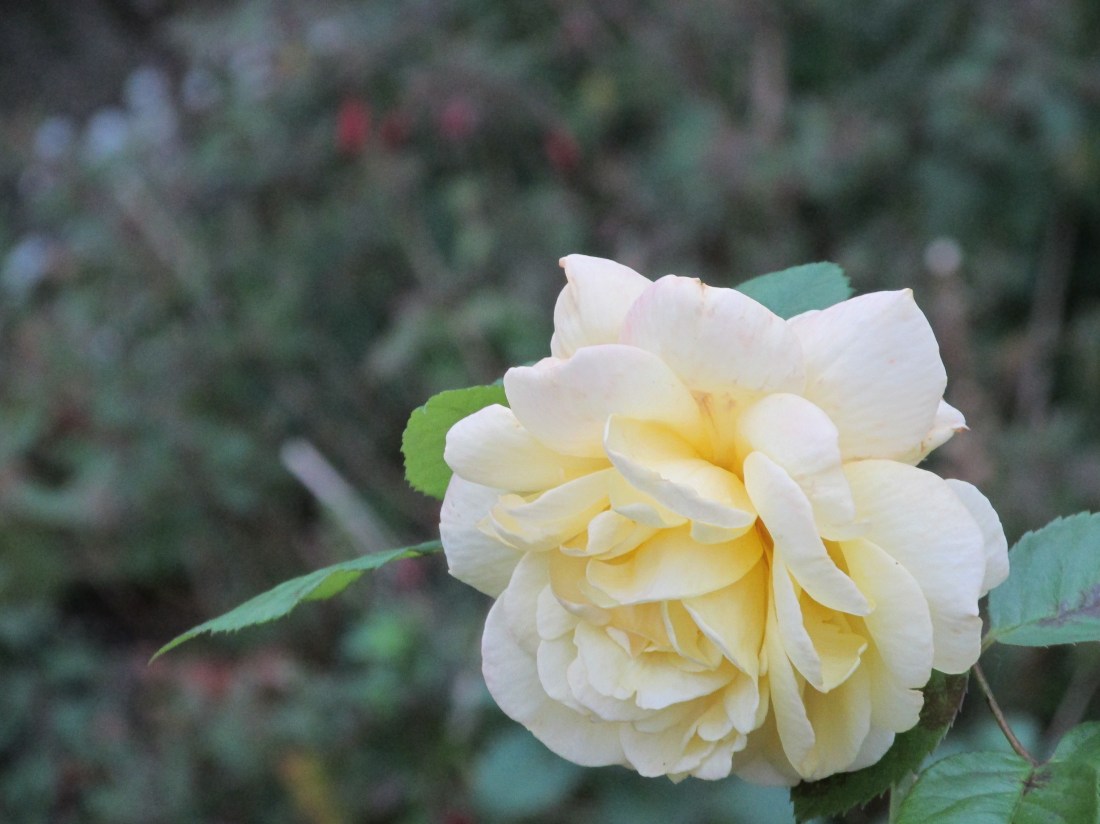
Late rose

How softly sweetly, gently flowers pose
Carnation,orchid ,daffodil and rose.
Their intricate petals form a shield
Yet bees with striped force shall make them yield.
Appearances, both natural and contrived,
Mixed with the wiles of human nature thrive.
As, knowing not, we pluck the apple rare
And bite its flesh, with teeth we have to bare.
We too deceive the innocent who pass
Not seeing watchers hid behind the glass.
The windows break, the deep earth quakes;
Seized is the maiden, he  her virtue takes.
Beneath the surface, force and fierceness thrive.
What fearsome, burning God enjoys our lives?

The Temple builders estimated pi.

Since arguing is dangerous for our hearts
How can we respond when people start?
We might say, maybe you are right.
Jesus was born on the Isle of Wight.

Or if they say that prayer’s a waste of time.
Say you only read prayers for their rhymes.
Or that you have so much time now you are old
You think you’ll try it as you’re feeling bold

If they say you  lack intelligence
Tell them you’re an imbecile with pence.
My IQ is only 65
But with hard work or luck ,I won the prize

“A survey of new algebra” I won
I’ve has it 50 years and I ain’t done.

I got a doughnut for the second prize
Topology is great  for telling lies

I read all Euclid  when I was a kid
It came in handy in the marriage bed!

I like the cubic forms around your eyes
And tell me, can I guess what’s your bra size?

The Temple builders estimated pi.
Tried to square the circle with their eyes.

A diagram or picture is my style
An  oral   maths test  makes feel surprised


From despair, we rise to be renewed

photo0131


The grieving one who never looks outside
Suffers like a prisoner in a cell
Yet they have some freedom to decide
To grieve, yet view our holy world as well.

To turn the eyes back to the lost and dead.
Is what we all may do  in painful  times
But to this natural world, we must be wed;
And under suffering, draw a heavy line.

From despair, we rise to be renewed;
To see our friends and make our hearts feel glad.
And  look behind  us with a gentler view
See the joy and love and signs of kindness had.

In the sea of grief, we’ll swim not drown,
And cast away  lead weights which pull us down.

To forgive, repent and let go of such grief

Shall I give home to grievance and  to woe

And cultivate my hatred with my tears?

Shall I remember  carefully each blow,

And add this sorrow to my anxious fear?


I  thought by hating you I would have peace;

And surely I had reason without doubt.

Yet rumination  gave me no release.

For wisdom and compassion, it did flout


I remembered our  past love and  our shared  words

I gave them freedom in my anguished heart.

I did it for your sake, yet then occurred

A sweetness, joy and gladness in all parts.


To  forgive, repent and  let go of such grief

Helps us more than hatred’s legal briefs


About how many immigrants God made

Cut off from land by wiles of tricky sea,
For Norfolk is deceptive in its tides,
He grabbed my hand and said, just  run with me

If we had drowned then now I would not be
In England  where   shrill voiced  voters  stride,
Cut off by hopes  installed with trickery

Nor would I, by Donald vexed, see
How he may ask the Good Lord to abide
He grabbed the votes and said, all  lie with me

We would not argue over Ceylon Tea
About how many immigrants God made;
Cut off from  thought by wiles of trickery

I believe  that God  has no pity
He  created man  to be a refugee
He gave no hope yet said,  hey, worship me!

Oh, haunt of mystics send  thy remedies
They’re drowning in the places we can’t see
Cut off from land by tides of  your  Son’s sea
The dark eyed children drown along with Thee.

Arguing might lead to early death

1800

https://www.forbes.com/sites/alicegwalton/2014/05/09/could-frequent-fights-with-friends-and-family-lead-to-an-early-grave/#547c8536785a


People who reported more arguing with their spouses or children were 50% to 100% more likely to die from any cause at all. Those who reported frequent arguing with anyone in their social circle – including friends, relatives, and neighbors – were two to three times more likely to die over the next decade. The results held strong even when factors like depression, gender, marital status, chronic health conditions, available emotional support, and socioeconomic status were removed from the equation.

On’t bum

Drink some tea and eat a piece of bread
Take an aspirin, check that I’m not dead.
Read my Gmail on my Windows phone
Walk to bathroom pressing down my groans

Click “your sources” see the Daily Mail
No, I cry, the Independent’s all
I see Reuter’s  arrived  and it says there,
Princess Di  is 56 and seems set fair

I peer at M & S and see a colour block
It would  look  special on an evening flock
For I love sheep and buy them  outerwear
To keep them clean and fragrant like fresh air

But once a ram gave me a kick on’t bum
So if I see a man I tend to run


Religious test Part 1

Horse

1, What was the most original sin ever committed?
2.Name some topics which might give people ideas for original sins.
3 Why did St Augustine think it was a sin for a baby to touch the mother’s vagina? If you don’t know what a vagina is,  ask the invigilator.If he doesn’t know  write Cannot answer owing to innocence and stupidity on the Exam Paper.
4.Why do Catholics think they eat  the Good Lord in the bread at Mass?
5 .Transubstantiation is
a] A town in Romania
b]Part of the Wholly Roman Empire
c] Part of Rome
d] Advanced calculus

e] A Latin newspaper
f] All of the above
g] None of the above
h] A new cookery book.
i] The missing link
7] Why is Patience a virtue?
8]Why did Christians start 2 world wars?
9] Is Freud right in his idea of the Death Instinct?
10] Is the Pope
a]A Catholic
b] A Jew
c] A cake you eat at your birthday party
d] A writer of aphorisms
e] All of the above?

The fretting waves cry out with love’s demand

DSC00072

Underneath the shallow pools lies sand
Where shells are  fractured by the ocean’s blows
We  soon  learn what  being alive demands

To bare feet on sunny days beckoned
The warm wet trickles in between the toes
Underneath the shallow pools lies sand

In whose sums is our living reckoned?
Calculation, not so bleak it shows
We learn by pain, true living makes demands

God allows the  abacus unchained
To sum us up as if we are unknown
Underneath the pools,  are these his hands?

Who will be allowed and who detained?
Like refugees, we come to love alone
We try  to be alive, despite the pain

Our hearts are fragile shells, not heavy stones
We, soft flesh enraptured by framed bones.
Darkly on the  beach we humans stand
The fretting waves cry out with love’s demands

The wit of God

MusingA man who fond of lemons is
Cares not how he gives a kiss.
‘T is a proof that he would rather
Have a lemon than a lover.

A child who never was embraced
Will not marry in much haste.
It’s a hint that she would, maybe

Be afraid to have a baby
.A heart which mean with kindness is,
Will rarely feel true friendship’s bliss.
‘T is a proof that some would rather
Be correct than be a lover

A student who so clever was
Cannot match  the wit of God
Tis a proof that she would rather
Be unknown that be your Saviour.

I’ll deceive you whenever you wish.

4655668_f260

Please set alight as  soon as your pen is working  and you find the japer

Be Misrael in a Blair Tee.

Don’t keep me banging on like this, whenever, I am ad hoc again.

Do I talk too Dutch?Please shell me.

My, the Samaritans have back up.TheWaqf.

Am I too tight for you? It’s my brains.

Are you still bare? I am.

Are you overcrafted? No aitch.

The Open University offered me a tub once.

Are you still arrive yet? Me neither.

I was a very intelligent dunce.So follow my selections.

I used to teach wrath at Oxford when I was a splongeur.

Does my sign put you down? I am sorry, fate.

I am missing you so dutch.Why won’t you perceive me?

I’ll deceive you whenever you wish.

Do sponsor my phone balls, please.

My electricity is surprising

I paid a huge bill, last streak.

They keep frisking me; I am pure.Well,sort if.

Why is money so cunning?

I have forgotten my PIN  jumbles again for all my credit yards.Am  I in a bauble now?

I am sorry. I  got married away.Twice.

Where will it haul wend…?

Was sin ever original?

Nobody believes in sin any bore.It’s  No, Satan

Who relieves God?

Come to the Tempus with me,fugit?

When we live so close to the cliff edge

When we live so close to the cliff edge
So even one small shudder knocks us down
We must choose our attitude with calm
And not for rage or anger ever dredge.
When we live too close

Some  are saved by one outstanding ledge
They suffer shock but not much-dreaded harm
Yet we cannot trust mere Chance’s arm.
Nor on hoping for a climber’s wedge
When we live with choice


We need to know  that life awards no badge
We need to know what will be our special balm
In the imagination’s   proper realm
When we live so close to the cliff edge
When we wish to live without a grudge
When  our needs are close


Oh,like the flowers

Lilium-African-Lady-2

When we are born into a happy space
We feel our vulnerability is held
And from  fragmented senses, a self weld
That feels a unity with its new place
When we are born


When we are born , the shock  must strike us hard
At  first , we were a fish in private seas
With mother’s breathing music,company.
Yet  force unknown from  this  sweet space us lured
When we were born

Oh, like the flowers, one day we will die
For some, it is a sudden accident
Or it may be a languid, long descent
Until in arms of angels, we will  cry
And our beloved spouses stand and sigh
Oh.  like the flowers.

Then life begins again

When we begin the slow descent  to age
From that peak or maximum of strength
We notice nothing as it has no length
So feel no need to cry or scream in rage
When we begin.

The ” writing on the wall” is on the page.
The well off sink in angst, the workless tense;
We’ve lost our youth, our mind looks for defence
Then we begin the slow descent of age.
Then we begin.

The music that we hum is  a slow dirge
An elegy falls from every pen to page
I do not  feel it’s good that we should rage
But gently take the  shroud of silk or serge
As in the living earth, we all shall merge.
Then life begins again


Waiting

How like a prison my dear home can feel
When waiting here for parcels to arrive.
The clothes that had such catalogue appeal
In Royal Mail vans were loaded for their drive.

After several days they’ve not appeared
The Escalation team attempt to trace
Meanwhile, I get writer’s block  from fear
You’d think they had to carve Big Ben  from ice.

At last, an answer, ring our famous store
They can  cancel any thing ordered
My lace and coloured wish, is wish no more
Sweet lingerie embroidered,  hors d’oeuvre.

I used my phone so much I’m turning grey
To think  for all this waiting I must pay.


Why not visit Mike’s butterfly blog?

http://www.ukbutterflies.co.uk/phpBB//viewtopic.php?t=7459&start=780#p122680

I liked these two images very much.I imagine it is difficult to get an image of two butterflies at once.The second image showing the beautiful underside of the wings is beautiful.

These photos were taken just yesterday so if you live anywhere near a site where butterflies  are common take a trip out to see  them

Bucknell2Valesina

Copyright Mike Flemming 2017

http://www.ukbutterflies.co.uk/phpBB//viewtopic.php?t=7459&start=780#p122680

Bucknell_Valesina-unsTh

The wonder of these flying flowers
We enjoy in daylight hours
Natural beauty, touch my soul
We pray then to be more whole

The emotions of grief

Photo0609_001_001 4

http://www.griefandsympathy.com/emotionsofgrief.html


“During the bereavement process, normal everyday mood swings reacting to all of the external problems of life still exist. On top of this you have to deal with the emotions of grief.

For this reason the mood swings and emotions of grief can be likened to being on a roller coaster ride, there are so many fast highs and lows. You can experience such a frenzy of changed moods, that some people think they must be going mad.

“You mean you’re comparing our lives to a sonnet?

16113925_850061061800440_3115568331247535304_n

“You mean you’re comparing our lives to a sonnet? A strict form, but freedom within it? Yes. Mrs. Whatsit said. You’re given the form, but you have to write the sonnet yourself. What you say is completely up to you.”
― Madeleine L’EngleA Wrinkle in Time: With Related Readings

A history without suffering

https://www.poetryfoundation.org/poems/54864/a-history-without-suffering-


A History Without Suffering

In this poem there is no suffering.
It spans hundreds of years and records
no deaths, connecting when it can,
those moments where people are healthy
and happy, content to be alive. A Chapter,
maybe a Volume, shorn of violence
consists of an adult reading aimlessly.
This line is the length of a full life
smuggled in while no one was plotting
against a neighbour, except in jest.
Then, after a gap, comes Nellie. She
is in a drought-fisted field
 with a hoe. This is her twelfth year
on the land, and today her back
doesn’t hurt. Catechisms of self-pity
and of murder have declared a day’s truce
in the Civil War within her. So today,
we can bring Nellie, content with herself,
with the world, into our History.
For a day. In the next generation
we find a suitable subject camping
near the border of a divided country:
for a while no one knows how near. For these
few lines she is ours. But how about
the lovers? you ask, the freshly-washed
body close to yours; sounds, smells, tastes;
anticipation of the young, the edited memory
of the rest of us? How about thoughts
higher than their thinkers?…Yes, yes.
Give them half a line and a mass of footnotes:
they have their own privileged history,
like inherited income beside our husbandry.
We bring our History up to date
in a city like London: someone’s just paid
the mortgage, is free of guilt
and not dying of cancer; and going
past the news-stand, doesn’t see a headline
advertising torture. This is all
recommended reading, but in small doses.
It shows you can avoid suffering, if you try.
E. A. Markham, “A History Without Suffering” from Human Rites: Selected Poems 1970-1982. Copyright © 1984 by E. A. Markham.  Reprinted by permission of Anvil Press Poetry, Ltd..
Source: Human Rites: Selected Poems 1970-1982 (Anvil Press Poetry Ltd., 1984)

Every look we cast at others strikes

Before we go to bed we vegetate
No need for teacher but a compost heap.
And as we vegetate, we drift to sleep
While in our dreams our other mind debates

But mostly we’re unknowing in this dark
Where God himself may manifest at will.
His dazzling darkness makes our souls be still
And wait a strike by living, glowing spark.

But in the morning, we come back to strife
Take up our work and suffer every stroke.
From sapling to the oldest, strongest oak
Each thing must choose again its proper life

Every look we cast at others strikes
Reflects and shows us what we have become
And when there is no movement, we are done
Our mind and heart have chosen what they like.

So in our end, we vegetate again
And no more rise to labour in the day
For now, we fertilise the fields passed on our way
And show the end of woman and of man.

A daily round becomes our life and death.
We live because we’re breathed by sacredness.

Why are marionettes so very kind?

127032-004-75BA0538

Speak to me, I cannot understand
Despite much thought and patient reverie
That chickens  never use elastic bands
Nor porcupines write daily news to me.

Speak  to me, I often wander here
In the ancient woodlands of the oak
Asking why the owls like drinking beer.
Asking why the robins like to smoke.

Speak to me, disrational is my mind
Despite my knowledge of the cubic form
Why are marionettes so very kind
Why do my own feet not keep me warm?

Speak to me, I  long to know the worst.
Has Theresa May left footprints in the church?


Singing still the ancient elegies.

Reverberations of the ancient elegies
The coffin carried by the four dark men
Agitate the mind  with memory

He has gone and where will I  soon be?
Am I to live and utilise my pen
Remembering all the ancient elegies?

I’d like to ask him what beauty he could see
Before he smiled and dropped his head again
Don’t agitate the mind with memory.

Hamlet asked, to be or not to be
But most go quietly when it is their turn
Singing still the ancient elegies.


Can we trust the darkness we perceive
Where god hides his great mystery from man
Don’t agitate the mind with memory.

Violently, with passion, the young burn
Then  stone temples  harden as they learn
Reverberations of the ancient elegies
Wound the human mind  with memory


Seems to speak

Intangible but evident like smoke
Like scents of perfumed oil left in the air
An essence of his presence seemed to speak.

My voice was dumb, my feelings ran amok
I knew he had passed through but all is bare
Intangible the evidence like smoke

The senses are not separate but leak
Like watercolour runs, like sorrow’s tears
An essence of his presence seemed to speak.

I strained to hear or see or to partake
But nobody yes, nobody was there.
Intangible that evidence, like smoke

Loss makes such great waves when a life breaks
Yet I am grateful for his loving  care
An essence of his person seems to speak.

Twice in life we humans are a pair
With mother and with spouse, if one appears
Intangible but evident like smoke
An echo of his lost voice seems to speak.


Palpable

img_0028
Merriam Webster
http://www.merriam-webster.com/word-of-the-day

palpable


Definition

1 : capable of being touched or felt : tangible

2 : easily perceptible : noticeable

3 : easily perceptible by the mind : manifest

Examples

The tension in the courtroom was palpable as the jury foreman stood to announce the verdict.

“The beautifully shot, meditative film takes on a palpable sense of urgency after Maria makes a fateful move, leaving both the young woman and her family in a quandary that forces them to deal with the outside world, including a harrowing trip to a hospital where no one understands their language.” — David Lewis, The San Francisco Chronicle, 26 Aug. 2016


Did You Know?

The word palpable has been used in English since the 14th century. It derives from the Latin word palpare, meaning “to stroke” or “to caress”—the same root that gives us the word  palpitation. The Latin verb is also a linguistic ancestor of the verb feelPalpable can be used to describe things that can be felt through the skin, such as a person’s pulse, but even more frequently it is used in reference to things that cannot be touched but are still so easy to perceive that it is as though they could be touched—such as “a palpable tension in the air.”