
Day: Jul 28, 2017

The guests
Share this:
So you are gone
So you are gone who once declared your love
For that phantasm conjured in your mind
For onto me you brought down from above
A torment bitter and your words unkind.
For that phantasm conjured in your mind
For onto me you brought down from above
A torment bitter and your words unkind.
Used to friendship from within your books
You did not understand that I was real
Irritation grew as you did look;
You threw your poisoned arrows at my heel.
Irritation grew as you did look;
You threw your poisoned arrows at my heel.
What once you loved then you began to hate
If not perfect then intolerable I must be
And then you cursed me with this sorry fate
Our child was born and him you’ll never see.
Illegitimate and born in desert grey.
I carried him alone from death’s dark way
Share this:
Without your love, I’m nobody I know.
Without your love, I’m nobody I know.
Our inter-self, dismembered, broke apart
Give me courage on the journey slow
In good times , we may lose our self in flow
To be self-conscious makes shame rule my heart
Without your love, I’m nobody I know.
Do we have no self when partners die?
Bewildered, can I find the way to start
Give me courage on the journey slow
Where is my best path to discover
The way to mend a self, holed by grief’s darts?
Without your gaze, I’m nobody I know
Like a ship strikes rocks deep down below
I risk getting hit without some charts
Give me courage on the journey slow
Will I know myself when new betrothed
To mirrors unfamiliar to me old?
Without your love, I’m nobody I know.
Give me courage in the darkness gross.
Share this:
Fancy bred

Share this:

About Nick and the Candlestick by Plath

Photo by Mike Flemming 2017 copyright
Take a look at Mike’s blog
http://home.btconnect.com/mike.flemming/home.htm
https://www.poetryfoundation.org/articles/143643/sylvia-plath-nick-and-the-candlestick
“In “Nick and the Candlestick,” a woman walks through a dark house toward her sleeping infant, and this ordinary action becomes fused with a metaphoric descent into a ghostly otherworld. Addressed to Plath’s son, Nicholas, the poem belongs to the tradition of poems such as Coleridge’s “Frost at Midnight” and Yeats’s “A Prayer for my Daughter” that directly address a poet’s sleeping infant. “Nick and the Candlestick,” however, teems with evocations of the speaker’s pregnancy and continually merges these images with descriptions of the baby himself. Like the poem’s opening fusion of metaphor and reality, this conflation collapses the boundaries between two things: past and present, memory and experience. In the poem, pregnancy is, itself, a time when two individuals are contained in one strangely altered body. As such, pregnancy, like metaphor itself, becomes emblematic of both the tenuousness of distinctions and of the inevitability of transformation.
As in many her poems, Plath borrows language and imagery from nursery rhymes, harnessing their peculiar mixture of menace and cheerful, linguistic playfulness—a juxtaposition that mirrors the poem’s insistence that seemingly disparate emotions or states of being are often closely entwined. This poem’s title recalls an old rhyme:
Jack be nimble,
Jack be quick,
Jack jump over
The candlestick.
If Jack is not nimble, after all, he risks setting himself on fire. “
Share this:

I was conceived
I want the pain to leave and I shan’t grieve
I’ve had enough today and evermore
For mourning mourning’s hard for the bereaved
I think of God and whether I believe
Although to him or her I’m just one fewer
I want the pain to leave and I shan’t grieve
I wonder if some new work I’d conceive
For God, I have not got infinite allure
Is mourning squared too hard for the bereaved?
Maybe I’d do better to perceive.
Does God believe in me, does love endure?
I want the pain to leave and I shan’t grieve
In my heart, I wish peace were achieved
Does Jesus want me, in sorrow so immured
Yet mourning mourning’s right for the bereaved
For life like this, death is the final door
But when it opens what will we see there?
I want the pain to leave;I shall not grieve
In mourning mourning’s rites I was conceived
Share this:
Carnation,orchid ,daffodil and rose.
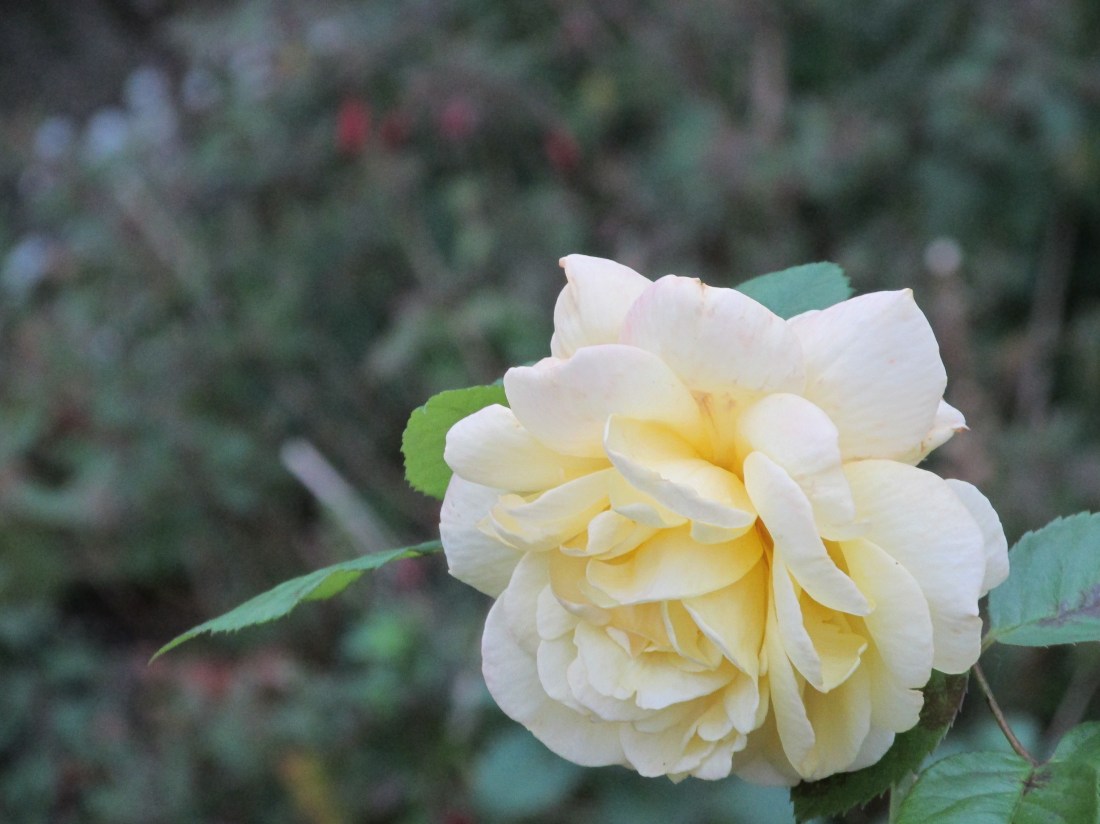
How softly sweetly, gently flowers pose
Carnation,orchid ,daffodil and rose.
Their intricate petals form a shield
Yet bees with striped force shall make them yield.
Their intricate petals form a shield
Yet bees with striped force shall make them yield.
Appearances, both natural and contrived,
Mixed with the wiles of human nature thrive.
As, knowing not, we pluck the apple rare
And bite its flesh, with teeth we have to bare.
Mixed with the wiles of human nature thrive.
As, knowing not, we pluck the apple rare
And bite its flesh, with teeth we have to bare.
We too deceive the innocent who pass
Not seeing watchers hid behind the glass.
The windows break, the deep earth quakes;
Seized is the maiden, he her virtue takes.
Not seeing watchers hid behind the glass.
The windows break, the deep earth quakes;
Seized is the maiden, he her virtue takes.
Beneath the surface, force and fierceness thrive.
What fearsome, burning God enjoys our lives?
What fearsome, burning God enjoys our lives?
Share this:

The Temple builders estimated pi.
Since arguing is dangerous for our hearts
How can we respond when people start?
We might say, maybe you are right.
Jesus was born on the Isle of Wight.
Or if they say that prayer’s a waste of time.
Say you only read prayers for their rhymes.
Or that you have so much time now you are old
You think you’ll try it as you’re feeling bold
If they say you lack intelligence
Tell them you’re an imbecile with pence.
My IQ is only 65
But with hard work or luck ,I won the prize
“A survey of new algebra” I won
I’ve has it 50 years and I ain’t done.
I got a doughnut for the second prize
Topology is great for telling lies
I read all Euclid when I was a kid
It came in handy in the marriage bed!
I like the cubic forms around your eyes
And tell me, can I guess what’s your bra size?
The Temple builders estimated pi.
Tried to square the circle with their eyes.
A diagram or picture is my style
An oral maths test makes feel surprised
Share this:
From despair, we rise to be renewed


To forgive, repent and let go of such grief
Shall I give home to grievance and to woe
And cultivate my hatred with my tears?
Shall I remember carefully each blow,
And add this sorrow to my anxious fear?
I thought by hating you I would have peace;
And surely I had reason without doubt.
Yet rumination gave me no release.
For wisdom and compassion, it did flout
I remembered our past love and our shared words
I gave them freedom in my anguished heart.
I did it for your sake, yet then occurred
A sweetness, joy and gladness in all parts.
To forgive, repent and let go of such grief
Helps us more than hatred’s legal briefs
 How my heart speaks