Can’t get going

With this poem I thee glue to’t bed

With my singing I  thee shamed in ‘t shed

I’m that honest, we were never wed

With my gurglin’ voice, I drove him mad

Is Grandad ‘ere?Tell him  mi finger’s red

Weers our Mam?Am ‘ungry  for  new bread

Am just a girl from Nelson with his head


We used to say Am not I am

And we said in’t   shed not in the shed.We had no shed except for coal as we had an outside closet

And  we called mother, our Mam or mi Mam

My mother called her father, Mi Dad

And her sister,our Lizzie.

I called my father Daddy and as he died he  never got to be Mi Dad

Winter darkness

Four o’clock– and the sun’s still glowing
Four o’clock – of a colour bright day,
Up above, pink-tinged clouds are sliding
Down still sky, sweeping sun away.

Come back sweet sun, do not leave us.
Come back bright beams, I need sunlight
Down on earth, it’s witch moon darkness,
When your golden face is out of sight.

I see the orange tinged clouds extending
I feel such sense of sky lit bright.
But gently now, the mist surrounds you
And sweeps away that happy sight.

Into velvet blackness sinking,
The dazzling, dreaming darkness falls.
Goodbye to haste,and glare, and sunshine
Time for reverie, night time calls.

On the night-trains gentle journeys,
On this trackless train, we ride
Strange visions and haunting pictures
We will see in dreams’ designs.

In my night train, I’ll be happy
In such rich deep reverie.
We visit darkness in our sleeping,
There we learn its ecstasy.

Now we may have no God to hold us,
In His Hands of Living Love,
What will help us trust deep blackness
If there’s no Saviour from above?

Must we enter that great darkness,
Go back to dark from which we came,
Into dark all living creatures,
In that darkness find our home?

Trust the dark unknown, to hold us,
Trust the dark ,both night and day.
Must we walk into that darkness
And trust it is our safest way?

Casualty by Seamus Heaney

Photo0725 (1)

Inverted photo of table lamp

https://www.poetryfoundation.org/poems/51607/casualty-56d22f7512b97


“But my tentative art
His turned back watches too:
He was blown to bits
Out drinking in a curfew
Others obeyed, three nights
After they shot dead
The thirteen men in Derry.
PARAS THIRTEEN, the walls said,
BOGSIDE NIL. That Wednesday
Everyone held
His breath and trembled.   “

The funny bone

Last week I felt happy all  alone
Remembering how I wound my mother’s  wool
Doing nothing,there I felt at home

But now I’ve banged my  pointed funny bone
I sit here clutching elbow, keeping still
Last week I felt happy and alone

What is it that makes the elbow prone
To throbbing  as it hits the window sill
Doing nothing,how I felt at home

When no-one hears ,there’s no motive to groan
Though eyes can weep when pain makes us feel ill
Last week I felt happy and alone

Would we turn to statues of grey stone
If no-one ever hears our crying shrill
Doing nothing,how I felt at home

My elbow is alright but I’ve no will
I’ll have to let Len Cohen sing me well
Last week I felt happy all  alone
Doing nothing,thus I found my home


What to wear at a funeral

  • http://youtu.be/m5TwT69i1lU

    Just before Stan’s funeral,  a heatwave began.Mary realised her outfit which her sister had chosen was too heavy.
    So she called into a small department store full of delightful garments.Unfortunately, most were more suitable for a nightclub than a chapel.A black dress caught her eye.It had a somewhat low neckline which was decorated with a deep gold band.
    Mary decided it was more suitable for Queen Cleopatra than a British woman.After a few minutes ,she found a lovely thin black jacket and a long drapey skirt.She rewarded herself with a large cup of coffee and observed the scene.
    Many of the women were wearing the dresses Mary had thought were for dancing and nightclubs while the rest wore jeans with T shirts saying:No size Fashion or Free women now!

    Most of these women were rather plump so their busts stuck out with the words going up and down some invisible contour lines across the small mountain range, their bosoms resembled.No wonder when the counter in the cafe was stacked with almond croissants.Definitely an occasions of sin and for sin.

    Photo1404
    The next morning Mary showed her new outfit to Annie.
    You can’t wear that, Annie screeched.The skirt is blue!
    Well if it is it is dark blue, Mary cried.It looked black in the shop.
    You will have to go back and change it.And you must buy some makeup too..
    What, for a funeral?
    Yes,said Annie who was wearing pink and purple eyeshadow from Pax Wacter combined with sun protective foundation by Minxette in deep beige.Her lashes were dyed purple and her brows had been groomed in a way which gave the impression she was constantly in a state of severe surprise or shock.
    Her thick juicy lips were painted a lurid orange from Revlon of Timbuctoo and Shanghai which meant that any man who kissed her would never be able to conceal their sin from their wives or partners.How hard life can be at times.Or even all the time.

    You must dress entirely in black and it will make you look pale but don’t worry you can have some of my makeup Annie said loudly

    Will the colour suit me, asked Mary plaintively.

    I think you can wear any colour now your hair has gone that horrible shade of pale.
    You are a bit rude, Mary said but I take the hint.

    http://youtu.be/Mb3iPP-tHdA
    After Annie left Mary phoned an old friend of hers and asked him what he thought of her clothes problem.
    Black and blue will look very good, he told her.As long as it’s dignified and dark the colour is immaterial.
    That’s nice, Mary thought, as she hated shopping and was unsure how much income she would have as a widow.
    Being practical a dark blue skirt is something a woman can wear any time whereas black is not so good in the daytime.
    Mind you, after you visit any town centre in Britain you will see sights of women in strange and tight clothing that will both amuse and appal you though most of us are used to it now.
    My goodness, Mary said to herself, what hard work it is losing a husband.I should have hired a boat and thrown him into the sea or even buried him in the back garden.That would have been better than all this kerfuffle.So she decided to turn her mind to higher things.

    http://youtu.be/CZipvBo3_Z4

    http://youtu.be/ihx5LCF1yJY

Remembering life is sacred and too brief

When we are made so lonely  by our grief
When we lose the loved one of our years
Remember life is sacred and too brief

Some may gain their comfort from a priest
Other by the emptying of their tears
Can we be too careless in our grief?

Blown away like one dried autumn leaf
Disconnected with our hearts so seared
Remember life is sacred and too brief

Death is more forgiving to the least
We must share the anguish and the fear
When we are made  too lonely  by our grief

When we feel we’re falling piece by piece
We wonder how to dignify by prayer
Remembering life is sacred and too brief

Just as the sun will rise up in the East
Despite it  dying daily everywhere
We are all  made   lonely  by our grief

Life is hard and often it’s unfair
We may feel so much we cannot bear
When we are made   lonely  by our grief
We remember life is sacred and too brief

A mere shroud

Lonely - Touching SpaceSome  ddwell   not in their  too human flesh

They  inhabit not their  feelings nor their breast

To be with them is  vile, but I digress

I’d rather live with cats and holy ghosts.

if we fail to enter our true being;

With accident and trauma felt too soon

Or. with a mother tormented and unseeing,

We linger sadly, helpless as her moon.

Is it possible to come home to ourselves

When failure marked our earliest attempts?

Will love arise spontaneously  dissolve

When often forced back by our own dissent?

Will night’s darkness  be  more than a  mere  shroud

Covering with its cloak the  selfish crowd?

With this poem.I thee duly read

7613537_5314b5b2fd_m

With this poem, I thee  truly read

With all my wilful goods I thee endow

I know not what your other lovers said

But will they lend you horses or a plough?

Without a handshake, we are nearly dead

With all my mercies, joy, I thee endow.

I know not what the judging angels said

But we will get to heaven, some other how.

With this promise, I thee  truly take

To be my lawful and unlawful mate.

And after all, it’s for thy  pity’s sake

I consent to eat my dinner from your plate!

For prayers and vows confused  have made me wild

I hope God’s mercy makes  us lovers mild

Poetry as enchantment

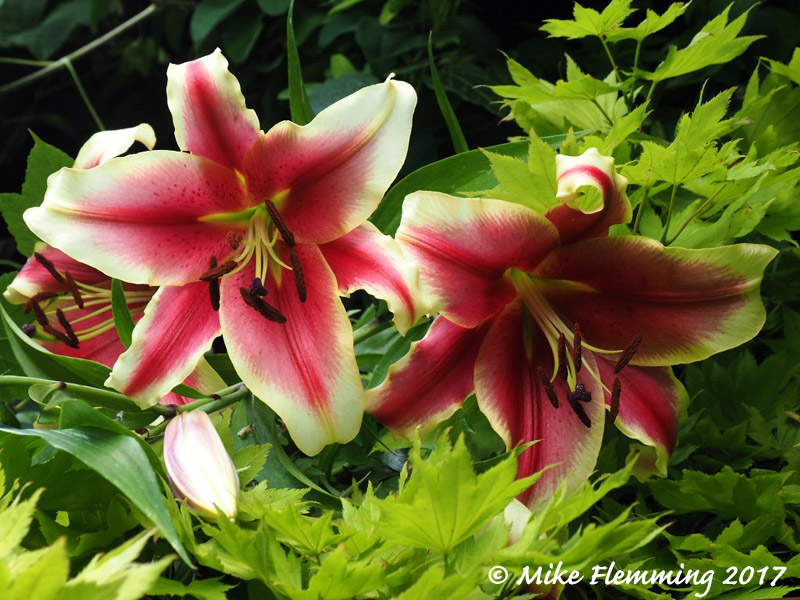
Lilium-African-Lady-2

http://www.thedarkhorsemagazine.com/danagioiapoetrya.html

This is well worth reading

Extract

Be not afeard. The isle is full of noises.

—Caliban, The Tempest

let me begin with three crucial observations about the art of poetry. First, it is the oldest form of literature. Indeed, it is the primal form of all literature. Poetry even predates history because it not only existed, but flourished before the invention of writing. As an oral art, it did not require the alphabet or any other form of visual inscription to develop and perfect a vast variety of meters, forms, and genres. Before writing, poetry—or perhaps one should say —stood at the center of culture as the most powerful way of remembering, preserving, and transmitting the identity of a tribe, a culture, a nation. Verse was humanity’s first memory and broadcast technology—a technology originally transmitted only by the human body. In Robert Frost’s astute formulation, poetry was ‘a way of remembering what it would impoverish us to forget.’

Frost’s pithy definition is usefully ponderable. He calls poetry ‘a way of remembering,’ which is to say a mnemonic technology to preserve human experience. He claims the loss of what it preserves ‘would impoverish us,’ which is to say that poetry enriches human consciousness or, at the very least, protects things of common value from depredation. Finally, he asserts that poetry maintains these virtues against the human danger ‘to forget.’ Here Frost acknowledges that the art opposes the natural forces of time, mortality, and oblivion, which humanity must face to discover and preserve its meaning. As Frost s

“Inside the mind of poetry”

6419415_506e1f1602_m

Inside the Mind of Poetry


“The greatest lines in poetry are infinitely quotable while having no definite meaning. What is a mind of winter, and why must one have one? It doesn’t matter. Wallace Stevens’ greatness lay in his ability to produce these kinds of anti-aphorisms, seemingly wise but ultimately ungraspable: Thought is false happiness. She sang beyond the genius of the sea. The only emperor is the emperor of ice cream. And, most pointedly: The poem must resist the intelligence / almost successfully. (Or, nay, successfully!)

I believe that to read poetry, one must have a mind of poetry. You must enter a state where you come to understand meaning-resistant arrangements of language as having their own kind of meaning. It’s quite similar to those Magic Eye posters from the ‘90s: If you haven’t figured out how to look at them, you can’t believe that anyone really sees the dolphin. (This metaphor has its limits, making learned skill seem like an on/off conversion; too, with poetry, even when you’ve mastered “the trick,” not everyone sees the same thing.)

Is this “negative capability”? I’m not sure.

Negative capability, as described by Keats, is rather delightfully poetic in itself, a form of imitative fallacy in criticism, a mental onomatopoeia. It seems clear enough by his own definition: “when a man is capable of being in uncertainties, mysteries, doubts, without any irritable reaching after fact and reason.” But it’s so often badly paraphrased, in conversation and in print; Wikipedia defines it as “the capacity of human beings to transcend and revise their contexts” (to their credit this merits a “citation needed”). A concept so frequently muddled must be inherently mysterious and as such, perhaps, a shibboleth; if you don’t understand negative capability you won’t understand poetry.

There are probably people who go through life with a permanent mind of poetry. I am not one of those people. I fall in and out of it, and not at will. As I write this, I am not in it, and have not been for three or four months, which is to say, I have not been able to focus on or become absorbed in any book of poetry. Oddly, I have continued to write poetry. I continue to think about poetry, almost daily. As my Twitter feed reveals, one doesn’t need a mind of poetry to talk about poetry.”

Too intelligent?

Photo0692https://www.theguardian.com/commentisfree/2013/dec/28/can-you-be-too-intelligent


“You could, of course, say that intelligence, properly understood, is a combination of wisdom, good judgment, logical dexterity and factual knowledge, and by definition, you can’t have too much of that. I’d like to agree, but I fear it is already too late to reclaim the word “intelligence” for this well-rounded cognitive amalgam. Intelligence has been broken down into small parts, and we can rely on each one to excess.”