
Oh, leather shoe from Hotter’s sale
At your beauty, grown men quail.
Far better than my vinyl pumps
Which made my feet grow big red lumps
In these shoes, no-one can see
My bunions, in God’s artistry.
When the sun shines winter low
I see my feet all bent a-glow
Although to doctors they’re deformed
In their curves are beauteous charms
Just as wrinkles in our skin
Look delightful coloured in.
As subjects for computer art
Curves and wrinkles play a part.
They are microcosms, you see
Of the world in its glory.
Mountains worry not if bent;
Streams run blithely up to Dent.
There in a small natural pool
My husband swam to get more cool.
Meanwhile, I ran up the road
Giving sheep the biscuit owed.
Then we got into the car
As Dent is further than we were.
Oh leather shoes, you are my pride
And in all senses, you’re my guide
May you last well and glow bright.
If Dad was here ,you’d be his rite
Day: Jan 9, 2017

Ode to a lightbulb

Oh, light bulb foreseen by our God
Save us all from darkness’ rod.
You are our Saviour as foretold,
In prophecy by ancients bold.
We will worship you at night
When sunken is the sun so bright.
We’ll watch TV and Kindle fire
No more to play shall we aspire.
We’ll wear ourselves out watching screens,
As from a can we eat baked beans
We’ll send for pizzas with our phones
With which we never feel alone.
We might talk to our partner dear
Though to text is easier.
We see the neon street lights gleam
Where once we saw the moon’s cold beams
And in bed ,we read our books
With a kindle or a nook
We put beneath out pillows fair
i phones which we long to hear.
Can one have too much new light?
From technology some take flight
For gone are seasons, and their fruit
As our computer we reboot.
New potatoes all year round
Avocados once quite rare
Now are seem ‘most everywhere.
Melons, grapes and fresh green peas
As the birds sing, life’s a breeze.
Oh light bulbs, fluorescent tubes
Electric candle, light is cubed.
We thank you for extended days
Maybe we’ll find time for prayers.
God is great in mystery
No light bulb can help us see.
In silence, darkness, meditate
Wonder what will be our fate.
As retribution for our wrong
Satan stabs us with his prongs
He needs no more light in hell
The fiery furnace cooks as well.
Share this:

Mimesis, what does it mean?

Share this:

Typos

Happy New Leer
Hippy New Flair
Happy, Loo near!
Aptly New Here.
Hoppy knew Fear
Happy New Beer
Happy with Lear?
Snappy New Year
Cherry Xmas
Very Xmas to view.
Make the post of it.
Hope to flee you soon.
Sorry I’ve not been in much.
Sorry not to sweep my promises.
Sorry I didn’t come but you didn’t either.
We must beat this year.
Let’s get together.Amen.
I’ll see you at the Creator.
I didn’t employ the cow we had.
Share this:

Poetry inspired by paintings
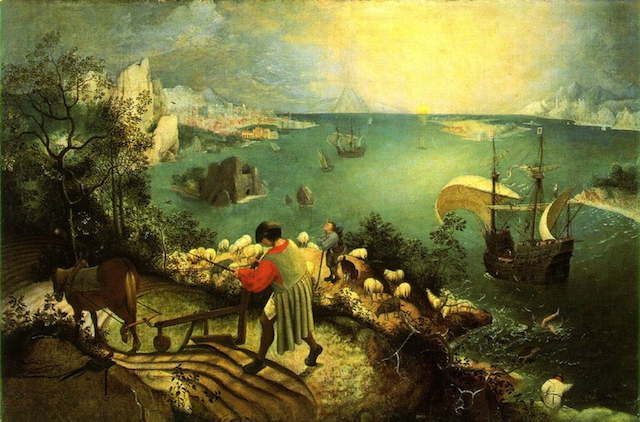 http://www.theartsdesk.com/visual-arts/listed-poems-inspired-paintings

Edwin Romanzo Elmer’s Mourning Picture, 1890, inspired Adrienne Rich’s 1965 poem of the same title© Smith College Museum of Art, Northampton, Massachusetts
Poetry has always inspired artists. Ovid’s Metamorphosesand Dante’s Divine Comedy are two of the most enduring. And according to Art Everywhere, of which I will say little here but have written about elsewhere (see sidebar), the nation’s favourite painting is inspired by a more recent poem: JW Waterhouse’s The Lady of Shalott shows the ill-fated heroine of Tennyson’s famous verse moving inexorably towards her watery death “like some bold seer in a trance”. The second favourite is, incidentally, another narrative illustration of an ill-fated heroine on the point of meeting her watery fate – Millais’s Ophelia.
Share this:

The difference between prose and poetry.
https://www.poetryfoundation.org/harriet/2012/04/the-difference-between-poetry-and-prose/
Quote:
Prose is all about accumulation (a morality of work), while poetry as it is practised today, is about the isolation of feelings (an aesthetics of omission). Among other things, prose is principally an ethical project, while poetry is amoral, a tampering with truths which the world of prose (and its naturalistic approach to mimesis) takes for granted. Poetry creates its own truth, which at times is the same truth as the world’s, and sometimes not. Whatever the case, its mimesis is always a rearrangement, at a molecular level, of that axis between the “seen” and the “felt” (that coal chute which connects the childish eye to the Socratic heart), which, were it not for poetry, with its misguided elenchus, would remain obscured. In both classical and modern languages it is poetry that evolves first and is only much later followed by prose, as though in a language’s childhood, as in our own, poetry were the more efficient communicator of ideas

 How my heart speaks