How do you know if you are insane? Don’t worry.Other people will tell you and even send a mental health team member.If you don’t want that to happen dress well,keep clean,eat and keep any wild or unusual thoughts private until you find a trustworthy person to guide you.If you can’t work as normal go to the doctor and tell them .You will find help somewhere.. online forums?
How do I know if my anxiety is normal?
Do other people in the same situation feel anxious? Like before an exam or going tp a job interview?Even if it is more than what others feel, you are probably a sensitive highly strung person who needs to relax and not be so self critical but that is not easy for everyone.I’ve been trying for 60 years ,so I should know!My first memory is of being in a pram with my two brothers,one at the bottom end and the other next to me and they were fighting and tore a blanket in half.Then when older they set my hair on fire and poured the contents of the baby’s potty over me.And tried to drown me.So being anxious is normal for me.Luckily no-one I know now has done any of the above.And if they tried I’d feel justified in ringing 999.
Am I a wicked sinner?
Is there any other kind? We are all sinners some times.It depends on your attitude to that.As in the Pharisee and the Publican.Humility is all.
Is seeing visions a good thing?
It depends what they are.Seeing a mirage might keep you going for longer when you may find a real oasis
If they are nasty, seek help.
Also, it might stop you living with real people if you have visions of wonderful kind people that you fantasise about.Generally visions are useless unless they help you to lead a better, more involved life.And recall Joan of Arc…..If you are taking drugs maybe you need help.It is ironic that lovely visions may entrap you more than other kinds.Remember it takes effort to find God or spiritual values
Today at work I asked a lady to help me find something on our company’s website and she was trying very hard and at some point said ‘I can’t see for looking‘. I remembered hearing this idiom before and thought I’d mention it here.
If you can’t see for looking, it means that you have been looking too long or too hard and cannot see what you’re looking for.
Here are some examples (a bit random, I admit):
– Sometimes you can’t see for looking. What are you looking high and low for at the moment which might just be right under your nose? Perhaps it’s time to stop seeking, work on a different bit of your own jigsaw, and let that missing piece come and find you! (alivetochange.com)
The form of some art corresponds truthfully to some felt pattern of our emotional life In this sense every object with aesthetic import is potentially in tune with some elements of human feeling… every truthful work will be limited by its authors range of sensibilities, every truthful work will have its supporters because it resonates with them’. Kenneth Wright
My early birth meant I was at the breast
When Hitler died and left a world depressed
Since then we’ve had Korea,over-run
Palestine and Laos Oh Saigon!
We seem to feel we’re still the very best
Christians are most peaceful, what a jest
From early martyrs killed by Romans in their games
We reversed the process, now it’s we who maim
When did Jesus say he wanted Gold?
When Cathedrals, when portfolios sold?
Why his image on the Flags of War?
Why no love of others, nor their care
At heart we’re carnivores uncontrolled
We wear our masks of love, as guns are sold
11 Then He said, “Go out, and stand on the mountain before the Lord.” And behold, the Lord passed by, and a great and strong wind tore into the mountains and broke the rocks in pieces before the Lord, but the Lordwas not in the wind; and after the wind an earthquake, but the Lord was not in the earthquake; 12 and after the earthquake a fire, but the Lordwas not in the fire; and after the fire [a]a still small voice.
13 So it was, when Elijah heard it, that he wrapped his face in his mantle and went out and stood in the entrance of the cave. Suddenly a voice came to him, and said, “What are you doing here, Elijah?”
I did not think that he would teach me hate
When love was what he falsely spoke to me
Alas, that was the end, the goal,my fate
Once enmeshed ,it’s hard to separate
It’s hard to find the eye with which to see
I did not think that he would teach me hate
What was waiting was ,too soon, too late
With hesitation, love I did agree
Alas, that was the end, the goal,my fate
Did he intend this, did he navigate
Like a lifeboat on a choppy sea?
I did not think that he would teach me hate
I did not send the images he sought
Even that did not make this heart flee
Alas, that was the end, the goal,my fate
How could love become my enemy
And shame and bitter hate the remedy?
I did not guess that he would teach me hate
Alas, that was the end, the goal,the state
As nouns the difference between shame and humiliation
is that shame is uncomfortable]] or painful feeling due to recognition or consciousness of impropriety, dishonor or other wrong in the opinion of the person experiencing the feeling it is caused by awareness of exposure of circumstances of [[unworthy|unworthiness or of improper or indecent conduct while humiliation is the act of humiliating]] or [[humble#verb|humbling someone; abasement of pride; mortification.
As a interjection shame
is a cry of admonition for the subject of a speech, often used reduplicated, especially in political debates.
As a verb shame
is (obsolete|intransitive) to feel shame, be ashamed.
Uncomfortable]] or painful feeling due to recognition or consciousness of impropriety, dishonor or other wrong in the opinion of the person experiencing the feeling. It is caused by awareness of exposure of circumstances of [[unworthy, unworthiness or of improper or indecent conduct.
* (William Shakespeare)
Have you no modesty, no maiden shame ?
*
, title=(The Celebrity), chapter=5 , passage=When this conversation was repeated in detail within the hearing of the young woman in question, and undoubtedly for his benefit, Mr. Trevor threw shame to the winds and scandalized the Misses Brewster then and there by proclaiming his father to have been a country storekeeper.}}
Something to regret.
* (William Shakespeare)
guides who are the shame of religion
* Evelyn “Champagne” King, in the song Shame
And what you do to me is a shame .
Reproach incurred or suffered; dishonour; ignominy; derision.
* Bible, (Ezekiel) xxxvi. 6
Ye have borne the shame of the heathen.
* (Alexander Pope)
Honour and shame from no condition rise.
* (Lord Byron)
And every woe a tear can claim / Except an erring sister’s shame .
The cause or reason of shame; that which brings reproach and ignominy.
* Shakespeare
guides who are the shame of religion
(archaic) That which is shameful and private, especially body parts.
Cover your shame !
Usage notes
* While shame is not generally counted, it is countable, for example *: I felt two shames: one for hurting my friend, and a greater one for lying about it.
Synonyms
* (something regrettable) pity
Derived terms
* body shame * crying shame * shame on you * shamefaced (rel-mid) * shameful * shamefully * shameless * shamelessly (rel-bottom)
A cry of admonition for the subject of a speech, often used reduplicated, especially in political debates.
* 1982 , ” Telecommunications Bill“, Hansard
Mr John Golding: One would not realise that it came from the same Government, because in that letter the Under-Secretary states: “The future of BT’s pension scheme is a commercial matter between BT, its workforce, and the trustees of the pensions scheme, and the Government cannot give any guarantees about future pension arrangements.”
[…] the Duke of Dorset charged in the list with “not known, but supposed forty thousand per year”” (charitable supposition) had when formerly in office only about 3 or £4,000, and ”has not now, nor when the black list was printed, any office whatever — (Much tumult, and cries of “shame ” and “doust the liars”)
*:Broder she said I can not telle yow For it was not done by me nor by myn assente / For he is my lord and I am his / and he must be myn husband / therfore my broder I wille that ye wete I shame me not to be with hym / nor to doo hym alle the pleasyr that I can
*(William Shakespeare) (c.1564–1616)
*:I do shame / To think of what a noble strain you are.
(label) To cause to feel shame.
:I was shamed by the teacher’s public disapproval.
*(Robert South) (1634–1716)
*:Were there but one righteous in the world, he wouldshame the world, and not the world him.
To cover with reproach or ignominy; to dishonour; to disgrace.
*(Edmund Spenser) (c.1552–1599)
*:And with foul cowardice his carcass shame .
(label) To mock at; to deride.
*
*:Ye have shamed the counsel of the poor, because the LORD is his refuge.
, volume=189, issue=3, page=21, magazine=(The Guardian Weekly) , title= Our banks are out of control , passage=Seeing the British establishment struggle with the financial sector is like watching an alcoholic […]. Until 2008 there was denial over what finance had become. When a series of bank failures made this impossible, there was widespread anger, leading to the public humiliation of symbolic figures.}}
Consider what, if encouraged, each of us might cultivate on that vast fallow plain that lies between the extremes of love and death, the weddings and the funerals to which poetry, for most of us, becomes confined. If there were a more broadly accepted sense that we structure reality through language, then poetry becomes a useful tool, as it allows us, to borrow ” our lives, or even to simply arrive at a deeper appreciation of the here and now.Adam Phillips’s term, to “redescribe our lives
Of course this begins with the way poetry is taught in schools, and with a shift from an emphasis on “understanding” to “enjoyment”. As soon as we are told what a poem is or should be rather than being affirmed as an innately human and instinctive form of expression, poetry grows to be seen as the preserve of others. What we are left with, over time, is an impoverished shorthand in the popular imagination, poetry as a sort of doggerel for wooing or mourning. But it can do so much more than this. Poetry can help locate us in the everyday but also remind us of the resounding mystery in life, think of Philip Larkin constructing a religion from water, or William Carlos Williams noticing that red wheelbarrow or Sharon Olds imagining The Pope’s Penis, which “hangs deep in his robes, a delicate clapper at the center of a bell”.
Discovering what we think or feel about something or someone through language, the revivifying effects of the contemplation of objects or memories through words, is something we can all practise – the impulse to do so is one of the things that makes us human. In an age of resources such as the Poetry Archive, well on its way to making available recordings online of nearly all contemporary poets working in the UK, it strikes me that the only thing needed is a shift in the culture.
I caught this morning morning’s minion, kingdom
of daylight’s dauphin, dapple-dawn-drawn Falcon, in
his riding
Of the rolling level underneath him steady air, and striding
High there, how he rung upon the rein of a wimpling wing
In his ecstasy! then off, off forth on swing,
As a skate’s heel sweeps smooth on a bow-bend: the hurl
and gliding
Rebuffed the big wind. My heart in hiding
Stirred for a bird, – the achieve of, the mastery of the thing!
Brute beauty and valour and act, oh, air, pride, plume, here
Buckle! AND the fire that breaks from thee then, a billion
Times told lovelier, more dangerous, O my chevalier!
No wonder of it: shèer plòd makes plough down sillion
Shine, and blue-bleak embers, ah my dear,
Fall, gall themselves, and gash gold vermilion.
I understand Finland has very advanced social systems. What impresses you most about it?
Khaya: What impresses me is the accountability and transparency on how public funds and taxpayers’ money are used in creating a dignified and decent living for all. The accessibility of education, free and everyone’s right, regardless of background, impresses me the most.
Sherry: It impresses me as well. In North America, we are losing rights left and right at the moment.
When did you first begin to write? Did it help you with the culture shock of finding yourself in a new place?
Khaya: Ah! The famous question…*laughs*. I can’t say for sure. As a child I preferred to write than to talk. This means I did a lot of letter writing, you know, more like the Dorothy Osborne kind of writing; long reports about rural life to my cousins and friends living in cities.
But it was when I moved to Finland that I actually started putting meaningful stories down. It was a way of dealing with culture shock, and so words became my friends.
Sherry: I love that: “words became my friends.” They do give comfort. When did you branch into poetry?
Khaya: I don’t think I branched out into poetry, Sherry. I’ve always been in it, even before I attempted to write it. I’ve always been a lover and a reader of poetry with influences such as S.E.K. Mqhayi and Tiyo Soga (Xhosa poets/writers), to name just a few.
I even had a crush on John Keats himself, during my high school years…*laughs* when a boy trying to impress me recited Keats’ Endymion. I thought, wow! I want to do that. But then I went to study business and got swept away a bit, whilst I chased the bottom line.
So, I returned and pursued poetry seriously, when I got stuck in my novel writing; a project that is still pending. Luckily at the time, I was also doing studies in English Philology (as part of a career change), and the process of writing poetry sort of came naturally.
Sherry: I love that you branch out in all directions, exploring all life offers. What do you love about poetry? What makes it sing for you?
Khaya: I love how poetry pushes limits with language and form. Its ability to make us pause, be in the moment, and remind us that water is still wet. The process of birthing a poem; the whisper, the nudge, the build-up and the release that eventually leads me to write with urgency. That like any other art form, poetry doesn’t belong to the creator but to the people.
To quote one of my writer friends, Khutsie Kasale, “Poetry is something more sacred and authentic. It is a gift of words birthed through the artist that come straight from the hands of God.”
So, I love that poetry means different things to different people depending on where it finds them.
Sherry: Such a good explanation! I read on your blog that you come from the Xhosa people, who have a strong tradition of oral storytelling. Do you think that is reflected in your poetry, that you are carrying on the tradition in your work? Do you remember a grandmother or someone in your family, who told great stories that caused you, as a little girl, to dream?
Khaya: I mentioned earlier on that I don’t think I branched out into poetry, I’ve always been in it. By this I mean, a Xhosa child, (or an African child for that matter), learns quite early in life who they are. That is, a knowledge of their origin, past history and culture because African cultures pride themselves on clan names.
So, a child learns about the notion of iziduko/izibongo through chanting of a multitude of family clan names; ancestors and heroes (living and dead) from the elders.
Chanting of clan praises is poetry itself; oral poetry that overlaps with a song. Thus, in my writing I’m always trying to emulate that rhythm and harmony.
Sherry: I envy you that rich cultural heritage. I see it, too, among the First Nations people where I live – such an ancient, proud, traditional culture.
Would you like to share three of your poems here, and tell us a bit about each one?
Khaya: Before I share, it’s important to point that my work often examines duality of an immigrant life; loss and gain. And the “I” doesn’t always mean the writer but the speaker.
Word Roots
Of origins I do not know
Theories varied and accepted
Making sense and no sense
Words are my friends.
Words that go forward
In prose and in books
Words that return
In verse and in song.
Of classical and medieval
Renaissance and modern
It’s Twa, the forage and pastoral
Tshawe, the ancestral heroes I seek
Diminished words found
Not in history books
Accepted words whose
History is esteemed
It’s Nongqawuse‘s words I thirst;
A prophecy from uQamata
Words older than writing
Dramatic and creative
Praise poems of no particular
Historical period. Folk tales
Of Tokoloshe terrifying
Children and adults alike.
Infidel words, beginnings
I do not know but whose
Oral tradition leaves me
Smitten in a trance
Speaking in tongues
Descending the Great Lakes
Borrowing from Khoi
To click a sound.
A tradition of Xhosa poetry
Whose metre measured not
In literary magazines, yet rhyme
Rings loud in Grahamstown
Words murmured teasing
With foreplay, words chanted
Exploding into a climax
Do scratch an itch
Spoken and sung
Barbaric and censored
Roots of word
I seek.
Khaya: This poem examines relationship with languages. It was inspired by a Poetry Festival held in my city, Tampere, in 2015. The theme was Syntyjä, Syviä, loosely translated as “root of words”.
Journeys I’ve Travelled
I’ve been to the north
I’ve been to the south
Journeys —
left me floating in between
(where both worlds depart)
and with no claim to either.
Suburbia no longer white
we sip tea and spend hours
discussing weather, whilst
the sun shines in black rural.
In song and dance we quench
— thirst vanquished.
I’ve been to the city
I’ve been to the country
Allow me the misguided view
with diluted memories, for
I build a world with these
smatterings of my life.
Khaya: I think this one is self-explanatory.
Summer
What would you have me say of you?
Ours is an obscure relationship
You led me believe I was your baby
A summer baby―
Because down south, October simmers
Spring overlapping with summer.
What would you have me say of you?
As if immaterial, now you tell me I am
An autumn baby―
Because up north, October teases
Skies weep fearful of winter.
Khaya: And the last is a poem excerpt from my upcoming chapbook that I’m hoping to release in spring 2018. I wrote it in celebration of the centenary of Finland’s Independence.
Sherry: Thank you for these, Khaya. You express yourself so well. I especially love the Xhosa words included in your poem. And we look forward to your book.
When you aren’t writing, what other activities do you enjoy?
Khaya: During my spare time, I can be found wandering in nature, hiking and backpacking, amongst other things, with my husband.
Why not take a holiday in the Vatican State especially if you are wanted by the police here or in Australia and you are a Cardinal.
How about going to Poland and asking what anti-Semitism ever did for them?
Don’t buy a raffle ticket in Saudi Arabia.Gambling is illegal.
Don’t go to Egypt with your own Mummy
On the Golan Heights you get a good view of Israel.Soon it will be in Israel
If you go to Gaza don’t strip unless forced to by the Border Guards.Smile and be friendly.It annoys some of them.
If you go to Jerusalem, wear long sleeves even if you are a nudist
In a Mosque, be decently dressed.If you remember what it means
Don’t bear or bare arms anywhere in the Middle East
That cheap 15 day trip to Damascus might end early when the Bomb drops.We know who has one.
Don’t complain that the French don’t speak English.Complain if they do
If in the Holy Land,pray.
Pray anyway
Remember the flu in 1918 killed more people than two world wars .Is giving your enemies flu the best revenge?
I wish we were Muslims as the clothes Christians and atheists wear are so revealing it’s enough to make a man or woman go mad with either rage or lust or both.It’s embarrasing living here as only immigrants dress nicely [ and me













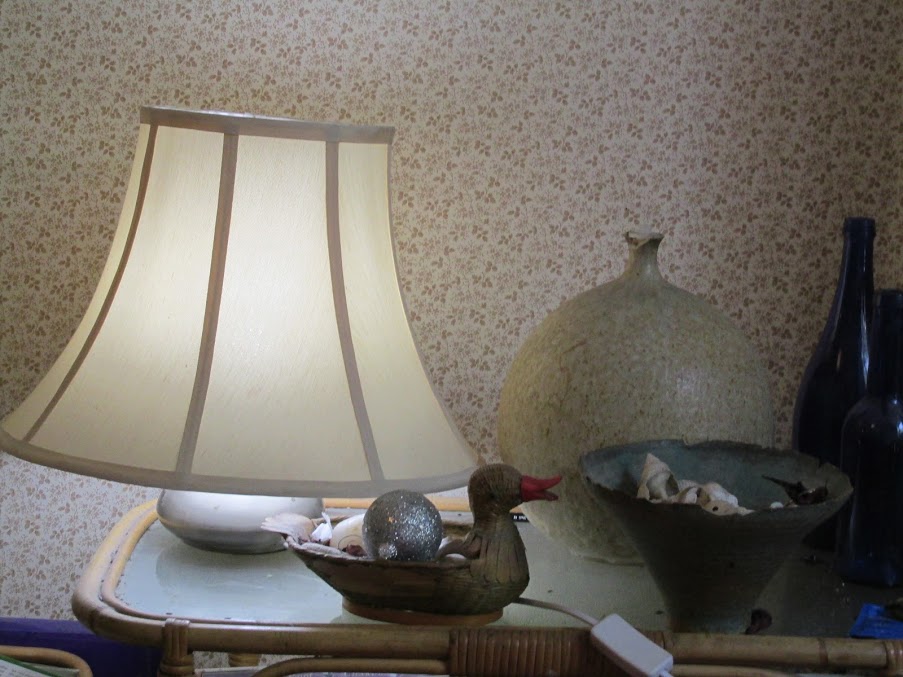
 The lamp shade on another base.
 I just spoke to them about the inaccessibility of my local train station



 I went into a Turkish coffee shop today, but they had no turkeys

 This is my data from Facebook.Feel free to share.I did and look at me now.Maybe you’d do better not to.


 How my heart speaks