

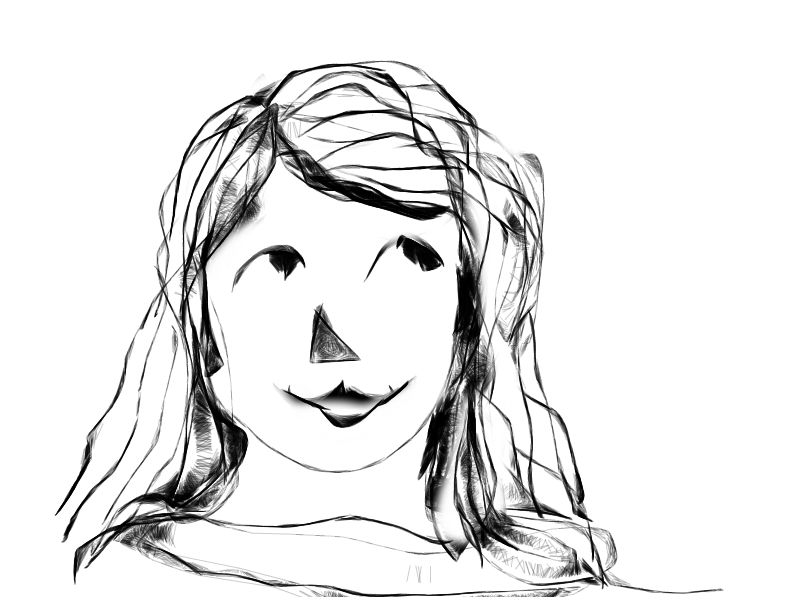
 After my husband died I knew I would be paying less Council Tax.When the bank statement came I saw it was the same as before.When I phoned the Council about a month after my husband had died, the man said,For all we know you have got another man now.I wonder that they could speak to me like that.
E-on want to read my metre so I sent them a note did they mean meter.No reply
I am reading the 6 Lives of Henry the Eighth.So far there’s only been one.Will he rise fron the dead and stop Brexit? That would be fun
I can’t understand a war about roses.I thought gardening was good for us,Will we have a war of the tomatoes?
Richard 3rd is still famous long after he died.What do I have to do?
I see we accepted the Normans because they were fierce conquerers. So should refugees start a war?
The war against benefits has been going on and on.Why don’t they just shoot us all?
It’s too late for breakfast and too late for lunch.I’ll go back to bed and try again tomorrow.If you start on the wrong foot it’s difficult to get it right,or left
Author: Katherine
Poetry writer and author

Joan Baez is now on her last tour
Share this:

Shame?
To live without experiencing some shame and blushes of admiration would surely be a wretched life.
Share this:

Mal-education
I was 16 when we began to study a simplified version of the writings of Thomas Aquinas.I believe now it was a very badly written book as I could see flaws in the arguments.But the most striking effect on me was that I had never questioned the existence of God.
When I began to study the book I thought:So they are not sure!
I think the nuns would have been horrified if I had said that.We were also told that we must not apply to University to do philosophy as they would not allow it.Because it might makes us lose our Faith
So I learned God might not exist and that people like myself might lose their Faith.That book we had we read over and over for 2 years.Eventually I lost the type of Faith they had tried to defend but I did not entirely lose the notion of spiritual or religious experience being possible.And also I am sure there is a God of some sort but there are many ways to find him/her/them including becoming an atheist after going to a school like mine which would open one to other possibilities.
Share this:

The need for idleness

Extract
Our contradictory fear of being idle, together with our preference for sloth , may be a vestige from our evolutionary history. For most of our evolution, conserving energy was our number one priority because simply getting enough to eat was a monumental physical challenge. Today, survival does not require much (if any ) physical exertion, so we have invented all kinds of futile busyness. Given the slightest or even a specious reason to do something, people will become busy. People with too much time on their hands tend to become unhappy or bored.
Yet, Smart argues, boredom is the key to self-knowledge.
What comes into your consciousness when you are idle can often be reports from the depths of your unconscious self— and this information may not always be pleasant. Nonetheless, your brain is likely bringing it to your attention for a good reason . Through idleness, great ideas buried in your unconsciousness have the chance to enter your awareness.
Share this:

The butterfly effect

This is a very good account with extracts from two novels as well as some graphs.Be not afraid.You can understand most of it without too much effort
The Butterfly Effect: Everything You Need to Know About This Powerful Mental Model
Extract
The Basics
In one of Stephen King’s greatest works, 11/22/63, a young man named Jake discovers a portal in a diner’s pantry which leads back to 1958. After a few visits and some experiments, Jake deduces that altering history is possible. However long he stays in the past, only two minutes go by in the present. He decides to live in the past until 1963 so he can prevent the assassination of President John F. Kennedy, believing that this change will greatly benefit humanity. After years of stalking Lee Harvey Oswald, Jake manages to prevent him from shooting Kennedy.
Upon returning to the present, he expects to find the world improved as a result. Instead, the opposite has happened. Earthquakes occur everywhere, his old home is in ruins, and nuclear war has destroyed much of the world. (As King wrote in an article for Marvel Spotlight, “Not good to fool with Father Time.”) Distraught, Jake returns to 1958 once again and resets history.
In addition to being a masterful work of speculative fiction, 11/22/63 is a classic example of how everything in the world is connected together.
The butterfly effect is the idea that small things can have non-linear impacts on a complex system. The concept is imagined with a butterfly flapping its wings and causing a typhoon.
Of course, a single act like the butterfly flapping its wings cannot cause a typhoon. Small events can, however, serve as catalysts that act on starting conditions
Share this:

The War’s not over when the fighting stops
 We sense the sacred in these peaceful walls
Yet men have died in places that appal
Women too and children then unborn
Fell into cold dark earth in lands forlorn
As our weapons grow, our hearts are hard
The people live in Gaza behind bars
The water all polluted as taps drip
Is this war or is it vengeance fit?
In Britain, it’s the poor who lose the war
As it was when Jesus Mary bore
Yet here are clerics blessing marching bands
A military show for all the land
The genocide in Europe of the Jews
The self destructive actions of the proud
The fields of France filled sick with blood and bone
Who are we to cast judgemental stones?
The War’s not over when the fighting stops
The soldiers and the tortured suffer shock
The widows and the parents all bereaved.
The unborn children hover in unease
We let the prisoners out from camps of death
But who would take them in or take their path?
The injuries will travel down the years
As still we fight and still we live in fear
It’s Europe’s grasp and greed which was the cause
Of death in Gaza, Syria, in long wars
Yet we judge we are more civilised
When we self defend with bitter lies
Share this:

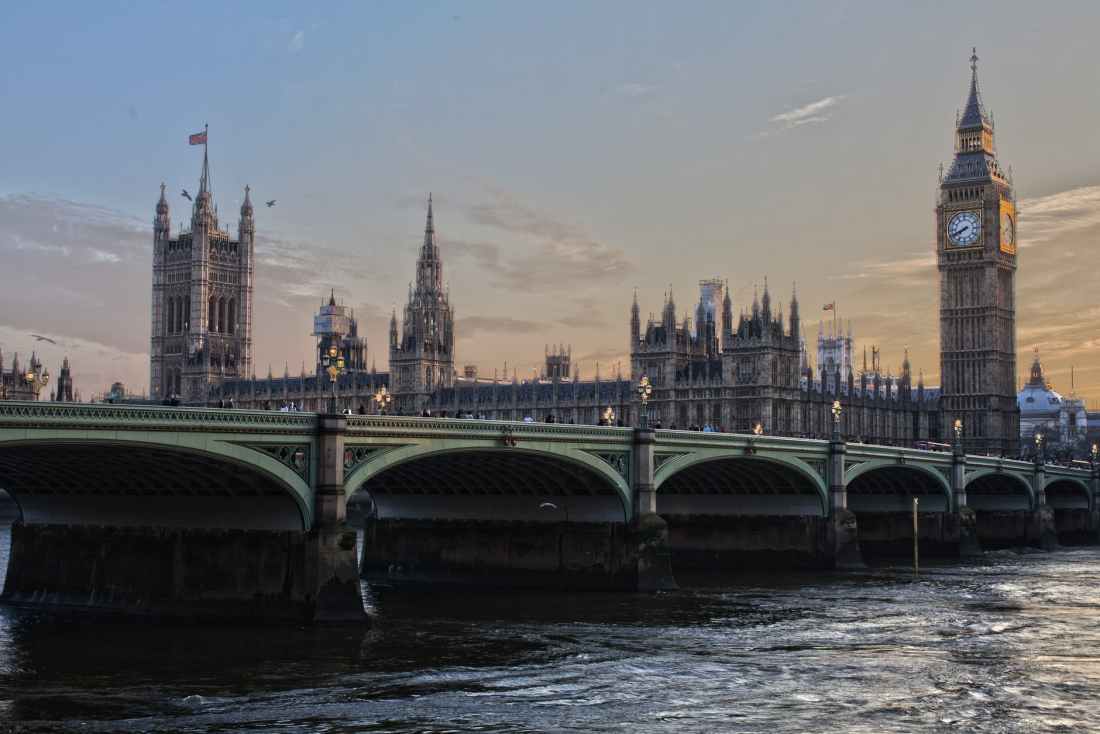
~Why does Britain glorify its violent past?
Extract
“It feels like I live in the middle of a culture war. On one side is a kind of state-sponsored amnesia. It’s pervasive. It’s an Oscar-winning movie perpetuating the idea that Winston Churchill stood alone, at the Darkest Hour, as Nazi fascism encroached, with Britain a small and vulnerable nation isolated in the north Atlantic. In reality the United Kingdom was at that moment an imperial power with the collective might of Indian, African, Canadian and Australian manpower, resources and wealth at its disposal.”
Share this:

Busy with a friend
I have had my friend Phil here all day so I have postponed writing much as we had a lot to discuss and I also got him to put my green bin out!?Men are very good with green wheelie bins.And the recycling ones as well.He even makes a pot of tea or two as he knows where the tea is.What a change in the last 40 years;men were unable to even fill the kettle back then and as for boiling an egg! Katherine
Share this:

Summer comes and goes by happenstance
In England now the seasons seem to dance
To quick music brightness comes and goes
Summer comes about by happenstance
Gales and lightning wound the outstretched branch
Apples cannot ripen when it snows
In England now the seasons seem to dance
Eating in the garden, storms by chance
Ruin all the party as drink flows
Summer comes about by happenstance.
Summer came too early, out it flounced
As the lightning in the dark sky glowed
In England now the seasons seem to dance
The joy inside the heart was well aroused
The nestling birds were learning how to fly
Summer came and went by happenstance.
True hope comes and settles without lies
Faith is all enduring,never dies
In England now the seasons seem to dance
Summer flaunts her goods but somewhere else
Share this:
Poetry and cross cultural perceptions

Extract
Despite the fact that human nature has evolved little since the dawn of humankind, our most basal emotions remaining largely unchanged for tens of thousands of years, one of history’s constants has been our general inability to truly understand one another. While humans have changed in both appearance and ability – from walking upright to developing the technology to walk on the moon – we still feel the same primal things we felt so long ago: happiness, sadness, pleasure, pain, pride, guilt.
However, our inability to establish human connections has, to an extent, remained just as constant. This much is evident in the various wars humans have engaged in, whether between nations (World Wars I and II, for example) or between different sides of the same country (America’s Civil War). It seems people have overlooked our overwhelming similarities with one another, allowing comparatively small differences – cultural distinctions, religious differences, variations in skin color and sexual orientation – to dictate human relationships or the lack thereof.
Over time, as people have populated different areas of the world and simultaneously encountered others who are not exactly the same, stereotypes have developed and, whether as a consequence or cause of these judgments, discrimination has emerged as a growing problem worldwide. This issue takes place on a large scale and is all-inclusive and encompassing: no one is safe from some sort of misperception or misunderstanding by someone else from a different background. America, long proudly called “the Melting Pot,” is certainly not exempt from the mistreatment – emotionally if not physically – of immigrants and other foreign visitors. We have labeled the Irish angry, the Jewish cheap, the French pompous, the Spanish overemotional, the Russian entirely unfeeling, Mexicans incompetent, and the list goes on and on.
Share this:

The emotional side of our nature
The loss of these tastes [for poetry and music] is a loss of happiness, and may possibly be injurious to the intellect, and more probably to the moral character, by enfeebling the emotional part of our nature.
Share this:
The poetic imagination
 https://opinionator.blogs.nytimes.com/2012/12/02/philosophy-and-the-poetic-imagination/
“Most importantly, the example shows that we cannot draw a sharp boundary to distinguish some language as intrinsically poetic. We can apply our poetic attention to commonplace language, and thereby give that language unexpected depth and importance. Indeed, poets such as William Carlos Williams purposefully challenge us to extend our sensibilities and find the poetry in everyday language, whenever they construct poems with familiar vocabulary and cadence.
How do we cultivate the poetic imagination? We must attune ourselves, however we see fit, to the features we notice in a poem, as a prompt to experience its language more deeply. This search for significance can target any noticeable feature of the poem—regardless of the meaning, if any, the feature might literally encode. We can listen to the sounds and rhythm of the poem. We can feel its syntax and structure. We can even attend to its visual shape and layout before us, as the poet e. e. cummings often invited his readers to do.
However, even when we explore the familiar domains of sound, meter, rhyme and line, we must be prepared to explore the variable and open-ended significance of each observation. We saw, for example, the different effects of lineation in the Missed Connections poem. There is no one meaning or effect for parsing lines; for annotating lines; or in juxtaposing the two. What we find in all these cases is just a formal contrast, an echo of further differences, which we can appreciate more deeply only by probing the poem further. This variability underscores the creativity poets and readers bring to their art.”
Share this:

Milton BY ALFRED, LORD TENNYSON (Alcaics)
O mighty-mouth’d inventor of harmonies,
O skill’d to sing of Time or Eternity,
God-gifted organ-voice of England,
Milton, a name to resound for ages;
Whose Titan angels, Gabriel, Abdiel,
Starr’d from Jehovah’s gorgeous armouries,
Tower, as the deep-domed empyrean
Rings to the roar of an angel onset—
Me rather all that bowery loneliness,
The brooks of Eden mazily murmuring,
And bloom profuse and cedar arches
Charm, as a wanderer out in ocean,
Where some refulgent sunset of India
Streams o’er a rich ambrosial ocean isle,
And crimson-hued the stately palm-woods
Whisper in odorous heights of even.
Share this:
Glossary of poetic terms
 https://www.poetryfoundation.org/learn/glossary-terms
Accentual verse
Verse whose meter is determined by the number of stressed (accented) syllables—regardless of the total number of syllables—in each line. Many Old English poems, including Beowulf, are accentual; see Ezra Pound’s modern translation of “The Seafarer.” More recently, Richard Wilbur employed this same Anglo-Saxon meter in his poem “Junk.” Traditional nursery rhymes, such as “Pat-a-cake, pat-a-cake,” are often accentual.
Accentual-syllabic verse
Verse whose meter is determined by the number and alternation of its stressed and unstressed syllables, organized into feet. From line to line, the number of stresses (accents) may vary, but the total number of syllables within each line is fixed. The majority of English poems from the Renaissance to the 19th century are written according to this metrical system.
Acmeism
An early 20th-century Russian school of poetry that rejected the vagueness and emotionality of Symbolism in favor of Imagist clarity and texture. Its proponents included Osip Mandelstam and Anna Akhmatova.
Acrostic
A poem in which the first letter of each line spells out a word, name, or phrase when read vertically. See Lewis Carroll’s “A Boat beneath a Sunny Sky.”
Alcaic
A four-line stanza invented by the Classical Greek poet Alcaeus that employs a specific syllabic count per line and a predominantly dactylic meter. Alfred, Lord Tennyson imitated its form in his poem “Milton.”
Share this:

My husband has a rubber face
P

    Short love poem

My husband has a rubber face,
He’s from a species of the human race.
Some men have faces fixed and set;
My husband’s face is not like that.

He imitates our politicians,
Just like Rory Bremner can.
Though he has no wig or hair piece,
He can look like anyone.

Some nights I waken for I am laughing
While I am quite sound asleep.
I am dreaming of his mobile features,
Contorted to a different shape.

He is skilled at telling jokes.
And he loves a good cartoon.
If I am feeling flu style blueness
I he can get me up again.

He has a rather noble visage.
He gets attention he abbhors.
In the bar on King’s Cross Station—
I was asked was he a Lord!

He’s a Lord of Fun and Humour.
He’s a Lord at Listening Well.
He’s unique, but so are you,
And all creatures that on earth do dwe
Share this:
The music in poetry
Share this:
Muslim immigrant saves a child in Paris
France grants honorary citizenship to hero ‘spiderman’ migrant who saved toddler-(video)
Extract
With a crowd below cheering him on from the street, the migrant pulled himself from balcony to balcony at risk of life and limb, and managed to grab the four-year-old as a neighbour unsuccessfully tried to reach the boy from the nearest flat.
President Emmanuel Macron invited Mr Gassama to the Elysee Palace on Monday morning to personally thank him. During their filmed conversation, Mr Gassama said that he was trembling like a leaf after his courageous act.
Afterwards, Mr Macron announced that he would be granted French citizenship and join the French fire brigade.
Share this:
People My Age by John Gorka
People my age have started lookin’ gross
I cannot say all, and I shouldn’t say most
I’ve seen ’em in the grocery, I’ve seen ’em up close
People my age have started lookin’ gross
I cannot say all, and I shouldn’t say most
I’ve seen ’em in the grocery, I’ve seen ’em up close
People my age have started lookin’ gross
People my age are showing some wear
There’s holes where their teeth was and their heads have gone bare
Their brains are shrinking, faces sinking into fat
And as for the mirror, we won’t be looking into that
People my age have started looking gross
Maybe not in Colorado, or up the Silicon coast
Back in Pennsylvania, I’d eat scrapple on toast
Those were my first steps on the road to looking gross
People my age are looking over-ripe
Some are getting operations to tighten up what ain’t tight
What gravity’s ruined, they try to fix with a knife
What’s pleasant in the darkness is plain scary in the light
John Gorka
(singer/songwriter)
This is a song of his, so it may not ‘read’ as well as if it would with you knowing the tune.
Share this:
Behind the mask
Behind the mask our nature lies concealed
But with a mask no human can be healed
When to show and when to hide , who knows?
Secrets,lies,manoeuvres, run the show
Faust with the old devil made a deal
While the angels tottered ,unrevealed
And so the pact was made and then was sealed
Behind the mask
Off the face, the make up’s nightly peeled
While we dream our Plays from all we feel
Underneath our facade, waters flow
We join the sea of life to undergo
The transformation by the miller’s wheel
Without the mask
Share this:
When there is no need to speak or sigh
When there is no need to speak or sigh
When the loved one sees with a true eye
Then the art of living is restored
The world is seen anew ,no more abhored
But lovers each grow old and one will die
We cannot hide the truth or tell a lie
No more could we grow wings and hope to fly
We’re no angels nor a God adored.
How are we living?
The time moves on and humans can’t delay
Nor is God affected by dismay
Life is truth and humans can’t defraud
We must pay the price we can’t afford
Until we join the stars and need no more
The art of living
Share this:
What does abhor mean?

Art by Katherine
I think horror comes from the same root horrere which is Latin for shudder
abhor
VERB
[WITH OBJECT]
-
Regard with disgust and hatred.
‘he abhorred sexism in every form’More example sentencesSynonyms
Origin
Late Middle English: from Latin abhorrere, from ab- ‘away from’ + horrere ‘to shudder’.
Share this:

USA and Hamas
https://www.huffingtonpost.com/stephen-zunes/americas-hidden-role-in-h_b_155087.html?guccounter=1


Originally posted on Alternet, January 3, 2009
The United States bears much of the blame for the ongoing bloodshed in the Gaza Strip and nearby parts of Israel. Indeed, were it not for misguided Israeli and American policies, Hamas would not be in control of the territory in the first place.
Israel initially encouraged the rise of the Palestinian Islamist movement as a counter to the Palestine Liberation Organization, the secular coalition composed of Fatah and various leftist and other nationalist movements. Beginning in the early 1980s, with generous funding from the U.S.-backed family dictatorship in Saudi Arabia, the antecedents of Hamas began to emerge through the establishment of schools, health care clinics, social service organizations and other entities that stressed an ultraconservative interpretation of Islam, which up to that point had not been very common among the Palestinian population. The hope was that if people spent more time praying in mosques, they would be less prone to enlist in left-wing nationalist movements challenging the Israeli occupation.
While supporters of the secular PLO were denied their own media or right to hold political gatherings, the Israeli occupation authorities allowed radical Islamic groups to hold rallies, publish uncensored newspapers and even have their own radio station. For example, in the occupied Palestinian city of Gaza in 1981, Israeli soldiers — who had shown no hesitation in brutally suppressing peaceful pro-PLO demonstrations — stood by when a group of Islamic extremists attacked and burned a PLO-affiliated health clinic in Gaza for offering family-planning services for women.
Share this:

The elements of poetry

http://learn.lexiconic.net/elementsofpoetry.htm
Extract
STRUCTURE and POETRY
An important method of analyzing a poem is to look at the stanza structure or style of a poem. Generally speaking, structure has to do with the overall organization of lines and/or the conventional patterns of sound. Again, many modern poems may not have any identifiable structure (i.e. they are free verse), so don’t panic if you can’t find it!
STANZAS: Stanzas are a series of lines grouped together and separated by an empty line from other stanzas. They are the equivalent of a paragraph in an essay. One way to identify a stanza is to count the number of lines. Thus:
- couplet (2 lines)
- tercet (3 lines)
- quatrain (4 lines)
- cinquain (5 lines)
- sestet (6 lines) (sometimes it’s called a sexain)
- septet (7 lines)
- octave (8 lines)
FORM: A poem may or may not have a specific number of lines, rhyme scheme and/or metrical pattern, but it can still be labeled according to its form or style. Here are the three most common types of poems according to form:
1. Lyric Poetry: It is any poem with one speaker (not necessarily the poet) who expresses strong thoughts and feelings. Most poems, especially modern ones, are lyric poems.
2. Narrative Poem: It is a poem that tells a story; its structure resembles the plot line of a story [i.e. the introduction of conflict and characters, rising action, climax and the denouement].
3. Descriptive Poem: It is a poem that describes the world that surrounds the speaker. It uses elaborate imagery and adjectives. While emotional, it is more “outward-focused” than lyric poetry, which is more personal and introspective.
Share this:

Come here darling, come here quick

Come here darling, come here quick,
‘Cos your Daddy’s very sick.
Run as fast as fast, you can,
Get the priest, get Father Dan.
Run,run went my eight year old feet,
Down the lane and up the street
I ran right up to Father’s door,
[Does God live there any more?]
“Come please, Mam said Daddy’s ill”
“Oh”,said Father,”that I will.”
Revving up his motor bike
With The Sacrament beside;
He lifted me onto the back
And roared off up the church-side track.
It was the best thrill of my life;
If only Daddy had not died.
Share this:

The still small voice
The still, small voice no longer can be heard.
The  sacred, silent space  unoccupied
No burning bush nor tempest speak The Word.

We centre our   whole self on the absurd
For iPads cannot pass through any eye
The still, small voice no longer can be heard.

God no longer feels inclined to share.
The golden cloud  of angels  cannot fly
No burning bush nor tempest speak The Word.

The altar’s stripped,  the rituals are nightmares.
The ancient priest says Mass and wonders why
The still, small voice no longer can be heard.

A  virtual wall stops grace from being shared.
Jesus is made flesh and  silent dies
No burning bush nor tempest speak The Word.

No one is an island, John Donne cried
But now there is no truth to satisfy
The still ,small voice no longer can be heard.
No burning bush nor tempest speak The Word
Share this:

The dove
At Whitsuntide we celebrate
The Holy Dove who will remake
The life within the human soul
With intent to make us whole
For our life is no mistake
We’re here to live, be not afraid
For virtue is why we are made
But also laughter, be not staid
At Whitsuntide
Some are silent ,some create
Some are cruel and devastate
We tell stories new and old
The dove brings peace which us enfolds
At Whitsuntide
Share this:
Headless hearts
 https://www.poetryfoundation.org/articles/146671/headless-hearts
Beginning of the article
Robert Lowell’s place in the literary imagination is that of the natty New England colossus who fathered confessional poetry. In his 30s, Lowell began to exhibit symptoms of bipolar disorder (then called manic depressive reaction) that plagued him for the rest of his life and resulted in more than a dozen hospitalizations. The illness also inspired some of Lowell’s most famous poems, including the widely anthologized “Skunk Hour.” The poet W.D. Snodgrass depicted Lowell as a puppy dog: “[T]hough tall and powerfully built, he seemed the gentlest of mortals, clumsily anxious to please.” But Lowell’s sweet, somewhat absentminded euthymic self was wildly distinct from his manic self, according to Robert Lowell: Setting the River on Fire, Kay Redfield Jamison’s recent biography-cum-psychological case study. When Lowell was manic, Jamison writes, he was “unkind, arrogant, and incomprehending [sic].”
In his review of the book for the Washington Post, Michael Dirda notes that “Jamison recognizes that Lowell damaged other people’s lives, but she excuses him because he had no control over his own behavior. … Lowell got away with a lot.” During his manias, Lowell drank heavily, got into altercations with police, and beat at least one of his three wives, the writer Jean Stafford. His world was shattered by temporary insanity, then restored, only for the poet to find himself yet again overwhelmed by gloom, hopelessness, and humiliation. Despite bouts with mental illness, he won two Pulitzer Prizes and a National Book Award. He was the sixth United States poet laureate. He taught at the Iowa Writers’ Workshop and at Harvard. He earned astute and compassionate scholarly attention.
But another poet—one who didn’t look, talk, or act like Lowell—might not have survived mental illness the same way. Another poet might have been abandoned by friends, evicted, or even killed by police. Another poet might not have had Lowell’s financial privilege, without which finding the time and resources to write prolifically and enjoy critical acclaim is difficult.
Just as it’s a privilege to recover from a manic episode assured of one’s friendships and stable finances, so too is it a privilege for one’s madness to be the object of scholarly inquiry instead of noted on a police report. “When power intersects with mental illness, it becomes romantic,” says Okezie Nwoka, a friend of mine and a fellow writer living with a mental health condition. When a poet of Lowell’s stature—Boston Brahmin rich, white, able-bodied, straight, and cisgender—is mentally ill, the illness is often considered inextricable from his brilliance. Yet no one has written a major medico-biographical tome about Etheridge Knight, a Black, formerly incarcerated poet whose addiction could be framed as having galvanized his brilliance. The lists of luminaries who lived with mental illness likewise often leave off Reinaldo Arenas, the queer Cuban poet who suffered from AIDS and committed suicide in 1990 after years of persecution by Castro’s communist regime. We hear of Theodore Roethke and Sylvia Plath but only rarely of their queer, trans, disabled, or non-white counterparts. It seems that only straight, cisgender white men—and sometimes straight, cisgender white women—are canonized as mad geniuses. The peculiar exclusivity of this category has legitimized, and even celebrated, a neurodivergent few while compounding the shame and isolation experienced by the neurodivergent many.
Consider Naadeyah Haseeb, a 29-year-old novelist and poet living in North Carolina. Like Lowell, Haseeb is bipolar. (Full disclosure: Haseeb and I struck up a friendship in 2016 after bonding over our mutual diagnoses.) Her novella, Manic Depressive Dream Girl (2015), dramatizes the fraught romance between a white man and a bipolar Black woman. Her next chapbook will be a collection of blackout poems about mental illness. “A certain kind of person is allowed to act that way, allowed to be the mad genius,” Haseeb tells me. “I don’t think that I am for so many reasons, being a Black lady.”
Though Haseeb feels rejected by the mad genius archetype, it still informs how she thinks about herself. She justified her teenaged sadness, for example, with the excuse that artists are supposed to be moody. The link between creativity and mental illness is so prevalent that Haseeb worries artists now see the two as indivisible. Years ago, when she had trouble writing, she stopped taking her meds and went without sleep in an effort to induce mania, which she hoped would result in a burst of creative productivity. Instead, she landed in the psych ward. She’s found that her writing habits fluctuate with her moods: sometimes the very thought of writing makes her anxious; at other times, she’s too depressed to open her laptop. And whereas a deadline is a fantastic motivator when she’s euthymic, it can be paralyzing when she’s not.
Haseeb isn’t alone.
Share this:

I miss the loving journey we began
I miss you eating with me,my dear one
You always smiled when reading in your chair
I miss the conversation now you’re gone
I wish some days that my own life had run
But I must live and this strange heart I bear
I miss you eating with me,my dear one
I’m happy then I’m sad and that’s no fun
My temper loosens yet I do not swear
I miss the conversation now you’re gone
I wonder when my own last day will come
I hope I shall be conscious of who’s near
I miss you eating with me,my dear one
Does no-one love me now my looks don’t stun?
I fear not God, to disgrace I’m inured
I miss the loving journey we began
The Sacred Heart of Love we must revere
Be grateful for the moments, shed our tears
I miss you eating with me,my dear one
I miss those conversations now you’re gone
Share this:
Disgust and Contempt in the White House Susan B. Miller, Ph.D.
This is a very full discussion of Donald Trump’s behaviour and feelings and the consequences.It was written before he was elected

smiller179@comcast.net
Keywords: Disgust, Contempt, Shame, Humiliation, Trump
Abstract: Disgust and Contempt in the White House
This paper examines a constellation of emotions that relate to self-regard maintenance in the face of interpersonal vulnerabilities. The emotions defined and discussed are disgust, contempt, shame and humiliation. The author conjectures that presidential candidate Donald Trump’s relationship to this emotion constellation predicts the type of leadership he might provide if elected to the US presidency. His focus is on preserving elevated self-regard, and he is willing to pursue this aim through disidentification with many individuals and classes of people. This self-protective and self-elevating urge combines with Trump’s disregard for conventional morality around truthfulness and personal responsibility to create a readiness to disengage from the needs of large swathes of humanity.
Article:
It hasn’t escaped notice that Donald Trump is easily disgusted, Not as much has been made of Trump’s inclination to contempt, a…
View original post 3,919 more words
 via
via 
 How my heart speaks