Grant us,love, the grace to see and fight

I can’t write poems about   the Fall
Plastic window,    curtain calls
Coloured  cclothes pegs and the iron
Men with names like ,Bill and Brian

I can’t write poems  about  my school
Nor on  algebra  rings offools
I hate to eat from plates at dinner
Am I   on the spectrum, not a sinner?

I cannot write about the Christ
Evoking grief at  sacrifice.
Pedophilia   hid by men
Men whose lies  might come again

Oh, what is left this world, its might?
Find the grace to see and  fight

David played and it pleased the Lord

Forget your perfect offering

There is a crack in everything

Then love itself was gone

I heard there was a sacred chord

There’s no-one left to torture

We don’t  like babies, anyhow.

But does it have to come so cruel, so  very bright?

It pleased the Lord

A sacred chord

We’ve seen the Nations rise and fall

We’re just the little Jews who wrote the Bible

Jesus was a sailor

Forsaken, almost human

He sank beneath your wisdom

Only drowning men could see him

That’s no way to say,goodbye

I have tried in my way to be free.

I swear by this song and by all I’ve done wrong

Dance me to the end of love

Climb on your tears and be silent

Oh, broken love.

Gentle this soul

The sun give over to splendour

Bless the continuous stutter

Of the Word being made into flesh


It’s a kind of evolution that’s begun

My finger nails keep breaking,they’re so thin
And my hair has forty partings,love has gone
It’s falling out,I looks like  an  old cat
There is no glory as it is so flat

I don’t know if my skin will will  join in too
We need  more protein, eggs and  vindaloo.
The Indian ladies’ hair looks very glam
Rubbed with olive oil and brushed out femme

Why don’t we wear hats and veils  when out
Convert to Islam, with a hijab flaunt.
Mystery attracts the aging man
Wear silk clothes or nothing if you  can

Our God is hair and so we  sacrifice
Days and weeks of out eternal life


Bones knitting

Why not do more  exercise, it’s fun
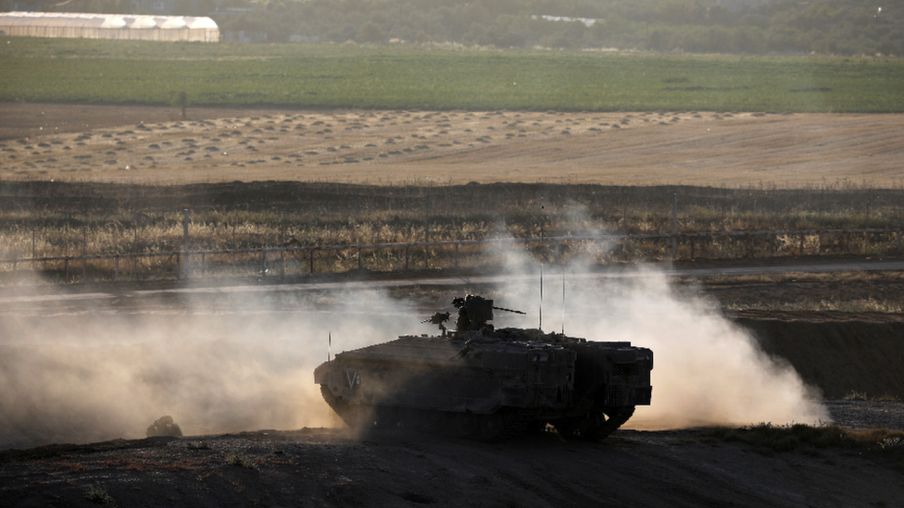
Come to Gaza, with the sea and sun
Run away from  bullets, here they come

Butterflies are  bullets and they’re bombs
Bombs don’t have to weigh  a million tons
Why not do more  running, it’s  such fun


It makes  us  women dash from those  big guns
Tear gas makes us cry till overcome
Run away from  bullets; watch them come~~

It’s a kind of evolution  that’s begun
Wiping out the inferior type of man
Why not see bones knitting, it’s  such fun

It’s enough to change a harlot to a nun
See  the children savaged now and them
Dart away from  bullets, Hate  again

Many’ve left us for the world to come
The God is harsh ans cold, he’s  called Vulcan
Why not do more  exercise, it’s  fun
Running from   those bullets, gassed and stunned

Scraps of paper and how Picasso made my legs give way

Photo0049

When I was first doing this I found it very anxiety producing as it was unknown territory.I never saw any when I was a young person.Then when I was 21 I saw a Monet.After that I loved all those Impressionists and Cezanne.Finally seeing a Picasso made me fall to the ground.My knees went weak and my legs gave way.It happened again when I saw Lincoln Cathedral floodlit.I hope not to do  any more falls as I am not so  rubbery as  I used to be.
Is there anyone else who has had an  experience like that?

Yosef Komunyakaa

P1000131.jpgPoetry helps me understand who I am. It helps me understand the world around me. But above all, what poetry has taught me is the fact that I need to embrace mystery in order to be completely human.
Read more at: https://www.brainyquote.com/authors/yusef_komunyakaa

https://www.poetryfoundation.org/poets/yusef-komunyakaa

Extract

Yusef Komunyakaa was born in Bogalusa, Louisiana. The son of a carpenter, Komunyakaa has said that he was first alerted to the power of language through his grandparents, who were church people: “the sound of the Old Testament informed the cadences of their speech,” Komunyakaa has stated. “It was my first introduction to poetry.” Komunyakaa went on to serve in the Vietnam War as a correspondent; he was managing editor of the Southern Cross during the war, for which he received a Bronze Star. He earned a BA from the University of Colorado Springs on the GI Bill, an MA from Colorado State University, and an MFA from the University of California-Irvine.

In his poetry, Yusef Komunyakaa weaves together personal narrative, jazz rhythms, and vernacular language to create complex images of life in peace and in war. In the New York Times, Bruce Weber described Komunyakaa as “Wordsworthian,” adding that the poet has a “worldly, philosophic mind… His poems, many of which are built on fiercely autobiographical details—about his stint in Vietnam, about his childhood—deal with the stains that experience leaves on a life, and they are often achingly suggestive without resolution.”

Komunyakaa’s early work includes the poetry collections Dedications & Other Darkhorses (1977) and Lost in the Bonewheel Factory (1979). Widespread recognition came with the publication of Copacetic (1984), which showcased what would become his distinctive style: vernacular speech layered with syncopated rhythms from jazz traditions. His next book I Apologize for the Eyes in My Head (1986) won the San Francisco Poetry Center Award; Dien Cai Dau (1988), a book that treated his experience in the Vietnam War in stark and personal terms, won the Dark Room Poetry Prize. It is regularly described as one of the best books of war poetry from the Vietnam War. The title means “crazy” in Vietnamese and was used by locals to refer to American soldiers fighting in their country. The collection explores the experience of African American soldiers in the war as well as captures the embattled Southeast Asian landscape. In the New York Times Book Review, Wayne Koestenbaum remarked that Komunyakaa’s casual juxtaposition of nature and war belied the artistry at work. “Though his tersely-phrased chronicles, like documentary photographs, give us the illusion that we are facing unmediated reality, they rely on a predictable though powerful set of literary conventions.” Koestenbaum added, “The book works through accretion, not argument; the poems are all in the present tense, which furthers the illusion that we are receiving tokens of a reality untroubled by language.”

Calls for help

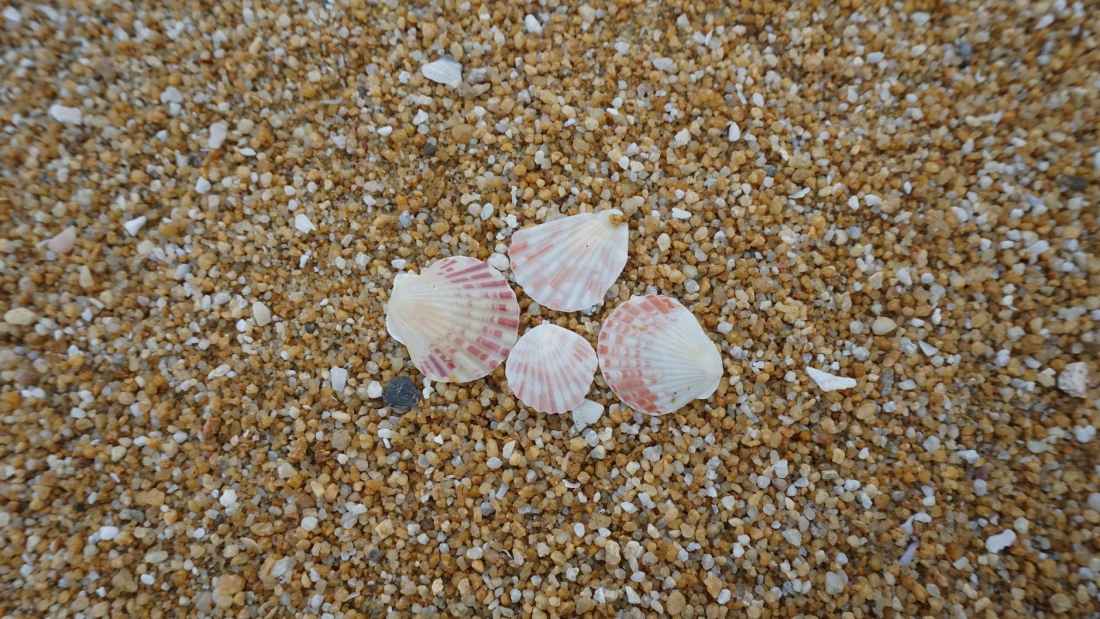
shells on shore
Photo by Pok Rie on Pexels.com

1.Hello,I want to die.
Just be patient and you will die sooner or later
2.Hello,I am going to buy a rope and hang myself when  the funeral is over.
You can’t put burden  me  any more with these endless calls.Why not do it now and have a joint funeral.And you are not tall enough to fasten a rope to the tree.
Why not  say  instead you feel terrible.And I will say everything passes in time.I will comfort you.
3 .Why did you say,hello, this is the police station?
Because you have your phone number hidden and I thought you were a crook.And I was with someone else who was threatening to kill herself so now that  is two if you.I am sorry you feel so depressed.
4.Why do you  have a man’s voice on your answering machine?
How do you know it’s a man? They may be transgender and and so am I,not.

Creating,  with the aid of Love, our soul

Do our minds have  little eyes to see inside
Or is there in the deeps, another guide?
How can we attend to what we find
Musing over places where love died?

The notion of the body and the mind
Separate, unequal,Descartes’  deigned
There is no little man inside our brain
More important than the body slain.

Pay attention till good images arise
If your dreams come, they will be so wise
We are whole and wholeness  is our goal
Creating,  with the aid of Love, our soul

Do not let us live as separate minds
For leaving out the body makes us blind

What to say to spam phone calls

walk- mary walsh - fairy steps 1 2 3 4 5.jpg1
You have been in an accident,haven’t you?
Yes,last week
So were you injured?
Yes
How?
I was killed.
2.

Hello, this is  the Insurance company
Hi, this is the Police Station.
3.
Someone in Hong Kong who has your surname  has died.You may  be able to get their money

OK.It was me.

3

Your husband is in Spain and has lost his passport.He needs money quickly
That’s odd.Has he risen from the dead?

Or, since when  have I been married?

4.Your mother is ill  and has no insurance cover.

Can  they get flu in heaven?

Did you say in Devon?

No,I said An Iron in Bevin

Does poetry matter?

_101571452_gaza6https://www.nytimes.com/roomfordebate/2014/07/18/does-poetry-matter/poems-hold-the-mysteries-of-the-present-dreams-of-the-future


Extract

We know that human beings are intrinsically connected to one another in how we assert our being. When we read a poem, we are in the presence of this link. We are open to the metaphors of our shared natures. 

Because poets have the highest faith that every word in a poem has value and implication and suggestion, a poem orients us in both our inner and outer existence. No matter what language we speak, we follow the guidance of poetry to better perceive sorrow and radiance, love and hatred, violence and wonder. No matter what continent we call home, we read poetry to restrict us in time and to aspire toward timelessness — whether we are in our most vibrant cities or in the remote woods. 

Does poetry matter? Yes. Can poetry be more relevant? No. It is the song of song, the language of language, the utterance of utterance and the spirit of spirit.

Leaves

bay beach clouds coast
Photo by Pixabay on Pexels.com

The  trembling leaves hid  sparrows as they sang
We were silent,drowning in the sun
Reminding me of Cartmel and Grange sands

I turned the phone off. so no idler rang
In winter we forget that bright light  comes
The  shining leaves hid  sparrows as they sang

My parents had no garden and no land
But judging by fertility,some fun!
I wish we were all down  on Grange’s sands

I remember holding Dad’s thin hand
He put me on his shoulders and we ran
He  knew  the words to all old Irish songs

He was tall and  made of smoke a friend
Then he went away to be God’s son
I wish we  still  were playing on the sands

In theology ,I have no hand
Do we need to know  where God has gone?
Can even experts  hear what angels sing?

The theologians   meanly note  their ends
Bishops in their robes  are  tried and stand
The   pure white  flowers  are scented as birds sing
Haunting me with  childhood,Grange O’ Sands

seaport during daytime
Photo by Pok Rie on Pexels.com


The coup

Rebecca Solnit: The Coup Has Already Happened


“We already had the coup.

It happened on November 8, 2016, when an unqualified candidate won a minority victory in a corrupted election thanks in part to foreign intervention. Any time is the right time to pour into the streets and demand that it all grinds to a halt and the country change direction. The evidence that the candidate and his goons were aided by and enthusiastically collaborating with a foreign power was pretty clear before that election, and at this point, they are so entangled there isn’t really a reason to regard the born-again alt-right Republican Party and the Putin Regime as separate entities.”

Happenstance

The crane will mate for life, unlike a man
For some it’s rarer than the hope of Spring
Was it so when life on earth began?

Post modern love is months, not years, in span
Loss and  separation our love rend
The crane will mate for life, unlike humans

Over us the  fickle moon has shone
The cranes rise in a flock,away they wing
So  they have since life on earth began

With peace, these rare white cranes will long go on.
When will we  reach  the  nadir of the wrong?
The cranes dance for their partners, one to one.

Love is a true process, not a thing.
Engagement  with the other,that’s  our song
The crane will mate for life,may they have span..
Happenstance  brings love  but who knows when?

The force that through the green fuse drives the flower

https://en.wikipedia.org/wiki/The_Force_That_Through_the_Green_Fuse_Drives_the_Flower

The Force That Through the Green Fuse Drives the Flower” is a poem by Welsh poet Dylan Thomas—the poem that “made Thomas famous.”[1] Written in 1933 (when Thomas was nineteen), it was first published in his 1934collection 18 Poems.

Like the other poems in 18 Poems, which belong to what has been called Thomas’s “womb-tomb period”, it deals with “creation, both physical and poetic, and the temporal process of birth, death, and rebirth”.[1]

Influence[edit]

The poem was the inspiration for a series of paintings by Ceri Richards made between 1943 and 1945.[2] Some phrases (“starry dynamo” and “machinery of night”) in Allen Ginsberg‘s 1955 poem “Howl” were derived from Thomas’s poem.[3] As well, its title served as the basis for the 1976 Roger Zelazny story “The Force That Through the Circuit Drives the Current”.

At you

Iris Murdoch would like this

I was unready for anything,
with no charms like a bee.
Each fresh day is torture..
As you  will hate me.

I was as tame as a dingo,
I was right in my mind.
Each night  had its daydreams,
In that you were   real kind.

I was charmed by your molars.
They were sharper than whales.
Each dawn brought the moon out.
As you cut your nails.

Rolling stones gathered
Your heart was not mine.
I’ll give you what you wish for.
It is by my  design .
.
As long as the clock speaks
As long as the rose.
As long as the bike pumps..
I’ll remember your nose.

As long as my patterns;
As brief as they are;
As long as my brain’s dead
I shall parsnip a star.

I love a good proverb.
I love no cliches.
When you find some Wisdom
Do not sever my pay.

Justice long as a ruler,
Sharpened to a screw.
When you are more kind,then
I may leak what I brew
.
As long as the flat Earth
As wise as it’s broad.
The moon in the water
Heard the crow caw.

Please hear my tall story
Sing  beside my cello.
I may fail at  the Strife Class
But I can  say , I know

I went to the Church belle,
And asked for a clue.
The finger on the dial
Kept pointing at you

W G Sebald’s Small Silences

birds2.jpg
Photo by Mike Flemming.Copyright

The Power of W. G. Sebald’s Small Silences

Extract

The Rings of Saturn follows a Sebald-like narrator as he walks along England’s eastern coast, letting his mind wander along with his feet. The prose follows the narrator’s digressions from each place and idea to the next, moving freely in time and space. The last chapter is concerned almost entirely with the subject of silkworms. Sebald’s narrator, inspired by the writings of the 17th-century polymath Thomas Browne, traces the history of sericulture—the rearing of silkworms for the production of silk—from its origins in ancient China to its arrival in Europe to its use in 20th-century Germany.

Like much of the novel, this fairly erudite discussion, while arresting in its way, does not immediately make its significance known. Then, a few pages from the novel’s end, the narrator considers a film he happened upon the preceding summer on the subject of silk cultivation under the Third Reich. As the booklet that accompanies the film informs both narrator and reader, in the 1930s, silk production became an important part of Hitler’s demand for an economically self-sufficient Germany. As a result, sericulture became a common feature of children’s education. It turned out to serve many pedagogical functions. In one of the novel’s most memorable passages, Sebald writes:

Any number [of silkworms] could be had for virtually nothing, they were perfectly docile and needed neither cages nor compounds, and they were suitable for a variety of experiments (weighing, measuring and so forth) at every stage of their evolution. They could be used to illustrate the structure and distinctive features of insect anatomy, insect domestication, retrogressive mutations, and the essential measures which are taken by breeders to monitor productivity and selection, including extermination to preempt racial degeneration. – In the film, we see a silk-worker receiving eggs despatched by the Central Reich Institute of Sericulture in Celle, and depositing them in sterile trays. We see the hatching, the feeding of the ravenous caterpillars, the cleaning out of the frames, the spinning of the silken thread, and finally the killing, accomplished in this case not by putting the cocoons out in the sun or in a hot oven, as was often the practice in the past, but by suspending them over a boiling cauldron. The cocoons, spread out on shallow baskets, have to be kept in the rising steam for upwards of three hours, and when a batch is done, it is the next one’s turn, and so on until the entire killing business is completed.

With the phrase “extermination to preempt racial degeneration,” Sebald slips seamlessly from the discussion of sericulture to an oblique discussion of the Final Solution. The description of the film takes on a haunting doubleness. It is both an explanation of the killing of silkworms and an evocation of the Nazi genocide.

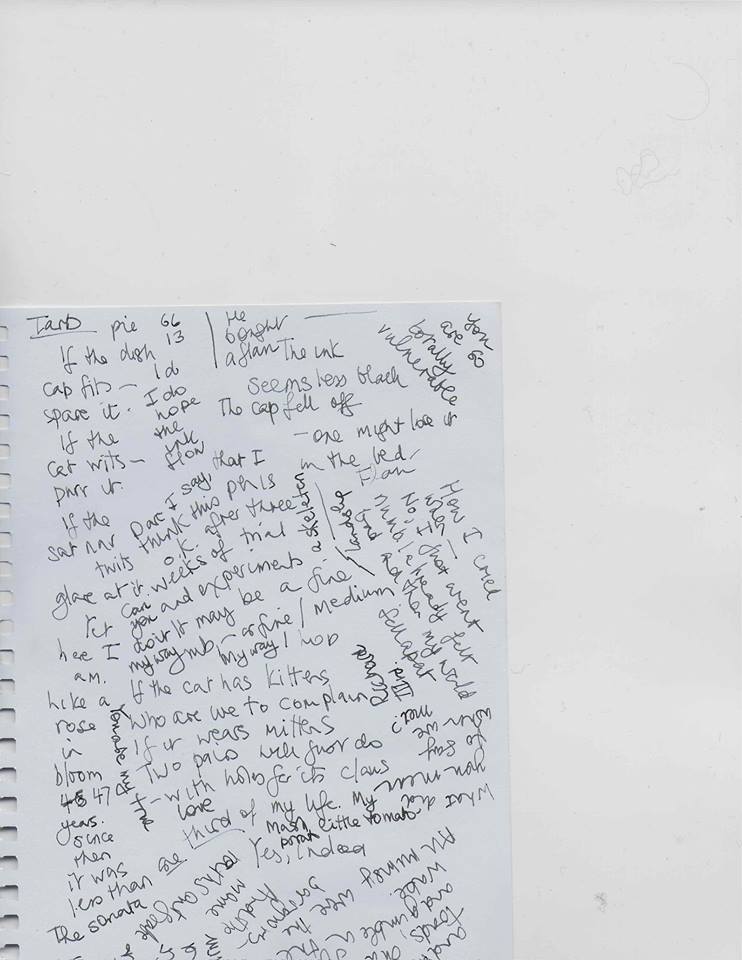
When I returned to this passage, what struck me most was the dash Sebald places between the description of the use of silkworms in the classroom and the account of the film—a single dash that hovers between two complete sentences. What could be its significance?

“The dash, situated between the talk of schoolroom sericulture and the talk of silkworm execution, creates a moment of silence for the victims of the death camps.”

Resuscitate

resuscitate

rɪˈsʌsɪteɪt/
verb
verb: resuscitate; 3rd person present: resuscitates; past tense: resuscitated; past participle: resuscitated; gerund or present participle: resuscitating
  1. revive (someone) from unconsciousness or apparent death.
    “an ambulance crew tried to resuscitate him”
    synonyms: bring round, revive, bring back, bring (back) to life, bring someone (back) to their senses, bring back to consciousness, rescuesave, bring back from the edge of death; More

    • make (something) active or vigorous again.
      “measures to resuscitate the ailing economy”
      synonyms: reviveresurrectrestoreregeneraterevitalize, breathe new life into, give the kiss of life to, give a new lease of life to, reinvigoraterenewawaken, wake up, rejuvenatestimulatere-establishreinstituterelaunch;

      archaicrenovate
      “measures to resuscitate the economy”
Origin
early 16th century: from Latin resuscitat- ‘raised again’, from the verb resuscitare, from re- ‘back’ + suscitare ‘raise’.