To sit by Mr Aneurin Bevan

When I die I am going to Heaven
To sit by Mr Aneurin Bevan
We will eat buttered Welsh cakes
Float in hot blue lakes
Oh final thought, how about Devon?

I wonder if I am perverted
For writing my poems with  ten verses
They say we’re post modern
And swearing’s forbidden
So are magic,religion and cursing.

I wonder if I  can be fluid
A man or a woman or druid?
I can be other
Since I have no mother
But what about rats in the sewage?

To economists we are just” Labour ”
We’re units when  once we were neighbours
Gender’s  quite useless
True  love is a nuisance
Capital  makes Money our Saviour

Why not  buy a new winter coat
Decorated with  the fur off a stoat
Weasels are  cheaper
Cats  purr and pierce you
As you sail ‘cross the Styx   in  a  boat

I thought I’d not marry again
I’m a feminist along with the men
But a m\n tried to hug me
And tickled my kidneys
He says I’m charming the snakes  into sin

But I think I am past getting wed
I just want to go straight to bed
Not just for the pleasure
Of getting his measure
No, it’s  just that  my organ’s half dead

I’d gaze into his eyes and feel good
As at last I’d feel  well understood
We don’t need to  chatter
About any matter
Nor scratch like the cat and draw blood.

I think my bed is too small
The headboard is stuck to the wall
The mattress collapses
As do my synapses
Who do you think  should call?

I’ve been untidy  ever since I was born
I lost mother’s breast  and her warmth
I’ve been looking forever
I got rather clever
Now I’ve lost my old man in the corn

Another mind

From time and place and season I am lost, Disorientated ,missing tracks well worn.

Do not suppose I’m unaware of cost,

Nor label me with epithets of scorn. For usual paths lead to the usual place.

The safest way to live and perhaps to die,

But wandering through the woods I find new space

and in wild grasses with the fox I lie.

Through distant trees, I see a way to go

As narrow as a slit in pale limestone.

I pass in silence as if in deep,deep snow.

My courage rises even as I groan. Remember when we’re lost ,we may then find

Another way,a place,another mind.

Writing makes me breathe differently

Sometimes writing makes me breathe differently.
I can feel the silence settle around me,
Like a prayer shawl.
i accept it gratefully.
There’s a thin feeling to the day
As if the sun might have tried harder
to come through
But it had a blue feeling
And the clouds were greedy,
Wanting too much to melt
And shed their moisture.
Some perfume please.I think it was £27.99
Yes,I like that one even more than jasmine oil.
Pour it down over London
Like a blessing.
A black woman laughed and patted my arm,
You’re so funny, she cried.
And I smiled coyly
As if someone hidden was taking my photograph.
Sometimes life’s too sweet
And needs a little pepper.
The chair creaks as I lean forward
Trying to see everything at once
As if it all happened now, not yesterday.

Best writing tips from well known writers

https://www.theguardian.com/books/2016/sep/10/my-best-writing-tip-william-boyd-jeanette-winterson

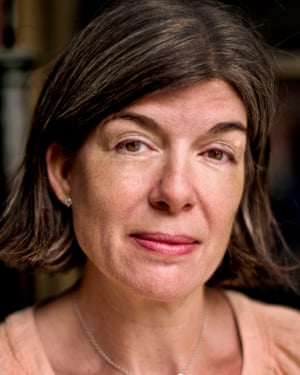
Claire Messud

Sarah Lee
Sarah Lee

In fiction, character is (almost) everything. We discuss “the elements of craft” – characterisation, plot, point of view, dialogue, detail, setting, style, and so forth – as if they were separable, as if you could disentangle them one from another. You can’t, of course; but when you filter almost all things through the specificities of character, many questions resolve themselves, almost miraculously.

Each of us is, in any given moment, the sum total of our temperament and experiences up to that point. Our baggage and idiosyncrasies may be suggested in our appearance; but much is invisible to the world. We all know that if there are three people in a room, each will tell a different story about what happened there – so ccharacter determines the story itself. But it also determines what will unfold – the plot.

As a writer, when you create a character, you don’t simply create his exterior (the wispy goatee, the receding hairline, the Liberty print shirt and expensive loafers); you must also come to know who he is (bullied in school, uneasy in friendships, veering between eager to please and cruel; vain but pretending not to be), and what has formed him (a Catholic school in the Sydney suburbs? A comprehensive in Exeter? Born with a silver spoon; or things started off comfortably, but his father’s business failed when he was 11? Raised in the shadow of three older siblings? Or alone with a single mum?). You must know his passions (loves pugs? Bicycle racing? First world war history? Talmudic study?) and his fears.

Once you know this person as well as you know yourself (or better), and once you put him, or her, in a particular place in a particular time, your character can only really act (or react) in a limited number of ways. He will notice only certain things, and those things only from a particular perspective; he will interact with others as only he can. If you’re using the first person, or the third person privileging this character, your diction and syntax – your very writing style – will be shaped by this person.

So much about a character is invisible, in fiction as in real life; but what lies beneath the surface will affect every aspect of your story. If you really take the time to figure out who you’re dealing with, much will become clear.
Claire Messud is a senior lecturer in creative writing at Harvard