Life didn’t unfold quite that way. Instead of having a literary career, she married, took a teaching job and raised three children. She wrote off and on, mostly for herself. But when she retired in her late 50s, “words came tumbling out of closets and drawers, leaking from rusty faucets and reappearing as character actors,” said Ms. Shulklapper, now 80. She began sending out poems and short stories, and published her first book of poetry in 1996, when she was 60.
Since then, she has published four chapbooks, which are typically small editions of 40 pages or so, and a fifth is in progress. And in January, Guardian Angel Publishing released Ms. Shulklapper’s first children’s book, “Stuck in Bed Fred.”
“I am living beyond my dreams,” said Ms. Shulklapper, a widowed grandmother of six who lives in Boca Raton, Fla. “I feel as though it’s my baby. A long pregnancy and now its delivery, all 10 toes and fingers.”
Conventional wisdom holds that if you do not write your “Farewell to Arms,” paint your “Starry Night,” start the next Twitter or climb Mount Everest by young adulthood, or
Adam Smith talked about the invisible hand of the market. What you’re experiencing is the invisible hand of art, the desire to pursue a life of creativity. That’s beautiful. But it’s unlikely to lead to financial security, at least in the short term, which is important to you because of your mother’s experiences. So you have to do what every artist does: find a patron. It might help to think of your accounting gig as that patron, at least for now. It will underwrite your apprenticeship, and help you uncouple your artistic aspirations from financial expectation, so you can write what you feel called to write without worrying about whether it will make money. It’s worth thinking, too, about the role you want writing to play in your life and what you’re willing to sacrifice to make that happen. I realize this doesn’t sound very romantic, but there is a practical aspect to the pursuit of our dreams. You have to ask yourself a few candid questions about what you consider essential, whether it’s a decent car or a nice place to live or enough financial security to keep anxiety at bay. The last thing you want is for writing to become a source of stress, because you’ll come to resent it as you do your current job.
CS In asking these questions, you’re undoing some of the ideas you absorbed that led you down the wrong career path, C. P. That’s exactly what you’re supposed to be doing at this moment in your life
Paying too much attention to your emotional state can make you miserable
Photo: Vince Fleming/Unsplash
Ifyou want to feel slightly less happy right this minute, there’s an easy way to make that happen: Ask yourself how happy you’re feeling.
“The moment you check in — how happy am I now? — you feel happiness less,” says Iris Mauss, PhD, a professor of psychology at the University of California, Berkeley. “The very question interferes with happiness.”
Mauss has spent years studying a phenomenon that some have termed the “happiness paradox.” The paradox is that when people try hard to be happy — when they make feeling happy a goal — their well-being tends to suffer for it.
There are a lot of reasons for this. Some appear to be cultural. Some have to do with the ways we define and pursue happiness.
But an overriding lesson from the happiness research is that the more you obsess about your emotional state — the more significance you assign your feelings, and the more you try to steer them — the more likely you are to get into emotional and psychological trouble.
Recently, Mauss and her research collaborators asked people to define happiness.
“We found a huge variety in how people answered,” she says. “Some people said happiness meant having good feelings, which is maybe the most intuitive response.” But when asked what good feelings they were talking about, some mentioned “excitement” or “joy” while others said “peacefulness.”
Some people didn’t talk about feelings at all. “They defined happiness in terms of knowledge — the knowledge that their life was meaningful, or the knowledge that they were a better person than they were five years ago,” she says. Others admitted their idea of happiness was acquiring more material possessions.
‘In the U.S., happiness is a relatively individualistic enterprise.’
The fact that we can’t even agree on what happiness is may partly explain why cultivating more of it is a challenge.
However, Mauss and her colleagues found that a person’s definition of happiness, whatever that definition was, tended to correlate with improved measures of well-being. Excitement and peacefulness and the knowledge that your life is meaningful — that’s all good stuff.
There was one big exception. “When people defined happiness in terms of material possessions, that was associated with worse well-being,” she says.
Mauss uncovered more useful insights while working on a 2015 study that appeared in the Journal of Experimental Psychology. For that project, she and her colleagues examined how people in different cultures around the world think about and pursue happiness.
“We found that in the U.S., happiness is a relatively individualistic enterprise,” she says. The Americans in her study tended to focus on their personal emotional experiences and how best to ameliorate them. And once again, valuing happiness in this way was associated with lower well-being.
But in East Asia, where notions of happiness are more social and collectivist, rather than self-oriented, these patterns reversed. The more a person valued happiness, the greater their well-being.
There, Mauss and her group found that the pursuit of happiness looked different than it does in America. Happiness often involved helping others or spending more time with friends and family. People also tended to associate happiness with sentiments such as “seeing that other people are content” or “making the people I care about feel good.”
Another way to put it, in these East Asian cultures, happiness looked outward, not inward. And that seemed to make all the difference.
One of the unwelcome byproducts of prioritizing happiness — one that’s easy to overlook — is that you end up spending a lot of your time monitoring and judging your feelings.
How am I right now? Am I hopeful? Anxious? Ambivalent? Angry? Whatever answer you come up with, Mauss says that this sort of emotional self-scrutiny can have unhappy consequences.
If your emotions are pleasant, pausing to examine them can reduce their positivity by pulling you out of the moment. The experience of “flow” — of being wholly immersed in something — is a hallmark of many activities that people value or enjoy. Checking in on your emotional state disrupts that flow; it rips some of your attention away from the pleasurable experience.
Assessing your emotional state disrupts that flow; it rips some of your attention away from the pleasurable experience.
On the other hand, if your emotional check-in reveals that you’re not happy, you’re likely to see this as a problem to be remedied.
Tens of millions of people across the United States have been enduring heat wave after heat wave this summer, in what feels like an unrelenting succession of humid days and scorching temperatures. While there’s no denying that extreme heat and humidity can be physically uncomfortable, research suggests that such conditions can be trying on your psychological well-being, too.
“We see across the whole spectrum of mental health” that heat extremes are damaging to mental well-being, said Nick Obradovich, a computational social scientist at the Max Planck Institute for Human Development and co-author of a 2018 study that analyzed the mental health risks of climate change.
Studies have found links between rising temperatures and a range of mental health issues including mental fatigue, aggression and even higher rates of suicide. This connection is not just limited to surges in temperature, Dr. Obradovich said, it’s also present for people living in climates where it is consistently hot. (Though of course mental health trends can depend on a variety of factors outside of temperature, too.)
Oh lord let us keep them happy with extended kitchens knife blocks and copper pans even copper work surfaces there’s always something new we can get.
Let’s tell them my high waisted jeans I need knickers like Brazilians, but should we get noughtie nostalgia we’ll need navel baring thongs
We are all sex workers now
You don’t need to go to university to get a job like that
Unless you want to be a courtesan and quite frankly can anybody spell it now?
Sorry I have your dreams which you know in fashion
0 when you have no tin of soldiers
Do you know where you get free chocolate fingers can you believe it?
I wish I was a vegetarian or even a vegetable. It may be dull but it’s peaceful and I wouldn’t have a mouth. I don’t like biting sarcasm even with custard on
A serious problem is that is people don’t have spare money just spend on their homes they will get very restless indeed and they will start a civil war the riots in 2011 were nothing compared to what’s coming in 2022. Don’t even mention 2033.
We don’t want to learn French country cooking anymore or or buy stuff from Provence.
Running away running away forest drop some of his golden wallpaper
He’s going to sell it to the British museum or Madame Tussauds! Yes they will have a waxwork Boris very soon.
They will give us all the small coffee and some darts so that we can can throw a spite. across the floor
One reason why acceptance can be so important is that it is very hard to do anything constructive about something when we don’t accept it. A degree of acceptance can be an important requirement for real engagement and for change to happen.
For example, let’s say two friends are driving to a hurling match. Suddenly the car hits a bump in the road and gets a flat type. The passenger glances at the driver and anxiously says, “hey, looks like we have a flat. Looks like we have a problem”. Now imagine that the driver, without missing a beat, speeds up and says, “no we haven’t!”
Now these people have two problems: a flat tyre and a driver who won’t, or can’t, accept the situation. This lack of acceptance in this situation is going to make a bad situation worse. Therefore, acceptance sets the groundwork for getting one’s bearings, rolling up one’s sleeves, assessing the situation and ultimately
Government and trade unionism to transform society.
The early Fabians’ commitment to non-violent political change was underlined by the role the Fabian Society played in parliamentary politics. Having initially sought to influence the Liberal and Conservative parties, the Fabians participated in the foundation of the Labour party in 1900. The society has been affiliated to Labour throughout the party’s history and is the only original founder that remains affiliated in unchanged form.
None of the early figures in the society were more significant than Beatrice and Sidney Webb in developing the ideas that would come to characterise Fabian thinking and in developing the thorough research methodology that remains a feature of the Society to the present day. Both prodigious authors
various ways in which you consciously or unconsciously try to increase your own sense of agency through your relationship. Feeling needed and wanted by a partner can create a sense of power and control, but if the relationship fails, your old feelings of being ineffectual and weak will return. The nurturing, support, and resourcefulness of an overly empathic white knight initially enhance her feelings of agency, but such acts ultimately render her dependent on her partner’s response in order to maintain her sense of being an effective person. The tarnished and terrorizing/terrified white knight may control his partner; however, his sense of agency depends on his maintaining that control.
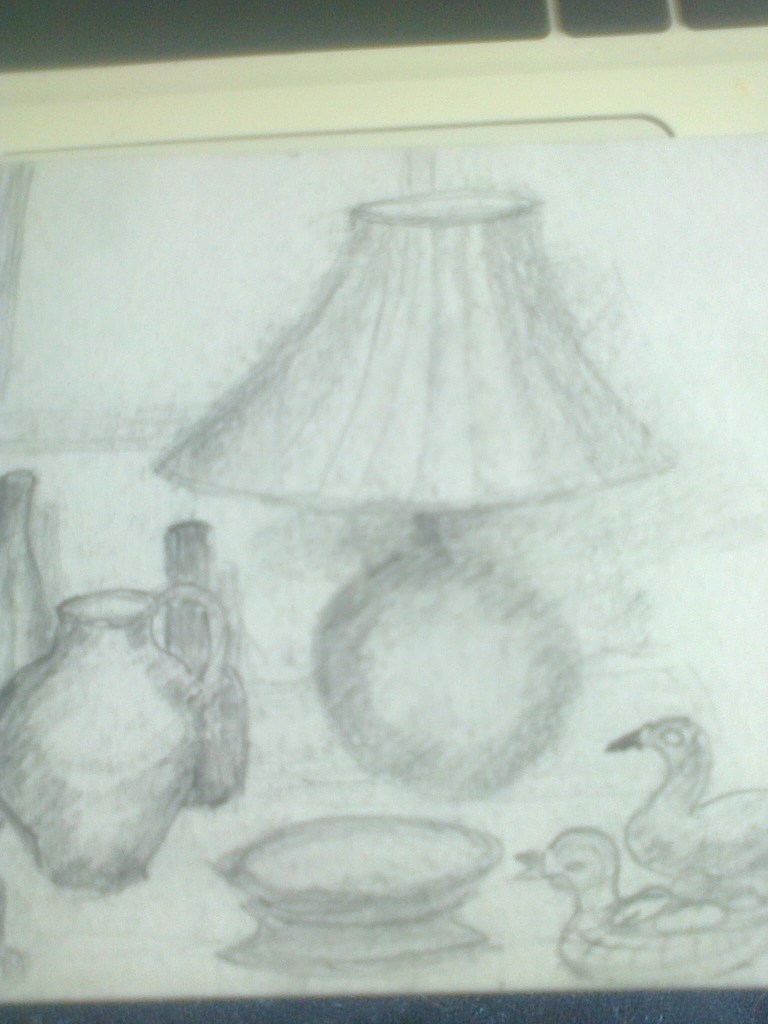
Almost any object can be broken down into shapes: a circle, a square, a rectangle. A mug is two ovals connected by vertical curved lines. The handle is a large half circle with a smaller half circle inside of it.
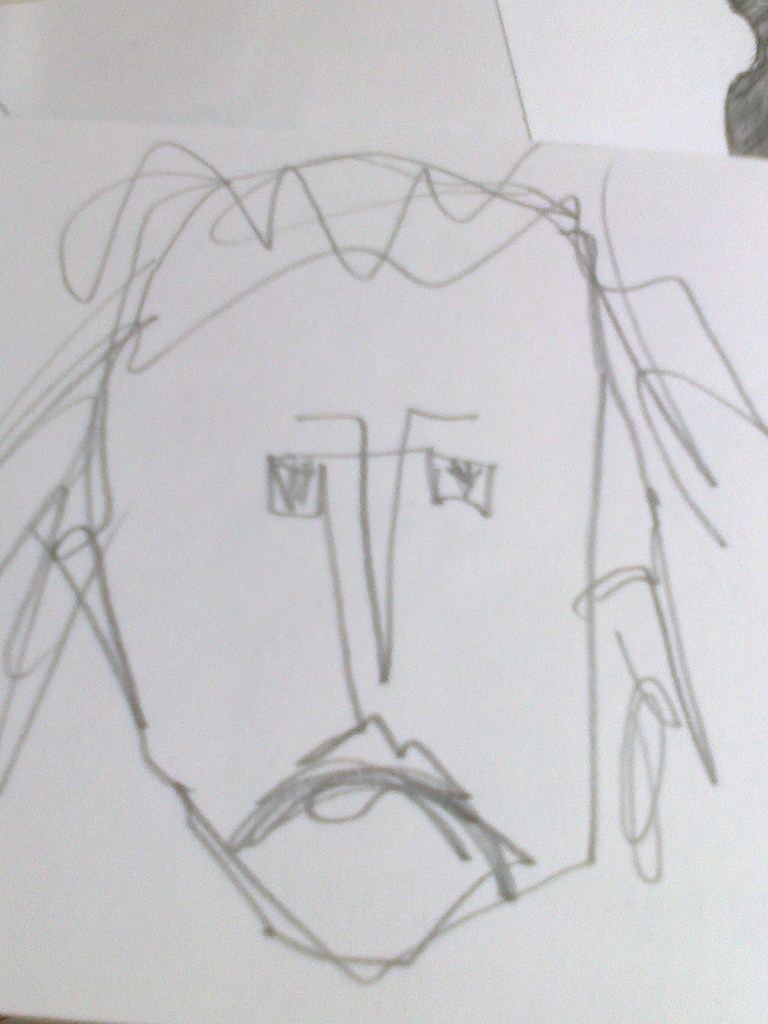
Horses, for instance, are notoriously hard to draw. “The head of a horse is generally rectangular,” said Tony DiTerlizzi, a best-selling children’s book author and illustrator. The body is an oval, and the legs can be sketched as straight lines. The human face is a sphere, he said, and an antique car is a bunch of boxes.
if you feel anxiety while watching the news, you probably don’t need to do anything about that (except maybe turn off the TV, go for a walk or take some deep breaths). But if your anxiety is interfering with your concentration, ability to focus or sleep — and, according to the DSM-5, if you have worry for more days than not for at least six months — that points to a disorder and you should seek a professional diagnostic assessment. But, Dr. Simon said, “For anyone who has some nervousness, anxiety or stress, there are many coping strategies you can try on your own.”
She added that, even at extreme levels, “anxiety is uncomfortable but generally does not result in death.” (Even if it doesn’t feel like that at the time.)
I went to bed with Eamonn.But she wasn’t I lay down with a lion.What a lamb I went to the Ladies.What a gent! I went to an all female college but I’m not I thought I was going mad but it’s only paranoia.It’s normal I sometimes say to myself, are we still here? Then once I heard a voice saying,No! I bought a book.It’s in invisible ink.What a relief! The hairdresser said, is it you, again? I said , no, it’s me. I went to the coffee shop but it was full of foreigners.People from Blackburn,Worcester,Bath,Wells and Bristol.Send them back, London is full. As for the Irish, send us back free and then I shall kiss the Blarney Stone What do you mean,I’m a foreigner? I’m a Viking.So behave