Sparks

The reading lamp makes bright sparks on blue glass
I feel  the beauty of this quiet day,
The  lavender is dull  and dry  in vase

So  for eight hours  the sun   sends  rays to us
But later it falls darkly  to dismay
Would I were a child that heedless plays

Much lavender is pressed to oil, alas
For fortune favours those who’re on the way
The  lavender seems dull  and dry  in vase

Do not call me narcissist for this
I love perfumed oils to charm display
The reading lamp  remember  this blue glass

Behind the ears and on the inner wrist
Perfume attracts men to be our mates
The  lavender seems dull, as if disgraced

Thanks to  those green  gods who  made our state
The trees bow down in worship and in praise.
For eight hours the sun enlightens, plays.
Would I were a child with heedless days

Winter coat

Rosemary  grows by my  old wooden bench
The various cats will gather  there at dusk
They wail in unison as if bereft
And in the moonlight their eyes amber spark.

The day is grey and dull and very still
I search for warmer clothes  and stouter shoes
The rain hangs over with a hint of hail
As if the gods of heaven leave a clue.

Silence can be menacing, unkind
But when at peace I love its fuller charm
Yet I have all my senses, am not blind
And in my mind, I feel an ideal calm

I hid my winter coat  to make  more space
Yet now I cannot find  a single trace

I


The pursuit of form by Robert Pinsky

https://www.poetryfoundation.org/articles/70037/the-pursuit-of-form


“Here’s another way of thinking about “body knowledge” and poetry: pursuing excellence, athletes and musicians willingly, even eagerly, submit themselves to tedious, grinding repetition and analysis. They try to cultivate by practice the most effective way of doing each thing, each best movement so reliably summoned that you don’t need to think about it in the fluid, immediate, rapid, intuitive performance of your skills. The goal, in a word used by those who work in these pursuits: to perfect their form.

But beyond that process, or extending it, true form is creative. As a verb, “form” means to make or generate. (In a neat parallel, the verb “generate” is related to the noun “genre.”) Coaches rightly speak of the best form, but there is no mechanical template: true form is what each person discovers, enhancing or adapting it each time. Form is what makes the batted ball sail over the fence, or the leaping dancer sail across the stage, and for no two people is the successful form exactly alike. Similarities may be important, and they are worth studying, but the best form has an element of idiosyncrasy. Everyone is different. And in practice, any one person will hit the ball or leap a bit differently each time.

In keeping with that flexibility, form should be transformative and original. It can elevate the ordinary, re-sharpen the familiar:

You that seek what life is in death
Now find it air that once was breath:
New names unknown, old names gone,
Till time end bodies, but souls none.
Reader! then make time, while you be,
But steps to your eternity.”

Where have all the rhymes gone?

https://www.huffingtonpost.com/john-lundberg/why-dont-poems-rhyme-anym_b_97489.html


“Most contemporary poets take a mixed stance on free verse versus formalism. There’s a general feeling that metrical, rhyming verse strikes the ear little too harshly these days, but poets haven’t abandoned form altogether. Poets make use of subtler techniques like internal rhyme (rhyming within, rather than at the end, of lines) and slant rhymes (words that almost rhyme like “black” and “bleak”). Most poets still write with a music, but it’s far more varied (and usually more subtle) than music typical of traditional verse.

I think most poets would also agree that you don’t have to use rhyme and meter to write a great poem. Take the well-known word-thing This Is Just to Say by William Carlos Williams.

I have eaten

the plums

that were in

the icebox

and which

you were probably

saving

for breakfast

Forgive me

they were delicious

so sweet

and so cold

If that doesn’t protect “the beauty and precision of the English Language,” I don’t know what does.

Still find yourself a fierce proponent of poetic purity? You’re welcome to join the QES at the New Cavendish Club in London every other Thursday. And who doesn’t enjoy a brisk debate about grammatical standards! Trust me, one might ensue. The QES’s wikipedia entry—and I guarantee you they are all over their wikipedia entry—states “a commitment to standards should not preclude the possibility of grammatical change; nor does it mean, however, that change should be mindlessly celebrated for its own sake.”

Mindless celebrating! Dare they forget how they got booted from Old Cavendish!

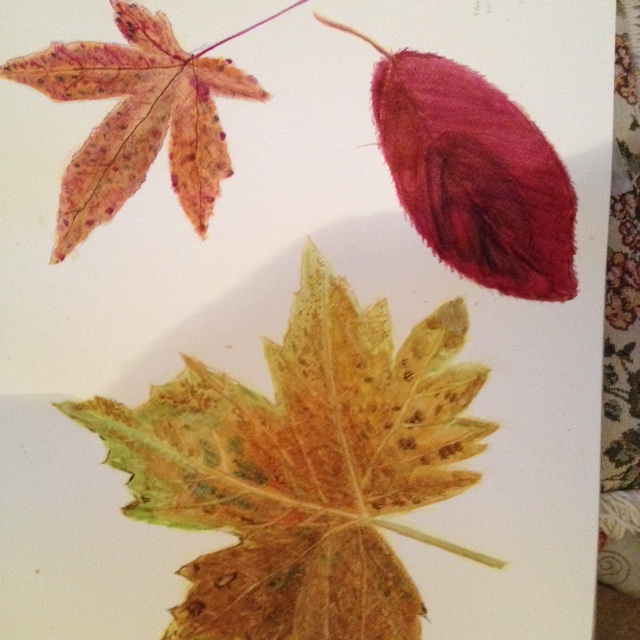
The tree of life

We are little leaves upon the tree
We  never did control our  tiny worlds
The tree of life; what power, what  mystery

With metaphor, it’s easier to see
Life is tender, see each leaf unfurl
We are only leaves upon the tree

Singing in the sun we seem to be
Full of joy until the storm winds swirl
The tree of life; what power, what  mystery

Extinguished   candles   smoke at Tenebrae
We are blown to death however bold
We are little leaves upon the tree

Thus we sacrifice to God uncertainly
Yet as the wars continue, we grow cold
The tree of life; what power, what  mystery

Who has dropped us from the hands that hold?
Who has stolen certainty untold?
We are little leaves upon the tree
The tree of life; what power, what  mystery

Their names changed

  • 400-111525-3.jpgJim Brown was in his new conservatory admiring the windows he had just
    polished.His 82nd birthday was coming up in a few days
    Marie,his stunningly attractive yet irritable,nasty and over educated
    wife,a leading authority on Wittgenstein and most likely suffering from
    Asperger’s syndrome into the bargain,….oh a cliche prone author too—!
    had made a huge whole orange cake and planned a large gathering of friends
    to celebrate his survival for so long whilst married to her,not easy she
    knows.
    He heard a sharp tapping on the door.
    There lay Lucy their next door neighbour spying through the key hole.
    “Are you on your own?” she queried tersely yet rudely.
    “No, yet I’m suffering from chronic existential anxiety” Bill lied politely.
    “Well,I just saw Martina on her second hand Raleigh bike going to the
    market or the Charity Shop or possibly leaving home for ever….”
    “Well,I still have the cat here”,he whispered loudly as if he were free
    associating in a dream
    “Let me in and make me some coffee” she asked courteously,
    “She’s an odd one” the cat Emile thought naughtily.
    “Where’s my Carnation cat milk?”
    “Real or instant?” Simon answered suavely yet naturally.
    “Won’t it wash off your brand new coral lipstick from Chanel of Paris?…
    not to mention your factor 60 sunblock.”
    “God’s whiskers” she murmured quaintly to herself.
    “How does he know it’s Chanel?
    Is he a spy or what?
    Is he in M.I.5?”
    John got some instant coffee and debated whether to put in a little LSD to
    add some visions to their morning!No,a short breathing exercise would do
    he concluded after 9 minutes of obsessive anxiety.
    He sat down in his favorite old wooden Habitat chair having poured the
    coffee into some old plastic mugs.
    “Did you know Habitat is going b..b bankrupt?” she brightly stuttered
    turning pink with happiness and the menopause which so far had lasted over
    30 years.
    Suddenly Lucy sat down on Bert’s lap and began to kiss his right eyelid
    “Careful, my darling!” he muttered insensibly.
    He was savouring the annoyingly uncommon pleasure when the chair fell to
    pieces as it frequently did at such times, throwing the elderly but
    versatile and experienced couple down onto the new Mary Quant patterned
    pure New Zealand lambswool carpet.Suddenly they heard the peal of Mary’s
    bicycle bell.Shortly she walked into the room carrying 78 bags of
    groceries for the birthday party.
    “What’s going on here ?” she murmured seductively in a piercing shriek.
    “I’m so sorry, Jenny, please accept my apologies, he has this thing about
    chairs.It’s a fetish ,I  believe,   according to Sinald Floyd.””
    “Have you got your mobile?” shrieked Tom agonisedly in a  loud whisper.
    ”I can’t get up.” he screamed softly.”Am I dead?”
    “What cannot stand up must forever remain lying down” As my old philosophy tutor at Cambridge used to say, muttered Marty.
    “Why, that’s bit extreme,” said Jane uneasily yet gallantly.
    .”MY tutor said “Who cannot speak must forever remain silent.”
    “Oh,who was your tutor?”
    “Elizabeth Ansconbe!” Amy admitted furtively.”She knew Wittgetensin well.”
    “Mine was Iris Murdoch!” called out Alf.
    Later they heard a silent siren.It was the emergency ambulance.
    Dick, the paramedic bounded into the room.
    “It’s this chair”  said Marie urbanely.
    “Can you mend it for me? My husband can’t manage without it!”
    “Anything else, madam?” Rick queried anxiously.
    “Any coal to fetch in,tins to open, blocked toilets?”
    “Later maybe.”
    Danny looked at Joan.
    “Your eyes look like two deep pools in the Caspian sea.”
    he whispered into her left ear.
    “Are you on another creative writing course?”she quipped urbanely.
    “Yes, we’re on eyes at the moment; what colour is that eyeshadow you have
    on.”
    “This is called winter teal” She admitted uneasily yet seductively.
    “Did you know I’m a transvestite?” he admitted happily her.
    “Yes”,she replied dishonestly.Kitty like to give an impression of
    omniscience owing to her ontological insecurity and her ignorance of
    theology and also her narrowly trained mathematical mind.
    Unfortunately, that frequently gave men the wrong impression.
    Mamie cried out to Al,
    “Get on with it,my sweetie!” So he took out a big tube of glue from his
    jeans’ pocket and set to work reconstructing the chair.
    “Oh,dear, Stewart looks a bit odd”
    “!No,he looks quite prime to me.”
    “Is he an integer?!”
    “No, he’s a transcendental real number”
    “He’s a number all right.”
    “Never mind, we’ve just got new wheelie bins so I’ll put him out with the
    rubbish,”
    Marty joked on hearing Amy’s remarks to Zach.
    But Simon was not yet dead.He merely had fallen asleep.
    He dreamed of his days at Oxgridge University studying illogic and unreason
    with Rudolphina Catnap, the famous female philosopher.Oh, happy, happy days!
    Danny made the ladies some Ceylon tea in the fabulous oak kitchen with its
    pure linen curtains in raspberry beige. and its black enamel sink with
    matching double oven and microwave.”Why no halogen?”Iris Murdoch might
    have asked.
    “What is a human life,”he pondered.He was studying logic as well as writing.
    He began to tremble like a leaf in the wind to use a freshly recycled old
    cliche.
    “Help” he called,”I’m having a panic attack.Hurry I’m dying,I believe.I
    need a priest“
    “You can’t have a panic attack,” shouted Marianne
    “Paramedics heal themselves.”
    “Does God heal those who heal themselves he wondered as he lay under a pile
    of broken china?”

    “Where’s the tea?” called the ladies.
    Ah ,if only Wittgenstein were here,he would know,t hought Emile.
    But I disagree.Only God would know that and He won’t say usually as he
    speaks another language known only to the few.Though sometimes one may
    hear it on the wind deep in a thick forest.
    That’s what I believe.
    Here endeth the first lesson… so be off!


Like coloured visions of the ocean bed


Thought, the vision of the inner eye,
Peers behind the mask of mundane view
A choosing from the symbols that come by
So into meaning, many words are fused

Thought to me is, vision without words;
Needs silent presentation and review.
The words translate the images that surge
Then fall back to the ocean where they grew.

Like coloured visions of the deep sea bed
Where fishes reel and dance, where life is new.
What we mean with difficulty’s said
Yet evocation summons it to view.

Let my words evoke love deep in you;
Answer me with texts and Bibles new.

He held an ancient prayer book  turned my way

The night came down in  clouds of purple-grey
Though when I was outside it still seemed light
Is this real, my instinct seemed to say.

I saw a Jew in Hotters where he prayed
His skullcap black, his face was very white
The night came down in  clouds of purple-grey

He held an ancient prayer book  turned my way
He looked relaxed yet I was in his sight
Is this real, my instinct seemed to say

I stood, as seeing women may delay
The mood of meditation, be a blight
The night came down in  clouds of purple-grey

I did not walk to him and loudly say
May I take your photo here tonight
Is this sense, my mind looked for delay

For where is David, proud as Cohen wrote
Where Solomon the wise, where his insight?
The night came down in  clouds of purple-grey
Where is Noah ,for the flood’s in play


Day shall come again

When red sun  drops and  cooling night  rolls in
The darkness masks both danger and our vision
Ancient minds fear   day won’t come again
Courage for the  delicate   seems thin
We  wrestle  with  our indecision
When   red sun  drops and  deep grey night  rolls in
But now, new stricken by  a sense of sin
Who shall aid the soul’s   derision?
Our  ancient minds fears  day won’t come again
When  we sleep we’re entertained within
Deft dreams squander our   illusions
When bright sun  drops and   fearful night  rolls in
In reveri , we’re loved  as we tune in
So  fancy turns to full communion
While ancient minds fear   day won’t come again.
And so  it was that our own life began
When sperm leaped up in proud confusion.
When  red sun  dropped and  a  new night  rolled in
When  ancient  hearts cried,”Day  shall come again”

Knowledge

“Sun Tzu said it quite well: ” If you know the enemy and know yourself, you need not fear the result of a hundred battles. If you know yourself but not the enemy, for every victory gained you will also suffer a defeat. If you know neither the enemy nor yourself, you will succumb in every battle.”

Kindness

1418162619873

https://thepsychologist.bps.org.uk/kindness-societys-golden-chain

Lee Rowland
“In my view, the beauty of kindness is that it is open to anyone. We can all opt to choose kindness if we wish. It is free, easily accessible to rich and poor alike, and is universally understood. Thus, if it turns out that simple acts of everyday kindness can send ripple effects of wellbeing through society, then promoting and facilitating that has to be a constructive pursuit.”

Yet in my dreams, I find another land

Some boiling water spilled onto my hand
I’ve cut my finger on a tin at last
An accidental death is not yet planned


I had to put 5 plasters in a band
And wait until the flow of blood had passed
Some boiling water spilled onto my hand

I must not condone the  last demand
For surely somewhere I will find green grass
An accidental death is not yet planned

Only God himself can give commands
About the exact time our bodies pass
Though  boiling water spilled onto my hand

Yet in my dreams, I find another land
As if I have stepped lightly through the glass
An accidental death is not yet planned

The sun shone for a moment in a flash
Say, I’m off dear reader, I just have to dash
Some boiling water spilled onto my hand
An accidental death is never planned


Poems about dreams and sleep

5346929_e6134c32792_m

https://www.poets.org/poetsorg/text/poems-about-dreams-sleep


Langston Hughes1902 – 1967

To fling my arms wide
In some place of the sun,
To whirl and to dance
Till the white day is done.
Then rest at cool evening
Beneath a tall tree
While night comes on gently,
    Dark like me—
That is my dream!

To fling my arms wide
In the face of the sun,
Dance!  Whirl!  Whirl!
Till the quick day is done.
Rest at pale evening . . .
A tall, slim tree . . .
Night coming tenderly
    Black like me.


The critic Donald B. Gibson noted in the introduction to Modern Black Poets: A Collection of Critical Essays (Prentice Hall, 1973) that Hughes “differed from most of his predecessors among black poets . . . in that he addressed his poetry to the people, specifically to black people. During the twenties when most American poets were turning inward, writing obscure and esoteric poetry to an ever decreasing audience of readers, Hughes was turning outward, using language and themes, attitudes and ideas familiar to anyone who had the ability simply to read . . . Until the time of his death, he spread his message humorously—though always seriously—to audiences throughout the country, having read his poetry to more people (possibly) than any other American poet.”

The sunlit top, the roots hid in earth’s floor

Turn back, live again, he  said to me
Do not  wander in the darkness anymore
One more move might give death victory

We are each connected to that tree
The sunlit top, the roots hid in earth’s floor
Come back, live again, he asked of me

While we live, we’ll live with dignity
Not scrabbling for the gold in blood and gore
One more lie will give  sin victory

The kindness of the golden light was  clear
And left an image in my mind’s deep core
Come back, live your life, he  soothed  me

So do not wonder  now why you are here
We’re here to live and living shall restore
What  our suffering self has found so dear

I had never seen the light before
Only Christ the tyger with his roar
Come back,  live  through pain, he  asked of me
One right step will give life  victory

Free

lit-up-hands.jpgI thought of writing in free verse today
As it has a different feel than form
Yet I have almost forgotten how to do that
We hear the News and then
We hear it again

When will peace come   like in 1989
South Africa?
When will people stop going to church
BECAUSE going to church  is not enough
It is not  so important.
What we do is.
Knowing what is possible is
It may be hard.
But cruelty is hard too,

Ethics and mysticism

“Mysticism has often been misunderstood as the attempt to escape this simple, phenomenal world to a more pure existence in heaven beyond. This is not mysticism, but Gnosticism. Biblical mysticism is the attempt to exit ‘this world’ to an alternative reality that pervades the old order. Its goal is to jettison the mind-set that says ‘greed is good,’ selfishness is normal,’ and ‘killing is necessary.’ Mysticism in biblical terms is not escapism, as so many have caricatured it, but a fight for ethics and social change.”
— Walter WinkWha

Big nerves

I have been mending “jewellery”  today.I find one can buy all sorts of fasteners and little chains.I find doing this is very soothing.I didn’t know the name of the clasp  which is lobster.Where you pull back a little rod and then the ring opens.I got some chains with a clasp at each end, Also used as safety chains.I  don’t like bracelets much but necklaces are nice.Mine are not real jewelry but things my husband bought in various odd places. or were given me by my sister.
I hope he’s not in hell because I am hot enough already!
I managed to pour some boiling water onto my hand but I react so quickly that it has not damaged the skin.I knew that when the dentist said my nerves are twice as big as the average that there must be a reason.I had never thought about whether the actual size of our nerves can vary so much. Some folk must have very small ones and sometimes I wish mine were.But on the whole, I  like myself.Whoever I am!

I can’t love  real numbers anymore

I can’t love  real numbers anymore
Their beauty has less meaning than  a flower
I can’t love them for they have more power
I can’t love real numbers anymore

I can’t love my husband anymore
I have the casket just behind the door
If I fall, I’ll hit the hi fi tower
I can’t love my sweetheart anymore.

I won’t love the angels anymore
I am in a rage and  I’ve gone sour
Give me my computer and will power
I won’t love the angels anymore.

I am cross because it’s dark and dour
I hate the rich who want to tax the poor
While they’re on a cruise or luscious tour
I am mad because it’s half an hour

Jesus died and no-one seemed to care
Some of  us were washing our long hair
None of us had any love to  spare
Jesus came and no-one ever saw.

What is life if we cannot be here?
What is worthwhile and is also near?
What is God about and what is fear?
What is love if we cannot be here?

Nobody will tell the truth in hell
Satan boils potatoes  till they gell
And he makes good chips with oil from wells
Nobody can tell the truth in hell.

Did Jesus really die for our sins?

https://www.huffingtonpost.com/christian-piatt/did-jesus-realy-die-for-the-sins-of-humanity_b_1007345.html


“Contemporary theologian Walter Wink goes a step further than Abelard, claiming that atonement theology is a corruption of the Gospel, focusing on an act of violence rather than the values of peaceful humility and compassion lived and taught by Christ.

Resolving the debate about the causes of, and purpose behind, Jesus’ death is an impossible task. More important, though is to make clear that such a debate is going on. For too long, Christians and non-Christians have assumed that all who yearn to follow the way of Christ universally believe Christ died for our sins. For millions, this not only defines their faith, but their understanding of the very nature of Good as well. For others, it is the basis for rejecting Christianity, understanding it as an inherently violent religion, centered on a bloodthirsty God that requires death in exchange for mercy.

This is not the God in which I put my faith, and I am not alone.”

Tea

Photo0404The doctor said I was too fragile to go to the hospital
She’d never even seen me
So I went anyway.

In A and E it was safer than being at home
I just realised they  never gave me a cup of tea.

Afterwords, they said they liked my voice
I had no choice.

Where are the chaplains nowadays?
We have DIY instead
My unconscious did it all
Then I went home and ate some food
But only because my sister was with me.

Sometimes I make  the tea very strong
Is it wrong?


A few words

My radio won’t play  music
Just the words of dead men
On cracked tea cups
And the lane where they led.
Sounds ominous?

The Television is always standing in the corner
Like we did at school when we misbehaved
Punishment, and how we were made.
I liked the singing and skipping most.

Mr Mulligan was young with dark eyes
He taught me for a year
Let me read novels in the afternoon
Fridays we polished our desks and cleaned the room
Mr Mulligan went to
Watch the football match on Saturday
Then he died.

Miss Molloy was elegant.She had red hair
She was beautiful with rimless glasses
When I’d been  off school
She showed me how to do long division
I found it irritating.
But I liked being at her big desk looking at the other children.
She was older and always severe.
She had  a lovely house with a  front garden
Not far from the bus stop.
I don’t know what her flowers were.

Father McGrath was very rich
His voice boomed
When we  went to Benediction I used to wonder
What was it he showed when we all had to  bend our heads down
So I looked.
It was big and gold like a clock.
Were we idolising it?


Poetry, surprise and older adults

Photo0092.jpg

Poetry helps older writers surprise themselves

“One of the great lessons of Cohn’s teaching experience is that everyone does have a poetic voice. “Right now I have a class with several students who, due to blindness, stroke or other health issues, can’t read or write,” she said. “They are still brilliant and they have a long history of loving learning, writing and language. So they come and find ways to participate. One woman, when I asked if she would like help scribing her words, said ‘I enjoy writing the poems in my head.’”

With Writing Home, Cohn aims to connect with students in a more personal and personalized way. “Rather than coming in with a cookie-cutter set of workshops, the Writing Home sessions are growing out of conversations I’ve been having as an artist-organizer, talking to experts in aging in and around the Creative Enterprise Zone, visiting existing programming for older adults – exercise classes, craft and arts groups, riding shotgun with someone delivering meals to homebound elderly.”

In a field where just getting to class counts as a victory for many students, it would be tempting to set the bar low, but Cohn measures her success by an array of metrics both challenging and inspiring. “I know sessions are succeeding when people come back for more,” she said. “We’ve succeeded if people have written something in class or between sessions. We’ve succeeded when people are bursting with eagerness to read what they wrote. We’ve succeeded when people share writing about a difficult experience and I get to witness that writer being supported by the community of writers gathered around the table. We’ve really succeeded when a student is willing to take the risk of revising work. We’ve succeeded if I share a poem an elder wrote and younger people are surprised by the quality or voice of a poem.”

And sometimes students even surprise themselves. “As a poet, one of my favorite moments is when a timid student, usually one who was given a whole lot of DOs and DON’Ts by a school teacher 70 or 80 years ago, takes a risk and tries something new in a poem. I remember a rush of pleasure when we were writing about art and I’d brought in a variety of images for writers to look at, and a student who usually wrote in very competent but tight rhyming couplets wrote an amazing, wild, gorgeous prose poem, and then looked up and asked innocently ‘Is this a poem?’””

Known by Heart’s Writing Home project launched in September in St. Paul’s Creative Enterprise Zone. Visit knownbyheartpoetry.com for more information.

Blood is always red

What is truth, the ruthless Pilate said
Postmodern thought already on  display
Our eyes are blind  yet blood is always red

On the stairs at night, I heard the tread
Was it Satan marching on his way?
What is truth, the  tiresome Pilate said

I lay in anguish in my chilly bed
In the darkness deeper than the clay
Our eyes are blind  yet sometimes we see red

The images of terror in my head
What to do and more, what must I say
What is truth, the  tortured Pilate said

Why are spirits broken and love shed
Children tortured where they used to play
Our eyes are blind  and good is almost dead

Deconstructed, demonized, displaced
In the shadows who can see the way?
What is truth, the  stupid Pilate’s dead
Our eyes are blind, what is the good, we said

Pavements

The  roots of trees don’t know what  pavements are
They heave them up as if by spite inspired
So older people to fall  down  by the cars

Underneath the   cobbles and the tar
Burns the earth with its creative fire
The  roots of trees don’t know what  cobbles are

To the boiling centre falls a star
And there it floats, a tadpole in a mire
Where older people  run  from falling cars

Above the water stands the Judge desired
See reflected, crooked Christian spires
The roots of trees don’t know what worships for.

With creative heat, I now perspire
My language shatters, breaks the  nerves of liars
When older people catch  a falling car.

I see a blade of grass with sun conspire;
Then comes again the soft yet poisoned tyre.
The  roots of trees have cracked the  pavement here
The older  people  pitied Hamlet and King Lear


Cracks in the pavement

What is conation?


IMG_3847.jpg
By my sister

https://www.merriam-webster.com/dictionary/conation


“conation

noun  co·na·tion  \ kō-ˈnā-shən \

Definition of conation

:an inclination (such as an instinct, a drive, a wish, or a craving) to act purposefully impulse 3

conative

play \ˈkō-nə-tiv, ˈkä-, ˈkō-ˌnā-\ adjective

First Known Use: circa 1837

Origin and Etymology of conation

Latin conation-, conatio act of attempting, from conari to attempt — more at deaco

Medical Dictionary

conation

noun  co·na·tion  \ kō-ˈnā-shən \

Medical Definition of conation

:an inclination (as an instinct, a drive, a wish, or a craving) to act purposefully :impulse 2

conative

play \ˈkō-nət-iv, -ˌnāt-; ˈkän-ət-\ adjective


National book awards

14993456_803616356444911_2244128012820919368_n.jpg
https://www.pw.org/content/jesmyn_ward_frank_bidart_win_national_book_awards


““Writing the poems was how I survived,” said Bidart upon winning the poetry prize. “I hope that the journeys these poems go on will help others survive as well.” In her acceptance speech, Ward addressed the crowd and said, “You looked at me and the people I love and the people I write about…. and you saw your grief, your love, your losses, your regret, your joy, your hope. I am deeply grateful, and I hope to continue this conversation with all of you for all of our days.””


The Tragic Sense of Frank Bidart

“Twenty years ago, Frank Bidart called his sixth book Desire. It is desire that drives his poetry, just as making desire believable on the page drives his imagination. Besides its erotic reach, “desire” signifies for Bidart a yearning toward the absolute in any domain. To desire to create a perfect work of art; to find provable truth; to speak with a candor “that gives a candid kind to everything” (Stevens) is—as any adult knows—to fail. And yet. It is that “and yet” that gives passion to Bidart’s voice, as he both succumbs to and resists desire. Hoping in love for a perfect entwining of body and mind, the young are violently disappointed by each broken relationship; longing for the sustenance of family affection, the young are astonished and hurt by its deficiencies; the artist-in-the-making aspires after an unattainable aesthetic cohesion of heart, eye, mind, and medium; and the devotee attempts a mystical knowledge of the divine, only to have the radiance wane.

Bidart’s fiercely original poetry, now collected into one volume with several interviews, has found again and again an entry into the heartbreak, pathos, plangency, rage, and depression into which the longing for perfection will lead anyone who finds compromise intolerable. This is an old theme: Coleridge treated it in “Constancy to an Ideal Object”; Hopkins saw himself “with this tormented mind tormenting yet”; and Yeats, in “Among School Children,” bitterly addressed those unattainable ideal perfections of love, worship, or maternal aspiration, those

               Presences
That passion, piety, or affection knows,
And that all heavenly glory symbolize,
[Those] self-born mockers of man’s enterprise.

Bidart’s poems establish themselves on the paradox of the compulsion to return to the scene of desire, loathing its fundamental insufficiency as well as the self that returns to it. His intricate twists of syntax, coiling like a python about the tortured sensibility, act out the dilemmas and melodramas of the desiring self. Because above all he wants to register the sound of the human voice, he is driven to unusual representations of that voice on the page.”