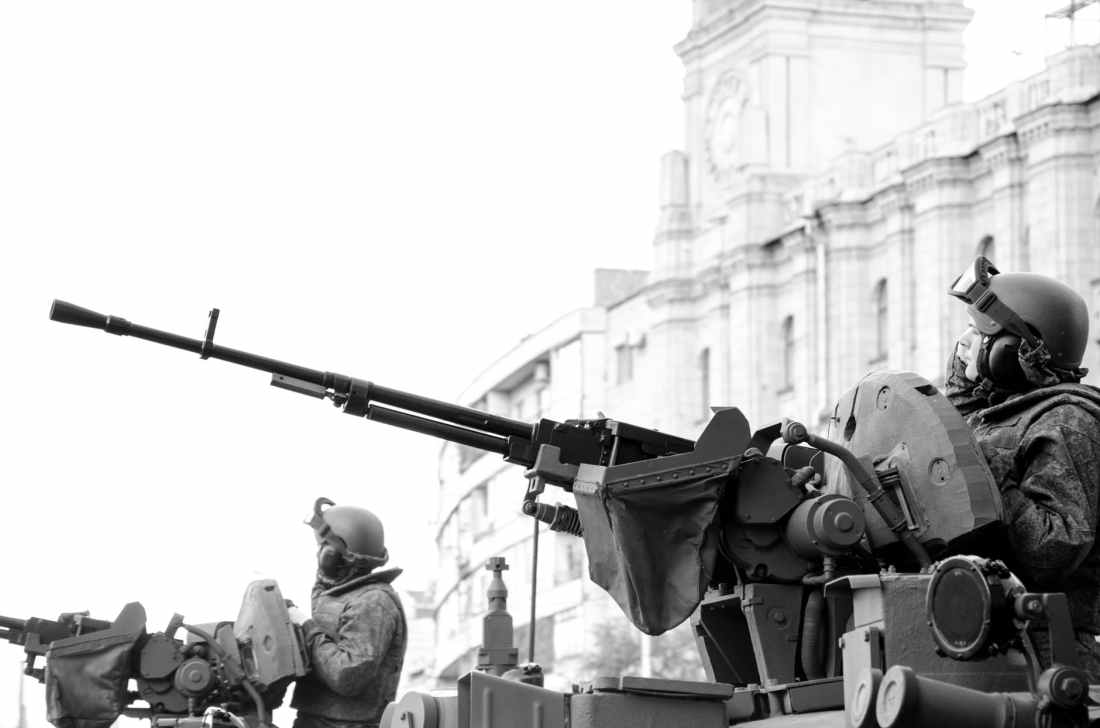
An undreamed dream


adult army battle black and white
Photo by asim alnamat on Pexels.com
To write a poem I dream an undreamed dream
The woods in France deformed by dead young men
A nightmare complex in its perplexed themes

In our dream the narrative has means
To make those killed communicate again
To write a poem I dream an undreamed dream

Later, in another war, trains steamed
To take the “insect” Jew, no longer “man.”
A nightmare simple in its evil themes

The little pearls we half see, as we scheme
The evasions we ignored but which remained.
We read a poem, we dream an undreamed dream

Who we are and who we might have been
At 4 am in isolated pain
The Nightmare Complex, come to share your screams

Can any see the woods as Dante aimed
To recreate the moment where we change?
To write a poem embodies soldiers’ dreams
Nightmares dark yet piercing wartime themes

Why,did you know already?

garganey

Mike Flemming

Doctor,I went to the sorting office
Are you a parcel
Sort of.

Doctor,I went to the Synagogue
D¨ýou?
No,I’m a Samaritan.

Doctor, I like Cheesecake
Thatś not a disease
But it might cause  one

Doctor,I am a genius
Who told you?
Why,did you know  already?

Doctor,I have no man to love
Be  less choosy
Alright,I shall love a woman
Who?
Give me a chance!

Doctor,people never phone me
Where is your phone?
I don’t have one.
Well, there’s the answer.
An ansafone?

Doctor, shall I go out?
Yes, go now!

Doctor, are you married?
I think so.
You dress so well,I think you must be
Yes,I accept that argument.
Surely it’s easier  and wiser to go home and look round  rather than use reason
Good thinking!

Doctor, I love maps
Why tell me?
Because I have had a heart attack so I have printed out the route to A and E
Surely  the paramedics would know
I don’t trust them.
Suppose you have one when you are out of the house
I  shall have to use more GNT.
Don’t blow up a shop.
Alright,I’ll go into  cafe first.
But how can you walk with a heart attack?
Unless I am dead I can still walk albeit slowly
Wow, what a vocabulary you have
I did spend 3 years in Cambridge
Doing what?
Listening.
Are you a spy?
Not now.
Can you prove it?
It’s not like proving pi is transcendental
You’ve lost me.
Well  how about  natural logarithms?
Please stop.
But you could learn.
I  am a doctor
Just of medicine?
Just?
Seems plain to me
Now knitting, that is fun!

The gravity of loss brought me to earth

agriculture clouds countryside cropland
Photo by Elle McGregor-Colman on Pexels.com
The gravity of loss brought me to earth
Beneath the rotting leaves, I lay with worms.
I wondered if I were of any worth

No more to be enchanted by love’s mirth,
I  with unnamed particles was turned.
The weight of loss bears down the heart to earth.

I could not rise alone but saw a path
While I slept  new unity had formed
I learned I need not think of what I’m worth

My sorrow brought no guilt nor fear of wrath
I am both  eagle and  a twisted worm
In my little grave, I  loved the earth.

Like the adder, shocked into rebirth.
I from silent underworld had learned
Not to judge my soul to be of worth.

I shall not  fear the flames of hell that burn
When blackness is accepted, may one learn?
The weight of loss breaks down the soul to earth
With dusty shredded leaves, we then converse

Beware of meditation

photo of cat in a flower field
Photo by Fedor GoldBerg on Pexels.com

https://www.independent.co.uk/life-style/health-and-families/features/meditation-is-touted-as-a-cure-for-mental-instability-but-can-it-actually-be-bad-for-you-10268291.html

Extract

“I looked further into the literature. In 1992, David Shapiro, a professor at UCLA Irvine, published an article about the effects of meditation retreats. After examining 27 people with different levels of meditation experience, he found 63 per cent of them had suffered at least one negative effect and seven per cent profoundly adverse effects.

The negative effects included anxiety, panic, depression, pain, confusion and disorientation. But perhaps only the least experienced felt them – and might several days of meditation not overwhelm those who were relatively new to the practice? The answer was no. When Shapiro divided the larger group into those with lesser and greater experience, there were no differences: all had an equal number of adverse experiences. And an earlier study had arrived at a similar, but even more surprising conclusion: those with more experience also had considerably more adverse effects than the beginners.”

Argument is pointless, love is key

Compare the BBQ on the hill to Nero fiddling while Rome burned

The burning road with  buses overfull
Old and poor folk crammed ,Calcutta like-
The burning road objects ,its tarmac boils
Swallows a man’s leg,this is no fake.

With hammer and a chisel he’s released
While others picnic on the fire struck hill
They say they do not see the clouds of smoke
If the wind turns East,   those fires will kill

As they ignore the fire above their  heads
So we ignore what we don’t want to know
That we may envy,hate or  wish to kill
That hidden rages make our mood fall low

So as we each choose what we want to see
Argument is pointless, love is key


In good form

closeup photo of lions cubs
Photo by Magda Ehlers on Pexels.com

https://www.poetryfoundation.org/poetrymagazine/articles/74593/in-good-form

“A well-turned line, a sparkling rhyme: craft is essential to the art of poetry, writes Poetry editor Christian Wiman in the October 2012 issue. He explains:

The sound and form of the poem are everything; they buffet it against its hard journey through time and indifference. Or, to change the metaphor, they enable it to insinuate itself into the hard carapace of our consciousness, so that the poem’s “message”…won’t just bounce off the glaze of us. Craft matters because life matters. Craftless poetry is not only as perishable as the daily paper, it’s meretricious, disrespectful (of its subjects as well as its readers)….

Why do you think craft matters? Do well-crafted poems hit you harder and remain with you longer, as Wiman suggests? Why might poems devoid of craft seem disrespectful—perhaps because they demand our time without rewarding us with pleasure, insight, or staying power?

The most recent issue of Poetry provides plenty of fodder for such questions. It offers several poems in received forms, such as Joshua Mehigan’s sonnet “The Professor” and Elizabeth Seydel Morgan’s villanelle “September 2011.” And it features invented forms as well. Take Marie Ponsot’s “Private and Profane,” reprinted from a 1957 issue:”