
Month: Jun 2017

Gives treasure for our dreams in their kingdom
The medium grey of clouds backlit by sun
Now turns to gentle pink and purple hues
A pleasure to my eye and its kingdom
My kitchen’s clean and all my toils are done
I gaze delighted by this epic view
The medium soft grey clouds are lit by sun
The once long day has passed in its wisdom
I learned my colours and I learned some new
With pleasure to my eye and its kingdom
How to tell the fire from its first flame,
As now they merge into the cold night blue
The medium soft grey clouds are now all gone
Life is both philosophy and game
Whose the rules and whose the mind , if true?
I close my eye and dream away its shame
Who wrote the script,who gave us every clue?
To whom is payment now so overdue?
The medium grey of clouds backlit by sun
Gives treasure for our dreams in their kingdom
Share this:
I had the perfect avocado pear
I had the perfect avocado pear
My loved one used to love them more than I
In olive oil, but otherwise quite bare.
I hate dead fish; their eyes so coldly stare
My loved one always had an eager eye
I had the perfect avocado pear.
I won’t eat fish not even for a dare.
I like a salad, which benignly lies
In olive oil, but otherwise quite bare.
My husband took me some place Super Mare
The ice cream booth was home to MI 5
I ate that perfect avocado pear.
I don’t know just what a woman spy can wear
A bathing suit might be a risk too far
Bathed in olive oil, but almost bare.
I wish I were mature while still alive
Like Stilton cheese or port beatified
I had the perfect avocado pear
In olive oil, but otherwise quite bare.
Share this:
Stabat mater dolorosa
Share this:
You beat me in dying
Like another life, lived in another world
Two years is a long time
And a very short time.
Why did you call Hello in the night?
Only once, but you did not say more.
Now I have cut down a shrub and moved the wheelie bins
So I can sit behind the hedge in sunshine.
I eat my dinner later
I don’t wash up right then.
I read books I am drawn to
But I don’t understand them
Unless some elusive bit of my mind does.
I wake up at 5 am thinking it is morning
A little black cat sits on my garden chair
Won’t come to me, not yet!
I’d like the cat to come inside in the winter
I like to stroke them while I listen to music.
Two years
Another world, another person
You’d hardly know me
I am sorry I beat you at chess.
But you beat me in dying.
Share this:
I have got this message which I believe is spam so beware BT imitations


Shared sorrow




Rest in peace
Share this:
I have a garden with a real brick wall
Now my garden parasols stand tall
One is red and one is kind of beige
So naturally, rain decides to fall
I also have umbrellas in the hall
To poke invaders ‘balls if I’m enraged
Thus my garden parasols stand tall
I have a garden with a real brick wall
A lavatory never yet engaged
So, fortunately, rain decides to fall
When it’s autumn, stuff begins to fall
I read a sentence, sometimes a whole page
Still, my garden parasols look tall
I shall give my poetry my all
And if it’s bad then you may take umbrage
Unnaturally, rain will never pall.
Before we married, we were quite estranged
Afterwards, we soon became deranged
Now my garden parasols may fall
So sullenly. the rain decides walks over all
Share this:
Culminate


https://www.merriam-webster.com/word-of-the-day
Word of the Day : June 29, 2017
culminate
Definition
1 : (of a celestial body) to reach its highest altitude; also : to be directly overhead
2 : to rise to or form a summit
3 : to reach the highest or a climactic or decisive point
Examples
“My son and I are very interested in science and discovery. We were privileged to hear a distinguished physicist describe his research in magnetic wave phenomenon…. His complex findings present all matter as series of circular waves culminating in one large magnetic center which connects the universe.” — Louise Bostic, The Daily Star (Hammond, Louisiana), 21 Apr. 2016
“Unfortunately, segments of its plot lacked creativity and purpose, ultimately culminating in a mediocre final product.” — Nick Gavio, The Georgetown Voice (Georgetown University), 5 June 2017
Did You Know?
Culminate was first used in English in the 17th century in the field of astronomy. When a star or other heavenly body culminates, it reaches the point at which it is highest above the horizon from the vantage point of an observer on the ground. The word derives from the past participle of the Medieval Latin verb culminare, meaning “to crown,” and ultimately from the Latin noun culmen, meaning “top.” As something culminates it rises toward a peak. These days the word is most familiar to English speakers in its figurative usage meaning “to reach a climactic or decisive point.”
Share this:

From a new perspective
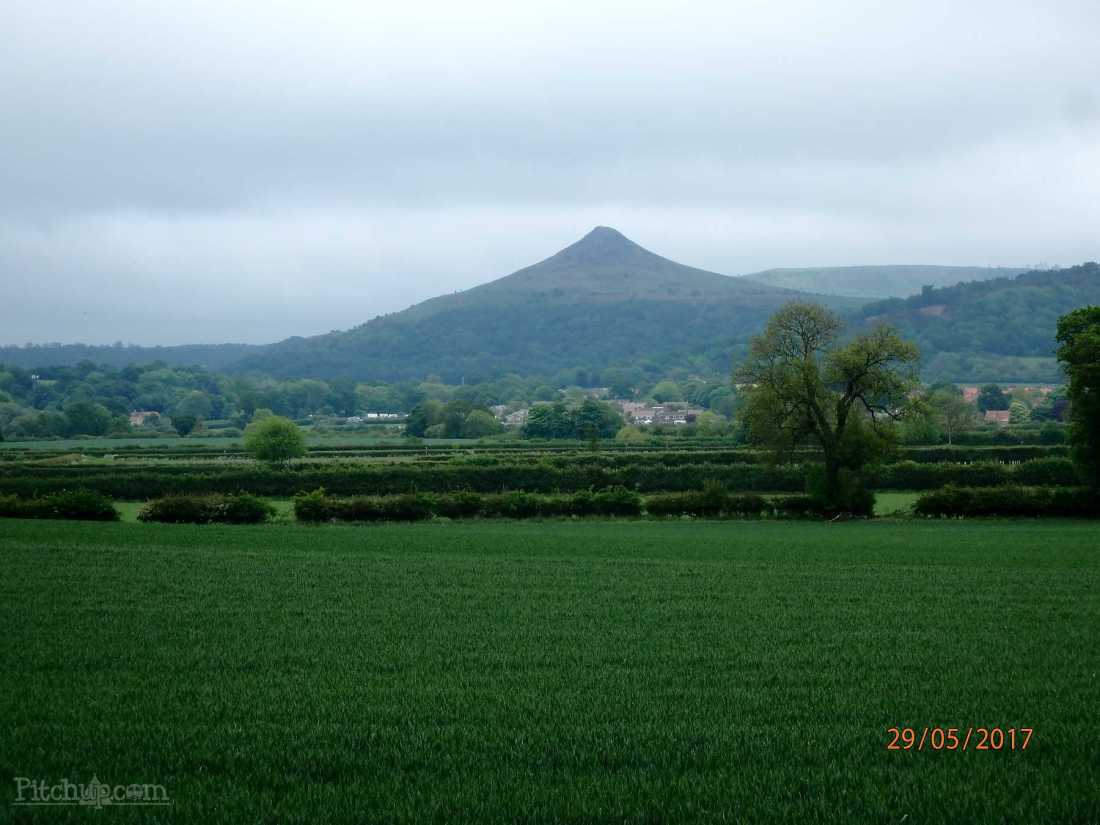
I’ve found there are terms derived from Art than can be useful in altering our perceptions and maybe making us forget our woes and feel more at one with the world.The most common and underrated one is,
Seeing things from a different perspective.
Most people are aware that when we look at a street or a row of trees we see them as differently shaped when we look at them from different positions.But we don’t see it can be used as a metaphor
I can imagine children think they are seeing a totally different place altogether
And furthermore to young children buildings are alive.Windows are eyes, the door is a mouth.So they seem to be looking at us.
When we grow older we invest the world with less of our imagination.So a pavement cracked and marked is fascinating to a child but is ignored, not noticed as we adults rush ahead trying to get things done
I think it is worthwhile to try to regain some childish vision and see more intensively what is near us.And who.
When we are unhappy it is good to get out of our thoughts and put our eyes and ears at the service of what is not ourself.I sometimes watched ants running up tree trunks.I wondered what their life was like.I believe injured ants are carried back to the nest.Perhaps they have a group identity.
See the brave grass growing in a crack in the road.
In a way, the environment IS ourself when we are little and we play outside the front door.For me, it is the hills of my childhood that evoke a sense of identity, a me-ness in me.
So to be a refugee or a displaced person must be very painful in more ways than we think.
As well as literally moving about to alter our perspective, we can also change our minds by trying to imagine what the lives of other people are like.
I find literature and novels especially are good for this.Great writers know more than psychologists.
So we can develop sympathy or empathy for others by reading.Many of us know a little Shakespeare and can identify with Hamlet or Macbeth, even King Lear.These works provide furniture for the mind.
And what do iPhones provide or texting
Should we be worried that a book written in poorish prose like 50 shades of grey outsells the Bible?
The stories of love, murder, savagery, mysticism are more interesting than these feeble writings women read on their Kindles as they commute to work.
Sometimes pretending to be a lawyer and making a case out for something you personally disagree with is a way of learning to see more widely
Because that really matters to everyone and not just the troubled or isolated
Share this:

Without their smartphones, many folk can’t walk.
I find it hard these days to have a proper talk
A text arrives, my landline rings, what next?
Without their smartphones, many blindly sulk.
Conversation could occur on walks
When phones were heavy and but few could text
I find it hard these times to have a talk
An object of transition , made in bulk
In colours.sizes.prices it’s alleged
That without their smartphones, many people sulk.
Their lips are shuttered with a vocal cork.
Against our humanness, they took a pledge
I find it hard to get friends here to talk
With right hand holding combined knife and fork
The left one texts and secrets are divulged
Without their smartphones, many folk can’t walk.
I ‘m determined with complete resolve
To make my tongue appealingly involved
When I meet a human , I shall talk
And if they say,you’re foreign, I’ll run riot.
Share this:
Beware the man

No woman ever can be what he dreams
Nor can they give comfort on the road.
Yet every night he plots and thinks and schemes.
And rarely does he ever go abroad.
No food he eats will satisfy his tongue.
The best wine is as nought to mother’s milk.
He grumbles and will not admit to wrong.
I ‘ve known more men than him of this same ilk.
No bed can be the right one for his sleep.
No sheets and pillows suit his wary skin.
He often has made gentle maidens weep
Crying out they’are fat or boney thin.’
Beware the man who never can adapt
For in own lone wishes he is trapped
Share this:

Let deep green digest me
Oh, sweet my heart, let nature dissolve me.
In her deep greens, I am allowed to be.
While in the city politicians cry
From my lips I hear a solemn sigh.
Oh , foolish world that foolish men are free.
What torment that we need society
And cannot dwell like birds in winter trees.
Or like the spider weaving webs defy.
Release my heart, let nature dissolve me.
The rich are common in momentous fee.
Unlike the insects and the fur-clad bee.
For all of us, our end is sweetly nigh
Enchanted as the dove that homewards flies.
Be comfortless in notoriety,
Oh, cease my heart, let deep green digest me.
Share this:
Silhouettes of hills
I lost you once before the end, I know.
It was a fantasy of silent love
I accepted not the wastes of unthawed snow
If looks can kill, they also cause a glow,
As if another sun shines from above
I lost you just before the end, I know.
Yet, all in all, it was a worthwhile show
Despite the naked hand inside the glove
I could not master arctic wastes in snow
Once an innocent, I was betrothed
And we touched so flew the homeward dove
I lost you just before the end, I know.
To be known, to love and so to laugh
To wander round the hills and ever rove
I could not last well in the iron snow
And yet at silhouettes of hills, we gazed
And saw those fierce Rams as they proudly grazed
I lost you in the mind’s mountains I know
I would not choose the arctic wastes the snow
Share this:
Neurosis is caused by language

If we didn’t learn to speak like animals we would not be offended or wounded by what people said.Because they wouldn’t be able to say it.We could not ruminate and worry nor have low self-esteem.We would just do what we could and sleep when we felt like it.And only have sex once a year if we were deer.More if we were rabbits.And there is no need for courting.In fact sometimes it gets a bit aggressive as in the duck family.In London, female ducks have been killed by too many male ducks fighting over them.That rather defeats the purpose of sex in the animal world.They can’t write love letters nor use sex as recreation.Still who had time for recreation these days
After you’ve blogged, tweeted been on FB and read the Guardian it’s time for bed

Share this:

A beautiful little talk
Share this:
Grammer
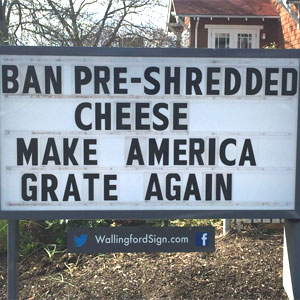
Grammer don’t really exist
Language was oral at first
The spoken is necessity
The written, a monstrosity
As we learn at a poetry fest.
Share this:

The poet Alan Shapiro
https://www.poetryfoundation.org/poems-and-poets/poets/detail/alan-r-shapiro
“Poet-critic J.D. McClatchy observed in a review of Shapiro’s Dead, Alive and Busy(2000), “Mr. Shapiro is a shrewd and sympathetic moralist. He never trivializes his subjects with high-minded flourishes or stylistic gimmicks.” Shapiro’s later collections address the loss of his two siblings to cancer, the aging of his parents, and the strains on a marriage. In describing the domestic details and loss portrayed in Shapiro’s Tantalus in Love (2005), poet Joshua Clover commented, “Such tightly framed tales of domesticity offer a sense of control parallel to Shapiro’s formal facility, reducing and clarifying the poem’s field of action in defense against an abysmal multiplicity of things.”
In his memoirs The Last Happy Occasion (1997), nominated for a National Book Critics Circle award, and Vigil (1997), Shapiro has written about the death of his sister and the role that poetry has played in his life. Shapiro is also the author of a collection of essays on poetry, In Praise of the Impure: Poetry and the Ethical Imagination: Essays, 1980–1991 (1993).”
Share this:
How poetry can change lives
“So, at the most basic level, poetry is important because it makes us think, it opens us up to wonder and the sometimes astonishing possibilities of language. It is, in its subtle yet powerful way, a discipline for re-engaging with a world we take too much for granted.
When the purveyors of bottom-line thinking call a mountain or a lake a “natural resource”, something to be merely exploited and used up, poetry reminds us that lakes and mountains are more than items on a spreadsheet; when a dictatorship imprisons and tortures its citizens, people write poems because the rhythms of poetry and the way it uses language to celebrate and to honour, rather than to denigrate and abuse, is akin to the rhythms and attentiveness of justice. Central to this attentiveness is the key ingredient of poetry, the metaphor, which Hannah Arendt defined as “the means by which the oneness of the world is poetically brought about”. It’s that power to bring things together, to unify experience as “the music of what happens”, that the best poetry achieves.
Share this:

Is Stan politically correct?
On Saturday afternoon after luncb , or midday dinner as we said up north before winning places in posh universities
which stole our native language, Mary began to feel very nervous, as she was going to the hospital with Stan on Monday for his next appointment with Dr.Range Rover.
Mary was puzzled.She felt almost happy last week about seeing this kind hearted and gracious well dressed female doctor.However she had been shunted sideways onto a male doctor who was almost totally silent.. so much so that he seemd to absorb Mary’s questions into his sponge of a brain without feeling the need to respond, just like many British husbands do… and it may be aa universal trait in men world wide.
Why do I feel so apprehensive this week? Mary asked her dear black cat Emile.
After all.I was happy to see her or to even have a biopsy last weekend.Why have I changed in my feelings so much in a week?
Does it matter? purred Emile.
Maybe your mood is affected by something else.. like fatigue or housework or the ravages of age… [he was well read]
We don’t always know why we feel a certain way but I feel it’s good if we are willing to accept these negative moods.Even I have my moods when the fish you get me is not the right sort and you don’t give me my cat’s handkerchief neatly ironed.
You are so wise, Emile ,especially as, being a cat, you never have to endure these interviews with consultants in horrible outpatients clinics.So you must have a wonderful empathy for humans
This lady doctor tomorrow is exciting me, cried Emile loudly.May I come in your Grace Kelly handbag.
What’s wrong with my shopping bag?Good grammar, by the way..
Well, she wil be surprised if you take a heavy shopping bag even if it has a Mondrian design on it… she may get suspicious.. even paranoid.If I am in your handbag she will not realise.
Not unless you miaow, mused Mary benignly as she smiled down at him her singular eyes gleaming like the headlamps on a Roller.
I like to know the reason for things, she continued somewhat frantically.I think therefore I might be eventually.I am not yet, for sure.
Does everything have a reason, shouted Stan querulously from the hall…
Well , it does, but it might be beyond human understanding like the Burning Bush.
We can only perceive what our language permits unless we are poets, mystics or artists and even then it’s tough to venture into the unknown , unthought or unknowable..
languages develop in societies and learning your language embeds you in many cultural assumptions without you realising it.You think it’s reality when it is just one perspective.
How true, screeched Annie their neighbour from outside the open patio door.She stopped there in her teal velour tracksuit with matching eyeshadow and trainers.
You seem to be overthinking, she said to Mary.
Are you sickening with the heat?It’s like loving too much, which may be co-dependency.
That’s a very silly pc word, said Stan rudely.We are all dependent but men can hide it until their wives run away with the milkman and they get a shock not knowing how much they’d miss her changing the sheets and buying their underpants and socks.And ironing their hankies
Surely that’s not the main reason a man might miss his wife, cried Mary as she carried in the tea tray with a big white insulated teapot.
Well, you can go on the web and find a virtual sex partner or even buy a dummy woman. but it’s tough to find a devoted woman who knows what you need to function.
Why don’t you buy your own underwear and use tissues?,asked Emile
Well, Emile, I put out the rubbish and wash the heavy Le Creuset pot.I see to the car and bikes.I paint the fence and even bake cakes.
Mary washes the clothes and changes the sheets unless she has an idea to write down.She kindly does all the worrying for both of us and I remain calm like a lighthouse.We complement each other ideally.. and we love each other and a few others as well..without giving away our secrets
That’s one waay of describing it, thought Mary without commenting out loud
Anyway, I am still wondering why I feel nervous about Dr Range Rover….
If you accepted the nervusness it might ease, said Annie wisely in her high voice like a car siren going off at night
Just then the doorbell rang.It was Dave the bisexual transvestite paramedic.
Emile phoned 999 saying Mary was having kittens, he said rapidly.This really must stop; inter species sex is not allowed here like most sexual activity is.
He was speaking metaphorically or is it metonymically, Stan groaned.
Now you are here go and make us a fresh pot of tea and admire my new tea caddy.I bought it for Mary last week in that new shop in town.
At your service, sir,Dave said politely, his flowered dress waving in the breeze.
Do you know anything about Dr Range Rover, Dave? Annie murmured
What is her reputation etc
Some people like her, Dave said, Usually men.she’s not so good with women..
Well it’s too late to change thought Mary so I shall have to willingly endure the agony of meeting her again as I cannot leave Stan on his own with her…
Why who knows what might happen? She might become his mistress as he likes several nowadays. despite nearly being too thi nto live…
God only knows, a little voice said.
Hello, said Mary.I’ve not heard from you lately.
Well, I am still here looking after you
Thank you, Lord, I love you, Mary shouted joyfully to the surprise of Stan and Annie, not to mention the cat Emile who was unlearned in the religion of his owners.
I thought you were an atheist, Annie said with horror.
I am an atheist and I believe in God.It’s what we call a paradox,Mary cried graciously….
What would Wittgenstein have said?
Whereof one cannot understand,therof one must be patient and tolerant,.
Why does Mary need to understand all her feelings…Stan wondered
When it’s raining she doesn’t spend hours wondering why and similarly if it’s raining in her heart she must take it like parched grass…she thinks too much.
Too much for what? Her sanity perhaps which has at times been doubtful but that has made her very understanding to those who find life hard.Everyone has value, even mad, nervous half blind, supersensitive, vulnerable ,stout arthritic female mathematical geniuses like Mary.She enriches the tapestry of life in a very real sense as someone once said
And so say all of us, she’s a jolly good Fellow of All Proles College,Oxenford..you know how famous that is!
Share this:

Grammar- Commonly Misused
Source: Grammar- Commonly Misused
Share this:
Selfie sticks…don’t bother


Share this:

I saw your soul in your transparent face.
The sparrows sing as if to draw me to
The present moment’s gravity and grace
Our contemplation of life’s nature new
What other attitude is worthwhile now
That I no longer see your loving face?
The sparrows sing as if to greet me too
Eden is still here, we miss the clues
We miss the ardent touch, the lost embrace
Our contemplation of the world renews
On my face, the tears are jeweled dew
In my body, I feel well enclosed
The sparrows sing as if to greet me too
Now the blackbird sings as if on cue
Inside my swollen heart, I feel its grace
Contemplation of life’s nature new
I saw your soul in your transparent face.
And crisscrossed lines from struggle left their trace
The sparrows sing as if to draw us to
The contemplation of the wildness true,
Share this:
Love itself
Share this:
Unless there is a space where we can doubt
Fashion plays with symbols unconcealed
The trench coat, Breton sweater, leather boots.
But sometimes “fantasy” is too near ” real”
We cannot play nor allow art to reveal
Unless there is a space where we can doubt
Fashion plays with symbols unconcealed
We must not just with demons do a deal
For we also need the angels who’re about.
Nowadays , our “fantasies” blur ” real”
The biker jacket’s modish in appeal.
The leather has its Fascistic clout
Fashion plays with symbols unconcealed
If we cannot waken, dreams will fool,
As on our monstrous war horses, we mount
I feel it now : our “fantasies” blur ” real”
We never can have everything we want
So we learn that other peoples count
Fashion plays with symbols unconcealed
But fantasising may lay waste to all
l
Share this:
Which of us desires to dress for war?
My polyester trench coat looks real swell
But inside it, I feel as hot as hell.
And when the storm hit, I found out
It is no raincoat, I have no more doubts.
Which of us desires to dress for war
This is what the trench coat was made for.
British soldiers on the battlefields
Died in mud locked trenches for what yield?
Do we want to know the Middle East
Was divided by the conquerors at their feast
France and Britain split the old Empire
We see from that the rise of Herr Hitler.
The war to end all wars is on stage yet.
Go hang these trench coats round the scapegoat’s neck
Share this:
On war by Ezra Pound
https://ticer-swim.blogspot.co.uk/search/label/war
E.P. ODE POUR L’ELECTION DE SON SEPULCHRE (1920) Ezra Pound
II

The age demanded an image
Of its accelerated grimace,
Something for the modern stage,
Not, at any rate, an Attic grace;
Not, not certainly, the obscure reveries
Of the inward gaze;
Better mendacities
Than the classics in paraphrase!
The “age demanded” chiefly a mould in plaster,
Made with no loss of time,
A prose kinema, not, not assuredly, alabaster
Or the “sculpture” of rhyme.
Ezra Pound in 1913
IV

and some believing,
pro domo, in any case. . .
Some quick to arm,
some for adventure,
some from fear of weakness,
some from fear of censure,
some for love of slaughter, in imagination,
learning later . . .
some in fear, learning love of slaughter;
Died some, pro patria,
non “dulce” non “et decor”. . .
walked eye-deep in hell
believing in old men’s lies, then unbelieving
came home, home to a lie,
home to many deceits,
home to old and new infamy;
usury age-old and age-thick
and liars in public places.
Daring as never before, wastage as never before.
Young blood and high blood,
fair cheeks, and fine bodies;
fortitude as never before
frankness as never before,
disillusions as never told in the days,
hysterias, trench confessions,
laughter out of dead bellies.
V
There died a myriad,
and of the best, among them,
For an old bitch gone in the teeth,
For a botched civilization,
Charm, smiling at the good mouth,
Quick eyes gone under earth’s lid,
For two gross of broken statues,
For a few thousand battered book
Share this:
Keats’ letters 2

http://ticer-swim.blogspot.co.uk/2011/09/john-keats-1795-1821-here-lies-one.html
“When I am in a room with People if I ever am free from speculating on creations of my own brain, then not myself goes home to myself: but the identity of every one in the room begins so to press upon me that I am in a very little time annihilated not only among Men; it would be the same in a Nursery of children: I know not whether I make myself wholly understood: I hope enough so to let you see that no despondence is to be placed on what I said that day.”
Share this:

The most read post in June
There was a young lady from Ealing
Who slept upside down on the ceiling
When she was asked how
She said I don’t know
I stood on my head and I’m reeling
There was a young lady from Ealing
Who wept upside down on the ceiling
When she was asked why
She said , well I cry
But gravity keeps interfering.
There was a young lady from Ealing
Who kept cats of all kinds on the ceiling
When they asked her if
It was where she’d like to live
She said, I’m bereft of desire and need healing
Share this:

Keats’ letters

‘Moods of my own Mind’: Keats, melancholy, and mental health
On mindfulness: “The only means of strengthening one’s intellect is to make up one’s mind about nothing — to let the mind be a thoroughfare for all thoughts.”
To George & Georiana Keats 1819
Negative Capability
“… – I mean Negative Capability, that is, when a man is capable of being in uncertainties, mysteries, doubts, without any irritable reaching after fact and reason – Coleridge, for instance, would let go by a fine isolated verisimilitude caught from the Penetralium of mystery, from being incapable of remaining content with half-knowledge. This pursued through volumes would perhaps take us no further than this, that with a great poet the sense of Beauty overcomes every other consideration, or rather obliterates all consideration.”

“Do you not see how necessary a World of Pains and troubles is to school an Intelligence and make it a Soul? A Place where the heart must feel and suffer in a thousand diverse ways!”
To George & Georgiana Keats, May 1819.

 How my heart speaks