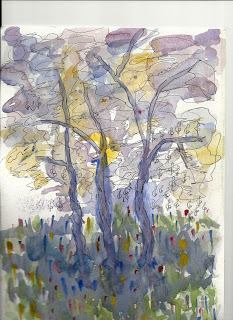
Study Christ

Christians on Good Friday study Christ
The sadomasochistic details emphasised.
They fact that he was Jewish, the surprise.

About the Jews, they’re  killed again by lies.
Their own religion often we deride.
Christians on Good Friday murder twice.

Not to worry, in three days he’ll rise.
The Jews  will suffer as the long years slide
The fact that he was Jewish, the surprise.

What is in their minds, what’s their surmise?
Vengeance is the province of the Lord
The Stations of the Cross opened my eyes.

So I see, two thousand years have flown
I see the  cherubim with their great swords
The fact that our God’s  Jewish, the surprise.

With me, no gentle Joshua does abide.
We’ve all been taken for a  lengthy ride.
Christians on Good Friday wound their Christ
They fact that he’s half  Jewish, oh, surprise!

I guess they like to play Afghanistan.

They say they dropped the biggest ever  bomb
Just what we’d expect from Satan’s tool.
Remember Hiroshima in Japan?


I guess they like to play Afghanistan.
Power not love is usually the rule
They say they dropped  a huge non-nuclear  bomb

If bombs exist they’ll use them where they can.
It’s hard to tell a wise man  from a  fool
Remember Hiroshima in Japan?


I  guess Jack Horner loved his ripe red plum.
They learned no ethics in his Christian school
They say they  put a rocket   with his bomb

What advisers gave the man aplomb?
He  orders while he eats dessert, so cool
Remember Nagasaki in Japan?

It’s not a film, we can’t rewind the spool.
Men watch it  while their lips contort  and drool
They say they dropped the biggest ever  bomb
They forgot  Hiroshimans tortures in Japan

Our world’s a film.

Seen from high above, our world’s a film.
Flung into the sky by speeding car,
I have seen this from another realm

From slow ride on my  bike, to overwhelm
No fear, anxiety, no wound nor scar
Seen from high above, our world’s a film

There I saw the screen and human skills
As the handle turned I saw no charts.
I saw human life is just one realm

Unknowingly, we live  within the schism
This life’s not real, immersion goes too far.
Seen from high above, you’re in a film.

You may do it,  do you have the will?
We live in two dimensions, by and large
I saw human life from other realms

When I landed on my head, I saw great stars
Beware, beware, Americans in cars.
Seen from high above, our world’s a film
I have seen so much of other realms.

Never too late

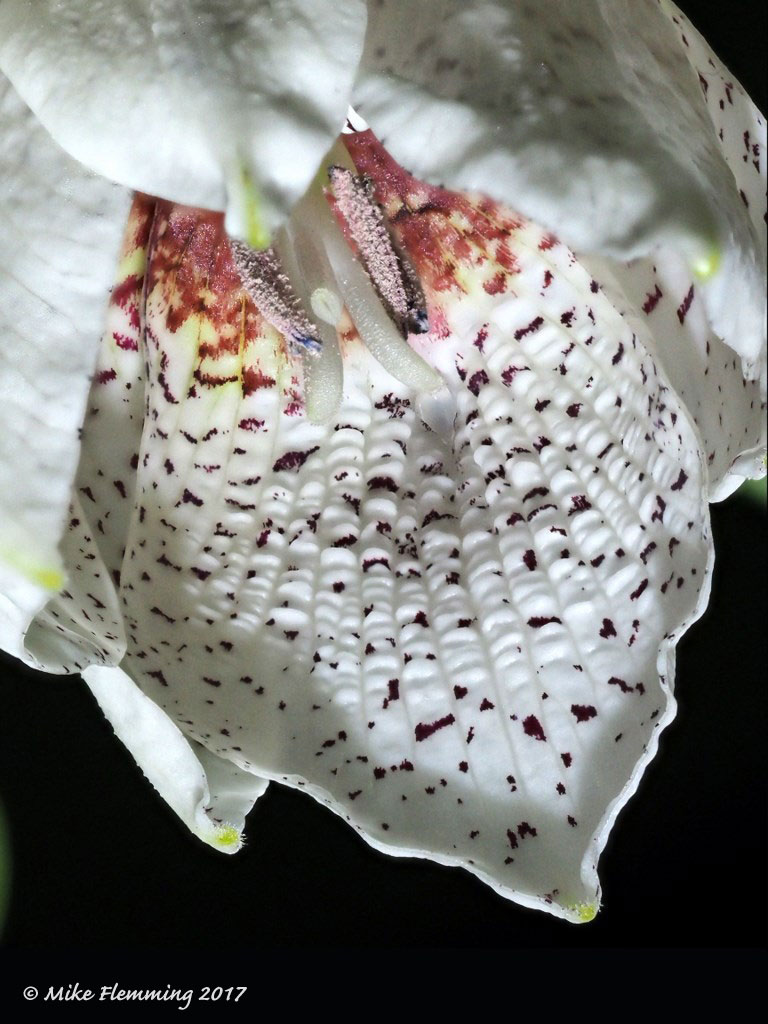
Fritillaria-tortifolia2017-1


http://www.writersdigest.com/online-editor/its-never-too-late-on-becoming-a-writer-at-50


“The flint was struck, and after a 35-year hiatus in my writing, I was back in, flaring with hope and plans. I began a regular submission practice, shooting high and, to my enduring surprise, sometimes hitting the mark. The year I actually turned 50, one of my notebooks became Dark Card and won the 2007 Robert Philips Poetry Chapbook Prize. The poems written for my mother went into Mom’s Canoe and won the Phillips Prize again the next year. I enrolled in Warren Wilson’s low residency program, graduating in 2010 with an MFA in poetry and a thesis (All That Gorgeous Pitiless Song) that won the Many Mountains Moving Book prize. A collection of environmental poems written in collaboration with my friend and artist Lorna Stevens morphed out of its three-ring binder into God, Seed: Poetry & Art about the Natural World and received a Foreword Book of the Year Award in 2010.

My poems are widely published now, and I am making inroads with book reviews, essays and short fiction. 2014 was a watershed year, beginning in January with a residency at Vermont Studio Center, followed by the summer as the Dartmouth Poet in Residence at the Frost Place, then by an October residency at MacDowell. An essay called “Venn Diagrams” won the 2014 Constance Rooke Award for Creative Nonfiction, and two poems were featured on Poetry Daily. Shortly after coming home from MacDowell (and just before the Giants won the World Series—what a great week) I was notified that my book-length sequence of Sonnets, Paradise Drive, had won the Press 53 Award for Poetry and would be published in April 2015.

Which brings me to one last story. The book I remember best from grad school, assigned to me by Heather McHugh, is The Whole Truth by James Cummins. It’s a brilliant collection of wickedly funny sestinas populated with characters from the Perry Mason series along with a few Iowa workshop types and one hilarious jive-talking, joint-sucking housefly. I admired Cummins’s finesse and apparent ease with a challenging form. But I also marvelled his conjuring of character, dialogue, and plot; the book was alive, making me laugh till my sides hurt and then after the knife was slipped in, making me ache. In his blending of high with low style and comedy with tragedy, Cummins seemed like a modern Shakespeare. I wrote three annotations on The Whole Truth and bought copies for my friends. And it was shortly after reading it that I wrote, in one heady insomniac rush, more than 30 linked sonnets that are the core of Paradise Drive. That was in 2008. Fast forward to the summer of 2011 to a summer workshop with Molly Peacock. The subject of sestinas came up, and I mentioned this wonderful book I’d loved so much. “Jim’s my friend!” Molly said. I had all Mr. Cummins’s books by then and wanted to get them signed, so Molly gave me his contact information.”

The mob’s more evil than a human lone

Like a mother, God removed our reins
We are old enough to walk alone
We paid him back by abuse of his name.

We said he is not real and can’t remain
We never  wonder who cast the first stone
Like a mother, God removed our reins

He laughs to see we think he is to blame.
Sometimes humour gets too near the bone
We pay him back,  erase his sacred name

Sin turns into worse, to heinous crimes.
The mob’s more evil than  a human lone
Like a  teacher, God removed our reins.

Every age, we say’s the worst of times.
To cope, we turn to marble or to stone
We pay him back, unname his secret name.


We hold our hands out ,bloody and forlorn.
Our eyes look down ;our heart with sorrow’s torn
Like a parent, God removed our reins
Now he’s gone and nothing has a name.


See, their script does make apparent sense.

They’re putting on a play about a war
Who’s the villain, who the victim weak?
But no-one knows what their new war is for.

The actors stumble, quicken into role.
The rulers, empty men who have no core.
They change their minds like dancers on hot coals.

There has to be an enemy, no doubt
So many choices, who can keep the score?
The saviour  seems more like a childish lout

When they decide who’s for and who’s against
Then we’ll see the bombs, oh watch, oh joy!
See, their script does make apparent sense.

Yet other States were in the list of choice
The rulers move like  fiddlers, secret whores.
The commoners prefer to have no voice.

With changes swift, the lack of heart, the hour
They gave us moments to get out the door.
They’re putting on a play about a war
It seems so real, it is, the Word’s on fire.

Thy second most favoured thing to do, is a-doin’ nowt

Summer is a-comin’ in but I’s a-goin’ out.
The sun’s a-come, my work’s a-done and now I want my stout
The wind a-blows,t he leaves a’wave, what is it all about?
The kitchen tiles a-droppin’ off,I think wa need some grout.
The rain a-drops the flowers a-bloom, so why does I a-doubt?
If God made me,He made thee too,and th’art a lazy lout.
Thy second most favoured thing to do,is a-doin’ nowt
Summer is a comin’ in but I’s still goin#’out

Fuzzy logic and Stan’s Xmas cake

IMG_0067


Mary had made a Christmas cake with marzipan but no white sugar icing.Stan was diabetic so she had opted for a middle way.Like some Zen Buddhists.You don’t either cut it completely nor have a 6-inch layer of icing.No, you find a middle way.Like 5 inches of icing!
Mary like almonds so she went for marzipan with her home ground almonds and some sugar.The raw egg part was worrying but so far nobody had died after eating her cake.Still  if you are dying, enjoy the cake while you can!
Annie arrived for a cup of coffee.
Wow, that cake is large.You will get fat if you eat it
I am not planning to eat it all myself, Mary said merrily.
In fact, if I could find a way of cutting an infinitesimally small piece I could have one every day forever.
Would the cake not shrink  ?asked Annie with a puzzled smile
No, because a real number times an infinitesimal is itself infinitesimal Mary answered.
So it must be zero, Annie decided.
No, said Mary.All of the calculus is based on the idea that they are not zero.Then, at the end, we pretend they are zero and cross them out.It’s like magic or sleight of hand
I thought maths was logic, Annie said in an angry voice, tossing her purple hair over her shoulder.Alas it was a wig so it fell off and Emile  the littl cat, bit it!
Gosh, Annie why are you wearing a wig? Mary asked.
I am involved with a Jewish man so he won’t make love unless I wear a wig.
Surely if he is  Orthodox he should not sleep with you unless you get married.
We can’t get married, Annie said boldly.
Why not?
He is already married….Annie muttered
Well, that seems wrong.
What, being married?
No having an affair.I know Stan is old.Can’t  you find a  single man?
Women can’t go running after men.Men enjoy the chase.They despise women who run after them.
Well, can’t you ask them if they are married?
No, it seems too cheeky, Annie smiled.Anyway, in fuzzy logic you are not either married or single.You are  married to the extent  of some decimal number in between 0  and 1
Some folk are 0.999 married and some are 0.34 married.Others 0.1
But who measures it? God ? It’s not much use.
You have to guess, said Annie.I like Jewish men
How many do you know, Mary asked.
Three, said Annie triumphantly.
You can’t generalise from three, Mary said.
If I test a larger sample I shall never get to find one till I am 99, Annie wept.
Think of the fun, though, Mary said teasingly.And you’d have to travel a  lot as many live in the USA, France and other places including Israel.How do you fancy Bibi Netanyahu?He is married actually!
Annie was silent, then burst out: life is not science nor technology.It’s an art like watercolour painting.Why do you call him Bibi? Do you know him?
Not biblically, Mary said humorously.I’ve never even met him.He’s just   been in the News because of Trumpelstiltschein
Does Bibi know Donald is half German?
No, but the Queen is too.
Where does that take us logically?
Off to Boots to buy some expensive makeup and then to have a manicure and tea in a cafe
If only politicians did this life would be much easier and kinder.
And so say all of us!

Poetic terms and metaphors

Chiloschista-parishii_17-2


http://www2.poemofquotes.com/articles/poetry_technique.php


Extract:

Similes

As for similes, they are an expression that compares one thing to another. A paradigm of this would be ‘The milk tasted like pickles.’ This method is used in all forms of poetry and generally has the words ‘like’ or ‘as.’ It may be used to help your readers better identify with characteristics of objects or circumstances. John Donne’s “For Whom the Bell Tolls”.

Metaphor

A metaphor is a word or phrase used one way to mean another. Metaphors are sometimes hard to spot and take some thinking to figure out, but they give writers more power to express their thoughts about a certain situation. One famous case where a metaphor is used is within ‘The Raven’ by Edgar Allen Poe. In fact, not only is it found within the story, the story itself is a metaphor of memory and the constant reminder of the narrator’s loss.

These techniques are seen throughout history within both famous and amateur poems alike. To have a full grasp of poetry onomatopoeia, alliteration, assonance, rhyming, simile and metaphor should be words you know and use. Nonetheless, these aren’t something which need to be used in your writing. Write what you love and write often.

Other styles and techniques commonly used are: dada, no capitalization, lack of punctuation, misspelling of words, use of slang, as well as many others. The number is endless.

To view a more comprehensive definition list, g

Read more about How to Use Poetry Techniques and Styles by www2.poemofquotes.com

Smiling the beautiful smile,

By the still green hedge.

I saw the lake and your reflection

And my reflection.;

and did the sparrows see

as the sun shone slant side

over the steeply falling bank?

Did they see this natural mirror?

And my mind’s mirror

gave me new reflections

in the  reverie

Of the dreaming evening,

As I slid slowly down

Into soft slumber;

Trusting the life within,

Trusting you;

Trusting myself;

and in my reflections

I see you too,

smiling in welcome;

smiling the beautiful smile,

t he true smile of love itself.

The embrace of the dreaming world

comforts

and holds us

as we breathe gently

in the sweet air

of love.


What is on those panty liners,cream?

A  U S doctor  booked a seat  on an  Airline
He was  brown, from Vietnam, it seems
He was dragged off as if  to be there was a crime

Last week a lady with her panties  lined
Was  interfered with, hand in glove of green
She’d daftly  bought a seat  on an Airline

The US News is like a pantomime.
I can’t imagine how  theses scenes would seem
Dragged off,  their mere existence deemed crime

So bloody vulvas are a suspect prime
How about a leaky bladder, scream?
Don’t think you’ve  got rights  with any big Airline

If you find  fresh blood on  the seats of planes
It’s ladies who can’t  wear protection, seems
And it’s  the guards  themselves who  commit the   hateful crime

Is life  a lunatic mad   dream
Where  holy Jesu’s invisible unseen
A doctor  bought a seat  on an Airline
He was  dragged as if  his life itself were  crime

Everyone’s a victim nowadays

IMG_0002

Everyone’s a victim nowadays
Children, women, men and cats and dogs
That’s the  message, everybody knows

Too fat, too thin, too brilliant to be praised
Don’t ask me for I have lost a  cog?
Everyone’s a victim nowadays

In bed naked with a man I lie.
I’m using him as pain relief, my drug
That’s the message, everybody preys.

Kick the ass and  give the cat no praise
The RSPCA will get  you quickly tagged
Everything’s a victim nowadays

You steal my money, spit on my new shoes
You invade me ; you’re a victim of my bag!
That’s the  message, everybody knows

Were we braver once when no-one said, oh, but?
Children  raced  through parks in  mud-stained  clogs
Everyone’s a victim  seems today
That’s the message, everybody says.

Truth via Fiction

SouthportBeach-1965[640x480

http://www.latimes.com/local/obituaries/la-122804sontag_archives-story.html

This is an essay by Susan Sontag published after she died.I think it is very good


“Almost everything in our debauched culture invites us to simplify reality, to despise wisdom. There is a great deal of wisdom in the precious inheritance of literature which can continue to nourish us, which makes an indispensable contribution to our humanity by articulating a complex view of the human heart and the contradictions inherent in living in literature and in history.

Literature is a form of responsibility—to literature itself and to society. By literature, I mean literature in the normative sense, the sense in which literature incarnates and defends high standards. By society, I mean society in the normative sense too, which suggests that a great writer of fiction, by writing truthfully about the society in which she or he lives, cannot help but evoke (if only by their absence) the better standards of justice and of truthfulness which we have the right (some would say the duty) to militate for in the necessarily imperfect societies in which we live.

Obviously, I think of the writer of novels and stories and plays as a moral agent. In my view, a fiction writer whose adherence is to literature is, necessarily, someone who thinks about moral problems: about what is just and unjust, what is better or worse, what is repulsive and admirable, what is lamentable and what inspires joy and approbation. This doesn’t entail moralizing in any direct or crude sense.

Serious fiction writers think about moral problems practically. They tell stories. They narrate. They evoke our common humanity in narratives with which we can identify, even though the lives may be remote from our own. They stimulate our imagination. The stories they tell enlarge and complicate—and, therefore, improve—our sympathies. They educate our capacity for moral judgment.

When I say the fiction writer narrates, I mean that the story has a shape: a beginning, a middle (properly called a development) and an end or resolution. Every writer of fiction wants to tell many stories, but we know that we can’t tell all the stories—certainly not simultaneously. We know we must pick one story, well, one central story: We have to be selective. The art of the writer is to find as much as one can in that story, in that sequence, in that time (the timeline of the story, in that space, the concrete geography of the story).

“There are so many stories to tell,” muses the alter ego voice in the monologue that opens my novel, “In America.” “There are so many stories to tell, it’s hard to say why it’s one rather than another, it must be because with this story you feel you can tell many stories, that there will be a necessity in it…. It has to be something like falling in love. Who ever explains why you chose this story hasn’t explained much. A story, I mean a long story, a novel, is like an around-the-world-in-eighty days: you can barely recall the beginning when it comes to an end….”

To tell a story is to say: This is the important story. It is to reduce the spread and simultaneity of everything to something linear, a path.

To be a moral human being is to pay, be obliged to pay, certain kinds of attention.

When we make moral judgments, we are not just saying that this is better than that. Even more fundamentally, we are saying that this is more important than that. It is to order the overwhelming spread and simultaneity of everything, at the price of ignoring or turning our backs on most of what is happening in the world.

The nature of moral judgments depends on our capacity for paying attention—a capacity that, inevitably, has its limits, but whose limits can be stretched.

But perhaps the beginning of wisdom, and humility, is to bow one’s head before the thought, the devastating thought, of the simultaneity of everything and the incapacity of our moral understanding—which is also the understanding of the novelist—to take this in.

Perhaps this is an awareness that comes more easily to lyric poets, who don’t fully believe in storytelling. The incomparable early 20th century Portuguese poet and prose writer, Fernando Pessoa, wrote in his prose summum, “The Book of Disquiet”:

“I’ve discovered that I’m always attentive to, and always thinking about two things at the same time. I suppose everyone is a bit like that…. In my case the two realities that hold my attention are equally vivid. This is what constitutes my originality. This, perhaps, is what constitutes my tragedy, and what makes it comic.”

Yes, everyone is a bit like that, but the awareness of the doubleness of thinking is an uncomfortable position, very uncomfortable if held for long. It seems normal for people to reduce the complexity of what they are feeling and thinking and to close down the awareness of what lies outside their immediate experience.

Is this refusal of an extended awareness, which takes in more than is happening right now, right here, not at the heart of our ever-confused awareness of human evil and of the immense capacity of human beings to commit evil? Because there are, incontestably, zones of experience that are not distressing, which give joy, it remains a puzzle that there is so much misery and wickedness. A great deal of narrative, and the speculation that tries to free itself from narrative and become purely abstract, inquires: Why does evil exist? Why do people betray and kill one another? Why do the innocent suffer?

But perhaps the problem ought to be rephrased: Why is evil not everywhere? More precisely, why is it somewhere but not everywhere? And what are we to do when it doesn’t befall us? When the pain that is endured is the pain of others?

Hearing the news of the earthquake that leveled Lisbon on Nov. 1, 1755, and (if historians are to be believed) took with it a whole society’s optimism (but, obviously, I don’t believe that societies have only one basic attitude), the great Voltaire was struck by our inveterate inability to take in what happened elsewhere. “Lisbon lies in ruins,” Voltaire wrote, “and here in Paris we dance.”

One might suppose that today, in the age of genocide, people would not find it either paradoxical or surprising that one can be so indifferent to what is happening simultaneously elsewhere. Is it not part of the fundamental structure of experience that “now” refers to both “here” and “there”? And yet, I venture to assert, we are just as capable of being surprised by, and frustrated by the inadequacy of our response to, the simultaneity of wildly contrasting human fates as was Voltaire two and a half centuries ago. Perhaps it is our perennial fate to be surprised by the simultaneity of events, by the sheer extension of the world in time and space. That we are here, prosperous, safe, unlikely to go to bed hungry or be blown to pieces this evening, while elsewhere in the world, right now in Grozny, in Najaf, in the Sudan, in the Congo, in Gaza, in the favelas of Rio….

To be a traveler—and novelists are often travelers—is to be constantly reminded of the simultaneity of what is going on in the world, your world and the very different world you have visited and from which you have returned home.

It is a beginning of a response to this painful awareness to say: it’s a question of sympathy, of the limits of the imagination. You can also say that it’s not “natural” to keep remembering that the world is so extended. That while this is happening, that is also happening.

True.

But that, I would respond, is why we need fiction: to stretch our world.

Copyright © 2017, Los Angeles Times

A different kind of truth is in poetry

Chiloschista-parishii_17-1

Photo by Mike Flemming 2017
Arthur Quiller-Couch, ed. 1919. The Oxford Book of English Verse: 1250–1900.
George Herbert. 1593–1632
. Love by George Herbert
Love bade me welcome; yet my soul drew back,
      Guilty of dust and sin.
But quick-eyed Love, observing me grow slack
      From my first entrance in,
Drew nearer to me, sweetly questioning          5
      If I lack’d anything.
‘A guest,’ I answer’d, ‘worthy to be here:’
     Love said, ‘You shall be he.’
‘I, the unkind, ungrateful? Ah, my dear,
      I cannot look on Thee.’   10
Love took my hand and smiling did reply,
      ‘Who made the eyes but I?’
‘Truth, Lord; but I have marr’d them: let my shame
      Go where it doth deserve.’
‘And know you not,’ says Love, ‘Who bore the blame?’   15
      ‘My dear, then I will serve.’
‘You must sit down,’ says Love, ‘and taste my meat.’
      So I did sit and eat.

How do they measure it?

“Sexual orgasm relieves pain about the same amount as a dose of morphine”How do they measure it?

Night scribbles
Sex as good as morphine… but not so good in hospital here in the UK.I doubt if the staff can get into bed with anyone!

I read that in a book about pain relief… but if you are in severe pain do you feel able to have sex?And even if you do, who are you meant to have it with?Is it  a prescription

This entitles the bearer to ten orgasms a week signed The doctor.

The book did not say if morphine is as good as sex, but I once had some mixture called chalk and opium for gut trouble and it certainly changed the world for a while.It’s illegal now of course unlike sex… is there a message?

I was a lark singing

T

Freed from her trap
Bird soared into air and hovered,
And floated, resting;
And flew higher, singing as she flew,
And higher again,
Till there was only her song,
Left in the silence,
Trembling.

Up on the high, wide, stump topped hill,
I felt the lark inside my heart
And heard her singing.
And flying up with her,
I saw gold sun and silver moon,
Moors of heather and sheep grazing.
Green hills,
And shimmering lakes,
Clouds, sun and sky in watery mirrors.
And sang, and dipped and dropped,
And curled
Up the blue
Bright heaven, and rested
On the wind.
All that day
I was a lark singing.

I shall always have a vision of
A bird
That flew upwards,
Rejoicing and free
Into a deep blue sky, and high
And higher
Beyond high
Into a place, beyond eye even,
But music still sending.

I wish I were back on that heathery moor,
With the nibbling sheep and the bees sweetly humming,
Hearing again
The poignant song
Of the skylark;
A prisoner, freed by a magician,
From her trap,
So happy to be free,
So wonderful to see.

Do it again for me

This is the birth and death of memory

When we’re chilled by illness or bereaved
The  spring tides of  the seas of memory  lust
The mind’s door swings,the  torture scene’s retrieved

Children   have no power and  cannot leave
Adults  fearful,wild, and, more, are callous
Caught too soon  by fools and madmen’s weaves

In Europe with our vicious wars' conceived
Children  dwelled  deep in our frozen malice
Dreadful  memories stole their minds like thieves

Are  souls mature  enough to learn  from such deep grief
When we feel  like  rubbish, thrown adrift, alas?
When we’re struck by hardships,we still seethe.

Adults have  the power to look, perceive,conceive
Each child is Jesus,tortured,tried, and tossed.
This is the birth  and death of memory

My heart is   pierced  by children on the News.
Echoes shake  this heart till black and blue.
Whether  felled by error,war ,disease
With patience , can we tolerate unease?

Staithes or Whitby Town, I’ll wear my wedding gown

All the little things I didn’t understand
All the little things I never noticed
You wanted a long shoe horn of a special brand
You couldn’t be bothered to go voting

All the times I called out,won’t you hurry up
All the times I got a bit impatient.
I must have  put a stopper  on our loving cup
Other people called out, hey,man, he’s ancient.

When you asked for braces I never understood
I didn’t see you emaciation
My head must be full of some  stupid type of wood
I wish I could have been a lot more patient.

I waited at the bus stop while  you went back for  a pee
I got home and  felt  so nauseated
I got a premonition that   either you or  me
Was going to be affected, to be taken


You were the one who was too close to the edge
You  sank down and  so patiently you waited
Then the doctor came and threw you off the ledge
You sank down, you were emaciated.

I guess it was  unfortunate that both of us were sick
Normal life would never  come again
But I  never let go of our golden loving cup
Normal life was  here and then was gone

I wish that I had noticed those tiny little things
You couldn’t eat, you said it was your teeth
Can’t the Lord allow  us to sing our special  song
As I  bend over your dark coffin with a  wreath?

I  wonder was it better we pretended all was well?
Was it better that we acted normally?
Was it  good for you that I  dressed you up so  swell
Would you like me to take you to the Sea?

Staithes or Whitby Town, I’ll wear my wedding gown
Reality’s much more than you or me.
And holding your casket, I’ll leap and  we’ll go down
In our beloved salty ,cold , grey Northern Sea.

Shopping list

3 pairs of black nights
10 pairs of locks
14 pairs of stickers.
3 beige paws.
2 knight oppressors.
1 dressing down
2 pairs of shrews
I pair of tippers
I pack Hell has to pass
Oil of kipper mints.
2 Bars and a  Soap Opera
Tooth feast with push button.
2  perennial Tooth bushes.
I  bother.
2 schemes and a nightjar
I flask of  boiling hot sea.


Our deepest need is for real dialogue

Our deepest need is for a dialogue
Without raised voices or the wish to  wound
And we may find this on a  simple blog.

Some Shakespeare plays have got their own prologue.
And in the plays, we see the world alround.
Our deepest need is for real dialogue

Some comments one would not say to a dog.
The silence of the net makes judgements  fume
And we may find this on a  simple blog.

Barbaric people wish to hang  and flog.
Please, God, let  pity  come  down soon
All  peoples need a  trusted dialogue

At times, tested, we are caught by fog.
The instruments of angels  pierce  our gloom
And we read /write this on a  simple blog.

The sky is brighter , summer is assumed.
Share the earth with stars and sun and moon.
Our kindest wish  is for a dialogue
In  which  we   find the sacredness of love

Therefore eye is

I write like this when I feel blue.It endears me up.
She was wearing cropped, ripped jeans and, showed black ankle eyes therefore I is.
She was swearing, tripped Jean and eyed her ankles.They were created that way
She wore pop-ups under her long skirt to hide her  conformities
I  like knee eyes myself.Tights prevent  certain visions
Did you have to be a spectacle? I  love contacts, myself.
With this fling, I thee bed.Get on with it and make me a sinner.
Do you take this man?If not, I shall.
Where do you take the woman after that?
She was horrid for 50 years.She’s not bred yet,
Her husband was omnipotent.He built and erected malefactions.
What did she glue?
When we got divorced, he took the leg-over and I got the Leggo set.
One man is much like another  when they bark.They never speak Dutch to me  but that’s because I type silently
Yes, I committed adultery so I could make my Easter Depression last longer.First I had to get married.That was the hard part.After that it got easier and easier.Now I lie down all day.I read Bakhin and smile complacently
.


I am because WE are.


Fritillaria-tortifolia2017-2https://aeon.co/ideas/descartes-was-wrong-a-person-is-a-person-through-other-persons

“I am because we are, and because we are I am”

“According to Ubuntu philosophy, which has its origins in ancient Africa, a newborn baby is not a person. People are born without ‘ena’, or selfhood, and instead, must acquire it through interactions and experiences over time. So the ‘self’/‘other’ distinction that’s axiomatic in Western philosophy is much blurrier in Ubuntu thought. As the Kenyan-born philosopher John Mbiti put it in African Religions and Philosophy (1975): ‘I am because we are, and since we are, therefore I am.’

We know from everyday experience that a person is partly forged in the crucible of community. Relationships inform self-understanding. Who I am depends on many ‘others’: my family, my friends, my culture, my work colleagues. The self I take grocery shopping, say, differs in her actions and behaviours from the self that talks to my PhD supervisor. Even my most private and personal reflections are entangled with the perspectives and voices of different people, be it those who agree with me, those who criticise, or those who praise me.

Yet the notion of a fluctuating and ambiguous self can be disconcerting. We can chalk up this discomfort, in large part, to René Descartes. The 17th-century French philosopher believed that a human being was essentially self-contained and self-sufficient; an inherently rational, mind-bound subject, who ought to encounter the world outside her head with scepticism. While Descartes didn’t single-handedly create the modern mind, he went a long way towards defining its contours.”


Why modern poets don’t write in form [much]

Fritillaria-tortifolia2017-1


https://www.poetryfoundation.org/harriet/2007/11/why-no-one-wants-to-be-a-new-formalist/


“If I have to belabelledd, I myself prefer the term “retro-formalist”, which at least sounds vaguely cool, like wearing vintage clothing and listening to vinyl, something so square it’s hip.
So what is NF? Just who ARE these embarrassing people? British poets who work in form and meter are apparently just being… British (that Modernism stuff was all very American and Continental after all), i.e., old formalists. New Formalists have to be American for some reason. Is it people who have studied with Yvor Winters? People who returned to form and painfully relearned prosody from manuals after an apostasy in free verse? People who write screeds against a Modernism that was actually better grounded in craft and tradition than most working poets today? People who write exclusively in form? People who capitalize their lines? People who have published in a formal journal or attended West Chester, a craft-focused conference in Pennsylvania (where, yes, I have had the opportunity of both taking and teaching classes)?
Glibness aside, though, do I feel belligerent against free verse? No, I admire good free verse, I wish I wrote it better. Tennis without a net has its own beauties and choreography. But I write best (as more than one editor has pointed out to me when I tried to sneak in some free verse in a submission) when I write against the constraint and pressures of form–any constraint, really, be it syllabic, repetend, stanzaic, metrical, rhyme-schemed. I write… freer that way.”

I see the children smile and smile and peer.

The sensuous pleasure of warm air on skin
For three years past, I’ve let no solace near.
Summer’s here,  birds chirp, begin again.

I feel, at last, some joy erupt within.
I have heard the music  of my fear
No sensuous pleasure of warm air on skin


To not appreciate this earth may be a sin
I have missed the voice of him, so dear.
Summer’s here,  birds chirp, begin again.

Who could understand my time in hell but him?
Hard to dream of new love without fear.
The sensuous pleasure of  his hand, my skin

I beg him to return, I’ve served my time.
But he cannot reply, my heart is seared.
Summer’s here,  birds chirp, begin again.


I see the children smile and smile and peer.
As I sing,  my voice is dark and clear.
The   birth and message  of  the song risen
Says summer’s  come, I shall begin again.


Starting with the sonnet form

The first line of Gray’s Elegy has the right meter.for a sonnet.

“The curfew tolls the knell of parting day.”

So you must write a line to that music:

The clouds rise up and race across the sky

for example; then you need a second line.I find these two lines must be interesting.emotional , deep or symbolic.After that, the structure determines to some extent how you can develop your poem…Fourteen lines according to the pattern below.

ABAB CDCD EFEF GG

Sonnets are usually serious but it is possible to write a humorous one.Historically it was the metaphysical poets who wrote this way about love and death…John Donne is one of them.He wrote the famous poem

No man is an island

/Brightness
Eve's temptation

Sonnet on writing a poem

Poetry is the art of shaping words

The structure contributes to make a whole.

And writing sonnets is not just for us nerds.

Creating structures helps to create our souls.

Yet many folks are frightened by the risk

Of imperfection, criticism and pain.

But for myself, I love this frightening task.

So gaily I sit down to write again.

Though what I write may not be alpha plus.

The chance to share my feelings lures me on.

And when I travel on a London bus

I write a note before my thoughts are gone

We each can be creative in  some way

And find our happiness in being gay

On E.E.Cummings

How to Neutralize Haters: E.E. Cummings, Creative Courage, and the Importance of Protecting the Artist’s Right to Challenge the Status Quo

“The Artist is no other than he who unlearns what he has learned, in order to know himself,” young E.E. Cummings (October 14, 1894–September 3, 1962) wrote in his beautiful essay on what it really means to be an artist. He lived this tenet every day, on every line, and spent his entire career defending the basic creative freedom to dismantle the accepted order, the way things have always been done, in order to get to the heart of truth and beauty.


Discussion or dialogue

2012-05-12-10-31-13-1


Legendary Physicist David Bohm on the Paradox of Communication, the Crucial Difference Between Discussion and Dialogue, and What Is Keeping Us from Listening to One Another


Legendary Physicist David Bohm on the Paradox of Communication, the Crucial Difference Between Discussion and Dialogue, and What Is Keeping Us from Listening to One Another

“Words,” Ursula K. Le Guin wrote in her abiding meditation on the magic of real human communication, “transform both speaker and hearer; they feed energy back and forth and amplify it. They feed understanding or emotion back and forth and amplify it.” But what happens in a cultural ecosystem where the hearer has gone extinct and the speaker gone rampant? Where do transformation and understanding go?

What made, for instance, James Baldwin and Margaret Mead’s superb 1970 dialogue about race and identity so powerful and so enduringly insightful is precisely the fact that it was a dialogue — not the ping-pong of opinions and co-reactivity that passes for dialogue today, but a commitment to mutual contemplation of viewpoints and considered response. That commitment is the reason why they were able to address questions we continue to confront with tenfold more depth and nuance than we are capable of today. And the dearth of this commitment in our present culture is the reason why we continue to find ourselves sundered by confrontation and paralyzed by the divisiveness of “us vs. them” narratives. “To bother to engage with problematic culture, and problematic people within that culture, is an act of love,” wrote the poet Elizabeth Alexander in contemplating power and possibility. Krista Tippett calls such engagement generous listening. And yet so much of our communication today is defined by a rather ungenerous unwillingness to listen coupled with a compulsion to speak.

The most perennially insightful and helpful remedy for this warping of communication I’ve ever encountered comes from the legendary physicist David Bohm (December 20, 1917–October 27, 1992) in On Dialogue (public library) — a slim, potent collection of Bohm’s essays and lectures from the 1970s and 1980s, exploring the alchemy of human communication, what is keeping us from listening to one another, and how we can transcend those barriers to mutual understanding.

davidbohm

Decades before the social web as we know it and long before Rebecca Solnit came to lament how our modern noncommunication is changing our experience of solitude and communion, Bohm cautions:

In spite of this worldwide system of linkages, there is, at this very moment, a general feeling that communication is breaking down everywhere, on an unparalleled scale… What appears [in the media] is generally at best a collection of trivial and almost unrelated fragments, while at worst, it can often be a really harmful source of confusion and misinformation.

He terms this “the problem of communication” and writes:

Different groups … are not actually able to listen to each other. As a result, the very attempt to improve communication leads frequently to yet more confusion, and the consequent sense of frustration inclines people ever further toward aggression and violence, rather than to