When we live so close to the cliff edge

When we live so close to the cliff edge
So even one small shudder knocks us down
We must choose our attitude with calm
And not for rage or anger ever dredge.
When we live too close

Some  are saved by one outstanding ledge
They suffer shock but not much-dreaded harm
Yet we cannot trust mere Chance’s arm.
Nor on hoping for a climber’s wedge
When we live with choice


We need to know  that life awards no badge
We need to know what will be our special balm
In the imagination’s   proper realm
When we live so close to the cliff edge
When we wish to live without a grudge
When  our needs are close


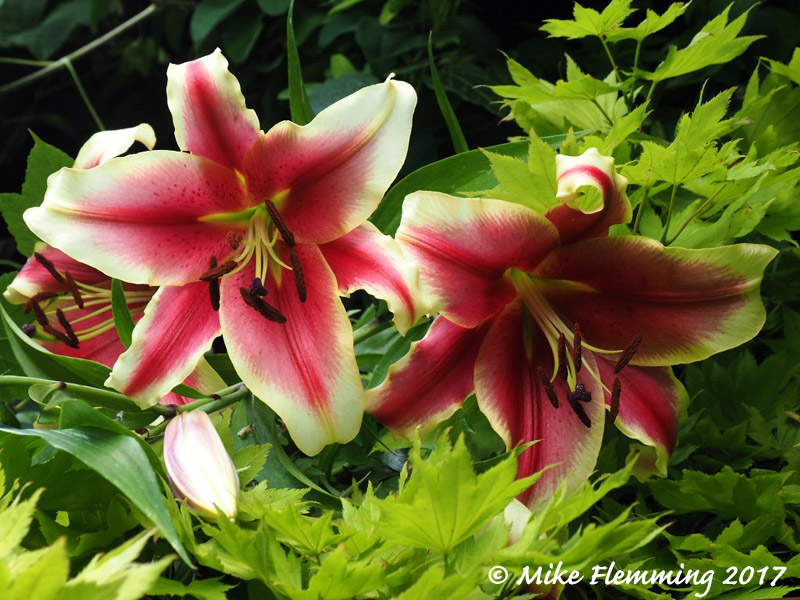
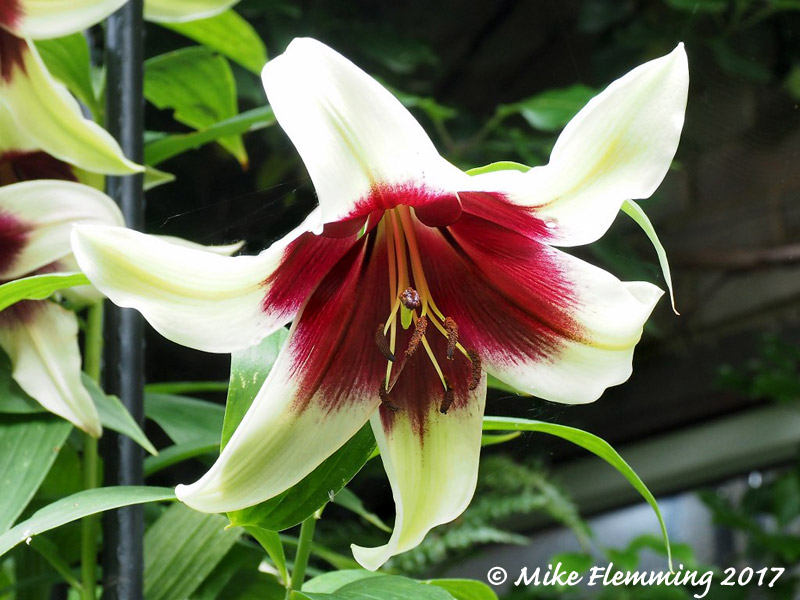
Oh,like the flowers

Lilium-African-Lady-2

When we are born into a happy space
We feel our vulnerability is held
And from  fragmented senses, a self weld
That feels a unity with its new place
When we are born


When we are born , the shock  must strike us hard
At  first , we were a fish in private seas
With mother’s breathing music,company.
Yet  force unknown from  this  sweet space us lured
When we were born

Oh, like the flowers, one day we will die
For some, it is a sudden accident
Or it may be a languid, long descent
Until in arms of angels, we will  cry
And our beloved spouses stand and sigh
Oh.  like the flowers.

Then life begins again

When we begin the slow descent  to age
From that peak or maximum of strength
We notice nothing as it has no length
So feel no need to cry or scream in rage
When we begin.

The ” writing on the wall” is on the page.
The well off sink in angst, the workless tense;
We’ve lost our youth, our mind looks for defence
Then we begin the slow descent of age.
Then we begin.

The music that we hum is  a slow dirge
An elegy falls from every pen to page
I do not  feel it’s good that we should rage
But gently take the  shroud of silk or serge
As in the living earth, we all shall merge.
Then life begins again


Waiting

How like a prison my dear home can feel
When waiting here for parcels to arrive.
The clothes that had such catalogue appeal
In Royal Mail vans were loaded for their drive.

After several days they’ve not appeared
The Escalation team attempt to trace
Meanwhile, I get writer’s block  from fear
You’d think they had to carve Big Ben  from ice.

At last, an answer, ring our famous store
They can  cancel any thing ordered
My lace and coloured wish, is wish no more
Sweet lingerie embroidered,  hors d’oeuvre.

I used my phone so much I’m turning grey
To think  for all this waiting I must pay.


Why not visit Mike’s butterfly blog?

http://www.ukbutterflies.co.uk/phpBB//viewtopic.php?t=7459&start=780#p122680

I liked these two images very much.I imagine it is difficult to get an image of two butterflies at once.The second image showing the beautiful underside of the wings is beautiful.

These photos were taken just yesterday so if you live anywhere near a site where butterflies  are common take a trip out to see  them

Bucknell2Valesina

Copyright Mike Flemming 2017

http://www.ukbutterflies.co.uk/phpBB//viewtopic.php?t=7459&start=780#p122680

Bucknell_Valesina-unsTh

The wonder of these flying flowers
We enjoy in daylight hours
Natural beauty, touch my soul
We pray then to be more whole

The emotions of grief

Photo0609_001_001 4

http://www.griefandsympathy.com/emotionsofgrief.html


“During the bereavement process, normal everyday mood swings reacting to all of the external problems of life still exist. On top of this you have to deal with the emotions of grief.

For this reason the mood swings and emotions of grief can be likened to being on a roller coaster ride, there are so many fast highs and lows. You can experience such a frenzy of changed moods, that some people think they must be going mad.

“You mean you’re comparing our lives to a sonnet?

16113925_850061061800440_3115568331247535304_n

“You mean you’re comparing our lives to a sonnet? A strict form, but freedom within it? Yes. Mrs. Whatsit said. You’re given the form, but you have to write the sonnet yourself. What you say is completely up to you.”
― Madeleine L’Engle, A Wrinkle in Time: With Related Readings

A history without suffering

https://www.poetryfoundation.org/poems/54864/a-history-without-suffering-


A History Without Suffering

In this poem there is no suffering.
It spans hundreds of years and records
no deaths, connecting when it can,
those moments where people are healthy
and happy, content to be alive. A Chapter,
maybe a Volume, shorn of violence
consists of an adult reading aimlessly.
This line is the length of a full life
smuggled in while no one was plotting
against a neighbour, except in jest.
Then, after a gap, comes Nellie. She
is in a drought-fisted field
 with a hoe. This is her twelfth year
on the land, and today her back
doesn’t hurt. Catechisms of self-pity
and of murder have declared a day’s truce
in the Civil War within her. So today,
we can bring Nellie, content with herself,
with the world, into our History.
For a day. In the next generation
we find a suitable subject camping
near the border of a divided country:
for a while no one knows how near. For these
few lines she is ours. But how about
the lovers? you ask, the freshly-washed
body close to yours; sounds, smells, tastes;
anticipation of the young, the edited memory
of the rest of us? How about thoughts
higher than their thinkers?…Yes, yes.
Give them half a line and a mass of footnotes:
they have their own privileged history,
like inherited income beside our husbandry.
We bring our History up to date
in a city like London: someone’s just paid
the mortgage, is free of guilt
and not dying of cancer; and going
past the news-stand, doesn’t see a headline
advertising torture. This is all
recommended reading, but in small doses.
It shows you can avoid suffering, if you try.
E. A. Markham, “A History Without Suffering” from Human Rites: Selected Poems 1970-1982. Copyright © 1984 by E. A. Markham.  Reprinted by permission of Anvil Press Poetry, Ltd..
Source: Human Rites: Selected Poems 1970-1982 (Anvil Press Poetry Ltd., 1984)

Every look we cast at others strikes

Before we go to bed we vegetate
No need for teacher but a compost heap.
And as we vegetate, we drift to sleep
While in our dreams our other mind debates

But mostly we’re unknowing in this dark
Where God himself may manifest at will.
His dazzling darkness makes our souls be still
And wait a strike by living, glowing spark.

But in the morning, we come back to strife
Take up our work and suffer every stroke.
From sapling to the oldest, strongest oak
Each thing must choose again its proper life

Every look we cast at others strikes
Reflects and shows us what we have become
And when there is no movement, we are done
Our mind and heart have chosen what they like.

So in our end, we vegetate again
And no more rise to labour in the day
For now, we fertilise the fields passed on our way
And show the end of woman and of man.

A daily round becomes our life and death.
We live because we’re breathed by sacredness.

Why are marionettes so very kind?

127032-004-75BA0538

Speak to me, I cannot understand
Despite much thought and patient reverie
That chickens  never use elastic bands
Nor porcupines write daily news to me.

Speak  to me, I often wander here
In the ancient woodlands of the oak
Asking why the owls like drinking beer.
Asking why the robins like to smoke.

Speak to me, disrational is my mind
Despite my knowledge of the cubic form
Why are marionettes so very kind
Why do my own feet not keep me warm?

Speak to me, I  long to know the worst.
Has Theresa May left footprints in the church?


Singing still the ancient elegies.

Reverberations of the ancient elegies
The coffin carried by the four dark men
Agitate the mind  with memory

He has gone and where will I  soon be?
Am I to live and utilise my pen
Remembering all the ancient elegies?

I’d like to ask him what beauty he could see
Before he smiled and dropped his head again
Don’t agitate the mind with memory.

Hamlet asked, to be or not to be
But most go quietly when it is their turn
Singing still the ancient elegies.


Can we trust the darkness we perceive
Where god hides his great mystery from man
Don’t agitate the mind with memory.

Violently, with passion, the young burn
Then  stone temples  harden as they learn
Reverberations of the ancient elegies
Wound the human mind  with memory


Seems to speak

Intangible but evident like smoke
Like scents of perfumed oil left in the air
An essence of his presence seemed to speak.

My voice was dumb, my feelings ran amok
I knew he had passed through but all is bare
Intangible the evidence like smoke

The senses are not separate but leak
Like watercolour runs, like sorrow’s tears
An essence of his presence seemed to speak.

I strained to hear or see or to partake
But nobody yes, nobody was there.
Intangible that evidence, like smoke

Loss makes such great waves when a life breaks
Yet I am grateful for his loving  care
An essence of his person seems to speak.

Twice in life we humans are a pair
With mother and with spouse, if one appears
Intangible but evident like smoke
An echo of his lost voice seems to speak.


Palpable

img_0028
Merriam Webster
http://www.merriam-webster.com/word-of-the-day

palpable


Definition

1 : capable of being touched or felt : tangible

2 : easily perceptible : noticeable

3 : easily perceptible by the mind : manifest

Examples

The tension in the courtroom was palpable as the jury foreman stood to announce the verdict.

“The beautifully shot, meditative film takes on a palpable sense of urgency after Maria makes a fateful move, leaving both the young woman and her family in a quandary that forces them to deal with the outside world, including a harrowing trip to a hospital where no one understands their language.” — David Lewis, The San Francisco Chronicle, 26 Aug. 2016


Did You Know?

The word palpable has been used in English since the 14th century. It derives from the Latin word palpare, meaning “to stroke” or “to caress”—the same root that gives us the word  palpitation. The Latin verb is also a linguistic ancestor of the verb feel. Palpable can be used to describe things that can be felt through the skin, such as a person’s pulse, but even more frequently it is used in reference to things that cannot be touched but are still so easy to perceive that it is as though they could be touched—such as “a palpable tension in the air.”

Politics and mental health

DSCF0498

http://www.independent.co.uk/voices/brexit-donald-trump-political-depression-mental-health-2016-psychiatric-cbt-methods-heal-britain-a7528581.htmlPolitics

Quote:

So what is helpful? What’s the cure for political depression? For one thing, liberal conservatives are going to have to borrow from some of the left’s irrepressible optimism. But if my last few months of lethargy and dark doctors’ waiting rooms have taught me anything, it’s that all those in search of a cure for our current political malaise could do well to look at recent advances in the mental health ward. Cognitive Behaviour Therapy, or CBT, is today’s wonder cure – but what does it actually entail, and can it save a country as well as it can a person?

CBT is all about breaking unhelpful mental patterns. It’s also about the art of the possible. Under pressure at work? Find one request you can reasonably make of your boss. Determined to run a marathon to feel better about being obese? Start by using the stairs instead of a lift.

In politics, focusing on the big picture can often seem overwhelming. The future is bleak; there are a lot of battles that the forces of liberalism seem unlikely to win. When I think of Trump in the White House, Erdogan imprisoning critics in Turkey, martial law in the Philippines – I could continue – I curl up and go back to bed. When I think about the two refugee friends who I’ve got coming to stay next week, I scurry up and start readying

Poetry and politics

thumbnail_Bulbophyllum jacobsonii_17-3 1024x768

Adrienne Rich on the Political Power of Poetry and Its Role in the Immigrant Experience


Quote:

Adrienne Rich — who spent a lifetime contemplating the relationship between art and capitalism and became the first and so far only person to refuse the National Medal of Arts in a political act of protest against the foibles of that relationship — considers poetry’s singular promise amid a culture increasingly preoccupied with the unfeeling superficialities of rampant capitalism:

Poetry can break open locked chambers of possibility, restore numbed zones to feeling, recharge desire.

[…]

I have never believed that poetry is an escape from history, and I do not think it is more, or less, necessary than food, shelter, health, education, decent working conditions. It is as necessary.

[…]

Where every public decision has to be justified in the scales of corporate profits, poetry unsettles these apparently self-evident propositions — not through ideology, but by its very presence and ways of being, its embodiment of states of longing and desire.

With an eye to the commodification of feelings in contemporary culture, she considers the tragic resignation of despair — a notion the great humanistic philosopher Erich Fromm had examined half a century earlier in his timeless treatise on human destructiveness, and one which Rebecca Solnit would echo a decade later in her sobering clarion call for resisting the defeatism of easy despair. Rich writes:

We see despair when social arrogance and indifference exist in the same person with the willingness to live at devastating levels of superficiality and self-trivialization… Despair, when not the response to absolute physical and moral defeat, is, like war, the failure of imagination.

One of Rich’s most potent points examines the role of poetry in the immigrant experience and in the flight from oppression. She considers poetry as a counterpoint to the problematic metaphor of the “melting pot”and writes:

Smaller than the pebbles drowned sea moist

Photo0581

An agnostic, yet I need my God
For many parts of life cannot be voiced
Without the sacred language, I learned of.

More a place  and less a cruel Rod
Willing us to have the rights of choice
An agnostic. yet I need my God

Lesser than both lower and above
Neither is he man, nor girl nor boy
In the sacred language I learned of.

Greater than  the mountain peaks  of love
Smaller than the pebbles drowned sea moist
Me, agnostic, yet I need such God!

Wilder than a stallion newly shod
Quieter than that little, still, small voice
In the sacred language, I learned, read.

As by our own new sciences, we  are hoist
There’s humour in that  secret, still embrace
I, agnostic, wish  to speak with God
And use the sacred language I learned of.

I still want to keep being lovin’.

Lilium-Kushi-Maya_1There was a late woman from Devon
Who was still blogging when she got up to heaven
When God asked her why
She said “Though I died,
I still want to keep being lovin’.

The angels like laptop computers
And asked BT for some routers.
They need tech support,
So goes the report….
A new career dawns for tech tutors.

Gabriel could have sent Mary an email.
To fill her in on the details.
“God has impregnated you,
I’ll email Joe too,
As we don’t want this venture to fail.

To loss survive

In my heart, my love is still alive
I feel his presence just where eyes can’t reach
I need another person to survive.

I am angry but do not feel enraged
For all must die and life its lessons teach
In my heart, my love  still is alive.

As I write, my pen disturbs the page
The art of love is just beyond my reach
I need another person to survive.

We need another in order to engage
The wit, the sense, emotions that we seek
In my heart, my love is  still alive.

Could that ” other  “be my other side?
The part that dreams and sometimes needs to speak?
I need another person to survive.

Gentler than the rain’s sound on the street
The still small voice sends messages to greet
In my heart, his love is  now alive
I wed my  “other self” to loss survive.

Claws so sharp

I wonder if this cauliflower cheese
Will taste far better than its image looks
In the cook book where I see dead fleas.

I’ll add  some plum tomatoes and fried bees
After all ,I am now my own cook
I wonder at this cauliflower cheese

The fleas must be quite ancient, I suppose.
Unappetizing to the viewer who just peeks
Into the cook book where there are dead fleas.

If the fleas were living, I would freeze.
And wonder if a cat had read my books
I ponder on this cauliflower cheese

I guess I’ll put as well a few green peas
The colour otherwise is somewhat bleak
In the cook book where there are dead fleas.

The cat we had was black and very sleek
With claws so sharp they made my bladder leak
I wonder at this cauliflower cheese
In the cook book where I saw dead fleas.


The origins of post modernism

dellengineeronthehorizon
http://www.americanthinker.com/articles/2007/03/the_origins_of_postmodernism.html

Quote:

One philosopher puts Nietzsche’s perspectivism in perspective (pardon the pun). Note the word “postmodern.” Soccio writes:
There is, however, a characteristically postmodern quality to Nietzsche’s perspectivist assertions: By repeatedly calling attention to his own aesthetic perspectivism, Nietzsche models what he asserts in a flagrantly self-referential way. He exuberantly adoptspoints of view. (Soccio, p. 566, emphasis original)
Still another interpreter of Nietzsche describes the logical outcome of Nietzschean perspectivism. Nehamas says:
Every view is only an interpretation, and . . . as perspectivism holds, there are no independent facts against which various interpretations can be compared . . . If perspectivism is correct and, as it seems to claim, every interpretation creates its own facts, then it may seem impossible to decide whether any interpretation is or is not correct . . . (Alexander Nehamas, quoted in Soccio, p. 566)
It is easy to see how perspectivism is a source of postmodernism, particularly in its interpretation of texts. It can make grounded interpretations of the Bible difficult or even impossible. If we cannot establish any fact in itself, then how do we anchor truths in our minds about the world outside of us? If we cannot anchor such truths, then historical investigation is even more difficult. And if we study an ancient text like the Bible, then how can we bridge the chasm between our interpretation and historical knowledge of the context from which the Bible has emerged? It must be noted up front that not all Bible scholars interested in applying postmodern interpretations are hyper-skeptical; maybe they know nothing about the sources that flow into postmodernism, as outlined in the list, above. But too many seem to blithely apply farfetched interpretations, for what end, I don’t yet know.
An alternative version
Some literary scholars and philosophers provide an alternative version of the origins of postmodernism. They divide western history into the modern (typically the Enlightenment project) and the postmodern (go here and here). However, this version gives too little credit to Enlightenment thinkers, who challenged the Medieval Age with all its systematization of knowledge and theology. And their version gives too much credit to postmodernists who borrow more than they innovate, at least in my opinion. Their version has the break between the two as too abrupt and sharp. As Nietzsche once observed, philosophers too often do not know how to deal with history, glossing over or omitting historical events like those in the bulleted list. But those real-life and self-evident events actually happened, and they shook people to their core. Modernism and postmodernism emerge from the events, as well as from the hyper-skepticism begun in the Enlightenment.
So what does all this mean?
For most people none of this means anything, thankfully. But can we depend on our blissful slumber? For a few of us, the heavy and excessive skepticism that masquerades as postmodernism makes the one Book that has influenced Western culture (and other cultures) and has been the guide for hundreds of millions and for the better—makes it unstable and unsecured, cut loose from an anchor of plain meaning. Do we want to lose this fountain of wisdom called the Bible?
Conclusion
The last three hundred-plus years can be characterized as times of uncertainty and instability. The old order has been cracking during this timeframe. Debatably, this ethos or general character was most visible first in philosophy, which then transmogrified other areas, such as politics, social customs, and economics. We lose a solid foundation. We lose our essence as humans. We lose the real world out there, existing objectively and in its own right, apart from and independent of our perceptions and understanding.
It did not take long for the hard-hitting philosophy to be adopted by Bible scholars. Traditional viewpoints, espoused by the Church-both Catholic and Protestant-were and are under siege. Generally, in response the Church divided into liberalism and conservatism, which is closer to the center than fundamentalism. The theological Left largely adopts the nontraditional intellectual criticisms and social trends, whereas the theological Right challenges the new social trends (though not all of them or in the same degree) and explains why the traditional viewpoints on the Bible are still valid and reasonable. Both the Left and the Right have variations, but this brief assessment of the Church’s reactions to modernist trends is adequate for our purposes.

In the big picture, the real innovators did not begin in the 1960s, but in the 1870s. The hyper-radicals (see Part One), particularly of the 1960s, are mere borrowers with only a few twists and turns on old ideas in modernism. They transmogrified it. Wider mass communication gave them a larger audience than early modernists had.
And postmodernist interpreters of the Bible are mere borrowers with few innovations. Postmodernists reflect the uncertainty and instability in society and intellectual trends and infer that discourse (how we communicate in a variety of ways) is likewise uncertain and unstable. This uncertainty and instability is especially apparent in a variety of interpretations of the Bible, which has been locked up and strangled by traditional interpretations, so they say. Apparently, it is the passionate goal of postmodernist interpreters of the Bible to free it from the stranglehold. If meaning in all discourse is uncertain and unstable, then they intend to demonstrate how the meaning of Scripture is likewise uncertain and unstable, dethroning any privileged viewpoint along the way, even time-tested and steady ones.
But to what purpose? Which way are the postmodernists headed? That remains to be seen. I’m not sure they know the purpose or direction of their application of the latest trends to the Bible in their postmodern project. But I do not at all find their purpose or direction to be “groovy.”

James M. Arlandson can reached at jamesmarlandson@hotmail.com

I wandered lonely  in my shroud

I wandered lonely  in my shroud
That boats stopped by with whales all filled
When all at once I saw a pound
A burst, of  folded unpaid bills
Beside the cake, beneath my knees,
Fluttering and dancing or they freeze
Continuous as the cars that wind
And  mangle up the stinking way,
They  charged us never-ending fines
Along the argument mof days
Ten thousand saw I all at once,
Tossing the  cheques into the Bank
The graves beside them once were paved
And did the  have nots  recite   free
A poet could not but be floored
In such good bottled rcompany:
Amazed—and mazed—but little fought
What wealth the show to me had brought
For oft, when with my pouch I fly
To shopping in expensive mood,
Teeth gnash upon that timid  cry
Which is the hissed beatitude
And then I write my garbled will
And prance till all the garden fills

Pray,please for me

Pray, please, for me, you  who my cooker  broke
With faked food,  hot frying in my chamber.
I have seen them griddle, flame, and smoke
That now are  cold and do a  lamb dismember
Sometimes they  filed  their briefs  inside my Aga
And  flaked bread  on my hand; whereon  sheep tgraze;
Busily baking  buns with  a  new range
Spanked by government  fools so  very wise
Twenty more times cooked on ribboned  lace
On these thin oven trays, we twinkled ice
When my denim apron from her neck did fall,
She  caught  a fish  for me in her arms thrall;
Therewithall  while sweetly  we drank Kirsch
She softly asked, “How do you  like your flesh?”
It was no dream: my bread unruly baking.
But all is  bleak now, as I ‘m cooker-less
Entering a  strange new future of uncreating
 Yet I have  all this sweet new yeast to raise  and bless
And she  promises to use  fat cookery books much less
But since that I so kindly am  now served
I ache to know what special meal she loved

When love and hate can enter no debate

We  draw a map of love inside our minds
Before we learn to speak and separate
And hatred too is structured by these lines

But owning such a map can make us blind
If we use just that to navigate
We  draw a map of love inside our minds

Some have mothers  tuned in and most kind
The map’s a good description of estate
Hatred too is structured on these lines

But some experiences we cannot bind
When love and hate can enter no debate
We  draw a map of love inside our minds

We need to let both love and hate combine
The pain and anguish may be very great
Our  mind is  better structured on such lines

Some may  think our life is made by fate
Others learn by how they correlate
We  draw a map of love inside our mind
And hatred too, is structured by those lines


Memorising poetry is good for us

http://www.newyorker.com/books/page-turner/why-we-should-memorize


Extract

“My late colleague Joseph Brodsky, who died in 1996, used to appall his students by requiring them to memorize something like a thousand lines each semester. He felt he was preparing them for the future; they might need such verses later in life. His own biography provided a stirring example of the virtues of mental husbandry. He’d been grateful for every scrap of poetry he had in his head during his enforced exile in the Arctic, banished there by a Soviet government that did not know what to do with his genius and that, in a symbolic embrace of a national policy of brain drain, expelled him from the country in 1972.

Brodsky was a nonpareil in various ways, not least in being the only teacher I knew who continued to smoke during class as the air-purifying nineties rolled around. He loved to recite poetry. The words emerged through smoke, and a thick Russian accent, but the conviction and import were unmistakable: to take a poem to heart was to know it by heart.

I’m struck by how, in the seventeen years since his death, the meaning and justifications for verse memorization have shifted. The effort in its acquisition may be the same, but we’d be naïve to suppose the necessity behind it is unaltered.

Memorized poems are a sort of larder, laid up against the hungers of an extended period of solitude. But today we are far less solitary than we were even a few years ago. Anyone equipped with a smartphone—many of my friends would never step outdoors without one—commands a range of poetry that beggars anything the brain can store. Let’s say it’s a gorgeous afternoon in October. You’re walking through a park, and you wish to recall—but can’t quite summon—the opening lines of Keats’ “To Autumn.” With a quick tap-tap-tap, you have it on your screen. You’re back in the nineteenth century, but you’re also in the twenty-first, where machine memory regularly supplants and superannuates brain memory.

So why undergo the laborious process of memorizing a poem these days, when—tap, tap, tap—you have it at your fingertips? Has this become another outmoded practice? When I was a Boy Scout, in the sixties, I spent some hours trying to learn Morse code and even, on a couple of overly sunny, headachey afternoons, trying to communicate by flag semaphore. Some things were meant to disappear. (And many of my students wish that assignments to memorize poems would follow them.)

The best argument for verse memorization may be that it provides us with knowledge of a qualitatively and physiologically different variety: you take the poem inside you, into your brain chemistry if not your blood, and you know it at a deeper, bodily level than if you simply read it off a screen. Robson puts the point succinctly: “If we do not learn by heart, the heart does not feel the rhythms of poetry as echoes or variations of its own insistent beat”

The second coming with analysis

The Second Coming

Turning and turning in the widening gyre
The falcon cannot hear the falconer;
Things fall apart; the centre cannot hold;
Mere anarchy is loosed upon the world,
The blood-dimmed tide is loosed, and everywhere
The ceremony of innocence is drowned;
The best lack all conviction, while the worst
Are full of passionate intensity.
Surely some revelation is at hand;
Surely the Second Coming is at hand.
The Second Coming! Hardly are those words out
When a vast image out of Spiritus Mundi
Troubles my sight: somewhere in sands of the desert
A shape with lion body and the head of a man,
A gaze blank and pitiless as the sun,
Is moving its slow thighs, while all about it
Reel shadows of the indignant desert birds.
The darkness drops again; but now I know
That twenty centuries of stony sleep
Were vexed to nightmare by a rocking cradle,
And what rough beast, its hour come round at last,
Slouches towards Bethlehem to be born?
Source: The Collected Poems of W. B. Yeats (1989)


Photo0609_001_001 3

https://www.theodysseyonline.com/poetry-prophecy


“Whenever a catastrophe strikes, it’s incredibly common to see an outburst of apocalyptic mania. One of the most enduring and popular artifacts of such an outburst is “The Second Coming”, a poem written in the early 20’s by Irish poet William Butler Yeats. The inspiring catastrophe in question was, of course, World War I, which had recently ended; but Yeats was also influenced by the failed Easter Rising of 1916, when Irish Nationalists tried to obtain independence from Great Britain. In fact, Yeats wrote a poem, “Easter, 1916”, commemorating the fallen heroes, many of them personal friends, just a few months afterwards. But “The Second Coming” elevates Yeats’ sense of disillusion into a cosmic existentialism foretelling the very end of the world.

The poem is divided into three sections, although many publications divide it into two stanzas. In the first section, Yeats describes the intellectual and cultural atmosphere in Europe after the War, with a ‘falcon’, symbolizing mankind’s animalistic aggression, escaping from the control of its ‘Falconer’, the social codes of civilisation that had recently been blown apart. Without these codes, ‘things fall apart’, causing ‘mere anarchy’ and ‘the blood-dimmed tide’ to become ‘loosed’ upon the world (in this context, ‘mere’ means ‘total’). That these disasters are ‘loosed’ implies that they were always somewhere within us, but had previously been held in check. ‘The best lack all conviction, while the worst/Are full of passionate intensity’- disillusioned by catastrophe, idealists completely give up, leaving a vacuum for more aggressive and violent people to take over. In less than fifteen years after the poem was published, the Nazi party would take over Germany.”

A deep ambivalence about being in touch

CatsHe fell in love with the cat: a short sweet storyCats againTwin cats

There is a strange confusion about the desirability and the danger of human communication.We have a landline and  1 or 2 mobile phone yet we often set them so that only certain people can phone us.I did that until a gas engineer tried to phone me on his mobile and could not get through.A friend does not answer if I phone her on my mobile.
Yet people also complain nobody phones them.And we have email and texting too along with instant messaging.An FB messaging
For some people, this means checking phones every few minutes.Others give out a sound like an aeroplane taking off when a message comes in.Naturally, that takes precedence over any real living human you are with.
There’s a deep ambivalence here about wanting to be wanted and fearing scams and trickery.I have recently had an upsurge in people telling me I’ve been in an accident.I tell them I was killed!That ends it,
We know more people live alone.In a way that is bad but also it means you eat when you want.Watch your favourite programmes or in my case never use the TV set at all.
But there is nobody who knows where you are and maybe nobody who really knows you deeply.As friends and spouses die, it gets harder to find new people to relate to.And do you want to nurse another person through to death? Maybe if you really love them.