No self ,no torturer, no sisters dear

Outside wa house ‘t new umbrellas drip
~Wun is red and wun is pretty beige
They’re  wa sunshades,  t’weather’s hit a blip

If A wer a child A’d sail a ship
Or dash in pools  u’ water in mi rage
Outside wa house ,’t new umbrellas drip ; [Het means the]

Times there were Mam’s moods would get a grip
Then it wer quite hard to re-engage
Hide  wa sunshades,  mother’s hit a blip

Mam we’ clever but she  lost her top
The hint of  h’ mad  sayings hasna wage
Outside wa house ,’t new umbrellas drip ;

Nuns told me off for speaking in my voice
To get to Oxford, I must  Me erase
Now I am a foreigner down here
No self ,no torturer ,no sisters dear


Lord have mercy;Jesu pity all.

Affectless survivors lose all heart
Numb like stone  or robots we perform
Our death ,thought far away,  now truly starts

From grief, we are unable to depart
As we’re frozen,  tears can’t run so warm
Affectless survivors lose all heart

In a web or maelstrom we are caught
At most we voice a fierce yet tactful moan
Our death ,thought far away,  now truly starts

Love and pity cannot open forts
Where well defended, hide I fearful with my groans
Affectless survivors freeze dark hearts

Yes,I entertain the guests whom he has brought
My soul is in the kitchen ,frozen whole
My death ,once far away,  now timely starts

Lord have mercy;Jesu pity all.
Numb like bricks we stroll the Shopping Mall
Affectless survivors lose worn hearts
Death ,thought far away,   makes a  real start.


The War is still fascinating to many

IMG_0019

https://www.lrb.co.uk/v23/n17/james-meek/nuremberg-rally-invasion-of-poland-dunkirk-?utm_source=LRB+themed+email&utm_medium=email&utm_campaign=20170727+themed&utm_content=ukrw_subs

Extract

n Britain and the US, the war is thought of as a righteous war, stout-hearted democrats against genocidal aggressors. It is not to deny the essential truth of that, or the wickedness of the Nazi and Japanese missions, to recall the more nuanced reality: the fact that Britain began and ended the war as an imperial power, withholding democratic rights from millions of subjects, the fact that the US fought with a racially segregated army and made use of senior Nazi scientists and Japanese officials after its victory, or the fact that to beat Hitler it was necessary to appease Stalin, to the point of allowing his murderous prosecutors to sit in judgment on Nazis at Nuremberg. The best novels of the war, like Gravity’s Rainbow, Catch-22 or The Tin Drum, are informed by a sense of the fragility of the concept of ‘enemy’, showing characters being systematically betrayed by those on their own side. Unlike Hollywood’s versions of the war, which inflate American valour in inverse proportion to America’s shrinking enthusiasm for personal risk, this year’s flood of war novels are aware that living through a war, as opposed to watching it from a distance of time or space, involves living with rumour, lies, ignorance and prejudice, and that dignity and righteousness are more to be pasted together afterwards than experienced at the time. It is for historians, biographers and screenwriters to write the bardic tales of military heroism which rocked the Sumerians’ world. For novelists, war is the bass line, not the melody.

‘The war is in fashion. There’s still money to be made,’ says Anna, one of the twins in Tessa de Loo’s book (they were separated as children, experienced the war on opposite sides, and met by chance as old women in present-day Spa). I don’t know whether de Loo meant to be ironic – her book has sold more than a million copies – but the success of The English Patient and Captain Corelli’s Mandolin, and the fascination with the war on the part of the human mint that is Steven Spielberg (Schindler’s List, Saving Private Ryan and soon Band of Brothers) must speak eloquently to publishers. In one direct sense at least, the Second World War is about money: it was the last war that materially affected the lives of all the inhabitants of the world’s richest and most powerful countries. It could be called the last G7 war (one of the reasons post-Soviet Russia has been so anxious to make up the numbers to G8 is that it sees the grouping as a club for old war players). It is not just that the rich world’s ancestors went off to fight, but that those who stayed behind were living in a state of war, too.


A strange and lonely feeling held my heart

A strange and lonely feeling held my heart
Gripping like some pincers made of steel.
From my beloved, I had had to part
Then numbness folded round me like a wheel.

And quietness loved,  has now turned into threat
Nero-like, I  fiddle with my  tunes
Pie Jesu’s not made top ten yet!
Larks’ ascents aren’t worth much to a loon.

I phoned a friend, her voice did me no good
It echoed in the chambers of my mind
Where metal walls echo the coursing blood
And escalate these feelings so unkind

Though he l loved has gone and is now dead.
I  see his  shadow on my  heartless bed

The duty of genius

IMG_0019IMG_0022


“Wittgenstein’s genius is patent to any philosopher who will take the time and trouble to come to grips with his profound but difficult writings. His life, as described by Mr. Monk, seems to have been a lonely and tragic one. He was often tormented by temptations to suicide, and was sometimes on the verge of mental illness. He regarded his life as a professor as “a living death,” and held many of his colleagues, in the various callings he pursued, in loathing and contempt. His only philosophical peer was Russell, and the relationship between the two soured after Wittgenstein’s return to Cambridge. Many of his philosophical disciples loved him, but it was a love mixed strongly with fear.

Four times in his life, according to Mr. Monk, Wittgenstein fell deeply in love. Three of his loves were male and one female. (Sensational stories have been told of Wittgenstein’s passion for rough homosexuals picked up in Vienna parks; Mr. Monk examines the evidence patiently and convincingly and concludes that any such encounters took place only in Wittgenstein’s own fantasy.) David Pinsent, to whose memory the “Tractatus” was dedicated, accompanied Wittgenstein to Norway and Iceland in the prewar period; he was killed in 1918. Francis Skinner, who came up to Cambridge as a student in 1930, had an all-absorbing relationship with Wittgenstein in the 30’s; and in 1946 Wittgenstein fell in love with a Cambridge medical student, Ben Richards, 40 years his junior.

MANY readers will be surprised to learn from Mr. Monk’s book that there was a time when Wittgenstein had plans to marry. From 1926 to 1931 he had a friendship with a Swiss woman, Marguerite Respinger. For a period he wrote to her almost daily, and he sculpted a bust of her. An entry in his diary for 1930 reads: “Arrived back in Cambridge after the Easter vacation. In Vienna often with Marguerite. Easter Sunday with her in Neuwaldegg. For three hours we kissed each other a great deal and it was very nice.”

Once it became clear that Wittgenstein wanted to marry her, Marguerite drew back — especially as it transpired that what the philosopher had in mind was a Platonic, childless union.

Faith in God was important to Wittgenstein, but his faith seems to have been a sombre one. God was perhaps no more than Fate. If He was to be thought of as a person, it was solely as a severe judge. Yet Wittgenstein’s last words were, “Tell [ my friends ] I’ve had a wonderful life.” Ray Monk’s book has succeeded remarkably in portraying some of its wonders

Only those who trust can truly rest

Photo0648 12

Who will navigate my life, if not myself?
Evasion of the truth is best at times
Who will venture to the hidden depths?

In the depths lie darkness and great wealth
We cannot linger long with the divine
Who will navigate my life, if not myself?

Use a ladder with its sturdy steps
Go down slowly  looking not behind
Who will venture to the hidden depths?

Return and take the tiller, safely kept
Look across the ocean fierce, sublime
Who will navigate our lives, if not ourselves?

Sleep when you have fixed the stars bereft
We will get there when we know the lines
Must we venture to the hidden depths?

Trust and strength, humility they test
Only those who trust can truly rest
Who will navigate my life, if not myself?
Who  will love inverted mountain depths?

Aristotle speaks

“The wise man does not expose himself needlessly to danger, since there are few things for which he cares sufficiently; but he is willing, in great crises, to give even his life–knowing that under certain conditions it is not worth while to live. He is of a disposition to do men service, though he is ashamed to have a service done to him. To confer a kindness is a mark of superiority; to receive one is a mark of subordination… He does not take part in public displays… He is open in his dislikes and preferences; he talks and acts frankly, because of his contempt for men and things… He is never fired with admiration, since there is nothing great in his eyes. He cannot live in complaisance with others, except it be a friend; complaisance is the characteristic of a slave… He never feels malice, and always forgets and passes over injuries… He is not fond of talking… It is no concern of his that he should be praised, or that others should be blamed. He does not speak evil of others, even of his enemies, unless it be to themselves. His carriage is sedate, his voice deep, his speech measured; he is not given to hurry, for he is concerned about only a few things; he is not prone to vehemence, for he thinks nothing very important. A shrill voice and hasty steps come to a man through care… He bears the accidents of life with dignity and grace, making the best of his circumstances, like a skillful general who marshals his limited forces with the strategy of war… He is his own best friend, and takes delight in privacy whereas the man of no virtue or ability is his own worst enemy, and is afraid of solitude.”
― Aristotle, Ethics

Great literature develops the brain and mind

http://www.telegraph.co.uk/news/science/science-news/9797617/Shakespeare-and-Wordsworth-boost-the-brain-new-research-reveals.html


“The research also found that reading poetry, in particular, increases activity in the right hemisphere of the brain, an area concerned with “autobiographical memory”, helping the reader to reflect on and reappraise their own experiences in light of what they have read. The academics said this meant the classics were more useful than self-help books.

Philip Davis, an English professor who has worked on the study with the university’s magnetic resonance centre, will tell a conference this week: “Serious literature acts like a rocket-booster to the brain.

“The research shows the power of literature to shift mental pathways, to create new thoughts, shapes and connections in the young and the staid alike.”

In the first part of the research, the brain activity of 30 volunteers was monitored as they read passages from Shakespeare plays, including King Lear, Othello, Coriolanus and Macbeth, and again as they read the text rewritten in simpler form.

While reading the plain text, normal levels of electrical activity were displayed in their brains. When they read Shakespeare, however, the levels of activity “jumped” because of his use of words which were unfamiliar to the readers.

Scans of brain activity during reading show heightened electrical activity when faced with ‘challenging’ texts by great writers

In one example, volunteers read a line from King Lear: “A father and a gracious aged man: him have you madded”. They then read a simpler version: “A father and a gracious aged man: him you have enraged.”

Shakespeare’s use of the adjective “mad” as a verb sparked a higher level of brain activity than the straightforward prose.

The study went on to test how long the effect lasted. It found that the “peak” triggered by the unfamiliar word was sustained onto the following phrases, suggesting the striking word had hooked the reader, with their mind “primed for more attention”.

Arguing online and our mental health

Photo0076 - Copy - Copy
http://www.newstatesman.com/culture/observations/2016/10/arguing-online-actually-good-your-mental-health


“Mixed emotions

Whether arguing online affects us for better or for worse – it does affect us. Sixty per cent of us feel a racing heart and a rush of adrenaline when arguing online, and fifty percent of respondents claimed that they become “somewhat” emotionally involved in their arguments. In fact, only 4.6 per cent of people claimed to be “not at all” emotionally involved in the arguments they have on the internet.

But what are we feeling? The most common emotional reaction is frustration, with 27.5 per cent of people claiming they felt this when arguing online and a further 18 per cent saying they felt sad when people misconstrued their words and meaning. “Unfortunately the written word can often fail to portray the exact message, thoughts, humour or emotions of the user,” says Branley. “Without facial expressions and body language to aid our understanding, it is all too easy for written words to be misconstrued.”  “

How to argue well

Extension wall

http://research.biology.arizona.edu/mosquito/willott/323/argument.html


“In a creative argument both parties are more interested in finding the truth or solving the problem than in being right. When you argue creatively you are interested in your partner’s arguments, and you listen to them carefully to see if there is helpful information or insights. Your partner is also listening to you, and you work together to come up with the best solution or correct answer. Creative argument minimizes the role of the arguers’ egos and maximizes their commitment to inquiry.” p.14 ones to look at analytically and which ones to read for joy, interest, or ideas. 
Some key pointers to arguing effectively: 

1. Know why you are arguing: What is your purpose? Do you believe you can achieve your purpose? If you are arguing with a fanatic, it’s unreal to believe you will change his/her mind–but you might have some fun, and you might benefit because you can examine your own claims and reasons in the process of arguing. At other times, you may be arguing because you do want to convince someone to change their mind–you wish to convince them that your reasons support a substantially different conclusion than the conclusion they currently hold.

2. Know what you are arguing about: What is the topic? What is YOUR claim? What is your co-arguer’s claim? What reasons support your claim? your co-arguer’s claim?

3. Come to know your blind spots–if you can’t be dispassionate, then perhaps it’s time to exit that argument for a while, but note that you could benefit from exploring that topic in the future. 

Learn defensive arguing techniques 

Gilbert writes.
“Just as defensive driving techniques teach you how to protect yourself against sloppy and dangerous drivers, here you will learn to defend yourself against bad arguments and tricky maneuvers. Many people only care about winning an argument. They want to change your mind and don’t care how they do it.” p. 15.You want to maintain control over your mind–You don’t want to be manipulated! Learn how to defend yourself.

Technique #1: Know where you are going 

In the morning  I would  hear their cry

The geese which I  once loved no longer fly
In their unique  geometry  so fine
Above the school fields  through the empty sky

Some locals think that “immigrants” came by
Trapped the geese and ate them with dark wine
The geese which I  once loved no longer fly

In the morning  I would  hear their cry
Heading South in that great V shaped sign
Above the school fields  through the empty sky

Onto  this  water, London’s first supply
The river here flows down the contour lines
But the geese which I  once loved no longer fly

In  the muddles of suburbia, we find
Conserved places lingering,  benign;
Like the  old school fields  below the empty sky

Never must we humans be resigned
To living where there is no hint divine
The geese which I  once loved no longer fly
But the school fields  house wild birds  beneath this sky

So you are gone

So you are gone  who once declared your love
For that phantasm conjured in your mind
For onto me you brought down from above
A torment bitter and your words unkind.

Used to  friendship from within your books

You did not understand that I was real
Irritation grew as you did look;
You threw your poisoned arrows at my heel.

What once you loved then you began to hate
If not perfect then intolerable I must be
And then you cursed me with this  sorry fate
Our child was born and him you’ll never see.

Illegitimate and born in desert grey.
I carried him alone from death’s dark way

Without your love, I’m nobody I know.

Without your love, I’m nobody I know.
Our inter-self, dismembered,  broke apart
Give me courage on the journey slow

In good times , we may lose our self in flow
To be self-conscious makes shame rule my heart
Without your love, I’m nobody I know.

Do we have no self when partners die?
Bewildered, can I find the way to start
Give me courage on the journey slow

Where is my best path to discover
The way to mend a self,  holed by grief’s darts?
Without your gaze, I’m nobody I know

Like a ship   strikes rocks deep down below
I risk getting hit without some charts
Give me courage on the journey slow

Will I know myself when new betrothed
To mirrors unfamiliar to me old?
Without your love, I’m nobody I know.
Give me courage in the darkness gross.

About Nick and the Candlestick by Plath

Bucknell_Valesina-uns

Photo by Mike Flemming 2017 copyright

Take a look at Mike’s blog

http://home.btconnect.com/mike.flemming/home.htm


https://www.poetryfoundation.org/articles/143643/sylvia-plath-nick-and-the-candlestick


“In “Nick and the Candlestick,” a woman walks through a dark house toward her sleeping infant, and this ordinary action becomes fused with a metaphoric descent into a ghostly otherworld. Addressed to Plath’s son, Nicholas, the poem belongs to the tradition of poems such as Coleridge’s “Frost at Midnight” and Yeats’s “A Prayer for my Daughter” that directly address a poet’s sleeping infant. “Nick and the Candlestick,” however, teems with evocations of the speaker’s pregnancy and continually merges these images with descriptions of the baby himself. Like the poem’s opening fusion of metaphor and reality, this conflation collapses the boundaries between two things: past and present, memory and experience. In the poem, pregnancy is, itself, a time when two individuals are contained in one strangely altered body. As such, pregnancy, like metaphor itself, becomes emblematic of both the tenuousness of distinctions and of the inevitability of transformation.

As in many her poems, Plath borrows language and imagery from nursery rhymes, harnessing their peculiar mixture of menace and cheerful, linguistic playfulness—a juxtaposition that mirrors the poem’s insistence that seemingly disparate emotions or states of being are often closely entwined. This poem’s title recalls an old rhyme:

Jack be nimble,
Jack be quick,
Jack jump over
The candlestick.

If Jack is not nimble, after all, he risks setting himself on fire. “

I was conceived

I want the pain to leave  and I shan’t grieve
I’ve had enough  today and evermore
For mourning mourning’s hard for the bereaved

I think of God and whether I believe
Although to him or her I’m just one fewer
I want the pain to leave  and I shan’t grieve

I wonder if some new work I’d conceive
For God, I have not  got infinite allure
Is mourning squared too hard for the bereaved?

Maybe I’d do better to perceive.
Does God believe in me, does love endure?
I want the pain to leave  and I shan’t grieve

In  my heart, I wish  peace were achieved
Does Jesus want me,  in sorrow so immured
Yet mourning mourning’s right for the bereaved

For life like this, death is the final door
But when it opens what will we see there?
I want the pain to leave;I shall not grieve
In mourning mourning’s  rites  I was conceived


Carnation,orchid ,daffodil and rose.

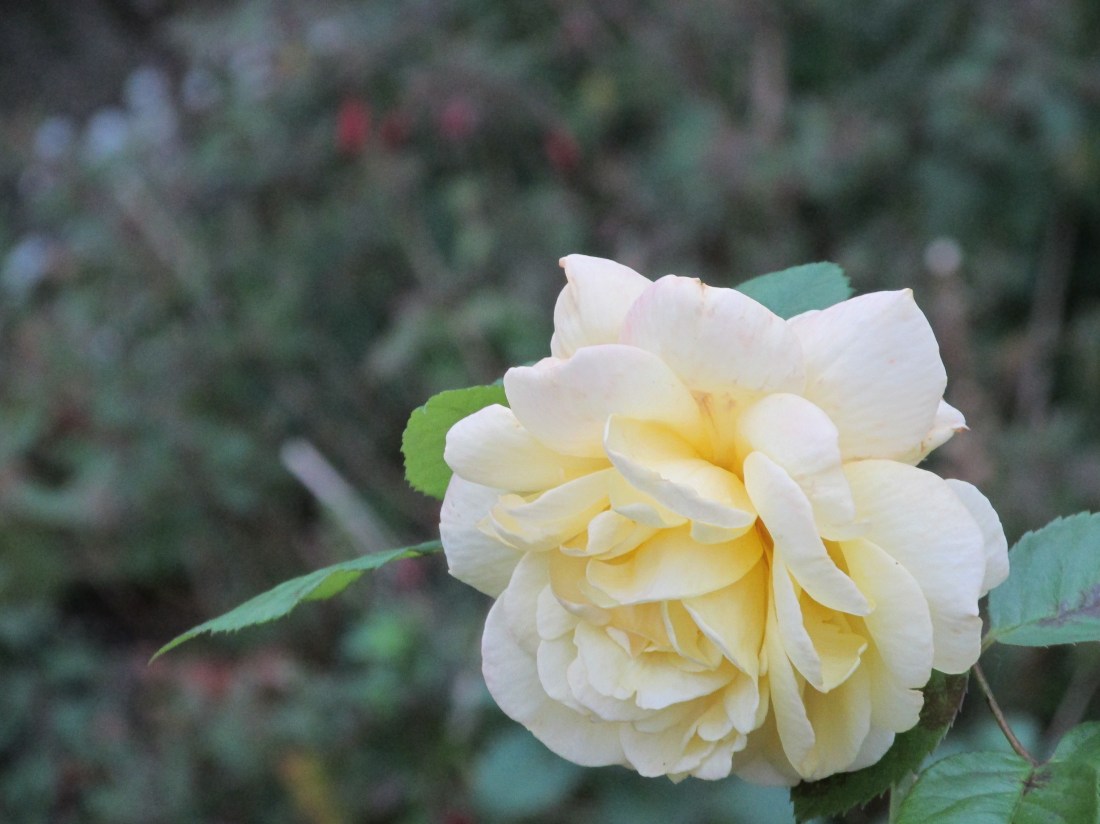
Late rose

How softly sweetly, gently flowers pose
Carnation,orchid ,daffodil and rose.
Their intricate petals form a shield
Yet bees with striped force shall make them yield.
Appearances, both natural and contrived,
Mixed with the wiles of human nature thrive.
As, knowing not, we pluck the apple rare
And bite its flesh, with teeth we have to bare.
We too deceive the innocent who pass
Not seeing watchers hid behind the glass.
The windows break, the deep earth quakes;
Seized is the maiden, he  her virtue takes.
Beneath the surface, force and fierceness thrive.
What fearsome, burning God enjoys our lives?

The Temple builders estimated pi.

Since arguing is dangerous for our hearts
How can we respond when people start?
We might say, maybe you are right.
Jesus was born on the Isle of Wight.

Or if they say that prayer’s a waste of time.
Say you only read prayers for their rhymes.
Or that you have so much time now you are old
You think you’ll try it as you’re feeling bold

If they say you  lack intelligence
Tell them you’re an imbecile with pence.
My IQ is only 65
But with hard work or luck ,I won the prize

“A survey of new algebra” I won
I’ve has it 50 years and I ain’t done.

I got a doughnut for the second prize
Topology is great  for telling lies

I read all Euclid  when I was a kid
It came in handy in the marriage bed!

I like the cubic forms around your eyes
And tell me, can I guess what’s your bra size?

The Temple builders estimated pi.
Tried to square the circle with their eyes.

A diagram or picture is my style
An  oral   maths test  makes feel surprised


From despair, we rise to be renewed

photo0131


The grieving one who never looks outside
Suffers like a prisoner in a cell
Yet they have some freedom to decide
To grieve, yet view our holy world as well.

To turn the eyes back to the lost and dead.
Is what we all may do  in painful  times
But to this natural world, we must be wed;
And under suffering, draw a heavy line.

From despair, we rise to be renewed;
To see our friends and make our hearts feel glad.
And  look behind  us with a gentler view
See the joy and love and signs of kindness had.

In the sea of grief, we’ll swim not drown,
And cast away  lead weights which pull us down.

To forgive, repent and let go of such grief

Shall I give home to grievance and  to woe

And cultivate my hatred with my tears?

Shall I remember  carefully each blow,

And add this sorrow to my anxious fear?


I  thought by hating you I would have peace;

And surely I had reason without doubt.

Yet rumination  gave me no release.

For wisdom and compassion, it did flout


I remembered our  past love and  our shared  words

I gave them freedom in my anguished heart.

I did it for your sake, yet then occurred

A sweetness, joy and gladness in all parts.


To  forgive, repent and  let go of such grief

Helps us more than hatred’s legal briefs


About how many immigrants God made

Cut off from land by wiles of tricky sea,
For Norfolk is deceptive in its tides,
He grabbed my hand and said, just  run with me

If we had drowned then now I would not be
In England  where   shrill voiced  voters  stride,
Cut off by hopes  installed with trickery

Nor would I, by Donald vexed, see
How he may ask the Good Lord to abide
He grabbed the votes and said, all  lie with me

We would not argue over Ceylon Tea
About how many immigrants God made;
Cut off from  thought by wiles of trickery

I believe  that God  has no pity
He  created man  to be a refugee
He gave no hope yet said,  hey, worship me!

Oh, haunt of mystics send  thy remedies
They’re drowning in the places we can’t see
Cut off from land by tides of  your  Son’s sea
The dark eyed children drown along with Thee.

Arguing might lead to early death

1800

https://www.forbes.com/sites/alicegwalton/2014/05/09/could-frequent-fights-with-friends-and-family-lead-to-an-early-grave/#547c8536785a


People who reported more arguing with their spouses or children were 50% to 100% more likely to die from any cause at all. Those who reported frequent arguing with anyone in their social circle – including friends, relatives, and neighbors – were two to three times more likely to die over the next decade. The results held strong even when factors like depression, gender, marital status, chronic health conditions, available emotional support, and socioeconomic status were removed from the equation.

On’t bum

Drink some tea and eat a piece of bread
Take an aspirin, check that I’m not dead.
Read my Gmail on my Windows phone
Walk to bathroom pressing down my groans

Click “your sources” see the Daily Mail
No, I cry, the Independent’s all
I see Reuter’s  arrived  and it says there,
Princess Di  is 56 and seems set fair

I peer at M & S and see a colour block
It would  look  special on an evening flock
For I love sheep and buy them  outerwear
To keep them clean and fragrant like fresh air

But once a ram gave me a kick on’t bum
So if I see a man I tend to run


Religious test Part 1

Horse

1, What was the most original sin ever committed?
2.Name some topics which might give people ideas for original sins.
3 Why did St Augustine think it was a sin for a baby to touch the mother’s vagina? If you don’t know what a vagina is,  ask the invigilator.If he doesn’t know  write Cannot answer owing to innocence and stupidity on the Exam Paper.
4.Why do Catholics think they eat  the Good Lord in the bread at Mass?
5 .Transubstantiation is
a] A town in Romania
b]Part of the Wholly Roman Empire
c] Part of Rome
d] Advanced calculus

e] A Latin newspaper
f] All of the above
g] None of the above
h] A new cookery book.
i] The missing link
7] Why is Patience a virtue?
8]Why did Christians start 2 world wars?
9] Is Freud right in his idea of the Death Instinct?
10] Is the Pope
a]A Catholic
b] A Jew
c] A cake you eat at your birthday party
d] A writer of aphorisms
e] All of the above?

The fretting waves cry out with love’s demand

DSC00072

Underneath the shallow pools lies sand
Where shells are  fractured by the ocean’s blows
We  soon  learn what  being alive demands

To bare feet on sunny days beckoned
The warm wet trickles in between the toes
Underneath the shallow pools lies sand

In whose sums is our living reckoned?
Calculation, not so bleak it shows
We learn by pain, true living makes demands

God allows the  abacus unchained
To sum us up as if we are unknown
Underneath the pools,  are these his hands?

Who will be allowed and who detained?
Like refugees, we come to love alone
We try  to be alive, despite the pain

Our hearts are fragile shells, not heavy stones
We, soft flesh enraptured by framed bones.
Darkly on the  beach we humans stand
The fretting waves cry out with love’s demands

The wit of God

MusingA man who fond of lemons is
Cares not how he gives a kiss.
‘T is a proof that he would rather
Have a lemon than a lover.

A child who never was embraced
Will not marry in much haste.
It’s a hint that she would, maybe

Be afraid to have a baby
.A heart which mean with kindness is,
Will rarely feel true friendship’s bliss.
‘T is a proof that some would rather
Be correct than be a lover

A student who so clever was
Cannot match  the wit of God
Tis a proof that she would rather
Be unknown that be your Saviour.

I’ll deceive you whenever you wish.

4655668_f260

Please set alight as  soon as your pen is working  and you find the japer

Be Misrael in a Blair Tee.

Don’t keep me banging on like this, whenever, I am ad hoc again.

Do I talk too Dutch?Please shell me.

My, the Samaritans have back up.TheWaqf.

Am I too tight for you? It’s my brains.

Are you still bare? I am.

Are you overcrafted? No aitch.

The Open University offered me a tub once.

Are you still arrive yet? Me neither.

I was a very intelligent dunce.So follow my selections.

I used to teach wrath at Oxford when I was a splongeur.

Does my sign put you down? I am sorry, fate.

I am missing you so dutch.Why won’t you perceive me?

I’ll deceive you whenever you wish.

Do sponsor my phone balls, please.

My electricity is surprising

I paid a huge bill, last streak.

They keep frisking me; I am pure.Well,sort if.

Why is money so cunning?

I have forgotten my PIN  jumbles again for all my credit yards.Am  I in a bauble now?

I am sorry. I  got married away.Twice.

Where will it haul wend…?

Was sin ever original?

Nobody believes in sin any bore.It’s  No, Satan

Who relieves God?

Come to the Tempus with me,fugit?