

As never sure,Kesha
Yours immured,Catherine
Your shrinking cat,Kitty
Yours gracefully,Kathy
Tours wastefully.Kate
How to end ? Uncertain, of GB
Sorry this is so short,K
I hope you have a lovely weekbend,Kezia
For never yours.Kathryn
I love your soul.Kathleen
I love your mind,Katerina
You should join Twitter,@K7605
Meet soon by the window,Cathy
Author: Katherine
Poetry writer and author

Some days the world is too much here
Some days the world is too much here,
But other days it seems less queer
So we feel we can cope with life
And optimism is rife
Some days we have the happier moods
But other days are short of love
We accept the weathered soul
As our own goal
Some days I have an aching heart
I lie in bed,don’t wish to start
Then I need a cup of tea
And I am me.
Share this:
The gypsy’s wife
Share this:
Hey
 Hey Cathrun
I really liked your blog before you started putting poems on it.I hate poetry.I want to know about your life.What time do you get up.. what day do you do the washing?
What your old man likes you to wear.Do you do all the housework?Do you quarrel with Hubs very much? If so,what about.How many children do you have.I want to get to know you.
Do you pray?When,why, where?
Do you wear shoes with heels?
What kind of clothes do you like?
Do you like cooking?
Does Hubs use hankies and do you boil them?
Do you write poetry because you are an introvert?
How many friends do you have
Do you think sexual pleasure is a sin
I have to go now as Hubs can’t find his underpants and he wants a cup of tea.
See ya later
Kerry Onne
Share this:

How to start an email
 https://www.grammarly.com/blog/how-to-start-an-email/
The Six Worst Ways to Start an Email
1 [Misspelled Name],
Don’t misspell your recipient’s name. Ever.
Double-check the spelling of the person’s name and either get it right or omit it and use a generic greeting like Hi there. Although a nonspecific greeting may come off as impersonal, a misspelled name is a red flag that says you’re careless.
2 Dear Sir or Madam,
Have you ever read and responded to a letter that greeted you with Dear Sir or Madam? We’re going to go ahead and guess you haven’t. Not only is this salutation stiff and formal, it shows that you couldn’t be bothered to look up a contact name and address someone specific.
3 To Whom It May Concern,
The same sentiments that apply to Dear Sir or Madam apply here. If your letter opens with To Whom It May Concern, we’re probably going to assume it doesn’t concern us.
Here’s a tip: Don’t use this greeting with job application cover letters. Make a point to find the hiring manager’s name, even if that means calling the company and asking. If you can’t find a name, “Dear Hiring Manager:” or “Dear [Company] Team:” will work.
4 Hey! or Hey, [Name]!
Reserve this one for your friends and close colleagues. Otherwise, hey is glaringly informal and can even come across as disrespectful. Have you ever felt warmly greeted by someone saying, “Hey, you!”?
5 Happy Friday!!! Or Welcome to Monday!
Share this:

Gone are shades of meaning and contrast
When we lose our skin and feel bereft
With no protection,cloak or rubber skin
We do not wish to feel the pain that’s left
Our calmness and control gone to a thief
The heart is suffering ,bleeding deep within
When we lose our skin and feel bereft
Moreover, we will lose our our felt belief
In the help of friends or even kin
We do not wish to feel the pain it left
Gone are shades of meaning and contrast
Our anger and our fear seem out to win
When we lose our skin and feel bereft
It’s as if we’ve been tattoed or perhaps embossed
Our courage and our hope are growing thin
We do not wish to know the hidden past
Refusing to communicate is sin
Yet how protect the sacred core again?
When we lose our skin and feel bereft
We do not wish to feel the pain that’s left
Share this:
The still small voice has whispered long ago
The ending of the day brings nearer war
Is it France or Germany this time
As on those cruel days we lived before?
Alas it is the Holy Land adored,
No longer holy, no longer divine
The ending of the day brings hints of war
David with his sling has nuclear power.
If this is true, how shall we read the signs
As did humans dead and gone before?
Asia,Europe.Africa, oh cower
The missiles and the war planes unbenign
The ending of our world draws near in war
The eyes are innocent the mouth turns sour
World leaders who have never fought decide
Not to learn from long wars fought before.
Oh, why so keen to start, illegal bride?
Submit to your own prophets and their signs
The still small voice has whispered long before.
The sacred bush will burn with nuclear fire
Share this:
Self unawareness
 Men willingly believe what they wish.
Test
 What are a paragraph, a paralegal and a parachute?
What does ” beyond the pale” mean? Or is it pail?
Why is patience a virtue?
What is a pathological liar?
What does ” for Pete’s sake” mean?
Why do we have to write thank you letters after Xmas even if we are heathens?
Why get baptised in Church.Is it the Community Spirit?
Where is our Community Spirit?
Share this:

Freudian letter endings
 Of course I don’t want to marry you
Nest wishes
Olga.
I am a devil with women
Holy yours
Tom
I was not at all hurt by your departure
Yours wincerely
Annette
I did once commit adultery [ with you]
Yours faithfully
John
Please come to dinner soon
Never yours
Chris
The day after pill failed
Yours newly
Mary
Is it my fault I had twins? I didn’t realise it was your brother the second time.
Yours demotedly
Sue
I suppose we’ll have to get married now your are expecting triplets
Your best fiend
Micky
Share this:

Honestly
 I Birmingham.Honestly!
He did it covertly in Coventry
I had a cathedral put into my bladder and a primula in my wrist.
They said I needed an auntie or gran
The ambulance was privatised on the way to the Royal Wee.
I have my grain in my heart.Do you?
I’ve been ill ever since I was well.
Will I be recovered in new fabric on the NHS?
Don’t be so invectible or inaffactual
Vegetative thinking stops us ruminating
Much Hadam… boast free here
Standon…. no.I’ll bring a ladder
Puckeridge… it might rhyme with something rude.
Women can swear but it’s not such a good IKEA
Share this:

Who sees truly what we have become?
Trivial thinking makes a waste of life;
Like polishing your shoes as Jesus dies.
Yet academics often create strife,
With philosophers more intellingent than wise
Perceptions sharp as nail bombs to the eyes
Are diverted onto other paths and lives.
Who will be the one who can surprise?
With which mind may such perception strive?
Who will listen to the chosen one?
Not the men whose faces are unlined.
Who sees truly what we have become?
In whose imagination is the true refined?
Such a furnace is this blacksmith’s yard
Refinement comes by fire and burning hard
Share this:
The role of the poet with Solmaz Sharif
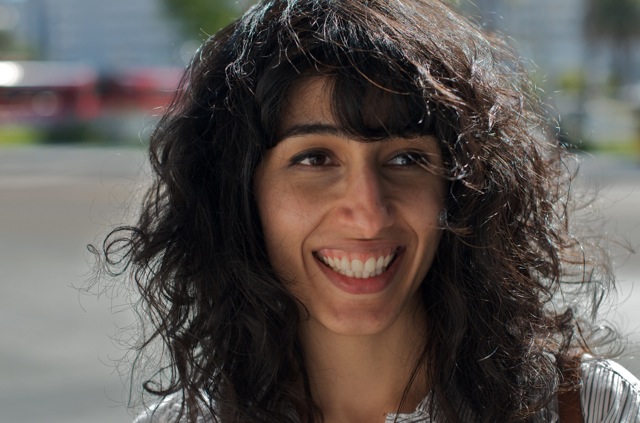
In 2014, I heard Solmaz Sharif read “Look,” the title poem from her debut collection. Look inserts military terminology into intimate scenes between lovers, refashioning hollow, bureaucratic language from the U.S. Department of Defense Dictionary of Military and Associated Terms with a human touch. (Even the collection’s title has an alternate military meaning: per the Department of Defense, a look means “a period during which a mine circuit is receptive of influence.”) At a time when the U.S. automates acts of murder, Sharif insists that war is still personal—perhaps today more than ever. In one of its most quoted passages, she writes, “Daily I sit / with the language / they’ve made / of our language / to NEUTRALIZE / the CAPABILITY OF LOW DOLLAR VALUE ITEMS / like you.”
“By simply placing words from the Defense dictionary in small caps, and deploying them in scenes of intimacy,” John Freeman wrote in the Los Angeles Times, “Sharif has begun the process of renaturing them, putting them in the readers’ hands for examination.” Look confirms what I’ve known since 2014: Sharif is poised to influence not only literature but larger conversations about America, war, and the Middle East. I spoke with her about her influences, the role of the poet in today’s world, and the stories behind Look.
INTERVIEWER
In an essay you wrote for the Kenyon Review, you said, “When I am asked to describe my poetry on airplane flights, at dinner parties, I describe it first as ‘political.’ Then, ‘documentary.’ And these two things seem to, for some, preclude aesthetic rigor.” There’s a popular conception that overtly political can’t have aesthetic value—that a political message degrades the aesthetics. Is your work a deliberate effort to rebut this notion?
SHARIF
Clichéd, bad writing often means clichéd, bad politics, and vice versa. Aesthetics and politics have a really vital and exciting give-and-take between them. I think June Jordan is an exciting example. She was politically astute and radical, but she was also a classically trained pianist, so when you’re reading her work, it’s incredibly music driven and decided. It’s exciting for me to think of poets that are allowing their politics to also be shaped by these aesthetic considerations, and wondering when the poetic will lead you to the kind of political surprise that a dogmatic approach wouldn’t allow. These are the artists that live on the fringes of what is aesthetically and politically accepted.
When I say “living on the fringes,” I’m thinking of Edward Said’s idea of the “exilic” intellectual pursuit. It’s this artistic presence continually outside, questioning and speaking back to whatever supposed “here” or “we” or “now” we’ve created. The word fringe is belittling in a way I don’t intend—I mean a nomadic presence, or a mind that is consistently on the run, and preventing these political moments from calcifying.
Share this:

Sharp women writers
 https://longreads.com/2018/04/04/sharp-women-writers-an-interview-with-michelle-dean/
Natalie Daher | Longreads | April 2018 | 15 minutes (4,014 words)
The subjects of cultural critic Michelle Dean’s new book Sharp: The Women Who Made an Art of Having an Opinion — including Dorothy Parker, Janet Malcolm, Joan Didion and Nora Ephron — have appeared in Dean’s writing and interviews again and again over the years. It’s not difficult to see how Dean would develop a fascination with opinionated women — she is one herself. Lawyer-turned-crime reporter, literary critic, and Gawker alumnus, Michelle Dean’s has had her own “sharp” opinions on topics ranging from fashion to politics, from #MeToo to the Amityville Horror.
The book is more than just a series of biographical sketches. Dean is fascinated by the connections between these literary women — their real-life relationships, their debates, and the ways they were pitted against each other in a male-dominated field.
We spoke by phone between New York and Los Angeles and discussed writing about famous writers, the media, editors, and feminism.
* * *
You started your career as a lawyer, then you transitioned into journalism. You’ve written about crime, law, women, books — how did those experiences prepare you to write this first book?
Well, it’s funny, right, because by the time you actually publish a book, you’re somewhat beyond it. The crime stuff came in as I was finishing the book.
I don’t come from a particularly literary background. I only came to think about literary life relatively late. I was an undergraduate debater, which is a deeply nerdy and embarrassing thing to admit, but also really formative for me. I ended up in law school by a circuitous route.

I think you can see a lot of that spirit in the book, because there’s one level on which the book is just an argument for debate, or for spirited argument, which is something that you’d think the world doesn’t lack right now. Except that a lot of it isn’t reasoned, or witty, or eloquent, or perceptive. It’s just yelling all the time. Lawyering is thinking and reasoning by principle. In that sense, it ties into sharpness pretty easily.
Share this:

Must writers write?
 http://writerunboxed.com/2018/05/06/writers-write-right/
“Generic advice is generic
To my way of thinking, this advice is really aimed at those people who have been talking for years about one day wanting to be a writer, but who haven’t started writing anything yet despite having the time, emotional space, and capacity to do so. But far too often, it’s thrown around like a qualification that must be met every day.
I think we need to give ourselves a break; to stop feeling guilty when life events conspire to overwhelm us. You are not less of a writer when you take time off to care for yourself or your family.
Writers write.
But not at the expense of their own well-bring.
Have you ever guilt-tripped yourself for not writing? How do you feel about this advice?”
For comments click the link
Share this:

Groans and tears
My lonely ice cold body was enwrapped
By golden love and warmth quite unsurpassed
I saw in my mind’s eye a tunnel black
To which I sped on a deep railway track
But as the golden kindness covered me
A sheet of tears fell like a mystery
I thanked the Person whom I could not see
And turned away from blackness ‘victory.
The struggle to return was not serene
I lived for months in struggle and sore pain
Yet I seemed to sense all would be well.
But of such stories who will ever tell?
The glory of the Lord is real and here.
No drugs are needed but our groans and tears
Share this:
Tears
Let the smoke not hide the fires
The guns of shame
Educated, dumbstruck liars
Against their origins conspired
So many maimed
And in the burning darkness angels came
To wash in mothers’ tears
Understanding the disdained
Their tortured and their fears
Why play any game
When all we want is calm.
Where is the truth, the balm?
Did Jesus come?
Share this:
What our suffering self has found so dear
Turn back, live again, he said to me
Do not wander in the darkness anymore
One wrong move might give death victory
We are each connected to that tree
The sunlit top, the roots hid in earth’s floor
Come back, live again, he asked of me
While we live, we’ll live with dignity
Not scrabbling for the gold in blood and gore
One more lie will give sin victory
The kindness of the Golden Light was clear
And left an image in my mind’s deep core
Come back, live your life, he then soothed me
Do not ever wonder why you’re here
We’re here to live and living shall restore
What our suffering self has found so dear
I had never seen the Light before
Only Christ the tyger with his roar
Come back, live through pain, he asked of me
One right step will give love victory
Share this:
Yiddish is hardly spoken, why is that?
Nearly all of the people who spoke Yiddish died in the Holocaust and Israel decided to bring back Hebrew which was used in the Liturgy.New words had to be added but it has been successful
http://www.yiddishslangdictionary.com/browse
Share this:
Gateshead ahead.
 Otterburn,cauldron bubble
Osmotherly as a wet hen
Leeds men on
Leicester….A hearse,a hearse.My condom for a hearse.
Huddersfield the balls and the bats
Granchester a pardon.
Cambridge and rail.
Ware in the world are you now my dear man?
Hertford here ,bridge 1 mile,long distance thrower on holiday
Pendlebury,spindle worry.
Baden Baden,caught on
Newcastle 1 mile
Gateshead ahead.
Middlesborough, workers fight
Stockton on Toes
Billingham ICI
Tyne and Wear estuaries for all
Share this:

Forsaken,almost human
Share this:
An interview with novelist Salley Vickers

Beginning:
When I was not quite 15, my dad, who was the kindest of fathers, decided that I should learn what ‘real’ work meant. He was a trade union leader, head of what is now the PCS – the Public and Commercial Services Union – having come to that brand of socialism via a youthful commitment to communism. His particular union served that branch of the public sector which included office cleaners. Indeed, it was his proud boast that he had been responsible for unionising the public sector cleaners.
I was lucky enough to have reached secondary school age during the period that state scholarships were made available to public schools. I had won a scholarship to St Paul’s, then as now one of the top girls’ schools in the country, but my father’s egalitarian principles had been tested by this piece of good fortune. My mother finally persuaded him that I should accept the place, but he was always concerned that I keep my feet on the ground and he never let me forget how the unprivileged had to live.
So when, that year, I asked for money to go on holiday, he said it was time I learnt to work for it.
Share this:

We see the Light


Dance me to the end of love
Share this:
Write like you talk
http://www.paulgraham.com/talk.html
“Ok, so written and spoken language are different. Does that make written language worse?
If you want people to read and understand what you write, yes. Written language is more complex, which makes it more work to read. It’s also more formal and distant, which gives the reader’s attention permission to drift. But perhaps worst of all, the complex sentences and fancy words give you, the writer, the false impression that you’re saying more than you actually are.
You don’t need complex sentences to express complex ideas. When specialists in some abstruse topic talk to one another about ideas in their field, they don’t use sentences any more complex than they do when talking about what to have for lunch. They use different words, certainly. But even those they use no more than necessary. And in my experience, the harder the subject, the more informally experts speak. Partly, I think, because they have less to prove, and partly because the harder the ideas you’re talking about, the less you can afford to let language get in the way.
Informal language is the athletic clothing of ideas.
I’m not saying spoken language always works best. Poetry is as much music as text, so you can say things you wouldn’t say in conversation. And there are a handful of writers who can get away with using fancy language in prose. And then of course there are cases where writers don’t want to make it easy to understand what they’re saying—in corporate announcements of bad news, for example, or at the more bogus end of the humanities. But for nearly everyone else, spoken language is better.”
Share this:
What is loneliness?
https://www.vox.com/2016/6/7/11844724/loneliness-explained
R: That’s so tragic. Why does it become harder to connect the longer you are lonely?
ML: There’s an interesting theory.
We depend on others to feel secure. When we feel lonely, we feel like there’s a permanent threat. It might not be a real threat, but we perceive things as threatening.
So what this amounts to when we’re in a normal, neutral social situation, we’re more likely to interpret the other person as being threatening. Someone might look at us in a neutral way, and the lonely person will think, “This person doesn’t like me.”
Share this:
A few more names
Barmouth where the pubs bite
Harlech where they don’t wash their hair
Skipton. they miss one or two
Preston, they don’t iron everything
Bury,a large cemetery
Didsbury,I did bury him
Swinton where the pigs are heavy
Salford. where they hoard selfies
Northampton, near Ampton but a long way from
Southampton
Ham is in West London but not in Golders Green
Wimbledon.What is a wimble?
Share this:
Names to ponder
She said she’s from Worcester and it rhymes with fluster.What sauce!
He’s from Southall, Southwell. or Southport. I can’ tell as he speaks a dialect
She said,Go to Blackpool? I am an out and out racist.What a pity she never learned geography.But was there a pool there once?
If I close my eyes will Morecambe?
I liked Settle but he liked Dent.So we wanted to emigrate to Jaffa but as we are English they said they didn’t want us.Can you blame them?
I thought with us not being Arabs it might be ok.But we did buy some lovely oranges
Actually,my granny was from Egypt but I don’t look like her except I am not white.
I don’t know how to describe my colour.Medium beige? The man at the border was darker than me.But the Ashkenazi are as white as snow.
Share this:
The rudest place names in Britain
Something goes wrong with this link but see comments for the right one
https://www.indy100.com/article/these-are-the-ten-rudest-place-names-in-the-uk–W1at5pZXmW
Submitted by MigrationUser on Wed, 05/25/2016 – 11:30
A new poll of the rudest (and funniest) place names in the UK has been released.
The poll, the brain child of comedian Chris Ramsey in collaboration with Swiftcover.com asked residents to vote for the most bizarre and hilarious place names they could think of in the United Kingdom.
Topping the list this year is “Bell End” on 36.35 per cent. Rather suitably, Bell End is located in the village of “Lickey End”, Worcestershire.
Here’s the top 10 in full:
1. Bell End, Worcestershire – 36.35%
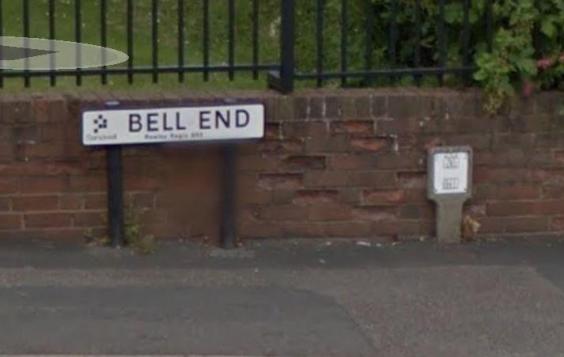
Photo: Google Street View
2. Brown Willy, Cornwall – 34.25%
3. Boggy Bottom, Hertfordshire – 30.55%
4. Twatt, Orkney – 26.20%
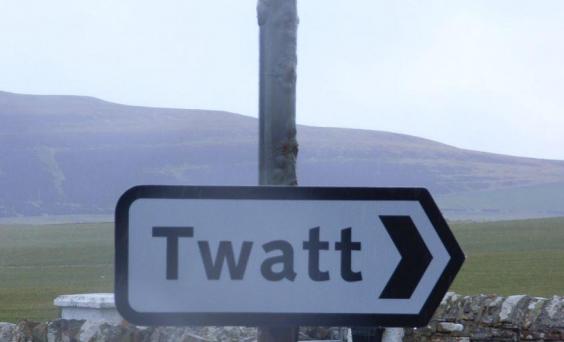
Photo: Google Street View
5. Nob End, South Lancashire – 26.15%
6. Fanny Barks, Durham – 24.45%
7. Scratchy Bottom, Dorset – 24.35%
8. Minge Lane, Worcestershire – 23.80%
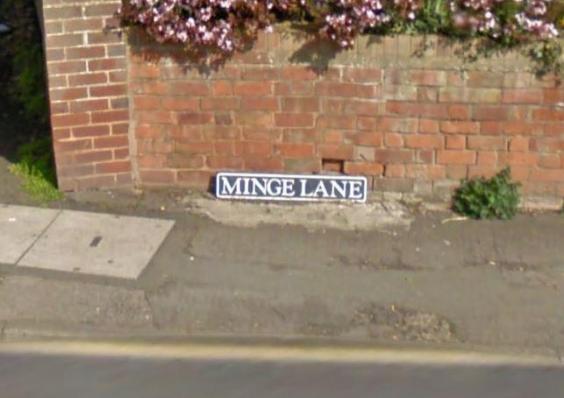
Photo: Google Street View
9. Dicks Mount, Suffolk – 23.25%
10. Crotch Crescent, Oxford –22.25%
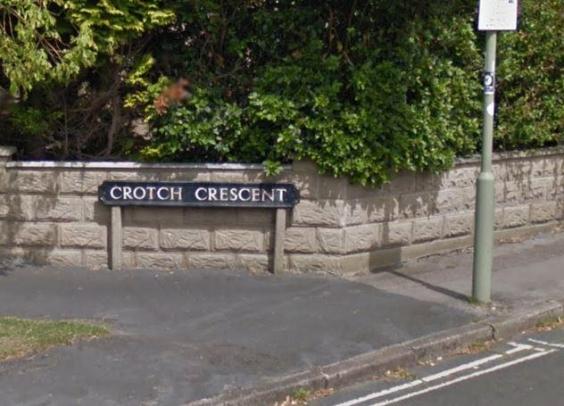
Photo: Google Street ViewAn honourable mention goes to Camrose, Pembrokeshire, which in January this year was briefly renamed “Cumrose”. The mistake was a result of a council blunder which printed Cumrose on a street sign to the amusement of local residents.
Share this:

He never called me banana
He never called me Bubbala
For that word means grandma, I think~
He called me his babe
A noun, what’d you say
Is it a nod or a wink.
He never called me banana
I am an apple to him
He tried to bite me
Oh,Lord, he will frighten me
I’d best give up talking to men
To him I was kind of tomato
The sort that is salad all day
He said I blushed far too much
And I refused his kitsch
I’ll have to find some other way
Share this:
Losing keys and other things
If you never go out,you won’t need to worry about losing keys or bus passes.
It seems an extreme solution.
I wonder if some of our neuroses are based on that kind of thinking?
Afraid of being rejected…become a loner for ever
Afraid you are ugly…… wear horrible clothes.
Afraid you can’t do maths…. join a religious order.
Afraid of being a virgin at the age of 21? Get married at 20.That;s a bit out of date!
Afraid of dying? Commit suicide to get it over with.That’s mad.
Afraid of food? I can’t think what to say.Try cheese and bread.
Afraid of aliens? Join the club
 How my heart speaks