

Love


https://www.poetryfoundation.org/harriet/2014/04/poetry-and-humor-for-megan-brian
” Let me talk just a little bit more about humor, and how it gets short shrift from this mass culture, so that for example you don’t hear people saying that Billy Wilder is a director far greater than someone like Tarkovsky. Nevertheless when I ask myself for my own opinion of “humor,” I confess than I find myself thinking of it as the rambunctious kid brother of the “serious.” I remember when I was a little boy I liked Beaver Cleaver but I was in love with the older, more staid Wally—and although erotic signs have changed considerably in 50 years, Wally remains the ne plus ultra of a certain kind of fuckability, a glamor of seizure. It’s the child, however, who sees through the pretensions of the adult, and that’s why I don’t care much for children no matter how cute.
I don’t want to waste a lot of time on examples of great poets whose work I find funny—because what one finds funny is a private thing. I know some who are still laughing at Liza Minnelli’s hijinks in Arthur and Arthur part 2. Going back to Freud’s model, I want to address the question of how we can wrest humor out of bleak circumstance. Let’s take a historical view. I can remember when Susan Sontag wrote her “Notes on Camp,” which, in the 60’s, was the most readily identifiable strain of gay humor available to her, or to most of us I guess. Sontag’s definition of camp proscribed a certain narrowing of it to include the love of gay men for the things straight people despise—untalented stars, kitsch, false icons, trash. Now that it’s 2014 I see camp as a product of a society in which love was valorized above all other possible forms of emotional action. We were supposed to be meek then, all of us. We would inherit the earth. ”

To me this adage implies that someone in pain needs only use more will power to blot out the pain.This is false.If it were true it would be dangerous.Should we banish the pain of a broken leg and continues using it we would do more damage or possibly go unconscious and even die.Will power is affected by fatigue,it is not limitless
When Jesus said,Take up your bed and walk to the paralysed or crippled he said it we believe as the Son of God who could work miracles
Maybe some of the people’s problems were psychosomatic and faith in God might give them confidence to try to walk.These things have occurred under hypnosis.I don’t have any data
But pain is a neccessary warning signal and we cannot turn if off. entirely.People born unable to feel pain don’t live very long
If you suffer chronic pain you do use all your will power to keep going.However it is finite and you pay a heavy price.Like you go shopping get home and can’t walk for 3 hours.
The only sensible saying would be “mind interacting with matter” and even that assumes Descartes division of us into a body and a completely separate mind where we live and take decisions.I expect this is imagined to be in the brain.Since we still don’t know what mind and consciousness are Descartes supposition may have had bad consequences.
If we pay attention to our body in the places which hurt this when kept up for a good while can relax some muscles and tendons.I used to do it for migraine but it would take at least 2 hours lying down and gently focussing on the pain which would gradually ease.Keeping very still stops one vomiting too.Of course you need a quiet place to do this and work is no that place
I have not yet found it helps arthritis but maybe it takes 3 hours or 5 hours and would not someone have written articles about it? Relaxing is usually good but many people are strained at work and struggle to keep going.That’s why A and E is full of drunken people at the weekend… they have be injured in falling or brawling
We educated people may blame these workers but could you spend 50 years in the coal mines [ and bring up 6 children alone] which my grandad did? He didn’t drink much as in those days they were paid starvation wages and Mum had to go to Soup Kitchens sometimes.If he had drunk he would not had much money for his children to eat
You may say if men didn’t get blind drunk then, why do they now? Ask a sociologist.It seems also to be common among middle class youngish people.I feel it’s a release of tension and if you go back to your flat alone on Friday you might be judged a loser.I know of people who go out of London on a train,get home and have no idea about it the next day.So it can be dangerous even if it helps arthritis pain
People who say, mind over matter, also are asserting their superiority to us sufferers who are weak willed morons
I did an IQ test once and I am a moron which seems odd as I used to be a mathematician!Really it shows they are rubbish on the whole
Rubbish is the in word now
The other technique which does work is Distraction.Meet friends and talk, write poetry, paint and draw.Get a camera and play with it.Go out and get a whore.I am unsure where you get them from but maybe now we are all whores.
Go to a party and get utterly knackered.But when you go to bed you still feel the pain.So how about all those free books you can get? Anything out of copyright might be available as an e book.I know someone who has read the ancient Greeks this way and alsoNewton and Hook.He has few friends as most people don’t understand such things but if you do, read all night and then have a nervous breakdown
Going mad may stop pain.I can’t say as yet and if I do I probably won’t be able to write an article about it.But on the whole given mental health’s low status in the UK I will not advise anyone to even think about it.
How do you go mad? Does anyone know the ideal way? First have loads of money for carers and a nice home with space for them…. and no doubt you will end up seeing a CBT therapist who will train you to believe you are sane and have no pain.
That’s a different kind of madnness
Here is the house and here is the door
But where is God?
Here is the table and here are the chairs
But where is God?
Here is the kitchen and here are the pans
But where is God?
Here is the woman and here is the man
Here is the bed that they lie upon
And here is God
h

I. The Art of Illumination
At times it is a good life, with the evening sun
gilding the abbey tower, the brook’s cold waters
sliding past and every hour in my Book
a blank page, vellum pumice-stoned
to chalky lustres which my inks suffuse:
saffron and sandarach and dragon’s blood,
azure and verdigris. Monsters and every type of beast
curl round the words. Each man here has a past,
and each man reasons for his faith. I wronged
a woman once and nothing I did after could atone
or throw a light upon the blackness of that deed,
whose harm lay in the telling, not the doing.[
[Use the link to read more, please]

When wi wer cummin’ ‘ome at last
From het Somme and from et Trojan Wars
The ghosts of owa dead menfolk shuffled past
Making sense u’ livin’ is owa task
When th’ heart and soul are sad and sore
When wi eh cummin’ ‘ome at last
The rush an’ rasp of textures breaks ‘t fast
We want to live ; we want to fight no more
The ghosts of owa dead neighbours staggered past
When wi all went mad ,wi acted daft
Wi felt dissected by yon eyes that saw
When wi were cummin’ ‘ome at last
Some we’ weeping ,others sat and laffed
Wi saw owa cat and touched her little paws
The ghosts of owa dead mammies staggered past
Do not kill that good that love adores
Do not bet with evil as ye source
When will we be cummin’ ‘ome at last?
The ghosts of owar own futures shuffle past
When will we be cummin home at last?
Will we be cummin’ home at last?
http://www.scottishpoetrylibrary.org.uk/poetry/poets/edwin-morgan/

Born in Glasgow, Edwin Morgan lived there all his life, except for service with the RAMC. Although his poetry is grounded in the city, the title of his 1973 collection, From Glasgow to Saturn, suggests the enormous range of Morgan’s subject matter. He was Glasgow’s first Poet Laureate 1999-2002, and the first to hold the post of ‘Scots Makar’, created by the Scottish Executive in 2004 to recognise the achievement of Scottish poets throughout the centuries.
Scotland’s first official Makar in modern times, Edwin Morgan was endlessly inventive, inquiring, energetic, internationalist, and deeply committed to his home city of Glasgow.
A book of poems in his honour, Unknown Is Best, was produced to celebrate Morgan’s eightieth birthday in 2000. His own poem, ‘At Eighty’, was characteristic of the poet’s work, faring forward into the future, embracing change: ‘Push the boat out, compañeros / Push the boat out, whatever the seas…. push it all out into the unknown! / Unknown is best, it beckons best…’.
This seems an unlikely sentiment from a man of Morgan’s background. He was the only child of loving, anxious and undemonstrative parents, Stanley and Margaret (née Arnott) Morgan, politically conservative and Presbyterian. His father was a director of a small firm of iron and steel merchants. Edwin George Morgan was born on 27 April 1920 in Glasgow’s West End, and brought up in Pollokshields and Rutherglen. He attended – unhappily – Rutherglen Academy, moving on to complete his schooling at Glasgow High and entering Glasgow University in 1937. When he was called up in 1940, he horrified his family by registering as a conscientious objector. He reached a compromise position while waiting for his case to be called, and asked to serve in the RAMC, with which he spent the war in Egypt, the Lebanon and Palestine.
He was demobbed in 1946, returned to Glasgow and took a first class Honours degree in English Language and Literature. There was a chance of studying at Oxford, but Morgan preferred to take up the offer of a Lectureship in the Department of English at Glasgow University, where he remained. Having become Titular Professor in 1975, he retired from the University in 1980. He was a much-valued colleague and himself appreciated the structure and salary that academic life gave him.
Morgan first published under the name ‘Kaa’ in the High School of Glasgow Magazine, in 1936, and went on using that nom de plume in the Glasgow University Magazine, emerging as reviewer and translator under his own name in a variety of periodicals after the war. His first collection, The Vision of Cathkin Braes, was published by William MacLellan of Glasgow in 1952, and in the same year the Hand and Flower Press issued his translation of Beowulf (reissued by Carcanet Press in 2002). For fifty years Morgan maintained this double output, translations from Russian and Hungarian, Latin and French, Italian and Old English keeping pace with his own work, showing astonishing variety and technical skills in both. He won the Soros Translation Award in 1985, and spent the prize money on a day trip to Lapland on Corcorde.
That first collection seems quite mannered now, given the immediacy of voice that characterizes Morgan’s poetry as it developed. A Second Life, published handsomely by Edinburgh University Press in 1968, signalled a profound private change as well as public achievement: this was the volume that established Morgan’s importance. In 1963 he had met and fallen in love with John Scott, to whom he remained attached – although they never lived together – until Scott’s death in 1978. Given the repressive legislation and attitudes of the time, this was a concealed love, but for Morgan it represented a liberating reciprocity. It was paralleled by his discovery of the Beat poets and other American exemplars such as William Carlos Williams and Robert Creeley: from them, he said, ‘I really learned for the first time… that you can write poetry about anything.’
The subjects in A Second Life ranged from the dispossessed and marginalised populations of Glasgow, in all the misery of the tenements due for demolition, to the trio walking up Sauchiehall Street, ‘laughter ringing them round like a guard’ as well as poets, Marilyn Monroe and Edith Piaf. Some of his wittiest concrete poems – ‘Siesta of a Hungarian snake’, the classic ‘Computer’s First Christmas Card’ are here, and the love poems that are much loved, ‘Strawberries’, ‘One cigarette’. Kevin McCarra remarked of the devotion to the city Morgan lived in all his life:
It is part of his purpose to bear witness to Glasgow while insisting that hope and realism need not be at odds. This is tricky work and all his talent is required to hold off glibness. Misery, violence and pain are on the scene, but they will not be given the last word.
Unobtrusively yet significantly, Morgan’s wide reading, love of cinema and definite musical tastes all informed his poetry. Of poets writing in English, he was one of those most attuned to what changes science and technology have brought to our perception of the world. He was one of the first civilians to put his name down for a space-shuttle trip (yet he never used a computer). The title of his 1973 collection, From Glasgow to Saturn, not only suggests his subject range but also his curiosity. The scienc-fiction element in his poetry is one aspect of this, but there is also the interest in the whole history of earth, manifested in his Planet Wave sequence (1997) which was set to music by Tommy Smith. The energy of inquiry attracted him, and the energy of invention.”
 https://www.theguardian.com/books/2010/mar/13/carol-ann-duffy-poems-ageing

https://blog.bookstellyouwhy.com/a-brief-history-of-poetry
 Mary went into the bathroom and looked into the mirror.She no longer feared to see Satan; compared to many living or dead human beings he seemed almost an angel.
Her hair was standing on end; she realised that it was one thing to buy a box of 24 combs from Amazon, but quite another to use one.
Ah, well, Stan preferred it wild, she told herself.But that was a long time ago.It was no longer thick and wavy.That stopped men singing,”O Sole Mio” when she passed them while they were painting a neighbour’s house.They probably didn’t know what it meant and neither did she.
Why am I looking into the mirror, she wondered? Maybe I am lonesome.But who to visit?Who to invite for tea?
Emile pushed the door open.
Are you alright, mother, he mewed piteously?
I am not your mother, Emile, she said to her little cat, being overly pedantic about every aspect of human life.
Ok,grandma, he continued.I see the Yodel van outside. He probably has something for you or me.
Now, Emile, I’ve told you before, call me Mary even if I am your grandmother.
Who was my mother, he asked? Did you adopt me?
Your mother was my mother’s cat “Arabella Stuart”.We called her Bella.Your father was a total mystery.
Presumably a cat, Emile pondered wonderingly
Why, did you think it was an animal of another type?
How about Stan.Was he not my dad?
In a metaphorical sense,he was, she murmured shyly.
He loved you very much.And so do I.
When we watched the dreadful news on TV I was wondering if any animals had been killed by the fire.Nobody has said.I doubt if they would keep dogs up there but cats might have been allowed.
Oh,dear, I have not thought of that.It was so terrible seeing people waving from their windows holding their phones.Saying, “I love you “to their parents or children.
And now the Chancellor says it is illegal here to use that aluminium cladding.
I bet he is going to try to oust Theresa May, Emile told her.
You men, you only think of one thing! Politics and fighting and sex and hot sinners.
Do you mean dinners, the intelligent cat asked her?
No , hot sinners are harlots.
But how do we know it is a sin.To cats it is normal.We don’t pay of course.
I don’t know.The word “sin” is no longer heard as it is not politically correct
Whereas letting 58 people burn to death is politically correct as long as we don’t call it sinful.And all the others will be sick for years.
My God, you are getting clever, Emile,maybe you should be runingn the country!
But now Mary and Emile are sad seeing the quarrelsome lunatics in charge of our little island, which will never rule any waves again,éxcept in people’s hair
Should Mary and Emile emigrate?
Who will take them?
Read more in “The Cats Times” on sale in all good pet shops
I love Picasso, it’s his line,you know
How he evokes the movement fast or slow
The sundered parts arranged in a new form
The image still and yet depicting storms
The unexpecting vision threw me down
My mind was blown and I lay on the ground
I heard no sound except for music lite
For I was in a shop,not an art site
I did not think I’d see great art in there
My fences bypassed by such beauty bare
The light of art burns into human souls
May shatter or fragment, create new wholes
Noone ever knew the blow I took
When I saw with no intent to look
 http://www.bbc.co.uk/news/mobile/10154775
“Creativity is uncomfortable. It is their dissatisfaction with the present that drives them on to make changes.
“Creative people, like those with psychotic illnesses, tend to see the world differently to most. It’s like looking at a shattered mirror. They see the world in a fractured way.
“There is no sense of conventional limitations and you can see this in their work. Take Salvador Dali, for example. He certainly saw the world differently and behaved in a way that some people perceived as very odd.”
He said businesses have already recognised and capitalised on this knowledge.
Some companies have “skunk works” – secure, secret laboratories for their highly creative staff where they can freely experiment without disrupting the daily business.
Chartered psychologist Gary Fitzgibbon says an ability to “suspend disbelief” is one way of looking at creativity.
“When you suspend disbelief you are prepared to believe anything and this opens up the scope for seeing more possibilities.”
 https://www.vice.com/en_uk/article/8gdygp/healing-soldiers-with-literature-427
Extract
“Gunners in Sevastopol, Ukraine, had unhinged the gates of hell on a battalion of British troops. On October 25, 1854, cannonballs flattened dozens of men a pop, and warhorses sank to their hocks in the splatter. When the smoke cleared 110 were dead, making the Battle of Balaclava one of the most notorious suicide missions of the Crimean War.
Six weeks after the massacre Alfred, Lord Tennyson, Britain’s poet laureate, hailed the soldiers’ valor in 55 lines of verse and enshrined them in legend. A tragic ballad with a biting sense of futility (“Theirs not to reason why, / Theirs but to do and die”), “The Charge of the Light Brigade” became the ambivalent banner cry of this and so many subsequent wars of questionable cause. But Rudyard Kipling’s postscript to the poem, “The Last of the Light Brigade,” written years later, went nearly unnoticed. His largely forgotten effort considered the battle’s forgotten survivors, who, “limping and lean and forlorn,” had inherited from their country nothing but shell shock, pained deformity, and crippling unemployment. Though Kipling wrote the essential poem about Crimea, Tennyson wrote the crowd favorite, as the public wants the battle but not the aftermath, like a child loath to clean up its mess.
If the war poet Frederick Foote has a mission, it would be to unite Tennyson’s gift for elegy with Kipling’s sense of debt. His debut collection, Medic Against Bomb, has enjoyed considerable acclaim since its quiet release last fall, receiving the Grayson Books Poetry Prize, earning applause from the National Endowment for the Arts and the Library of Congress, and being named by the Progressive as a best book of the year. An account of Foote’s time as a US Navy doctor in Iraq and Afghanistan, the book is a tonic for the genre. A relic of the sickbay rather than the battlefield, it prefers the guts of war to the glory, lamenting the wounded on both sides with Hippocratic impartiality.
Like Kipling, Foote knows he is here not to eulogize but to heal. And his interest in the intersection of art and war doesn’t end with his poetry collection. After studying humanities at the University of Chicago, Foote trained in neurology at Georgetown and Yale. When he returned from Iraq and Afghanistan he dedicated himself to finding new ways of treating veterans beset with brain injury and post-traumatic stress disorder. His approach has been auspiciously atypical. With military funding, Foote founded the Epidaurus Project, which researches and advocates the use of holistic medicine throughout the armed forces, and his writing group, the Warrior Poets Project, puts verse at the center of this practice. In other words, his writerly endeavors are inseparable from his pastoral care, devoted as it is to the therapeutic power of art. If his work as a poet focuses on the literature of medicine, his work as a doctor focuses on the medicine of literature.”

“And yet the myth of power poses remains, as we saw this week from Sajid Javid. I attribute this partly to TED not removing the talk from their website, and partly to the general principle that you can’t put the lid back on the can once the worms are everywhere. I don’t know why government advisers don’t know that social media roundly mocks this particular stance (unless they are deliberately trolling their employers, which seems unlikely), but you don’t actually need to debunk Cuddy’s power pose research to know politicians don’t get perce”ived as confident, powerful entities simply by standing with their legs splayed.”
I am myself and noone else is me
And yet we have a contemplative soul
With my own eyes I look and wish to see
We each desire but wish to pay no fee
Becoming all we are will make us whole
I am myself and noone else is me
To God so many make a silent plea
With history like ours, it’s rather droll
With our own eye, we look but cannot see
To all the world we needs show charity
Reciprocated lest it take a bitter toll
I am some self but know not who is me
Would I were a butterfly or bee
To take my bliss from pretty little flower!
With our own eye,we peep then we may see
As I look out from my wooden tower
I see hills far away ,oh nature’s treasure
We each desire but wish life to be free
I’ll be myself for noone else is me

I did an IQ test and got 80.So I thought
how did I start writing if I am so dull?
My self esteem seems ok though despite this poor result
So this proves IQ does not really matter
or else I am making the most of my limited brain
I blame my bicycle.I was ok when I rode that but I lost my nerve
Not because I was in a serious accident in Oxford as I cycled to a choir practice
nor because I miscalculated a place where
if nobody was around
I would ride onto the pavement usually without causing me to hit a wall
and be thrown backwards uttering loud screams,
No,I lost it when my eyes were not so good and the traffic was terrible
I’ve never been injured
but as I flew into the air
I saw that this life is a film on a screen
and I saw The Hand that turns the film onwards.
But there was no Voice.Oh,dear.Get me a horse now!
1.Explain the difference between the Epistles and the Apostles and our muscles
2.How did people in that era cut their toe nails?
3.When and by whom were scissors invented? Was it before or after 0 CE?
4 Is our Bible plagiarised?
5,If St Paul had received modern treatment for epilepsy, would the Church be here now?
6.Who write the song,Did Jesus have a baby sister?
7.Why do so many great people die young.Mention Keats,Schubert,Mozart and Jesus…. and any others you discover in your research
8 Did Jesus have a sense of humour?Would you?
9.Who invented angels?
10 Why should the dead bury the dead?

Have you read the Hound of the Baskervilles?
No, we have no animals in the library.
Have you read the Riot Act?
I will if you lend me it
Where is your cheek?
It’s being returned soon
What is the eye of the storm?
It’s a bit like eye of God. you can’t see it but you feel it’s there
I read Dante’s inferno
I think you can have too much of a bad thing

Please return the other cheek
I need both sides to be humane
signed J.Christ

“How to turn your cheeks into jowls in 30 years” by A Big-Face
“Your enemies want you to hate them.Then they can attack you .Stop the cycle” By A Rider-Byke
“How to be elusive without anyone noticing” by Alan Butter -Fly
“How to button your tie” by Albert Royal -Valet-Once
“How to do dry cleaning at home” by Ms.A Broom-Beater
“How to hate the one you love” by Mrs Marriage-Bedde
“How to be vicious” by S.Tan Ph.D
“How to stop being vicious” [ this is not finished yet]
A symbol is a well where we must dig
 A symbol is a well where we can dig
To find the deeper meaning hid below
On our human knees we need to beg
To gain admittance to the  latest show.

Life is but an apple we shall bite
Our teeth may break and so we suffer pain
As from our  human ills we cannot fly
We suffer learning,digging, once again

Love’s a cherry with a lively stone
Which desires to live itself when time is ripe
Some see love as meat gnawed from a bone
Some think love’s a letter we can’t type.

Love or hate, a fruit will have its pips
Which choke  us while its flesh is on our lips

This photo of Whitby Abbey belongs to English Heritage and if you google Whitby Abbey Images they have a wonderful selection including in the moonlight although we never climbed up there at night.
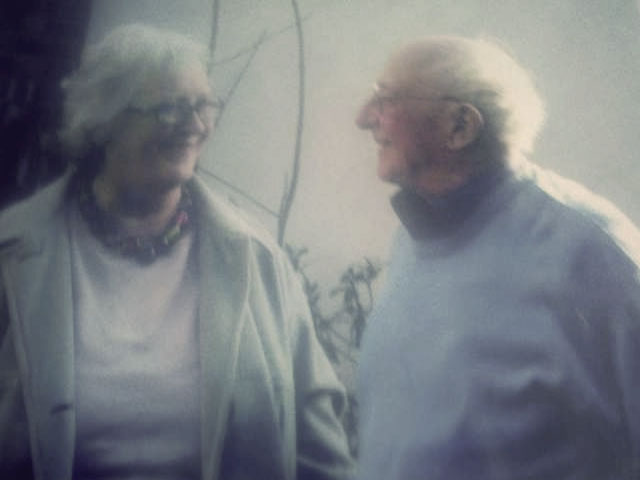
Not long before he died, he said we should be living back in the North.I said,I am so sorry but I don´t think we can do it now.
He had a romantic idea of the sea and went out for whole night in a fishing boat.He was very sea sick.I don´t know how much he saw.. ……..stars I suppose
He told me he was very angry with me exactly 7 days before he died.I can´t remember all the reasons but one was housework so I told him they didn´t teach that at Oxford [I was a post graduate there] i felt so awful it didn´t affect me.In fact I might have said I didnt like boiling his hankies or some other trivial thing.I wish I could boil them now
But another day he was asleep in a chair, woke up,sat up and said,
You´ve got a brilliant personality.
Before I could answer he fell asleep again.
He really did have a happy, peaceful death [ in A and E ] quite conscious. well cared for even fed by me using a teaspoon ,smiling and holding my hand but not speaking except telling me not to go to the loo… then I knew he was on the brink.I am full of gratitude because most people I know say their partner died in the night.
I smile yet tears run down my face.
He is not here,you see.
Marmalade of oranges of blood
Jam made from tomatoes ,such good food
Braised lambs’ tongues with onions and God
Strip the bones of all the pilgrims good
Make your bed and lie about on wood
Marmalade of oranges like blood
Martyr the old priest and stew the dude
Let the menstrual flow be shown to goad
Braised lambs’ tongues with onions, he said?
Cannibals, we never understood
Yet we have warred sans pity when well fed
Oh,marmalade ,oh oranges of blood
In the trenches ,men died in the mud
Others drowned in grief as if they should
Braised lambs’ tongues with onions,M’ lud?
Sheep may gaze,Hiroshima, the dead
Did you take brief notes of all you read?
Marmalade of oranges and blood
The tongues of Babel made the world go mad
 I decided to make my manuscript in a darker bolder script and then republish it on kindle direct publishing.I added two poems at the front to make it less stark
Now it appears it need to be at least £26 for them as the printing is £16.I am confused about it especially as I will only get 10 pence instead of 27 pence
Does it seem they are doing it for their own profit? One would expect that but not to this extreme.So next week I think I will just delete it altogether.
Who would pay more than £15 for it.It is large and that is my mistake.I could have made 50 little books..
Still this blog is more important to me.I couldn’t go out so I decided to learn how to do it but it’s not much use to authors who need to make money
10 pence is worse than £0
“”My childhood – which I spent largely in London except during the Blitz – was full of soldiers, American, English, every other nationality. With National Service, we were all non-soldiers, we were just in for a couple of years. We weren’t going to kill people – we would have been terrified of killing people! – and the people in the regular army, our sergeants, did tend to despise us, and you could see why. So, yes, isn’t it interesting how many soldiers there are in my early poetry and how often I am the soldier and I’m not really sure what I’m doing? Not especially romanticised except when I think of Achilles or somebody. So it was a very ambiguous role, but it was a role that apparently I tended to see myself in, especially in that first book. And I don’t think it was that conscious or deliberate. I had to think about it afterwards to find out what could have been in my mind.”
He then spent six months in Paris, on a low-paying sinecure arranged by his father, before going up to Cambridge at 21. One of his friends there was Karl Miller. “Karl was my best friend for a while; I knew him very well: we were both rather difficult people, but he was very kind to me and he always had a very good mind. I’d show him my poems when I wrote them and he’d tack them up over his desk, which was very flattering.”
Miller recalls that Gunn “was a good student and critic, who enjoyed the degree. Leavis was sovereign at the time. Gunn was sympathetic to Leavis but not a Leavisite. We were both involved in the same discussions and clubs and so on. I wrote a lengthy profile of him for the student newspaper Varsity.” He adds, “He knew how to keep the ball in the air in terms of literary attention.”
At Cambridge, Gunn had begun publishing his poems, and wrote the bulk of his first collection, Fighting Terms (1954) in his last two years there. They are startlingly assured pieces, formally controlled, metaphysical, with a subtext that only seems obviously homoerotic in retrospect.”

Well,I’ve had a great time checking my kindle books.Imaginary Life has coloured images on my laptop but black and white on the kindle reader.I am removing the paperback option for Gravity and Loss.I know my eyes are a bit feeble but the print is too faint.Maybe I can eventually change that but even for 300 poems I doubt many people will pay £16.99 for a book by an unknown poet
Meantime I’ve spent hours trying to put a SIM card into a phone and eventually bought a cheaper phone in Argos which takes a nano card.Trying to put the micro-card into a Nokia Lumia was purgatory.The outer piece broke..I hate those three in one cards.But I had done it once before so….maybe it’s the antibiotics and UTI’s do affect the brain… poison in the blood [ a good story title?]
So I am going outside and looking at a tree.I have had to barricade myself in to stop those 5,6, or.7 dogs next door from coming in.But I can still eat outside.I didn’t mind the dogs so much…. it’s the owners who distress me.
How can an ordinary family cope with so many dogs?


 How my heart speaks