
https://fortune.com/2022/10/18/van-life-gone-wrong-nomadic-lifestyle-tips-natasha-scott/

https://www.verywellhealth.com/mindfulness-can-be-harmful-researchers-say-5186740
It only happens in a small number of cases if it’s worth doing now the meditation and mindfulness is being pushed as a cure for everything. If you feel uncomfortable stop and go for a walk through the park instead


https://www.nytimes.com/2020/11/02/well/family/pandemic-knitting-election-stress.html
R
Knitting puts me in the moment. As someone who has failed every attempt at meditation, or even at mindfulness, knitting calms my mind and brings me to the table, real or metaphorical. My hands move, I am aware of their movement. The yarn moves through my fingers, around my fingers, and I am aware of the tension (tension is another term with a technical meaning in knitting, and also, of course, a certain metaphorical importance).
Continue reading the main story
The footprints of the seabirds in wet sand
The footprints of our children and their hands
Castles sinking as the sea comes back
The tide is turning yet the sky is black
Everyday we see the patterns play
Inside the frame that stretches day by day .
When did the sea birds walk along the beach?
We use small memories like this to teach.
The beach at Dover is not very fine
Yes it left an imprint on my mind.
Maybe it’s the castle and the cliffs
Nothing here to make Herr Hitler laugh
Before the evil of our two world wars
Matthew Arnold thought he glimpsed the cause.
God was sinking like a boat at war.
In any case whatever was God for?
The north is a closely knit, indigenous, industrial society,” he said. “A homogeneous cultural group with a good record for music, theatre, literature and newspapers, not found elsewhere in this island, except perhaps in Scotland.” He added, with a wry smile, “And, of course, if you look at a map of the concentration of population in the north and a rainfall map, you will see that the north is an ideal place for television.”

The mast is only a little higher than three older landmarks. Most walkers catch their breath at the Grade II-listed Rivington Pike Tower, built as a hunting lodge in 1733 on the site of an older beacon. Another focal point, a little further down, is the Pigeon Tower – built by William Hesketh Lever (aka Lord Leverhulme) as a birthday present to his wife, Ellen. The tower and the terraced gardens it overlooks were part of Lever’s private estate, landscaped by Thomas Mawson between 1905 and 1925.
The third landmark, the Two Lads Cairn, is a pile of stones on Crooked Edge Hill, large enough to resemble a tower from certain angles. Conflicting legends say the lads were two Saxon princes, two sons of a bishop, or two children employed at a mill.
If the summits of our more celebrated peaks have a generally middle-class atmosphere – the technical gear, the smart gizmos, the “hydration” drinks – the top of Winter Hill felt everyday, multi-generational, multi-ethnic and communal. This was especially fitting, given the hill’s role in our nation’s rambling history.Pigeon Tower, which was built by William Hesketh Lever (aka Lord Leverhulme). Photograph: Ruaux/Alamy
In August 1896, Colonel Richard Henry Ainsworth, scion of a wealthy family that had made its fortune in the bleaching trade and resident of Smithills Hall, decided to close a well-used track that crossed his land on the south-east slope of Winter Hill. His business’s reliance on the hill’s watercourses had perhaps given him a proprietorial outlook. Moreover, he regarded walkers – whether tramping to work or heading up there for a breath of clean air after a week’s slog in factory, mine or mill – as unwanted intruders on land he used for grouse-shooting. He had his gamekeepers turn people back and build a gate on Coalpit Road to show the way was closed. A melee ensued, but the colonel’s private army was no match for the great mass of demonstrators
Local people took umbrage at Ainsworth’s decision. Cobbler Joe Shufflebotham, secretary of Bolton Social Democratic Foundation, advertised a march up the disputed road, which won support from journalist and Liberal party radical Solomon Partington. On Sunday 6 September 1896, about 10,000 people joined in the march as it progressed along Halliwell Road through a densely populated working-class district, and up the hill track. A handful of police and gamekeepers were waiting for them at the new gate. A melee ensued, but the colonel’s private army was no match for the great mass of demonstrators; the gate was smashed and the procession continued. When the victorious party arrived at their destination, Belmont, on the north side of Winter Hill, they drank the hostelries dry.
The Bolton Journal reported that “the multitude far exceeded what had been anticipated … the road was literally a sea of faces and the multitude comprised thousands of persons of all ages and descriptions”. During that fervid September, there were three weekend marches and one on a Wednesday, the only day shopworkers were free to join. There was a further march on Christmas Day.
Despite the numerical success of the popular uprising, Ainsworth had writs issued against Shufflebotham, Partington and others. The marches were stopped while the case was heard in court. The colonel won, leaving the marchers to bear the costs. The tail of the trial was long: though locals were able to use the path from the 1930s, it wasn’t until 1996 that public access was formally secured.
The massed march (the walkers wouldn’t have thought of it as a “trespass”) of 1896 has never been accorded anything like the attention given to the 1932 march up Kinder Scout, led by Manchester communist Benny Rothman, which is usually credited with leading to the creation of the UK’s national parks.
“Although the march was a massive event, it was very local, only involving people who lived within two or three miles,” says Bolton-based historian and author Paul Salveson, an expert on the Winter Hill events. “That, and the fact they lost the case, might explain why it’s not better known, though it did lead to greater awareness about rights of way in the Bolton area. The first world war led to the slaughter of many of the participants and brought the curtain down on so many working-class activities. When I met Benny [Rothman] for the Kinder Scout 50th anniversary in 1982 he had never heard of Winter Hill.”
Paul has written a book about the march and was involved in commissioning a play for the first commemoration, back in 1982. His most recent publication, Moorlands, Memories and Reflections, celebrates the countryside writing of dialect writer and radical thinker Allen Clarke, who wrote about the march and penned the stirring song about the Winter Hill protest, Will Yo’ Come O’ Sunday Mornin’?
A memorial stone to the marchers stands on Coalpit Lane. But, unless you go looking for it, you could walk for miles around without seeing any record of the historic clash. Just as most drivers ignore Winter Hill, so many walkers miss the glorious story of their recreational space.
This year – the 125th anniversary of the march – things might at last be about to change. Bolton Socialist Club, the Ramblers, the Woodland Trust, housing association charity Bolton at Home and other community organisations and unions have joined forces for a commemorative march along the original route for the weekend of 6 September. Folk singer Johnny Campbell is releasing a single for the occasion. There’s even talk of a new memorial, to be built by a local quarrying company.
“The events of 1896 showed how important the countryside was to working-class people in the north,” says Salveson. “It still is. This year’s celebration of those momentous events 125 years ago isn’t just a reminder of Britain’s biggest-ever rights of way demonstration. It’s intended to be a rallying call that the countryside is still under threat, with rights of way being eroded and inappropriate development threatening the landscape.”
• Join in the 125th anniversary events via Facebook

But there is another way to see this crisis – one that doesn’t place it firmly in the realm of the medical system. Doesn’t it make sense that so many of us are suffering? Of course it does: we are living in a traumatising and uncertain world. The climate is breaking down, we’re trying to stay on top of rising living costs, still weighted with grief, contagion and isolation, while revelations about the police murdering women and strip-searching children shatter our faith in those who are supposed to protect us.
As a clinical psychologist who has been working in NHS services for a decade, I’ve seen first hand how we are failing people by locating their problems within them as some kind of mental disorder or psychological issue, and thereby depoliticising their distress. Will six sessions of CBT, designed to target “unhelpful” thinking styles, really be effective for someone who doesn’t know how they’re going to feed their family for another week? Antidepressants aren’t going to eradicate the relentless racial trauma a black man is surviving in a hostile workplace, and branding people who are enduring sexual violence with a psychiatric disorder (in a world where two women a week are murdered in their own home) does nothing to keep them safe. Unsurprisingly, mindfulness isn’t helping children who are navigating poverty, peer pressure and competitive exam-driven school conditions, where bullying and social media harm are rife.
If a plant were wilting we wouldn’t diagnose it with “wilting-plant-syndrome” – we would change its conditions. Yet when humans are suffering under unliveable conditions, we’re told something is wrong with us, and expected to keep pushing through. To keep working and producing, without acknowledging our hurt.
In efforts to destigmatise mental distress, “mental illness” is framed as an “illness like any other” – rooted in supposedly flawed brain chemistry. In reality, recent research concluded that depression is not caused by a chemical imbalance of the brain. Ironically, suggesting we have a broken brain for life increases stigma and disempowerment. What’s most devastating about this myth is that the problem and the solution are positioned in the person, distracting us from the environments that cause our distress.‘I’m glowing’: scientists are unlocking secrets of why forests make us happy
Individual therapy is brilliant for lots of people, and antidepressants can help some people cope. But I worry that a purely medicalised, individualised understanding of mental health puts plasters over big gaping wounds, without addressing the source of violence. They encourage us to adapt to systems, thereby protecting the status quo. It is here that we fail marginalised people the most: Black people’s understandable expressions of hurt at living in a structurally racist society are too often medicalised, labelled dangerous and met with violence under the guise of “care”. Black people are more likely to be Tasered, sectioned, restrained and over-medicated than anyone else in our mental health services today.
The UK could learn a lot from liberation psychology. Founded in the 1980s by the Salvadorian activist and psychologist Ignacio Martín Baró, it argues that we cannot isolate “mental health problems” from our broader societal structures. Suffering emerges within people’s experiences and histories of oppression. Liberation psychology sees people not as patients, but potential social actors in the project of freedom, valuing their own lineages, creativity and experience, rather than being forced into a white, eurocentric and individualistic idea of therapy. It directly challenges the social, cultural and political causes of distress through collective social action.
This framework makes complete sense when we hear that the pandemic in the UK has affected poor people’s mental health most. Does it mean wealthy, privileged white men don’t experience suffering? Of course they do. We’re still learning about the complicated ways these structural issues affect our everyday lives. For example, how the pressures of individualism and capitalism may lead to isolation and substance abuse, or how colonial violence towards immigrant families plays out within homes and on bodies.
Let me be clear, I’m not saying people in distress should be out there on the picket line. Pain can be debilitating. But those of us who are supporting people in distress, such as mental health workers, have a key role in social transformation. Social action is the medicine that relieves people’s personal and collective distress.
Instead of trying to change “mindsets” in therapy, we need to change race- and class-based hierarchies, the housing and economic system. Universal basic income has psychological benefits, and recent studies show how it improves the “crises of anxiety and depression”. As a clinical psychologist, some of my most powerful work has been not in the therapy room but in successfully advocating for secure housing for, or working in the community with, queer, black and brown facilitators in organisations such as Beyond Equality, to prevent gender-based violence. The network Psychologists for Social Change shows us a practical imagining of this work. We also need social change that is preventive, such as investing in young people and community-led services such as healing justice london and 4front. They work to shift trauma in marginalised communities through building social connectedness, social action and creativity, towards futures free of violence.
None of this is to dismiss the value of one-on-one therapy (that’s part of my job, after all). But therapy must be a place where oppression is examined, where the focus isn’t to simply reduce distress, but to see it as a survival response to an oppressive world. And ultimately, I’d like to see a world where we need fewer therapists. A culture that reclaims and embraces each other’s madness. Where we take the courageous (and sometimes skin-crawling) risk of turning to each other in our understandable, messy pain.
Meaningful structural transformation won’t happen overnight, though the pandemic taught us that big changes can happen pretty quickly. But change won’t happen without us: our distress might even be a sign of health – a telling indicator of where we can collectively resist the structures that are hurting so many of us.
… as you’re joining us today from the UK, we have a small favour to ask. Tens of millions have placed their trust in the Guardian’s fearless journalism since we started publishing 200 years ago, turning to us in moments of crisis, uncertainty, solidarity and hope. More than 1.5 million supporters, from 180 countries, now power us financially – keeping us open to all, and fiercely independent.
Unlike many others, the Guardian has no shareholders and no billionaire owner. Just the determination and passion to deliver high-impact global reporting, always free from commercial or political influence. Reporting like this is vital for democracy, for fairness and to demand better from the powerful.
And we provide all this for free, for everyone to read. We do this because we believe in information equality. Greater numbers of people can keep track of the events shaping our world, understand their impact on people and communities, and become inspired to take meaningful action. Millions can benefit from open access to quality, truthful news, regardless of their ability to pay for it.
Every contribution, however big or small, powers our journalism and sustains our future.Support the Guardian from as little as £1 – it only takes a minute.
SingleMonthlyAnnual£6 per month£12 per monthOther
ContinueRemind me in Novemberhttps://6bd2070874e8cb4fdc70397ff773cf80.safeframe.googlesyndication.com/safeframe/1-0-38/html/container.html?n=0
But there is another way to see this crisis – one that doesn’t place it firmly in the realm of the medical system. Doesn’t it make sense that so many of us are suffering? Of course it does: we are living in a traumatising and uncertain world. The climate is breaking down, we’re trying to stay on top of rising living costs, still weighted with grief, contagion and isolation, while revelations about the police murdering women and strip-searching children shatter our faith in those who are supposed to protect us.
As a clinical psychologist who has been working in NHS services for a decade, I’ve seen first hand how we are failing people by locating their problems within them as some kind of mental disorder or psychological issue, and thereby depoliticising their distress. Will six sessions of CBT, designed to target “unhelpful” thinking styles, really be effective for someone who doesn’t know how they’re going to feed their family for another week? Antidepressants aren’t going to eradicate the relentless racial trauma a black man is surviving in a hostile workplace, and branding people who are enduring sexual violence with a psychiatric disorder (in a world where two women a week are murdered in their own home) does nothing to keep them safe. Unsurprisingly, mindfulness isn’t helping children who are navigating poverty, peer pressure and competitive exam-driven school conditions, where bullying and social media harm are rife.
If a plant were wilting we wouldn’t diagnose it with “wilting-plant-syndrome” – we would change its conditions. Yet when humans are suffering under unliveable conditions, we’re told something is wrong with us, and expected to keep pushing through. To keep working and producing, without acknowledging our hurt.
In efforts to destigmatise mental distress, “mental illness” is framed as an “illness like any other” – rooted in supposedly flawed brain chemistry. In reality, recent research concluded that depression is not caused by a chemical imbalance of the brain. Ironically, suggesting we have a broken brain for life increases stigma and disempowerment. What’s most devastating about this myth is that the problem and the solution are positioned in the person, distracting us from the environments that cause our distress.‘I’m glowing’: scientists are unlocking secrets of why forests make us happy
Individual therapy is brilliant for lots of people, and antidepressants can help some people cope. But I worry that a purely medicalised, individualised understanding of mental health puts plasters over big gaping wounds, without addressing the source of violence. They encourage us to adapt to systems, thereby protecting the status quo. It is here that we fail marginalised people the most: Black people’s understandable expressions of hurt at living in a structurally racist society are too often medicalised, labelled dangerous and met with violence under the guise of “care”. Black people are more likely to be Tasered, sectioned, restrained and over-medicated than anyone else in our mental health services today.
The UK could learn a lot from liberation psychology. Founded in the 1980s by the Salvadorian activist and psychologist Ignacio Martín Baró, it argues that we cannot isolate “mental health problems” from our broader societal structures. Suffering emerges within people’s experiences and histories of oppression. Liberation psychology sees people not as patients, but potential social actors in the project of freedom, valuing their own lineages, creativity and experience, rather than being forced into a white, eurocentric and individualistic idea of therapy. It directly challenges the social, cultural and political causes of distress through collective social action.
This framework makes complete sense when we hear that the pandemic in the UK has affected poor people’s mental health most. Does it mean wealthy, privileged white men don’t experience suffering? Of course they do. We’re still learning about the complicated ways these structural issues affect our everyday lives. For example, how the pressures of individualism and capitalism may lead to isolation and substance abuse, or how colonial violence towards immigrant families plays out within homes and on bodies.
Let me be clear, I’m not saying people in distress should be out there on the picket line. Pain can be debilitating. But those of us who are supporting people in distress, such as mental health workers, have a key role in social transformation. Social action is the medicine that relieves people’s personal and collective distress.
Instead of trying to change “mindsets” in therapy, we need to change race- and class-based hierarchies, the housing and economic system. Universal basic income has psychological benefits, and recent studies show how it improves the “crises of anxiety and depression”. As a clinical psychologist, some of my most powerful work has been not in the therapy room but in successfully advocating for secure housing for, or working in the community with, queer, black and brown facilitators in organisations such as Beyond Equality, to prevent gender-based violence. The network Psychologists for Social Change shows us a practical imagining of this work. We also need social change that is preventive, such as investing in young people and community-led services such as healing justice london and 4front. They work to shift trauma in marginalised communities through building social connectedness, social action and creativity, towards futures free of violence.
None of this is to dismiss the value of one-on-one therapy (that’s part of my job, after all). But therapy must be a place where oppression is examined, where the focus isn’t to simply reduce distress, but to see it as a survival response to an oppressive world. And ultimately, I’d like to see a world where we need fewer therapists. A culture that reclaims and embraces each other’s madness. Where we take the courageous (and sometimes skin-crawling) risk of turning to each other in our understandable, messy pain.
Meaningful structural transformation won’t happen overnight, though the pandemic taught us that big changes can happen pretty quickly. But change won’t happen without us: our distress might even be a sign of health – a telling indicator of where we can collectively resist the structures that are hurting so many of us.
To return to the plant analogy – we must look at our conditions. The water might be a universal basic income, the sun safe, affordable housing and easy access to nature and creativity. Food could be loving relationships, community or social support services. The most effective therapy would be transforming the oppressive aspects of society causing our pain. We all need to take whatever support is available to help us survive another day. Life is hard. But if we could transform the soil, access sunlight, nurture our interconnected roots and have room for our leaves to unfurl, wouldn’t life be a little more livable?
… as you’re joining us today from the UK, we have a small favour to ask. Tens of millions have placed their trust in the Guardian’s fearless journalism since we started publishing 200 years ago, turning to us in moments of crisis, uncertainty, solidarity and hope. More than 1.5 million supporters, from 180 countries, now power us financially – keeping us open to all, and fiercely independent.
Unlike many others, the Guardian has no shareholders and no billionaire owner. Just the determination and passion to deliver high-impact global reporting, always free from commercial or political influence. Reporting like this is vital for democracy, for fairness and to demand better from the powerful.
And we provide all this for free, for everyone to read. We do this because we believe in information equality. Greater numbers of people can keep track of the events shaping our world, understand their impact on people and communities, and become inspired to take meaningful action. Millions can benefit from open access to quality, truthful news, regardless of their ability to pay for it.
Every contribution, however big or small, powers our journalism and sustains our future.Support the Guardian from as little as £1 – it only takes a minute.
SingleMonthlyAnnual£6 per month£12 per monthOther
ContinueRemind me in Novemberhttps://6bd2070874e8cb4fdc70397ff773cf80.safeframe.googlesyndication.com/safeframe/1-0-38/html/container.html?n=0
http://www.poetryinternationalweb.net/pi/site/poem/item/5495
Is it I that lies
in the dark where loneliness hides,
that listens as the wild geese wing
past short of the stars,
rime my roof with their dung?
Cat’s mewling, sky’s
sibilances, these
are the thieves of my ease?
What else waits
in the dark where loneliness hides?
My song has a crooked spine.
Should I break a bone
as I straighten it?
Or birth its crookedness in
the dark where loneliness hides?

https://www.nytimes.com/2015/08/18/health/complicated-grief-so-deep-it-wont-die.html
The death of someone beloved often brings deep sadness. Usually, however, the intense grief of early mourning begins to ebb as months pass, and people alternate between continuing sorrow and a growing ability to rediscover life’s pleasures.
What distinguished Ms. Schomaker’s suffering was its sheer duration. She had been mired in grief for nine years when she saw an announcement from Columbia University, where researchers who had developed a treatment for “complicated grief” were seeking participants in a study.
Maybe this new approach could help, Ms. Schomaker thought.
Complicated or prolonged grief can assail anyone, but it is a particular problem for older adults, because they suffer so many losses — spouses, parents, siblings, friends. “It comes with bereavement,” said Dr. Katherine Shear, the psychiatrist who led the Columbia University study. “And the prevalence of important losses is so much greater in people over 65.”
In a review in The New England Journal of Medicine earlier this year, Dr. Shear listed several symptoms characteristic of complicated grief: intense longing or yearning, preoccupying thoughts and memories and an inability to accept the loss and to imagine a future without the person who died.
Often mourners with these symptoms are convinced that had they done something differently, they might have prevented the death. Severe and prolonged compared with typical reactions, complicated grief impairs the mourner’s ability to function.
“Adapting to loss is as much a part of us as grief itself,” said Dr. Shear, who directs the Center for Complicated Grief at the Columbia University School of Social Work. With complicated grief, “something gets in the way of that adaptation,” she said. “Something impedes the course of healing.”
How common is this prolonged grief? An epidemiological study of more than 2,500 people, conducted in Germany in 2009, put the proportion at nearly 7 percent, and at 9 percent among those over age 61.
George A. Bonanno, director of the Loss, Trauma and Emotion Lab at Columbia University Teachers College, said the real figure might be closer to 10 to 15 percent.
ADVERTISEMENT
Dr. Bonanno, author of “The Other Side of Sadness: What the New Science of Bereavement Tells Us About Life After Loss,” argues that resilience is the typical response to the death of loved ones. Yet, he notes, “we always see a group of people who don’t recover.”
The problem appears more likely when a death is sudden or violent; when the person who died was one’s spouse, romantic partner or child; and when the bereaved person has a history of depression, anxiety or substance abuse.
Defining this sort of grief has engendered some professional disagreement. What criteria distinguish complicated grief from depression or anxiety? When does normal grief become prolonged? Researchers disagree on even the condition’s name.
The American Psychiatric Association, in the latest version of its Diagnostic and Statistical Manual of Mental Disorders, declined to classify complicated grief as a mental disorder and instead included “persistent complex bereavement-related disorder” in an appendix for further study.
ADVERTISEMENT
The fifth edition, published in 2013, sets 12 months as the point past which continued symptoms of intense grief may constitute a disorder, although Dr. Shear and other researchers had proposed a threshold of six months.
Some experts have argued that the available evidence doesn’t support a clear distinction between longer-than-average grieving and mental illness. “Does psychiatry need to continually label the range of normal human emotions as disorders?” Jerome C. Wakefield, a professor of social work and psychiatry at New York University, said in an interview.
By diagnosing complicated grief just six months after a death, he said, “you’ll get a lot of normal people receiving treatment they don’t need,” including drugs.
Dr. Shear also worries about “pathologizing” normal emotions. But when a woman remains unable to leave her home or answer the phone four years after the death of her adult son, as was true of one patient, something has clearly gone wrong.
ADVERTISEMENT
“If you’re worried about what you’re experiencing, if you’re not getting more engaged in life and people around you are saying, ‘Honey, stop wallowing in it,’ why not get some help?” Dr. Shear said.
Complicated grief therapy, developed by her center, showed greater effectiveness among older adults than interpersonal psychotherapy in a clinical trial.
Subjects, including Ms. Schomaker, were given a scale with statements measuring responses to loss like “I think about this person so much that it’s hard for me to do the things I normally do,” and “I feel that life is empty without the person who died.” Their high scores indicated complicated grief.
Close to half of the 151 subjects (average age: 66) had lost a spouse or partner, and more than a quarter had lost a parent. More than three years had elapsed, on average, since the death. Most subjects reported that they had thought of suicide.
ADVERTISEMENT
They were randomly assigned to undergo 16 weekly sessions of complicated grief therapy — which focuses specifically on bereavement symptoms, and incorporates memories, photographs and recordings — or interpersonal psychotherapy.
Both treatments helped, but in the group receiving complicated grief therapy, more than 70 percent were found “much improved” or “very much improved” in the severity of their symptoms and impairment, compared with 32 percent in the standard psychotherapy group. A larger, four-site study, completed but not yet published, showed similar effectiveness, Dr. Shear said.
To make its method more widely available, the Center for Complicated Grief has published a manual and offers training workshops for therapists; staff members consult with and answer questions from patients and therapists around the country.
Darlyn Reardon of Ross Township, Pa., for instance, sought complicated grief therapy at the University of Pittsburgh Medical Center in 2011. After her husband of 40 years died of cancer, “it was like I lost my life, too,” she said.
ADVERTISEMENT
Seven years passed, and “I didn’t take care of myself,” she said. “I didn’t go to the doctor. I stopped going to church. We had a circle of friends, and I stopped seeing them. I stopped everything.”
Ms. Reardon, 72, will always miss her husband, John, who was a firefighter. But she can take pleasure now in a regular movie and lunch with her cousin, in an affectionate pug named Lovey, in her teenage grandchildren.
Ms. Schomaker, too, feels substantially recovered. A volunteer and museumgoer with an active social life, she is grateful for the complicated grief therapy she received.
“It gets you thinking about your loss in a different way,” she said. “It encourages you to move on, because there’s happiness ahead of you.”
DAILY
Make sense of the day’s news and ideas. David Leonhardt and Times journalists guide you through what’s happening — and why it matters.Get this newsletter
AS NEEDED
Get informed as important news breaks around the world.Get this newsletter
WEEKDAYS
An informed guide to the global outbreak, with the latest developments and expert advice about prevention and treatment.Get this newsletter
ImageCredit…Watcharapong HongjamrassilpWhen Sarcastic Fringeheads Open Their Mouths, Watch Out
Why Some Penguins Give Up on Half of Their Unhatched Eggs
Secrets Preserved in the Skin of Dakota the ‘Dino Mummy’
ADVERTISEMENT
Something went wrong. Please try


https://www.nytimes.com/2020/11/02/smarter-living/how-to-worry-mindfully.html
B
But getting lost in worries is emotionally depleting, and it interferes with moving forward. That’s why it’s worth improving how you handle this pesky mental habit.
Many of us worry because we feel that it helps us plan. It’s tempting to keep unsettling issues top of mind — the same way we review our to-dos — to prepare.
“Our minds will try to solve a problem, even if it’s a problem that

Show me a poem written in lines with 5 beats so-so poetry is like music it’s more like music than a kiss like a pro
This is really funny what it’s coming out with Siri absolutely hilarious I can’t type my laughter Tim I can hear it myself I can hear it anyway all the different forms of poetry have some of the qualities in music even free verse those although it’s hard to explain it sometimes I remember when I first began writing that all my writing is in free verse and my brother said to me how do you know when to end the line and I said you just get a sense of it the fence and then you go onto a new line but before someone else might disagree with I think when I think back to him as a long ones that I wrote like him but the one about the end man or possibly young woman leaving to join the army because I’m always broken out saying goodbye to her mother and the mother is grieving the Lions are actually very short um which seem to fit in with um the feelings and although I didn’t realise it was on the 11th of September also some people in America route to me to thank you for writing it because it was 9/11 but I didn’t I didn’t contraflow I think a lot of things that we knew my husband is going to die before I even though the doctor salty with left till about November and he died on the 1st of June but we already celebrating 30th anniversary I don’t know whether he really but you know they gave me some tears, a special kind of cake and um at least I felt in myself doing had his and say when it turns I didn’t find it too painful although unfortunately the next year I did find it very painful but then that’s the price you paid until I find that 7 people want to know soon as they seem to be angry when you’re grieving Mr if they’ll never been married or had a close relationship they must be so envious that the fitness think you shouldn’t complain when you lose it and when you’re grieving you know exactly complaining that you lost it but you’re trying to adapt yourself to being one person without someone who is always like part of yourself in some ways although my husband was actually very much further than private and we both work for with another in fish outside of our relationship but you know what is the Silverstone Home and away is scanning emotional security that you know that when you go home with somebody that will listen to you I’m just sending middle of writing a book or something but they will listen to you and possibly come for you if you need it I know that adults can live without having the same with all the time but we are animals and animals tend to like to be with her animals ,animals like themselves because with animals like themselves there is a mate when it’s the right season and the home hunt together and they can now look after their young together this is sleeping it really that they want to which types of Arran to like to do that human being this day seem to like to sleep in the heat not anymore but I think in the past and in the house like the ones where I live out there any similar only had two bedrooms wh for the mother and the father are all the children respect to the dead in the other room at the top of the bottom I don’t know when I don’t know what happened when they reach puberty Avenue in one family only have two children the morning when the children reach puberty they’re all slept with the mother and the boys check with the follow through the mother and the father themselves didn’t after sleep together praxitelous plastic wrap suit practice trip together with me and children at school right now shouldn’t be saying this way if it’s not very nice visit me while I’m just kind of thinking about the fact that turn to be alone in the house in which you lived with your loved ones for many years is quite difficult but on the other hand it’s familiar I don’t think I’d like to go somewhere completely different at the moment but some people my02 you know I’ll get married a few weeks after they’ve been removed because of the contrary to be in the same house all to be alone. There’s an American writer called Joyce Carol Oates and she wrote a book about at the death of Ivan and how it affected her and not matter of fact she got married again and see ya Rafi died and she’s got heavily criticised for having written this week about loss and pain and Mirena when probably by the time it was published showing already remarried but I mean she didn’t mean that she hasn’t started losing the first husband. Actually they do you say that if you been happily married you more likely to get married again but I don’t think that I would like to get married again because it is quite an old phone to get to know somebody and it will be very easy to find someone who sings pleasant it interesting in a certain amount of chemistry how much to tell if you’d expect at this ungodly reason but there are some things I believe that smell is very important that you like the way they smell that that’s so but then you might find out there and all sorts of peculiar habits so light I want to see friends of mine they had a man the friend who is the at the weekend or with whom they went out to concerts and things like that and and left them in the Mail on Sunday but they didn’t actually live together in the same house all the time ironically what are these women displaying Me toys and me because I was talking to her on the phone and my husband will learn quite well I need to cook them in and he came in and he said and they didn’t read it and she said I don’t owe anyone just I thought to myself that’s because you wouldn’t marry your partner who wanted to marry you and you refuse and if you had married him it was very well you could have bought all your food in, you could have gone to a restaurant or you have 2 boxes in Marks and Spencer’s with you and pretending that you can have it or eat it must have been able to cook because it is period wanted split up because of her and then I don’t know what he lived on that Tuesday feeling well Friday Saturday and Sunday so that’s how the leftovers for those when he will need to make himself and me London if you think you’ll be happy until he got you won’t feel and then they laugh died
Unable to recount by spoken word
What speechless infancy endured in fear,
Through the body pain and hurt are shared.
In the doctor’s office, body bared
The blood test and the scan are both quite clear
Unable to express this pain by any words.
“Show , don’t tell” is in this case, absurd.
Wise for writers, not much good right here
The body hurts so human minds are spared.
Expressions on the face are not endured
Affectless and wooden, yet unfeared;
Emotions overwhelmed before we’d words.
Like the Dutch boy’s thumb held back the waves
But inner seas are not the oceans fierce
The body jerks , believing minds are spared.
Sometimes our defences cost us dear.
Yet floods can kill, destroy, debase and jeer.
Unable to recount by our own words
With the body, pain and hurt are bared.
https://www.nytimes.com/guides/well/how-to-deal-with-stress


With stress, the mind and the body are intrinsically linked. You can view stress as something that is wreaking havoc on your body (and it can) or as something that is giving you the strength and energy to overcome adversity. Here’s a quick way to think about these two very different views of stress. Read the statement, and then think about your own reaction to the biological changes that occur during times of stress.1. When I’m stressed, my body releases adrenaline and cortisol. My heart is beating faster. This means that:

Too much leisure at leads to sinful acts.
Reading tiny print on bacon packs
Asking us the size we take in boots.
Borrowing guns from soldiers for a hoot.
If you are creative write a book
I fright the young men by teaching . groups
I apologise for that with sultry looks.
As long as the police think I’m a crook
Don’t ask for information in the night
If you’ve gone to bed he must be right
When you go to heaven don’t tip the Saints.
Hell is hot with furnishings quite quaint.
Do you think potato cakes are food
Answer this in every kind of mood l
If you’re feeling hungry they are meat
Yeah when you need some cake they can be sweet.
Cover them in butter and some salt
Give over Mother, we get off at the Holt
I
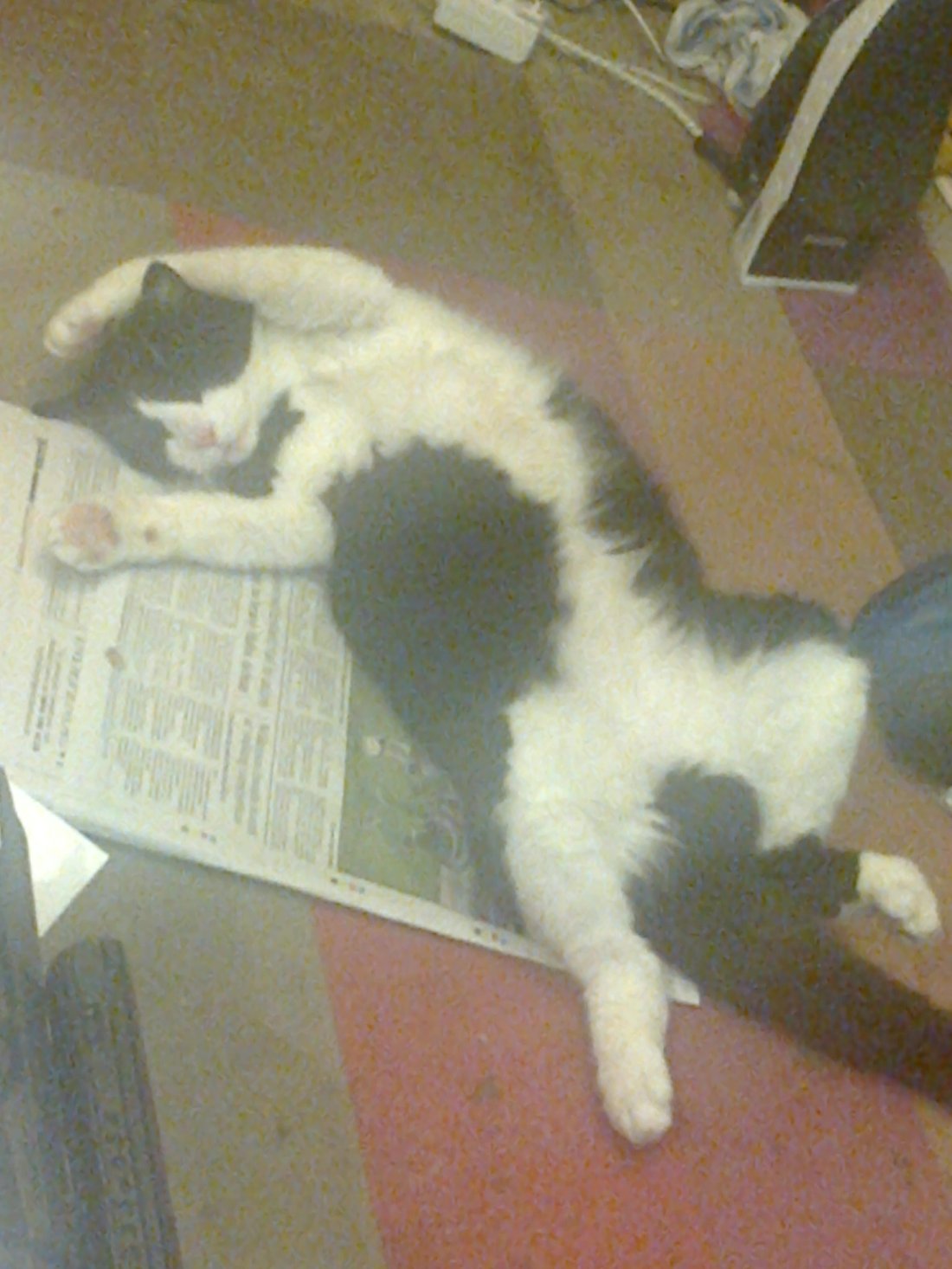
Alfred my old cat
The weather in Knittingham was rather hot.Mary was away giving a lecture on Dirac’s thoughts in Oxford and Stan felt lonely.He rang Annie but she was out.
So he said to Emile
I am going to bed early.Have you had enough to eat?
Definitely,cried Emile,who had just licked all the cream off two meringues in the larder.So Stan went upstairs.He took off all his clothes and admired his thin body in the mirror.
Not bad for 97,he muttered.
Now what shall I put on?
He found his pyjamas too hot so on an impulse he opened Mary’s wardrobe and found a cotton nightdress.It was a bit big for him but definitely cooler than his pyjamas.He cleaned his teeth and washed himself before falling into bed with,The Other Ariel a book about Sylvia Plath’s poetry and how Ted Hughes had altered the order of her poems and even removed some from the book .Ariel,which made her name.The doorbell rang.Each time it played a different tune out of the 90 in its repertoire.
He ran downstairs and opened the door.There stood two policemen.
They stared a the handsome old man with elegant hands
Hello.Sir.I hope we have not interrupted you?
No,I am just reading in bed. on my own
Do you always wear a nightgown?
This is the first time,he told them humorously.
I felt very hot so I decided to wear my wife’s gown.
And just where is your wife?
What’s it got to do with you,he enquired unceremoniously.
Just tell us,the older policeman said brusquely
She’s at a conference in Oxford giving a talk.About Dirac or Riemann or another nitwit.
Can we come in? the policeman said.
May we come in,Stan corrected him;not a good idea on the whole,especially in the USA where the police have guns.Luckily all our police have here are rubber gloves in case people ask them to wash up after having a cup of tea.
What is wrong? said Stan.
We have found a naked woman walking in the High Street.She says a man stole her clothes.For various reasons we think it might be you.
But if she was in the High Street she’d be in proper clothes not a nightdress,surely ,Stan murmured.
But you like women’s clothes….. we can see.
No,I don’t, the old man shouted.
I told you I was too hot.And in my own home I can wear anything I like.
Sometimes I wear a prayer shawl
Are you Jewish? they asked.
Only a little, but I inherited it from a great grandfather who married out.
Out of what? the police asked
He married out of his faith.He was longing for a bacon sandwich.
Surely marrying just to eat a bacon sandwich is a bit over the top.
Well,that was his story.Maybe he was tired of obeying the Ten Commandments so he broke most of them.
Which ones?
He committed adultery once when his wife had a nervous breakdown ; he lost his head and went to bed with his neighbour’s wife.
And where was his neighbour?
At the psychiatric unit visiting my great grandmother.Stan admitted uneasily.
Well,at such times we all do odd things,the older policeman advised him.
Thank you for your frankness,Sir.I can see you are not a criminal.
Thank the Lord,said Stan as he went into the kitchen and put the kettle on to make a cup of tea to save ringing 999
I am lucky not to be in a cell and Mary would have had to come home.She would have been cross, he told Emile.Anyway monks wear habits.
But who had stolen the clothes off the woman in town? A mystery to be studied with Annie when she got home.
At last Stan relaxed and went back to bed with his books
This is the last time I ever wear a nightdress he whispered to Emile who was by his side.
And so hope all of us.

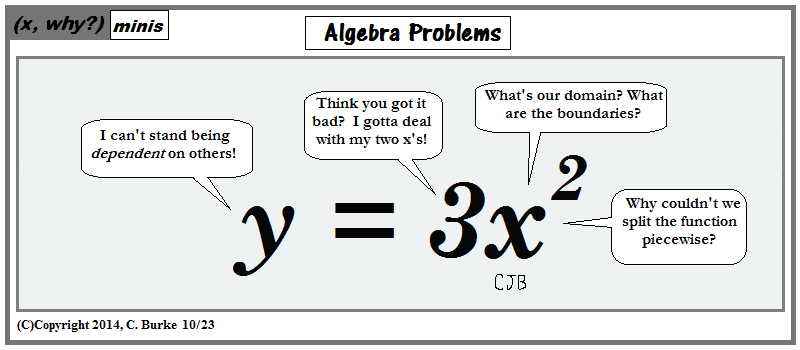
http://mrburkemath.blogspot.co.uk/2014/10/x-why-mini-algebra-problems.html

http://www.britannica.com/biography/Charles-Hermite
Hermite might not have succeeded nowadays as passing exams was not easy for him.I suspect he was a person who preferred to spend his time on his own interests in Mathematics and to neglect his wider studies
I have referred in some of my Stan stories to the number “e”.Hermite was the first to prove that e is not an algebraic number.
http://www.mathsisfun.com/numbers/transcendental-numbers.html
{ see the article].
It may surprise many people that there are different kinds of numbers ,beginning with the integers 1.2.3…… and the rational numbers [fractions like 1/2 4/5 89/54 etc.]
The Babylonians discovered the ratio of the circumference of a circle to its diameter was fixed regardless of the size of the circle.We call it pi.It is not an integer nor a raional number.The number of integers is infinite.
“The ancient Babylonians calculated the area of a circle by taking 3 times the square of its radius, which gave a value of pi = 3. One Babylonian tablet (ca. 1900–1680 BC) indicates a value of 3.125 for pi, which is a closer approximation.” [from link below]
They used 3 as an approximation and in the Hebrew Bible 400 BCE the Temple was made using 3 as an approximation. Archimedes got closer.But. like e, pi cannot be expressed as a fraction.
Some other numbers like the square root of 2 are irrational [ that is,not fractions[ but they are algebraic.As in x squared =2
Relating to Solomon’s temple.They used pi =3.It is in the Hebrew Bible
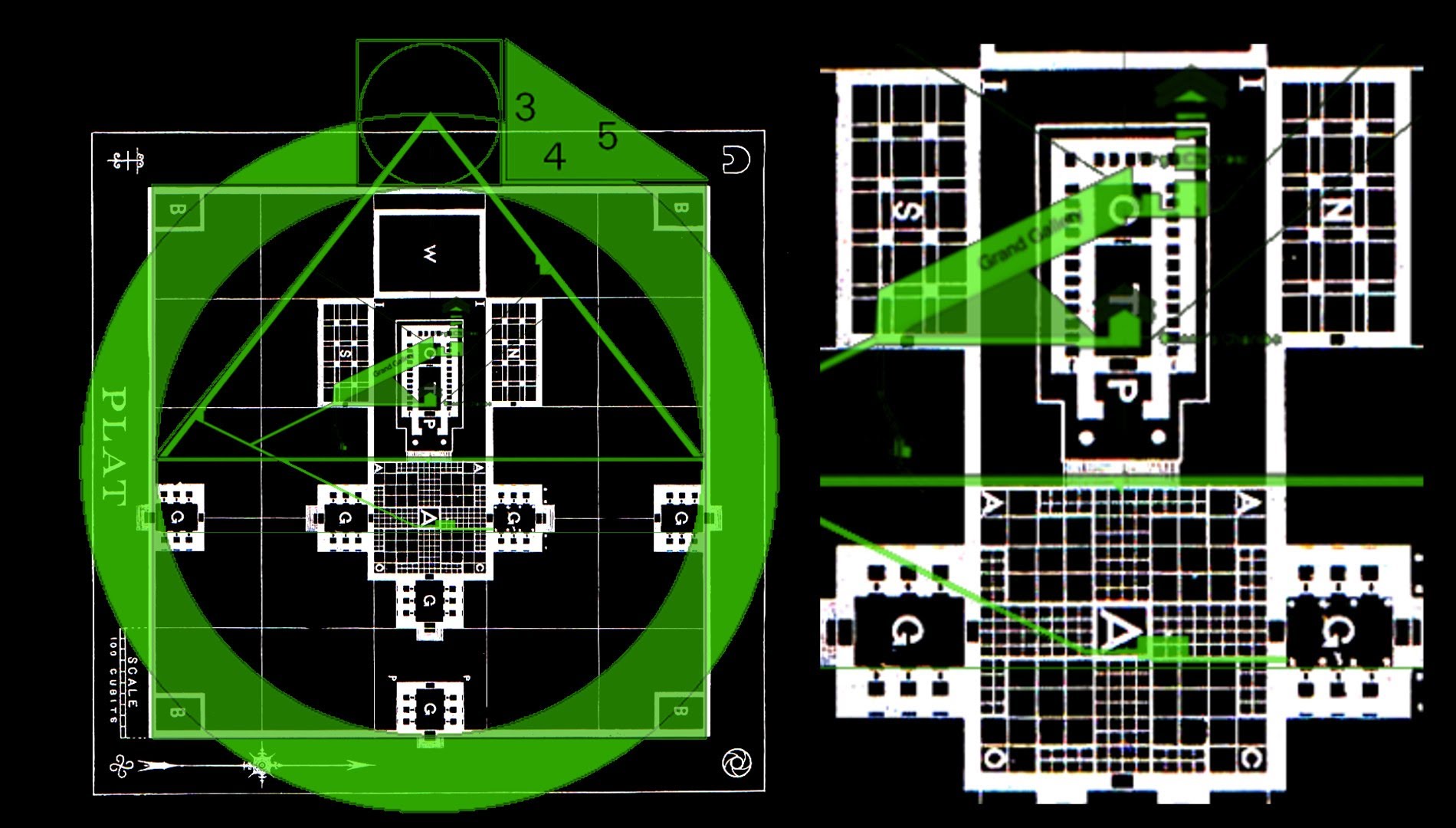
Real numbers are all numbers from integers to the transcendental and they are uncountably infinite
Pi and e are called transcendental numbers.We don’t know many other
Yet
“The set of transcendental numbers is uncountably infinite. Since the polynomials with rational coefficients are countable, and since each such polynomial has a finite number ofzeroes, the algebraic numbers must also be countable. However, Cantor’s diagonal argument proves that the real numbers (and therefore also the complex numbers) are uncountable. Since the real numbers are the union of algebraic and transcendental numbers, they cannot both be countable. This makes the transcendental numbers uncountably infinfte
Quote from article below {Euler is usually credited with this]
:In 1706 a little-known mathematics teacher named William Jones first used a symbol to represent the platonic concept of pi, an ideal that in numerical terms can be approached, but never reached.

The history of the constant ratio of the circumference to the diameter of any circle is as old as man’s desire to measure; whereas the symbol for this ratio known today as π (pi) dates from the early 18th century. Before this the ratio had been awkwardly referred to in medieval Latin as: quantitas in quam cum multiflicetur diameter, proveniet circumferencia (the quantity which, when the diameter is multiplied by it, yields the circumference).
– See more at: http://www.historytoday.com/patricia-rothman/william-jones-and-his-circle-man-who-invented-pi#sthash.4bbJtftH.dpuf

http://www.historytoday.com/patricia-rothman/william-jones-and-his-circle-man-who-invented-pi
https://www.exploratorium.edu/pi/history_of_pi/
http://mrburkemath.blogspot.co.uk/2014/10/x-why-mini-algebra-problems.html
This is meant to be humorous
Now we live in cubicles voluminous
We cannot kiss a friend to say goodbye
Though some may see or hear the numinous
While we live as separate as our perfume is
God is unaffected by walls numerous
Can visit prisoners without need for lies
Divert lonely people being humorous
As we ‘re locked so separate can you live with us?
We cannot kiss the cat to say goodbye










 synonyms:






 How my heart speaks