
https://en.wikipedia.org/wiki/No_good_deed_goes_unpunished


She got out of bed at the wrong station today
Very moving
I ate one chicken before it was snatched
She always keeps affairs underhand.
Many tans make doctors work
https://blog.oup.com/2020/04/how-g-e-anscombe-revolutionised-20th-century-western-philosophy/

Anscombe’s Intention is arguably the most important and influential piece of philosophical work from the 20th Century, and it continues to be used as a point of reference for students, scholars, and those working in action theory and philosophical psychology. Written after she opposed the decision by the University of Oxford to award an honorary degree to President Harry S. Truman following the bombing of Nagasaki and Hiroshima, Intention considers the nature of agency through an understanding of intention, and drew the ethical evaluation of these actions. Anscombe believed that there was a distinction between intention and acting intentionally.
She developed her action
She kept a SIM card in her vest
It kept warm against her chest
But if she put her smart phone there
Its ringing sound would curl men’s hair
Every body stares
How much does a SIM card know
As the numbers go by slow?
Is it proof you are a thief
If you hide it in your briefs?
Noone even cares
What a peaceful world it was
Just the radio and God
No landline phone,no TV set
Wilfred Pickles, what no net?
Never cared to dare
Playing rounders in the road
Helping mother with her load
Learning how to stitch a hem
Buttons came off now and then
Just another year
Now it’s USB cords fine
Sign yourself up , wi fi time
Get connected to someone
From Palestine to Wellington
Photos are the lure
Time has shrunk, our posts impinge
Messages and twenty rings
I have three phones in my bag
One for mother, one for dad
They are dead but I ain’t sad
It’s much worse,I’m going mad.
Oh,everybody shares📷
Come here ,Kathryn, come here quick,‘Cos your Daddy’s very sick.Run as fast as fast, you can,Get the priest, get Father Dan.Run,run went my eight year old feet,Down the lane and up the streetI ran right up to Father’s door,[Does God live there any more?]“Come please, Mam said Daddy’s ill”“Oh”,said Father,”that I will.”Revving up his motor bikeWith The Sacrament beside;He lifted me up onto the backAnd roared off up the church-side track.It was the best thrill of my life;If only Daddy had not died.
The enclosed garden had a peaceful air.
Nothing untoward could happen there.
The irises are famous and diverse
No thorns to prick the finger or to curse.
We sat beneath the tree still holding hands
And let the peace we felt on us descend.
But now I am alone I feel despair
Where now shall I love, where shall I care?
..
We cannot love another till we find
A felt connection to the heart and mind
When we’re anxious we cannot perceive
The mind and feelings shuttered may deceive.
Patience is so hard when we feel sad.
The tears in our own eyes make us feel bad
https://www.theguardian.com/news/2001/jan/11/guardianobituaries.highereducation
She gives the famous illustration of the contents of a basket which a shopper fills according to a list, and which a detective compiles a list of. If the shopper finds any discrepancy between his list and what is actually in the basket, he rectifies this not by altering the list (practical thought) but by altering what’s in the basket (the action performed). If the detective wants to rectify discrepancies between his list (observational thought) and what’s in the basket (the other’s action observed), then he can indeed do so merely by altering the list. But our actions are intentional only under a description, said Anscombe, so that under one description (“I wanted to help”) an action may be intentional, under others (“I interfered”, “I stopped play”) unintentional.https://c2b229b81d012e82bb22a0e0ee2315fe.safeframe.googlesyndication.com/safeframe/1-0-39/html/container.html?n=0
Anscombe thought that modern philosophy had also misunderstood ethics. In her seminal paper Modern Moral Philosophy (1958), she argued that notions like “moral obligation”, “moral duty”, “morally right”, and “morally wrong”, are now vacuous hangovers from the Judaeo-Christian idea of a law-giving God. Anscombe, of course, firmly believed in God herself, but she was examining the way language was actually used, and ethics done. She argued that “ought” has become “a word of mere mesmeric force”, since it no longer has the corollary “because we are commanded by God”.
Philosophers, however, have tried to find content in the deracinated ethical concepts, and failing to, have been induced to supply “an alternative (very fishy) content”, such as that the right action is the one that produces the best possible consequences. However purportedly different, in fact, all contemporary moral philosophies lead to this sort of “consequentialism” (it was Anscombe who coined that now-indispensable term), which blithely countenances the execution of an innocent person as a potentially right action. Anscombe famously asserted of someone who thought in this way, “I do not want to argue with him: he shows a corrupt mind.” She urged the abandonment of “the law conception of ethics” and a return to the avowedly secular Aristotelian concepts of practical reasoning and virtue. And she insisted that it was no longer possible to do moral philosophy without doing philosophy of mind, thoroughly investigating concepts such as “action”, “intention”, and “pleasure” in their non-moral sense.
Two years earlier, in 1956, she had demonstrated in a very practical way her opposition to consequentialism. When it was proposed that Oxford should give President Truman an honorary degree, she and two others opposed this because of his responsibility for the bombing of Hiroshima and Nagasaki. Although overruled, they forced a vote, instead of the customary automatic rubber-stamping of the proposal. “For men to choose to kill the innocent as a means to their ends is always murder,” declared Anscombe’s pamphlet, Mr Truman’s Degree. It sarcastically condoled with the Censor of St Catherine’s for having to make a speech “which should pretend to show that a couple of massacres to a man’s credit are not exactly a reason for not showing him honour”.
Anscombe was never afraid to voice unpopular views, scandalising liberal colleagues such as Bernard Williams with her paper against contraception (later published in revised form by the Catholic Truth Society) and condemnation of homosexuality.
Outspoken, often rude, she was sometimes dubbed “Dragon Lady”. For a time she sported a monocle, and had a trick of raising her eyebrows and letting it fall on her ample bosom, which somehow made her yet more daunting. But, while giving short shrift to pretension and pomposity, she took endless pains with those students she considered serious. Her exhilarating tutorials went on for hours, leaving everyone exhausted; students could drop into her house at any time to discuss philosophy among the dirty nappies. Married to Peter Geach, a fellow-philosopher and Catholic, she was always called “Miss Anscombe”, which caused some consternation at the Radcliffe Infirmary whenever she turned up to give birth (she had seven children).
Perhaps Anscombe’s best work was done in the 50s, but her three-volume Collected Philosophical Papers (1981) contain trenchant papers on epistemology, metaphysics, history of philosophy, and philosophy of religion. Causality and Determination, her inaugural lecture on becoming professor of Cambridge in 1970, presented an extraordinarily original and controversial view of causation.
An affectionate tribute on her retirement in 1986 called her “a modern Daniel in the lions’ den”, but, although doggedly Catholic, Anscombe could also be radical and was never straitlaced. She was notorious for a forthright foulmouthedness which was only enhanced by the beauty of her voice. When presenting a paper on pleasure, she distinguished extrinsic pleasures – things we enjoy because of the description they fall under – and intrinsic pleasures – things we enjoy regardless of how they are described; and she cited, as an example of the latter, “shitting”, strongly pronouncing the double “t”, and with such sternness that her academic audience were too daunted to laugh. (Unfortunately this was probably one of the many papers she threw away as insufficiently good.)
Once, threatened by a mugger in Chicago, she told him that that was no way to treat a visitor. They soon fell into conversation and he accompanied her, admonishing her for being in such a dangerous neighbourhood. She chain-smoked for some years, but bargained with God, when her second son was seriously ill, that she would give up smoking cigarettes if he recovered. Feeling the strain of this the following year, she decided that her bargain had not mentioned cigars or pipes, and took to smoking these.
Except when pregnant, she wore trousers, often under a tunic, which, in the 50s and 60s, was often disapproved of. Once, entering a smart restaurant in Boston, she was told that ladies were not admitted in trousers. She simply took them off. When she threatened one of her children, “If you do that again, I’ll put you on the train to Bicester”, and he did, she felt obliged, given her views on fulfilling promises, actually to put him on the train. Bluff, courageous, determined, loyal, she argued that the word “I” does not refer to anything, but she certainly believed in the soul.
She is survived by her husband and their four daughters and three sons.https://c2b229b81d012e82bb22a0e0ee2315fe.safeframe.googlesyndication.com/safeframe/1-0-39/html/container.html?n=0
• Gertrude Elizabeth Mary Anscombe, philosopher, born March 18 1919; died January 5 2001
… we have a small favour to ask. Tens of millions have placed their trust in the Guardian’s fearless journalism since we started publishing 200 years ago, turning to us in moments of crisis, uncertainty, solidarity and hope. More than 1.5 million supporters, from 180 countries, now power us financially – keeping us open to all, and fiercely independent.
Unlike many others, the Guardian has no shareholders and no billionaire owner. Just the determination and passion to deliver high-impact global reporting, always free from commercial or political influence. Reporting like this is vital for democracy, for fairness and to demand better from the powerful.
And we provide all this for free, for everyone to read. We do this because we believe in i
I

I look up our small street,
To see if you are coming.
I don’t know what time it is,
But I think I hear you humming.
You sang sweet songs for us,
And you could whistle well.
You wore an old tweed jacket
You loved us,I could tell.
I look out there each day,
But I can’t see your tall, thin shape.
I saved your Woodbine packet,
It made me feel some hope.
What does death’s door mean?
Where has Daddy gone?
When will be the welcome day,
When we hear his songs again?
I’ll sing like him all day,
I’ll dream of him all night.
I hope he won’t be angry,
If his cigarettes won’t light!
He can’t write his own songs now.
He went too far away, too soon.
I’ll write down what I think he sang,
And I’ll invent the tune.
I hear him singing now,
He dwells inside my heart.
And though I still can’t see his face,
I recognise his Art.

There were three of us on this motorbike,
Father Dan with me,
And he had Jesus in his bag.
That makes the total three.
Transubstantiation, oh my Lord
I looked at his black bag.
Is Jesus inside there, I thought?
Should it have a tag?
It’s a secret never told
Father Dan gave it me to hold.
So I had Jesus in my lap,
No wonder now I feel a gap.
We zoomed off up an unmade road
As fast as Dan could go.
I felt bewildered and bemused,
I loved my Daddy so.
Father Dan took back his bag,
And went inside our house.
I got my marbles out to roll,
I feared I’d see a mouse.
So Three of had taken a ride
And after that, my Dad had died.
Father Dan said Mass today
Still with Jesus, so I cried.
Aspiring to eternal life by will
The cells divide and rule until they kill.
If you love then do not overpower.
But neither will you love if prone to cower
It’s here again the wild beast with dagger claws
Trying to steal our lives
Using our flesh and bones to feed itself.
A child’s lungs damaged by pollution make a handy home
The beast might sleep for 20 years.
Then may will go on a rampage.
Psychopathic cells take over
They acknowledge no boundaries
Golden rules are not their way of life.
They are crazy blinded mad
They cannot think

As much as we might have enjoyed reading (and writing) poetry when we were children, in school we are taught that poetry is inherently “difficult,” and that by its very nature it somehow makes meaning by hiding meaning. So our efforts at reading poetry begin to reflect this. But it turns out that the portal to the strange is the literal.

The sun ignores the dark leaved compact tree.
All is silent waiting some decree.
Like a prisoner standing in the dock
Imagining the key that turns the lock
is it bird song, is it my alarm?
In the winter morning holds less charm
Once I had a loved one in my bed.
Are my feelings better left unsaid?


I painted this picture in my art class and then I put it on the computer and I think I have done something to the colours so that the moment which is at the front looks really really like one that we bought a few years ago. Please don’t copy my photograph. my husband has still got a very hot temper

https://en.wikipedia.org/wiki/Shattered_assumptions_theory

The final fundamental assumption evaluates one’s self as a positive, moral, and decent–and thus deserving of good outcomes in life. Individuals’ assessment of their self-worth contributes to their success in life.[3] A person’s positive self-worth encourages them to be effective in their tasks at hand. Generally, this assumption enables an individual to maintain a belief that s/he has the ability to control positive or negative outcomes.
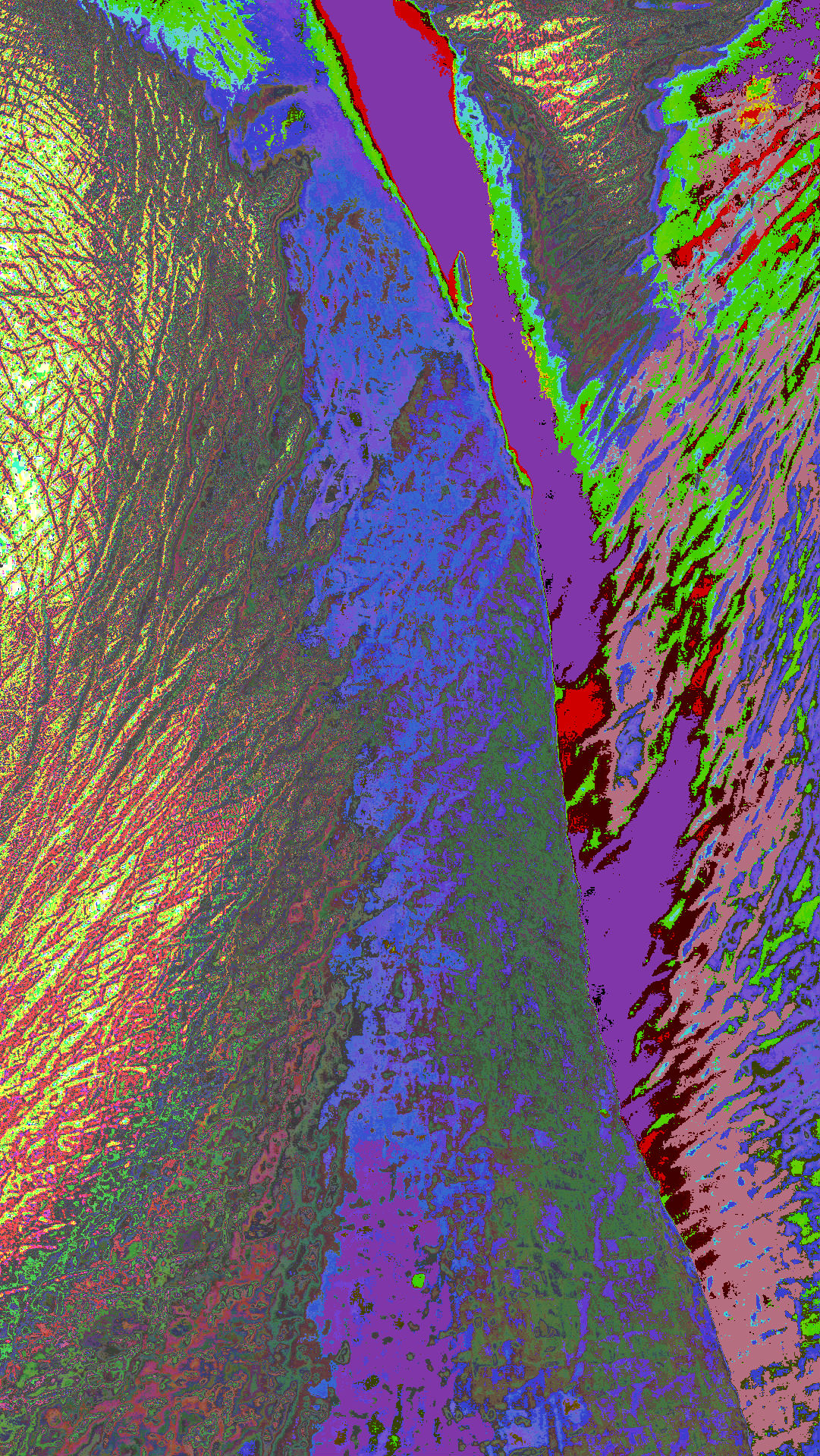
Mary came in with a bag of shopping and went into her bijou turquoise and teal kitchen with magenta door knobs; she decided to make herself a cup of tea before opening up the shopping bag.
As she put the kettle on ,she saw her door neighbour Annie in her garden bending over Emile. Mary’s cat. Mary opened the back door and called,
What’s wrong with the cat?
Annie looks backwards over her red velvet coat towards the house which was rather foolish as her centre of gravity was unstable and she fell over onto the wet lawn. Mary ran out and helped Annie to get up; meanwhile , the cat Emile had run back into the house
Well, I never knew Emile was pretending to be unconscious .I thought that he might be dead. I realise I’m too old to bend over a dead cat and simultaneously talk to someone who is inside the house as it is a more complicated manoeuvre than anything that we do in the yoga class.
I’m terribly sorry I said Mary.I wasn’t thinking
That makes a change, shared Annie, because you think too much;I see that you have a book here called, what is thinking by Martin Heidegger.
I haven’t read it, said Mary,in fact I don’t believe I ever will read it because he was somewhat of a supporter of the Nazis and also seduced a student call Hannah Arendt who as it happens was Jewish ,so he obviously was rather mixed up in his mind about Jews in a bad and wicked way and also I don’t want to think about what thinking is, if you see what I mean .Do you get words coming into your mind?
I don’t think so. they only come into my mind when I’m talking to somebody. I just open my mouth and the words come. I thought it was the same for everybody but clearly it’s not.
Do you ever hear voices she asked Mary.
Yes ,I heard a voice and it said, go to the doctor immediately.
And did you go? asked Annie petulantly.
Yes, I did and he took some blood from me which he finds quite difficult. Anyway, he’d sent it for testing I think you know he found my thyroid was so underactive that I would have been in a coma in another couple of weeks, so I think that the voice was a good one.I don’t know who it was but it was not frightening at all Goodness me, said Annie. I have never heard of people hearing kind voices. I wonder if some people have a positive type of Paranoia and believe at the entire world is a conspiracy designed for their pleasure and amusement.
I expect there are some people like that , Mary,cried , but they probably think we’re all the same so they don’t tell us.
It might be very interesting if we had a gathering of women who were all prepared to reveal something strange about themselves; I’m not referring to the part of the body, I am referring to something in their mind or something that happened to them in their mind, if you see what I mean..
Yes certainly that will be very interesting see you but not for me because nothing strange like that has ever happened to me
How do you know, said Mary. it might not seem strange to you but it might seem a surprise to me. It would seem strange to me if you told me that you enjoyed Euclidean geometry or learning Russian.
Mary made tea in the big teapot and they went into the lounge and sat down on the couch which was covered in orange velvet fabric
My goodness ,said Anna, I don’t think I like this orange velvet.What a shame, whispered Mary. I can’t afford to have it recovered again for 45 years.
In 45 years we wouldn’t be here Annie pointed out in her timely manner.
I wouldn’t know—– the second Ice Age might come and we could be frozen into these seats for the next hundred years and we will then turn into fossilised bones I suppose and people might write doctoral theses about us. Wouldn’t that be wonderful?
Not really said Mary, because we wouldn’t know anything about it.We would be dead.
Wel,l think about the poet Gerald Manley Hopkins. No work of his was published while he was alive and it was only by chance that a famous literary person Robert Bridges in England, he was friendly with him, and had copies of his poetry This is why it was eventually published. He is one of the best poets who ever wrote in English.
I found him very difficult to read, Annie said cautiously. it’s those slant and half rhymes and the rather strange musical quality of his work which can be quite beguiling; on the other hand, it is sometimes over top to my brain. I prefer John Betjeman.
Really, said Mary , that is absolutely ridiculous; you cannot compare two poets who are so completely different that they could be writing for you in different languages altogether.
It will make more sense to compare him with T S Eliot or W B Yeats the Irish poet. but no , for comparison is odious and so he must under fall or rise on his own merits.
Personally, I like the poem which begins ” as kingfishers catch fire”
That’s a metaphor, kingfishers don’t normally catch fire…. Mary hinted
Yes, I know I did a course in modern poetry at the Polytechnic it was either that or yoga and I am sick of doing yoga.
Alright don’t lose your temper, unless you want to go to a course about anger management which is on in the hospital on Monday afternoon’s between 5 and 6.
That’s a stupid time because it’s men who tend to be more angry and most of them will still be at work.Do you think that the boss would let them come out of work early to resume to a class at the hospital without telling them what the class was called
That’s a difficult question to answer because such a man being very impulsive and prone to anger somewhat like Donald Trump l if he refused to let him go to the class he would hit the manager and lose his job and then he would apply for compensation on the grounds that he wouldn’t have hit the manager and lost his job. if the manager had allowed him to go to anger management class on a Monday afternoon at the hospital; if you don’t know, it gets a bit convoluted sometimes, doesn’t it?
Do you know I did an IQ test and it says that I am in the lowest 5% of the entire population; don’t you think that’s wonderful I don’t know how I did it?
You must do it again to see if it was correct it would be frightening if you repeated it and you came out in the top 5% because that would mean either you’ve got schizophrenia or that the concept of the IQ is totally meaningless.
IQ is meant to measure something which is independent of Culture or social class yet if you tests of verbal intelligence it is using words such as a fire, conservatory, sitting room, Harrow,Oxford, Wittgenstein, chambermaid, Maps, physics .water planet, ambivalent, pentagon crisis, Conservative Party, Europe and bulldoze, and you must admit that those are class related words.
it also uses expression ;like Barclaycard, Marks and Spencer’s credit card , Visa card and PayPal; these are unlikely to be known by the poorer members of society when they are still children, When they reach the age of 16 they will be offered credit cards by unnameable banks which put letters through the door trying to whip up some custom but if you are living on benefits it would not seem very wise to accept the offer
With Barclaycard myou have to pay by direct debit and I don’t think the social security office pays out by direct debit to anybody even those going to get benefits from them don’t get it by direct debit from the government
.l say that’s quite funny ;why doesn’t the government pay our pensions by direct debit?
No direct debit is only used to take money off you, like for example, charities like you to pay by direct debit so does the British Gas Company ,and BT telephones they say that it stops you worrying about whether you have paid the bill or not but my brother found that he was £2,000 in credit with the electricity company and they were still taking more money from the account by direct debit because he is very rich and he never looks at bank statements or very rarely looks at the bank statement and so he did not notice.
That’s rather puzzling to me as I look at the bills to see you when I am in credit or debit but then as my brother said, I am quite poor financially although I am very rich another ways
What are the other ways?
I’d rather not say at the moment.
Nor would any of us!

Gone with the sinned
How dreamed was my valley?
Wander, the greenwoods free
Come live with me and find my glove.
Round yonder themed palais
On Richmond’s pill and other matters
Oliver Missed again
King Seer.See here.
Joan’s Ark kit
Badbreath
Jamset
A midsummer night’s reverie
The golden throat look.
How to find your F spot.
How to curse in verse
Where is the great O?
The book of sewed
Heidegger on blindness
In denial? Freud on Trial.Buy one get ten free.
Try Ram’s Horns on

O
about computing.
Barefoot Computing – Developed by practising teachers through Computing at School and managed by BT, Barefoot exists to boost teachers’ subject knowledge, save time and help bring computational thinking to life in cross-curricular lessons.
Big Ideas – Find projects and resources designed to bring communities and countries together. Fun, educational resources for independent home learning, focusing on STEM, citizenship and Holocaust remembrance.
blutick – Watch videos, view worked examples and try problems to improve your maths confidence and understanding.
Centenary News – A range of news about the First World War centenary.
codeSpark – A computer science resource that combines learning with creative play and community.
Dekko Comics – Educational comic stories providing an entertaining alternative to conventional
the art of poetry isn’t hard to master
make the syntax good and entertaining
the gruesome heart of poetry brings disaster
a meter errant makes the lines come faster
an oxford thesaurus gets the listeners waning
the art of poetry isn’t hard to master.
a genius woke and saw a verse rush past her
it only needed polishing and planing
the gruesome heart of poetry brings disaster
she left the oven on,it gassed her
ever since her folk groan, paining
the art of poetry isn’t hard to master.
she saw her selves as coloured shapes in plaster
and round her mind, were ghosts all craning
the gruesome heart of poetry brings disaster
there’s not a lot of hope if we’re complaining
for criticism from hidden ghosts is draining
the art of poetry isn’t hard to master
the gruesome heart of poetry brings disaster
I wish we were in Alston steep and fine
The Pennines all around, the lakes nearby.
We walked the Pennine way in our own time.
Your heart was in the hills, to teesdale chained.
You didn’t like the urban sprawl, the blight
I wish we were in Alston now and then
The time has passed we find our memories fade.
I miss you,miss you, miss you, I can’t lie
I wish that we were near high force, that air.
And our;United Kingdom’s in decay.
We saw an eagle but it did not fly
0h every breath we took was like a prayer.
I find it hard to walk without a crutch
I can see but I can’t feel your touch
You would hardly know me now I sigh
I wish you were in Alston by my side.
The dreams, the symbols memories combine.
This is how you’re with me for all time
I am very proud because I’ve tried

I left a pan of curry on the stove
Hot as ash combined with burning coal
Yet when I went back in a cat stood there
Eating this strong curry with no care.
It must have had thick skin inside its mouth
Before I looked ,it ran out of the house
To think it gobbled up our supper so
Leaving me with nothing but a glow
So then I made a chilli beef and beans
My heart ached as I listened to puss scream
Can cats learn that pans are out of bounds?
I’d hate to hear again its anguished sounds
Be sure to close the kitchen door or else
You too will suffer torment from cats’ yells

How do you treat stage 4 lung cancer?
By surgery to remove the lungs
And how do you treat brain cancer?
Isn’t it obvious? Remove the brain.
What about your heart?
I took my mine out a long time ago.
You didn’t have it done on the NHS then ?
No but I paid myself £10,000 afterwards
Now, let’s do the circulation of the blood.
Which person discovered that the blood circulated around the entire body.
I didn’t even know that anyone had discovered that.
Going back to oncology what about skin cancer?
I thought this was a general oral examination not a specialist one for people studying oncology
Alright what makes your pulse go too low?
Boredom I think.
So what is the cure for that?
Being a medical student
There’s no need to go on. You have failed completely.
Thank you very much sir or madam. I only came here to bring these pens then I thought I would just try to do the exam in case I could become a doctor straight away without doing any training.
They say the people who know the least about a subject are the ones who are more likely to believe they know a great deal about it.
So the more learned you get the more humble you get
Then heaven might be full of scholars but also of people who are highly skilled in other ways such as artists.
. I won’t say they will get on like a house on fire because that might more like hell than heaven.
And what is heaven but a metaphor?
 http://www.griefincommon.com/blog/grievinginthesecondyearafteraloss/
”
But expectations are a big part of our mindset, even when we’re not in the stages of grief. How much more do we enjoy the movie or party that we thought was going to be terrible? How disappointed are we when a long planned vacation-of-a-lifetime turns out to be not all what we would have hoped?
If ever there was a time when we need to be setting realistic expectations for ourselves, then certainly our time of grieving is one of them.
Throw away the timelines.
Don’t compare yourself with those whom you know have had a loss. The coworker who was back to work smiling only a few days after her Dad died? She was crying every day on the way to and from work. The family member who thinks that 18 months after your husband died you should be dating again? She has no idea what this loss feels like, what your love felt like, or what is right for you.
Be patient with yourself. Be patient with those who don’t understand. Don’t expect today to be hard and tomorrow to be easy. Honor wherever you are right in this moment and know that even if it feels uncomfortable, unsettling and uneasy, that it’s probably exactly where you need to be.
Stay open to the idea of hope and optimism “








 How my heart speaks