
The first Muslims in England
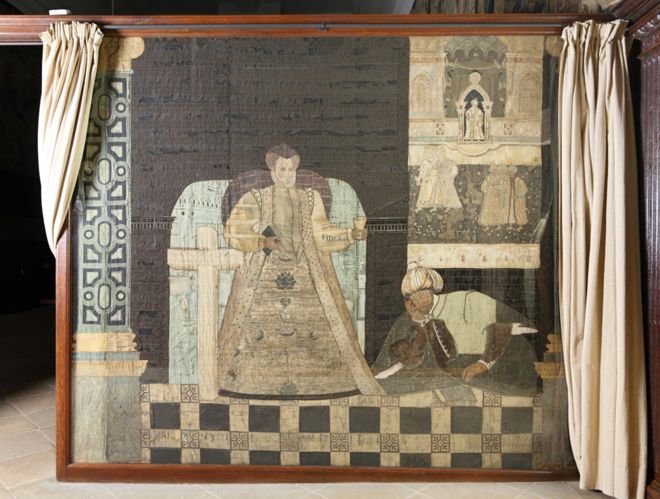 Image copyrightBRIDGEMAN IMAGES
Sixteenth-century Elizabethan England has always had a special place in the nation’s understanding of itself. But few realise that it was also the first time that Muslims began openly living, working and practising their faith in England, writes Jerry Brotton.
From as far away as North Africa, the Middle East and Central Asia, Muslims from various walks of life found themselves in London in the 16th Century working as diplomats, merchants, translators, musicians, servants and even prostitutes.
The reason for the Muslim presence in England stemmed from Queen Elizabeth’s isolation from Catholic Europe. Her official excommunication by Pope Pius V in 1570 allowed her to act outside the papal edicts forbidding Christian trade with Muslims and create commercial and political alliances with various Islamic states, including the Moroccan Sa’adian dynasty, the Ottoman Empire and the Shi’a Persian Empire.
She sent her diplomats and merchants into the Muslim world to exploit this theological loophole, and in return Muslims began arriving in London, variously described as “Moors”, “Indians”, “Negroes” and “Turks”.
Before Elizabeth’s reign, England – like the rest of Christendom – understood a garbled version of Islam mainly through the bloody and polarised experiences of the Crusades.

 How my heart speaks
When I visited Fatehpur Sikri in India, some years ago, I recall learning that the Mughal Emperor Akbar held discussions there with representatives of other world religions, as he wished to know about others’ religious beliefs. Apparently Queen Elizabeth 1st sent representatives there, although I suspect their interest was mainly in trade.
That is interesting.Mike, thank you.I didn’t know till I looked it up that she had those connections… owing to the Pope’s edicts giving her freedom in a sense.