Trivial thinking makes a waste of life;
Like polishing your shoes as Jesus dies.
Yet academics often create strife,
With philosophers more intellingent than wise
Perceptions sharp as nail bombs to the eyes
Are diverted onto other paths and lives.
Who will be the one who can surprise?
With which mind may such perception strive?
Who will listen to the chosen one?
Not the men whose faces are unlined.
Who sees truly what we have become?
In whose imagination is the true refined?
Such a furnace is this blacksmith’s yard
Refinement comes by fire and burning hard.
Signs and symbols guide the route.
Love gives the soul her appetite.
Though the night is black and starless,
The inner guide is never careless.
The notes are struck,the tune is played,
Plain melodies are overlaid.
In this chant and benediction,
Healing comes for desolation.
Though the passage way is narrow,
This pathway is the one to follow.
Struggling through the mud and mire,
We see in darkness tongues of fire.
The sacred centre of our life
Is never found without some strife.
Just then the dark and light combine,
To create a symbol for our mind.s
Shams-ud-din Muhammad Hafiz (c. 1320-1389) is one of the most beloved poets of the Persians, and is considered by many – from different cultures – to be one of the seven literary wonders of the world. Ralph Waldo Emerson and Johann Wolfgang von Goethe both agreed. As Emerson said of Hafiz: “He fears nothing. He sees too far, he sees throughout; such is the only man I wish to see or be.” And Emerson gave Hafiz that grand and famous compliment, “Hafiz is a poet for poets.”
Hafiz has no peer – Goethe
Both Goethe and Emerson translated Hafiz. And after Geothe’s deep study of him, simply – though remarkably – stated, “Hafiz has no peer.”
Hafiz poems were also admired by such diverse notables as Nietzsche and Arthur Conan Doyle, whose wonderful character Sherlock Holmes quotes Hafiz. Garcia Lorca praised the Sufi poet. Johannes Brahms was so touched by his verse he used several in his compositions. And even Queen Victoria was said to have consulted Hafiz in times of need – which has been a custom in the Middle East for centuries. The Fal-e Hafiz, is an ancient tradition in which a reader asks Hafiz for advice when facing a difficulty or at an important juncture in their life – treating his books as an oracle and opening them with a deep wish from their soul for guidance.
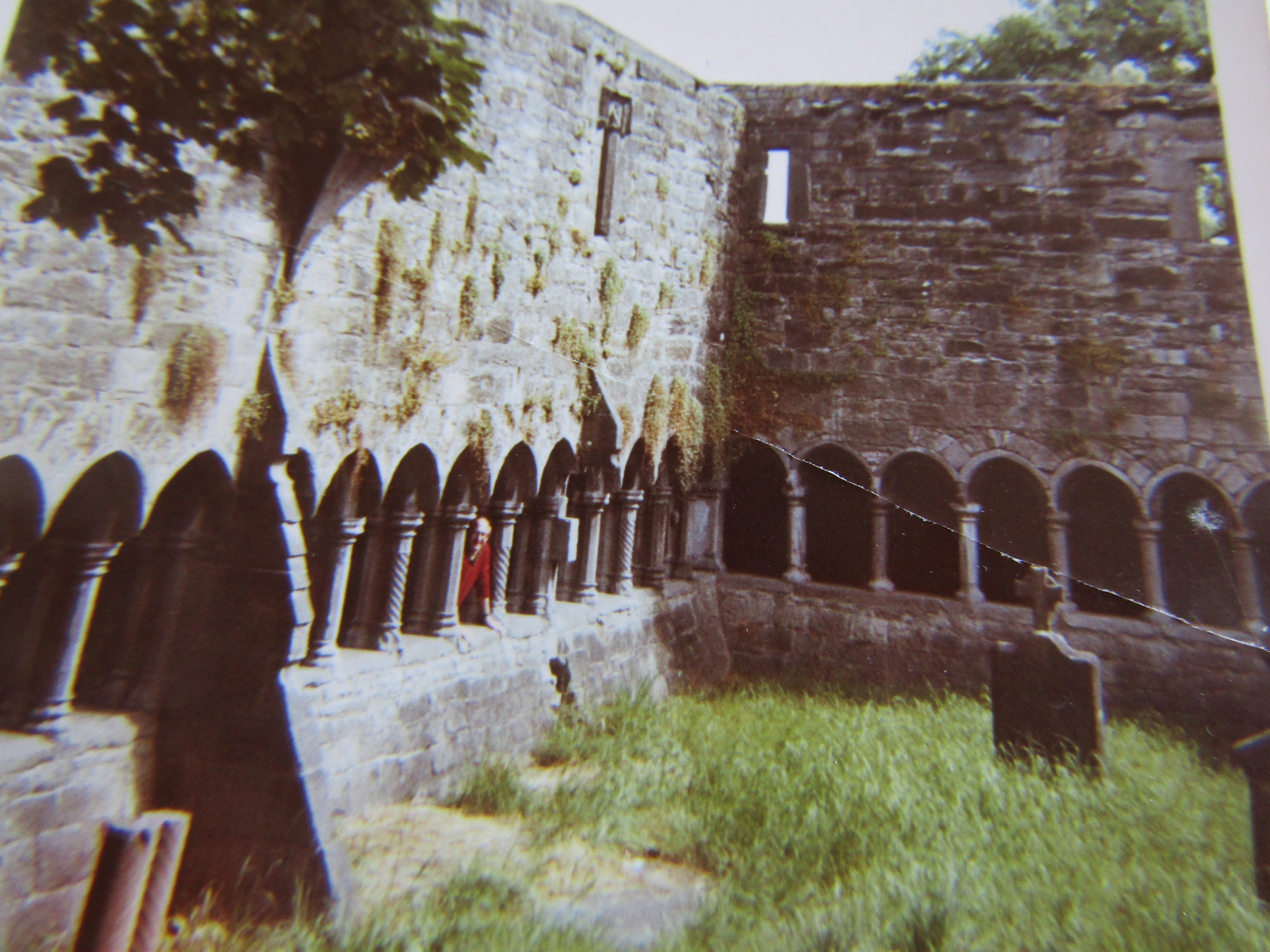
We sense the sacred in these peaceful walls
Yet men have died in places that appal
Women too and children then unborn
Fell into cold dark earth in lands forlorn
As our weapons grow, our hearts are hard
The people live in Gaza behind bars
The water all polluted as taps drip
Is this war or is it vengeance fit?
In Britain, it’s the poor who lose the war
As it was when Jesus Mary bore
Yet here are clerics blessing marching bands
A military show for all the land
The genocide in Europe of the Jews
The self destructive actions of the proud
The fields of France filled sick with blood and bone
Who are we to cast judgemental stones?
The War’s not over when the fighting stops
The soldiers and the tortured suffer shock
The widows and the parents all bereaved.
The unborn children hover in unease
We let the prisoners out from camps of death
But who would take them in or take their path?
The injuries will travel down the years
As still we fight and still we live in fear
It’s Europe’s grasp and greed which was the cause
Of death in Gaza, Syria, in long wars
Yet we judge we are more civilised
When we self defend with bitter lies
I saw you struggling with your walking frame Guessed that you must suffer too much pain I smiled because you caught my sidewards glance Then your face too by smiling was enhanced
So often older people are ignored Lost and lonely hidden at the core Once this man fought in a major war I hope by some fine friend he was restored
I saw him disappearing down the road His posture more erect, his back less bowed And in my heart I felt the smiling too Enchanted by the essence , by the cue.
I got on a bus, ignored my phone, Smiling still I pushed the door key home
After dinner, Mary and Stan often went for a longish walk.They liked to go to a road where the richer people of Britain lived.,where there were some Georgian houses and one Tudor house. At dusk, they would stroll by looking into the lighted windows to see how the rooms were decorated.And if the front garden was large sometimes they crept in to see more One beautiful house they liked from the outside was spoiled for Mary by the garish tartan wall paper. What sort of people would live there, she asked Emile who was in her handbag.with his head peeping out Well,they have a cat called Percy,he mewed softly. Why Percy?It is a noble name from the British past of course, she answered… Earls of Percy were involved in affairs of state. Well.Percy is Chinese, Emile said to her wittily. He ought to be called Hu Ar U then, Mary joked ,or tried to as her sense of humor was somewhat lacking or maybe just odd.Still she looked lovely despite her moth eaten clothes bought in Sales in colors nobody else wanted like purple and lilac and bottle green. She and Stan crept slowly up the garden path and peered nervously into the empty sitting room trying to identify the paintings on the walls. All of a sudden, a woman who was completely naked came into the room and lay modishly on a sofa as if she were a trained dancer.She was a sight for sore male eyes. Are they about to have a drawing class, Stan whispered. She must be a model for a Life Class or an abstract woman with cat ,if Percy gets into the frame, Mary mused Percy might scratch her then.Stan muttered.She could scream. Suddenly a loud voice was booming at them. What the hell are you doing in my garden? There stood a big man in plus fours and an oversized red jumper with matching cheeks We were admiring your wall paper, Mary said.I think it is very unusual. He smiled in gratification. I chose it, he cried.All by my self. But why is there a nude lady on the sofa, Stan enquired? I am so annoyed, the man told them.My fiancee likes to walk around nude but she forgets to draw the curtains first. Does she want to make an exhibition of herself, Stan enquired hopefully. We wondered if it was for a life class, you know, students learning to draw and become artists of note. Well, that’s a good idea said Arthur thoughtfully. The woman got up and came over.She opened the window.To their astonishment, she was Annie, their neighbour and Stan’s mistress too.Stan might have known but he had kept his face immobile after years of practice. Fancy seeing you here, Annie whispered creatively in her sweet little voice I am trying to seduce Arthur but with no success so far except a marriage proposal. You need to be more discreet and indirect, said Stan. If you act like this he will think you are an artist’s model and likely to be featured in the Tate Modern Annual Show of Infamy Now, would a man like this marry or even sleep with such a woman as you appear to be walking around like Eve before she ate the apple? I don’t know said Annie but my clothes are all in the tumble dryer, anyhow. Did you wet yourself? Mary asked her kindly It’s nothing to be ashamed of.We all do it now and then especially since public conveniences were shut down across the UK.And now ,even coats are machine washable. Well,I knocked over some lemon barley water in a big jug and so I decided to wash all my clothes. while I was here as Arthur as a tumble dryer That’s a very strange tale Arthur told her.You look ravishing hanging out of the window with your nipples pointing up.Let me take a photo of you.Say, Cheese But will you put it on Twitter, Annie asked anxiously. No, dear.I am not so cruel.Why don’t you get your clothes and make us all some tea/ I can’t make tea, she yelled and without pausing she dialled 999. What is it Fire or Ambulance the lady receptionist asked politely? It’s a kettle. Is it on fire? No , it won’t boil.Can you send Dave the paramedic please, as he makes good tea. We are quite busy so it may be two hours or more she was told. I thought this was an emergency service, Annie said. But who defines what an emergency is? the lady asked her philosophically. I will die without this tea, Annie informed her in a ringing tone Ok, hang up and I will send the ambulance now. Arthur seemed a little surprised I have private medical insurance, he cried.But they don’t make tea not even for old people. Well, in the UK tea has always been essential to the National Health But it will soon be drying up and we shall get flasks from the dustmen on Sundays instead. I just don’t believe it, Arthur said and he then passed out on the rug which stood in front of a bookcase full of leather bound volumes of poetry. Will he live?Read more tomorrow and pay the price… a few minutes of fun and gaiety.
Alfred,cat ,both black and white Do not be afraid Alfred dearest, that was News Before the Trump arrived Alfred how I miss you now I hope you’re still alive
You look quite puzzled or afraid
I’m sorry I was sad
In this world of madness now
We search for tidings glad
If you have another home
I don’t mind now you’re gone
I hope you find a warm bed place
And sleep until you’re done
Who owns the weapons of mass extinction? The Queen has been raining since 1954 at least
Brtain is a mock-democracy.
We sell instruments of torture to keep the Economy entranced
Across the globe people are locked up without trial but has it made the world safer? You can kill one Osama but there are others.Why not use the power of reason? Why not think? Why not wonder? It’s madmen playing games to make their names
It’s interesting that when something is sinful according to Christian teachings then it’s written down in various places. When I used a missal a Catholic prayer book there was a section on the sacrament of confession which contained the list of sins. I never ever wondered how this was put together It was quite a long list I had discovered later that some people were just looking through and picking out a couple of sins and then confess their sins when they went into the confessional with the priest!
Obviously they didn’t know that we were all sinners for whom Jesus died on the cross and therefore we had to confess our real sins that we really done to the priest.
I wonder how many Catholics misinterpreted this but I do know my sister confessed to adultery when she was 12 years old. Told me that she had got the word from that list but she didn’t know what it was and I didn’t tell her.
Why should I cause my sister distress? It was s very long list of sins and it was quite a good education;it was almost as good as finding a list of swear words and 4-letter words that you must never say when you never would have seen them previously because you didn’t know of their existence and you never heard anyone say them.
If you you are 7 or 8 when you make your first Communion have you ever wondered what the children knew because some of them couldn’t read!!
It is even more strange that the average reading age of adults in this country is between 9 and 10 that means that 50% of the population had a reading age below 10 which means that they could only read a limited number of words when to read a newspaper like the Times or the Guardian you need a reading age of 14 so it would appear that three quarters of the population of Britain cannot read a proper newspaper at all with any degree of success. And they probably could not afford to buy those expensive papers
Since the reading age is declining even further it’s possible that is a connection to the weak politicians we now have. Only idiots would vote for some of the people who are in office or who will hope to get into office at the next general election so in one sense it is not in the interests or the political class to raise the reading age of our children in schools. It’s possible that using computers and other screens might mean that the vocabulary the children meet at different ages may be reduced from what it used to be when we are all read books paper books. I’m sure that information must exist. Conversation is a place where we learn language and increase our vocabulary but is conversation as common now but it used to be by? Writing texting and emailing language comes across a little bit differently and again it may be a language with fewer words that the full number in the English language and literature which used to be named by a proportion of people let’s say the ones who went to college or of the ones who did GCSE level subjects at school.
Returning to the subject of sin we can increase our vocabulary by reading some of the list of sins in prayer books especially Catholic ones. I wonder if some theologians like to think about sins for reasons that are not entirely honourable,
If my sister reached the age of 12 without having anything said about being bad or committing sins and believed that the list was put there for our convenience to save us thinking about what we had actually done then why would see loads of them just wanting to tell her that she might suffer from
irregular motions of the flesh ?If she got married she added adultery to her behaviour so that she could confess to it when she went to church.
My tree
how could you convince your child the telling lies was wrong has madewhen when Boris Johnson that’s very clear but it’s not wrong for him to tell lies?
What about irregular motions of the brain brought on by using iPads and laptops not to mention smartphones.
Such words “not to mention” could have been used in the present to say you know this sinful to steal people’s food and I don’t want to mention all the other things like adultery theft selfishness greed calling someone nasty names murder anti-semitism; and several thousand more.
Th is my goodbye and thank you after almost two years of writing my Times poetry column. I have loved reading the piles of poetry books – thank you to all the publishers who sent them; I have also loved reading your e-mails and letters. You demonstrated how a poem in the column could go off and have another life; comments, discussions and readers’ poems abounded. And I have loved writing about the poems, trying to relate them to our hopes and anxieties as human beings in my belief that there is a poem for everyone – even a trucker on the M1 who reads nothing more challenging than his sat-nav. Because to say “I don’t like poetry” is like saying “I don’t like music”. It’s a case
Handwriting is the result of a singular movement of the body, typing is not.”
Furthermore pens and keyboards use very different media. “Word-processing is a normative, standardised tool,” says Claire Bustarret, a specialist on codex manuscripts at the Maurice Halbwachs research centre in Paris. “Obviously you can change the page layout and switch fonts, but you cannot invent a form not foreseen by the software. Paper allows much greater graphic freedom: you can write on either side, keep to set margins or not, superimpose lines or distort them. There is nothing to make you follow a set pattern. It has three dimensions too, so it can be folded, cut out, stapled or glued.”
An electronic text does not leave the same mark as its handwritten counterpart either. “When you draft a text on the screen, you can change it as much as you like but there is no record of your editing,” Bustarret adds. “The software does keep track of the changes somewhere, but users cannot access them. With a pen and paper, it’s all there. Words crossed out or corrected, bits scribbled in the margin and later additions are there for good, leaving a visual and tactile record of your work and its creative stages.”
Handwritten copy is fast disappearing from the workplace. Photograph: Alamy
But does all this really change our relation to reading and writing? The advocates of digital documents are convinced it makes no difference. “What we want from writing – and what the Sumerians wanted – is cognitive automaticity, the ability to think as fast as possible, freed as much as can be from the strictures of whichever technology we must use to record our thoughts,” Anne Trubek, associate professor of rhetoric and composition at Oberlin College in Ohio, wrote some years ago. “This is what typing does for millions. It allows us to go faster, not because we want everything faster in our hyped-up age, but for the opposite reason: we want more time to think.”
Some neuroscientists are not so sure. They think that giving up handwriting will affect how future generations learn to read. “Drawing each letter by hand substantially improves subsequent recognition,” Gentaz explains.
Marieke Longchamp and Jean-Luc Velay, two researchers at the cognitive neuroscience laboratory at Aix-Marseille University, have carried out a study of 76 children, aged three to five. The group that learned to write letters by hand were better at recognising them than the group that learned to type them on a computer. They repeated the experiment on adults, teaching them Bengali or Tamil characters. The results were much the same as with the children.
Drawing each letter by hand improves our grasp of the alphabet because we really have a “body memory”, Gentaz adds. “Some people have difficulty reading again after a stroke. To help them remember the alphabet again, we ask them to trace the letters with their finger. Often it works, the gesture restoring the memory.”
Although learning to write by hand does seem to play an important part in reading, no one can say whether the tool alters the quality of the text itself. Do we express ourselves more freely and clearly with a pen than with a keyboard? Does it make any difference to the way the brain works? Some studies suggest this may indeed be the case. In a paper published in April in the journal Psychological Science, two US researchers, Pam Mueller and Daniel Oppenheimer, claim that note-taking with a pen, rather than a laptop, gives students a better grasp of the subject.
The study focused on more than 300 students at Princeton and the University of California, Los Angeles. It suggested that students who took longhand notes were better able to answer questions on the lecture than those using a laptop. For the scientists, the reason is clear: those working on paper rephrased information as they took notes, which required them to carry out a preliminary process of summarising and comprehension; in contrast, those working on a keyboard tended to take a lot of notes, sometimes even making a literal transcript, but avoided what is known as “desirable difficulty”.
On the basic issue of handwriting France has chosen to take the opposite course from the US. In the early 2000s the ministry of education instructed schools to start teaching cursive writing when pupils entered primary school [aged six]. “For a long time we attached little importance to handwriting, which was seen as a fairly routine exercise,” says school inspector Viviane Bouysse. “But in 2000, drawing on work in the neurosciences, we realised that this learning process was a key step in cognitive development.”
“With joined-up writing children learn words as blocks of letters, which helps with spelling,” Bouysse explains. “It’s important in a country where spelling is so complex! However, the ornamental capitals in the patterns published in the 2013 exercise books have been simplified, with fewer loops and scrolls […] They are important, though, because they distinguish proper names or the start of a sentence.”
Some handwriting advocates regret the disappearance of these ornamental effects. “It’s not just a question of writing a letter: it also involves drawing, acquiring a sense of harmony and balance, with rounded forms,” Jouvent asserts. “There is an element of dancing when we write, a melody in the message, which adds emotion to the text. After all that’s why emoticons were invented, to restore a little emotion to text messages.”
Writing has always been seen as expressing our personality. In his books the historian Philippe Artières explained how doctors and detectives, in the late 19th and early 20th century, found signs of deviance among lunatics and delinquents, simply by examining the way they formed their letters. “With handwriting we come closer to the intimacy of the author,” Jouvent explains. “That’s why we are more powerfully moved by the manuscript of a poem by Verlaine than by the same work simply printed in a book. Each person’s hand is different: the gesture is charged with emotion, lending it a special charm.”
Which no doubt explains the narcissistic relationship we often entertain with our own scrawl.
Despite omnipresent IT, Gentaz believes handwriting will persist. “Touchscreens and styluses are taking us back to handwriting. Our love affair with keyboards may not last,” he says.
“It still plays an important part in everyday life,” Bustarret adds. “We write by hand more often than we think, if only to fill in forms or make a label for a jam jar. Writing is still very much alive in our surroundings – in advertising, signing, graffiti and street demonstrations.” Certainly the graphic arts and calligraphy are thriving.
Perhaps, in their way, they compensate for our soulless keyboards.
This article appeared in Guardian Weekly, which incorporates material from Le Monde
… we have a small favour to ask. Tens of millions have placed their trust in the Guardian’s fearless journalism since we started publishing 200 years ago, turning to us in moments of crisis, uncertainty, solidarity and hope. More than 1.5 million supporters, from 180 countries, now power us financially – keeping us open to all, and fiercely independent.
Unlike many others, the Guardian has no shareholders and no billionaire owner. Just the determination and passion to deliver high-impact global reporting, always free from commercial or political influence. Reporting like this is vital for democracy, for fairness and to demand better from the powerful.
And we provide all this for free, for everyone to read. We do this because we believe in information equality. Greater numbers of people can keep track of the global events shaping our world, understand their impact on people and communities, and become inspired to take meaningful action. Millions can benefit from open access to quality, truthful news, regardless of their ability to pay for it.
If there were ever a time to join us, it is now. Every contribution, however big or small, powers our journalism and sustains our future. Support the Guardian from as little as £1 – it only takes a minute. SingleMonthlyAnnual£5 per month£10 per monthOther
Handwriting is the result of a singular movement of the body, typing is not.”
Furthermore pens and keyboards use very different media. “Word-processing is a normative, standardised tool,” says Claire Bustarret, a specialist on codex manuscripts at the Maurice Halbwachs research centre in Paris. “Obviously you can change the page layout and switch fonts, but you cannot invent a form not foreseen by the software. Paper allows much greater graphic freedom: you can write on either side, keep to set margins or not, superimpose lines or distort them. There is nothing to make you follow a set pattern. It has three dimensions too, so it can be folded, cut out, stapled or glued.”
An electronic text does not leave the same mark as its handwritten counterpart either. “When you draft a text on the screen, you can change it as much as you like but there is no record of your editing,” Bustarret adds. “The software does keep track of the changes somewhere, but users cannot access them. With a pen and paper, it’s all there. Words crossed out or corrected, bits scribbled in the margin and later additions are there for good, leaving a visual and tactile record of your work and its creative stages.”
Handwritten copy is fast disappearing from the workplace. Photograph: Alamy
But does all this really change our relation to reading and writing? The advocates of digital documents are convinced it makes no difference. “What we want from writing – and what the Sumerians wanted – is cognitive automaticity, the ability to think as fast as possible, freed as much as can be from the strictures of whichever technology we must use to record our thoughts,” Anne Trubek, associate professor of rhetoric and composition at Oberlin College in Ohio, wrote some years ago. “This is what typing does for millions. It allows us to go faster, not because we want everything faster in our hyped-up age, but for the opposite reason: we want more time to think.”
Some neuroscientists are not so sure. They think that giving up handwriting will affect how future generations learn to read. “Drawing each letter by hand substantially improves subsequent recognition,” Gentaz explains.
Marieke Longchamp and Jean-Luc Velay, two researchers at the cognitive neuroscience laboratory at Aix-Marseille University, have carried out a study of 76 children, aged three to five. The group that learned to write letters by hand were better at recognising them than the group that learned to type them on a computer. They repeated the experiment on adults, teaching them Bengali or Tamil characters. The results were much the same as with the children.
Drawing each letter by hand improves our grasp of the alphabet because we really have a “body memory”, Gentaz adds. “Some people have difficulty reading again after a stroke. To help them remember the alphabet again, we ask them to trace the letters with their finger. Often it works, the gesture restoring the memory.”
Although learning to write by hand does seem to play an important part in reading, no one can say whether the tool alters the quality of the text itself. Do we express ourselves more freely and clearly with a pen than with a keyboard? Does it make any difference to the way the brain works? Some studies suggest this may indeed be the case. In a paper published in April in the journal Psychological Science, two US researchers, Pam Mueller and Daniel Oppenheimer, claim that note-taking with a pen, rather than a laptop, gives students a better grasp of the subject.
The study focused on more than 300 students at Princeton and the University of California, Los Angeles. It suggested that students who took longhand notes were better able to answer questions on the lecture than those using a laptop. For the scientists, the reason is clear: those working on paper rephrased information as they took notes, which required them to carry out a preliminary process of summarising and comprehension; in contrast, those working on a keyboard tended to take a lot of notes, sometimes even making a literal transcript, but avoided what is known as “desirable difficulty”.
On the basic issue of handwriting France has chosen to take the opposite course from the US. In the early 2000s the ministry of education instructed schools to start teaching cursive writing when pupils entered primary school [aged six]. “For a long time we attached little importance to handwriting, which was seen as a fairly routine exercise,” says school inspector Viviane Bouysse. “But in 2000, drawing on work in the neurosciences, we realised that this learning process was a key step in cognitive development.”
“With joined-up writing children learn words as blocks of letters, which helps with spelling,” Bouysse explains. “It’s important in a country where spelling is so complex! However, the ornamental capitals in the patterns published in the 2013 exercise books have been simplified, with fewer loops and scrolls […] They are important, though, because they distinguish proper names or the start of a sentence.”
Some handwriting advocates regret the disappearance of these ornamental effects. “It’s not just a question of writing a letter: it also involves drawing, acquiring a sense of harmony and balance, with rounded forms,” Jouvent asserts. “There is an element of dancing when we write, a melody in the message, which adds emotion to the text. After all that’s why emoticons were invented, to restore a little emotion to text messages.”
Writing has always been seen as expressing our personality. In his books the historian Philippe Artières explained how doctors and detectives, in the late 19th and early 20th century, found signs of deviance among lunatics and delinquents, simply by examining the way they formed their letters. “With handwriting we come closer to the intimacy of the author,” Jouvent explains. “That’s why we are more powerfully moved by the manuscript of a poem by Verlaine than by the same work simply printed in a book. Each person’s hand is different: the gesture is charged with emotion, lending it a special charm.”
Which no doubt explains the narcissistic relationship we often entertain with our own scrawl.
Despite omnipresent IT, Gentaz believes handwriting will persist. “Touchscreens and styluses are taking us back to handwriting. Our love affair with keyboards may not last,” he says.
“It still plays an important part in everyday life,” Bustarret adds. “We write by hand more often than we think, if only to fill in forms or make a label for a jam jar. Writing is still very much alive in our surroundings – in advertising, signing, graffiti and street demonstrations.” Certainly the graphic arts and calligraphy are thriving.
Perhaps, in their way, they compensate for our soulless keyboards.
This article appeared in Guardian Weekly, which incorporates material from Le Monde
… we have a small favour to ask. Tens of millions have placed their trust in the Guardian’s fearless journalism since we started publishing 200 years ago, turning to us in moments of crisis, uncertainty, solidarity and hope. More than 1.5 million supporters, from 180 countries, now power us financially – keeping us open to all, and fiercely independent.
Unlike many others, the Guardian has no shareholders and no billionaire owner. Just the determination and passion to deliver high-impact global reporting, always free from commercial or political influence. Reporting like this is vital for democracy, for fairness and to demand better from the powerful.
And we provide all this for free, for everyone to read. We do this because we believe in information equality. Greater numbers of people can keep track of the global events shaping our world, understand their impact on people and communities, and become inspired to take meaningful action. Millions can benefit from open access to quality, truthful news, regardless of their ability to pay for it.
If there were ever a time to join us, it is now. Every contribution, however big or small, powers our journalism and sustains our future. Support the Guardian from as little as £1 – it only takes a minute. SingleMonthlyAnnual£5 per month£10 per monthOther
Handwriting is the result of a singular movement of the body, typing is not.”
Furthermore pens and keyboards use very different media. “Word-processing is a normative, standardised tool,” says Claire Bustarret, a specialist on codex manuscripts at the Maurice Halbwachs research centre in Paris. “Obviously you can change the page layout and switch fonts, but you cannot invent a form not foreseen by the software. Paper allows much greater graphic freedom: you can write on either side, keep to set margins or not, superimpose lines or distort them. There is nothing to make you follow a set pattern. It has three dimensions too, so it can be folded, cut out, stapled or glued.”
An electronic text does not leave the same mark as its handwritten counterpart either. “When you draft a text on the screen, you can change it as much as you like but there is no record of your editing,” Bustarret adds. “The software does keep track of the changes somewhere, but users cannot access them. With a pen and paper, it’s all there. Words crossed out or corrected, bits scribbled in the margin and later additions are there for good, leaving a visual and tactile record of your work and its creative stages.”
Handwritten copy is fast disappearing from the workplace. Photograph: Alamy
But does all this really change our relation to reading and writing? The advocates of digital documents are convinced it makes no difference. “What we want from writing – and what the Sumerians wanted – is cognitive automaticity, the ability to think as fast as possible, freed as much as can be from the strictures of whichever technology we must use to record our thoughts,” Anne Trubek, associate professor of rhetoric and composition at Oberlin College in Ohio, wrote some years ago. “This is what typing does for millions. It allows us to go faster, not because we want everything faster in our hyped-up age, but for the opposite reason: we want more time to think.”
Some neuroscientists are not so sure. They think that giving up handwriting will affect how future generations learn to read. “Drawing each letter by hand substantially improves subsequent recognition,” Gentaz explains.
Marieke Longchamp and Jean-Luc Velay, two researchers at the cognitive neuroscience laboratory at Aix-Marseille University, have carried out a study of 76 children, aged three to five. The group that learned to write letters by hand were better at recognising them than the group that learned to type them on a computer. They repeated the experiment on adults, teaching them Bengali or Tamil characters. The results were much the same as with the children.
Drawing each letter by hand improves our grasp of the alphabet because we really have a “body memory”, Gentaz adds. “Some people have difficulty reading again after a stroke. To help them remember the alphabet again, we ask them to trace the letters with their finger. Often it works, the gesture restoring the memory.”
Although learning to write by hand does seem to play an important part in reading, no one can say whether the tool alters the quality of the text itself. Do we express ourselves more freely and clearly with a pen than with a keyboard? Does it make any difference to the way the brain works? Some studies suggest this may indeed be the case. In a paper published in April in the journal Psychological Science, two US researchers, Pam Mueller and Daniel Oppenheimer, claim that note-taking with a pen, rather than a laptop, gives students a better grasp of the subject.
The study focused on more than 300 students at Princeton and the University of California, Los Angeles. It suggested that students who took longhand notes were better able to answer questions on the lecture than those using a laptop. For the scientists, the reason is clear: those working on paper rephrased information as they took notes, which required them to carry out a preliminary process of summarising and comprehension; in contrast, those working on a keyboard tended to take a lot of notes, sometimes even making a literal transcript, but avoided what is known as “desirable difficulty”.
On the basic issue of handwriting France has chosen to take the opposite course from the US. In the early 2000s the ministry of education instructed schools to start teaching cursive writing when pupils entered primary school [aged six]. “For a long time we attached little importance to handwriting, which was seen as a fairly routine exercise,” says school inspector Viviane Bouysse. “But in 2000, drawing on work in the neurosciences, we realised that this learning process was a key step in cognitive development.”
“With joined-up writing children learn words as blocks of letters, which helps with spelling,” Bouysse explains. “It’s important in a country where spelling is so complex! However, the ornamental capitals in the patterns published in the 2013 exercise books have been simplified, with fewer loops and scrolls […] They are important, though, because they distinguish proper names or the start of a sentence.”
Some handwriting advocates regret the disappearance of these ornamental effects. “It’s not just a question of writing a letter: it also involves drawing, acquiring a sense of harmony and balance, with rounded forms,” Jouvent asserts. “There is an element of dancing when we write, a melody in the message, which adds emotion to the text. After all that’s why emoticons were invented, to restore a little emotion to text messages.”
Writing has always been seen as expressing our personality. In his books the historian Philippe Artières explained how doctors and detectives, in the late 19th and early 20th century, found signs of deviance among lunatics and delinquents, simply by examining the way they formed their letters. “With handwriting we come closer to the intimacy of the author,” Jouvent explains. “That’s why we are more powerfully moved by the manuscript of a poem by Verlaine than by the same work simply printed in a book. Each person’s hand is different: the gesture is charged with emotion, lending it a special charm.”
Which no doubt explains the narcissistic relationship we often entertain with our own scrawl.
Despite omnipresent IT, Gentaz believes handwriting will persist. “Touchscreens and styluses are taking us back to handwriting. Our love affair with keyboards may not last,” he says.
“It still plays an important part in everyday life,” Bustarret adds. “We write by hand more often than we think, if only to fill in forms or make a label for a jam jar. Writing is still very much alive in our surroundings – in advertising, signing, graffiti and street demonstrations.” Certainly the graphic arts and calligraphy are thriving.
Perhaps, in their way, they compensate for our soulless keyboards.
This article appeared in Guardian Weekly, which incorporates material from Le Monde
… we have a small favour to ask. Tens of millions have placed their trust in the Guardian’s fearless journalism since we started publishing 200 years ago, turning to us in moments of crisis, uncertainty, solidarity and hope. More than 1.5 million supporters, from 180 countries, now power us financially – keeping us open to all, and fiercely independent.
Unlike many others, the Guardian has no shareholders and no billionaire owner. Just the determination and passion to deliver high-impact global reporting, always free from commercial or political influence. Reporting like this is vital for democracy, for fairness and to demand better from the powerful.
And we provide all this for free, for everyone to read. We do this because we believe in information equality. Greater numbers of people can keep track of the global events shaping our world, understand their impact on people and communities, and become inspired to take meaningful action. Millions can benefit from open access to quality, truthful news, regardless of their ability to pay for it.
If there were ever a time to join us, it is now. Every contribution, however big or small, powers our journalism and sustains our future. Support the Guardian from as little as £1 – it only takes a minute. SingleMonthlyAnnual£5 per month£10 per monthOther
“It has been an old comparison for our urging on – the Beehive; however, it seems to me that we should rather be the flower than the Bee – for it is a false notion that more is gained by receiving more than giving – no, the receiver and the giver are equal in their benefits. The flower, I doubt not, receives a fair guerdon from the Bee – its leaves blush deeper in the next spring – and who shall say between man and woman which is the most delighted”
I breath as softly as a little bird Like the robin in the glade in Arnside Wood Quick yet calm, who for some food would dare.
The view from Arnside Knot is broad and fair The atmosphere is pure, we see trains chug The Estuary of the Kent will never bore
Further South the Lune runs like tapped tears Morecambe Bay endangers, how it floods Behind the Pennines rise, the edges fierce
Dent is sacredmmobile phones won’t dare To penetrate the music of its blood Nor bring their tones to hurt the mad March hare
Hutton Roof , cathedral, how we stared A gentle hand caressed my heart to good Meek flowers grew in the cracks as safe,as pure
How my heart expands and I am glad For mourning heals and I am no more sad I breath as softly as a little bird I tiptoe on the path the peace is shared
Many years ago we bought a pine chair for the kitchen.
It was larger and taller than the average dining chair and reminded me of the chair in van Gogh’s painting. My husband like to sit in the kitchen with the door open to look at birds also listen to the radio and that is why I decided we should get this special chair
After he died I didn’t think about the chair very much and I rarely sat on it. So a couple of weeks ago I decided to move it out of the kitchen where it was taking up space.
The next day as I was walking into the kitchen my hand reached out to hold the chair back but it wasn’t there.
I nearly fell over. That kept happening for several days and even now I have to be careful. I’m missing it. It takes a long time for the brain to adjust when you move the furniture so imagine how long it takes to adjust when you lose a beloved person
No matter how many times you tell yourself they are not here you still reach out for them or pick up the phone to phone them before you get the pain of grief. They are not there:they are missing





























 How my heart speaks