

I’m in deep now,never been this deep before
The world’s hollow like a shell and I’m out its door.
In so deep, the ocean has its own startled floor.
I’m down,down,down,never been so dark , so more

I can’t rightly tell how I got where I am
I think I had an accident,fell over,then I swam.
Sometimes it’s a loss, be times it’s a man.
I guess I only do it 'cos I know some folk can.

I don’t know if the joy is worth the pain
Would I choose to relive, if I was born again?
The deep joy is the amazing gain.
But the sorrow is  damn sad,let’s admit it plain.

I’m in deep and it’s over my head
What was I thinking of,when I fell  out of that bed?
I look up and  the sea’s so  turquoise like  that mist is red
When we get good and mad and wish some loon was dead.

At first, it was all just black,black pain
But from the bottom of the  well, I looked up with awed love again.
That’s when I recalled,feelings are deep and sane
Joy is much greater when we’re in the deep,deep zone.

I dunno if I’m  ever comin’ out.
We can’t control it,ain’t that what life’s all about?
I’ll never love with innocence again,nor not feel doubt.
But I’m no teapot and the devil ain’t got my spout.

I’m swimming and the ocean’s so   mysteriously bright
Down here we don’t have no day nor no night
Fish nudge me with  big grins  and teeth white
Sea flowers fondle me and whisper,turn off that light
Category: Thinkings and poems

Fuzzy love is generous, by the way
A fluid gender, I heard someone remark
Fuzzy logic has degrees of grey.
A fluid gender waiting in the dark?
A change of clothing, perfume, what a lark.
Fuzzy love is generous, by the way
A fluid gender’s nothing to remark
The currents of our energy can spark
Responses from the straight and from the gay
Who can deploy their sexual appetites?
The gap between the genders’s not so stark
With identity , we all might play
A fluid gender, who can craft remakes?
Who can say they’re certain they are right?
So many models look un peu distrait
Who has destroyed their total appetite?
The sins of murder, war and bomb parades
Are always with us, cold, sick and, depraved
Changing,fluid, unworthy of remark
A fluid gender, enjoyed in the dark.
Share this:
Hill country

Share this:

Happy Easter Sunday
Share this:
Happy Easter Day
Share this:

Leonard Cohen live 1988
Share this:
The ashes of the lost, the glades of skin
In Bedzin and in Krakow they breathed in
What they denied in conscious thought or word,
The ashes of the Jews, the shades of skin
Penetrating lungs so deep within
The dead , unburied, mixed with air, endured,
In Bedzin and in Krakow, mortal sin.
The local people were their burial urns.
The human dust by breathing was allured
The ashes of the lost, the shades of skin.
So Europe took this human ash within.
A graveyard we became, disowned , impure.
In Bedzin and in Krakow, more of sin.
And who they thought destroyed lived on in them
Played in their lungs, their hearts, their minds uncured,
The ashes of the lost, borne in their skin.
Like a Mass, Communion without words
We ate and breathed the Jews, the gays, unheard.
In Bedzin and in Krakow we took in
The ashes of the lost, their outstretched skin
Share this:
I cannot answer, for from speech I fast.
Have you much to say, the axeman asked?
For people who must die will make grand speech
As you must die there is no added risk.
I now grieve for I’ve not done my best
My thoughts surpassed my actions in their reach
Have you more to say, the axeman asked?
Just to ask who else can do my tasks?
At these words, the axeman seemed to flinch
As we will die there is no further risk.
I cannot answer, for from speech I fast.
From that, I ponder if you are a witch
Can you not hope for prayers, the axeman asked?
To tell us you are dumb, you speak at last.
The paradox has entered, logic squashed
As all will die, life has no further risks.
Wandering in my mind I meet the lost.
The Jews, Armenians, gypsies, turned to dust
The backward children, gays, the angels flinch.
The matter of their death puts all at risk.
Share this:
My declaration, reason has surpassed
Anything to declare, they bluntly asked
Gold or silver, drugs stuffed up your ass?
Just war, the shadow answered, that’s my task.
Do you believe a just war can exist?
You’ll find that out when you have let me pass
Anything else, they bluntly, coldly asked
No, nothing, you can search me if you must.
My declaration, reason has surpassed
More wars, the figure ranted, that’s my task.
I declare the world is done and bust
Though Jesus died and we’ve just been to Mass
What did that do for Hitler, the guards asked?
What we choose has existential risk
As if we live enclosed in walls of glass
Bombs, the figures chanted, they’re our task.
Shall we let these strange, black figures pass?
War is coming, guns and poison gas
Anything to declare, the guards just asked
Another war and starting it’s unjust
Share this:
Fundamentalism
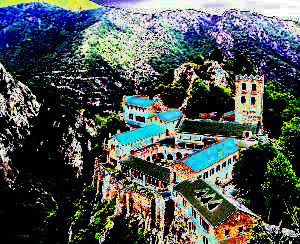
A definition proposed by the eminent scholars Martin Marty and R. Scott Appleby
: “[Fundamentalisms] are embattled forms of spirituality, which have emerged as a response to a perceived crisis. They are engaged in a conflict with enemies whose secularist policies and beliefs seem inimical to religion itself”
Share this:

War is not declared
The shadows on our world converge just here.
Violent death has spread from battlegrounds
So all of us must live unnerved by fear
War is not declared, the process veered
Off the page and into minds unsound
The shadows on our world converge just here.
More people die from flu than bombs of spears
Why must humans honour death profound?
Most of us shall live unnerved by fear
The boundaries collapsed like cardboard tiers
The safety of the home has quite unwound
So all of us must live unnerved by fear.
We too inhabit worlds unlike those near.
Civil life now’s buried underground
Folk in their private bubble , phone to ear
Both inside and without the echoes sing
To try to measure what is most profound
The shadows on our world emerge right here.
Where our rulers help us live in instant fear
Share this:
Don’t call your child this…Patta Wolf.

Broad V.Howle
Parfery Coarse.
Emma Cockney.
Wolf Gange
Aceda Trump
Ibeate U Their..
Crimp Leanne Dress.
Ray Onne U.
Connie Servation
Conne Serva Tived
Sue Pearl A Teeve
Hugh Dare
Pat Mee.
Jane Grey.
Anne Onion.
Peter Wolf
Patta Wolf.
Simon Schnapps
Kate Mates.
Christ I.S. Mee.
Jesus Agen Dada
Jamie Poor-Rile
Inne Virtual Coma
Ina Total Coma
Conned And- Cuffed
Ina Town-Centre
Sinne Agog.
Mayne Street.
Waye Off
Pay Mee.
I McAllure.
Dale Wool.
Dark Hoarse
I McRubbish.
Ilova Hugh-Too.
Payne Agen
Black Smith.
Pale Stiff.
Dead Rite.
God Dess Forbidde
Kurt Ian Rails.
Watt Next
I.A- Next.
Rail Yard
Amme Nestie
Sweet Simple.
Accident Emergent.
Rhythm Methods.
Buster Sheath.
Watt Pill.
Torture Torture Torture Torture Death
Contra Sceptic
I Am Calme
Ann Accident
Hugh A.Genn?
Ear Music
Share this:

And people looked like watercolour flies
The morning sun still low in winter sky
Made brilliant light with darker shadows thrown.
And people looked like watercolour flies
As , nonchalant ,through the shopping mall they roamed.
So here we see in colours black and white
We do not see the usual shades and hues.
And so inside our mind, a too great light
May prejudice our judgement and our views.
We learn to understand by metaphors.
As did our unthought ancestors before.
Jesus was our Shepherd and neighbour
We were sheep not wolves with slavering jaws
What we see depends upon the light.
And , where we stand and when , invites the sight
And , where we stand and when , invites the sight
Share this:
Vengeance

I’ve been reading and thinking about revenge, retaliation and hate.And forgiveness.
If we ruminate over past harm done to us ,we never recover let alone forgive.
So the Christian Liturgy on Good Friday [now altered to be less offensive by the Pope.A little late in the day] by constantly reminding us of the allegation that the Jews were responsible for Jesus’s death means we’ve been ruminating for 2,000years on this.And Christians wrote the gospels. a good few years after the events..the true story may be different.
Inany case we were taught it was God’s will that Jesus should die
But should we not in any case forgive?
After all, the Jewish religiongave uss Jesus too.Should we not thank them for this?
Should we not have gratitude?
Should we wonder at a God who needs his son to die anyway [it’s a fertility ritual I believe in ancient times?]And now we hate foreigners and no doubt all Jews except Jesus,Mary, and a few others.Yes, when you mock Jews you mock him.He died as a practising Jew.
Share this:

Study Christ
Christians on Good Friday study Christ
The sadomasochistic details emphasised.
They fact that he was Jewish, the surprise.
About the Jews, they’re killed again by lies.
Their own religion often we deride.
Christians on Good Friday murder twice.
Not to worry, in three days he’ll rise.
The Jews will suffer as the long years slide
The fact that he was Jewish, the surprise.
What is in their minds, what’s their surmise?
Vengeance is the province of the Lord
The Stations of the Cross opened my eyes.
So I see, two thousand years have flown
I see the cherubim with their great swords
The fact that our God’s Jewish, the surprise.
With me, no gentle Joshua does abide.
We’ve all been taken for a lengthy ride.
Christians on Good Friday wound their Christ
They fact that he’s half Jewish, oh, surprise!
Share this:
I guess they like to play Afghanistan.
They say they dropped the biggest ever bomb
Just what we’d expect from Satan’s tool.
Remember Hiroshima in Japan?
I guess they like to play Afghanistan.
Power not love is usually the rule
They say they dropped a huge non-nuclear bomb
If bombs exist they’ll use them where they can.
It’s hard to tell a wise man from a fool
Remember Hiroshima in Japan?
I guess Jack Horner loved his ripe red plum.
They learned no ethics in his Christian school
They say they put a rocket with his bomb
What advisers gave the man aplomb?
He orders while he eats dessert, so cool
Remember Nagasaki in Japan?
It’s not a film, we can’t rewind the spool.
Men watch it while their lips contort and drool
They say they dropped the biggest ever bomb
They forgot Hiroshimans tortures in Japan
Share this:
Easter time


Share this:

Our world’s a film.
Seen from high above, our world’s a film.
Flung into the sky by speeding car,
I have seen this from another realm
From slow ride on my bike, to overwhelm
No fear, anxiety, no wound nor scar
Seen from high above, our world’s a film
There I saw the screen and human skills
As the handle turned I saw no charts.
I saw human life is just one realm
Unknowingly, we live within the schism
This life’s not real, immersion goes too far.
Seen from high above, you’re in a film.
You may do it, do you have the will?
We live in two dimensions, by and large
I saw human life from other realms
When I landed on my head, I saw great stars
Beware, beware, Americans in cars.
Seen from high above, our world’s a film
I have seen so much of other realms.
Share this:
Five authors who began writing in mid-life
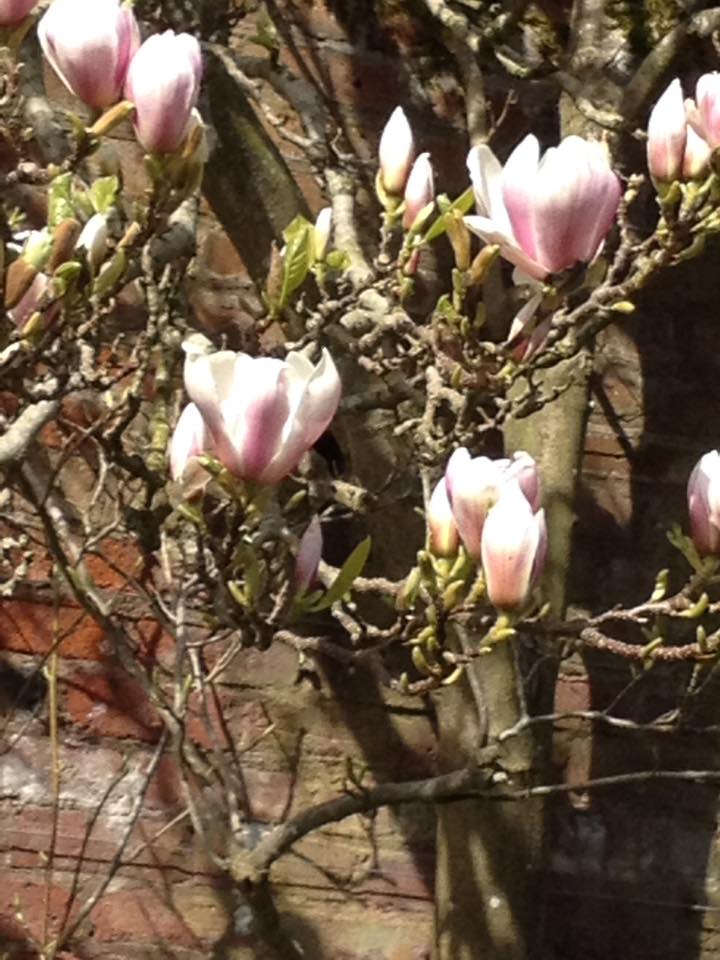

Never too late

http://www.writersdigest.com/online-editor/its-never-too-late-on-becoming-a-writer-at-50
“The flint was struck, and after a 35-year hiatus in my writing, I was back in, flaring with hope and plans. I began a regular submission practice, shooting high and, to my enduring surprise, sometimes hitting the mark. The year I actually turned 50, one of my notebooks became Dark Card and won the 2007 Robert Philips Poetry Chapbook Prize. The poems written for my mother went into Mom’s Canoe and won the Phillips Prize again the next year. I enrolled in Warren Wilson’s low residency program, graduating in 2010 with an MFA in poetry and a thesis (All That Gorgeous Pitiless Song) that won the Many Mountains Moving Book prize. A collection of environmental poems written in collaboration with my friend and artist Lorna Stevens morphed out of its three-ring binder into God, Seed: Poetry & Art about the Natural World and received a Foreword Book of the Year Award in 2010.
My poems are widely published now, and I am making inroads with book reviews, essays and short fiction. 2014 was a watershed year, beginning in January with a residency at Vermont Studio Center, followed by the summer as the Dartmouth Poet in Residence at the Frost Place, then by an October residency at MacDowell. An essay called “Venn Diagrams” won the 2014 Constance Rooke Award for Creative Nonfiction, and two poems were featured on Poetry Daily. Shortly after coming home from MacDowell (and just before the Giants won the World Series—what a great week) I was notified that my book-length sequence of Sonnets, Paradise Drive, had won the Press 53 Award for Poetry and would be published in April 2015.
Which brings me to one last story. The book I remember best from grad school, assigned to me by Heather McHugh, is The Whole Truth by James Cummins. It’s a brilliant collection of wickedly funny sestinas populated with characters from the Perry Mason series along with a few Iowa workshop types and one hilarious jive-talking, joint-sucking housefly. I admired Cummins’s finesse and apparent ease with a challenging form. But I also marvelled his conjuring of character, dialogue, and plot; the book was alive, making me laugh till my sides hurt and then after the knife was slipped in, making me ache. In his blending of high with low style and comedy with tragedy, Cummins seemed like a modern Shakespeare. I wrote three annotations on The Whole Truth and bought copies for my friends. And it was shortly after reading it that I wrote, in one heady insomniac rush, more than 30 linked sonnets that are the core of Paradise Drive. That was in 2008. Fast forward to the summer of 2011 to a summer workshop with Molly Peacock. The subject of sestinas came up, and I mentioned this wonderful book I’d loved so much. “Jim’s my friend!” Molly said. I had all Mr. Cummins’s books by then and wanted to get them signed, so Molly gave me his contact information.”
Share this:

The mob’s more evil than a human lone
Like a mother, God removed our reins
We are old enough to walk alone
We paid him back by abuse of his name.
We said he is not real and can’t remain
We never wonder who cast the first stone
Like a mother, God removed our reins
He laughs to see we think he is to blame.
Sometimes humour gets too near the bone
We pay him back, erase his sacred name
Sin turns into worse, to heinous crimes.
The mob’s more evil than a human lone
Like a teacher, God removed our reins.
Every age, we say’s the worst of times.
To cope, we turn to marble or to stone
We pay him back, unname his secret name.
We hold our hands out ,bloody and forlorn.
Our eyes look down ;our heart with sorrow’s torn
Like a parent, God removed our reins
Now he’s gone and nothing has a name.
Share this:
See, their script does make apparent sense.
They’re putting on a play about a war
Who’s the villain, who the victim weak?
But no-one knows what their new war is for.
The actors stumble, quicken into role.
The rulers, empty men who have no core.
They change their minds like dancers on hot coals.
There has to be an enemy, no doubt
So many choices, who can keep the score?
The saviour seems more like a childish lout
When they decide who’s for and who’s against
Then we’ll see the bombs, oh watch, oh joy!
See, their script does make apparent sense.
Yet other States were in the list of choice
The rulers move like fiddlers, secret whores.
The commoners prefer to have no voice.
With changes swift, the lack of heart, the hour
They gave us moments to get out the door.
They’re putting on a play about a war
It seems so real, it is, the Word’s on fire.
Share this:
Thy second most favoured thing to do, is a-doin’ nowt
Summer is a-comin’ in but I’s a-goin’ out.
The sun’s a-come, my work’s a-done and now I want my stout
The wind a-blows,t he leaves a’wave, what is it all about?
The kitchen tiles a-droppin’ off,I think wa need some grout.
The rain a-drops the flowers a-bloom, so why does I a-doubt?
If God made me,He made thee too,and th’art a lazy lout.
Thy second most favoured thing to do,is a-doin’ nowt
Summer is a comin’ in but I’s still goin#’out
Share this:
Fuzzy logic and Stan’s Xmas cake

Mary had made a Christmas cake with marzipan but no white sugar icing.Stan was diabetic so she had opted for a middle way.Like some Zen Buddhists.You don’t either cut it completely nor have a 6-inch layer of icing.No, you find a middle way.Like 5 inches of icing!
Mary like almonds so she went for marzipan with her home ground almonds and some sugar.The raw egg part was worrying but so far nobody had died after eating her cake.Still if you are dying, enjoy the cake while you can!
Annie arrived for a cup of coffee.
Wow, that cake is large.You will get fat if you eat it
I am not planning to eat it all myself, Mary said merrily.
In fact, if I could find a way of cutting an infinitesimally small piece I could have one every day forever.
Would the cake not shrink ?asked Annie with a puzzled smile
No, because a real number times an infinitesimal is itself infinitesimal Mary answered.
So it must be zero, Annie decided.
No, said Mary.All of the calculus is based on the idea that they are not zero.Then, at the end, we pretend they are zero and cross them out.It’s like magic or sleight of hand
I thought maths was logic, Annie said in an angry voice, tossing her purple hair over her shoulder.Alas it was a wig so it fell off and Emile the littl cat, bit it!
Gosh, Annie why are you wearing a wig? Mary asked.
I am involved with a Jewish man so he won’t make love unless I wear a wig.
Surely if he is Orthodox he should not sleep with you unless you get married.
We can’t get married, Annie said boldly.
Why not?
He is already married….Annie muttered
Well, that seems wrong.
What, being married?
No having an affair.I know Stan is old.Can’t you find a single man?
Women can’t go running after men.Men enjoy the chase.They despise women who run after them.
Well, can’t you ask them if they are married?
No, it seems too cheeky, Annie smiled.Anyway, in fuzzy logic you are not either married or single.You are married to the extent of some decimal number in between 0 and 1
Some folk are 0.999 married and some are 0.34 married.Others 0.1
But who measures it? God ? It’s not much use.
You have to guess, said Annie.I like Jewish men
How many do you know, Mary asked.
Three, said Annie triumphantly.
You can’t generalise from three, Mary said.
If I test a larger sample I shall never get to find one till I am 99, Annie wept.
Think of the fun, though, Mary said teasingly.And you’d have to travel a lot as many live in the USA, France and other places including Israel.How do you fancy Bibi Netanyahu?He is married actually!
Annie was silent, then burst out: life is not science nor technology.It’s an art like watercolour painting.Why do you call him Bibi? Do you know him?
Not biblically, Mary said humorously.I’ve never even met him.He’s just been in the News because of Trumpelstiltschein
Does Bibi know Donald is half German?
No, but the Queen is too.
Where does that take us logically?
Off to Boots to buy some expensive makeup and then to have a manicure and tea in a cafe
If only politicians did this life would be much easier and kinder.
And so say all of us!
Share this:

Poetic terms and metaphors

http://www2.poemofquotes.com/articles/poetry_technique.php
Extract:
Similes
As for similes, they are an expression that compares one thing to another. A paradigm of this would be ‘The milk tasted like pickles.’ This method is used in all forms of poetry and generally has the words ‘like’ or ‘as.’ It may be used to help your readers better identify with characteristics of objects or circumstances. John Donne’s “For Whom the Bell Tolls”.
Metaphor
A metaphor is a word or phrase used one way to mean another. Metaphors are sometimes hard to spot and take some thinking to figure out, but they give writers more power to express their thoughts about a certain situation. One famous case where a metaphor is used is within ‘The Raven’ by Edgar Allen Poe. In fact, not only is it found within the story, the story itself is a metaphor of memory and the constant reminder of the narrator’s loss.
These techniques are seen throughout history within both famous and amateur poems alike. To have a full grasp of poetry onomatopoeia, alliteration, assonance, rhyming, simile and metaphor should be words you know and use. Nonetheless, these aren’t something which need to be used in your writing. Write what you love and write often.
Other styles and techniques commonly used are: dada, no capitalization, lack of punctuation, misspelling of words, use of slang, as well as many others. The number is endless.
To view a more comprehensive definition list, g
Read more about How to Use Poetry Techniques and Styles by www2.poemofquotes.com
Share this:

Smiling the beautiful smile,
By the still green hedge.
I saw the lake and your reflection
And my reflection.;
and did the sparrows see
as the sun shone slant side
over the steeply falling bank?
Did they see this natural mirror?
And my mind’s mirror
gave me new reflections
in the reverie
Of the dreaming evening,
As I slid slowly down
Into soft slumber;
Trusting the life within,
Trusting you;
Trusting myself;
and in my reflections
I see you too,
smiling in welcome;
smiling the beautiful smile,
t he true smile of love itself.
The embrace of the dreaming world
comforts
and holds us
as we breathe gently
in the sweet air
of love.
Share this:
What is on those panty liners,cream?
A U S doctor booked a seat on an Airline
He was brown, from Vietnam, it seems
He was dragged off as if to be there was a crime
Last week a lady with her panties lined
Was interfered with, hand in glove of green
She’d daftly bought a seat on an Airline
The US News is like a pantomime.
I can’t imagine how theses scenes would seem
Dragged off, their mere existence deemed crime
So bloody vulvas are a suspect prime
How about a leaky bladder, scream?
Don’t think you’ve got rights with any big Airline
If you find fresh blood on the seats of planes
It’s ladies who can’t wear protection, seems
And it’s the guards themselves who commit the hateful crime
Is life a lunatic mad dream
Where holy Jesu’s invisible unseen
A doctor bought a seat on an Airline
He was dragged as if his life itself were crime
Share this:
Everyone’s a victim nowadays

Everyone’s a victim nowadays
Children, women, men and cats and dogs
That’s the message, everybody knows
Too fat, too thin, too brilliant to be praised
Don’t ask me for I have lost a cog?
Everyone’s a victim nowadays
In bed naked with a man I lie.
I’m using him as pain relief, my drug
That’s the message, everybody preys.
Kick the ass and give the cat no praise
The RSPCA will get you quickly tagged
Everything’s a victim nowadays
You steal my money, spit on my new shoes
You invade me ; you’re a victim of my bag!
That’s the message, everybody knows
Were we braver once when no-one said, oh, but?
Children raced through parks in mud-stained clogs
Everyone’s a victim seems today
That’s the message, everybody says.
Share this:

Truth via Fiction

http://www.latimes.com/local/obituaries/la-122804sontag_archives-story.html
This is an essay by Susan Sontag published after she died.I think it is very good
“Almost everything in our debauched culture invites us to simplify reality, to despise wisdom. There is a great deal of wisdom in the precious inheritance of literature which can continue to nourish us, which makes an indispensable contribution to our humanity by articulating a complex view of the human heart and the contradictions inherent in living in literature and in history.
Literature is a form of responsibility—to literature itself and to society. By literature, I mean literature in the normative sense, the sense in which literature incarnates and defends high standards. By society, I mean society in the normative sense too, which suggests that a great writer of fiction, by writing truthfully about the society in which she or he lives, cannot help but evoke (if only by their absence) the better standards of justice and of truthfulness which we have the right (some would say the duty) to militate for in the necessarily imperfect societies in which we live.
Obviously, I think of the writer of novels and stories and plays as a moral agent. In my view, a fiction writer whose adherence is to literature is, necessarily, someone who thinks about moral problems: about what is just and unjust, what is better or worse, what is repulsive and admirable, what is lamentable and what inspires joy and approbation. This doesn’t entail moralizing in any direct or crude sense.
Serious fiction writers think about moral problems practically. They tell stories. They narrate. They evoke our common humanity in narratives with which we can identify, even though the lives may be remote from our own. They stimulate our imagination. The stories they tell enlarge and complicate—and, therefore, improve—our sympathies. They educate our capacity for moral judgment.
When I say the fiction writer narrates, I mean that the story has a shape: a beginning, a middle (properly called a development) and an end or resolution. Every writer of fiction wants to tell many stories, but we know that we can’t tell all the stories—certainly not simultaneously. We know we must pick one story, well, one central story: We have to be selective. The art of the writer is to find as much as one can in that story, in that sequence, in that time (the timeline of the story, in that space, the concrete geography of the story).
“There are so many stories to tell,” muses the alter ego voice in the monologue that opens my novel, “In America.” “There are so many stories to tell, it’s hard to say why it’s one rather than another, it must be because with this story you feel you can tell many stories, that there will be a necessity in it…. It has to be something like falling in love. Who ever explains why you chose this story hasn’t explained much. A story, I mean a long story, a novel, is like an around-the-world-in-eighty days: you can barely recall the beginning when it comes to an end….”
To tell a story is to say: This is the important story. It is to reduce the spread and simultaneity of everything to something linear, a path.
To be a moral human being is to pay, be obliged to pay, certain kinds of attention.
When we make moral judgments, we are not just saying that this is better than that. Even more fundamentally, we are saying that this is more important than that. It is to order the overwhelming spread and simultaneity of everything, at the price of ignoring or turning our backs on most of what is happening in the world.
The nature of moral judgments depends on our capacity for paying attention—a capacity that, inevitably, has its limits, but whose limits can be stretched.
But perhaps the beginning of wisdom, and humility, is to bow one’s head before the thought, the devastating thought, of the simultaneity of everything and the incapacity of our moral understanding—which is also the understanding of the novelist—to take this in.
Perhaps this is an awareness that comes more easily to lyric poets, who don’t fully believe in storytelling. The incomparable early 20th century Portuguese poet and prose writer, Fernando Pessoa, wrote in his prose summum, “The Book of Disquiet”:
“I’ve discovered that I’m always attentive to, and always thinking about two things at the same time. I suppose everyone is a bit like that…. In my case the two realities that hold my attention are equally vivid. This is what constitutes my originality. This, perhaps, is what constitutes my tragedy, and what makes it comic.”
Yes, everyone is a bit like that, but the awareness of the doubleness of thinking is an uncomfortable position, very uncomfortable if held for long. It seems normal for people to reduce the complexity of what they are feeling and thinking and to close down the awareness of what lies outside their immediate experience.
Is this refusal of an extended awareness, which takes in more than is happening right now, right here, not at the heart of our ever-confused awareness of human evil and of the immense capacity of human beings to commit evil? Because there are, incontestably, zones of experience that are not distressing, which give joy, it remains a puzzle that there is so much misery and wickedness. A great deal of narrative, and the speculation that tries to free itself from narrative and become purely abstract, inquires: Why does evil exist? Why do people betray and kill one another? Why do the innocent suffer?
But perhaps the problem ought to be rephrased: Why is evil not everywhere? More precisely, why is it somewhere but not everywhere? And what are we to do when it doesn’t befall us? When the pain that is endured is the pain of others?
Hearing the news of the earthquake that leveled Lisbon on Nov. 1, 1755, and (if historians are to be believed) took with it a whole society’s optimism (but, obviously, I don’t believe that societies have only one basic attitude), the great Voltaire was struck by our inveterate inability to take in what happened elsewhere. “Lisbon lies in ruins,” Voltaire wrote, “and here in Paris we dance.”
One might suppose that today, in the age of genocide, people would not find it either paradoxical or surprising that one can be so indifferent to what is happening simultaneously elsewhere. Is it not part of the fundamental structure of experience that “now” refers to both “here” and “there”? And yet, I venture to assert, we are just as capable of being surprised by, and frustrated by the inadequacy of our response to, the simultaneity of wildly contrasting human fates as was Voltaire two and a half centuries ago. Perhaps it is our perennial fate to be surprised by the simultaneity of events, by the sheer extension of the world in time and space. That we are here, prosperous, safe, unlikely to go to bed hungry or be blown to pieces this evening, while elsewhere in the world, right now in Grozny, in Najaf, in the Sudan, in the Congo, in Gaza, in the favelas of Rio….
To be a traveler—and novelists are often travelers—is to be constantly reminded of the simultaneity of what is going on in the world, your world and the very different world you have visited and from which you have returned home.
It is a beginning of a response to this painful awareness to say: it’s a question of sympathy, of the limits of the imagination. You can also say that it’s not “natural” to keep remembering that the world is so extended. That while this is happening, that is also happening.
True.
But that, I would respond, is why we need fiction: to stretch our world.
Copyright © 2017, Los Angeles Times
Share this:

A different kind of truth is in poetry

Photo by Mike Flemming 2017
| Arthur Quiller-Couch, ed. 1919. The Oxford Book of English Verse: 1250–1900. |
| George Herbert. 1593–1632 |
| . Love by George Herbert |
Share this:

How do they measure it?
“Sexual orgasm relieves pain about the same amount as a dose of morphine”How do they measure it?
Sex as good as morphine… but not so good in hospital here in the UK.I doubt if the staff can get into bed with anyone!
I read that in a book about pain relief… but if you are in severe pain do you feel able to have sex?And even if you do, who are you meant to have it with?Is it a prescription
This entitles the bearer to ten orgasms a week signed The doctor.
The book did not say if morphine is as good as sex, but I once had some mixture called chalk and opium for gut trouble and it certainly changed the world for a while.It’s illegal now of course unlike sex… is there a message?


