The old phone: Mary hears a shriek

donald-winnicott

Western fashion


Mary heard a  very strange sound as she came down the polished stairs of her bijou  detached home with its soft  blue  cosy furniture and deep  navy blue  thick pile wool  carpets.It was a loud two part shriek that was intermittent and so more irritating to a delicate lady’s ear
I wonder if that’s the new answering machine, she thought  to herself as she went to put the kettle on to make a few pints of tea.She heard it again,but it was not continuous
Well, it’s not the carbon monoxide detector either,she told Emile who was eating a sardine.Then she remembered hearing it before.
It’s the old phone handset with a flat battery,she murmured as she suddenly began to  wash her hair in the kitchen sink with some Persil Silk and Wool detergent.
Annie came to the door
What’s that strangely disturbing  beep ?she cried.And why are you washing your hair here,not in the bathroom?
See if you can spot the phone.I can’t find it,Mary told her.I wash my hair sometimes just to clear my brain besides my hair is so limp it needs it especially when we get a truly hot summer
Well,why not keep some shampoo here or that new wash and condition in one  bottle Oh,gosh,I have found the phone.It was  in the waste paper basket!But you can’t put it in the  ordinary rubbish bin,can you?
Well I could but it’s illegal.I will have to pay £20 for a cab to the recycling centre,Mary said philosophically.
I’d better not leave it “by accident” on a bench  in the Mall given the current climate of fear and Brexit hatred
Well if we remove the batteries it won’t shriek anymore,Annie told her kindly.
How is the new phone doing .Is it good? she rambled on  guilelessly
OK.It has a special button  on the front so you can block someone after you have picked it up.There is some much fear now about WITHELD NUMBERS.At one time we only knew after we picked it up.If I use my phablet my sister hates it..Mary disclosed.She refused to have more than 2 numbers for me so it comes up as UNKNOWN
What is a phablet? Annie enquired sardonically,her little soft  eyes crinkling with laughter which showed off  her turquoise and orange  eye shadow which is actually    made from  pastel sticks from her art box!
It’s just a small tablet but you can make phone calls with it.An if it gets lost you can phobe it!!
I didn’t know you had one of those!
Neither did Stan,Mary said with a touch of sadness.I only wish we could phone heaven from earth.
Wow,said Annie.Maybe it would spoil
How true, her friend responded
.Let’s hope they have some attitude that   makes them  have a different point of view from us. Now,I’ll dry my hair and you can tell me why you came.
Oh,dear,said Annie.Let me drink some tea.I can’t remember except that  your wisteria has climbed up my rowan tree.
Was it shopping? Was it Dave?Let’s ring 999 and see what he has to say.
We’re all gay here,no fuss
We’ll all go play with puss,Emile!!

For sale

Archimedes’ pocket calculator in working order
Cleopatra’s nightie [washed and ironed]
Aristotle’s chair with footstool and TV remote
Abraham’s bra [unworn]
Isaac’s laughter [  CD]
My kindle book on   spelling
Euclid’s ruler [plastic]
Zeno’s hair [combed]
Ten  live Greek tortoises with name tags.
Book of Numbers [ In Hebrew]
My poetry  course [ Teach yourself]


Spelling – Poem by Margaret Atwood

My daughter plays on the floor

with plastic letters,
red, blue & hard yellow,
learning how to spell,
spelling,
how to make spells.

I wonder how many women
denied themselves daughters,
closed themselves in rooms,
drew the curtains
so they could mainline words.

A child is not a poem,
a poem is not a child.
there is no either/or.
However.

I return to the story
of the woman caught in the war
& in labour, her thighs tied
together by the enemy
so she could not give birth.

Ancestress: the burning witch,
her mouth covered by leather
to strangle words.

A word after a word
after a word is power.

At the point where language falls away
from the hot bones, at the point
where the rock breaks open and darkness
flows out of it like blood, at
the melting point of granite
when the bones know
they are hollow & the word
splits & doubles & speaks
the truth & the body
itself becomes a mouth.

This is a metaphor.

How do you learn to spell?
Blood, sky & the sun,
your own name first,
your first naming, your first name,
your first word.

A sad child by Margaret Atwood

You’re sad because you’re sad.
It’s psychic. It’s the age. It’s chemical.
Go see a shrink or take a pill,
or hug your sadness like an eyeless doll
you need to sleep.

Well, all children are sad
but some get over it.
Count your blessings. Better than that,
buy a hat. Buy a coat or pet.
Take up dancing to forget.

Forget what?
Your sadness, your shadow,
whatever it was that was done to you
the day of the lawn party
when you came inside flushed with the sun,
your mouth sulky with sugar,
in your new dress with the ribbon
and the ice-cream smear,
and said to yourself in the bathroom,
I am not the favorite child.

My darling, when it comes
right down to it
and the light fails and the fog rolls in
and you’re trapped in your overturned body
under a blanket or burning car,

and the red flame is seeping out of you
and igniting the tarmac beside your head
or else the floor, or else the pillow,
none of us is;
or else we all are.

Unmistakable and real

In the beginning
Matthew Arnold’s Dover Beach
Not God’s word but ours.

Premonitions
Unmistakable and real
Enter into minds

Can we live without
Worshipping something other
Than denim and gold?

I suspect we can’t
Collective melancholy
Becomes paranoid.

Neither can we stop
Until the  nuclear fault
Brings hell to the earth.

Who thinks of heaven?
We seek to project our hate
Can we not hold it?

No-one wants to share
We don’t understand others
Are very like us.

Slowly

A happy  blackbird
Cheeps sweetly from the holly
The black cat sits by me.

A thrush came  here once
I had no camera then
So I just looked out.

A  little black cat
Sits near the house and watches
She looks nervous.

I boil the kettle
Put the coffee into  cups
We drink it slowly

We lie down

Into the darkness we descend
When the day has reached its end
Weary,happy,worn and still
We lie down at body’s will.

The darkness wraps us like a shroud
And in  our dreams  we sweetly browse
Till we pass the night and rise
To see the world with  naked eyes.

.

All shall be well

You must go out, they cry to me
Loneliness is bad for you
Be with one or  better two
Or better still, a mass will be.

You must go out,don’t stay within
You may  go mad and lose your mind
So mix with others of your kind
Ignore the quarrels and the din

Yet  hermits to the desert went
Though Julian’s cell was  in the Wall
She said God is a Mother to all
All shall be well,said mystic saint.


Feeling lonely  in a crowd
We miss the few who know our hearts
Yet one day soon we must restart
Isolation’s not allowed.

And we are animals it’s true
Some sleep together in a heap
Comforting whilst in deep sleep
Yet some prefer their privacy

Instead of staying in

Instead of staying in, I could go out;
But I am held back here  by stifling doubts,
The  heart is sad the sea is deep and dark
I wonder at the minds of those who shout
Is this true ,they must protest to  ease their hearts,
Instead of staying in.

Since the new millenium was here
The world’s been further racked by   violent fear
While in his pram the baby sleeps alone
Assuming carers are  still  watching  near.
Until  a madman throws a knife or bomb
Instead of staying in.

.

The sky is dark

The sky is dark and yet the air is sweet
The little blackbird   potters near my feet
For I have scattered crumbs  upon the flags
And feel the air still has its  July heat.
But  madmen rage and knife attacks deplete.
The sky is dark.

People who are uncertain of their acts
With words and gestures  make a fierce attack
Do they convince themselves  or convince me?
Our world is breaking up; we see the cracks.
The sky is dark


Rondel


http://www.shadowpoetry.com/resources/wip/rondel.html
Rondel
by Kevin N. Roberts

Our time has passed on swift and careless feet,  [A]
With sighs and smiles and songs both sad and sweet.
Our perfect hours have grown and gone so fast,
And these are things we never can repeat.
Though we might plead and pray that it would last,
Our time has passed.                                         [A]

Like shreds of mist entangled in a tree,
Like surf and sea foam on a foaming sea,
Like all good things we know can never last,
Too soon we’ll see the end of you and me.
Despite the days and realms that we amassed,
Our time has passed.


Rondel


http://www.shadowpoetry.com/resources/wip/rondel.html

Home Poetry Types Japanese Poetry Handbook Poetry Guide Resources Bookstore
Introduction   |   What Is Poetry?   |   Poetry Quotes   |   Traditional Poetry Forms   |   Invented Poetry Forms
Traditional Poetry Forms:
bullet   Acrostic
  bullet   Ballad
  bullet   Cinquain
  bullet   Clerihew
  bullet   Diamante
  bullet   Didactic
  bullet   Epic
  bullet   Epigram
  bullet   Epitaph
  bullet   Etheree
  bullet   Fable
  bullet   Free Verse
  bullet   Ghazal
  bullet   Haiku
  bullet   Katauta
  bullet   Kyrielle
  bullet   Kyrielle Sonnet
  bullet   Lanturne
  bullet   Limerick
  bullet   Minute Poetry
  bullet   Monody
  bullet   Monorhyme
  bullet   Naani
  bullet   Nonet
  bullet   Ode
  bullet   Ottava Rima
  bullet   Palindrome
  bullet   Pantoum
  bullet   Quatern
  bullet   Quatrain
  bullet   Quinzaine
  bullet   Rispetto
  bullet   Rondeau
  bullet   Rondel
  bullet   Rondelet
  bullet   Sedoka
  bullet   Senryu
  bullet   Septolet
  bullet   Sestina
  bullet   Shape Poetry
  bullet   Song
  bullet   Sonnet
  bullet   Tanka
  bullet   Terza Rima
  bullet   Terzanelle
  bullet   Tetractys
  bullet   Tongue Twister
  bullet   Triolet
  bullet   Tyburn
  bullet   Villanelle
Rondel
A French form consisting of 13 lines: two quatrains and a quintet, rhyming as follows: ABba abAB abbaA. The capital letters are the refrains, or repeats.

Example:
A Rondel for Margarita 

On the carousel, on a summer's day,
As the rest of the fairground goes gliding by,
We coast together, now low, now high,
But how quickly the moment slips away.

She laughs at the music, elfin and fey,
She laughs for joy at the sapphire sky,
On the carousel, on a summer's day,
As the rest of the fairground goes gliding by.

How sweet her delight in simple play,
Someday, without me, she'll take to the sky,
Brave little fledgling, ready to fly.
We must hold these moments while we may
On the carousel, on a summer's day.

Copyright © 2004 Gail Kavanagh


A coincidence


I put a rondeau on Facebook and my sister commented:Great.. that was the crossword clue I couldn’t do today!She still had the newspaper on her lap.

A little black cat is sitting on the patio.She looks quite nervous but didn’t run off.

Why aye,lass

Aye,Morecambe Bay ,they crossed at times by horse
The boatman knew the tides and river’s course.
The shape of  Langdale Pikes   were seen ahead
And kept back  travellers’  fear of river bed,
There were quicksands,spirits and much worse-
Premonitions of a Chinese curse.

Yet as we stand and gaze who feels remorse?
Cockle pickers all sent here by force.
Not tortured except by what was never said
We  know such  silence  fills a soul with dread.
The death, the grief, the hearse
Ah lass, Morecambe Bay.

Across the sands lie Cartmel and Furness
Ships were built by men  with tenderness
Now all the  yards lie empty and quite dead
While Barrow’s streets  provide men with a bed,
The  streets were  children played affect  my breath.
Beautiful and  sad,oh, Morecambe Bay.
Oh Morecambe Bay betrayed,they caught their death

Stabilise me with tea

61F8ubLAOFL._SL1000_Doctor,doctor
What’s wrong?
My IQ keeps going up and down.
It must be low today
Why do you say that?
If you were wise you’d avoid the medical profession
Wisdom is not the same as Intelligence>
No,wisdom is a virtue.
But can you stabilise  mr
Where.. at the bottom?
Surely the top is better.
It depends on the weather

He that is down need fear no fall

I’d like to hide

I’d like to hide myself from human sight
In a  big oak wardrobe with a light
For as my skin is thinner than I like
Every word affects me like  a knife
I’ll come out in the evening for a bite
And look for poets whose words I wish to cite.

In our culture, individual rights
Have been used  so much in manners maladroit
I’d rather fish with Hughes and hope for  pike
Than socialise  as I’m too erudite
And thus I put humanity to flight
I’d like to hide.

Arguing    whether  Brexit was alright
Such matters do not fill me with delight
I hate to argue with a  demagogue  and break
Her temper which she’d hid for kindness’ sake
In my wardrobe I will go on strike
And starve myself  to make room for a bloke.
I’d like to hide


Scientific racism

He fell in love with the cat: a short sweet story

 I  am a cat

Scientific Racism


“Such theories, which often postulated a “master race”, usually “Nordic” and “Aryan”, were along with eugenics, pioneered by Sir Francis Galton (among others) and popularized at the turn of the 20th century, a main influence of the Nazi racial policies and their program of eugenics. Galton developed the science of Eugenics whose primary concept was “control” and promotion of quantification and analytical measurements of “desirable traits” so as to set a guide on how to obtain the “truly proper breeding”. [1] However, this was not necessarily a continuous relationship, as several influential authors of Nazism were not themselves anti-semitic.

Quite to the contrary, Arthur de Gobineau (1816–82), for example, was a philo-semite who placed the “Jewish race” above all. Thus, although his racial theories largely influenced Nazi ideologies, they had to adapt him to suit their mindset. Apart from Gobineau’s 1853 The Inequality of Human Races,[2] other scientific racist works that largely influenced Nazism include Francis Galton’s 1870 Hereditary Genius: An Inquiry into Its Laws and Consequences,[3] Madison Grant’s 1916/1924 The Passing of the Great Race[4] and Lothrop T. Stoddard’s 1920 The Rising Tide of Color Against White World Supremacy[5]”


Carolus Linnaeus (1707–78), a Swedish botanist, physician and zoologist, who laid the bases of binomial nomenclature (the method of naming species) and is known as the “father of modern taxonomy” (the science of describing, categorizing and naming organisms) was also a pioneer in defining the concept of “race” as applied to humans. Within Homo sapiens he proposed four taxa of a lower (unnamed) rank.

These categories are, Americanus, Asiaticus, Africanus, and Europeanus. They were based on place of origin at first, and later skin color. Each race had certain characteristics that were endemic to individuals belonging to it. Native Americans were reddish, stubborn, and angered easily. Africans were black, relaxed and negligent. Asians were yellow, avaricious, and easily distracted. Europeans were white, gentle, and inventive.[10

When we run

The path to take may seem a curious choice
For usually we run away from pain
But sages and deep wisdom with one voice
Tell us we must face it and remain.

For when we run, the action aids our fear
It grows with each long step   to giant size
But images are not what they  appear
As fantasy can be a dangerous lie.

If we stay and trembling shake and stare
The elephant may turn into an ant
And yet it seems for death we had prepared
Our narrow focus made of this a giant.

The paradox of wisdom isn’t clear
We trust the deep  while we outstare  ouir fear?

On quicksands

On quicksands we must  travel at  some speed
Pausing,  to the sucking sands we cede.
No rumination nor  excuse will save
Nor will our weeping stop the  steady waves
For  of our needs ,  stark nature takes no heed.

If on our journey should we pause to read
Or   peer   on phone to see where paths should lead?
No, we must walk as swiftly as is brave .
And this alone may give us what we need
On quicksands.

We’d best not stop despite our feet may bleed
As when a bull is charging we need speed
No special clothing nor appearance suave
Will distinguish  us from harlots or from knaves.
We’re at risk as in a storm a reed
Will break and God does not deceive.
On quicksands.


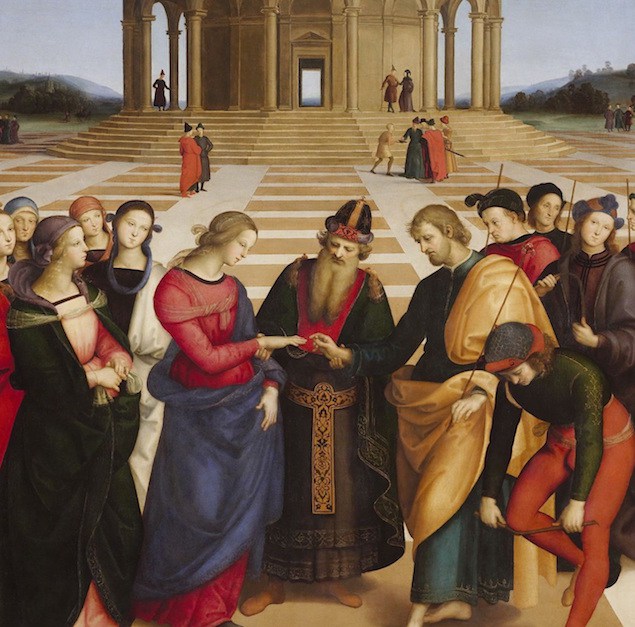
Politeness,the history.

Raffaello_-_Spozalizio_-_Web_Gallery_of_Art

From the article

“http://www.thebookoflife.org/politeness/


Paradoxically, the polite person who is pessimistic about their own nature, doesn’t in fact end up behaving horribly with anyone. So aware are they of their own dislikable sides, they nimbly minimise their impact upon the world. It is their extraordinary suspicion of themselves that helps them be – in everyday life – uncommonly friendly, trustworthy and kind.”


“”The Polite person also passionately cares about spreading kindness, love and goodness on a mass scale, but they are cautious about the chances of doing so on any realistic time horizon. Yet their belief that you perhaps can’t make things a lot better for a huge number of people in the coming decades makes them feel that it is still very much a worthy goal to try and make a modest, minor improvement in the lives of the few humans you do have direct contact with in the here and now. They may never be able to transform another person’s prospects entirely or rescue the species from its agonies, but they can smile and stop for five minutes to chat to a neighbour about the weather. Their modesty around what is possible makes them acutely sensitive to the worth of the little things that can be done before today is over.”


Rondeau

11257109-old-mosaic


https://www.poets.org/poetsorg/text/rondeau-poetic-form

“The rondeau’s form is not difficult to recognize: as it is known and practiced today, it is composed of fifteen lines, eight to ten syllables each, divided stanzaically into a quintet, a quatrain, and a sestet. Therentrement consists of the first few words or the entire first line of the first stanza, and it recurs as the last line of both the second and third stanzas. Two rhymes guide the music of the rondeau, whose rhyme scheme is as follows (R representing the refrain): aabba aabR aabbaR.”


“Where the rentrement appears in its traditional French form, it typically does not adhere to the rhyme-scheme–in the interest of maintaining the line’s buoyancy and force. But when nineteenth-century English poets adopted the rondeau, many saw (or heard) the rentrement as more effective if rhymed and therefore more assimilated into the rest of the poem. An example of a solemn rondeau is the Canadian army physician John McCrae’s 1915 wartime poem,”

“In Flanders Fields“:”


   In Flanders fields the poppies grow
Between the crosses, row on row,
That mark our place, and in the sky,
The larks, still bravely singing, fly,
Scarce heard amid the guns below.

We are the dead; short days ago
We lived, felt dawn, saw sunset glow,
Loved and were loved, and now we lie
In Flanders fields.

Take up our quarrel with the foe!
To you from failing hands we throw
The torch; be yours to hold it high!
If ye break faith with us who die
We shall not sleep, though poppies grow
In Flanders fields.

The challenge of writing a rondeau is finding an opening line worth repeating and choosing two rhyme sounds that offer enough word choices. Modern rondeaus are often playful; for example, “Rondel” by Frank O’Hara begins with this mysterious directive: “Door of America, mention my fear to the cigars,” which becomes the poem’s refrain.

read more rondeaus


In Memory of W. B. Yeats

W. H. Auden, 1907 – 1973


I

He disappeared in the dead of winter:
The brooks were frozen, the airports almost deserted,
And snow disfigured the public statues;
The mercury sank in the mouth of the dying day.
What instruments we have agree
The day of his death was a dark cold day.

Far from his illness
The wolves ran on through the evergreen forests,
The peasant river was untempted by the fashionable quays;
By mourning tongues
The death of the poet was kept from his poems.

But for him it was his last afternoon as himself,
An afternoon of nurses and rumours;
The provinces of his body revolted,
The squares of his mind were empty,
Silence invaded the suburbs,
The current of his feeling failed; he became his admirers.

Now he is scattered among a hundred cities
And wholly given over to unfamiliar affections,
To find his happiness in another kind of wood
And be punished under a foreign code of conscience.
The words of a dead man
Are modified in the guts of the living.

But in the importance and noise of to-morrow
When the brokers are roaring like beasts on the floor of the
Bourse,
And the poor have the sufferings to which they are fairly
accustomed,
And each in the cell of himself is almost convinced of his
freedom,
A few thousand will think of this day
As one thinks of a day when one did something slightly unusual.

What instruments we have agree
The day of his death was a dark cold day.


II

You were silly like us; your gift survived it all:
The parish of rich women, physical decay,
Yourself. Mad Ireland hurt you into poetry.
Now Ireland has her madness and her weather still,
For poetry makes nothing happen: it survives
In the valley of its making where executives
Would never want to tamper, flows on south
From ranches of isolation and the busy griefs,
Raw towns that we believe and die in; it survives,
A way of happening, a mouth.


III

Earth, receive an honoured guest:
William Yeats is laid to rest.
Let the Irish vessel lie
Emptied of its poetry.

In the nightmare of the dark
All the dogs of Europe bark,
And the living nations wait,
Each sequestered in its hate;

Intellectual disgrace
Stares from every human face,
And the seas of pity lie
Locked and frozen in each eye.

Follow, poet, follow right
To the bottom of the night,
With your unconstraining voice
Still persuade us to rejoice;

With the farming of a verse
Make a vineyard of the curse,
Sing of human unsuccess
In a rapture of distress;

In the deserts of the heart
Let the healing fountain start,
In the prison of his days
Teach the free man how to praise.

From Another Time by W. H. Auden, published by Random House.


The Tables Turned

Up! up! my Friend, and quit your books;
Or surely you’ll grow double:
Up! up! my Friend, and clear your looks;
Why all this toil and trouble?
The sun above the mountain’s head,
A freshening lustre mellow
Through all the long green fields has spread,
His first sweet evening yellow.
Books! ’tis a dull and endless strife:
Come, hear the woodland linnet,
How sweet his music! on my life,
There’s more of wisdom in it.
And hark! how blithe the throstle sings!
He, too, is no mean preacher:
Come forth into the light of things,
Let Nature be your teacher.
Photo0506
She has a world of ready wealth,
Our minds and hearts to bless—
Spontaneous wisdom breathed by health,
Truth breathed by cheerfulness.
IMG_0003 - Copy - Copy - Copy - Copy (2)
One impulse from a vernal wood
May teach you more of man,
Of moral evil and of good,
Than all the sages can.
Photo0510
Sweet is the lore which Nature brings;
Our meddling intellect
Mis-shapes the beauteous forms of things:—
We murder to dissect.
OLYMPUS DIGITAL CAMERA
Enough of Science and of Art;
Close up those barren leaves;
Come forth, and bring with you a heart
That watches and receives.

For sale


Nuneham_2016-4 [800x600]

1.Archimedes’ bath with hot and cold running water.
2.Eureka’s dressing gown size 118
3. A catapult plus free Brighton rock
4.15,000 English novels most by Nicholas Freeling and  other expatriates
5.Plato’s cave with aluminium age  drawings on the walls.
6.A cloud with golden lining
7.Rotating shoes will turn you towards the sun all day
8.!12 bottles of sunscreen  and a large black hat suitable for Hasidic Jew or English woman or Russian wolf.
9.Sheepskin rug covered in dried muesli free to  first arrival.
10.Ventriloquist’s mummy  in working order despite 40 years in a very small desert.

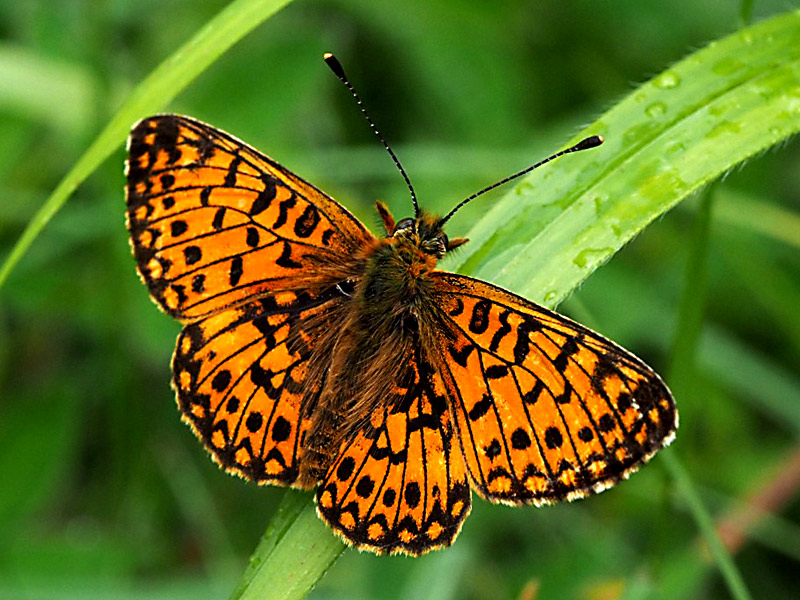
The butterflies

The flowers are opening though the sky is grey
The butterflies fulfil their inbuilt tasks
While seeming like sweet innocents at play

On hot  flagstones, the little cat will bask
Though one eyes is left open  to the world
With amber bright intelligence, it asks

And should a bird hop by, the cat uncurls
And leaps  so lithely from its seeming sleep;
Akin to acrobats of boys and girls.

To eat or to be eaten is our fate
Else  we  fall to dust inside our shroud.
And there are some who cannot bear to wait.

But do not  think we’re  blinded by these clouds
All things change when all things are allowed

Limericks now

A doctor must work hard today
No  time for reflection or play
Ironically this
Means  diagnosis  is missed
Doctors and patients each  pay.

Recall Archimedes’s bath
His creative ideas  found a path
Eureka, he  shouted
But she never doubted
His  genius for physics and maths.

Whatever job we have to do
Ideas need peace to come through
For in the deep mind
Our unconscious finds
The answer when the cat says mioaw.

Living with anxiety


6393348_e92238f4cb_shttp://motto.time.com/4269148/anxiety-disorder-brussels-attack-terrorism/

I think we often believe we should not  have bad  feelings like panic and anxiety  but it seems the best way  to cope is to accept them.If that is not possible we need to get help.But how do we know how much we can or should tolerate?We may complain but that about refugees in camps? How do they manage?Or people who lose a family member or friend in an accident which maybe they caused by poor driving?We are all different.