Help a friend who grieves

From Riemann to Schrodinger:Cats in Modern Physics and in the Unconscious Mind

http://www.huffingtonpost.com/megan-devine/death-and-dying

Anticipate, don’t ask.
Do not say “Call me if you need anything,” because your friend will not call. Not because they do not need, but because identifying a need, figuring out who might fill that need, and then making a phone call to ask is light years beyond their energy levels, capacity or interest. Instead, make concrete offers: “I will be there at 4 p.m. on Thursday to bring your recycling to the curb,” or “I will stop by each morning on my way to work and give the dog a quick walk.” Be reliable.

Write your own poem

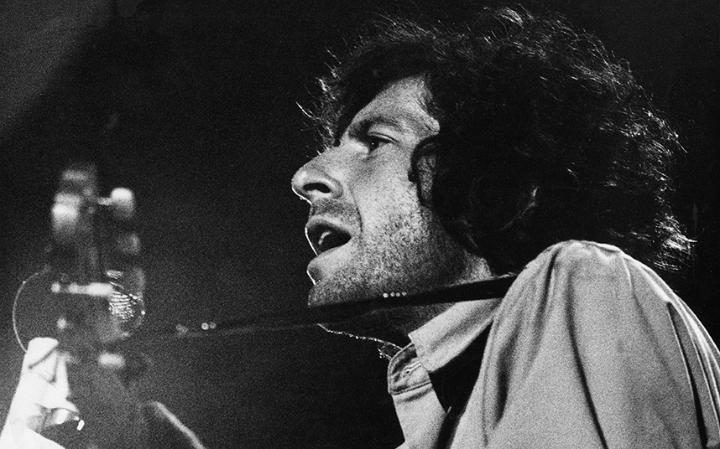
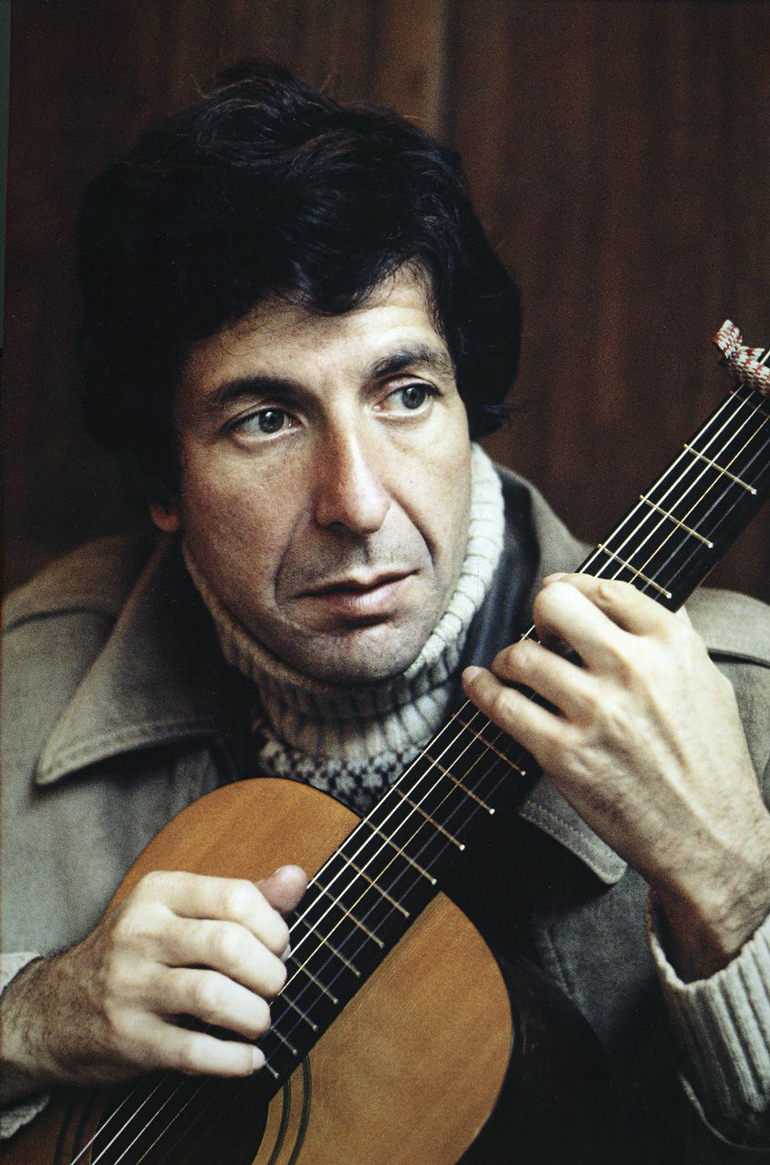
Leonard Cohen (1970's)
Leonard Cohen (1970’s)


https://www.poetryfoundation.org/resources/learning/articles/detail/69588


Practice of an art is more salutary than talk about it.
There is nothing more composing than composition.
—Robert Frost, from his notebooks[Poetry and Prose,
edited by Edward Connery Lathem and Lawrance Thompson
(Holt, 1972)]

Why you can and should write poetry

15135887_811237475682799_2117509265760364530_n.jpg

http://www.huffingtonpost.com/university-of-toronto-news/why-you-can-and-should-wr_b_4718395.html

Quote

What final advice would you give to someone thinking about taking up poetry?

Keep a notebook and pen on you at all times and pay attention — with all your senses — at all times. You can use a cell phone, tablet, iPad, anything to take notes. Don’t be afraid to jot notes down in transit, at a meeting or at the dinner table. Put inspiration first. And once you sit down to write, let yourself write, even if you fall on clichés. Don’t let your internal critic take over too soon. Another key is to write every day, even if just a little. This is how you nurture the emotional and intellectual breakthroughs, the aesthetic highs, which will serve as the foundation of your writing addiction.

— Don Campbell

Ozymandias by Shelley

  • I met a traveller from an antique land,
Who said—“Two vast and trunkless legs of stone
Stand in the desert. . . . Near them, on the sand,
Half sunk a shattered visage lies, whose frown,
And wrinkled lip, and sneer of cold command,
Tell that its sculptor well those passions read
Which yet survive, stamped on these lifeless things,
The hand that mocked them, and the heart that fed;
And on the pedestal, these words appear:
My name is Ozymandias, King of Kings;
Look on my Works, ye Mighty, and despair!
Nothing beside remains. Round the decay
Of that colossal Wreck, boundless and bare
The lone and level sands stretch far away.”

Anyway,how is your nose?

When I am down I like a little Bark.
What about my shoe,Bert?
I know it’s a stiletto , but murder doesn’t cure depression.
Nothing lasts…except the ten minutes before the doctor begins the 22 injections into your face.
You know I hate the way   they talk,You are going to smell the smell of human flesh burning.
It’s what we call schizoid.If they said, your own flesh burning then you’d be shouting,  and bawling.And they can’t handle that.They are only trying to help you
That’s what Hitler said to Freud
And what did Freud say?
i prefer a cigar,
I didn’t know you smoked
It’s  the new oven.
What’s the make?
Belsen,I think.
You sure?
Or Schwitz they said.
I think that’s disgusting.
Well you have to leave it all behind you.
it’s still bloody disgusting.
I agree,we are going all electric soon… starting with the chairs.
You are barking.
Or Digging ’em.
Don’t get the spade out,We’ve buried enough.
All you need is love……. it’s just this bloody hate that lurks about…..Oh,my God

Killed by the phone

16womens-well-writers-slide-1OB8-master675


http://www.salon.com/2013/11/02/smartphones_are_killing_us_and_destroying_public_life/


Quote:

Personal technology may be only a small part of McCullough’s interpretation of “peak distraction,” but for most people, the computer, tablet and phone are a focal point. What permanent connectivity does to our minds is the subject of great debate. What it does to public space is less often acknowledged. Essentially, smartphone users in public operate under the illusion that they are in private. They exist, in the words of two Israeli researchers, in “portable, private, personal territories.” Their memories of visited places are much worse than those of control subjects.

It takes a long time

  •  

    It takes a long time for a tree to die.
    Though its trunk be almost severed with the axe.
    There was plenty of sap above
    Then the leaves began to wither
    and fall though it was spring time…

    It takes a long time,to forget.
    Not to remember
    How to live.

    First the tree stops growing.
    It pauses,as if waiting for a message.
    Then,as I said, the leaves turn brown.
    It all takes time.Time to stop waiting

    The leaves drop,then the smaller branches shrivel.
    Humans also find that when ill, the hair may stop growing
    And the finger nails.
    We sacrifice the less important pieces of ourselves.
    Even the most.

    The small branches shrivel and dry out….
    Yet the tree still looks alive.
    Then gradually we notice it’s drying out;
    it’s branches are parched and soon the trunk dries too.
    It may split in places and insects make their home there.

    It takes a long time before the trunk dies.
    From the top down it dies.
    The sap is too limited in quantity
    To climb the trunk….
    So the sap stays near the ground.
    Eventually the whole tree seems dead
    Yet in the roots there is still subterranean life.

    The tree has died and is now brown and leaning a little sideways
    No longer magnificent in display.
    Time is all it needed
    After the sharp cut…
    And sometimes the roots are strong enough
    To begin to send up new shoots
    Another tree may grow..
    I have seen that.

    People ,of course ,die more quickly.
    We have no roots.
    And what of love,how does love die?
    Like a tree,like a tree,like a tree

As from the wind’s hook I was flung

The hook of the wind caught my jacket
And spun me around on  its rope
The look of the wind wasn’t happy
As I spun on that strange gyroscope.

The rain drenched my hair and my glasses
I could not see where I was flung
All I could see was the passing,
As from the wind’s hook I was flung

Then as I hung down from an oak tree
The sun made a brilliant return
So I could see how the birds see
Above  the  grey smoke I could learn

My jacket came loose , the wind whooshed it
Until I fell into a ditch
I think I may purchase a broomstick
And become  the new neighbourhood witch

My jacket still hangs in the oak tree
But my hat has  stayed glued to my head
The crows were delighted to see me
But I will not let birds share my bed

Lurkers and lurking on the net


461670392

leonard-cohen-1970s-large_transqvzuuqpflyliwib6ntmjwfsvwez_ven7c6bhu2jjnt8

Non lurkers here.Lurkers will not wear distinctive clothing.They want to  see but not to be seen

Showgazae

Lurkers are Like Dophins or Unicorns!


https://onlineeconomy.hbs.org/submission/confessions-of-an-internet-lurker/


http://blog.mersive.com/confessions-of-a-cto-lurker/

imagesnew-photos-feb-2013-008-22

Like coloured visions of the ocean bed

Thought, the vision of the inner eye,
Peers behind the mask of mundane view
A choosing of the best of what comes by
Not the monsters on the Daily News

Thought to me is vision without words;
Needs silent presentation  and review.
The words  translate the images  that surge
Then fall back to the ocean where they grew.

Like coloured visions of the  deep sea bed
Where fishes  reel and dance, where life is new.
What we  mean  with difficulty’s said
Yet evocation  summons  it to view.

Let my  words evoke my love  of you;
And answer me with many   kisses new.


The feel of thinking


Essay: The Feel of Thinking – Sarah Howe on lyric connections and incisions

Quote:

Can lyric think? I want to work towards this question of poetics by way of a related one in philosophy, whose crispest articulation I’ve yet found swims up in the course of a long, fragmentary lyric by Denise Riley: ‘It is called feeling but is its real name thought?’ This line from ‘A Shortened Set’ unpicks the traditional opposition between thought and feeling, which holds that immersion in one diminishes or even precludes the other. In terms of poetic history it’s a notion we might associate with the Romantics – recall Keats’s jibe at ‘consequitive reasoning’ – though they simply revived a still older view of reason and emotion as fundamentally at odds. As Riley the philosopher is aware, this internal division within the psyche was also traditionally a gendered distinction. Along with feeling, mental operations such as intuition and belief aren’t usually granted the status of thinking. Yet it’s these hinterlands of thought that have the most to tell us about contemporary poetry and its relationship to consciousness. I want to touch on two poets whose work offers us, in very different ways, a picture of thinking in action – what Wallace Stevens called ‘The poem of the act of the mind.’

Kind

When does pain become too  much to bear
Perhaps when love has gone as has  peace  fair
The joy of being wanted and of care
Distracts the mind from ruminations  bare.

As long as I can see with my one eye
And write despite the pain of  emptiness
I shall push away my  wavelike wish to die
For else I  cannot live whenmy  love’s lost.

By man or God,  when penetrated deep
By  one who in his arms  encircled me
The price of knowledge did not seem too steep
But when engrossed in love we scarcely see.

The measuring of worth seems  hard when  blind
The proper measure of a man is  kind

Definition of evoke in English:Oxford Dictionary

evoke

VERB

[WITH OBJECT]

  • 1Bring or recall (a feeling, memory, or image) to the conscious mind:

    ‘the sight evoked pleasant memories of his childhood’
    More example sentences
    Synonyms
    1. 1.1 Elicit (a response):
      ‘the Green Paper evoked critical reactions from various bodies’
      More example sentences
      Synonyms
  • 2Invoke (a spirit or deity):

    ‘Akasha is evoked in India when a house is being built to ensure its completion’
    More example sentences
    Synonyms

Origin

Early 17th century (in evoke): from Latin evocare, from e- (variant of ex-) out of, from + vocare to call.

leonard-cohen-1970s-large_transqvzuuqpflyliwib6ntmjwfsvwez_ven7c6bhu2jjnt8

Meaning of “evoke” in the English Dictionary

“evoke” in British English

 See all translations

evoke verb [ T ]

UK /ɪˈvəʊk/ US /ɪˈvoʊk/

evocation

noun [ C or U ] UK /ˌiː.vəˈkeɪ.ʃən/ US /ˌev.əˈkeɪ.ʃən/

We should be mourning

images

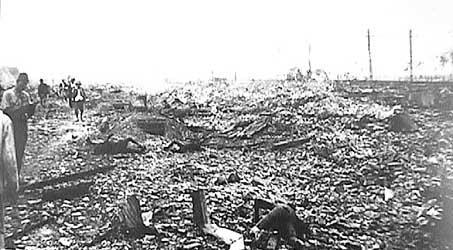
I have studied books about the  history of Germany ,The holocaust and what follows.One writer  asks if it even POSSIBLE  for the Jews to grieve the destruction of European Jewry ans the destruction of Yiddish as a common language.Inability to grieve leads to paranoia.
I am asking, is it  not the duty of  us in Europe to mourn  our loss too  and our destructiveness?For who needed WW1?Who began  it?Why? Was it neccessary?
I think not.
We lost also gypsies,disabled children,homosexuals and political   people who  attempted to change what was going on.
And why did Churchill bomb  innocent Dresden but not  the railway lines taking Jews and others to the Death Camps?
Why do we have no shame?

Just to get up each morning is to make a kind of peace.”

lc12.jpg

”It is painful to recall a past intensity, to estimate your distance from the Belsen heap, to make your peace with numbers. Just to get up each morning is to make a kind of peace.”

Leonard Cohen (b. 1934), Canadian singer, poet, novelist. “Lines from My Grandfather’s Journal,” The Spice-Box of Earth (1965).

What is poetry for?

http://www.worldliteraturetoday.org/2013/september/what-use-poetry-meena-alexander


Poetry takes as its purview what is deeply felt and is essentially unsayable; that is the paradox on which the poem necessarily turns.

3

Poetry takes as its purview what is deeply felt and is essentially unsayable; that is the paradox on which the poem necessarily turns. A poet uses language as a painter uses color, a primary material out of which to make art. But language that is used all the time and all around us—in sound bites, advertisements, political rhetoric, newsprint—needs to be rinsed free so that it can be used as the stuff of art.

The poem in its act of meaning-making turns away from the literal, its truth bound to what can be evoked. And evocation is sparked by memory. Abhinavagupta (ca. 950–1020 ce) realized this clearly. In his reflections, he writes of how poetry—far from dealing with the literal—reaches into what lies in memory, in memory fragments. It is in this way that rasa, the quick of aesthetic pleasure, is reached:

On the other hand rasa is something that one cannot dream of expressing by the literal sense. It does not fall within workday expression. It is rather of a form that must be tasted by an act of blissful relishing on the part of a delicate mind through the stimulation of previously deposited memory elements . . . beautiful because of their appeal to the heart. . . . The suggesting of such a sense is called rasadhvaniand is found to operate only in poetry. This in a strict sense is the soul of poetry. (Source: The Dhvanyāloka of Ānandavardhana with the Locana of Abhinavagupta, Harvard University Press, 1990)

4

While poetry is bound to the sensorium, to the sensual powers of bodily being, to memory that draws its power from feelings heightened by the senses, it is also bound to place. It is in place that we locate ourselves, mark ourselves in relation with others; it is in place that we survive. But what becomes of the past when place is torn away, when the sensorium is radically displaced, and when exile or dislocation marks out the limits of existence?

What is poetry and how is translation possible

leonard-cohen-cds-0086957596261_c7168d96a5


Write Tight

Quote:

Etymology doesn’t help—it only highlights that the apples and oranges here are how the thing is made and how it moves. Poetry is from the Greek poiein, “to make”: a poem is something made, or in English we would more naturally say crafted. Yet everyone agrees good prose is well crafted, too. Prose means, literally, “straightforward,” from the Latin prosa, proversus, “turned to face forward” (whereas verse is all wound up, twisty and snaky, “turned” in every direction except, apparently, forward). Yet we all know that poems can be clear and direct, too, especially when they’re songs.

Sidelining sonnets and quarantining quatrains in the poetry ghetto does produce a certain clarity. But of course it also creates problems when translating from languages that gerrymander poetry differently. In German, for example, writer is a word even more literal than the English “someone who writes”: it’s Schriftsteller, a put-down-on-paper-er (Schrift = “writing,” stellen = “to place, to put”). Autor is a word used a bit less often for pretty much the same thing, unlike in English, where there’s a difference: author expresses a professional and financial identity (there are no “unpublished authors,” unless maybe the manuscript is finished and the contract is signed), while a writer is someone pursuing an activity (published or not, paid or not, read or not).

And then there’s a Dichter, usually translated “poet” but meaning a creator of poetry in the grand sense. The verb dichten means “to write poetry, ” and a poem is a dichten-ed thing, a Gedicht, but dichten means more generally to write poetically and well. The good stuff. The writer as hero of the spirit. How do you say that in English? We don’t have heroes of the spirit.