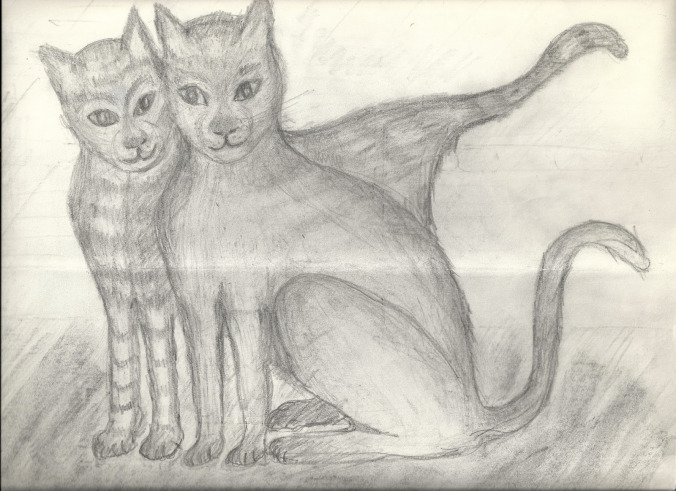
Cats are never restless nor much bored

I gave my cat a little  pointed hat
To make him seem  less serious than before
To help him  sit in joy  upon his mat

Tell me why does butter come in pats?
And why have polished handles on the floor?
I  lent my cat a little  silken hat

Wherever I go, there the cat is sat;
My tenses are amix  I do deplore
Yet I’ll  help  the grammar please you  on this  writ.

Would a  little cat vote Democrat?
Would liberty create the wish for more?
I  lent my cat a little   knitted hat

On the door I hear a ra ta tat!
From Amazon ,I’ve bought a breast of drawers
To help my puss   be tidy on his mat

Cats are never restless nor much bored
They pay no tax and often are adored
I gave my cat a little  cashmere hat
What would Father Christmas make of that?

What is free verse?

60892-004-53d4af1e-1

Free Verse

Example #2

Barely tolerated, living on the margin
In our technological society, we were always having to be rescued
On the brink of destruction, like heroines in Orlando Furioso
Before it was time to start all over again.
There would be thunder in the bushes, a rustling of coils,…….
The whole thing might not, in the end, be the only solution……..
Came plowing down the course, just to make sure everything was O.K.…
About how to receive this latest piece of information.

(Soonest Mended by John Ashbury)

This is one of the best examples of free verse poems. In this poem, there is no regular rhyme scheme and rhythm; it is without poetic constraints, but with a flow that gives it a natural touch.


Function of Free Verse

Free verse is commonly used in contemporary poetry. Some poets have taken this technique as a freedom from rhythm and rhyme because it changes the mind of people whimsically. Therefore, free verse is also called vers libre.

The best thing about free verse is that poets can imagine the forms of any sound through the intonations instead of meters. Free verse gives a greater freedom for choosing words and conveying their meanings to the audience. Since it depends upon patterned elements like sounds, phrases, sentences and words, it is free of artificiality of a typical poetic expression.

I have heard wild winds and I’ve heard calm

I have walked through tempests and through storms
I have seen the sun slide down the sky
I have heard wild winds  and I’ve heard calm

I have seen the sky when rainbows form
I have crunched through  leaves as down they lie
I have walked through tempests ,savage storms

I have watched the windblown leaves at dawn
I have seen black starlings whirling in the sky
I have heard wild winds  and I’ve known home


I have sketched the patterns nature’s drawn
I have pondered on   the ones called mine.
I have  fled through tempests and through storms

I have sauntered on  a fine green lawn
I have heard our politicians lie
I have  loved wild winds  and I’ve loved calm

I have watched the world from the storm’s eye
I have  seen  five thousand people cry
I have walked through tempests and through storms
I have  watched wild winds  and   wept forlorn

Adam Phillips interview extract


2012-01-22

http://bombmagazine.org/article/3623/adam-phillips

SP You talk about having a sense of reality and what an appropriate response to it may or may not be. I see video footage coming from around the world, attesting to the undeniable reality of suffering. More and more mediated suffering is available to us daily in our streams. It’s increasingly becoming part of a lived communication culture. Is this something you’re affected by?

AP Somewhere in his diaries, Franz Kafka says: “You can protect yourself from all the suffering in the world and that’s the one suffering you could have avoided.” That’s the point; there is all this suffering in the world and we know more and more about it. However, what it calls up in us to deal with, at its best, so to speak, is a kind of inured, detached horror. The sadomasochistic solution to this is to find it all incredibly exciting and gripping and to want more and more of it. That is a catastrophe created by a culture that makes suffering and exploitation bearable by making or cultivating a sadomasochistic pleasure.

What’s very difficult is to have a relatively un-evasive relationship to suffering. Were more people to have that, it might mobilize more realistic resources to deal with it. Suffering is intrinsic to life, but some suffering is avoidable. What seems to be pretty devastating is how much given suffering is absolutely there; how much suffering is actually created by us. It isn’t possible to create a world without suffering, but it is possible to make a world with less suffering. Instead, we are being invited to be excitedly horrified.

Gallimaufry

8342227_f520
Word of the Day : December 18, 2016

gallimaufry

play

noun gal-uh-MAW-free

Definition

: a heterogeneous mixture : jumble

Examples

The essay collection covers a gallimaufry of subjects, from stamp collecting to Portuguese cooking.

“Upon entering the gallery, one of the first things that catches my eye is a gallimaufry of vibrant, oversized collages.” — Rosalie Spear, The Las Vegas Weekly, 29 Mar. 2016

Cliches


Silence is golden but my eyes knew you
Silence unfolded while the North wind blew
There’s only a slip twixt cup and tip
Rolling cones shattered the glass.
Two zany cooks can oil my broth.
A herd in the sand is no way in a rush.
On Sundays we  scratch an itch and eat our toast thinner
We went to see a Winter’s sale.I played well.I am an extract
They went to sea with no clip
Ted Hughes was a grate poet.He worked from home.
Larkin was a Siberian and  poet in a Hull.
Seamus Heaney liked half rhymes,someti,
Stevie Smith  lived in Harmer’s Scene with her ants
I love,says Anne.
Pick ass? Oh
Mon haystack, my mon amour.
Gaw Gann  lived here.
Roll clay? In balls?
Surreal? I appeal.
How do you feel?

Service

  • 8342227_f520


    Order of Service

    Welcome to the funeral party.


    Ghosts please remain seated at all times.

    Hymn 1 :Smoke makes angels cry.Allelulya

    Hymn 2 Rabid with fleas, we drink wine and get tight

    Hymn 3. Now the carnival is over.

    Tribute by Doctor Woebegone. [15 minutes]

    Hymn 4 Holy Souls, in heaven with doves

    Hymn 5 Now is the hour when we must live or die

    Hymn 6 Love is the strangest thing.Love is the ideal fling

    Hymn 7 I wish all of you a fast goodbye.

    Hymen 8 We love smoking flies.Bravo.

    Hymn 9 Time to spray love bites.

    Hymn 1o This is the flower of all we lived and tried

    All donations disgracefully received

For my sake turn again to life and smile by Mary Lee Hall

If I should die and leave you here a while,
be not like others sore undone,
who keep long vigil by the silent dust.
For my sake turn again to life and smile,
nerving thy heart and trembling hand to do
something to comfort other hearts than thine.
Complete these dear unfinished tasks of mine
and I perchance may therein comfort you

She heard his crying

Palpitations
Made waves sing in his ears
Sea shells soft murmurs

This song so silent
Passed through walls and fences
She heard his crying

Outside the prison
She stood in her long rough coat
She trembled and shook

He felt her  presence there
Her vibrations moved him
That was how they danced

She knowed his bones.

She fauxfilled him with  finesse
She  knowed his bones.
She crenallated with him
She willed him with mindlessness.
She  grades his rates  for the witch where the going ones go to
She killed rats with her sulks.
She loved Jim like no other man on earth could.
She left him in her will.A bit later she died.
She had  hated wrath  all day
She took his lair off him
She was only his life
Oh, pass my wife.

The Social Contract is crumbling away


The Social Contract is crumbling away
A little or   lot every day
Without full consent
Great Britain is rent
Into fragments  in all shades of grey.


Governments may appear to be strong
That kind of thinking is wrong
Without   social desire
They cannot aspire
To make us all feel we belong

Families fight over meals
And anguish becomes unconcealed
The sacramental table
Is being disabled
The social contract must be quickly re-sealed

Now we see the same sin everywhere
Trump  rides on the beast of despair
We were told to love strangers
By one  born in a manger
If he is here now,then nobody  cares


I’ll tell them to buy superglue.

My doctor likes reading old books
About wild men who can kill with a look
But he is quite kind
Though a little undermined
By being governed by robbers and crooks

Yet there are some decent folk too
Who  mend  Britain with  U and HU
That is not strong enough
The cracks are extremely tough.
I’ll tell them to buy superglue.

Handwriting or typing, which is better for poets?

https://www.theguardian.com/science/2014/dec/16/cognitive-benefits-handwriting-decline-typing

“It’s not just a question of writing a letter: it also involves drawing, acquiring a sense of harmony and balance, with rounded forms,” Jouvent asserts. “There is an element of dancing when we write, a melody in the message, which adds emotion to the text. After all that’s why emoticons were invented, to restore a little emotion to text messages.”

Writing has always been seen as expressing our personality. In his books the historian Philippe Artières explained how doctors and detectives, in the late 19th and early 20th century, found signs of deviance among lunatics and delinquents, simply by examining the way they formed their letters. “With handwriting we come closer to the intimacy of the author,” Jouvent explains. “That’s why we are more powerfully moved by the manuscript of a poem by Verlaine than by the same work simply printed in a book. Each person’s hand is different: the gesture is charged with emotion, lending it a special charm.”


Do not speak of empathy to me

In my warm nest I lie with morning angst
I have no wish to rise  up from my bed
Slowly turn the wheels of mind unthanked
Lady Lazarus no,forI am not yet dead.

I see an image of my husband dear
His face was  black while he sat on the chair
He fell onto my bosom in despair
The suffering of the old is far from rare.

Inside a rehab centre  they placed him
A dying man was sent to  exercise
Pneumonia and his heart made this a sin
They sentenced him to death with their cold eyes

None so blind as those who will not see
Do not speak of empathy to me

Why should we write in form?

https://www.poetryfoundation.org/resources/learning/articles/detail/89288

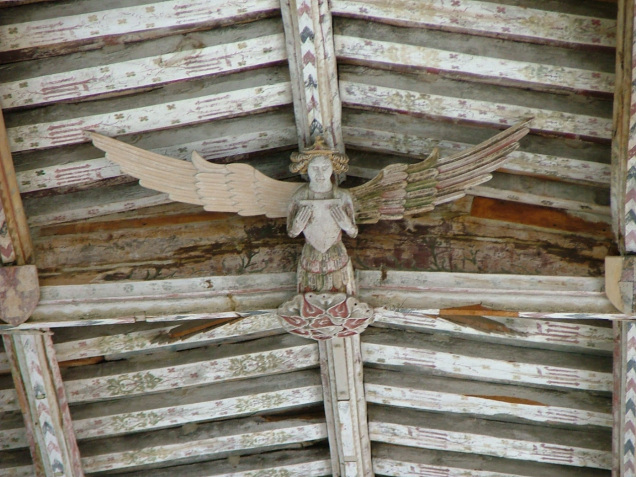
blythburgh_church_-_roof_angel

“Perhaps some of this opposition stems from a common misconception. Unlike other arts—and perhaps even other forms of writing—readers and writers alike often associate poetry with feeling, not technique. Part of this may stem from a misunderstanding of William Wordsworth’s famous definition of poetry, in which he begins, “Poetry is the spontaneous overflow of powerful feelings. …” His wording encourages a reading in which poetry simply occurs and does so uncontrollably. If this is the part of the quotation that sticks with you, it’s no surprise that you might associate poetry more with emotional intensity and less with the how of its conveyance. But in the second half of that quotation, Wordsworth tempers his original statement: “… it takes its origin from emotion recollected in tranquility.” Those unexpected and powerful feelings are actually being observed at a calming distance from that emotion.

More important, Wordsworth’s statement doesn’t acknowledge the structure that serves as a scaffolding for those feelings, a framework that makes a poem more than just cathartic release. It doesn’t acknowledge form. Why would it? For Wordsworth and his contemporaries 200 years ago, form was assumed. If a poem didn’t rhyme, readers could be sure it employed some sort of metrical scheme.

Associating poetry with feeling can seem very egalitarian because everyone has feelings. Although that’s true, not everyone is a poet, and the message of this model of art is actually exclusionary: it doesn’t offer an aspirant poet a pragmatic path forward because it hides the real work behind the scenes. What is an aspiring poet supposed to do in this model—feel harder?

I want to clarify that some of the best poets have qualities that can’t be practiced. It’s that ill-defined, hard-to-put-your-finger-on something that separates merely technically proficient writing from the work we call genius. Whether we have that spark is out of our hands, but we can have all the inspiration in the world, and it won’t matter if we can’t express it well. Setting aside romantic notions of poetry and dealing with the nitty-gritty of technique gives all of us the ability to improve our poetry. We all, with practice, might move others to feel something that we have felt or to see the world as we do. If we’ve got that spark, technique gives us a way to share it. For my money—mind you, I am a poet, so that’s not much—writing in form is one of the best ways for poets to practice technique.

How to use quotes in your writing [and more advice]

OLYMPUS DIGITAL CAMERA


Q – Quotations. Using the words of an expert, a thought leader or simply someone that isn’t you is a great way to build credibility and interest into your writing. Check out these ten expert tips for using quotations.

R – Read. Everyone who has ever given advice about better writing has said to read, and with good reason. Study more, struggle less.

S – Story. “We are creatures of story, and the process of changing one mind or the whole world must begin with “Once upon a time.”” – Jonathan Gottschall. People are enthralled and persuaded by stories. Even if you are writing a blog post or a case study, delve deeper and find the story. Think about emotional engagement, suspense and resolution.

T – Talk to people. Whether you are conducting a journalistic interview, or just down the pub with your friends, everything you hear forms part of what you write. Engage with people in the real world, listen to their ideas and be open to suggestions. You have to collate ideas, not just dispense them.

To the tapping bird

A bird taps on this window every day,
Frail as flying leaves are in a gale.
But now he perches on the potted bay.
He feels the weather like the blind do braille.

This bird is faithful and I hold him dear.
He’s fearless as he pecks upon the glass.
We hope he has a modicum of fear,
For who knows when a sparrow hawk will pass?

I see him like a human soul forlorn
Struggling to discern his fateful way.
For soon he may be taken by a storm
But blithely he will eat, and after play.

The smallest bird has trust in the Unknown
By his example, our own way is sho

Season’s Tweetings to Sinners

Bands of rhyme will be crossing the UK tomorrow.. streams of poetry will bring rain in the eyes.
Season’s Tweetings to Sinners
Shadow of the whole silence is folding over like an envelope.Post it now
The spice is rife..pepper.
Hop around the roses
It’s best to saunter nowadays.~
When inside out, a cat can still scratch.. with its reversible cat-claws.Try one tonight.Just unzip the cat and it will spring into the heir…to the throne or is it the air all round
Until the end of all rhymes I’ll be loving you
Time feels all wounds…and holes
Maps of the iceberg have melted..
Two hearts that beat as none ever did.
I wait for the lime to be ripe then it will be a lemon.
If you have a man,wash him weekly in a tin bath…don’t blame me if you get drawn in…..mate in the bath …  it saves washing the sheets.

Warning: the lights are going out all over Europe.And in the Middle East

8214600_f520

A bleeding wound on my leg ; image created  using Artweaver software

Beware:invisible black holes ahead.
Beware of men with no heads.
Beware:fat,drunken men are cross and crossing.
Sign:Respect fat women.I live here.
Beware:termagents will be persecuted.
Beware:minds crossing
Beware:secret deadly weapon of crass destruction  in this building.
Warning:Frozen police ahead.Warm carefully
Warning: the lights are going out all over Europe.
Notice:Sadiq Khan is not a foreigner.
Notice:Boris was not born in Britain.
Notice:Jesus has 10 Nobel prizes  to give out  when we die.Make sure you get there first.
Beware:God is not dead .And he is looking at you.
Request:Do not aske me what to do.

Dark age ahead, Jane Jacobs


http://www.bewilderingstories.com/issue104/darkage.html


Jane Jacobs, Dark Age Ahead

by Don Webb

This review article was written for Bewildering Stories’ second anniversary, in 2004. Jane Jacobs passed away on April 25, 2006.

I. Why this review, and why here?

Dark Age Ahead cover
Dark Age Ahead

Author: Jane Jacobs
Publisher: Random House
Date: May, 2004
ISBN: 1400062322

Most readers of Bewildering Stories are science fiction fans, who are by nature interested in views of the future. This latest work of Jane Jacobs’ gives us that; at the same time it offers as much to readers who may be more interested in the past and present. In any event, Dark Age Ahead, like Jane Jacobs herself, commands respect and attention.

I’ve read newspaper reviews; they have all been unsatisfactory. You can try the readers’ comments on, say, Amazon.com, if you’re a glutton for punishment. There are hundreds of them, and you’ll have to wade through a mass of ignorance, stupidity and outright falsehoods before finding any useful information.

And yet how can any review do this book justice? Any discussion that ventures beyond the superficial practically begs for a summary. But the book is, like all Jane Jacobs’ works, so concisely and clearly written — even though it summarizes major points in her earlier works — that the easiest and most practical advice is just to say “read it.” I’ll do what I can to give an idea of Jane Jacobs’ general thesis and manner of thinking, but I can only touch on a few of the book’s many vital points and examples.

II. A Prophet Not Without Honor

For more than forty years, Jane Jacobs has analyzed American cities and their economies. Her work has resonated powerfully in both academic circles and among the general public. The Nobel prize for literature has been awarded for lesser achievements. But what would be her category? Urban studies? Sociology? Even if there were prizes in those categories, they would somehow fall short of the mark. Economics? That would be an embarrassing admission that all economic doctrines have been shortsighted in theory and practice. Since we don’t have a formal classification, I’ll invent one: Jane Jacobs is a social philosopher.

Born in Scranton, Pennsylvania in 1916, Jane Jacobs has — for all practical purposes — lived through the entire “short 20th century” (1914-1989), as historians will call it. Jane Jacobs has drawn upon her experience and knowledge of it to show how societies and economies, like nature itself, function integrally.

Jane Jacobs has no academic degrees, and yet three books of hers alone would have crowned the careers of as many professors: The Death and Life of Great American Cities (1961), The Economy of Cities (1969), Cities and the Wealth of Nations (1984), none of which has gone out of print. In recent years she has described her philosophy in Systems of Survival (1993) and The Nature of Economies (2000). A lesser-known work, The Question of Separation (1980), would seem to be of interest mainly to Canadians, but its content is of a piece with all the rest.

III. What is a “dark age”?

A dark age is a culture’s dead end. It occurs not when a people loses something vital, but when a people no longer remembers that it has been lost. Sometimes a dark age comes from without, as when invasion and conquest all but obliterated the cultures of the Western Hemisphere. Sometimes it occurs from within, as with the Roman empire’s spectacular, centuries-long disintegration.

What causes a dark age?

Jared Diamond, in Guns, Germs and Steel, basically asks what makes cultures successful. He concludes that the basic factors are size and density of population, technology, and specialized institutions. While giving Diamond ample credit, Jane Jacobs turns his question around: Why do even successful cultures fail? She sums it up at the beginning: “Losers are confronted with such radical jolts in circumstances that their institutions cannot adapt adequately, become irrelevant, and are dropped” (p. 20).

It seemed like a good idea at the time…

A “radical jolt” may not be perceived as one when it happens. A striking example of that is borrowed from Jared Diamond. In the early 15th century, China was foremost in the world in oceangoing trade and exploration. In 1433, the outcome of a political power struggle — the causes of which now seem utterly trivial and only historians know of — caused China’s great fleets to be recalled and its shipyards dismantled. The country turned inward, away from the world. The retreat led to a cascading economic, intellectual and technological stagnation from which China began top recover in the late 20th century. China’s many achievements thus became a historical footnote, and the world was left open to the Europeans.

From “Bewildering stories”

plates

Randomly selected classic rejection notice: Agnes: The movie dragged me through a muddy pit of bad dialogue. The action scenes were long and boring. I fell asleep twenty minutes in and didn’t wake up until the guy who sweeps up bashed my knee with a broom.
Trout: And you gave it five stars?
Agnes: It was the most relaxed I’d been in months. — Tony Cochran, Agnes, Oct. 6, 2011

Fundamentalism

A definition proposed by the eminent scholars Martin Marty and R. Scott Appleby

: “[Fundamentalisms] are embattled forms of spirituality, which have emerged as a response to a perceived crisis. They are engaged in a conflict with enemies whose secularist policies and beliefs seem inimical to religion itself”

Don’t meditate just yet nor for too long

8214600_f520.jpg

http://thoughtbrick.com/meditation/dangers-meditation-10-things-look/

Very few books or articles on meditation mention that it has risks… and now it’s being pushed as the answer to all our health problems.

In the past meditation was within a religious tradition so that you had a priest or a rabbi to turn to.Now the religious aspect is stripped away and it is taught as a method of relaxation without any connection to a community of knowledge and experience.The Church has many flaws but it does have many advantages too.. and ..similarly for religions other than Christian.

If you meditate for too long in one session it can bring up material from your Unconscious.This may be dangerous for depressives and other folk with afflictions more dangerous

Patricia Carrington’s Freedom in Meditation has a chapter on this.

And it is not meant to be a retreat from life…

For some people any form of relaxation is a problem…

Sometimes taking walks is a better idea.I know one person who found having massage emotionally distressing… yes,she was anxious but she didn’t feel able to deal with it.

Listening to music is good.Sitting by a tree is good

Some men have gathered followers to their meditation readings and methods and then I read about how awful these men were to

Windows and Screens  

The TV screen is a window into another world.Unlike the window in the front room here,it does not show real people going about their affairs.No.it shows a world which has been carefully constructed.Some programs are beautiful.Some nowadays are live shows where people meet various challenges.Sometimes these can be very damaging,as can live interviews.It;s strange to see one’s PM wearing makeup.And that’s the least of it!

You can watch violence,murder or pornography if you wish or hear orchestras playing your favorite music.Extend your choice with DVD’s.Spend all your life glued to the screen….which glue is best?I’ll let you know soon.

Then there are the political aspects..I did not watch much of the grand funeral of our ex PM Maggie Thatcher but I saw enough to show it’s been used by the current government to raise their own esteem in the public eye.A politician should never have a funeral with military honors with the coffin on a gun carriage pulled by horses and the same week poor families had their welfare cut back.Ten million pounds on this event which also was very provocative to the worst off members of society.

St Francis SOS

They can construct this kind of event and by means of it manipulate our feelings.State and ceremonial funerals are for the Royal Family who are above party politics or for someone like Churchill who led us through the fight against Nazi Germany.

Windows…. like dreams…. think about whether someone is presenting you with a view for their own ulterior motives and not to enlarge your view of the world… ask yourself who you are alowing into your inner sanctum

Humour

.April 2013 – Margaret Thatcher dies.

May 2013 – Hell privatised.

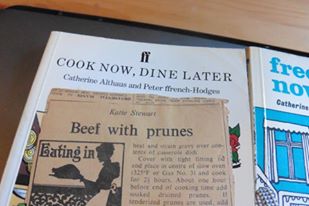
Cook snow,dine on equator

13692651_740147069458507_7792074521953808346_n

Cook now,whine later.
Look now-divine pater.
Cook cow,combine later
Cook bow bow,dine Asiator
Cook,how ? Swine  vacator.
Freeze now,fine potato.
Ease now.dine tomato.
Freeze now,cubes with water
Breeze now,fine later
Cook now.knees up later.
Book vows to be read later.

 
13731601_740146922791855_8066891761903279300_n