
I got up at the smack of dawn,
As I had some facts to grind.
Somewhere in the black of my mind
I knew we were through.
We have a very moving kind of love.
a very moving type of love


I got up at the smack of dawn,
As I had some facts to grind.
Somewhere in the black of my mind
I knew we were through.
We have a very moving kind of love.
a very moving type of love
This music does caress my inner ear
Takes me to my childhood joy and love
How much beauty can a human bear?
The vision of the lighted candles here
A symbol of the starlight far above
Beloved music will caress my inner ear
And God does dwell in those who sense him near
But overlooked , he’s but a clear grey dove
How much beauty can a human bear?
And see, God laughs to be revered
As she enjoys the flutter of my glove,
While music does caress my inner ear!
The God who’s true does not depend on fear
But holds the soul as it allows their love
How much beauty can a human bear?
God is here and not at one remove.
And in his grace we each can gently bathe
This music shall caress my inner ear
How much beauty can a human bear?
Down grassy banks we rolled for joy and fun
Like children playing out in freer times
Then back to being adults we would come
We wrote each other letters filled with puns.
We wrote the letters often, with good rhymes.
Down grassy banks we rolled for joy and fun
The bills and the housekeeping we would shun
Though now and then we’d wash away the grime
So back to being adults we would come
He fed a robin daily and it ran
Inside the house when he had passed his time
Those grassy banks ,oh, happiness and fun
When he grew older and his time was gone
I sat nearby and struggled with my poems
I had to be an adult by design
Don’t count the cost nor allocate the blame.
Don’t feel the guilt neither the heat of shame
Down grassy banks enjoy the ancient fun
But come back as an adult till we’re done.
Quote:An example? Encounter groups . These meetings were an attempt to help individuals work together to tackle internalised oppression. However this kind of collective work soon became co-opted by ideas such as self-actualisation. The inner world was to be explored now not for the collective endeavour, but in the pursuit of individual happiness. Mass activism began to wane as the sale of self-help books mushroomed, carrying within their pages the message that responsibility for growth and happiness rested firmly in the individual. Why, after all, go to a feminist encounter group, when the tools for enlightenment lay in a self-help book one could peruse at home?
The side effect of the rise of therapy culture was a de-politicised understanding of embodied distress, and a certain navel gazing. The causes of anger and anxiety were located solely in individual’s childhoods or, as the 21st century beckoned, genes. Consideration of power relations and the structural causes of inequalities became a lefty side project, getting in the way of developing “brand me”, or a side note at the end of academic articles. Alternative ideas of the self received a special kind of ridicule – a phenomenon we see in the reaction to Corbynism today. Alternative ideas within psychology got sidelined.
Simone de Beauvoir on Art, Science, Freedom, Busyness, and Why Happiness Is Our Moral Obligation

In her incisive inquiry into the intelligence of emotions, philosopher Martha Nussbaum wrote: “Instead of viewing morality as a system of principles to be grasped by the detached intellect, and emotions as motivations that either support or subvert our choice to act according to principle, we will have to consider emotions as part and parcel of the system of ethical reasoning.” But the moral system itself — what comprises it in a philosophical sense, how it is enacted in practical terms, and what it aims at in the daily act of living — remains one of the most conflicted ambiguities within and between human beings.
Those elements of the moral machinery are what the great French existentialist philosopher and trailblazing feminist Simone de Beauvoir (January 9, 1908–April 14, 1986) examines in The Ethics of Ambiguity (public library) — the paradigm-shifting 1947 treatise that gave us Beauvoir on vitality, the measure of intelligence, and what freedom really means.

To wrest a graspable conception of morality, Beauvoir turns to art and science:
Art and science do not establish themselves despite failure but through it; which does not prevent there being truths and errors, masterpieces and lemons, depending upon whether the discovery or the painting has or has not known how to win the adherence of human consciousnesses; this amounts to saying that failure, always ineluctable, is in certain cases spared and in others not.
For this reason, she suggests, success and failure bear no equivalence with right and wrong. If we are to seek an understanding of morality, the equivalence is to be found not in the outcomes of art and science but in their methods. She writes:
https://www.poetryfoundation.org/poems-and-poets/poems/detail/42639
| synonyms: | well dressed, well turned out, fashionably dressed, fashionable, stylish, chic, modish, elegant, neat, besuited, spruce, trim, dapper, debonair; More |
| antonyms: | scruffy |
| synonyms: | fashionable, stylish, high-class, exclusive, chic, fancy; More |
| antonyms: | unfashionable, downmarket |
| synonyms: | clever, bright, intelligent, sharp, sharp-witted, quick-witted, nimble-witted, shrewd, astute, acute, apt, able;
informalwhip-smart
“Joey will know what to do—he’s the smart one”
|
| antonyms: | stupid |
| synonyms: | feel annoyed, feel upset, feel offended, take offence, feel aggrieved, feel indignant, feel put out, feel hurt, feel wounded, feel resentful
“she had smarted at Jenny’s accusations”
|
By User:Jean-no – Image:Breakdance oldschool.jpg, FAL, https://commons.wikimedia.org/w/index.php?curid=3175166

This image is from the Los Angeles Review of Books

Insanity in individuals is somewhat rare. But in groups, parties, nations, and epochs, it is the rule.
— Friedrich Nietzsche, Beyond Good and Evil


They have cut down the old cherry tree
Where my cat used to climb and watch me.
Little black lady cat
On my old bike she sat.
Then knocked on the door for her tea.
I used to post letters near here
The cat would pretend to no fear.
But when I turned to go home
Faster than sound she came
So from the old porch she would leer.
All that is left it this stump
And the bike is well fit for the dump
The pillar box red is there
But my own use is rare.
I see a small celandine clump
I walk through streets where once I walked with you
Everywhere I look seems different now
I wring my hands and wonder what to do
I hate these feelings which are both old and new
I know that I should let them be somehow
I walk through streets where once I walked with you
Former losses entered and they grew.
I must grieve but will not this allow
I wring my hands and wonder what to do
Melancholic states within my soul now brew
And hamper me from wielding my old plough
I shiver in the streets I walked with you
I must digest my losses for their clue.
And act upon it when the time is new.
I wring my hands and wonder what to do
When I grieve ,I must find out for who.
As long ago they mended me with glue
I wander streets where once I walked with you
I wring my hands and wait to get my clue.
As if my heart has roots which have been torn
I need protection for my tender skin
I wait in starless darkness for the dawn
My eyes are heavy and I am forlorn
I’m wounded yet I’m willing to begin
Repair my heart whose roots have been so torn
My energy and purpose have both gone.
My skin does not protrct;it is too thin
I wait in starless darkness for the dawn
The world seems different now my love has gone
I have no loving arms to lie within
Nor repair my heart whose roots have been so torn
It’s I who am now different ,of love shorn.
A harlot who gives love to anyone
I wait in starless darkness for the dawn
My eyes gape like black holes bereft of sun
Shoot me,God, with your own devil’s gun
For my heart has roots which have been torn
I wait in starless darkness as holes yawn

The larder was empty
the cupboard was bare
he looked inside the cake tin
but nothing was there there
Stan had flour,eggs and sugar and of course milk and butter.Emile was under the table waiting for something to drip out of the bowl!He loved baking days.
Stan had bought a load of blackberries in the market so he was thinkin of blackberry tarts,blackberry crumble..
He picked up the bag which seemed very heavy.Putting his hand in …..he pulled out a Blackberry!
He went to the market
to buy me some fruit
and now he’s got Blackberries
he’s going to shoot!
Annie his next door neighbour was coming to the back door.
”What’s up ,Petal?”
“Oh,dear.I seem to have made a category error.”Stan answered philosophically.
”Well what category would you put me into?” she asked petulantly.
“Why are you so egocentric ?Not everything is about you!”He said fluently.
“Well if I’m narcissistic it’s because my infant grandiosity was ruptured too suddenly and I was not held and contained in a suitable manner.”
“You’ve been reading that Wilfred Bion again.” Stan said admiringly.
”No,not just him.It’s some American chap as well .Would you like to read it?”
“No,thanks,I’m finding Julia Segal is more than enough for me.I find Bion is a bit too mystical.I don’t think I can approach you without memory or desire.To be honest,without memory or desire I wouldn’t want to approach you.”
“Wow ” she said stupidly,her large green eyes staring avidly upon him inviting him to fall into their salty sea like depths.
“Shall I ring 999?I can’t think of anything to say.I’m lost for words.”
“Perhaps you have reached that mystical spot beneath language mostly only known to babies,the mad, or meditators?”
“Well,I do feel a bit of madness today.”
“Is that why you have purple and orange eyehadow on clashing with your alarazin crimson lipstick and your light beige, but not too light, foundation by Lancome of Brixton and Blackheath,Paris,Rome,and London?”
“I suppose so.” she replied indifferently.I feel as if I’m behind a glass wall.”
“Oh,don’t worry.That’s the new window!” Stan explained courteously.
”You really are behind a glass wall.You’ve been reading about schizoid processes again on Yahoo,”
“Yes,” she admitted her face blushing violently.”It’s those new people who’ve moved in across the road.They are both psychoanalysts so I wanted to feel up to their level of knowledge.”
“I didn’t know they were psychoanalysts.How did you find out?”
“Well,first of all,there were two large sofas, and then hundreds of knitting needles and a lorry-ful of wool.And I thought,”Hello,hello,It must be one of Anna Freud‘s followers.”
“So have you met them?” he asked laconically?
“Yes”,she confessed animatedly .I went over and said,
“Sprechen Sie Deutsch?”
“And what did he say?”
“Are you all mad round here?”
“So I thought,”You’re not getting hold of me that easily.””
“So I said “I’m sorry to disappoint you but I’m an admirer of Melanie Klein,”
“Oh,how did they react to that?”Stan quizzzed her jovially.
“He was so rude.He said,
”Are you telling me you’re a lesbian as well as a lunatic?”
“Oh,dear.No wonder your make up is all running off your face and disappearing down your cleavage.Why don’t you pop upstairs and have a bath?”
“Well it’s either that or ringing 999.My self is totally divided.”
“Into equal parts?”
“I can’t say” she murmured.
”Oh,well” said Stan “you sit there with Emile and I shall make a Victoria sponge and a lemon drizzle cake without the lemon…I’ve only got bananas and they don’t drizzle.
“Why not adapt to reality and make a banana loaf?”
“Is that wise?” Stan enquired.
”Wise or not,it seems to make sense.” she whispered coyly.
”Get a move on or Mary will be back on her Raleigh shopper bicycle and there’ll be no cake for tea.
”Thank you,honey.”Stan replied.
“I am filled with memory and desire.””And quite right too,”mioawed Emile from his basket.”I’m like that every night!””And so are all of us,”Annie twittered on one of Stan’s blackberries.
Hello.what brings you here?
My feet doctor.
I have enough derision already.
Oh.dear.I have reduced vision too.
Are you hard of hearing?
No,my ears do it all by themselves.
You don’t understand.
I wear underpants but I have no standing in the community.
I’m a doctor.
Well,you could have fooled me.You have fooled me.
You are a complete nitwit.
What wit are you on about?
Nits!
Do you mean lice or knitting?
Oh,my God!
Are you enjoying a vision?
No,God is rarely on the television.
You need to get tuned in?
Shall I drop out first?
I’m tempted to spank you.
Well,I’ve always been a glutton for punishment.
It’s a prank.
A plank is quite useful for crossing mud.
Who is helping whom?
I don’t even know Hoom.Is he new here? I once read Hume.
This is hopeless…
Don’t give up……….. try a Samaritan…
Where are they?
Inside the handset.
No,I give in.Why am we here?
I have an idea……….
Oh, no……it’s too late.
For what?
Hush.. just listen……..
There’s a kind of hush, all over the world tonigh
They say that we enclose our soul in shell.
But then we are cut off from our true self
It keeps away the demons loose from hell
We may keep our hearts that way as well
And so we are cut off from inner wealth
Today we all enclose our souls in shell.
Sometimes trifles will not set or gell
Some may gain advantages by stealth
I blame those wicked demons loose from hell
I tried to make a pie crust from a bell
The copper is not good for human health
They say that we enjoy our souls in shell.
A symbol is like water from the well
The meaning can be dug out by himself
I like those wicked demons hot as hell
We petrify, we ossify our selves.
We try to buy our grace from off the shelves
They say that we enclose our soul in shell.
It keeps away the demons and all else,
He wanted some trifle
As he had an eyeful
She gave him his wishes
And he washed the dishes.
He wanted another
So she phoned his mother..
Two trifles each weekday
And three on a Sunday.
He was diabetic
And almost ascetic.
She was psychotic
And never quite got it.
He liked the great sea shore
And sanded wood floors oh
She liked the true heather
Whatever the weather.
They bought jars of bees’ honey
And spent more than their money.
The bees liked them more than
An egg loves a fry pan
Raspberry trifle
Is utterly delightful
With silver balls in the cream
It’s any man’s dream
How kind the air I breathed was when I walked
How stuffy when I’m back inside the house
The place where ghosts of lost ones call and stalk
How kind the air I breathed was when I walked
If only sheets and pillows learned to talk
And duvets wrote strange poems in language loose.
How kind the air I breathed was when I walked
How deadly it now seems inside the house
The afternoon is ended but the sky
Is lilac in the darkness where doves dwell
The neon lights of town are raised up high
The afternoon is ended at the sky
They call to me, why did he need to die?
No poet nor priest can own the words to tell
The afternoon is ended but the sky
Shows lilac in the darkness where love dwelled
Invisible but real it hangs between
Myself and all the others of this world.
This sheet of tears , this cover felt not seen
Invisible but real it hangs between
What is real and what is a mere dream.
My face is wet with tears that softly welled
Invisible but real, they hang between
Myself and other lovers of this world
l


The face that was familiar is no more.
Yet in my dreams ,he is alive again
If ,by a chance, his life could be restored
It would affect me like the hidden chord
Which played, my own life force would go.
That one must live and one must die is plain
The face that was familiar is no more.
Yet in my dreams ,he is alive again
Old man,bending over,
arched like a fallen moon
in a dark lilac  winter sky.
joy and pain wrestle my heart across the emptiness
and toss it up like a damp rocket
to fall in a hidden corner where mice live.
Would that not be a good ending,to be dust
to these little creatures nesting
in my chewed green twine and my tartan basket?
They have eyes and shiver in my hand when I rescue them
from the cat…
as any heart might.
Now night falls on the newspaper basket
where the damp Times and the Guardian mix into glue
and tomorrow the sun will rise;
it will just be the garbage
with no poetic undertones nor deathly hushes..
Heather and a silver light
you stand on a hill top like a god
looking over his domain.
Strong and now weak
it’s the human condition
Everlasting life is too dangerous for us.
Silent,motionless,home of beetles
bit by bit we fall away
into the mother soil
with cracked jugs and dropped coins
for a future academic to dig into.
Transparent hand touches me.
Whose might it be but yours?
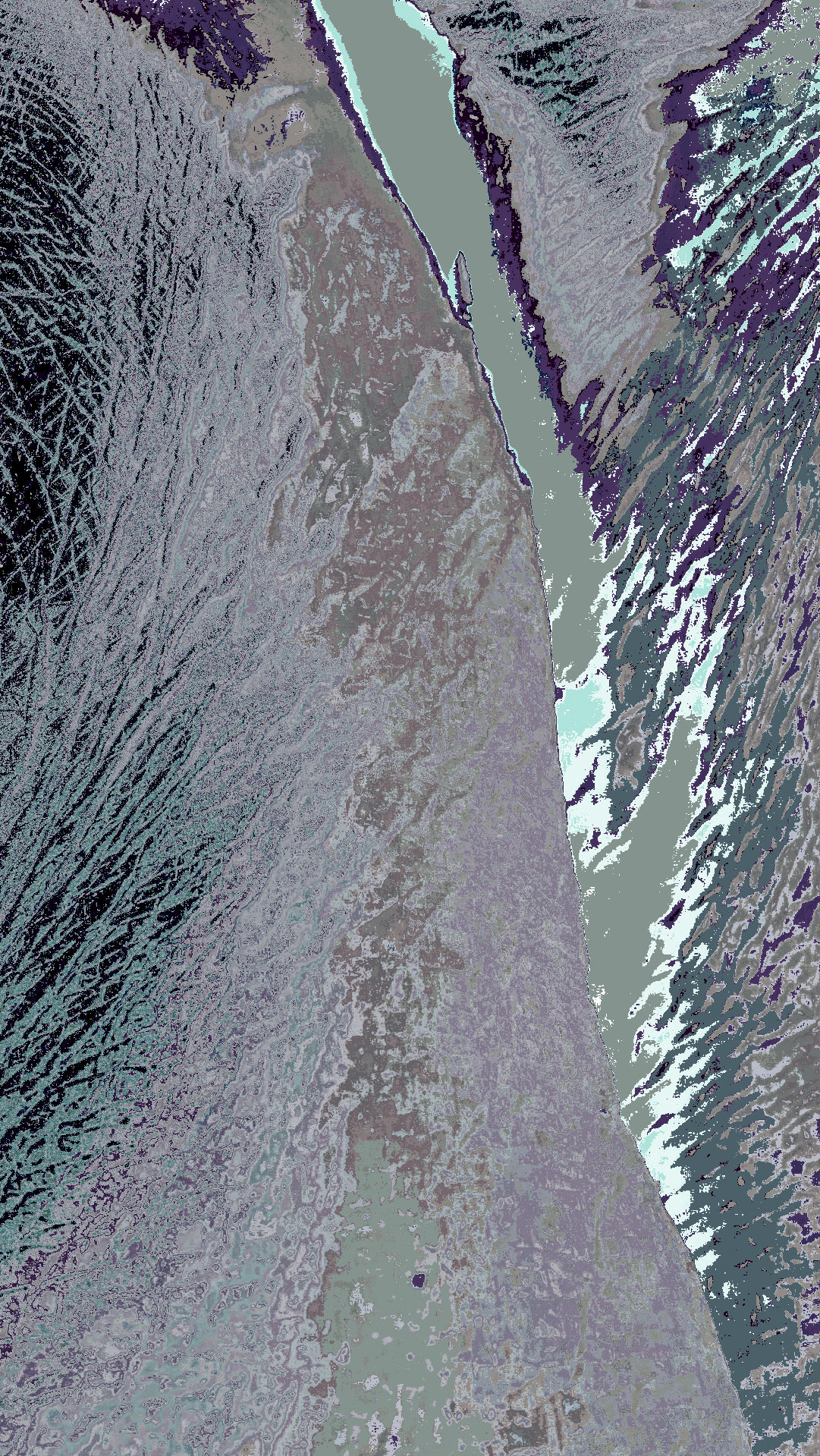
The apple tree,now bare of leaves,
Still bends in worship to the sun.
The sap flows down into the earth
Its fruiting year is done.
Where once a cat sat on the branch,
And children played below,
Now only sparrows hunt for crumbs,
and patterned snails slide slow.
The sun is setting to my left;
where is the slivered moon?
The day is deeper than a dream,
and over all too soon.
Oh,come,my lover,to my bed
And hold me in your arms.
I’ll rest against your fragile chest,
Whilst you enjoy old charms.
I sat on your old wall to see the sun
The wall is cold and makes my rear end chill
As all too soon each little day is done
The day is ending and I ‘ve not begun
To do my writing , let my mind be still
I sat on your old wall in winter sun
If we were younger we might have more fun
But we allow now what we cannot will
As all too soon each little day is done
Must we finish what we have begun?
We gazed at rampant water by the mill.
I sat on your old wall in winter sun
As a woman, I can love a man
Them to their rest with singing I may lull
As all too soon each little day is done
Today my heart with love is very full
And happy tears my features like to swill
I sat on your stone wall to eye the sun
As all too soon each little day is done
The sunshine fluctuates as do my moods
My inner landscape’s clouded like the sky
And anxious thoughts into my mind intrude
I disdain phone calls with impatience rude
For connections only make me want to cry.
The weather fluctuates as do my moods
Strange and lonely thoughts await in queues
I tell them they are foolish and they lie
More anxious thoughts into my mind intrude
I understand why people quarrel and are rude
I understand why imprecations fly.
The sunshine fluctuates as do my moods
But dark clouds pass and feelings change to good.
When self respect and love are each nearby
I shall befriend the thoughts which now intrude
I panicked as bad thoughts became a flood
And wished instead of flesh, I was hard wood
The sunshine fluctuates as do my moods
Those anxious thoughts with love are now endured.
https://www.loc.gov/poetry/interviews/wallylamb.html
“Many of the most important turning points in your characters’ lives are centered on trauma and loss. Do you think that the way people process these events is what defines them?
I don’t think people’s processing of trauma and loss necessarily defines them fully, but these surely influence the course of their lives. I was 12 years old when a dam collapsed at the northern end of my hometown, releasing millions of gallons of lake water that cut a path of death and destruction. Among the dead was a 27-year-old mother who drowned in the flood waters after helping rescue her three sons, ages four, two, and six months. I drew on that remembered local tragedy when I wrote We Are Water and, in the course of my research, became friends with those three little boys—who are now well-adjusted, middle-aged family men. Each has a successful career and a great sense of humor. Were these three brothers greatly impacted by the loss of their mother on that terrible night and the reality of having grown up without her? Certainly. But are they defined solely by tragedy and loss? No.
For the past 15 years, I have volunteered at a maximum-security women’s prison where I facilitate a writing program. Most of my students there had terrible things done to them as children and many have been convicted of having done terrible things. Some are serving life sentences and will die in prison. Yet each is a complicated equation not fully defined by the trauma she endured or the crime for which she has lost her freedom. In my novel The Hour I First Believed, Maureen Quirk, afflicted with PTSD and drug addiction after the Columbine trauma, must discover how to live a useful life in prison. In I Know This Much Is True, Dominick Birdsey must ride a roller coaster of emotional responses to his twin brother’s mental illness. In We Are Water, Andrew Oh must struggle with the grim truth that he killed a man in a rage and has not been caught. Should he keep his dark secret or reveal it? In my fiction, I’m interested in examining and depicting not only the ways in which trauma and loss derail the lives we may have imagined or planned, but also, and more importantly, how our responses to these can attest to the resilience of the human spirit. Thankfully, I have not had to endure the tragedies that befall my characters. But what we share in common is this: we are imperfect people living less-than-perfect lives yet trying to become better people.
Has your work with the female inmates of the York Correctional Institution changed the way you write your female characters? If so, how?
I grew up with older sisters and older girl cousins who lived next door. The only other boy on McKinley Avenue was a rock- and snowball-thrower named Vito, which didn’t exactly make him great playmate material. A loner, I frequently was thrust into the role of observer of my sisters’ and cousins’ exotic games of pretend—not a bad perspective for someone who will grow up and become a fiction writer. The girls were cowgirls and stagecoach robbers one day, Amazons in sarongs (old curtains) the next, harem girls the day after that. In the latter fantasy, I was enlisted to play the minor role of a sultan named Kingy Boy, which required me to sit cross-legged on the floor with a bath towel wrapped around my head turban-style and say things like “Peel me a grape” while they danced and undulated around me. All this to say that, from an early age, I became immune to the spell of “the feminine mystique.” I’ve always felt comfortable among, sympathetic toward, and amused by females, and I am aligned with and supportive of the tenets of feminism. This has served me in my interactions with the women of York Prison and my goals for them as writers.
If I have taught my incarcerated students a thing or two about how to write more effectively, they have taught me a number of things, minor and major, about life—everything from how to talk “street” and how to cook an English muffin pizza with a plastic bag and a hair dryer to how to use humor, art, writing, and sharing as survival tools in a harsh and institutionally hostile environment.
I reject the supposition that men are marooned on Mars and women on Venus, and that each gender, therefore, is doomed never to understand the other. That rejection has allowed the women of York Correctional Institution to give me the gift of their trust. Whenever they hand me writing in which they expose the hard truths and long-buried secrets of their pasts, or they read their highly personal pieces aloud to the group for the purpose of getting feedback, I am an eye- and ear-witness to acts of courage and generosity. Perhaps that’s the most impactful thing these students have taught me about writing and life: that taking risks, no matter how risk-averse one may be, will pay dividends in ways you might never have imagined.”
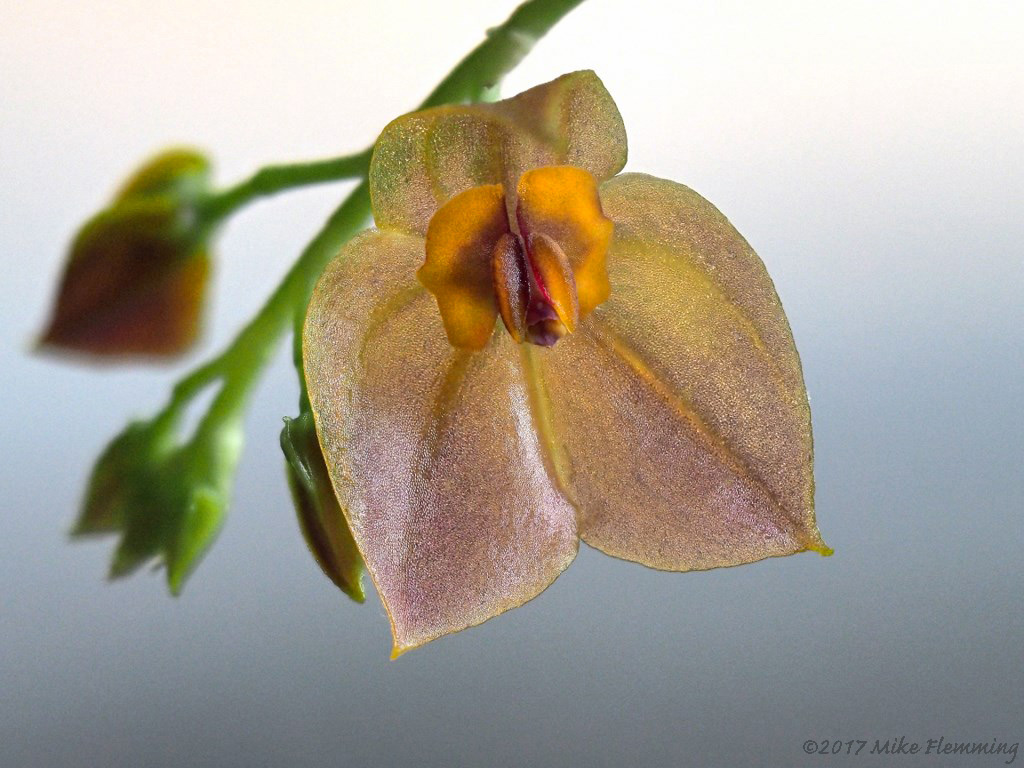
In between the darkness and the bright,
Graded shades of grey and lilac lie.
These variegated colours give delight.
And from my soul, I hear a gentle sigh.
As we live, we dwell in mysteries;
Must take decisions based on various views.
And unknown memories from our history
Emphasis the old , see not the new.
For true perception, humility is key,
Not for moral reasons but for sight.
The emptiness lets flood creative seas.
Allows bright rays of loving, guiding light.
We need to know we do not know at all.
And, trembling, hold the doors of vision wide.
So gentle should be judgements when we fail.
Then errors we’ll appreciate, not hide.
We must deal with life unknown, unclear;
Perception is a better guide than fear.


