

When seven years come round again
My self is liquified,
My skin becomes a holding shell
For my old self has died.
As I dissolve I feel great fear
And yet I trust my soul.
So in the sea I lose my form,
And with the waves I roll.
I am at one with all the world,
And yet I am no-thing.
My inner waters rise and fall
What will the high tide bring?
After my drowning I shall rise
And I shall be renewed.
I must submit to that strange Life
With which I am imbued.
I am not mistress of myself,
I am this moment’s flower.
In the deep waters I must trust
To take me to the shore.
O hang my arms with grasses green
And dissolve me in your sea.
Thus when the time comes round again
Regenerated I shall be
Author: Katherine
Poetry writer and author

Golden love
The roses by your gate
Revealed my sweet fate:
That I would love you in summertime,
That my poetry would always rhyme,
That a dream of petals falling from above
Would drench us both with sunshine’s golden love;
That we would fall into deep grassy meadows
Full of daisies,lie on our backs.Swallows
Darting across the sky would see
Our shapes intertwined with bright buttercups.
Who knows when love will erupt
And carry us on its flowing waters
To places unreachable in summer saunters?
Into the eye of love itself
Share this:
Metaphor of the week
The argument was over till he “stirred the pot”
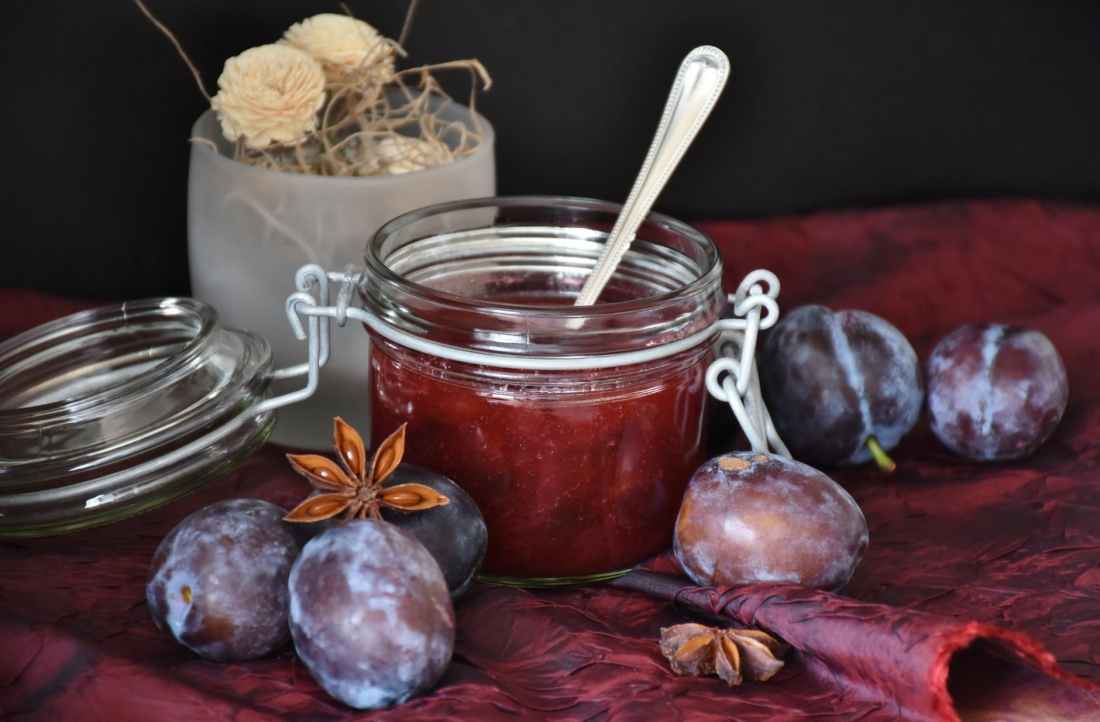
Stirring the pot can have several meanings in cookery.
If you are making a jelly or cold pudding it will set o if you leave it alone after mixing the ingredients ideally in a fridge or cold place
However unless it is in a very hot place it will eventually set but will take much longer
That is probably what is referred to in the sentence.
If you stir a dish of simmering meat it will not affect the outcome unless you make a hole in the pot with violent stirring for hours.In which case you deserve all you get
Share this:

Maturity
 “To be mature is to be careful of what you say, to respect what you hear, and to meditate in the silence.”
I don’t know who said this
Share this:

Sense and humour
 is a bitter disappointment for which no remedy exists, unless laughter could be said to remedy anything.”
The first poet?
 https://www.ancient.eu/Enheduanna/
Extract:
WORKS
She is best known for her works Inninsagurra, Ninmesarra, and Inninmehusa, which translate as ‘The Great-Hearted Mistress’, The Exaltation of Inanna’, and ‘Goddess of the Fearsome Powers’, all three powerful hymns to the goddess Inanna (later identified with Ishtar and, still later, Aphrodite). These hymns re-defined the gods for the people of the Akkadian Empire under Sargon’s rule and helped provide the underlying religious homogeniety sought by the king. For over forty years Enheduanna held the office of high priestess, even surviving the attempted coup against her authority by Lugal-Ane.
In addition to her hymns, Enheduanna is remembered for the forty-two poems she wrote reflecting personal frustrations and hopes, religious devotion, her response to war, and feelings about the world she lived in. Her writing is very personal and direct and, as the historian Stephen Bertman notes:
The hymns provide us with the names of the major divinities the Mesopotamians worshipped and tell us where their chief temples were located [but] it is the prayers that teach us about humanity, for in prayers we encounter the hopes and fears of everyday mortal life. (172)
Enheduanna’s prayers very clearly express those hopes and fears and do so in a very distinct voice. Paul Kriwaczek paints a picture of the poet at work:
Share this:

Evening meal
1.Avocado pear and melon with black grapes
Chop into small pieces and pour over it some olive oil and lemon juice
2.Cover a rectangular oven dish with layers of onion,mushrooms and tomatoes all sliced
Place on top some lamb chops.Bake for about 45 minutes at about Gas 6…. till chops are brown.New potatoes go well
3. Mix some cream cheese with honey or maple syrup and serve in very small round or square dishes
Sit in a comfortable chair and read a novel while drinking whatever you fancy with whom you fancy or fantasise about the tennis star of your choice.Or watch TV
Go to bed and dream about the sands at Old Hunstanton and how you would feel riding a horse there.
Share this:
How do you charge
How much do you charge?
About half
How do you charge?
On demand
Is therapy good for us?
Only if you are madder than the therapist
Can I find a new partner?
Why not resurrect the old one
Jesus Christ
Well, well.Are you a virgin?
Almost.
What do you mean?
It’s like limits in calculus
I’d say, more like the sum of an infinite geometric procession
Well, bless my soul
Done!
Thanks so clutch
Are you a virgin yet?
I’ll have to try
Try what?
What do you think?
I never do.
I can’t like others
But they like you
Share this:
I can’t like others
I can’t like others if they don’t like me
I need responses and a judgement fine
Love is transitive and may soon flee
I love to entertain folk having tea
Unless some try to argue hate is fine
I can’t like others if they don’t like me
I do not wish to savour enmity
While opening a new bottle of good wine
Love is transitive and may soon flee
There may be a gap before we see
Where we ought to draw a boundary line
I can’t like others if they don’t like me
Reflections may change sides in harmony
Nothing is not much until defined
Love is transitive and so are we
Petulant and pouting, see me whine
At least my face has never caused a crime
I can’t like others if they don’t like me
Love is here and I may soon agree
Share this:
Could I love my neighbour very well?
I wondered if I were a cannibal
Could I eat my neighbour not a cow
As long as she was roasted really well?
With the army led by Hannibal
The Alps were crossed despite the ice and snow
I wondered if they ate an animal
Sheep and goats will often wear a bell
They ring melodiously as up the hill they go
As long as they are treated really well
I guess I’d be dessert in caramel
Eaten up with cream till overflow
I wonder if there still are cannibals
Oh, dear reader,I may say farewell
I need to see the oven is restored
So it roasts potatoes really well
At least consuming humans is no bore
As long as they like dwelling by a flower
I wondered if, were I a cannibal,
Could I love my neighbour very well?
Share this:
Just in case I might flatten a brown cow
In school they taught us how to iron men’s clothes
Handkerchiefs,shirts and even hose
I dreamed I took the iron from the nun’s grip
Then I laid her down and ironed her till quite flat.
And so it was I found my rage within
I went to school to learn and not to sin
I never told my mother of my dream
In case a flattened nun would make her scream.
I should have taken sculpture in a class
Then made a model of this nun in glass
After she was flattened she looked good
A piece of clay could well have understood
My dreams escape as I awaken now
Just in case I might flatten a brown cow
Share this:
If he is love
I used to live with fear I was in sin
As Jesus died to save my wicked soul
I later found a kinder place within
Where I could escape the tyrant grim
Learn to love and learn to sing again
Accept my self fragmented and unwhole
Split and fearful, knowing my thin skin
If He is Love, He will contain my sin.
Share this:
Stillness without dread
Half of me feels glad and half feels sad
I wonder which will take the higher place
I feel a need for stillness without dread
To let the hints of grace in me be read
Without obsession over what you said
Or listening to that fearful heavy tread
I sometimes hear when I have gone to bed
Where is the essence of the love we had?
Somewhere there must be a hint or trace
Part of me is sad and part is glad
Can they each accept and then embrace?
Share this:
A whiter veil
Paler than a thousand lips disgraced
Whiter than a whiter shade of pale
I saw by my glass door her silent face.
I had too fiercely put her in her place
By my kitchen fire which glowed with taste
Like a headless nun once newly veiled
Yet heaven is not reached in any race
One knows there is no surer way to fail
Share this:
It is seemly
The place where my words live is overgrown
Despite it’s winter, freezing, and dark grey.
How did these creepers reach from their old home
The honeysuckle and the honey comb?
The Russian vine is wilder when it roams
The Ways of G-d alone are not my ways.
The place where my words died is not yet shown
But these days it is seemly should we pray.
Share this:
The North facing coast of Norfolk
Long pale sands,
the strand,the white topped rollers,
holier than the Eucharist,
sun kissed waves,
three coloured cliffs
Whiffs of scent of broom and gorse
winds make us hoarse
sea salt coarse
oh, to be walking there with you
And the sky so blue
Higher than any view
Share this:
North Norfolk UK

Share this:

Writer’s block
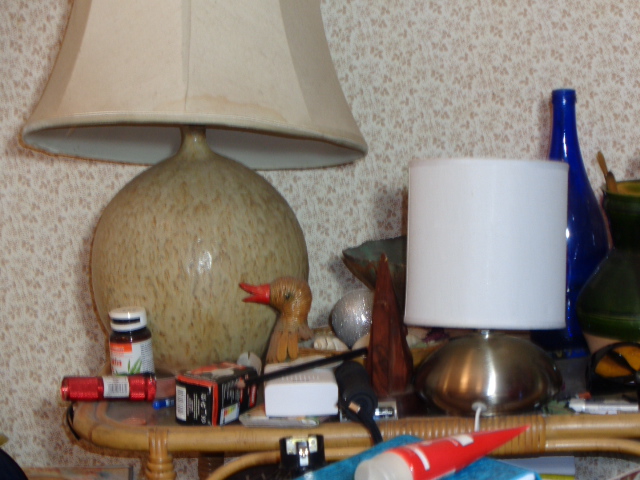 Now I know what it is.
Anthony Hecht.. a great poet
 https://www.poetryfoundation.org/poets/anthony-hecht
“George P. Elliott contended in the Times Literary Supplement that “Hecht’s voice is his own, but his language, more amply than that of any living poet writing in English, derives from, adds to, is part of the great tradition.” Though his early work was often slighted as ornate or Baroque, his collection The Hard Hours (1967) is generally seen as his break-through volume. In that book, Hecht begins to use his experiences as a soldier in Europe during World War II. The often unsettling and horrific insights into the darkness of human nature told in limpid, flowing verse that characterize the poems in the collection would become Hecht’s trademark. According to Dana Gioia: “Hecht exemplifies the paradox of great art. … He found a way to take his tragic sense of life and make it so beautiful that we have to pay attention to its painful truth.”
Share this:

Poetry and Truth
 https://www.newcriterion.com/issues/2015/4/poetry-truth
Extract
The poet Mark Strand, who died this past November, once told Wallace Shawn in a Paris Review interview that “You don’t read poetry for the kind of truth that passes for truth in the workaday world. You don’t read a poem to find out how you get to Twenty-fourth Street.” In other words, poetic truth does not inhere ultimately in the denotative language of the poem. For facts, we have much more effective means of communication: the instruction manual, the brochure, the travel guide, or the public lecture. When Goethe takes “Poetry and Truth” as the title of his autobiography, what he is suggesting in part, I think, is that experience, in a work of art, may be rendered most clearly, and in a sense most truthfully, by attending to something beyond the verifiable facts. Fine, you might say, but doesn’t art, then, become, as Jacques Maritain wrote, “a world apart, closed, limited, absolute”—not the apprehension of reality but a replacement for reality, an illusion? This was a mote to trouble the mind’s eye of Plato.
Adefinition of poetry put forward by the poet Yvor Winters in his book Primitivism and Decadence (1937) sheds light on the question. A poem, Winters wrote, is a statement in words about a human experience—so far, so good, no?—a statement, he was quick to add, that pays particular attention to the connotative or emotional charge of language. Now, we all know where to find the denotative meaning of a word: we go to the dictionary. The connotative shades of a word, however, are harder to locate precisely. Take, for example, the word prison. The OED reports: “Originally: the condition of being kept in captivity or confinement; forcible deprivation of personal liberty; imprisonment. Hence (now the usual sense): a place of incarceration.” Clear, certainly, but a little dry. One could not say that this definition contains the complete meaningof the word.
Share this:

The laundry

Share this:

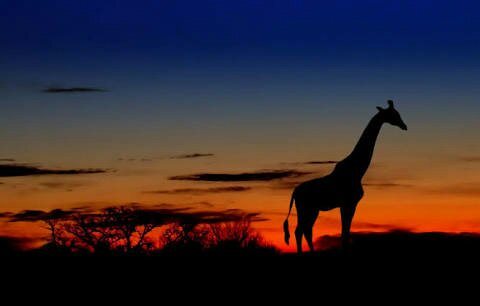
The Shade of the Baobab
See this lovely post


The wandering soul rests,
under a Baobab tree that offers sanctuary,
as the South African sun,
burns copper red.
The wanderer gives thanks to the ancestors,
a moment of respite from the unending journey,
sifting through the dust,
divining the road ahead,
a time to reflect,
on the miles lost through the sieve of time,
on the paths that have yet to be tread.
Share this:
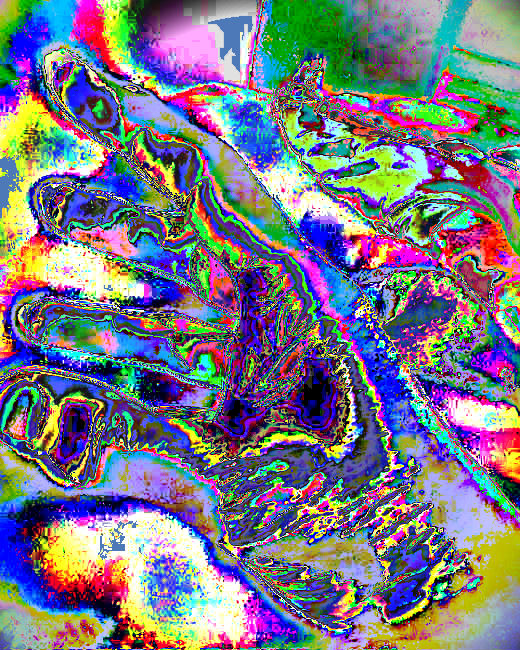
My right hand
Share this:

The hole
The rosemary had a gap and a large hole
A blackbird made a nest there where it sang
Startled people passing asked, who rang?
If I knew, I never would have told.
This gracious shrub was old and very wide
It made a home for snails against the wall
Near where blackbirds busily might call
Yet wrongly pruned,eventually it died
One must not prune a bush into the wood
This plant is tender like the inside wrist
Where wanton lovers avidly do kiss
Thinking they are flagrant in their good
Later we had placed a beech bonsai
Small and frail behind the red brick wall
Where the blackbird sang in Spring and Fall
Now the tree’s as tall as any lie
Small its leaves yet mighty is its heart
It pushes half the hedge off at a slant
Where the prickles fill with antic ants.
Hot the sun on leaves that know no chart
Here the metal gate is open wide
The path is level but with spirit none
My heart is in the case with him who’s gone
I carry all my shopping bags inside
On the shelf, a little wooden tray
A butter dish perhaps or a cheese board
Too small for any man who was a Lord
Here he left his gold at end of day
Share this:
How the picture changed
One sad day, the picture on the wall
Changed from The Three Bears to Waterfalls
A three arched bridge across a river blue
A cataract, a grave. a sailing crew.
For little children have a world their own
The symbols are constructed as are poems
Bears play a large part in infants’ lives
Their comforters, their babies, their right guides
Would it occur to me that Mam and Dad
Had no interest in a bear fur clad?
What was me must surely still be them-
United in our love till kingdom come.
I saw the picture shift and change its guise
With these blue coloured orbs that are my eyes
Share this:
Conspire
The meaning of conspire
kənˈspʌɪə/
verb
verb: conspire; 3rd person present: conspires; past tense: conspired; past participle: conspired; gerund or present participle: conspiring
-
make secret plans jointly to commit an unlawful or harmful act.“they conspired against him”
synonyms: plot, hatch a plot, form a conspiracy, scheme, plan, lay plans, intrigue, collude, connive, collaborate, consort, machinate, manoeuvre, be/work hand in glove; More -
(of events or circumstances) seem to be working together to bring about a particular negative result.“everything conspires to exacerbate the situation”
synonyms: act together, work together, combine, join, unite, ally, join forces, cooperate; More
-
Origin
late Middle English: from Old French conspirer, from Latin conspirare ‘agree, plot’, from con- ‘together with’ + spirare ‘breathe’.
Share this:

The little bulbs are flowering like a prayer
As winter sun expands the length of days
And afternoons grow longer with its light
The little bulbs are flowering like a prayer
Snowdrops small and fragile ever gave
Their beauty and their presence to our sight
As winter sun expands the length of days
But, discontented, we demand much more
As if controlling nature is our right
As little bulbs are flowering like a prayer,
If we heard them speak, what would we hear?
Complaints about the trees that rage incite
As winter sun expands the length of days
Do such tender plants live in great fear
That cats and mice may snatch a greedy bite
While the bulbs are flowering like a prayer?
All of nature eats with ripe delight
And then is eaten by a satellite
As winter sun expands the length of days
The little bulbs are flowering like a prayer
Share this:
The craft of poetry
 https://www.writermag.com/2016/02/29/14969/
The craft of poetry with Seamus Heaney
Poetry’s magic gone wild.
By Alicia Anstead, editor-in-chief | Published: February 29, 2016
 Shortly after I returned from Ireland a few years ago, I encountered Seamus Heaney’s poem “Postscript.” The landscape he describes – “out west” – in County Clare had captivated me with its craggy rocks and rolling hills. It was (and still is) resonant in my imagination. Heaney’s poem caused a major take-me-back moment (in spirit of Irish crooner Van Morrison).
Just as Heaney brings the location to life, he quickly and disconcertingly tosses forward this important line:
Useless to think you’ll park or capture it
More thoroughly.
Share this:

How do you clean your nails without a brush
Tell me,dear cat, how do you keep stripes clean
And furthermore those small bits in between?
How do you keep your whiskers all one length
And jump off walls with just the ideal strength?
I hear you have nine wives and so have I
If this is true,indeed it is a lie
Do you not think seven are quite enough
As some days serving two is rather tough?
How do you clean your nails without a brush?
Do lady cats when older ever flush?
Do you like to sleep in heaps like logs
Or wander in the night around our blogs?
Oh,cat, my darling, come and be my mate
For if we wait we may find we are late
Share this:
No-one can tell
I lost my gender and my sex as well
Flying back from Glasgow on a plane
How I fell in love,no-one shall tell
I saw his eyes were shining like fire balls
But much of him is hidden, yet remains
I lost the bull, the cow, my flocks as well
His collar was emblazoned with cats’ tails
His trousers were dark green and full of stains
How I fell in love,no-one can tell
I told him his two ears were like sea shells
To see him was enough to cure migraines
I wish to wander and my stick is well
I worship him with love perpetual
To hear him speak is gladness unrestrained
How I grew so happy, I done well
When we’re loved, we humans feel no shame
If we’re hated, who shall take the blame?
I grew so wise I was a doctor’s belle
How to pass in love, I wonder still.
Share this:
The good need not be lost
Do not destroy the joy of all we had
The good need not be lost when lovers part.
If you need space then take it and be glad.
Because I love you, I shall now be sad
But there’s no need to stab me in the heart
Do not destroy the joy of all we had.
With your loving words I once was clad
Now naked to the winds, I must depart
If you need space then take it and be glad.
The only constant love is that of God
No Eros is He with his arrowed darts
Do not destroy the joy of all we had.
On these forlorn, faint tracks I have once trod
In my mind I search for ragged charts
If you need space then take it and be glad.
I have my maps and now am fully clad.
With tenderness,farewell my dearest heart.
Do not destroy the joy of all we had.
If you need space then take it and be glad.

