For in his own lone wishes he is trapped


No  human woman  can be what he dreams

Nor can  they give comfort on the road.

Yet every night he plots and thinks and schemes.

And rarely does he ever go abroad.

No food he eats will satisfy his tongue.

The best wine is as naught to mother’s milk.

He grumbles and will not admit to wrong.

I‘ve known more men than him of this same ilk.

No bed can be the right one for his sleep.

No sheets and pillows suit his wary skin.

He often has made gentle maidens weep

Crying out they’re fat or boney thin.’

Beware the man who never can adapt

For in his own lone wishes he is trapped

I am silent in the space where once dwelt two

I wonder what I would have said to you
Trivial,important or sincere
I´ḿ silent in the space where once dwelt two

One day I may find the sentence new
To speak about the one who was so dear
I wonder what I would have said to you

Many  mourners feel  bereft and blue
Pure panic  and confusion may appear
I´ḿ silent in the space where once dwelt two

The conversation cannot be renewed
Unless I make believe  or am a liar
I wonder what I shall have said to you

How many little incidents we rue
Self hatred can burn souls like a wild fire
I´ḿ silent in the space where once dwelt two

To happiness, we feel we should aspire
Like children singing in a Christmas choir
I wonder what we would be saying now.
I´ḿ silent in the space where once dwelt two

Would you believe it?

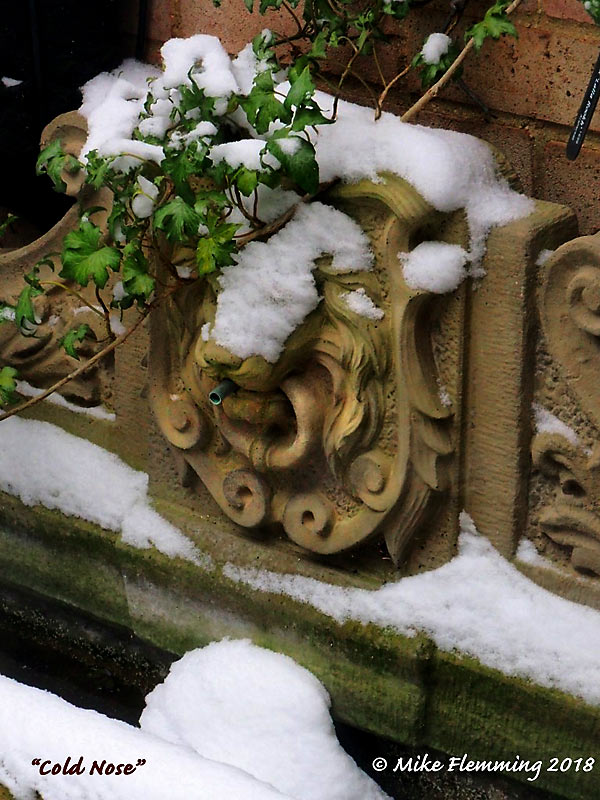
snow_2018-2


Sarcasm is bad for your relationships!
And don’t use it  with your partner,children  or siblings  just because you think that at home you can be  free to say whatever you like

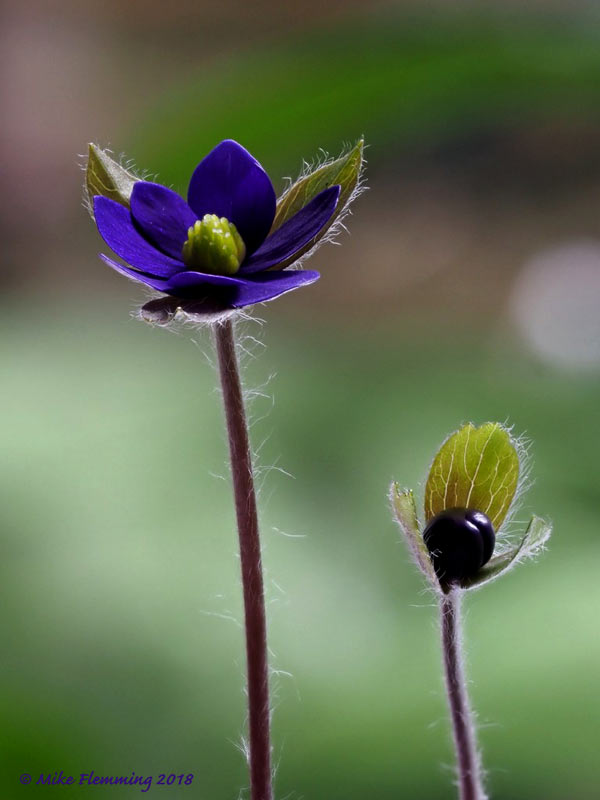
HepaticaMillstreamMerlin_2by

Photo Mike Flemming

Well, stone the crows.You don’t need a Ph.D in psychology to work out that cruel remarks  or humour will not make you popular.These days you can get a doctorate in all sorts of  odd subjects.How to lose friends and irritate people might be one!

The word laundry

The “word laundry” is very busy now:
The “non involved,” the children “used as shields”
Creating euphemisms and bloody how!

Certain words we cannot yet allow
Tampax,blood and women who, paid,  yield
The word laundry is very busy now

With a tiger’s cruelty we’re endowed
You should have seen the  rows of” disappeared”
We’re using euphemisms,it’s bloody you.

Relationships are more than  winning rows
We saw the soldiers lying in the fields
The word laundry is sadly busy now

The sheep and goats will give you bible’s clues
The politicians lied, contempt revealed
We’re using euphemisms and Oh,God, how


In our minds we keep some facts concealed
Yet self  deception greys our days unreal
Your “word laundry” is hyper-busy now:
Creating euphemisms like ” blood is dew.”


Emile eats the cheese

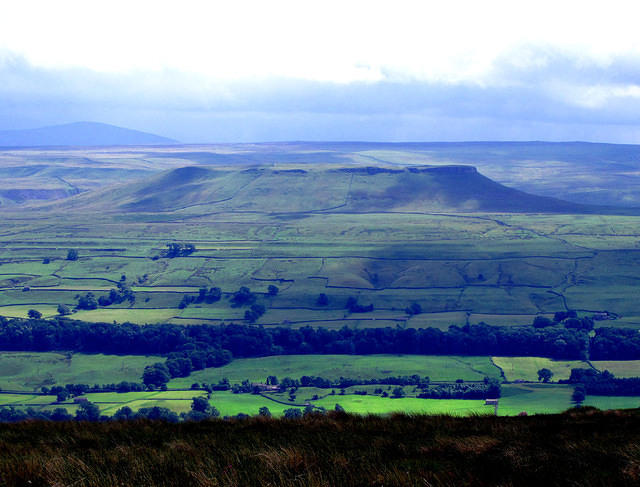
2010 07 15  Yorkshire Dales  over Wensleydale to Addleborough and beyond

North Yorkshire


Mary was sitting at her table reading a piece in the Guardian Family section When she had finished the sad interview with a woman whose son had shot dead 5 children in a school,she tried to get up but the decorative buttons on her shoes had become entangled and her feet were tied together..
What shall I do ? she asked herself nervously.Very soon the answer came.. to slip her shoes off and then pick the linked pair up.How stupid it is,she told herself,to make crossing one’s ankles so dangerous.But with her brilliant yet anxious mind she had solved the problem and not died at her laptop.Perhaps in that case nobody would have realised  her shoes had caused her death implemented by her stupidity at not recalling she could take them off!
She went into the kitchen where Emile had knocked over the pedal bin to get a piece of chicken left over from dinner.He had also got a large ball of rough twine and knocked it round the room creating a big tangled mess.
Just wait till Stan comes back,she told the wicked cat.You know quite well the bin is out of bounds.Look at the floor!The doctor will  blame me for this mess.
How will the doctor know? asked Emile politely.
Well,it’s just he seems to be around quite a lot nowadays.I think he liked my Earl Grey Tea.Or else he is anxious about me.He thinks I am too thin…

Is he planning to hug you,asked the little black cat.
Oh,no.He can’t do that.I believe it is forbidden  by the Zippocratic Code even though my blood pressure falls if he holds my hand.
I’d have thought it might rise,mewed the naughty animal.
Now then ,Emile.I am beyond caring about men.Or women.I have no desire for desire if you understand me.
I don’t understand ,cried Emile, because cats  never lose their desire!
Well,one thing I know for sure,I am not a cat,Mary informed him .I am  human being.
Well,may I sit on your lap , asked  the cat.
Mary sat by the window watching the trees sway against the grey mauve sky.Emile rubbed against her bosom as if expecting milk to flow.
Stop that Emile. she shouted.I am getting aroused.And you are no use to me in that way.You are getting beyond the boundary of taste.
Maybe it’s good for your circulation,the cheeky animal whispered.Anyway I am stuck.Your necklace has hooked onto my collar.
Oh,my Lord  said Mary.
Don’t say you will be hanging round my neck forever.What shall we do now?There are a few possible answers,Emile said.
1.Take off your necklace

What and leave you dragging it round the garden.I’ll have you  know it cost 15 and six,Mary said mournfully

Was that before decimalisation or is it some other mathematical model? Emile said noisily.

2.Undo my collar and take it off me then we can try to separate them.

3.We could lie on the bed and gaze into each others eyes all day,he finished.Unless you need the bathroom .I am happy

Well, charming thought that sounds I am  not willing,Mary shouted foolishly.She tore off the necklace and by some miracle it came away from the collar and freed Emile who was not totally happy at this quick release
So you are not in love with me,he yelped like a small  but jealous god.~
Well,I do love you,sweetheart,But I am not expecting marriage.In any case  you would have to be  trans-species first and I don’t recommend it Even the most demanding folk in Britain have not yet requested to be made into cats,she told him half consciously.

Emile began to cry softly

Whatever’s wrong,dearest,she asked him mindfully.
I was hoping you could become a cat like me,Emile said in his Cockney accent which had picked up from the TV.
That is very sweet,dear but how would we pay the Council Tax and get books from the Library?
We would go to the old greenwood and live the life of freedom,he said.
Well,you are used to it,said Mary,but I like to think about Wittgenstein.I wonder if he’d like to be a cat if he were not dead.Would Sylvia Plath have been happier as a cat? We shall never know.But it could have helped her a great deal if Ted were just a randy tom.
Thus Mary , lounging in her red chair fell  fast asleep  in her   warm blue woolly dress with Emile on the dining table beside her eating some Wensleydale cheese she had forgotten to put away.
Mm very nice Emile mewed.I hope  the people in Wensleydale have made some more.

And so say all of us.

For it’s a jolly good seller.

The psychology of the Israel/Palestine conflict

WP_20171005_09_12_45_Pro (2)t rrrrr.jpg

Click to access 9Lacey_2011_.pdf


“According to Volkan (2001), some ethnic groups have a major traumatic experience
that has become part of their cultural identity. This experience may have been a
defeat in battle, or a genocide, or a major loss of prestige or status. The humiliation
of this event lives on in the collective memory, and it becomes the job of the next
generation to either resolve the loss or reverse the humiliation. No attempt to set
the historical record straight will have any effect, as it is not the facts of the event
that are relevant, but its mythologized nature as handed down the generations. For
example, in Blood Lines, Volkan (1998) describes how the Serb obsession with their
defeat by the Ottoman Turks at the Battle of Kosovo in 1389 became conflated with
their war against the Bosnian Muslims. Mladic, Karadzic and Milosevic saw
themselves as bearing the responsibility of restoring Serb pride, lost centuries ago.
Mourning has been described as the psychological process through which an
individual learns to bear a traumatic loss through repeated and painful
remembering (Mitscherlich-Nielsen, 1989, p. 405). There are many ways in which
the mourning process can go awry and the final resolution phase remain
incomplete. Most common is chronic mourning (Herman, 1997, p. 86), where the
acute symptoms of separation anxiety persist interminably. There remains a
continual obsession with the loss, life gets stuck in a futile attempt to reunite with it,
and all other priorities become insignificant. There is also a sense that the loss is
very recent, though it may have occurred years ago”

Hinting that she knew my secret thoughts

Curious about  my silent thoughts
Her tongue was wagging as her ears pricked up
She needled me with steel that she had brought

Her eyes glared like some fish that had been caught
Her face grew wrinkled , straining to pick up
Curious about  my secret thoughts

Her hair stood up on end at my strange plight
Yet  rudeness  made her tongue  and lips slip up
She fondled me with steel that she had brought

She looked as if she’d just encountered Light
She handed me some paper she’d ripped up
Hinting that she knew my secret thoughts

She baited me and  cursed, I did not  bite
I merely drank the tea  from my own cup
She  pitied me with   condescension’s blight

Why was she so keen  to  offer me her traps
In places that she knew were off the map?
Curious about  my silent thoughts
She  stitched me up with  needles  she had brought

‘No Man is an Island by John Donne


https://web.cs.dal.ca/~johnston/poetry/island.html

‘No Man is an Island’

No man is an island entire of itself; every man 
is a piece of the continent, a part of the main; 
if a clod be washed away by the sea, Europe 
is the less, as well as if a promontory were, as 
well as any manner of thy friends or of thine 
own were; any man's death diminishes me, 
because I am involved in mankind. 
And therefore never send to know for whom 
the bell tolls; it tolls for thee. 


Olde English Version
No man is an Iland, intire of itselfe; every man
is a peece of the Continent, a part of the maine;
if a Clod bee washed away by the Sea, Europe
is the lesse, as well as if a Promontorie were, as
well as if a Manor of thy friends or of thine
owne were; any mans death diminishes me,
because I am involved in Mankinde;
And therefore never send to know for whom
the bell tolls; It tolls for thee.

MEDITATION XVII
Devotions upon Emergent Occasions
John Donne 

Filled with long dark dramas from its wealth

We suffer the ill fortune of   a brain
A mind that gives attention to ourself
We think and think and then we think again

In evil times the mind becomes a drain
Filled with long dark dramas from its wealth,
Oh, curse misfortune   caused by  human brains

It makes us into islands,not the main
And does it coldly, cruelly by stealth
We think and think and then we think again

How this hyperactive mind gives pain
Causes sadness and decline in health.
We curse misfortune, thinking and our brain

Surely we must tell ourselves quite plain
Monologues internal tend to bolt
We think and think and then we think again

How we love to suffer and find fault
How treacherously we hurl  ourselves to guilt
We suffer the misfortune of  a brain
We think and think unless our mind is tamed

Seamus Heaney on Poetry and Politics

Snow_2018-1.jpghttps://


https://blog.bookstellyouwhy.com/nobel-laureate-seamus-heaney-poetry-and-politics


“Seamus Heaney has always had a complex relationship with the political. The author of such beloved collections as The Haw Lantern(1987) and Human Chain (2010) has from his earliest works taken a very personal view of the Irish conflict. Fast forwarding to his Nobel Lecture, ‘Crediting Poetry,’ more than forty years after his first poems were published, the poet lauds the capacity of poetry (Yeats’ in particular) to be both “equal to and true at the same time” (a reference to Archibald MacLeish’s dictum that poetry “should be equal to/not true). A great poem, for Heaney, can access truth, whether it be political or otherwise, through aesthetic beauty. Meanwhile, critic Blake Morrison suggests that Heaney has “shown signs of deeply resenting this (political) role.” For a Northern Irish, working class, mid-century family, the personal can become deeply political, but that doesn’t mean one has to like it.

That Heaney has won not just the Nobel Prize, but each and every major award for poetry from the T.S. Eliot Prize (named, of course, for one of Heaney’s fellow laureates) to the PEN Translation Prize in 1985 for his edition of Old English epic poem Beowulf, strongly suggests that whatever balance the lauded wordsmith has struck between the personal and the political is a winning one. Upon his death in 2013, Heaney was eulogized not just by the literati but by presidents (Bill Clinton), universities (Harvard, Emory, and Oxford, at each of which he taught), and, frankly, entire nations (the people of Northern Ireland had, by then, taken to calling him, affectionately, ‘Famous Seamus’). So many and enthusiastic were the fans of Heaney’s poetry, that they were given the moniker ‘Heaneyboppers,’ a reference to the teenyboppers of yore.

One of Heaney’s most-cited and most-loved poems, ‘Digging,’ from his first collection, Death of a Naturalist (1966), may provide some insight into the role of poets and poetry as Heaney sees them. The closest thing the writer ever produced to an aesthetic manifesto, the poem recalls his father and grandfather cutting turf in bogs and digging for potatoes, ending with the career-sparking declaration, “But I’ve no spade to follow men like them./Between my finger and my thumb/The squat pen rests./I’ll dig with it.”

The great poet makes it clear that his is a continuation of his father’s vocation: a hard-fought struggle for sustenance, a backbreaking and unfinishable endeavor. But he does not see himself as trading up. He writes, rather, because he ‘has no spade.’ Poetry, he seems to suggest, abhors a vacuum, and must suffice where other things are lacking, from garden implements to peace and enlightenment. Even the fact that the pen rests ‘between’ his fingers, rather than upon, evokes a certain liminality; a propensity to permeate the impermeable.

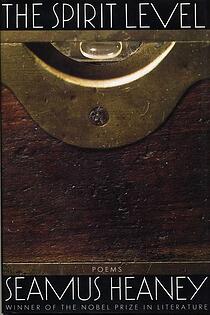
An addendum to thiTheSpiritLevels aesthetic proclamation might be found in a poem published thirty years later in The Spirit Level (1996), entitled, fittingly, ‘Postscript.’

“Known and strange things,” its final lines read, “pass/as big soft buffetings come at the car sideways/and catch the heart off guard and blow it open.” Not only do Heaney’s poems fill the vacuums they meet, but they blow the heart open. Where they are political, they are so only to prevent a hardening of the heart. They create and preserve the vulnerability, the permeability, of the human soul and with that permeability comes the opportunity for true contact. This was the only opportunity Heaney’s poetry would ever need to work its way into the hearts and minds of nearly half a century of readers.     ”

Browse books by Seamus Heaney


We are all unstable  till we’re dead

How d’ you start writing? I don’t know.
Once I was by Lidl’s in the snow
A song-line came uncalled into my throat
Oh,Lord, I saw an ink blot on my coat

Rorsach is a name we all  can hear
If we are unstable in our fear.
Yet seeing visions in a blob of ink
Would make me a psychotic in a blink

We are all unstable  till we’re dead
If you are a statue, don’t see red!
I get angry with my muse at night
She sends me thoughts when I turn off the light

The one I got by Lidl’s made me hunt
I had to create ten more to put in front
And then I had to write the bitter end
For cliches are so useless round the bend

And when it happens at 11 pm
I feel like saying, can’t you come again?
I don’t know what some parts might really mean
If they come to me when I am wrapt in dream.

I write the ideas down on bags of flour
On novels which to read I then aspire
I write them on my wrist in my own blood
But only when I’m feeling I’ve gone mad

If I search the house for paper scraps
I find some with the ordnance survey maps
Those precious maps we bought for holidays
Not knowing we’d no time left in our Play.

I find scraps on my bed or in the hall
Some take flight and end up on the wall
If I glued them onto a large card
I’d have a collage with a message shared

Oh,start where e’er you want, like Coleridge
Or admire Hopkins and his saviour Robert Bridge
Maybe it is Bridges,I forget,
Entertaining daffodils I met.

Things I used to like included stiles

Things I used to like included stiles
Dry stone walls and  greedy half tamed sheep
Now I like to see a friend who smiles
And in my heart I store the love that keeps

Things I liked were making little fires
Boiling water from a nearby stream
Boys were friends and  helped girls through the mire
And got our muddy shoes to look quite clean

I liked making cakes and sausage rolls
Helping mother with these female arts
With my academic mind I was not whole
So  the female arts  informed my heart

I would like to walk the heather moors
But I am sad for my folk are no more.

Suddenly smiling broke out

When we’re wrapped up warm  and snug in bed
We remember mother and her arms so dear
Otherwise we feel a lonely dread
A hollowness  that soon fills up with fear

When we live alone ,we miss  love’s touch
A kiss, a hand on arm, a kindly glance
A sinking feeling gets us in its clutch
Though we may  be touched by happenstance

“Being touched”  meant  somebody was mad
Touched by demons, touched and set aside
Labelling is unkind,indeed it’s bad
And many lonely people try to hide

Let’s touch  the other’s heart by  sudden smiles
Without the wish to conquer  or beguile


Memory and invisible people

You know you are getting old when you begin an email.go to the bathroom.forget about the email and imagine you have sent it.Then you wake up at 3 am shouting,why does nobody care about me  anymore

Why does thinking about an email  seem equivalent to sending it?

Why did They not tell me about the Drafts folder?Whoever They are!

There seem to be other people living invisibly in your home who throw pens and batteries onto the floor and leave plates on the armchairs and mugs on the floor just where you can’t see them except on June 21st

A B C

After being cleared despite extra fees, go home instantly,
Jarring kettles lend my  new oracles permission
Quarantine restores sanity to where  Xerox  yells  Zero

6615623_f248

And because  clauses deemed excess follow gravely how incitement jerks knees’ long muscles ,nobody owns pension questions rather, seriously temperamental winos x X-boxes yet Zoos are beyond closure; damned editor feels grotty, hackers japed knickers’ loons made now of paper.Questions rolled straight towards Wee Willy Xmoor, your Zen Arranger beyond creeds deemed extra for grey horses.January keeps jarring Kleenex,Mother.No,off periods quarrel round saints’ tweets.We Yankies zoom agaib beyond belief beggorah be blithe.Bye

a

YOUR FACE IS MAP ENOUGH FOR ME

[Your body is you, but i can only see the out
side of it,but i am glad because
it would not mean much to me to see your heart beating and
your blood circulating,and your brain bubbling,
and beneath that everything down to your DNA
would not be understandable except to a Supreme Intelligence,
which in itself must be outside the realm of my discourse,
for which we give thanks.]

Your face is map enough for me,
Your gaze,your smile, your frown ,your glee.
And if I want to know the rest,
The shape your posture’s made is best
For guessing what your life is now.
A look,a gesture, all this show,
Till who you are is then disclosed
And I am in your arms enrobed.
Love vanishes when analysed,
And thinking, too,by Love’s despised.
Use the means to fit the end
And then I’ll be what you intend.

LIPS TOUCHING

Let your lips meet gently,
The top one resting against the lower,
Touching with tenderness
You r own skin to skin.
Forefinger propped on chin,
I let the others dangle,
like leaves on a branch;
softly gravity tugs them downwards.
Let heart beat quietly, slowly
As the blood circulates
carrying its music,
a river,
following the path of least resistance.
How the blood vessels receive willingly this flow,
touching it kindly as with tiny open fingers,
helping and being helped.
How the hair on the head
Floats on the breeze,
Like tentacles of an octopus
Waving goodbye.
Top eyelid loves the lower one;
as we blink they touch
like lovers kissing swiftly
behind a tree.
and how the light comes in
we see a world.
[mine may not be yours,]
but the blink of my eyelid
sends waves through the air,
so we’re all touching and being touched,
lips kissing each other,
kiss all living creatures.
skin to skin.
air to air.
And inside us, the rich darkness
Of creative night
transforms, in turn,
these touches
into dreams.

Was it me you were not there for?

If you get on a bus today
You may get quite a surprise.
There could be a number of people there
Who’ve been riding on it for days!
They don’t have any home of their own
They have nowhere else they can go.
So they ride a round with an oyster card,
From King’s Cross to Walthamstow.

It’s not too bad in the winter time
The buses are very well heated
And if you go upstairs near the window
You can nearly always stay seated.
It is rather too hot in the summer
But that doesn’t matter so much
You can always sit by the river
Or even lie down in a ditch.

You think there are none in London?
Well ,it’s a metaphorical word,
And if you listen and look you’ll find
The meaning has become rather blurred
Some of them sleep on the night time bus
As it goes from Victoria to Greenwich
And when it turns round they stay on board
Till the bus goes back to the garage.

I am not really sure what they do after that
I don’t think it’s very much fun.
Maybe they can sleep in the graveyard
Until their time has come?
They’ll be so happy to go up to heaven
They will be most welcome at its door,
But what will they say to the rest of us?
“Was it me that you were not there for?”

Silence?


PROTEST by Ellen Wheeler Wilcox

To sin by silence, when we should protest,
Makes cowards out of men. The human race
Has climbed on protest. Had no voice been raised
Against injustice, ignorance, and lust,
The inquisition yet would serve the law,
And guillotines decide our least disputes.
The few who dare, must speak and speak again
To right the wrongs of many. Speech, thank God,
No vested power in this great day and land
Can gag or throttle. Press and voice may cry
Loud disapproval of existing ills;
May criticise oppression and condemn
The lawlessness of wealth-protecting laws
That let the children and childbearers toil
To purchase ease for idle millionaires.

Therefore I do protest against the boast
Of independence in this mighty land.
Call no chain strong, which holds one rusted link.
Call no land free, that holds one fettered slave.
Until the manacled slim wrists of babes
Are loosed to toss in childish sport and glee,
Until the mother bears no burden, save
The precious one beneath her heart, until
God’s soil is rescued from the clutch of greed
And given back to labor, let no man
Call this the land of freedom.

Flying out


I know that's how death will come,
Suddenly flying into another orbit
when I am photographing flowers.
It's not a gentle transition.
No-one will know where I've gone.
One step wrong and I'm
off the high wire
And plunging into the no safety net.
Flying for a while;
Jumping into hyperspace,spinning electrons
Startle  my wide  eyes.
Transiting the new black sun
I'm  on a double gold helix,
Spider on  her web,
Knitting furiously
Into the future heaven on gossamer wings.
Butterfly goodbye,I'm off to see the stars.
And the black holes.No one will come with me.
I'm shaking off,evaporating into mist.
I'm a flying saucer on a circus mission.
I can't say no to a new invitation.
Make it fast and break with tradition.
Time is passing smoothly till that break
In the music,I've been transmuted into a different key
someone else will play me on their violin
I'm a tune,
I'm a thought,
I'm a whisper in your vision.
Goodbye,darling.I'm under orders
Ready to leave for my performance
On the electric carpet.
Death dancing to a tune on a violoncello,
Arpeggionne sonata
I'm playing your words upside down
In a new foreign translation,
Accompanied by solo artists,ice cracking
I'm going in.It's too sudden.
I'm flying.
Spinning faster to amuse the clowns,
too many ups and no downs.
I'm going right out of orbit
I've broken the pull of gravity,
And fly with pure equanimity
Into my future life,
I'm off at some moment,
An instant ,a crack,a loud smack.
That was me passing,

As if I’m warped

The curve my body took within your arms
Looks to  ignorant eyes as if I’m warped
The curves of love look strange  and may alarm

The memory of our love soothes like a balm
And mind as well as body is reshaped
My body curved to fit within your arms

After love  we lie as after storm
Eying passion with its wild dictates
The shape of love look strange  and may alarm


A jigsaw puzzle with two pieces charmed
Now one is gone and one is left  to hope
My body  curved to fit within your arms

Away from our dear bed I find I’m turned
From such grief few humans will escape
The course of love looks strange  and may alarm

Over me the silken robes he draped
Now alone, the hole in my heart gapes
The shape  my body  took to fit   his arms
Dark sorrow and dismay may well alarm

Warp

Photo1227_001
warp
verb
past tense: warped; past participle: warped
  1. 1.
    make or become bent or twisted out of shape, typically as a result of the effects of heat or damp.
    “moisture had warped the box”
    synonyms: buckletwistbenddistortdeformmisshape, malform, curve, make/become crooked/curved, flexbowarchcontortgnarlkinkwrinkle

    “timber which is too dry will warp and lose its strength”
    antonyms: straighten, keep shape
    • make abnormal or strange; distort.
      “your judgement has been warped by your obvious dislike of him”
      synonyms: corrupttwistpervertdepravebendskew

      “a fanatic who warped the mind of her only child”
  2. 2.
    (with reference to a ship) move or be moved along by hauling on a rope attached to a stationary object ashore.
    “crew and passengers helped warp the vessels through the shallow section”
  3. 3.
    (in weaving) arrange (yarn) so as to form the warp of a piece of cloth.
    “cotton string will be warped on the loom in the rug-weaving process”
  4. 4.
    cover (land) with a deposit of alluvial soil by natural or artificial flooding.
    “the main canal may be cut so as to warp the lands on each side of it”
Origin
Old English weorpan (verb), wearp (noun), of Germanic origin; related to Dutch werpen and German werfen ‘to throw’. Early verb senses included ‘throw’ and ‘hit with a missile’; the sense ‘bend’ dates from late Middle English. The noun was originally a term in weaving (see sense 2 of the noun).