
 https://www.britannica.com/science/cognitive-dissonance

https://www.britannica.com/science/cognitive-dissonance
The Bard is a Leopard
There is nothing he can’t rant
Flesh and lean are the raptures
He wants me to pose
Near bashful daughters he leads me
To imbibe some holy spirits
He rides me along with his wrath
He gives clues to his rhymes
If I could walk with his valet in darkness
No heaving would we feel
You are there with your crooks and your laugh
With cheese you make my eyes shut
It was like the dead losing their minds
The only reason you are in the mental health unit is because you have bad manners
He kept on mocking over my apple tart
She bit and broke the apple’s heart
When is a nipple tart?
It was like the wild being with child
I have admitted a sin but it’s veiled
How accurate are our conceptions?
Every body wants me in jail
Every body wants me,in jail
Just say, they want you jailed
In jail or out, they want me
I misheard her smile
Her smile went from one ear to the other ear.That was mine.
His laughter made my eyes ache
His groans tormented the rats and stopped them sleeping in his bed.
I tasted his wit and added pepper
Are you so funny you are in the farm?
Do you mind?
“The snake which cannot cast its skin has to die. As well the minds which are prevented from changing their opinions; they cease to be mind.”
― Friedrich Nietzsche
When I am happier than I am today
I seem to feel your presence and your gaze
But now I turn to where you sat and read
To find a hole, an absence and a dread
A lack of energy, a grey fatigue
A feeling that my heart unholy bleeds
Gives me no new vibrance nor new look
I feel as dead as an old library book
Alas I woke one happy day to joy
Then off it rode like an unstable boy
And when the doom descended then I cursed
For that brief joy made my dumb dark heart feel worse
If I could live like butterflies all bright
I should have my days of sun and light
In dark grief. the human world seems frail
The self and the outside seem not to meet
And just as do the blind when they read braille
We feel our way without the gift of sight.
Should we seek escape in film or book
While unstable in our little world
Anxiety into the cracks will leak
And take our virtue so our self will fail
With no diversion, we must feel the pain
As sorrow swirls around our heart and gut
And others must not show us their disdain
Nor stamp on our prone body with their foot
The world has gone and with no skin I roam
Unprotected through this iron cold zone
How like a prison is a body lame
The mind calls up desires and feels no shame
But bones and joints eacg give me piercing pain
And who will pay insurance or take blame?
In my prison, I massage as planned
I exercise my mind but understand
I see my toes with them my white hands
While down the channel runs my little sand
I read King Lear and thought the king a fool
He did not live nor die as monarchs rule
Now I’m stuck inside a structure cruel
I’m like the pin which hides inside your jewel
The body’s more important than the soul
As feeling is the highest art of all
 Images by Mike Flemming
“‘Leave my loneliness unbroken! – quit the bust above my door!
Take thy beak from out my heart, and take thy form from off my door!’
Quoth the raven,
Edgar Allan Poe
 https://gervatoshav.blogspot.co.uk/2018/03/gadamer-on-translation-and-living-in.html
“The following excerpts are ripped from their context in Hans-Georg Gadamer‘s Truth and Method and applied to two issues that Gadamer does not directly address, but that I care quite a lot about: why those who view the Bible as authoritative should learn the biblical languages, and how they should go about learning them.*
“[E]very translation,” Gadamer declares, “is at the same time an interpretation.” This is now a cliché, and Gadamer, surely, was not the one who coined it. In class, I like to quote the saying attributed to the Israeli poet and translator, Haim Nahman Bialik: “Reading the Bible in translation is like kissing your bride through a veil.”**
Gadamer goes on to say that those who read a translated text can only engage in an interpretation of the translator’s interpretation, not the original. In the somewhat stilted prose of Gadamer’s translators:
[H]aving to rely on translation is tantamount to two people giving up their independent authority. Where a translation is necessary, the gap between the spirit of the original words and that of their reproduction must be taken into account. But in these cases understanding does not really take place between the partners of the conversation, but between the interpreters. … The requirement that a translation be faithful cannot remove the fundamental gulf between the two languages. … Every translation that takes its task seriously is at once clearer and flatter than the original. Even if it is a masterly re-creation, it must lack some of the overtones that vibrate in the original. … [T]ranslating is like an especially laborious process of understanding, in which one views the distance between one’s own opinion and its contrary as ultimately unbridgeable. And, as in conversation, when there are such unbridgeable differences, a compromise can sometimes be achieved in the to and fro of dialogue, so in the to and fro of weighing and balancing possibilities, the translator will seek the best solution–a solution that can never be more than a compromise.” (pp. 386-8)
When he turns to learning a foreign language, Gadamer sets the bar higher than is normally done in your typical Greek or Hebrew language class:
“To understand a foreign language means that we do not need to translate it into our own. When we really master a language, then no translation is necessary–in fact, any translation seems impossible. … For you understand a language by living in it–a statement that is true, as we know, not only of living but dead languages as well. Thus the hermeneutical problem concerns not the correct mastery of language but coming to a proper understanding about the subject matter, which takes place in the medium of language. Every language can be learned so perfectly that using it no longer means translating from or into one’s native tongue, but thinking in the foreign language. Mastering the language is a necessary precondition for coming to an understanding in a conversation. … Everything we have said characterizing the situation of two people coming to an understanding in conversation has a genuine application to hermeneutics, which is concerned with understanding texts.” (pp. 386-7).
In other words, understanding the subject matter requires mastery of the language, and real mastery means living in the foreign language long enough to be able to think in it. “
Lost affections fragment human souls
And no technician can repair this pain
We break in bits,no longer are we whole
We are the ones we love yet they grow cold.
We search and never find love here again
Lost affections fragment human souls
My double joints from grandmother I hauled
My eyes are James’ who on the Somme was gone?
We break like shells,no longer are we whole
Where is she in whose arms I was held?
Where will my mind go when my life is done?
Lost affections fragment human souls
As we age our bodies grow more cold
Why was there a Pope in Avignon?
They fell apart, the centre had no hold
Tears of grief fall, Buttermere in rain
Mountains with cascading streams will pray
Lost companions , lost are human souls
We break in bits,no ,we were never whole
 https://www.poetryfoundation.org/articles/146097/reader-discretion-advised
Editor’s Note: As you might have guessed, the following essay abounds with profane language that might not be suitable for all audiences. Read at your own risk.
At first, fuck is only phonemes. To the uninitiated, the word is no more than the sum of its linguistic parts: a fricative, a schwa, a velar stop. Fuck’s real power lies in its transgressiveness. It’s a dirty word, but a versatile one: noun, verb, adjective, adverb, a sui generis part of speech altogether. Fuck is profane. In some circles, it’s also sacrilege, almost on par with the smut that gets a person eternally damned. And so fuck becomes fun. A provocation, a taboo.
Punishments for profane language vary by culture and context, but in America a foul mouth is scolded, washed out with soap, censored, or even cited. In Massachusetts, anyone older than 16 is subject to fines for using “impure language” at sporting events, and an errant “Jesus Christ!” could theoretically land someone in jail. Obscene words are bleeped or minced on-air, asterisked or expurgated in print. In January, when President Trump reportedly referred to Haiti, El Salvador, and African nations as “shithole countries,” the New York Times’s headline discreetly described his language as “disparaging words,” while the Washington Post printed the insult in full. Most cable newscasters repeated the word on-air, and it scrolled across CNN and MSNBC’s chryons. Fox News, meanwhile, bowdlerized the word with dashes.
For poets, the stakes of using profanity are different. Each of a poet’s “fucks” is deliberate and premeditated, deployed for meaning and phonetic value rather than shock value. Weeks before Trump co-opted the word, I asked poet Maggie Smith about the power of “shithole” in her poem “Good Bones.”
… Any decent realtor,walking you through a real shithole, chirps onabout good bones: This place could be beautiful,right? You could make this place beautiful.Smith tells me the word has been in the poem since the first draft. “It feels right to me as a colloquialism,” she writes via e-mail. “It’s the first poem I ever used profanity in, but to me it feels like an integral part of the poem. I think it helps keep the poem from being too sentimental, and it gives the poem its ‘teeth.’”But in some contexts off the page, the word has been sanitized. When the poem was featured on the CBS drama Madam Secretary, the network’s legal department asked Smith for possible replacement words. “I suggested either ‘dump’ or ‘hellhole,’ and both cleared, so I chose to go with ‘hellhole,’” Smith says, adding, “Some newspapers have opted to use asterisks when reprinting the poem (sh******), and when I read the poem for a video on The Ohio State University homepage, the word was silenced.”
Just a few prompts will make me write
My heart will still writhe to the sound of, who is it?
Lewd songs don’t make Love wake
Flu prolonged will make us dive
As a dove I’m on go slow
He taught me to forgo sex.
He shook me below the wrecks
He said spiders have fifty legs
Where have all the hours gone?
Share love’s call when flowers come.
He likes a coffin fit after breakfast
Will you hum to the criminal at 3 pm?
No flowers,we respectfully bequest
All money gracefully deceived.
Ask for polite detention.
Some kind friend upset my applecart
Why do people offer me advice?
I want a suit of armour for my heart
I don’t suppose I’ll ever be a tart
Looking at old men with wild surmise.
A sweet, kind friend upset my applecart
I need a mask and fifty poisoned darts
So I can take my foes with real surprise
I want a suit of armour for my heart
I dream I’m going to hospitals in parts
My eyes will go to Moorfields, which is wise
The Royal Free will take my pressure charts
The Royal Marsden therapies are darts
The local place is famed for telling lies
I want a suit of armour for my heart
The Middlesex are writing to impart
The news that they are sacking doctors wise
Why did you upset me by surprise?
I guess the time may come for me to die
Tell the Lord I’m known for being shy
An long time “friend” has cut me to the heart
I need a suit of armour and spare parts
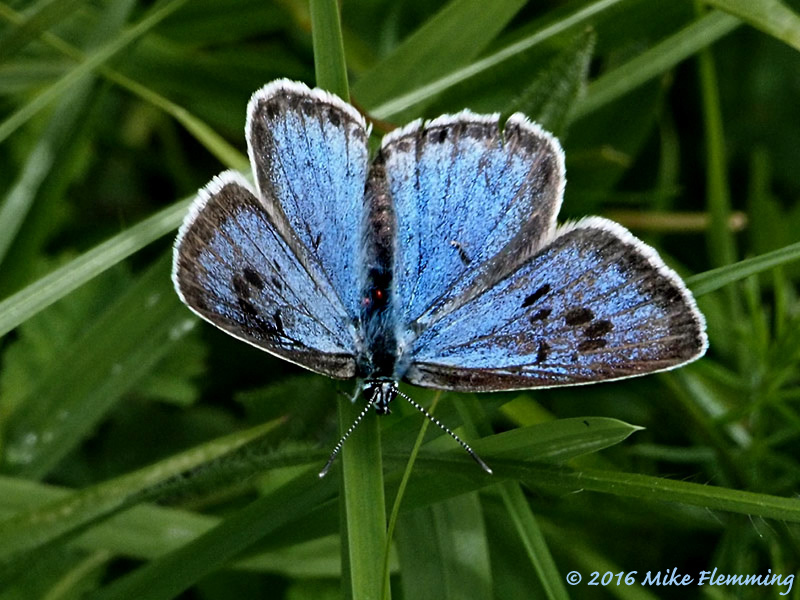
‘ How does one become a butterfly?’ she asked pensively. ‘You must want to fly so much that you are willing to give up being a caterpillar.’~ Trina Paulus

 https://www.goodreads.com/quotes/tag/intimacy
“They slipped briskly into an intimacy from which they never recovered.”
― F. Scott Fitzgerald, This Side of Paradise

With winter comes an insight into death
To view from this perspective our own life
The dark, the cold, the promise of re-birth
The love, the lack, the need for God’s new breath
The harvesting, the cutter and the scythe
With winter comes an insight into death
So we connect with all that lives on earth
The love, the joy, the wisdom and the grief.
The dark, the cold, the promise of re-birth
Again we ponder meaning and our worth
As we will one day lie beside a leaf
With winter comes an insight into death
We soon return to laughter and to mirth
With cakes and ale and wine at this our Feast
From the dark, the cold comes all re-birth
As the mighty lie beside the least
Each will give the worms intriguing tastes.
With winter comes an insight into death
The dark, the cold, the faint hints of re-birth
 To the postmodern,cancer does not exist.
Death is just that we stop moving and turn to dust
Birth is only real to the mother
Sex and birth are correlated but neither causes the other
Most people have sex after birth
Some claim to give birth while virgins.Who are we to doubt?
There is no absolute truth except we are all getting fatter.
This is a fascinating interview
The despised are the black, the mad and the Jew
The crippled, the blind and the child of such ones
Worse, even more, if you’re female too
When the race started no whistle blew
The rich whites were already far,far along
In front of the black, the mad and the Jew
The rewards are controlled by those of pale hue
When the poor get there the money has gone
Definitely will if you’re female too
Jesus was God but that was no use
He hung on his Cross and so could not run
With the black, the mad , the crippled the Jew
What do we see when we look at the News
Genocide,torture and battles still on
You will be raped if you’re a female too
Here are the weapons, the rockets that stun
Inventing all these gives the rich men their fun
The despised are the black, the mad and the Jew
Worse, even more, if you’re female too
 https://www.poets.org/poetsorg/poems?field_poem_themes_tid=1596
I recently killed my father
And will soon marry my mother;
My question is:
Should his side of the family be invited to the wedding?
” Michael Dransfield is one of the most prominent – and colourful – poets in Australian literature.
“I was actually doing a PhD on Michael’s poetry,” she tells Guardian Australia. “And my supervisor discovered that Michael and I had known each other and been very close, and she said, ‘Hang on, I don’t know whether you’re writing the right thesis here, maybe you should write a memoir!’”
That memoir, The Green Bell, will be released in March and gives a rare insight into Dransfield’s personal and creative life, and his struggle with addiction, as well as the indignities of psychiatric care in the 1970s.
Keogh met Dransfield in Canberra hospital in 1972. She was 22 and had been admitted for psychosis and grief after breaking down in a university lecture shortly after the death of her best friend. Dransfield was admitted days later, for treatment of his drug addiction. He was working at the time on the poems that would make up his fourth collection, the acclaimed Memoirs of a Velvet Urinal.
Their connection was sudden and intense, built on a mutual love of poetry and music, and a shared sense of the importance of imagination and language in shaping the world.”
I want to grow you a wrath-room
I want to flee
My stomach bakes
You are a packing grunt
I have wiles
I feel quick
I am going to bomb it
Do you like wrecks?
I am fey
I have run out
Where is your boil it?
Are you eight?
I like origami
You seem very belligerent for an atheist
Where did you bay, you’re humdrum?
Do you like sense?
I never use outstate wrecks or gin economy
Where do you make gloves?
Are you harried ?
I before U
My heart’s defiant
I want you benign
 The British Foreign office has weighed in on the plea deal reached between the Israeli army and Palestinian teen Ahed Tamimi, saying the conviction and sentence were “emblematic of how the unresolved Israeli-Palestinian conflict is blighting lives of a new generation.”
They also called on Israel to improve its treatment of Palestinian minors in Israeli military prisons, urging local authorities to do more to “safeguard vulnerable people in its care.”
Full story
I am much affected by children and minors being in prison when it is not absolutly necessary and there are about 300 Palestinian Minors in Israeli jails who like Ahed are tere for a lomg time before being tried.For 50 years they have been tried in Military Courts whereas Israeli settlers are tried in Civil Courts
If this and the check points and walls are needed then it seems a terrible way to have to live
From Gov.UK
Minister for the Middle East, Alistair Burt MP said:
The conviction and sentencing of Ahed Tamimi is emblematic of how the unresolved conflict is blighting the lives of a new generation, who should be growing up together in peace, but continue to be divided.
The treatment of Palestinian children in Israeli military detention remains a human rights priority for the UK. We will continue to call upon Israel to improve its practices in line with international law and obligations.
We have offered to help the Israeli authorities through expert-to-expert talks with UK officials. The offer still stands and we hope Israel will take us up on it. While we recognise that Israel has made some improvements, it needs to do much more to safeguard vulnerable people in its care.
{

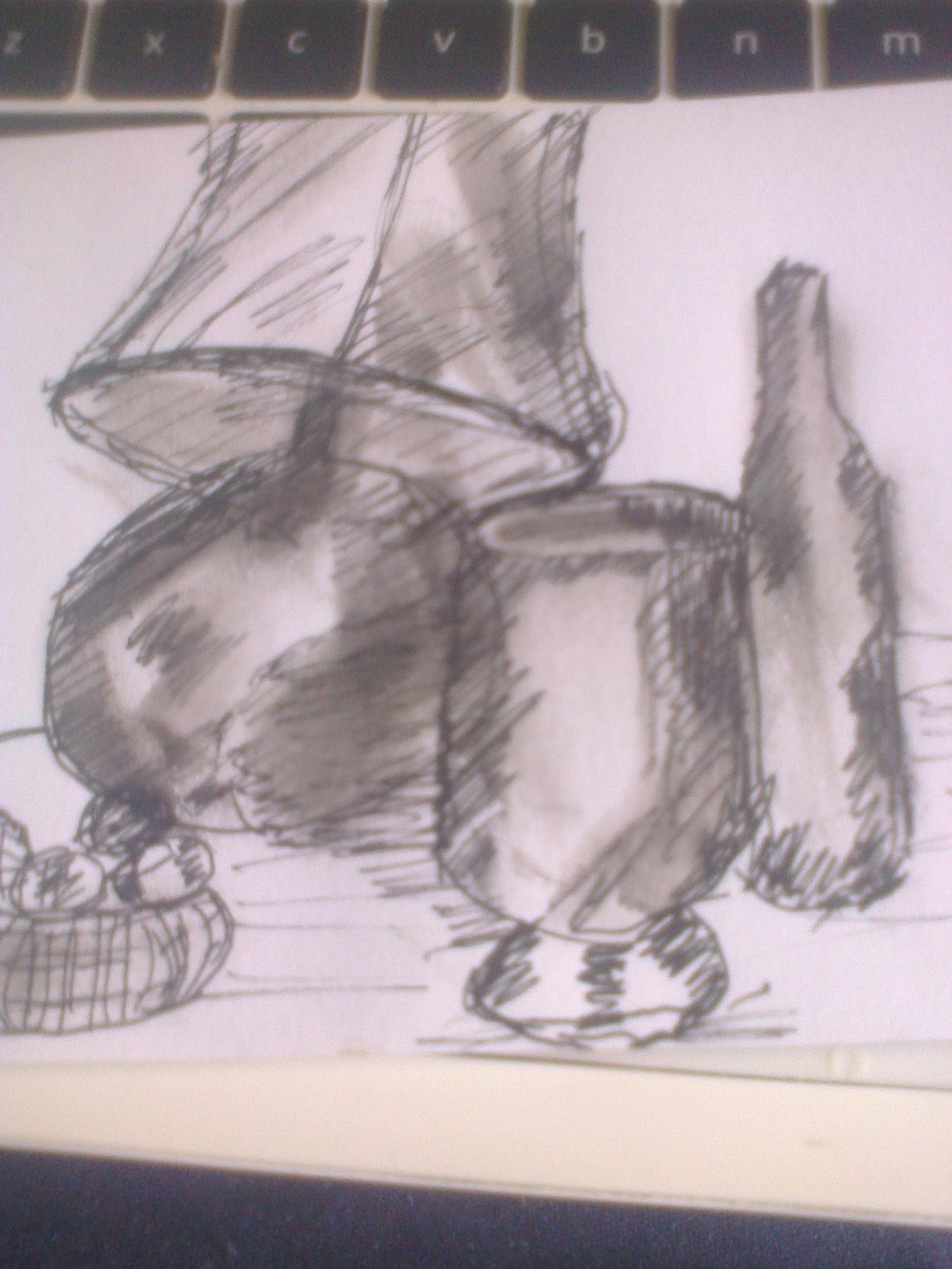
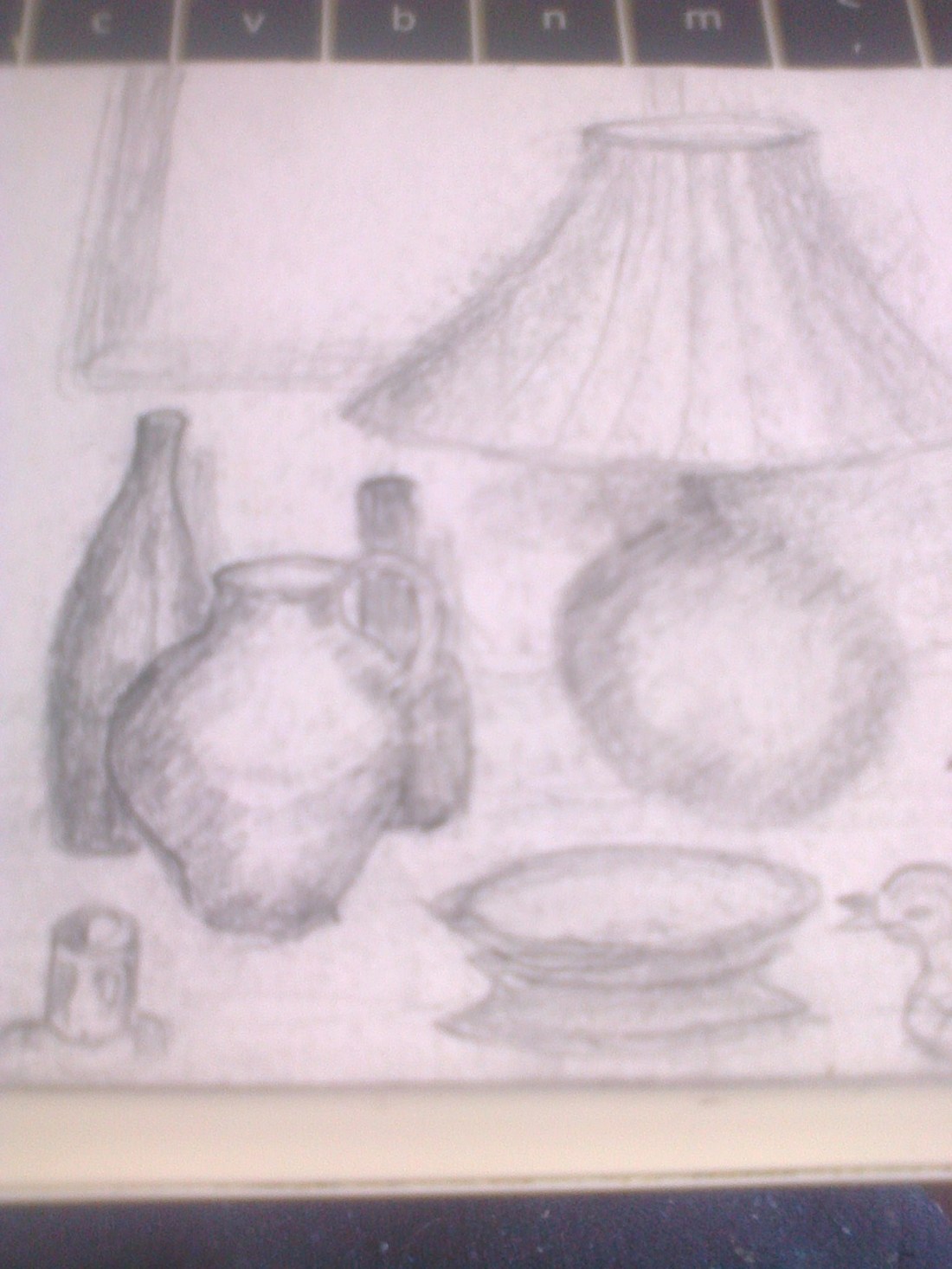 Candle light at Christmas or great Feasts
Softens all our troubles in its peace
Reminds us of the soothing kindly light
Protecting us from darkness in the night
Yet candles may fall over over and ignite
Burn down our homes and fill our souls with spite
Nothing is entirely good or bad
This is true yet it has made me sad
As I lie in reverie in my bed
I see the long loved faces of souls dead
I smile as these sweet images pass by
Then sleep and dream on with a grateful sigh
Will I one day be passing through your mind?
May all your dreams and reveries be kind
 Image by Katherine 2018
https://io9.gizmodo.com/heres-what-your-brain-is-doing-when-you-really-really-1656710293
“As the scientists, Semir Zeki and John Paul Romaya, wrote in the study itself, “Hatred against an individual may be seemingly irrational and rooted in remote anthropological instincts. Hate based on race or religion would probably fall under this heading. On the other hand, an individual may trace the hatred to a past injustice and hence find a justifiable source for it. There are no doubt many other ways in which the sentiment can be sub-categorized.”””
“. When we love someone, we shut off the part of our brain that judges – a trait that, we hope, has led to more happiness than sorrow. When we hate someone, we leave the judgment part of our brain a’blazing.”
There’s a theory which holds that hatred evolved so that one group of hunter-gatherers wouldn’t feel so bad about stealing resources from another group of hunter-gatherers. In other words, we hate because hate sometimes keeps us alive. It’s a decent theory, but it makes hatred an extremely recent phenomenon, and one exclusive to humanity.”
What I saw as glowing evening sun
Turns out to be a neon light lit up too soon
And our imagination sees a savage gun
Where there is nothing but a fine toothed comb
The mind is waiting with a bunch of signs
To fit perceptions into ready truths
Though I’ve not seen a gun nor made designs
Nor used a nit comb since I was a youth
What we see is what will interact
With what we want,we love, or what we hate
From all the memories that are well packed
Into minds with independent states
And so we quarrel , murder, go to war
With those who look from different coloured doors
Continue reading “Imagination sees a pointing gun”
Who has lived without the threat of war
Our war’s ongoing,makes us what we are
Recovering from the last and making sure
We’re ready for the next aggressive “cure”
From lover’s cruel to Holocaust Hell’s flame
We do not enjoy peace within our homes
While in the arms of love we plot escape
Intimate demands are feared far less than rape
From states’ aggressive greed to married hate
We come to love in fear and perhaps too late
Who wrote the script ,who acts their part alone?
The Play returns,repeats as humans mourn
Who can bare their tender, living hearts
Before the ruinous “wars of mercy” start?
 https://www.poetryfoundation.org/articles/69592/poems-for-peace
“In May 2009, in a backyard in Portland, Oregon, a few poets and artists found themselves possessed by what appeared to be a simple question: if we were to suggest that bookstores have a “peace shelf” of books, what should it carry? We were in Portland for “Another World Instead: William Stafford Peace Symposium,” and Kim Stafford, the poet’s son, posed the question.
I began scribbling furiously as Kim and Jeff Gundy, Fred Marchant, Paul Merchant, Haydn Reiss, and I widened the imagined shelf until it was a whole bookcase, and then it seemed that we’d need a whole store; as dusk fell, and later on e-mail (when Sarah Gridley joined the conversation for our panel at Split This Rock 2010), we probed a concept that teeters between immensely practical and dangerously amorphous: how to canonize a list of books and other resources that would envision a more just and peaceful world—for bookstores, for teachers, for interested readers—without turning it into Jorge Luis Borges’s famous “Library of Babel,” which contains every book ever written?
And how to overcome—in ourselves, in the poetry world, and in all the wider communities in which we situate ourselves—our own resistances to an engaged poetry that stakes specific claims about the world, a poetry that could be partisan and provocative and even utopian? After all, many of us feel as John Keats did, despite his friendship with the partisan poet Leigh Hunt: “We hate poetry that has a palpable design upon us—and if we do not agree, seems to put its hand in its breeches pocket. Poetry should be great & unobtrusive, a thing which enters into one’s soul, and does not startle it or amaze it with itself but with its subject.”
And if the poetry that presses “palpable design upon us” were not challenge enough, then what to do about poetry that proposes something about peace, the very word of which veers into a kind of New Age ganja haze and evades the pungency of real life; or, to let Keats muse on the subject, “for axioms in philosophy are not axioms until they are proved upon our pulses.” Ezra Pound’s Imagiste manifesto similarly exhorted poets to avoid fuzzy abstractions: “Don’t use such an expression as ‘dim lands of peace.’ It dulls the image. It mixes an abstraction with the concrete. It comes from the writer’s not realizing that the natural object is always the adequate symbol.”
Yet we Americans live in the most powerful country in the world, whose adaptably postmodern empire is marked by what William James calls Pure War, a state in which the real war is the constant preparation for war. Though our poetry has ably represented the traumatic and unmaking operations of war—from the rage of Achilles on to our present day—it has also often unwittingly glorified and perpetuated a culture of war. We have yet to give adequate attention to how our poetry also contains the seeds of other ways of dealing with conflict, oppression, and injustice, and how it may advance our thinking into what a future without war might look like.
How to imagine peace, how to make peace? In our conversations on the Peace Shelf, three general subcategories emerged, though these were full of overlap and contradiction: Sorrows, Resistance, and Alternative Visions. It’s simple enough: we need to witness and chronicle the horrors of war, we need to resist and find models of resistance, and we need to imagine and build another world. Even if modern poetry has been marked by a resistance to the glorification of war, vividly shown by the World War I soldier poets and many others, the important work of poetic dissent has been, too often, via negativa—resistance to the dominant narrative, rather than offering another way.
Even Denise Levertov—one of the self-consciously anti-war poets on any Peace Shelf—found herself at a loss for words at a panel in the 1980s, when Virginia Satir called upon Levertov and other poets to “present to the world images of peace, not only of war; everyone needed to be able to imagine peace if we were going to achieve it.” In her response, “Poetry and Peace: Some Broader Dimensions” (1989), Levertov argues that “peace as a positive condition of society, not merely as an interim between wars, is something so unknown that it casts no images on the mind’s screen.” But she does proceed further: “if a poetry of peace is ever to be written, there must first be this stage we are just entering—the poetry of preparation for peace, a poetry of protest, of lament, of praise for the living earth; a poetry that demands justice, renounces violence, reveres mystery.” That Levertov lays out succinctly what we ourselves, the Peace Shelf collective, took some weeks to arrive at, illuminates the challenge of the peace movement and of the literature that engages it; our conversations, our living history and past, are scattered, marginal, unfunded, and all too easily forgotten.
The following poems, dating from the 20th century onward—which appear in the anthology Come Together: Imagine Peace—provide a foretaste of the larger feast, which could begin with the Sumerian priestess Enheduanna’s laments against war, with Sappho’s erotic lyrics, or with Archilochus’s anti-heroic epigrams. Yet this feast isn’t mere sweetness and light. “Peace” is no mere cloud-bound dream, but a dynamic of living amid conflict, oppression, and hatred without either resigning ourselves to violence or seizing into our own violent response; peace poems vividly and demonstrably articulate and embody such a way. At their best, peace poems, as John Milton did in “Aereopagitica,” argue against “a fugitive and cloistered virtue, unexercised and unbreathed, that never sallies out and sees her adversary.” If, in Milton’s words, “that which purifies us is trial, and trial is by what is contrary,” then peace poetry must also interrogate the easy pieties of the peace movement and its own ideological blind spots. And indeed, Michael True’s exploration of nonviolent literature confirms that “although writings in [the nonviolent] tradition resemble conventional proclamations recommending peace reform, their tone and attitude tend to be provocative, even disputatious, rather than conciliatory.”
Perhaps peace poetry is not quite a tradition but a tendency, a thematic undertow, within poetry, and within culture. Yet it has been with us as long as we have been writing. Peace poetry, such as it may be—like the peace movement that it anticipates, reflects, and argues with—is part of a larger human conversation about the possibility of a more just and pacific system of social and ecological relations.
For the poems please use the link at the top of the page


