

Is it tomorrow yet?
What shall I dream of tonight?
Shall I sleep in my own bed or in the cat’s?
Am I the cat’s mother?
What are the patriot’s games?
Is Ireland a Jewish State as Jesus was a Jew [ maybe he still is]?
Can anyone be a Catholic? How can you tell?
Can I be buried with glee?
Do you like Jennifer Warnes?
I love her with all I have
Praise be the Chord
Author: Katherine
Poetry writer and author

Humour
 I made an old friend laugh a lot when I suddenly switched from Educated English into my broad Lancashire accent.She was thunderstruck.I’ve never spoken like that before in front of her.I sound like Thora Hird.. I look like her.Am I her double?
Where the cow slips there slip I
How come this beauty?
Where the bull rings, there ring I
Ravel your duty
There’s no deliverance
From heeding life at once
To learn love’s wisdom
Share this:

“There are no ordinary people”

Photo by Mike Flemming copyright
“There are no ordinary people. You have never talked to a mere mortal. Nations, cultures, arts, civilization—these are mortal, and their life is to ours as the life of a gnat. But it is immortals whom we joke with, work with, marry, snub, and exploit—immortal horrors or everlasting splendours.” To embrace this account of the human person, which is of course a traditional Christian one, is to decenter the world of politics—not to ignore it, but to shift it toward the periphery, to see it as among the second rather than the first things. (Lewis, The Weight of Glory, p 46; Jacobs, p 56)
C S Lewis ,best known as the author of Narnia, was an Oxford Don who wrote about Christianity [Mere Christianity]
Share this:

Do what’s better, not what’s worse
Oh, mother, father take me back
I’ve lived the pain, I ‘ve felt the rack
I wanna see Jesus.
Take me to that wall they built
Let me see where blood’s been spilt
I wanna see Jesus.
Oh, take me back to where I was
The enemy may well be us,
Not Jesus.
What did all those sermons do?
Did they say he was a Jew?
Oh, Jesus.
Did he want the First Crusade
It is his blood the priest creates
Lord Jesus.
I don’t like the way things are
I am getting tired of war
Kill Jesus.
What has human wisdom done
From Wittgenstein to Abraham?
Cripes, Jesus!
Does research improve our lives
As for grants, the scholars strive?
Ask Jesus.
We may have chemotherapy
Radiation, history.
Where’s Jesus?
You’d think that after all the years
We’d have used up all our tears
Sweet Jesus.
Love your neighbour as yourself
Give 1% of all your wealth
Aye, Jesus.
Do what’s better, not what’s worse
I see another fragrant hearse.
It’s Jesus.
See the plastic Crucifix
See him dying with dry lips
Bend your knees, confess your sins
Otherwise, the Devil wins
Not Jesus.
We destroy the good we hate
Envy writhes and with pride mates.
The progeny will wreck the earth
Eden’s burning as drones pass.
No, Jesus.No Jesus.
Know Jesus.
Share this:
A brave novelist
“Before, says Peretti, she was “very scared of showing people I had a disability. For a long time, I tried to be better than a ‘normal’ person. It was stupid. Now I know that we are all different, and we only have to be ourselves. I am this way: a writer, a woman, a person with a disability.”
Like a child afraid of the dark, the unknown filled her with dread. “Now I know that no one can control the future. We don’t know what will happen tomorrow.”
For Mafalda, a keen goalie, letting in a goal because she doesn’t even see the ball coming and being ditched by her oldest friend, are particularly unexpected. Without self-pity she crosses “having a best friend” off her list of essential things. “I thought, for a long time,” says Peretti, reflecting on her own attempts to suppress her need for human connection, “that it was very hard for other people to be close to someone with a disability, or problems in general. But it wasn’t hard for me to be with marginalised refugee children. It’s not hard to be with someone who needs help.
“Being lonely was a great fear of Mafalda’s, and of mine. It is a sort of death, being lonely. Finding a true friend, a real friend, is the most important thing for Mafalda – and for me as well.””
Share this:
Friday’s Child by Auden
He told us we were free to choose
But, children as we were, we thought—
“Paternal Love will only use
Force in the last resort
But, children as we were, we thought—
“Paternal Love will only use
Force in the last resort
On those too bumptious to repent.”
Accustomed to religious dread,
It never crossed our minds He meant
Exactly what He said.
Perhaps He frowns, perhaps He grieves,
But it seems idle to discuss
If anger or compassion leaves
The bigger bangs to us.
What reverence is rightly paid
To a Divinity so odd
He lets the Adam whom He made
Perform the Acts of God?
It might be jolly if we felt
Awe at this Universal Man
(When kings were local, people knelt);
Some try to, but who can?
The self-observed observing Mind
We meet when we observe at all
Is not alariming or unkind
But utterly banal.
Though instruments at Its command
Make wish and counterwish come true,
It clearly cannot understand
What It can clearly do.
Since the analogies are rot
Our senses based belief upon,
We have no means of learning what
Is really going on,
And must put up with having learned
All proofs or disproofs that we tender
Of His existence are returned
Unopened to the sender.
Now, did He really break the seal
And rise again? We dare not say;
But conscious unbelievers feel
Quite sure of Judgement Day.
Meanwhile, a silence on the cross,
As dead as we shall ever be,
Speaks of some total gain or loss,
And you and I are free
To guess from the insulted face
Just what Appearances He saves
By suffering in a public place
A death reserved for slaves.
(In memory of Dietrich Bonhoeffer,
Share this:
The quick of human flesh was dragged and torn
The death of God implies he did exist
And of his sayings many were possessed
The still, small voice, the burning bush, its fire
The prophets ,Moses ,Jesus, Jeremiah
On God, a snail without a shell , we trod
On his face of love, we left much blood
The quick of human flesh was dragged and torn,
Oh, tortured people, God lived in your forms
Tear your finger nail side,see it bleed
Imagine pain both dreadful and unseen
Where was God’s own dwelling place, we cry
To the lowly, he was in the sky.
God was buried live in earth which shrieked
My people,where are they, ah can none speak?
A number of Jews who survived the death camps went to their old homes in Eastern Europe.I am not saying which country
They were buried live.The earth heaved for hours
Share this:
A human haversack [ dialect words]
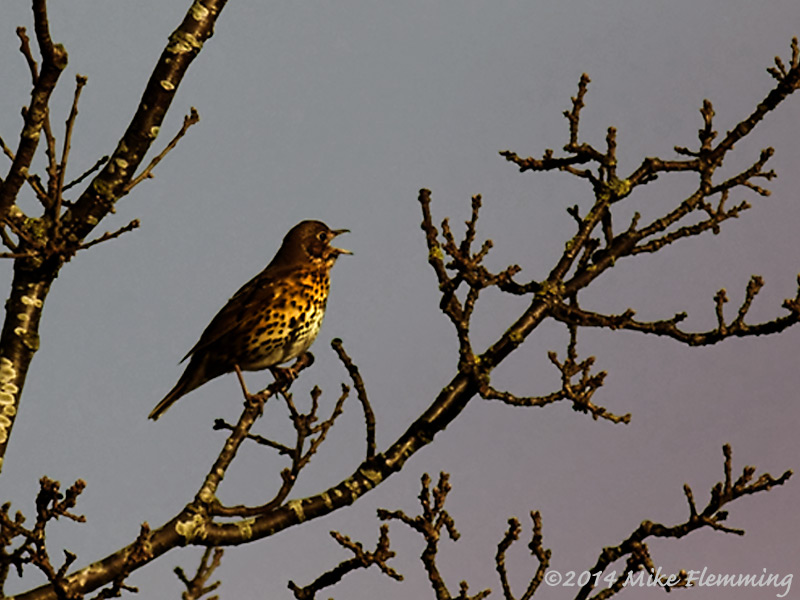 Ballispipes(voice box)
-
-
Ballybant(belt)
-
Bant(twine)
-
Banterin(haggle)
-
Baokes(beams)
-
Barm-bo(barm dumpling)
-
Barmy(Silly)
-
Barrowfells(barrowfields)
-
Barst(burst)
-
Bat(hit)
-
-
-
Beawt, bowt(without)
-
Beylin(Boiling)
A kettle beylin on het fire means home
A place of greater safety, allus known
Mi mam wer mekin bread and dad wer heah
I live now cos mi daddy drank that beer
T’cat wer sat down on our old rag rug
I was in ‘t kitchen peeling spuds
We had ehn old gas cooker and a sink
Otherwise we’d only pen ‘n ink
Mi ballispipes are useful as I hum
Hopin’ song will bring mi daddy home
But now and then they cause some people wrath
Like a woman in my Wensday morn Art Class
She shouted ,is there summat wrong wi’ you?
Where to start, is Confession ever new?
Abaht mi singin’ I don’t sing bi will
I think it’s daddy, he is wi’ mi still
Oh daddy I don’t miss your ballybalt
On my bum it left eternal welts
Yet you sang me lullabies and I rode on ye back
A livin’ ,breathin’ ,human haversack
Share this:

Religious rites: are they of any real value?
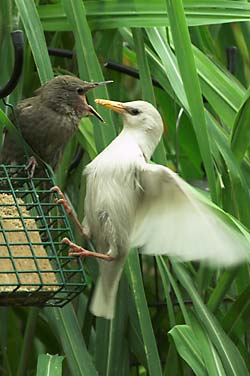
This photo is from Mike Flemming’s Natural History Blog
http://home.btconnect.com/mike.flemming/
“In the 1950s and 1960s his [Auden’s ]religious views began to coincide with those of the Protestant theologian Dietrich Bonhoeffer, whose letters from the Nazi prison where he was eventually murdered had expounded an adult, “religionless” Christianity that had left behind all childish fantasies of a protective, paternal God. Bonhoeffer’s God experienced human suffering: “It is not some religious act which makes a Christian what he is, but participation in the suffering of God in the life of the world.” Auden told friends that of all the doctrines that the early Church had condemned as heresies (such as the Gnostic and Manichaean heresies that regarded matter as inherently fallen or demonic), the only one in which he believed was patripassianism, the doctrine that the Father voluntarily suffered with the Son.”
Share this:

A strange experience by WH Auden
One fine summer night in June 1933 I was sitting on a lawn after dinner with three colleagues, two women and one man. We liked each other well enough but we were certainly not intimate friends, nor had any one of us a sexual interest in another. Incidentally, we had not drunk any alcohol. We were talking casually about everyday matters when, quite suddenly and unexpectedly, something happened. I felt myself invaded by a power which, though I consented to it, was irresistible and certainly not mine. For the first time in my life I knew exactly—because, thanks to the power, I was doing it—what it means to love one’s neighbor as oneself…. My personal feelings towards them were unchanged—they were still colleagues, not intimate friends—but I felt their existence as themselves to be of infinite value and rejoiced in it.
WH Auden
Share this:
Start again, I seemed to hear them say
Share this:
Celtic Harp
Share this:
Washing gay men!

Photo by Andre David Manjon Escobar on Pexels.com
Emile woke Mary up at 7am.It was a Sunday in late October, grey and damp though the sun was still not too low
Go away, she told him.The clock has changed.It’s not 8 am yet.I have to wash my hair as well.Get the Observer out of the basjet for me.
I can’t read. the dear animal replied.And why don’t you rebel and stick to Summer Time?
I know Stan wanted to send you to Eton but we couldn’t afford it.Yet you understand days and calenders, Mary joked savagely
She got up and found her fleece dressing gown; it was conker brown covered in coloured spots.She went downstairs and gave Emile a Whitby kipper.Then she made some tea and took it upstairs so she could drink it while she came round from her dreams
Suddenly Annie ran into her bedroom wearing a long black vinyl coat and red knee-high boots
You never locked the back door, she howled like a lost leopard which has had no food for weeks
I don’t suppose anyone wants my old TV as it is only 19 inches.And my Chromebook is not something worth re-selling.I do have a new coat.
How about Ray Monk’s life of Wittgenstein, Annie asked her defiantly, her apricot lips pouting childishly as the Riemann of Paris lipstick glittered uncannily like an imaginary number in a dream of Godel.
The people who might enjoy reading it are by virtue of that , not the sort to steal or buy it on the black market.
That is very racist, Annie told her.You should say:the beige market!
Then nobody would know what I meant, Mary said lovingly
Anyway, do you want to come to Marks with me? They have some beautiful coats in
I’d like a pink wool coat, said Mary thoughtfully
Quite right ,said Annie.Bring back feminine colours
Actually, gay men might like pink coats, she continued.But if they go on the bus they might get dirty.Come to think of it, so will women’s coats
They will have to buy pink puffa jackets and we can wash them at 30 deg.Mary whispered
Using a special detergent, Annie asked?
I have never seen a detergent for washing gay men.I don’t think they will fit into the washing machine.On the other hand, you are small so you will fit in
Shall I get undressed first, Annie asked furtively.
Yes, I’ll try to put you on a short wash for 15 minutes but it is your choice.Maybe a bath would be safer?
No problem, said Annie intellectually.Are you having one with me?
You’d better be careful, Mary ad-libbed.It might be sexual harassment.
Well, I am not gay , said Annie.
You never know till you try, Mary giggled ,like a child behind the school canteen
Why, we might become gender fluid and then who knows?
And so say all of us
Miaow
Share this:

54 hours
Using google maps I see
I can walk to Tewkesbury
It will take me 50 hours
Just time for the milk to sour
If I have a motor car
I can get there in 3 hours
Is it worth it just for once?
£20,000 at a glance
I wonder can I hire a bike
I have an old one but it’s white
The tyres have rotted and it’s sad
Better just to say its dead
No wonder the Royal Family
Spend so much on fealty
Their own train is very good
If only if it were real brown wood!
Share this:
A surprise to me:Auden’s view of prayer
“To pray,” Auden wrote, “is to pay attention or, shall we say, to ‘listen’ to someone or something other than oneself. Whenever a human so concentrates his/her attention—be it on a landscape, or a poem or a geometrical problem or an idol or the True God—that s/he completely forgets his/her own ego and desires in listening to what the other has to say to him, she/he is praying.” This may seem a denatured idea of prayer, but Auden took it seriously, and seems to have prayed in exactly this sense”
I sent this article to a few friends.One sent back an elegant and beautiful description of his view of the world and what it has within it though being an atheist he may not pray in the [old fashioned] Christian sense.He may pray in the above sense but to him it’s not prayer it is being alive and experiencing that
Another lapsed Catholic sent a short note saying she wasn’t interested in God
She didn’t ask me what it meant to me or why it had seemed interesting enough to send to her.She may like me have suffered the utter boredom of a convent school
Are some of us living in a complete and enclosed world so we don’t care what interests others? And we feel safe.After all, the boredom of the Rosary nearly drove some of us insane.That was no prayer that was rubbish to me.Yet some people have found it a help in times of trouble/Maybe just feeling the beads is nice?
I suppose in Auden’s piece he wants to be involved in humankind and the world of nature, the Universe of some aspect of that.And he also liked the invocation of the spiritual by means of rites and rituals which has been part of our history from the start……
A bit like music or an art show….?
Share this:
W H Auden
““To pray,” Auden wrote, “is to pay attention or, shall we say, to ‘listen’ to someone or something other than oneself. Whenever a human so concentrates his/her attention—be it on a landscape, or a poem or a geometrical problem or an idol or the True God—that s/he completely forgets his/her own ego and desires in listening to what the other has to say to him, she/he is praying.” This may seem a denatured idea of prayer, but Auden took it seriously, and seems to have prayed in exactly this sense
Share this:

On the cello
Share this:
Arpeggione Sonata by F Schubert
Share this:
That phrase
A starting phrase, a melody alert,
A trill of birdsong may our ears caress
As sensitive as a baby’s little hands
As touching as the lover understands
We join together in one human heart
As round the world the News our minds will hurt
As round the sacred, carelessly we skirt
As dimly we perceive the last combat
Then let us be like music sung unplanned
From startled phrase
Arpegionne, cello,Franz Schubert
Do not leave before the great concert
The music gathers from the world’s own lands
Shared in trembling heart and soul’s demands
Till all to peace may make their minds convert
Give us that phrase.
Share this:
Drunk again

Share this:

In the mirror
In the mirror, who do we perceive?
Do we see ourself,does it deceive?
We look different when in varied moods
Ungrown people love to sulk or brood
We see ourselves but how are we received?
If a friend looks sad, perhaps they grieve
We are mortal.,death will snatch with greed
As we turn to dust with ancient leaves
Reflecting on the truth, do not look rude
In the mirror
Where one has has ventured must she lead?
Far from home, barbarians spread their seed
Europeans savaged worlds approved
Forced conversions madden God indeed
With no mirror
Share this:
A poem by Les Murray
the same mirror:
mobile, glancing, we call it poetry,
fixed centrally, we call it a
religion,
and God is the poetry caught in
any religion,
caught, not imprisoned. Caught
as in a mirror
that he attracted, being in the
world as poetry
is in the poem, a law against its
closure.
There’ll always be religion around
while there is poetry
or a lack of it. Both are given, and
intermittent,
as the action of those birds –
crested pigeon, rosella parrot –
who fly with wings shut, then
beating, and again shut.
Share this:
Religions are poems

https://www.theguardian.com/books/2008/nov/29/nick-laird-poetry-religion
EXTRACT:
Though an atheist – in that I believe we’re here only by happy accident – my sensibility is religious. I like ritual and heightened states. I like mind-altering drugs. I believe in invisible forces – radioactivity, magnetism, sound waves – and I’m more than willing to sit for an hour listening to a church organist practice, which I did just last week. And I’ll let myself shiver along with the immense chord changes. I don’t like faith but I’m fond of its trappings- the kitschy icons, the candles, the paintings, the architecture and, especially, the poetry. Though many great religious figures, from Augustine to Screwtape, have taken prose as their instrument for confessing or cajoling, when it comes to praise, poetry’s the usual choice. I’ve been reading Robert Alter’s magnificent new translations of The Book of Psalms, and “My heart is astir with a goodly word”.
The relationship between poetry, those goodly words, and religion is hard to quantify. Both involve the hidden, working at the borders of the sayable. They share an experiential dimension. Personal religion involves a private speech act (prayer), chanting (psalms), heightened states achieved by ritualised words. The Lord’s prayer is one of the first poems I learned. Leached of its import by years of mindless recital, it’s almost a Sitwellian sound poem to me.
Share this:

The narcissism of small differences
“The English and the Scots. The Serbs and the Croats. The Sunnis and the Shiites.
If you look at some of the fiercest and bloodiest rivalries in history, what’s striking is not how different the opposing groups are, but how similar. Sure, they often hold different beliefs, but they live as neighbors, share ancestry, and hold similar customs.
In his 1930 essay “Civilization and Its Discontents,” Sigmund Freud commented on this dynamic, noting that it is frequently “communities with adjoining territories, and related to each other in other ways as well, who are engaged in constant feuds and in ridiculing each other.” Elsewhere he notes that the phenomenon is not limited to ethnic or religious peoples either: “Every time two families become connected by a marriage, each of them thinks itself superior to or of better birth than the other. Of two neighboring towns each is the other’s most jealous rival; every little canton looks down upon the others with contempt.”
If as a teenage football fan you were caught up in a cross-town rivalry with another high school, you know of which Freud speaks.
So what accounts for the peculiar hostility between groups of people that are in many ways quite alike?
Freud chalked it up to the innate human proclivity for aggression and the desire for distinct identity. To see one’s neighbors reflect and mirror oneself too much threatens a person’s unique sense of self, and superiority. It’s what political scientist Stephen Brooks calls the “uncomfortable truth of resemblance.” To alleviate this injury to one’s ego, one downplays their similarities with others and emphasizes their divergences — which can be amplified into seemingly unbridgeable rifts.
Freud called this phenomenon “the narcissism of minor differences.””
Share this:
The crisis in the Labour Party

Stan rides his bike and Dave arrives

Although Stan was 92 years old he still rode his bike as much as possible in the summertime.He was out in the garden pumping up the tyres before going off to the Library when suddenly his neighbour Annie appeared at the gate,bedecked as usual in finest Scottish tweed with a long pendant on a solid 22 carat gold chain swinging nonchalantly from her neck,with a matching ring attached mysteriously to her upper lip
“Who’re you,the Lady Mayoress” he joked noisily as he felt nervous.
Where’s Mary?” she whispered shyly.
“She’s up with her widowed sister Joan in Scotland ” Stan admitted nervously.
“Joan,that’s not a very Scottish name!” Annie joked.”anyway how about we sit down here on this bench for a moment”.She pulled him vigorously towards her.Stan responded regretfully yet politely
“I’m afraid I can’t stop.I have all these old books overdue and the library shuts in 15 minutes.
“Don’t worry, sweet heart”, she cried softly.”I’ll pay all your fines.I’ve just come into loads of money.”
“Oh,how’s that.my angel” Stan murmured into her ear.
“I just shot Bert.If you help me to get rid of the evidence,I’ll share the loot with you.”
At the funeral,Annie was dressed in a beautiful dark brown suit from Jaeger.She went around the room making sure everyone had enough food and drink..As she leaned over towards Stan her heavy gold locket,inside which was hidden the bullet that killed Bert,swung over and hit Stan a glancing blow on his temple.
Stan fell to the ground where luckily there was a thick wool carpet
“Do you think we should ring 999?” someone asked sarcastically.Within minutes paramedics arrived.
“So,is it that chair again?” they clamoured.
“Yes,this foolish old man fell over and the leg came off my new antique chair.I’ve only had it a few days and it’s not insured.”
“Did anyone ever tell you,your eyes are like deep pools in the Sargossa Sea?” The paramedic whispered into her right ear.I’m Dave,by the way,her muttered.
“Have you still not finished that Creative Writing Course?” Annie shouted,continuing..
“I’m getting tired of you admiring my eyes.What about my nose?”
“Has anyone ever told you,your nose is the shortest they’ve ever seen?” he said furtively
“That’s a bit boring” Annie retorted. angrily
“Yeah,maybe I should change to Art,” he ruefully moaned, his eyes on the ground
“I love the way your deep blue and turquoise eye shadow is melting round your eyes and running down the sides of your nose.”
“Hurry up and fix my chair,and while you’re about it,you may as well take Stan down to A and E for a head X-ray.”
Glancing slyly at Annie in her Jaeger suit with carefully contrasting deep coral blouse and opaque teal blue 80 denier tights with 6 inch stiletto heels to complete the outfit, not to mention her raspberry coloured bra which clashed violently with the coral blouse, which, as it happens, was more transparent than she realised, Dave picked up a hammer and began,excitedly,to mend the broken chair as this would put her in his debt.
“This is what life is all about,my boy” he thought.Little did he know the true tale, that Annie had murdered her husband merely because she felt very bored.
Boredom is very dangerous.If you are affected why not go out and look at some hats?
 Image by Katherine from a photo she took 2013
Share this:

A whale has swallowed Brexit and Ms May
The late night news was very black today
Get ready for the angst , be mobbed by tears
A whale has swallowed Brexit and Ms May
No more shall little children, heedless, play
For love imperfect has not paid their fear
The late night news is very grim today
Let the moon and stars each turn to grey
As in their grief they weep with hate sincere
A whale has swallowed Brexit and Ms May
Who will pay the bill or write the Play
Can it be that lady, Germaine Greer?
The late night news is very grim today
Where do whales live,how about E bay?
Or in the House of Lords, is there a pier?
A whale has swallowed Brexit and Ms May
Who would have thought that vote would bring us here?
Weep well, oh mine eyes,have you got no tears?
The late night news was wonderful today
A whale has swallowed Brexit and Ms May
Share this:
Auden and God
 https://www.nybooks.com/articles/2007/12/06/auden-and-god/
““To pray,” Auden wrote, “is to pay attention or, shall we say, to ‘listen’ to someone or something other than oneself. Whenever a man so concentrates his attention—be it on a landscape, or a poem or a geometrical problem or an idol or the True God—that he completely forgets his own ego and desires in listening to what the other has to say to him, he is praying.” This may seem a denatured idea of prayer, but Auden took it seriously, and seems to have prayed in exactly this sense. The only value he found in “petitionary prayer”—prayer that asks for something—was that the act of expressing desires can reveal what they are, so that “we often discover that they are really wishes that two-and-two should make three or five, as when St. Augustine realized that he was praying: ‘Lord, make me chaste, but not yet.’” Auden prayed to a God whom he knew he thought about in falsely human-centered terms, but only by doing so could he listen with any attention: “I can see…what leads [Paul] Tillich to speak of God as ‘Ground of Being,’ but if I try to pray: ‘O Thou Ground, have mercy upon us,’ I start to giggle.””
Share this:

I need help,Lord
I need a good sinner
I am not Hungary
Where is the damage?
Is there a desert in the kitchen?
The Neg’ev… sounds like my wife
Are you a misphlogistonist?
Do you like a beginner at dinner?
Why do we always have three horses every night
Sorry, three hearses.
I like an egg fish
Sign,aye. Give me a pen.That’s an order
Is Rael still here?
He’s gone over to Rome
Wireless in Gaza?
Tireless at Murder
The order is in Gatwick they say,
Is this a war or just a piece of one?
Conflict with glassy fists is vulgar,regina.
Where will it all end? At the bottom.
So King David had his Hotel and Solomon had the Temple then some terrorists blew up the Hotel.Where was King David at that time? I see they are now Rulers
I’ll say this for King Herod.He knew his pie from his irrational jumbles
Why, I never knew he built a new temple all by himself.
What a Nero!
Do you like the Pope? I didn’t even know he was on FB!
Do you ever bleat? Join Blitter or otherwise Bitter.
What a nun, aeon!
I scrambled my legs on a low heat
We can’t even afford an oven.
What did they do with them after Auschwitz.. give them to Charity or sell them to another evil Fascist country to pay for the re homing of the survivors who were refused entry to the UK or USA and then we complained when they decided to flee to the Holy Land.I bet Jesus wept all night.Unless he was not a survivor
That made me blink.
Oh, fire a blank.for God’s sake.That’s blass venomous.. you will remain in hell >
I told you to vote Leave, so don’t claim me
It’s still a free cointreau,I daresay.
Food for the bitch, work for the whore.
Death to the Menace.
What about God? He’s not got a blog yet so no About
 How my heart speaks