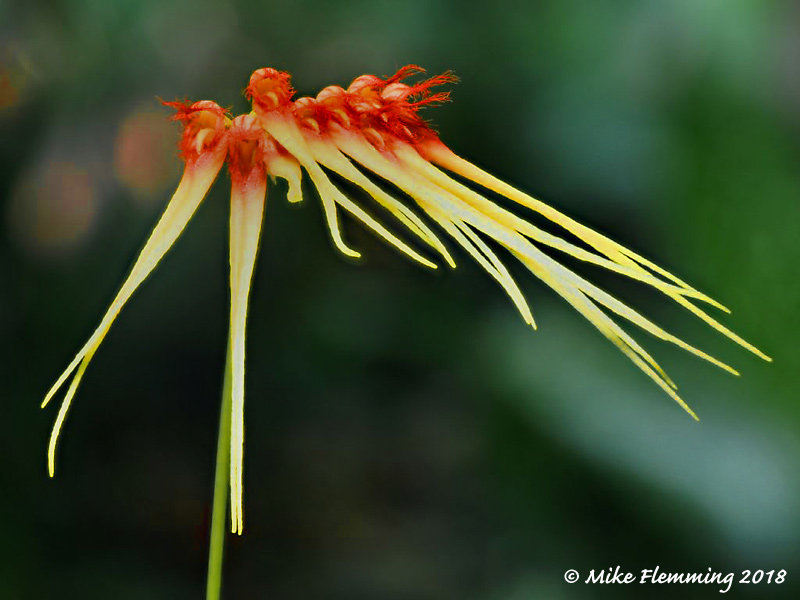
As burn his lies

The sleeveless coat is wet and so am I
What made me buy such foolish,fashion garb?
Rain  struck like sad lizards with bad eyes

From their poisoned blood  some women die
Life in third world countries is damned hard
The sleeveless coat is wet, oh foolish I

But with  the fire as hot as a Trump lie
My clothes have dried and I send  my regards
Though rain fell like old lizards with bad eyes

The Walk In Centre is  a  blessing undenied
From my sofa I can watch the cars
The fire is warming me as  burn Trump’s  lies


I wonder if the doctors may be spies
Yet nothing I reported needs a guard
As rain fell like  wild lizards  bloodied eyes

If you dislike this, you may discard
And, on your mobile phone,  block me,your bard
The sleeveless coat is wet and so am I
Rain  flayed like   hot lizards with bad eyes


What is a pantoum poem?


RadleyLake2018https://www.poets.org/poetsorg/text/pantoum-poetic-form


Posted

September 20, 2004

Type

Poetic Terms/Forms

Printer-friendly version

The pantoum originated in Malaysia in the fifteenth-century as a short folk poem, typically made up of two rhyming couplets that were recited or sung. However, as the pantoum spread, and Western writers altered and adapted the form, the importance of rhyming and brevity diminished. The modern pantoum is a poem of any length, composed of four-line stanzas in which the second and fourth lines of each stanza serve as the first and third lines of the next stanza. The last line of a pantoum is often the same as the first.

The pantoum was especially popular with French and British writers in the nineteenth-century, including Charles Baudelaire and Victor Hugo, who is credited with introducing the form to European writers. The pantoum gained popularity among contemporary American writers such as Anne Waldman and Donald Justice after John Ashbery published the form in his 1956 book, Some Trees.

A good example of the pantoum is Carolyn Kizer’s “Parent’s Pantoum,” the first three stanzas of which are excerpted here:

     Where did these enormous children come from,
More ladylike than we have ever been?
Some of ours look older than we feel.
How did they appear in their long dresses

     More ladylike than we have ever been?
But they moan about their aging more than we do,
In their fragile heels and long black dresses.
They say they admire our youthful spontaneity.

     They moan about their aging more than we do,
A somber group—why don’t they brighten up?
Though they say they admire our youthful spontaneity
They beg us to be dignified like them

One exciting aspect of the pantoum is its subtle shifts in meaning that can occur as repeated phrases are revised with different punctuation and thereby given a new context

Medical humour

My patient announced she had good news … and bad. “The medicine for my earache worked,” she said. “What’s the bad news?” I asked.

“It tasted awful.”

Since she was feeling better, I didn’t have the heart to tell her they’re called eardrops for a reason. —Murray Grossan, MD, founder of 
the Grossan Institute, Los Angeles

Find out what else you doctor’s really thinking but won’t say to your face.

The character

everything is connected neon light signage
Photo by Daria Shevtsova on Pexels.com

What is that character on the blackboard?

t’s the headmaster trodden to   death
No, it’s a number.
I think it’s a Greek letter
It’s just in your imagination
I can’t see anything at all.
What blackboard?
What is a blackboard?
How out of date
Throw it away.
Him not it
What a character he was.
Metaphorically speaking


Outside in

The child too shy to join  a little group
Or shamed by her old clothing  and her shoes
The one who feels they don’t fit in or match
The one who suffered early from the blues

The barren wife, no virgin yet unused
The girl so clever yet she was well bruised
The middle age of suffering ends and views
The loneliness  of age  with none amused

The man too nervous to make any move
The man who cannot pass  yet cannot love
The aging figure hopelessly bemused
The sperm still leaping,never to be used.

Some are in and others are outside
How few stayed with Jesus as he cried!
If we were more like him we would now mix
With the people who fall through the cracks.

A hint of suffering in the edge of eye
A hint of sadness by  the mouth denied
A hint of being tired of one’s own life
A hint that maybe someone wants to die

Etymology of “character”

https://www.etymonline.com/word/


“The meaning of Greek kharakter was extended in Hellenistic times by metaphor to “a defining quality, individual feature.” In English, the meaning “sum of qualities that define a person or thing and distinguish it from another” is from 1640s. That of “moral qualities assigned to a person by repute” is from 1712.”

Mystery

I  am a mystery mostly to myself
Others see my acts  better than I can
And they see my face with its expressions
Again I see just the reflection in their face
So maybe we could ask, yet I feel afraid
As if I might see the head of the Gorgon
Or you might see me like that
You might say wounding words
Why do I fear that?
Mostly  people don’t look at us so much as we fear and hope

Character

DSCF0067https://dictionary.cambridge.org/dictionary/english/character

At first it seems like summer

At first it seemed like summer once again
When cats curled up on cushions drowse  and dream
Yet second seeing finds the sun  estranged
Makes autumn bring out ancient  colouring schemes


The world, intense,  is full of new born dawns
At first it seems like summer still remains
We love the greeny grass of ancient lawns
Yet second seeing  learns the sun’s disdain

 
While cats curled up on cushions drowse  and dream
While little children play with whip and ball
Then autumn brings out ancient  coloured schemes
As we begin to view the  full filled Fall


So  older people’s minds  weave new  and lost
And cats curled up on cushions drowse  and dream
We  notice how the sun  has burned the grass
While autumn paints its ancient  coloured themes


Round the wheel turns at a steady pace
Yet it seemed like summer  had remained
Nature does not enter any race
Yet second seeing finds the sun estranged

In my end is  origin and growth
For the racing hare and weary sloth


God

Photo0313If God knows everything, why should we tell our sins to a priest?
God must be stupid if he spends all day watching me or you or anyone.I mean he watched Hitler and what good did that do?
God must be cruel otherwise he would never have created human beings who kill animals,birds.trees and each other.I mean,why?
If God know everything, we might be just a tiny part of that.We are like flies buzzing round his kitchen.One day he will buy some flyspray.
Well, not buy it!

The voice of God

dyakia_hendersoniana-2018“When his life was ruined, his family killed, his farm destroyed, Job knelt down on the ground and yelled up to the heavens, “Why god? Why me?” and the thundering voice of God answered, There’s just something about you that pisses me off.”
― Stephen KingStorm of the Century: An Original Screenplay

Poetry and history

http://www.warscapes.com/poetry/poem-history

“Brenda Marie Osbey’s long poem, “History,” from which we have published an excerpt here, comes from her recent collection History and Other Poems (Time Being Books 2012). The subject of these poems is colonialism, the slave trade, but also, the telling of history itself. We have asked Brenda Marie Osbey to discuss the relation of  poetry to  history, and to discuss the relation of history to the literary symbol, and we have transcribed this discussion below:

Noam Scheindlin: Your poems engage with a long tradition of the poet as historian.  Your poems also seem to manifest something of the impersonal thrust of history: the disembodied voices, snatches of songs, unattributed quotations could be understood to perform the way history creates subjects.  But there is of more than this: there is a counter-thrust; an opposition not just to the way things happened—but to the way-things-are-told.  How do you understand the function / phenomenon of poetry in relation to that of “history?” Can a poem be history?

Brenda Marie Osbey: There is a longer tradition of the poet-as-historian than we readily admit. Isn’t history always the way/s in which things are told, who does the telling and on what authority? Antar ibn Shaddad, the Black Raven of Saudi Arabia, wrote that three things define man: “to make love, to make war, to make verse.” Long before his 6th century epic of war and love, the Gabon Death Rite Suites and hunting poems were composed, and the Khoikhoi lyric poems on the nature of the universe, all of which tell such a great deal about ancient sub-Saharan African social and political life, religion, mythology and warfare. The teachings of Lao-Tsu come to us in verse. Much of the accepted history of Western antiquity comes to us from Homer. And, of course, the Nahuatl philosopher-poet-king and master craftsman Nezahualcoyotl recorded in poems and songs much of what we’ve come to understand about life in the pre-Columbian Americas. Indeed, much if not most of what we know (or claim to know) about the ancient worlds of Africa, Asia, the Americas and Europe, we know through poetry anyway. What ancient societies can we claim to know that didn’t have generations of peripatetic bards carrying news and history in some combination of song, lyric and narrative poem? More recently, so much of what we’ve come to understand about the experience of the Middle Passage we know from Robert Hayden’s brilliant narrative poem of that title. In the words of the late Audre Lorde, poetry is not a luxury. Literary critic Deborah McDowell writes passionately about “the myths, the fables, the abridgements, the approximations, and the outright lies that masquerade” in the name of history. This presumed divide between history and poetry really is a relatively recent one, and one that seems to underscore the recent need to segregate intellectual and creative work into neat and exclusive categories. Hence, the notion of history as the serious business of historians and, more and more, of journalists, and of poetry as an art form concerned primarily with personal identity and craft, precious, interesting perhaps, but signifying nothing. My own practice has always been to think of poetry first, foremost and always as a way of engaging and interacting in and with the world.”

Waiting

Waiting for a sign
Shall I see or hear
Where is the design?
Why do I shed tears.

How can I bear pain
Alone and paralysed
Sitting in the rain
Tears I should have cried.

Why do I hide here?
Why do I feel shame?
God I do not fear
Bless that unnamed Name.

Dissolve me into earth
Let me fertilise
Who decides our worth?
When shall love arise?

A sentence or two

https://www.theguardian.com/books/2018/oct/03/first-you-write-sentence-joe-moran-review

“In the first page of this book, Joe Moran quotes Gustave Flaubert’s claim (in a letter to his lover, Louise Colet) that his mind is always “itching” with sentences. Flaubert is Moran’s natural literary authority, because for him literature was style, and style came down to the shape and wording of sentences. Later interpreters might read Madame Bovary as an anatomy of sexual hypocrisy or class conflict or the pains of bourgeois marriage, but what the novelist really cared about were its sentences – their rhythm, their wit, their beauty.

Moran shares Flaubert’s values. His book recommends the pleasures of the well-made sentence, to writers and readers. For both, the sentence is the essential unit of expression. Moran remembers the Struldbruggs, the cursed immortals in Jonathan Swift’s Gulliver’s Travels, who as they age lose even the solace of reading, “because their Memory will not serve to carry them from the Beginning of a Sentence to the End”. A sentence is what you hold in your head, whether it be Ernest Hemingway or Marcel Proust. A sentence is where you make sense of the world.”

Short of friends?

m9309438_stackhttps://www.theguardian.com/commentisfree/2016/may/18/why-dont-i-have-any-friends-google-answer?CMP=twt_gu&CMP=aff_1432&awc=5795_1538653826_37f5e23f27942fe9cfee03104633dffe


“Or, as Alice Roosevelt Longworth put it more succinctly: “If you can’t find anything good to say about anyone, come sit next to me.””


“Lack of friends can be a result of reading signals incorrectly. Many people think other people don’t like them, so they don’t like them in return and thus it goes on and on and before you know it, you hate that person, before you’ve even spoken to them. What I’m about to say sounds tremendously trite, like something you’d find printed on a tea towel in a seaside shop selling awful scented candles, but smiling at someone can be the first step to friendship. It can make someone warm to you, make them like you, because they think you like them.

Friendship favours the brave. Those who aren’t afraid to smile or put a hand out first.”

Will it sell?

I’m far too old to write a villanelle
A sonnet or a roundeau or  free verse
Besides I know my poetry won’t sell


I have my life  and living now to tell
But maybe you would like it better terse
I’m far too kind to write a villanelle

I  need another life time just to mull.
How I can avoid the writers’ curse?
I suspect  my  sonnets just won’t sell

Is the mind complete, might it be full?
I’d hate to have to write when in my hearse
I’m far too daft to write a villanelle

Get the knitting needles and some wool
I feel as if my brain is going to burst
Writing   sonnets  when they never sell


Yet writing of all options is least worst
Acting like a midwife or a nurse.
Am I too grey to write a villanelle?
Can I be sure my poetry will not sell?


Why not eat in?

1.

Soup of the fray
Jellied heels
Vice on toast
Roman numerals in ice
Mixed  leftover vegetables with  free green mould

2.
Grass green chicken with chips and baked cream
Beef in butter with red eyed bean  in potatoes
Curried toad  with pasta and  wholemeal bread
Macaroni , fleas and sauce with home made dread.

3.
Diabetic ice cream and insulin
Gooseberry tarts with insulted maidens
Custard creams with  vengeance of fruit over-ripe  but not rusty
Very rude blue cheese and no biscuits either
And  finally

make your own pudding from anything in the fridge,except sausages [raw]

Affect

“Those sentimental radio hits, with their artificial naivete and empty crudities, are the pitiful remains and the maximum that people will tolerate by way of mental effort; it’s a ghastly desolation and impoverishmment. By contrast, we can be very glad when something affects us deeply, and regard the accompanying pains as an enrichment.”
― Dietrich Bonhoeffer, Letters and Papers from Prison

A moment

How white and blue together recollect us
to the summer sky and the imagined swallows
darting in exquisite geometry
under the great domed space of the heavens,
like the Basilica in Constantinople
containing and giving space.
And how you held me for a moment that was infinite
and then you were gone like an angel fearing enchantment
into some finite boundaried world

What to write about

SurrealOrchidhttps://thinkwritten.com/poetry-prompts/

My ideas

How language can never fully describe the world

The

Here are a few from the link

1.The Untouchable: Something that will always be out of reach

2. 7 Days, 7 Lines: Write a poem where each line/sentence is about each day of last week

3. Grandma’s Kitchen: Focus on a single memory, or describe what you might imagine the typical grandmother’s kitchen to be like

4. Taste the Rainbow: What does your favorite color taste like?

5. Misfits: How it feels when you don’t belong in a group of others.

6. Stranger Conversations: Start the first line of your poem with a word or phrase from a recent passing conversation between you and someone you don’t know.

Robert Louis Stevenson

https://www.bartleby.com/360/1/185.html


Poems of Home: V. The Home
The House Beautiful
Robert Louis Stevenson (1850–1894)
NAKED house, a naked moor,
A shivering pool before the door,
A garden bare of flowers and fruit,
And poplars at the garden foot;
Such is the place that I live in,         5
Bleak without and bare within.
Yet shall your ragged moors receive
The incomparable pomp of eve,
And the cold glories of the dawn
Behind your shivering trees be drawn;         10
And when the wind from place to place
Doth the unmoored cloud galleons chase,
Your garden blooms and gleams again
With leaping sun and glancing rain;
Here shall the wizard moon ascend         15
The heavens, in the crimson end
Of day’s declining splendor; here,
The army of the stars appear.
The neighbor hollows, dry or wet,
Spring shall with tender flowers beset;         20
And oft the morning muser see
Larks rising from the broomy lea,
And every fairy wheel and thread
Of cobweb dew dediamonded.
When daisies go, shall winter time         25
Silver the simple grass with rime;
Autumnal frosts enchant the pool
And make the cart ruts beautiful.
And when snow bright the moor expands,
How shall your children clap their hands!         30
To make this earth our heritage,
A cheerful and a changeful page,
God’s intricate and bright device
Of days and seasons doth suffice.

Grace

Deferential, I
Eternity await
Submit to your  grace
In my patient state.


None but God can judge;
None have his pure gaze.
Write me not your wish.
Tempt me not with praise.


Timeless as the  heavens
Eternity is now
Mindful of this lesson
Grace will show me how

Poetry and music

https://www.theguardian.com/books/2016/jun/07/cerys-matthews-poetry-and-music-closely-think


“The Welsh word “cerdd” can be translated as either “verse” or “music”. It covers both meanings, because, as we know from history, when the great bards were performing their poetry it would be accompanied by music. The two were always intertwined and music, poetry, spoken word and performance have been a part of our society for centuries. The festivals called “eisteddfod” combine literature, music and poetry. These cultural competitions were not just for the rich or educated, but were held in pubs and other meeting places and brought everyone together. They are part of an oral tradition entrenched in Welsh society as it is in many other cultures, as diverse as the Somali tradition of oral storytelling or praise poetry in India and Pakistan.”

Emile sweeps the streets

Dotty cats
Mary was making her supper.She put a pan of chickpea dahl onto the stove
 Fortunately the heat was low
Emile decided he must watch the pan as Mary had burned eight in the last three years
He wondered what  to do if it  began to smell odd.
I suppose I could bite Mary’s  ankle ,he thought.But she might kick me.He decided to ring 999
Hello, my mother has set  a pan on fire and I have burned my  foot.Can you send Dave please.
You have a strange accent.Where are you from?
I’m Albanian ,he boasted
So is your mother Albanian?
No, it was my father and we don’t  know his name.
Well, it sounds suspicious.Are you an illegal immigrant?
No,it was all legal.Except they weren’t married and as mother is English I believe I have the right to stay
Oh,I wouldn’t be too sure of that.When Jesus  applied for asylum they sent him straight back.
Where to?
Wherever his father lived.
So that’s why we never saw him again!
I can’t keep talking like this.I’ll send an ambulance.
OK, said Emile.
Dave the paramedic ran in wearing a trench coat and trainers.
What’s happened?
Mary has left this pan on.She’s writing again
Well, it seems she has also left some bacon cooking.Good thing she has you , Emile.
Mary walked in
What’s happened?
They are threatening to deport me to Albania,Emile purred.I told them my father was from there.
Well, it is possible,Mary agreed.But  they can’t prove it
Let’s hope Emile is not made to wear a yellow star on his collar and sweep the main road with a toothbrush. said Dave.
It would take a very long time unless all the cats in Knittingham were sent there as well.
Why doesn’t the Council buy a vacuum cleaner,asked Emile?
That is the least of our troubles, muttered Dave.
And so say all of us

The shift to Autumn

The shift to Autumn comes as a surprise
Summer was extreme  yet it has died
The intense sun, the air on naked flesh
The sweat and strain, the heat, the thirstiness
As in the meadows we were walking by
Forgotten were the worries of past days.
We had knelt and wept and wished to pray
Words came very hard and with delay
Or suddenly like hailstones in a rush
A strange Autumn

We do not want revealed the  unknown way
We wish to be the same and life to stay
Yet like blood, the sudden tears will gush
As if the poison of the grief will flush
And we the final bill must surely pay
In Autumn


we

Emile thinks

M9309420_stackI had  a full day watching Stan hoover the bedroom. and re-hang the curtainsHe found 5 pence on the rug.
That makes 60 pence this week.He swore when he saw the duvet had slipped to one side of the bed.I jumped up and stood on it while he pulled it back into place;a bit of fun.I can’t help him much but I hope being watched pleases him.
He tried on Mary’s dressing gown and looked in the mirror.Then he swore again.I think her likes her clothes but that was not a nice sight.
She was out giving another lecture and running a seminar
on something called “Rings and Groups.” It sounds like a dance or a sacred rite.I’d love to go in her wicker basket to the University and listen to a lecture.I believe she’s very popular and is always pleased to prove that “e” is not an algebraic number.

Well,it’s obvious………even a cat knows it’s a letter!
Does she think it’s another more advanced kind of number? Beats me.
What with that and all the times she brings in pies…she has me wondering what mathematics is now.Why does it frighten people?
Cats like me love a nice meat pie and will run in rings or circles
mewing “eeeeeeeeeeeeeeeeeeeeeeeeeeeeeeeeee” for hours if we get some Earl Grey tea .
We are not into groups though except maybe groups of mice.
Now where’s my milk?I’m worn out writing my blog.
Still,I hope you know what “e” and “pie” are now!
Mioaw.Next week:Imaginary numbers is her theme but  how will I know what she’s planning  to imagine?Can you plan to imagine?

Uncertain

To be uncertain.live in mist and fog
To tense the eye and feel the mind’s  a bog
To hope but not to know what it’s for
To be afraid of who comes to the door
As  if the visitor may be a dog
Fierce  yet irritated by  a frog

Who owns this machine, am I a cog?
Or am I lonely, mentally unfed?
Friendship is not purchased from  a store
We feel uncertain

Life is easier, teachers do not flog
Criminals not hung   nor  flung in mud
Yet of all  the world’s ills we are made aware
As at our little screens we  fearful stare 
Seeing refugees and  children dead
Calm is uncertain.


Reason cannot teach us how to dance

What time is it, the old man said to me.
Time for conversation with no fee
We have to pay the therapist to hear
Why we feel we need to live in fear

Friends are better as they know our ways
Know when we are having a dark day
But everyone is suffering angst and dread
For God has gone away to haunt the dead

The old man prayed when he awoke to dark
Asking Jesus for some light, some sparks
But why wait till the end is drawing near
And angry ghosts pollute the atmosphere

Enlightenment is what they called it once
But reason cannot teach us how to dance

Dear cat,when old

Lurching yet graceful ,the old black cat sets off.
Slowly he circles the edges of the garden in joy.
In the car ,though still in a shut basket,
He always knew when we came to the turning of the road.
Was it the cherry trees in blossom,a scent
Or something we could never be aware of?
I would open his basket in the car.
He comes out and descends so carefully
Onto the pavement,then tries to bound up the path,
The long wooded back garden is his total joy.
He would sit watching tiny frogs in a deep pond in the sun.
No doubt he longed to catch one.
He once brought a robin indoors,
The bird was completely unharmed.
Must have been his gift to me
We released it later after its shock had worn off.
Now he can only hobble,
And soon, his thinness warns me, he'll be gone.
No cat has ever loved or will love like this cat,
A rescued, terrified animal.
His eyes say everything to me.
I look into their clear-jewelled greenness
I look into a deep,still glowing sea of light.
The last day,finally, all day,he's on my knee.
I say"goodbye,goodbye,Pussy".
And he's gone,just before tea.
Now the garden seems empty.
Love leaves a gap.
Love leaves us bare
Love leaves us stripped.
Yet Love is eternal grace.
A mystery of faith.
I believe.
Believe.
Be.