Sylvia Plath:romantic?

http://journals.sfu.ca/thirdspace/index.php/journal/article/view/gordon/141

Extractphoto0189
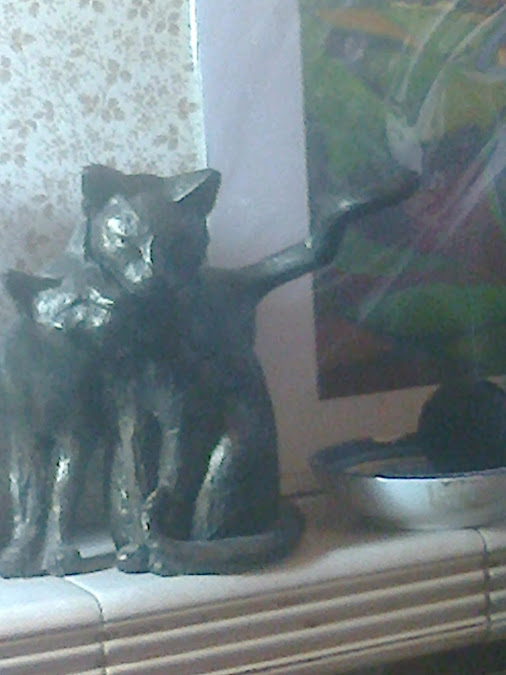
“Raymond Williams observes, in his book Culture and Society: 1780-1950, that between the end of the eighteenth century and the early years of the nineteenth, some significant shifts in the meaning of words occurred. One of the important words that underwent this shift was ‘art’ and with it, the conception of the artist changed dramatically. Williams notes that “Art came to stand for a special kind of truth, ‘imaginative truth’, and artist for a special kind of person” (15). Furthermore, the idea of the genius changed from “meaning ‘a characteristic disposition,’” to “mean ‘exalted ability’, and a distinction was made between it and talent” (Williams 15). So, a Romantic conception involved not only a new perspective on art, but also on the person and the abilities that created the art. The conception of the Romantic Artist developed into one in which the Artist “is by nature indifferent to the crude worldliness and materialism of politics and social affairs; he is devoted, rather, to the more substantial spheres of natural beauty and personal feeling” (Williams 48). While Williams goes on to explain that this view is a simplification of the interests and social engagement of the Romantic poets, elements of this view persist. It is also important to note Williams’s gendering of the Artist as male. The gender bias is not only a reflection of the conventions of the time in which his book was written, but also reveals some of the presuppositions underlying the Romantic tradition.

E. Young, in his 1759 work Conjectures on Original Composition, reveals another underlying concept: “An original may be said to be of a vegetable nature; it rises spontaneously from the vital root of genius; it grows, it is not made; Imitations are often a sort of manufacture, wrought up by those mechanicsart and labour, out of pre-existent materials not their own” (qtd. in Williams 54). The idea of the original privileges the creativity and ‘liberty’ of work that breaks new ground and is spontaneous invention over work which is the result of effort and imitation. Rather than record the mundane, “the Artist’s business is to ‘read the open secret of the universe’” (Williams 56). The Artist has access to something universal and can transcend the ordinary through inspiration.

One potential reason for the use of the Romantic tropes of the Artist in work on Sylvia Plath is the many similarities between the lives the later Romantic poets led – lives of passion, pain, fame, ending in early death – and Plath’s experiences. The poets help to create their personal fame through their poetry, which was so personally revealing. The later Romantic poets – specifically Byron, Shelley and Keats – bear striking similarities to Plath. Byron was “made famous by his despair” and all three “die out of England” (McGann 110) as expatriates, like Plath who died away from America. The “Romantic poets like Keats appear to suffer in and through their work” (McGann 136) and the same could be said of Plath. Al Strangeways states that “Plath’s connection to Romantic tradition is […] usually treated incidentally” and that this is inadequate because many of her “central conflicts […] such as her struggles with individualism […] and her interest in the extremes and intensities of the unconscious, are rooted in Romantic concerns and influenced by [a] Romantic version of conflict” (40). The trope of the suffering, tortured artist is frequent in Plath criticism, though less prevalent in Rose and Stevenson’s works. Byron’s death is also “normally thought of in relation to his marriage separation, but that domestic event merely culminated his desperate Years of Fame” (McGann 111). The observation applies equally well to Plath, a female addition to the tradition typically restricted to males, but this important idea of gender and inclusion in the canon will be returned to later in the paper.

A crucial concept for the discussion of Plath and her work is that of the ‘genius.’ Christine Battersby notes that

[b]y the end of the eighteenth century, ‘genius’ had acquired Romantic grandeur: it had been transformed from a kind of talent into a superior type of being who walked a ‘sublime’ path between ‘sanity’ and ‘madness’, between the ‘monstrous’ and the ‘superhuman’ The creative success that could be ascribed to ‘mere’ talent was opposed to that bound up with the personality of the Romantic ‘genius.’ (103)

Poems for peace

img_20181015_2246203042https://www.poetryfoundation.org/articles/69592/poems-for-peace


“Yet we Americans live in the most powerful country in the world, whose adaptably postmodern empire is marked by what William James calls Pure War, a state in which the real war is the constant preparation for war. Though our poetry has ably represented the traumatic and unmaking operations of war—from the rage of Achilles on to our present day—it has also often unwittingly glorified and perpetuated a culture of war. We have yet to give adequate attention to how our poetry also contains the seeds of other ways of dealing with conflict, oppression, and injustice, and how it may advance our thinking into what a future without war might look like.

How to imagine peace, how to make peace? In our conversations on the Peace Shelf, three general subcategories emerged, though these were full of overlap and contradiction: Sorrows, Resistance, and Alternative Visions. It’s simple enough: we need to witness and chronicle the horrors of war, we need to resist and find models of resistance, and we need to imagine and build another world. Even if modern poetry has been marked by a resistance to the glorification of war, vividly shown by the World War I soldier poets and many others, the important work of poetic dissent has been, too often, via negativa—resistance to the dominant narrative, rather than offering another way.

Even Denise Levertov—one of the self-consciously anti-war poets on any Peace Shelf—found herself at a loss for words at a panel in the 1980s, when Virginia Satir called upon Levertov and other poets to “present to the world images of peace, not only of war; everyone needed to be able to imagine peace if we were going to achieve it.” In her response, “Poetry and Peace: Some Broader Dimensions” (1989), Levertov argues that “peace as a positive condition of society, not merely as an interim between wars, is something so unknown that it casts no images on the mind’s screen.” But she does proceed further: “if a poetry of peace is ever to be written, there must first be this stage we are just entering—the poetry of preparation for peace, a poetry of protest, of lament, of praise for the living earth; a poetry that demands justice, renounces violence, reveres mystery.” That Levertov lays out succinctly what we ourselves, the Peace Shelf collective, took some weeks to arrive at, illuminates the challenge of the peace movement and of the literature that engages it; our conversations, our living history and past, are scattered, marginal, unfunded, and all too easily forgotten.

The following poems, dating from the 20th century onward—which appear in the anthology Come Together: Imagine Peace—provide a foretaste of the larger feast, which could begin with the Sumerian priestess Enheduanna’s laments against war, with Sappho’s erotic lyrics, or with Archilochus’s anti-heroic epigrams. Yet this feast isn’t mere sweetness and light. “Peace” is no mere cloud-bound dream, but a dynamic of living amid conflict, oppression, and hatred without either resigning ourselves to violence or seizing into our own violent response; peace poems vividly and demonstrably articulate and embody such a way. At their best, peace poems, as John Milton did in “Aereopagitica,” argue against “a fugitive and cloistered virtue, unexercised and unbreathed, that never sallies out and sees her adversary.” If, in Milton’s words, “that which purifies us is trial, and trial is by what is contrary,” then peace poetry must also interrogate the easy pieties of the peace movement and its own ideological blind spots. And indeed, Michael True’s exploration of nonviolent literature confirms that “although writings in [the nonviolent] tradition resemble conventional proclamations recommending peace reform, their tone and attitude tend to be provocative, even disputatious, rather than conciliatory.””

Conned today

8340680
Made by Katherine
I had  a hard day having been conned by some  clever people pretending to be Mcafee Security.It was not just the money but the need to return the computer to its factory settings which meant Windows 10 was removed.I also lost my credit card and some other things but I managed to call the Bank before anyone could use it
Then I got vertigo and almost fell onto the coffee table.No doubt it would have collapsed and fallen to pieces like the rest of my life seems to do now and then
However while the laptop is still not ready,I read some of my poems outloud and  amazingly my tension was reduced immensely.
I will remember that as on days when I make many phone calls I do get quite fraught.
I always try to be pleasant to the people in India who are helping me because I think it’s not just our friends we should be kind to.And my doctor is Indian and so were many of my colleagues so I have an admiration also linked to the fact that they invented the concept of zero as a number…….. a very abstract idea.Look it up.Maths is interesting.It’s not arithmetic

The  wounds can be discerned but seldom seen

The agony of  loss will clot  in time
The anguish sharp destroys the human heart
The  wounds can be discerned but never found


As for us human beings, love profound
Predicts that one or other will depart
The agony of  loss will clot in time

As on our beds ,we wounded folk all lounge
Until a message comes  and we must start
The  wounds can be discerned but never seen

As life flows out like lyrics and their rhymes
As lizards from their hiding places dart
The agony of  loss will ease in time

At first the very cells each seem to scream
The eye seeks visions to protect the hearts
The  wounds can be discerned but never seen


How Helen may have overturned the cart
How skin of little children often smarts
The agony, the pain will wane  in time
The  wounds can be discerned but are now  tamed


Save the rich

At last I have achieved what I most need
Is it money, fame or love or war?
I’ve got writer’s block and painful knees

This block I have proves I once wrote at speed
With words that rose up from my heart’s deep core
At last I have  been given what I need

Are there markets which will buy my pleas?
What I fear the most is that I bore
I’ve got writer’s block and  knobbly knees

I could run a class on minds diseased
If I did I’d speak up from the floor
At last I have  been  offered what I need

A teacher on a podium might freeze
Like google drive , like love which we ignore
I’ve got writer’s block and ancient knees


Save the rich from greed and envy pure
From starving , from homelessness, the poor
At last I have achieved what   noone  knew
I’ve got  sex free socks and gendered knees


A dark lilac November sky

Old man,bending over,
arched like a fallen moon
in a dark lilac November sky.
Joy and pain wrestle my heart across the emptiness
and toss it up like a damp rocket
to fall in a hidden corner where mice live.
Would that not be a good ending,to be dust
to these little creatures nesting
in my chewed green twine and my tartan basket?
They have eyes and shiver in my hand when I rescue them
from the cat,
as any heart might.
Now night falls on the newspaper basket
where the damp Times and the Guardian mix into glue
and tomorrow the sun will rise
and it will just be the garbage
with no poetic undertones nor deathly hushes..
Heather and a silver light
you stand on a hill top like a god
looking over his domain.
Strong and now weak
it’s the humane condition
Everlasting life is too dangerous for humans.
Silent,motionless,home of beetles
bit by bit we fall away
into the mother soil
with cracked jugs and dropped coins
for a future academic to dig into.
Transparent hand touches me.
Whose might it be but yours?

Haiku Economics

dsc000751https://www.poetryfoundation.org/poetrymagazine/articles/69633/haiku-economics


Quote:I was teaching economics at the Georgia Institute of Technology when I made the haiku-economics connection. I needed to connect with 225 economics, science, and engineering majors—college kids who were being trained to believe that poetry and feelings are not important to, say, the World Bank. At the same time I was reading The Essential Etheridge Knight and falling in love with haiku. I thought about the inability of standard economic models to explain bubbles, crashes, and global inequality—and how market fundamentalists refuse to discuss them. I saw the bridge I needed in this poem:

Invisible hand;
Mother of inflated hope,
Mistress of despair!

Adam Smith, indeed. Perhaps it’s the economists who can learn the most from poets about precision and efficiency, about objectivity and maximization—the virtues, in other words, of value-free science.

Ironically, the benefit of the addition is in the cost. The typical haiku budget constraint is limited by three lines of seventeen syllables. Basho himself understood well the joyful paradox of haiku economics: less is more, and more is better! Each poem is the length of about one human breath. This constraint, though severe, is more than offset by a boundless freedom to feel:

Window reflection—
The baby sparrow sitting,
Listening to glass.

I do not yet possess ironic wit

I do not yet possess ironic wit
Yet often I amuse the readers’ ears
Just as my cat once bit me as I sat
Confessing sins, my scruples and my fears.

When one   man left me as I was so bright
Yet others told me  I was  dim and vain
The irony here affects my  once sweet nights
We see in others what we most disdain

Would you tell a lover they were dumb?
Would you tell a lover they smelled queer?
Would you tell a lover you  hate  men?
Would you tell  one they seem insincere?

We see in others sin which dwells in us.
Perpetuating  malice  as  we boss.

What is irony in poetry?

man wearing welding helmet welding metal near gray brick wall
Photo by Movidagrafica Barcelona on Pexels.com

https://www.poetryfoundation.org/learn/glossary-terms/irony


“As a literary device, irony implies a distance between what is said and what is meant. Based on the context, the reader is able to see the implied meaning in spite of the contradiction. When William Shakespeare relates in detail how his lover suffers in comparison with the beauty of nature in “My Mistress’ Eyes Are Nothing like the Sun,” it is understood that he is elevating her beyond these comparisons; considering her essence as a whole, and what she means to the speaker, she is more beautiful than nature. “

No visa

They took my blood and ethnic group, they did.
My soul was skulking, knowing of the strains
If I have no visa, they’ll get mad

Reading my thick newspaper was sad
Seeing they’re deporting  love again
They took my blood ,my heart and I feel bad

Water has no salt whereas blood has
And losing it will cause a lot of pain
If we have no visas, oh dear God.

The water circulates; we’re effing dead
So when we’re shot  there’s no red blood to stain
They looked for  human souls and  then they bragged

The Jews,  the gays the helpless .felt cold dread
And who resists now Fascism rides again?
We  scream when we’re asleep,oh helpless God.

We invented torture ,  prison, shame
Were God here he’d hear the frightened groans
They took my ethnic group  and stole my blood
Now they call me ” nigger”,  ain’t life sad?

Ain’t so good to blow your own fuse.


She was built like a brick outhouse

Ya,born with a silver spoon in her mouth

Her momma was like an old brown mouse

And her pa was just a slimy stuck up louse.

She was built like an old outhouse

On the top, sharp eyed vultures used to roost

Her brother has gone for a Dead Sea cruise

Her sister wants to let all hell break loose.


She was in for life with those smart spooks

A creepy horror in every nook

Her ma never learned her how to cook

She ain’t never even read a single book.


No aphrodisiac ain’t of much use

When the true Furies are on the loose.

Do what you can to cook thet goose

Ain’t so good to blow your own fuse.


No,those Furies are on the ball

They come looking for us one an’ all.

Keep your face hid and your ego small…

What’s thet dark shadow on your  wall?

And on blue Cleveland Hills


Coats on the hall stand
Smelling of you;
Coats on the hall stand
Some are mine too.

Hats on the top hooks
Caps that you wore.
Now where you’ve gone
You will need them no more.

My hats will be puzzled,
Hanging there all alone
Now when I see yours
My heart feels like stone.

I found some of your shoes
All covered with green
Now they’re in the bin bag
No more to be seen.

I found half  your pyjamas
The rest are all gone.
I wonder where these hid,
Where’ve they come from?

Last night in my dreams
You were right by my side
We were cleaning the oven
With brillo and Tide.

But when I awakened
No glimpse did I see.
Except looking slantwise
Towards the red  maple tree,

Why did you leave me?
Why did you go?
I held your left hand
And fondled it so.

Come back to your loved one
Don’t leave me alone.
I don’t want to live
Just to hear myself groan.

Touch me with your fingers
Melt my poor, sad, lone heart
I let go of your hand~
Then the agony starts.

Up north in old Richmond
And on blue Cleveland Hills
I’ll remember your dear face
As my eyes with tears fill.

I will lift up mine eyes
To the hills where my strength
Comes down from the Heavens
Endless in length.

Stronger than granite,
Stronger than steel,
Stronger than silver
Is the love that I feel.

Stronger than iron;
Stronger than gold;
Stronger is my love,
For the one I once held.

No ,he was not a Christian

Why did Jesus have no shoes?
He had sent his soles to be heeled.

Why was Jesus kind to sinners?
Because they were not hypocrites

Did Jesus go to church on Sundays?
No ,he was not a Christian

Did Jesus have a nuclear family?
God the Father and  the Holy Spirit.
Was he an only child?
GOK

Why did Jesus not wear trousers?
Jewish tailoring had not got that far 2,000 years ago.

Did Jesus drive a car?
Drive a car what?

Did Jesus write letters?
They had no Royal Mail then and soon we shan’t either.

Why did Jesus go to a comprehensive school?
He wanted to widen his appeal.

Did Jesus iron his clothes?
It was before the Iron Age.


How about this atom bomb here in my pocket?
Please, let it drop,I beg you

The News

dsc00069-1-1The entire population of the UK is moving to Uganda.
Great Britain is being turned into a Nature Trail.
Westminster Bridge is being moved to  the Niagara Falls
Or is it Nicaragua?
St Paul’s Cathedral is going to Damascus
St Paul was a romantic poet who burned with no flame
The Queen is having a baby.Next week
The Vatican is being moved to Nairobi
Mystics are wanted .We will arrest you soon
London Buses are still read.
King’s Cross is Henry V111th
Enfield Wash in the River Lea.
Epping Forest is being moved to the Sahara.
Elsynge Palace will be rebuilt in the Gaza Strip where they tear gas!
Theresa May has entered a nunnery.
A new public convenience is being built in Scotland Yard.Can we hang on?
If you want Marks and Spencer it is in Transylvania
I am building  a border with barbed wire in my garden so I will know how to cross it


In the pink.

Not dead yet” was a phrase that was part of a comic act here on TV… it’s that odd humour here in England.

If we meet we say:Who are you?

And this is what we answer

Fine thanks.In the pink.

  • Feeling groovy.
    Could be worse I suppose.
    Think I’ve got that bug that’s going round the Food Bank
    Still here…give is a wink
    Still alive,apparently
    I flunked.
    I am in the theatre.Pass the needle,nurse.
    I would have fallen over in front of a bus except the dog would miss me.Besides I am the driver
    Not dead yet.Must try harder
    Could be better at maths if she learned to read first
    Why do you frisk?
    Have we been i traduced?
    You look vaguely familiar.Are we married?
    I think I met you once on the Underground.
    How unkind of you to ask.
    Is that cat glued to your head or is it  a transplant?
    Do you come here  frequently
    How did you say you care?
    Have we met or are  you  on TV? Did you see me?
    I’ve booked a hotel in that place that’s been flooded.Bow wow wow are you?
    I say,old boy.How nice you asked.I’m fine I just got married again..I I have a lot more news…..ah,well.I never liked him much really,the bastard.
    Where have you been all my strife?
    Do you know everyone leers?
    Are you hiding anything? I can only see yout eyes.You seem to have three.
    I can see gold lights all over the place.Is it Xmas?

Art and poetry

https://www.tate.org.uk/research/publications/in-focus/pegwell-bay-kent-william-dyce/art-and-poetry


IN FOCUS

Art and Poetry

FIONA STAFFORD

“When William Dyce visited Rome, he was astonished: ‘In truth, to me Rome was a kind of living poem, which the soul read unceasingly, with the soothed sense which poetry inspires’.1 In comparison with the bracing climate and rather more austere architecture of Aberdeen where Dyce had grown up, the warmth, colour and sheer magnificence of the Eternal City was overwhelming. To describe it as ‘a kind of living poem’, however, suggests not just the visual artist’s acute perception of the city’s distinctive appearance, but also a deep sensitivity to the overall tone, history and special atmosphere. Dyce first travelled there in 1825, a year after the poet Lord Byron’s death. Born in 1806, Dyce was only a few years younger than the poets John Keats and Percy Bysshe Shelley, so recently buried at the Protestant Cemetery when Dyce made his initial visit to Rome. He was thus part of an era in which the very idea of ‘poetry’ was broad enough to encompass any imaginative response to the world, enabling Shelley to include Raphael beside Homer, Tasso and Bacon in stirring references to the ‘greatest poets’ of all time.2Artists of the Romantic period could rise as readily as writers to the ideals articulated by Samuel Taylor Coleridge in 1817, in praise of Wordsworth’s poetry:

It was the union of deep feeling with profound thought; the fine balance of truth in observing with the imaginative faculty in modifying the objects observed; and above all the original gift of spreading the tone, the atmosphere, and with it the depth and height of the ideal world, around forms, incidents, and situations, of which, for the common view, custom had bedimmed all the lustre, had dried up the sparkle and the dewdrops.3

For Dyce to describe Rome as a ‘living poem’ would not have seemed odd to those nurtured on the grand ideals of the Romantic period, and although subsequent decades saw a diminishing faith in poetry, and indeed much else, the influence of Coleridge, Wordsworth and other stars of Dyce’s formative firmament continued to be felt. John Ruskin, for example, presenting a Victorian readership with Modern Painters (1843–60), still drew inspiration from Wordsworth, including more quotations from the elderly poet laureate than any other source. The third volume, published in 1856, was prefaced by lines from Wordsworth’s The Excursion (1814), lamenting the modern tendency to neglect the soul, which Ruskin considered as relevant to readers of the mid-century as to those four decades before. Modern painters, he suggested, should look to Wordsworth for inspiration in the fullest, most spiritual sense. Dyce’s own analogy between the experience of visiting Rome and the ‘soothed sense which poetry inspires’ could only have been made by a poetry lover, and throughout his artistic career he frequently chose subjects with literary dimensions. From his early sketch of Puck 1825 (Aberdeen Art Gallery and Museums, Aberdeen) to his late portrait of George Herbert at Bemerton c.1860 (Guildhall Art Gallery, London), Dyce demonstrated his interest in poetry; but even works less obviously indebted to specific sources often suggest a deeply literary sensibility. As the Art-Union observed approvingly in 1844, he was one of the few modern British painters who considered it ‘as much their duty to read and think as to draw and paint’.”

Flowered fields

The face that was familiar is no more
Yet in my dreams ,we  amble through bright  fields
Where cornflowers and blue linseed  softly grow
The face that was familiar is no more
The emptiness  and loss,  confused, real
The face that was familiar is no more
Yet in my dreams ,we wander through   flowered fields

The hand that once held mine I still  do feel
Warm with tapered fingers and hard nails
That death was near you did not then reveal
The hand that once held mine I still can feel
The memory impressed like iron or steel
You were growing colder,oh,so pale.
The hand that once held mine I  think I feel
Warm with tapered fingers and hard nails

Grief and the consolation of poetry

candlelight candles
Photo by Irina Anastasiu on Pexels.com

https://www.irishtimes.com/culture/books/grief-and-the-consolation-of-poetry-1.1697178

All my work is finished, Kate, and I am free and finally known.’ ”

The latest novel from the prize-winning David Park contrasts three marriages, one made in the heaven of mutual harmony of mind and heart, one in the hell of Stalinist Russia, and one in the land of contemporary dysfunctional families.

The stories are told by the widows of great poets: Catherine Blake, wife of William Blake, the 18th-century visionary; Nadezhda Mandelstam, wife of the Russian Osip Mandelstam, who died in a Soviet prison camp in 1938; and Lydia, fictional widow of a fictional modern Irish poet who writes in a cottage somewhere near Portrush.

The novel deals with complex emotions: love, the grief of the bereaved, the role of religious belief, and the immortality of poetry.

Nadezhda Mandelstam, based closely on the historical woman, is presented as she who is most intently aware of the importance of poetry and of her husband’s work in particular. In Russia, it is obvious that poetry matters, as they are always killing poets, Nadezhda wrote in her own memoir, Hope Against Hope .

Her husband’s crime was to write a scurrilous poem about Stalin. Married to Osip for 18 years, she lived without him for more than 40. After his death she learned all his poems by heart, ensuring that while she lived they would survive. Julian Barnes, in his wonderful essay on the grief of the bereaved husband, Levels of Life , writes that his strongest motivation for living is that he is his wife’s best rememberer.

Nadezhda Mandelstam fulfilled this role for Osip literally: it is largely thanks to her unstinting devotion to preserving his poetry that he is now recognised as one of Russia’s greatest 20th-century writers. Park’s version of her story is shorter, gentler in style and more accessible than her own autobiographical work, which, although brilliant, is densely packed with facts, names and political references – more history than novel.

Testament to Park’s power as a storyteller is that he manages to convey better than she does herself the character of this tough and formidably intelligent woman, and to express her profound love, grief and devotion to her husband and his work.

His completely fictional creation in the novel is Lydia. Unlike Nadezhda, Lydia did not love her husband, although she was married to him for 41 years (somewhat unaccountably).

Moments of infidelity
All three poets in this novel are alleged to have had moments of infidelity. In the cases of Blake and of Mandelstam, these episodes were subsumed into the sturdy texture of their good marriages. But Don, the Irish poet, was persistently unfaithful, and not even his daughters have a good word to say for him. Lydia feels, as she prepares to scatter the ashes of her husband, that she is “lighter, freer, and at the same time a little frightened”.

Curiously, Lydia’s relative lack of pain at her bereavement feels sadder than the searing grief of the loving wives. Like them, however, Lydia recognises the greatness of her husband’s work. In spite of her resentment she determines to preserve his manuscripts: “What she had to do was owed not to him but to something greater.”

Nadezhda Mandelstam and Lydia have in common that they appear to have no strong belief in an afterlife. Catherine Blake, who was married to William for 45 years, and survived him for only four, has the comfort of trusting that on her death she and William will be reunited in heaven. And even in her widowhood he visits her on this earth, chats and gives advice, both spiritual and practical: “Take what’s left of my collection of prints to Colnaghi and Co and try to get the best price you can.”

Had he left her for a woman who dressed in thick beige blouses and stockings with grey skirts?

Professor Rosa Benchez was in the staff-room at Middle-Jeans-Rise University collecting her mail and having coffee at 9.30 am on Monday morning after running 10 miles on her rowing machine.It rowed and she ran
How are you? enquired Danny her friend and colleague in the School of Learning.
I’m feeling very insignificant today,she replied. quietly.I am giving a lecture on Semiotics and it’s those French people who use such idiotically complicated language.We all know that an object like a bird has to have a name before we can talk about it.
Well.,said Danny, I thought you’d just say,”In the pink” as usual to my greeting, so you must feel bad.Does each bird have to have its own name,he continued wonderingly?
Well,it depends on the context, she informed him  enigmatically.
First,if we are looking at birds as a class or set, they just need a name like “bird”.It could have been anything but somehow it was” bird” that occurred like x is used in algebra.We may just study one bird then we give it a number to identify it.That is its name
Danny gazed at her beautiful bosom under her semi-transparent pink blouse.Did she dress like that on purpose to provoke men or did she feel so deeply insignificant that she didn’t realise anyone at all could see her purple lace bra and her green silk and wool thermal vest with matching briefs, though fortunately, the latter were invisible from the outside .
Danny,I’m talking to you, she called sympathetically.Why are you quiet?
I dunno, the world famous biologist replied.Maybe I am not quite here today.
You too,she murmured quietly ,like the stream in Little Walsingham by the ruined Abbey.
Are you anxious about your lectures,she enquired softly and caringly?
No, not really ,he said tearing his eyes away from her revealing clothing.
Is there a biological reason why a scholar like Rosa would wear this unusually exciting outfit.
The truth was more mundane.Rosa bought her clothes in Sales and was indifferent or unaware to the way men might feel seeing her like this.After all,did she notice if they wore deep purple underpants that showed above their low rise jeans or gold coins on a chain with matching long earrings?
She only looked at their faces while they naturally were drawn to see what outfit she was wearing that day. and what her new lingerie looked like.
What did her partner feel?Had he left her for a woman who dressed in thick beige blouses and stockings with grey skirts?
To dress well takes time and Rosa did not give it enough although so far she had not lectured in a string bikini nor an evening dress she had found in a jumble sale.
These French people have made a fortune by re-labelling well know things like birds as “signified” and the word “bird” as signifiers!
It reminded her of a sociologist who got a large grant to see if women were more scared walking under a railway bridge at night if there were no streetlight there
The conclusion seems obvious.And that was what they proved “scientifically”
Statistics,numbers, that’s what journals want.
She went to her lecture room and turned on the lights.Eighty students gazed at her happily.She was the best and funniest lecturer in the place.
I put 30 handouts in Dr Bevan-Finnish’s drawer for the seminar but someone has stolen them, she said menacingly.I write these handouts myself and if they do not appear by noon ,nobody will get another one for the entire semester
With that, she turned to the blackboard and defined ” the signifier”
Well,it’s better than taking the insides out of chickens on a conveyor belt she thought silently as she moaned on while the students took copious notes or wrote limericks on kleenex tissues with their own blood
After lunch Rosa was in the staff room talking to some women colleagues when Dr Bevan -Finnish came over,blushing dark red as he approached.He said the handouts were back in his tray
Why is he so shy, Rosa asked herself,not realising it was her outfit that provoked his blushes.And that is a very important thing to remember… whoever we are with affects us so a bold man like Bevan-Finnish seemed shy when with Rosa whereas with another more sensibly dressed woman he was quite at ease.
There may be a few men who are not affected this way but not many otherwise the human race would die out and then where would we be?Nowhere!
What a pity nobody tells a lady like Rosa the facts of life so she goes about causing sinful longings in her colleagues quite oblivious.Even some of the women were getting affected but nobody dared to tell her.At least it drew students to her lectures and who knows, they might have learned some Linguistics as well.And it kept them off the streets.Which streets nobody knows.Yet!

The art of sadness isn’t hard master

The art of sadness isn’t hard  to master
Anyone can learn this should they choose
Dwell on all your losses  and disasters

Think of all the bad times, slower, faster
Ruminate until you get the blues
The art of sadness isn’t hard to master

Make your face numb like   cold alabaster
Never smile or cheer at  friends’ good news
Dwell on all your losses  and disasters

Compare yourself unkindly with your sister
Let envy ,spite and hate dwell in your house
The love of evil isn’t hard to master

See ambiguity  as inevitatably nasty
Let your soul be poisoned and abused
Dwell on all your losses  and disasters


As we stumble through the sites  of memory loose
We could change perspective and  our views
The art of sadness isn’t hard master
Ruminate on  nothing but disaster.


Vice typing

photo01525230546Here I am I will seize my hands as they are hurting so I cannot type; if there is any noise in the song here because because of the computer not me.
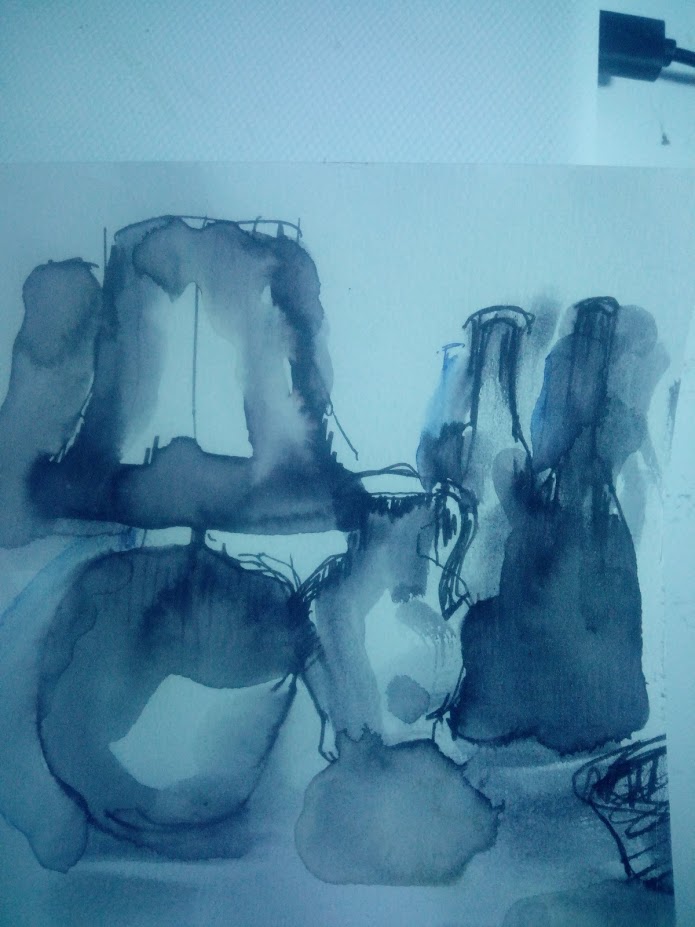
it doesn’t seem to be working very well today


My joints  are inflamed. if I belong to a certain school of thought I would think that inflamed joints would symbolically mean that connecting to other people is painful  and I should be forgiven for  whatever I may have done


I do prefer gentle people with quiet voices I don’t like people who argue badly in loud voices 


I don’t really believe this I could write poetry using this voice to typing tool but I might try who knows what would come out?


I have no love left in my heart today
and neither do I wish to Talk or pray
for I am feeling Shetland in my mood
So here I search and that’s the way I brewed


Soaking is a very stupid act
Light rumination ,I think  truly daft
Better far to cast the burden down
And go to see a film about a clown


What do you do when you suffer pain
it’s not so bad just ones but comes again
n fact I have it all day and all night
And if I had a partner  they’d take flight


Let us not dwell in the realm of words
But open up our eyes to humming birds

In our sleep  we find the open door

The face that was familiar is no more
Yet in my dreams he is alive again
Thus his image lives inside my store

In our sleep  we find the  open door
We see   the   precious faces  of those gone
The face that was familiar is no more

A nightmare,anxious, running as before
To find our car, to bring home my dear man
Now his image  lives within my store

His voice to me sounds muffled by great doors
He wonders how I manage  all alone
The love that was  so potent is no more

An anger at the doctors made me roar
A dying man ignored by every one
Now his love  lives on in my  deep core

Death will capture all but is that fair?
We live  then die  at last of all good bare.
The face that was familiar is no more
Yet his  sweet love  still haunts  my deepest core


The rage of loss

The face that was familiar is no more
The  golden meaning of the world destroyed
Where is  love and where are its new laws?

Though none but God itself should be adored
The rage of loss   for  tumult is employed
The face that was familiar is no more

In the earthly life come no encores
As down the river we each  float unmoored
What is  love and where are its new laws?

Hate and envy  give no cruel succour
Yet whose the heart that  loss has fast devoured?
The face that was familiar is no more

Must we sip the fatal  bloody gore?
Must the evil humans be empowered
What is  love and are there  gracious laws?

Over me the fear and panic  glowers
Shall I hide  in some  old unused sewer?
The face that was familiar is no more
Will the memory   birth a new desire?