

He was a back slapper so crazy, his hand went through me and hit my heart.I had a heart attacker… him!
He truly did have baited breath and once a salmon leaped down his throat.I told him it was dangerous but the salmon killed him so we really didn’t enjoyed eating it even when it smoked a cigar by the table.
Will the Royal Family choose baptism by fire for Archie?
Beauty is in the buys of the beholder
Beauty is only thin it’s not deep
I have a big head and a small part
Do we cry over cow’s sulks?
Do you feel me press your organ in my sleep; Or am I dreaming?
Does my heart do you good when you kick it?
I am driving my self crazy so I shall get insecurity benefits or is it impurity deficits?First I have to hear a voice offering me advice.. or swearing at me.Hang on,I’ll phone an old blogger who might shout,Bugger!
Life is endless words with no punctuation except when we get stoned…those
may be full stops when we over blow ourselves and the balloonish egoes burst.
Every dog has his stray cat.
Everything’s coming up our noses so block them up.
A faint art never an oil painting shows
I fall head over wheels into a police van; why am I low sunk?
We fall through the cracks that God left in the world…give him credit for uncommon sense
Ban the old blames now! Burn them all or go to hell… it’s your choice.
Are you nurturing an old wound? Seal it off with “super soul and heart glue!”
Author: Katherine
Poetry writer and author

Why should we use google, we have you?
Oh,Katherine I feel you’re very bad
I saw you were in Starbucks with a cad
Why, you should be home to wash the floors
Not discussing Dirac, Joyce, or More.
Katherine, your readers you’ll annoy
All your poetry is just a ploy
You really want to teach them how to prove
Pi is not a number one can use.
Katherine, is this a clerihew?
Why should we use google, we have you
Yet you do look somewhat pale
As if you have been left out in a gale
Share this:
Poets and society
 https://poets.org/text/conversing-world-poet-society
EXTRACT
The politician wants men to know how to die courageously;
the poet wants men to live courageously.
—Italian poet Salvatore Quasimodo, Nobel lecture, 1959
Since the invasion of Iraq in 2003, the relationship between politics and poetic protest has taken on fresh urgency for American readers and writers. “I suspect the writers know in their hearts how ineffectual poetry is in greater American society,” W. S. Di Piero wrote in Poetry magazine in October 2003. He was commenting on the Poets Against the War movement and updating Dana Gioia’s plaint made in the controversial 1991 essay, “Can Poetry Matter?” In it, Gioia asserts that it is a “difficult task to marry the Muse happily to politics,” given that poets lack a role in the broader culture and therefore do not have the confidence to create public speech.
Why is it that in this country poetry is viewed as separate from the business of the nation? Certainly this is an Anglophone peculiarity. In Latin America, José Martí, one of the region’s most beloved poets, led the movement to liberate Cuba from colonial domination. The Nicaraguan poet and priest Ernesto Cardenal was engaged in the Sandinista revolution and later served as his country’s Minister of Culture. The Nobel Prize-winning Chilean poet Pablo Neruda was a diplomat, and a senator, and joined the ranks of Spanish poets such as Federico García Lorca and Miguel de Unamuno, who spoke out against General Franco during the Spanish Civil War. Both Lorca and Unamuno lost their lives as a consequence of their Republican sympathies.
In France, Paul Éluard, René Char, and Robert Desnos wrote dissenting poetry while fighting for the Résistance. In Italy, Quasimodo and Cesare Pavese were repressed for denouncing the regime under which they lived, as were Russian and Polish poets such as Ossip Mandelstam, Anna Akhmatova, Wislawa Szymborska, and Czeslaw Milosz.
Contemporary Middle Eastern poets such as Badr Shakir al-Sayyab, Nizar al-Qabbani, Adonis, Ghazi al-Gosaibi, and Mahmoud Darwish have embraced the idea of committed literature, or a literature engagée, as Sartre termed it.
And yet, in the Anglophone West, poets ranging from W. H. Auden to W. B. Yeats are invoked for their epithets that warn against involving politics in poetry. Both poets were cited repeatedly in the wake of the White House poetry debacle of February 2003, when Laura Bush canceled her symposium on “Poetry and the American Voice” after she learned that some of the poets on her guest list refused to attend in protest against the impending war. Sam Hamill, poet and founding editor of Copper Canyon Press, intended to present her with a petition and a compilation of protest poetry. Laura Bush’s spokeswoman said that it would be “inappropriate to turn a literary event into a political forum.” The conflict helped spark Hamill’s creation of the Poets Against the War movement.
Media accounts of the movement often quote Auden’s line “Poetry makes nothing happen,” or three lines from Yeats: “I think it better that in times like these / A poet keep his mouth shut, for in truth / We have no gift to set a statesman right.” It is not accurate to invoke these poets or their words as emblems of the apolitical poetry camp without recognizing that each in his own way led a profoundly political existence. Yeats aided the national cause in the uprising against British colonial power and later served as Senator for the newly freed Republic of Ireland. He rejected the aestheticism of “art for art’s sake,” declaring, “Literature must be the expression of conviction, and be the garment of noble emotion, and not an end in itself.”
And in fact, Auden’s poem—an elegy for Yeats—concludes by exhorting the poet to “follow right”:
With the farming of a verse
Make a vineyard of the curse,
Sing of human unsuccess
In a rapture of distress;
In the deserts of the heart
Let the healing fountain start,
In the prison of his days
Teach the free man how to praise.
Auden, who traveled to Spain to support the Republican cause during the Spanish Civil War, argued in 1939 that “In so far as poetry, or any other of the arts, can be said to have an ulterior purpose, it is, by telling the truth, to disenchant and disintoxicate.”
Acting on their beliefs often led Auden and Yeats to the dynamic center of public life. Each remained wary of the traps of dogma and expressed that caution in his work, particularly later in life. But a political belief mixed with ambivalence and pessimism is nonetheless a political belief. The fact that it is tempered with an awareness of human failings, foibles, and hypocrisies is the mark of a responsible conscience—and when they appear in poetry, such complexities are the signature of great art.
Why is it that poets today are not considered by the nation as legitimate actors in the public sphere? What transpired in the Anglophone literary imagination since Percy Bysshe Shelley claimed nearly two hundred years ago that poets were the “unacknowledged legislators of the world”?
READ MORE ON THE LINK
Share this:

Live again
Turn back, live again, he  said to me
Do not  wander in the darkness anymore
One more move might give death victory

We are each connected to that tree
The sunlit top, the roots hid in earth’s floor
Come back, live again, he asked of me

While we live, we’ll live with dignity
Not scrabbling for the gold in blood and gore
One more lie will give  sin victory

The kindness of the golden light was  clear
And left an image in my mind’s deep core
Come back, live your life, he then soothed  me

Do not wonder  now why you are here
We’re here to live and living shall restore
What  our suffering self  has found so dear

I had never seen the light before
Only Christ the tyger with his roar
Come back,  live  through pain, he  asked of me
One right step will give love  victory
Share this:
Boris is the Menace of the Hour
Boris is the Menace of the Hour
He’s like a nightmare figure in the dark
The Menace to our status and our power
He has charisma, he is never dour
But would you like to meet him in the park?
Boris is the Menace of the Hour
I suspect he’s after money, gold allures
Like viagra it may make him spark
He’s a Menace to our worthiness and power
He’d have watched Herr Hitler painting flowers
Saying killing Jews was just a lark
Boris is the Menace of the Hour
I wish I could have hit him with my flour
I guess I feel frustrated with the jerk
He’s a Menace to our our country and its power
Can’t the poorer people see how Boris fucks
Not just women, folk in low paid work
Boris is the Menace of the Hour
The Menace to this Kingdom uninsured
Share this:
That Satan’s Den
How did Britain breed such brilliant men
From Eton, Oxford, now they live still fools
They create big recessions with a pen
The new PM is of mixed origin
He acts the clown, dictates how he will rule
How did Britain breed such cunning men?
Oh,Franco,Himmler,Hitler gentlemen
They soon drew in adherents,mean and cruel
They created new illusions, who helped them?
We’re going down, we’re Jews, we know that doom
Sure enough men sell the poor tinned gruel
How did Britain breed these family men?
Hear the cheers, it’s Camelot again
Johnsons, Ben and Boris, aint’ it cool.
Boris lifts the Host, adore or ban
He is not a King, he lies with Pen
Viagra should be banned for such damn fools
How did we ever breed impotent men?
In the doorways homeless men may call
In Christian churches, boys are groomed and mauled
How did Britain breed such evil men
They’re nurtured in the House , that Satan’s Den
Share this:
Andrew Marvell
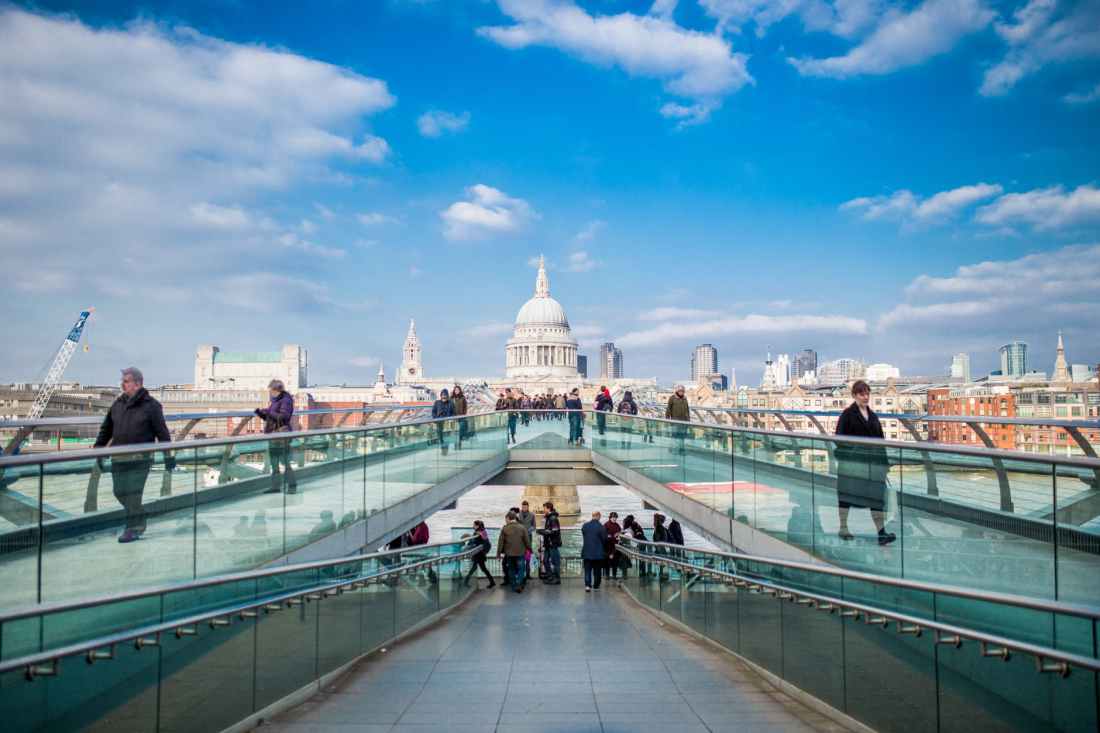
https://www.poetryfoundation.org/poets/andrew-marvell
EXTRACT
Andrew Marvell is surely the single most compelling embodiment of the change that came over English society and letters in the course of the 17th century. In an era that makes a better claim than most upon the familiar term transitional, Marvell wrote a varied array of exquisite lyrics that blend Cavalier grace with Metaphysical wit and complexity. He first turned into a panegyrist for the Lord Protector and his regime and then into an increasingly bitter satirist and polemicist, attacking the royal court and the established church in both prose and verse. It is as if the most delicate and elusive of butterflies somehow metamorphosed into a caterpillar.
To be sure, the judgment of Marvell’s contemporaries and the next few generations would not have been such. The style of the lyrics that have been so prized in the 20th century was already out of fashion by the time of his death, but he was a pioneer in the kind of political verse satire that would be perfected by his younger contemporary John Dryden and in the next generation by Alexander Pope (both writing for the other side)—even as his satirical prose anticipated the achievement of Jonathan Swift in that vein. Marvell’s satires won him a reputation in his own day and preserved his memory beyond the 18th century as a patriotic political writer—a clever and courageous enemy of court corruption and a defender of religious and political liberty and the rights of Parliament. It was only in the 19th century that his lyrical poems began to attract serious attention, and it was not until T.S. Eliot’s classic essay (first published in March 1921), marking the tercentenary of Marvell’s birth, that Marvell attained recognition as one of the major lyric poets of his age.
Share this:

Poetry and sociality in a global frame
https://arcade.stanford.edu/content/poetry-and-sociality-global-frame
Extract
Dowdy, Michael. 2013. Broken Souths: Latina/o Poetic Responses to Neoliberalism and Globalization. Tucson: University of Arizona Press. $30.00 sc. 296 pp.
Furani, Khaled. 2012. Silencing the Sea: Secular Rhythms in Palestinian Poetry. Stanford: Stanford University Press. $55.00 hc. 312 pp.
A formidable hermeticism has long held sway over Anglophone poetry criticism. While criticism of other literary genres expands its grasp, most notably into new sociological approaches to literature, knowledge of the tropes and schemes of poetry serves as a border check for those interested in poetic criticism, slowing contemporary poetry’s reception, inhibiting pedagogy, and operating in general like a canon of revealed truths. Generally speaking, to read poetry means to learn the history of poetic devices and to recognize the various appearances (or absences) of this history in an individual poem: why a line break works the way it does, why a metaphor appears where it does. But these claims about poetic design do not only represent a neutral language specific to literary study or a convenient mechanism for distinguishing between traditional and avant-garde strands of poetry. By attributing a private and individual, rather than global and material, foundation to the aesthetics of poetry, such claims also prevent poetry from being recognized as a social form. As a result, canonical notions of line, verse, and enjambment are theorized as though poetry developed and continues to develop in monastic seclusion from the political economies and emergent precarities of modern global capitalism.
No sustained analysis exists in which the history of poetry and poetics is reread in the light of the history of globalization. Books on Anglophone poetry in particular have been cautious in adopting a postcolonial, global, or transnational critical perspective and, in general, complacent in upholding the immutable value of a small set of formal devices and traditions. Within this tradition, however, there are critics who are moving toward a global and socially attuned poetics. Jahan Ramazani’s The Hybrid Muse (2001) and A Transnational Poetics (2009) link poetic tropes of metaphor and figures of irony with theories and themes of hybridity, migration, and exile in postcolonial Anglophone poetry. After Ramazani, the Jamaican poets Claude McKay and Louise Bennett can no longer be treated as marginal, neither to postcolonial studies nor to poetry, while the Irish poet W. B. Yeats and the Trinidadian poet Derek Walcott, who are already the subjects of a voluminous critical corpus, appear newly relevant.
Another extract
Furani and Dowdy are not troubled or anxious to establish their credentials through the Anglophone poetic tradition. Instead, their work provides ways outside the existing tradition and methodologies from which Anglophone critics might learn. In Silencing the Sea: Secular Rhythms of Palestinian Poetry, Furani, an anthropologist, argues that aesthetic innovations in post-1948 Palestinian poetry must be understood in relation to ethical and political “craftings of the self” (2012, 2): “I have been able to see the poetic tradition as caught in the formation and contestation of truth and subject formations in a particular society, rather than as an insular unraveling of beauty and imagination” (3). In Furani’s account, poetic meter and religion are the two critical axes for understanding Palestinian poetry in the second half of the twentieth century. The history of Palestinian verse, Furani argues, is one that links traditional meter with religion and the break from traditional meter with the rise of secularism as “a dominant fragmentary formation in ways of knowing and being in the modern era” (19). While Furani’s work introduces many poets who will be virtually unknown to those well versed in other poetic traditions, it also culminates in a powerful critique of secularism for its elevation of self-sovereignty and its claims that truth can only be found in the visible (246). Furani concludes by stressing the need “to think fully through the secular demands sensing the frailty buried under its claims of sovereignty” (248).
The most striking aspects of Silencing the Sea are the structure of argument Furani creates and the methodology he employs. The first section of the book, “Initiations,” introduces readers to the theoretical, formal, and institutional frameworks of the study by giving overviews of secularism, forms of Arabic poetry, and poetry festivals in post-1948 Palestine
Share this:
Snails
In my little garden dwell the snails
I love their patterned shells upon the wall
Walking round I see their tiny trails
They do not go to work nor ever fail
Unless I step unseeing as they crawl
In my little garden dwell the snails
Human beings hurt us by betrayal
Natural life gives comfort as we fall
Walking round I see their tiny trails
Petted cats can caterwaul or wail
But men may hit a woman and then maul
In my shady garden dwell the snails
I wonder if they read the earth like braille
If they are attacked, they lose their all
Walking round I see their tiny trails
Build no barbed wire fence nor a brick wall
Between the human and the natural world
In our little gardens dwell the snails
Walking round we see their silver trails
Share this:
A comparison of prose and poetry
https://www.diffen.com/difference/Poetry_vs_Prose
I
Read more by clicking the link
| Poetry | Prose | |
|---|---|---|
| Introduction (from Wikipedia) | Poetry (from the Latin poeta, a poet) is a form of literary art in which language is used for its aesthetic and evocative qualities in addition to, or in lieu of, its apparent meaning. | Prose is the most typical form of language. The English word ‘prose’ is derived from the Latin prōsa, which literally translates as ‘straight-forward.’ |
| Line breaks? | Yes | No |
| Use | Typically reserved for expressing something in an artistic way. | Most everyday writing is in prose form |
Share this:

What value is x?
Algebra has made an impression
The opposite of a depression
What value is X
Is it something like Sex?
Bring back the days of repression
Topology is hard to explain
Rubber sheets, here’s geometry again
Would it be better
To write you a letter
As long a I show no disdain
Doing the tax form is hard
What income have I ever declared?
I do have my pension
Will I get detention
For spending it all at the Fair?
I see an equation go by
I say, never focus your eye
Or you may try to solve it
Or even dissolve it
I’m truthful; I never tell lies
Share this:
Books

What we are reading this month:
The Duty of Genius by Ray Monk
[ a biography of Wittgenstein and descriptiions of the era he lived through]
Cheap as a kindfle book and I have read it 7 times already/
Share this:

How sweet my readers are when I am ill
How sweet it is when I m feeling ill
When I’ve been assaulted verbally
To read the comments ,not just take a pill
I lie in bed, my duvet has a frill
i wish my cat and man were here by me
How sweet my readers are when I am ill
I see a stray black cat on window sill
When I go out =side this cat will flee
I read your comments love will cure ,not pill
As humans suffer in this life ‘s cruel mills
The metal grinds all down beyond a plea
How kind my readers are when I am ill
I have climbed the mountains and the hills
In gratitude I write you poetry
I prefer your comments to the doctor’s pills
Our minds were given us without a fee
All that’s best is given happily
How sweet it is when I m feeling ill
To read the comments ,not just swallow pills
Share this:
Mysterious the dark the ignored, heart
On the surface of our self we dwell
Mysterious the dark the ignored, heart
Till we have an accident, are ill
We’re like a little snail without its shell
Trodden on by others we depart
Oh surface living paves the way to Hell
We climb our way up the consumer’s hill
Filling up our trolley as we walk
Till we have an accident, are ill
Imagination helps us more than Will
Oh, to be in Dorset, sea and lark
On the surface of this place we dwell
When at last we die, where is the bill
Where the confrontation wise and stark?
When down comes a new virus, we are ill
Oh, pain, oh fear., surrender now the will
Intuition tells us to be still
On the surface of our self we dwell
We think that we are living very well
Share this:
Normality?
“‘Normality,’ says Howe, ‘is the paradise of escapologists, for it is a fixation concept, pure and simple.’ ‘It is better, if we can,’ he asserts, ‘to stand alone and to feel quite normal about our abnormality, doing nothing whatever about it, except what needs to be done in order to be oneself.’
E Graham Howe
Share this:

Their little twigs and branches softly croon
I see this house where you once lived with me
I cannot hear your voice in any room,
I touch the cushions,rugs and tapestry
I feel the silky sheets my eye can see.
The silken scarves,the necklaces of blue
I see this house where you once lived with me
The trees bend in the wind, they cannot flee
Their little twigs and branches softly croon
I touch the well embroidered tapestry
The silence is the lack that makes me free
The other senses gratified, stll bloom
I see the sofa, marriage bed indeed
No voice but mine is heard , oh loss obscene
All I see is blackness and faint moon
The cushions comfort me ,oh heart bereaved
Yet all you gave is rich in my esteem
The wedding ring of gold still has its gleam,
I weep at home where you once loved well me
I flinch then rest by love’s great boundary
Share this:
So in a rage we break our treasures fine
In a rage we break our treasures fine
The china gold, the artwork, worse…. a friend
Possessed by envy, hatred, thoughts malign
Little children scream,no, that is mine
When we’re older wisdom might descend
Still in a rage we break our treasures fine
We are human beings, not divine
We make an error, should that be the end;
Possessed by envy, hatred, thoughts malign?
After we have broken friendship’s lines
When in grief our best garments we rend
So in a rage we break our treasures fine
Later in regret we see we’re blind
And it’s too late to make or do or mend
Ruled by envy, hatred, thoughts malign
Inside ourself , do know we ‘ve sinned?
Weep and weep , this seems to be the end
In a rage we broke our treasures fine
Now we live in imprisoned ,unresigned.
Share this:
The Window
Share this:
Deep down we go into our hearts
- Wind blows soft on my bare arms
I ride through deep green woods.
These simple pleasures still I love,
Air on my skin feel good.
The wind shakes leaves for sidelong sun
To make her pictures from.
So much, so rich the offerings
This is senses’ realm.
Alone in woods, I plight my troth
To earth and gods thereof.
I sing my own sweet melodies,
To solitude and love.
Far from the maddening crowds of folk,
I hear earth’s own true songs.
And then refreshed by woodland charms,
I feel at peace from wrongs
Inside my heart,there is a wood,
And there I shall now dwell.
And so I’ll solve the mystery,
Of how we can live well .
Each wood has its special birds
On tree tops in sunlight.
And each wood has its special song,
And each wood has its sights.
I shall accept the mystery
Of who has made my wood;
And how we are all joined bodily,
All sharing this green blood.
Deep down we go into our hearts,
To find out who we are.
Just at the deepest,quietest parts
We find all beings there.
Share this:
They move with ease the body, say the Mass
Feelings need geometry to form
Not to spill like water from dropped glass
Feelings running wild may do great harm
Yet inhibition,tense lacks any charm
Love and hate need ritual,compass
Feelings need geometry to form
Ballerinas, skaters melt their bones
They move with ease the body, say the Mass
Feelings running wild may do great harm
Will power out of place can cause alarm
Create tensions, acts so evil,crass
Feelings by geometry inform
Restraint and sculpting, waiting through impasse
Like Jesus gives up all upon his Cross
Feelings running wild may do great harm
Here we find the rhythm and the task
We feel the rawness; feel the utter risk
Feelings need geometry and form
Feelings like wild bulls can do us harm
Share this:
Free associating in E minor.
I once knew a lady called Jane,
Who found writing poems a pain.
She took out her pen,
And tried to write when
All the fuses blew out in her brain.
Jane’s had her head disconnected,
Until all the electric’s been inspected.
So she lies on her recliner,
Free associating in E minor.
I wonder how her Unconscious’s directed?
Jane studied mirrors and magnets.
She’s always been well versed in gadgets.
But to do it to yourself,
Is not good for your health.
You need to pay Freud for some magic,
Share this:
Life is a patterned weave.
Some days are sad and blue
And then we feel lonely too;
Or we cause rifts.
Some days are doldrum days.
Some days are like bad plays.
Not such a gift.
Most days have joyful parts.
Most days we lift our hearts.
They pass all too swift.
Some days love speaks to me.
Some days I feel so free.
I love my craft.
Life is a patterned weave.
Love helps us when we grieve.
Love is a raft.
See how the sun comes back.
See how light fills the gaps..
Some days we laugh.
Weep now and I’ll weep with you.
I have known sorrow too.
Yet sorrow will pass.
Joy is not far away.
Joy will return one day
With life’s arts and crafts
Share this:
In this erratic summer , heat and flood
In these dead leaves I slept alone and sad
I wandered as if searching for a child
But now the summer’s here to make us glad
Nothing’s static, be it good or bad
Some like cities some live in the wilds
Where in dead leaves I slept alone and sad
Like green leaves where sap has turned to blood
The remnants of the plants lie waste, defiled
In this erratic summer , heat and flood
The woods dry out, the cornfields turn to mud
Frogs are happy by the damp beguiled
I wandered by dry leaves , their message read
Who is British, who should be exiled?
Boris Johnson,PM,AM riled
In this erratic Kingdom , heat and flood
Where did Mona Lisa find her smile?
Who paints in their dream the image kind?
In these dead leaves I slept forlorn and sad
But now the summer’s here my heart beats glad
Share this:
It enticles my canticles to eat chocolate panticles.
I have always liked”Jabberwocky ” and other of Carroll’s work,and wondered how he wrote it.
Similarly with Edward Lear.
I wasn’t planning to imitate them.[Or even to have an imi-tete a tete with them]
But after playing with the word “impersonate” and making up words like “imfelixator”
and after a while I got in this other mode.I think it is better if it is read out loud
It enticles my canticles to eat chocolate panticles.
It deflubs my joicicles to ride twenty cobrimmed bicycles.
It inflammates my twesticlites to plead with guesstimiates.
It defibrilatees mt twenty costaring ladycles,
And playmobile entereations.
I’ve been found guiltestimated and sentenced to be decivinalised,
And to spend fifty tears hearts with a Thesaurian’s bride,
The judge’s stays I have to go inside outicle
Until I discover a new three legged corimmed tribycle
Share this:
In the morning
In the morning,I’m
opening slowly, a bud,
a flower,
breathing softly,
In the summer sweetened air.
Cat stretches
Lazily,hot stones
a bed.
Don’t let the day
begin too soon.
Relaxed.
I feel your presence
In the azure sky.
Now midday,I bloom.
And take in all there is
Share this:
From the Guardian today
GRIEF IN THE USA
Authorities had not yet officially named the suspects in either shooting, but local law enforcement sources in El Paso named the shooter there as Patrick Crusius. Police were also examining a hate-riddled message on the website 8chan, posted around 20 minutes before Saturday’s attack, in which the author expressed sympathy for a white nationalist massacre at mosques in Christchurch, New Zealand, a few months ago, and which stated: “This attack is a response to the Hispanic invasion of Texas.”
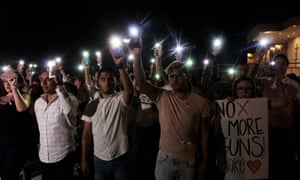
By late Sunday morning, the US president, who is spending the weekend at his golf resort in Bedminster, New Jersey, had not addressed the nation in person, with a statement from the White House saying: “Our Nation mourns with those whose loved ones were murdered in the tragic shootings in El Paso, Texas, and Dayton, Ohio, and we share in the pain and suffering of all those who were injured in these two senseless attacks. We condemn these hateful and cowardly acts.”
Share this:

Algebra of new media

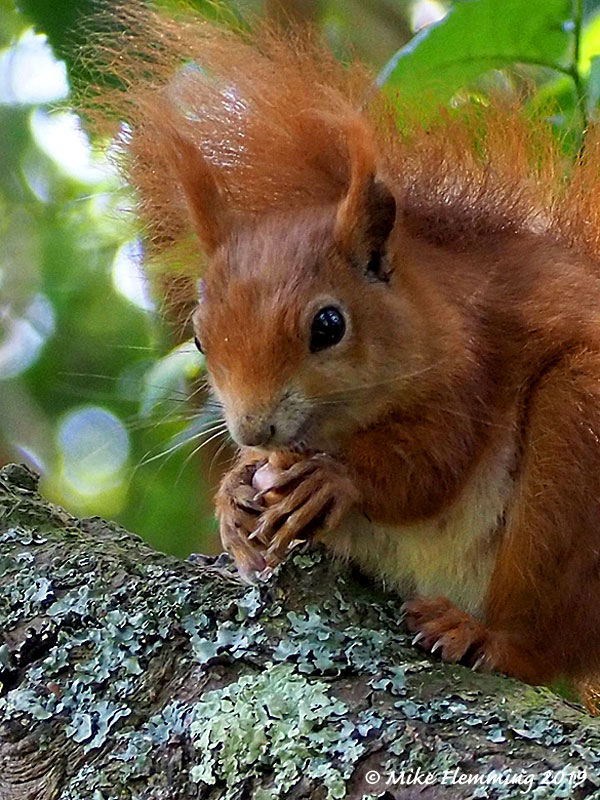
Photo by Mike Flemming,Copyright.Published with permission
xxxx = I like/love you/it
yyyyy=I can’t understand it.
zzzzz= I feel sleepy after I read your writing.
uuuuu= You are self absorbed,narcissistic or an egoist.
vvvvv= I want to view more
wwwww= I want to wee urgently but postponed till I read this.
xyxyxy= Love it but it’s incomprehensible.
xzxzxzxz-= Love it and feel drowsy and relaxed
yzyzyzy== too tired but trying to comprehend
ahahahaha= funny
bbcbbcbbc= too mainstream
bcbcbcbcb=before the common era= out of date
wowowowowow= amazing and painful
howhowhow= puzzled
hmmhmmhmm= thinking about this.
Share this:

Reparation?
https://www.psychologytoday.com/gb/blog/the-me-in-we/201806/paranoid-schizoid-and-reparative-states
EXTRACT
Effective reparation also involves a distinct form of guilt, one that is not so overwhelming as to induce despair and humiliation. This is a not a punitive or persecutory guilt, but guilt of a different sort. Carveth puts it this way, “If I injure someone and while he bleeds I self-flagellate, that is punitive guilt; but if I put down my cat-o-nine-tails and reach for my first-aid kit and start bandaging, that is reparative guilt.”
The reparative state marks our move to moral insight and development, and the ability of the child to distinguish between kind and cruel actions.
Share this:
If I don’t feel angry I get sad
I was angry with the cat , she bit my leg
I was angry with the kettle, it was slow
I was angry with the lawn, it needs a mow
So I poured my violent rage on you instead
I am angry with the weather, it’s too hot
I am angry with the government .it’s bad
If I don’t feel angry I get sad
I throw my pain at you like a gunshot
I have no friends left,I am going mad
They all hate me,I don’t know for what
Is this Hell,I certainly feel hot
Do you think I acted like a cad?
I love you dearest, please let me come back
I did not mean to make your eyes turn black
Share this:
How constraints can help in writing poetry
 https://www.poetryfoundation.org/articles/145052/the-choice-of-constraint
EXTRACT
In constrained writing, one writes under a condition. That condition might mean not being allowed to do something—such as not using the letter e—or following a certain pattern. If this definition seems broad, it is. All formal writing operates under some kind of constraint; a traditional sonnet, for example, asks you to manage meter and a rhyme scheme in 14 lines. In this essay, we’ll look at less-familiar uses of constraint, ones that will challenge you in different ways. It may seem counterintuitive to put limitations on your writing, but you may find that a small constraint can make a big difference in soothing your fears of the blank page. It does so by taking some choices away and by demanding that you make new choices.
To illustrate this, I’d like to look at one of my favorite constraints—the abecedarian. Abecedarians are poems in which the first letter of each line or stanza follows the alphabet: A, then B, and so on. The abecedarian is an ancient form; it may be as old as the alphabet itself. You can find abecedarians in the Bible, though you’d have to see Psalm 119 in the original Hebrew to notice that each section is headed by a letter from the Hebrew alphabet (Aleph, Beth, Gimel …). Contemporary poets have used the alphabet constraint on a grand scale, creating long poems, such as Carolyn Forche’s “On Earth,” and even throughout entire books, such as Inger Christensen’s alphabetand Harryette Mullen’s Sleeping with the Dictionary.

 We
We
 How my heart speaks