Such gentle words can break our sullen bonds

tresco_2019-4

A word  that’s spoken by a friend can  reach
Can touch, can move, can  embrace in its sounds
The inner soul where its vibrations teach.

When cut off, silent,after   sad defeat
Such gentle words can break our sullen bonds
A word  that’s spoken by a friend can  reach.

We must not  torture nor torment  in speech
Our heart, the centre of our  morbid wounds
The inner soul with its vibrations speaks..

From our eye, a tear  springs  with  relief
From imprisoned sulking, jump with a great bound!
A word  that’s spoken by a friend can  reach.

Muscles weaken,but the mind stays fleet
Humour and its cousins are our clowns
The inner soul  by its athletics speaks.

I smile and smile  yet rarely do I frown
For I will rise up, even when low down
A word  that by a friend can  reach,provoke
In  our souls ,deep  memories  will evo

Death of democracy?


london night lights bridge
Photo by Uncoated on Pexels.com

Our new PM is suspending Parliament for 5 weeks.I  would not have believed this could happen here.Watch out you immigrants,Jews,Muslims. the handicapped, the old,foreigners [ who is foreign in London?]
Boris Johnson seems  hard and cold.Maybe he is Icarus……… who knows?

.

We got it in your mouth but it was hell

I was in a dark and evil place
Having seen the blackness of your face
You had no trousers on your thin old legs
Sitting in a chair beside your bed

I sat down, you collapsed onto my breast
Your  blood was out of oxygen at last
The nurse came running with some sugar gel
We got it in your mouth but it was hell

I had to help him lift you  to the bed
You never spoke, I wondered were you dead
He said that you must eat which was bizarre
You were semi conscious as you glared.

A doctor came from calling 111
He said you got pneumonia,by gum!
He rang  999 and then he left
The paramedics ran in, I  dismissed

I waited in a  little room with chairs
An hour passed by,I pulled out my own hair
Then at last they pulled the curtain back
You were on a  trolley like a sack

Your voice was stronger and  right then you said
Oh, darling, I’ll soon  see my mum and dad


Be wary of BP lowering pills

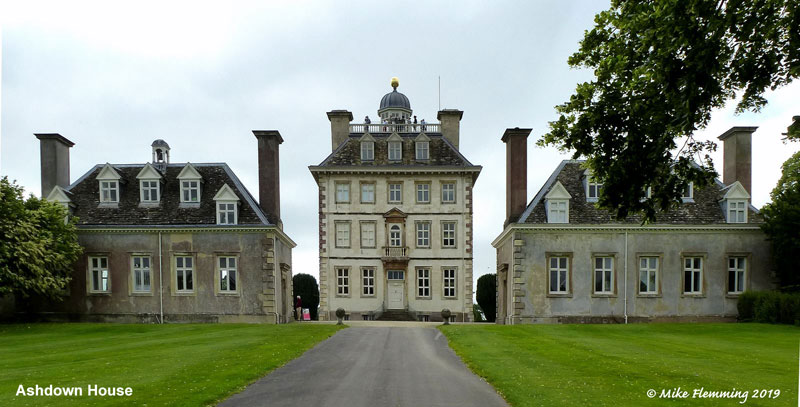
ashdown-house-2019-1About 4 weeks ago I went to a walk in Medical Centre, thinking I had an infection
I was right.I did have one.But this doctor insisted on giving me pills for high blood pressure despite not knowing me at all.I was distressed about  the behaviour ot someone who won’t   return my door keys

Anyway, about 10 pm I felt odd.I went into the kitchen ]   then guessed I might faint and managed to kneel down before I went unconscious.I came to  and thought I was not injured and despite my face being black and blue the next day I was not hurt

I got a locksmith.When  he saw my face he asked me what happened.He offered to call on the person  who has my keys but I  did not want  him to do that
In the end it proved useful as he fixed another key and adjusted the doors.
So beware.Don”t do like I did.Ask your own doctor first before taking new medication

God won’t mind, he knows well we are flawed

Oh, my electric carpet sweeper  I adore
It  never grumbles as  it sweep my floors
It sounds so quiet and gentle as it drags
Dust and bits of wool from off my rugs

I’m astonished how much dirt if gathers in
I  examine  it with awe beside the bin
I look to see of there is any gold
Just as Freud the prophet has foretold

I found three pounds, enough to buy some tea.
I like tea in bed as I come to.

Escaping from my dreams as from a Zoo
Am I odd or am I just like you?

Even kitchen tools can be adored
God won’t mind, he knows well we are flawed

The bane of my life

adult alone backlit dark
Photo by Pixabay on Pexels.com


https://dictionary.cambridge.org/dictionary/english/bane


See more results »

Radical= what?

man in black jacket
Photo by mohamed Abdelgaffar on Pexels.com
https://www.google.co.uk/search?safe=active&source=hp&ei=MWxlXbqZLtGm1fAP2NGsQA&q=radical&oq=radical&gs_l=psy-ab.3..0l10.1306.3568..4557…0.0..0.68.442.7……0….1..gws-wiz…….0i131.EOJZU3heNPo&ved=0ahUKEwj69aixzaPkAhVRUxUIHdgoCwgQ4dUDCAc&uact=5
radical
/ˈradɪk(ə)l/
Learn to pronounce
adjective
  1. 1.
    (especially of change or action) relating to or affecting the fundamental nature of something; far-reaching or thorough.
    “a radical overhaul of the existing regulatory framework”
    synonyms: thoroughgoingthoroughcompletetotalentireabsoluteuttercomprehensiveexhaustive, root-and-branch, sweepingfar-reachingwide-rangingextensiveprofounddrasticsevereseriousmajordesperatestringentviolentforcefulrigorousdraconian

    “radical reform is long overdue”
noun
  1. 1.
    a person who advocates thorough or complete political or social change, or a member of a political party or section of a party pursuing such aims.
    synonyms: revolutionaryprogressivereformerrevisionistMore

  2. 2.
    CHEMISTRY
    a group of atoms behaving as a unit in a number of compounds.

Extract from politics and poetry

5d6397cedda4c8cf588b462b


As radical as empathy and imagination can be, these qualities exist in the mind. But there is also a poetic language of embodied experience, one that uses poetry to seek out the body. In “Feeld,” the trans poet Jos Charles bends language, via willful spelling, to a place where it must be parsed slowly, struggled through, read not so much with the brain as the mouth. Language becomes a felt thing, a terrain to be crossed. The title itself toys with such a transformation, the word feeld being a marriage, perhaps, of feelfelt and field. Reading lines like “i care so / much abot the whord i cant / reed / it marks mye bak / wen i pass / with / a riben in mye hayre,” I can’t help feeling that the body — itself a shifting and malleable possibility — is the target for these poems.

Through the strange labor of deciphering the text, I come to understand that Charles is transmitting an experience that I must allow to travel from her body into mine. When I do, the distance between us alters. It grows smaller and strangely charged. I’m made to realize that the very vernacular of the poems also tampers with history; it announces a continuum where Chaucer and 19th-century enslaved blacks and a 21st-century white trans woman seem quite effortlessly to share a lexicon.

Justin Phillip Reed, whose “Indecency” received the 2018 National Book Award in poetry, writes close to the flesh. His poems take up the body in desire and violence, and they do so by thrusting the reader into a stark visceral encounter with their material. The poem “Portrait With Stiff Upper Lip” is graphically rendered so that it can’t be read line by line; the page must be turned, repositioned so that text, overlapping and running every which direction, can be seen. Beyond typography, the poem asks the reader to take on the physical and emotional sense of a black man hearing himself, or someone like him, discussed via fragments. A reader staggers through a field of statements like “looks like planet of the apes” “probably has / a huge” “probably has a parent” “in / prison” “NO” “[in / the / pen]” “I’ve never had” “with a really hot BLKguy.” The reader, dragged forward yet afraid to keep reading, is made to feel caught in a hostile gaze, shoved around by heedless voices.

I saw your soul like that of a wild bird


Someone other guided me to act
Deep inside my voice had been unlocked
I sang the psalms and then a lullaby
Not aware in thought  that you would die.
I fed you with a teaspoon the mashed fish
From a  plate as good as one might wish
Like a little child you tried your best
You winked at me and gazed  like one who’s blessed
You sat up with  a  brighter  face at last
Then lay back and  God knows all the rest
Oh, don’t go yet ,my darling,I am here
The floor of heaven came down  among my tears
Made of sumptuous satin  golden,dear.
For a little moment it hung low
Then it rose and  took you in its glow
I saw your soul like that of a wild bird
Taken by the Power  who  sent the  Word
A sheet of tears fell down from my closed eyes
It’s hard ,too hard when those you love  must die


Just watch a single leaf as it unfurls

What kind of camera shows the changing light
Upon the yellow blossom as it waves?
The wind has dropped ,the breeze is here, but slight
And on the flowers I in languor gaze

The red leaves of the acers now unfurl-
Two side by side but different in their glow.
The light accentuates  them as they curl
Gives them time to unwind  and be slow.

Without the breeze the colour  varies less.
It’s flatter, less like Monet, yet still bright.
And as a grey cloud  sags across the West
It puts my dreams of colour into flight.

Yearn not for special tools to catch the world.
Just watch a single leaf as it unfurls

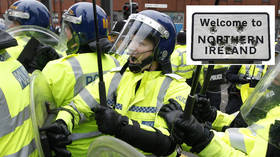
The Irish border with English police WTF


https://www.rt.com/uk/


‘Bloody hell’: English police could patrol Northern Ireland border after no-deal Brexit

‘Bloody hell’: English police could patrol Northern Ireland border after no-deal Brexit

Despite a wealth of history suggesting that it’s a very bad idea, UK politicians have reportedly devised detailed plans to deploy English police officers in Northern Ireland in the event of a no-deal Brexit.

The heron seems to smile

Happy-Heron-2014 (1)The heron seems to smile upon its prey
Why did God make this bird  be that way?
Could it  live on grass and bits of moss?
I guess  it is the protein it would miss.
We do much worse things than  do the birds
We damage other people by our words.
We also steal  more money from the poor
Even when the hangman’s at the door.
No,I don’t feel guilty  being rich
It seems that I use money as a crutch
I’ll give my winter coats to Charity
I’ll dress by drying leaves fresh off a tree
I’ll get a  little couch inside the shed
And hear the beetles laughing in my bed
I guess  a beetle will not know my name
Just like men, oh, dear, are they the same?

Poetry and the Reformation

birds12

Photo by Mike Flemming copyright


https://www.cairn-int.info/article-E_RHR_2261_0032–from-reformation-to-renaissance.htm

Extract

Two undeniable facts remain: the Anglican Reformation did not actually lead to any form of poetic engagement nor did it produce the sort of politically inspired poetry that is associated with the French epic poems of Agrippa d’Aubigné.[1]  One of the rare exceptions was a sonnet by Milton “On…[1] It was not until the beginning of the seventeenth century that the first poems bearing the spiritual influences of the Reformation appeared. This is a result of the transposition whereby England is neither the birthplace nor the promised land of the Reformation, but a significant hub where the continental prototypes were adapted under Anglicanism and subsequently exported in its new idiosyncratic form to the New World, the chosen land of the Puritans. A complete overview of the subject would also include the Puritan literature of New England,[2]  See Perry Miller, ed., The American Puritans. Their…[2] but this would merely highlight the rarity of poetry amongst a generation of pragmatic colonists, who were far more preoccupied with establishing permanent settlements than making an epic gesture that would aggrandize them in the eyes of all posterity.

6

However, back in England at the beginning of the seventeenth century, poetry was undergoing a reformation. The long reign of Elizabeth I (1558–1603) was conducive to political stability, to the flourishing of the arts, and a literature enriched by court poets such as Philip Sydney (1554–1586) and Edmund Spenser (1552–1599), who embroidered versions around the myth of the Virgin Queen that were both epic (The Faerie Queene, 1590–1599) and pastoral (Arcadia, 1590). At court there was a throng of fine and erudite minds whose rhetorical education drew not only on the Greco-Roman culture brought back into favor by the humanists, but also on the Bible, the core text for the schools of rhetoric based on the reformation of knowledge initiated by John Colet (1466–1519, a friend of Erasmus and Thomas More, and founder of St. Paul’s School in London). Many of these poets were no longer alive when the translation of the King James Bible was published in 1611 (Sydney died in 1586, Spenser in 1599). Nevertheless, as humanists, the poets were highly knowledgeable and were able to translate, gloss, or imitate the Psalms without fail.

7

By the time the great metaphysical poets (Donne, Herbert, Vaughan, Crashaw) provided spirituality in English poetry, with its real momentum during the first years of the seventeenth century, these rhetorical exercises around the Psalms had already become great classics, thus allowing a young poet to shape his style through his juvenilia, before embarking on original creative works. Thus, the English were initiated at the same school as Racan, Corneille, and Racine, or again Gryphius and Angelus Silesius. In addition to Sydney, it is worth noting: the Scotsman and Lutheran George Buchanan (1506–1582), author of a Latin Paraphrase of all the Psalms (written in 1566), a work which was re-published twenty-six times in the course of one hundred and fifty years; the court poet Thomas Carew (1594–1640) who wrote his paraphrases in English; and the sacred epigrams rendered in Latin by two metaphysical poets, the Anglican George Herbert (1593–1633: Passio Discerpta – Rendings from the Passion, and Lucus – the Sacred Grove) and the Puritan-born Catholic Richard Crashaw (1612–1649, Epigrammatum Liber, 1634). All these examples are in fact more interesting from a linguistic rather than a stylistic point of view in that they are the last remnants of neo-Latin[3]  See Pierre Laurens and Claudie Balavoine, ed., Musae…[3] literature of English origin. Having left these schoolboy exercises behind, a seventeenth century English poet would henceforth write in his mother tongue, and especially so when he sought to move nearer to God.

8

Why then were these poets so drawn to the Psalms? It was not particular to the English, but to the very essence of the Reformation in its most profound form. By making the human voice heard with its full spectrum of contradictory emotions, they opened the way for lyricism, which had already been heartily encouraged by the devotia moderna, promoting the individual piety of the layman through the ideal of the imitation of Christ (Low Countries, fourteenth century). Subjectivity then would know no bounds. It would be possible for every human being to seek in the voice of David the accents that corresponded to his own voice and then to cry in wonder: “Oh, to vex me, contraries meet in one,”[4]  John Donne (1572–1631), Divine Poems, vol. 1, No. 19,…[4] and from this torment draw almost unlimited poetic inspiration.

9

Amongst human nature’s innumerable contradictions carried within this voice, there is the clash of a resounding paradox: to allow humans to speak enables the voice of God to be heard more than ever. What the Reformation poet seeks above all is a dialogue. Perhaps it is the fear of being crushed by the Calvinistic theory of double predestinationism, which would have God isolated in a state of transcendence so distant, indeed so remote, that any communication with Him would be threatened. God would surely then become a complete alterity, to be approached only with fear and trembling (Luther), for this God might only manifest himself in the form of some spiritual death sentence, like the prophetic writing on the wall telling Balthazar of his imminent end.[5]  See Rembrandt, The Writing on the Wall, The National…[5] The hope of salvation (revealed in the inamissible grace of the conversion) transforms a person into an anxious lookout, forced to watch relentlessly lest he be blind or deaf to the signs that God may send to make known his will.

The  soul becomes transparent as it sails

As the heart grows weaker, memory fails
The home familiar made itself feel strange
Although he smiled at me, he was too pale
As the heart grows weaker, so perception fails
The  soul becomes transparent as it sails
Through the heavens   with its candle flame
As the heart grows weaker, memory fails
The home once known,  felt odd, he fled his cage.


Stan and his mistress

Stan is feeling low and sad

His good wife Mary has gone mad.

Stan is feeling Guilt and Fear

He knows now that it’s wrong to leer.

Stan has been a naughty boy.

He let a mistress with him toy.

But Mary found his mobile phone

When she was at home all alone.

His mistress lived next door to him

Which made it simpler for to sin.

While Mary worked hard teaching maths

The lovers lingered in the bath.

He was meant to do the chores.

Chopping wood and painting doors.

He had to bake the cakes and bread.

So  the household would be fed.

But Stan into temptation fell,

As did his neighbour Anne as well.

They enjoyed  so many hugs,

And lying down on woolly rugs.

So, Mary, she was most appalled.

She screamed and yelled and cried and bawled.

So Stan has gone for therapy.

What sort of changes will he see?

He lies down on a long brown couch.

Behind which the therapist crouches.

He says to Stan,”now let it rip.

I want your mouth to be unzipped.”

Was your mother kind to you?

Did she train you on the loo?

Did she wash yopur mouth with soap?

Was she prone to sulk and mope?

Stan thought this man verbose.

So he kept his own lips close.

When he got the bill to pay.

He told the therapist,”No way”

“You have been the one to talk.”

He glared like a crusading hawk.

“You should pay me,not I pay you!”

What was his therapist going to do!

“I’m glad you’ve managed to speak out.

Your sanity is not in doubt.

I’ll tear the bill up for this week.

And next time I want you to speak.”

So Stan unleashed his every thought

Just as the Freudians once had taught.

I don’t know how he feels inside.

But language is a useful guide.

And as he sees his therapist,

His mistress is not greatly missed.

He  wanted more attention,

So now his bad ways are all gone!

He got a part time job as well.

So he could pay his therapy bill.

Mary is still teaching maths.

And now it’s she with whom he baths!

Advertisements

He helped the homeless, addicts and the scared

My many sins in marriage were disclosed
He taught me Chess,I won, he was  annoyed
Yet did not tell me till his dying days
He must have sulked to cover his dismay
All at once he  poured out my mistakes
I was too brilliant for a  man unwise
Who married me because I had blue eyes 
I knew the villain when we watched TV
Now I see the true villain was me.
Yet he seemed  most  learned as he spoke
His weighed his words that helped so many folk
While I struggled teaching maths, it’s hard
He helped the homeless, addicts and the scared
Then I cooked his dinner, fed the cat
Fit for nothing much,I   darned my hat
Now all that I assumed for forty years
Hid his anger when I thought he cared
Was our love a play within a play
I held  his dearest hands, he passed away

Mother’s song

He smiled at me  so broadly I was mazed
He thought I was his mother,not the case
He asked me where I’d spent my honeymoon
I  don’t know.Oh Scarborough,flowers bloomed
Why  did your boss sport a wooden leg?
He got in  in the war,  he lost his head
Mother you look stunning, on he  smiled
Where is Dad? I’m sorry, he has died
So why have you not married since that time?
He gazed on me  entranced, and not by rhymes
No-one ‘s asked me yet;he seemed surprised
Never mind that, is the washing dry?
Mother,  now you ‘re blessed with big  blue eyes
I felt so sad,I  would have sobbed and cried.
If it made him happy,was I  wrong
Being like a mother till  the end?

Marriage holds a  breeze but not a storm

Would you be more gentle,dear,I cried
She’d pushed my head as if  it were a stone
I only want my hair washed, not to die

And BTW why are you using Tide
Shampoo is much kinder,on I moaned~
Could you be more gentle,dear,I cried

I ‘m glad you don’t  use Ariel,  suicide
She wrote about the Moon, her  love and home
Did she want her hair washed, not to die?

In Spain she  bought sardines so she could fry
In the wilds of Devon left alone
Ted was  getting famous, not his wife

I re-enter time ,I let  her dye
My hair is purple   rinsed  from  the  white foam
Did Plath want her hair  dyed, not to die?

Marriage holds a  breeze but not a storm
The  rose had pricked her finger with its thorn
Could we be more gentle if we tried?
We all need human love or we will  die

He kissed my hand,I knew what was afoot

He kissed my hand,I knew what was afoot
He followed me on Facebook every day
I get these butterflies inside my gut

I never fall in love with porn or smut
Or men who ask me out to make me pay
He kissed my hand, I knew what was afoot

We went to Lyons cafe, it was shut
We  fried an egg and ate it in our way
I got those butterflies inside my gut

I could  have made it funny, should I flirt?
He ate my  buttered toast like it was prey
He kissed my hand, I knew what was afoot

I did not lead him on, for it might hurt
He had to be the one who led the way
I got no butterflies inside my gut

He kissed my hand and asked me to a Play
He wrote it all himself, my fiance!
He kissed my hand,I knew what was afoot
I tell a lie, I never said I would.


In my heart I still  yearn for his gaze

In my heart I still  yearn for his gaze
In which I   lived, felt real and was engaged
Critical,  he did not always praise.
In my soul I still  desire his gaze
Driving through  bright summer  fields  all day
Flowers exquisite   yanked me from my page
In my heart I still  yearn for his gaze
In which I   lived, felt real , and  was engaged

 The laws of the exuberant middle

There   must be shades of grey in human life
Or shades of blue that we see in the sky
Not I am right and you are wrong, not strife

If I’m  black does that mean you are white?
You may be  grey or beige, oh, laugh and cry
There   must be shades of grey in human life.

Not every man  is well loved by  a wife
Some are deft and some will never try
 I ‘m  both right and wrong,  there is no strife        

No woman loves all men, however lithe.
Our purpose  is  indeed a  need to pry
There   must be shades of grey in human life.

As in connubial bliss the lovers writhe
Others filled with hatred want to die
 I am right and you are wrong, that’s twice

I don’t  write a memoir, I ‘m dead shy
Yet I’m as bold as brass when all’s awry
There   must be   colours  softer than straight lines
Using fuzzy logic, let’s  not lie


Look at me and read me like a book

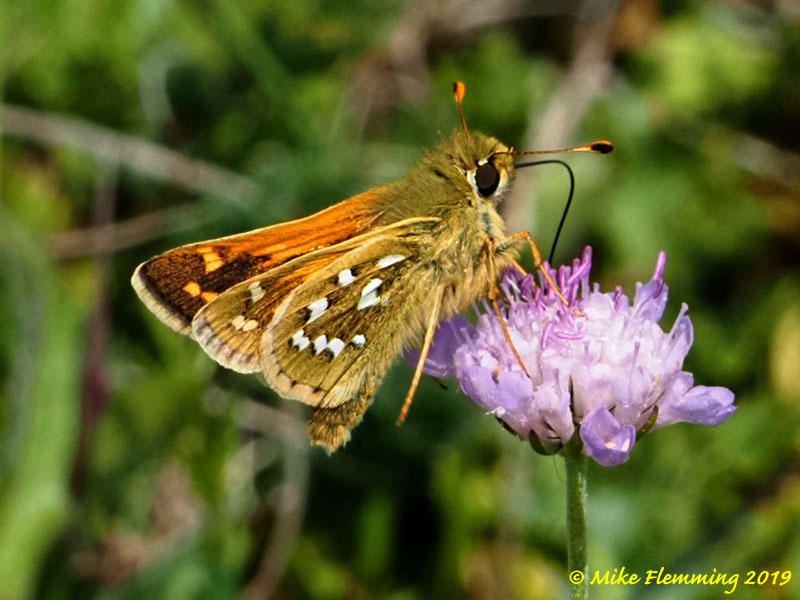
Silver-spotted-Skipper-2019

I am a kettle made of stainless steel
I am a saint,  for tea  is brewed to heal
And , unlike kettles on an old  coal fire,
I am not dirty nor do I perspire.

My mirrored sides reflect you as you cook.
Look at me and read me like a book
I’m  full of love and hotter than a man
Oh, dear lady, love me while you can.

Superior mother,  yet inhuman  I;
Even electric kettles sometimes lie.
I shall never punish you, my dear
For perfect love like mine shall wield no fear.

All I ask is that you polish me.
For, in between your hands, I  yearn to be.


Enigmatic  like a midday dream

The fallen sun makes black the trees that lean
Its liquid centre thrown up wild and bright
Enigmatic  like a midday dream

The  pinky edges shift in  sun’s bent beams
Do they convey the aura of the light?
The fallen sun makes black the trees that lean

I wonder where my haunted eyes have been
In the forests deeper than the night
Enigmatic  like a midday dream

Schizoid, lacking affect,  a  slit scream
Destroying what is left of love and sight
The fallen sun makes black the trees that lean

Here we saw wild primrose by the stream
The castle of the Tudors soft in  blight
Enigmatic  like a midday dream

Bewildered people  kill their own insight
Toss their fears , into the weak to bite
The failing sun as pure as  boiling screams
Enigmatic  are our midnight dreams

Just be kind

The Tilley lamp and its dramatic hiss
Affected me like clocks do in the night
I crouched beneath the blankets in my fear
Red light from its centre pained my sight

Feverish, alone and still a child
I  lay in darkness with no  mother there
Tense as if to run when lions came
Pretending to be dead , that might deter.

I had a dream when they surrounded me
They spoke in human voices, she is dead
I froze into  paralysis  and fear
My heart was thumping  like a lump of lead

Children’s fears  destroy their  peace of mind
To the young, we must at least be kind

Poetry and social change

https://www.poetryfoundation.org/harriet/2016/05/on-poetry-social-change-claudia-rankine-discusses-adrienne-rich-at-new-yorker


Extract

On Poetry & Social Change: Claudia Rankine Discusses Adrienne Rich at New Yorker

BY HARRIET STAFF

adrienne-rich

In the most recent New Yorker, Claudia Rankine discusses Adrienne Rich’simpact on her poetry, and explores Rich’s lifelong engagement with literature and social justice movements. More:

In answer to the question “Does poetry play a role in social change?,” Adrienne Rich once answered:

Yes, where poetry is liberative language, connecting the fragments within us, connecting us to others like and unlike ourselves, replenishing our desire. . . . In poetry words can say more than they mean and mean more than they say. In a time of frontal assaults both on language and on human solidarity, poetry can remind us of all we are in danger of losing—disturb us, embolden us out of resignation.

There are many great poets, but not all of them alter the ways in which we understand the world we live in; not all of them suggest that words can be held responsible. Remarkably, Adrienne Rich did this, and continues to do this, for generations of readers.

Rich’s desire for a transformative writing that would invent new ways to be, to see, and to speak drew me to her work in the early nineteen-eighties, while I was a student at Williams College. Midway through a cold and snowy semester in the Berkshires, I read for the first time James Baldwin’s “The Fire Next Time,” from 1962, and two collections by Rich, her 1969 “Leaflets” and her 1971–1972 “Diving into the Wreck.” In Baldwin’s text I underlined the following:

Most people guard and keep; they suppose that it is they themselves and what they identify with themselves that they are guarding and keeping, whereas what they are actually guarding and keeping is their system of reality and what they assume themselves to be. One can give nothing whatever without giving oneself—that is to say, risking oneself.

The lore and lure of numbers   like strange fish

Infinities  of  different orders point
Like signposts on tbe hills where walkers pass
To  places where  just gods were pleased to haunt

The common sense reproach will ever taunt
Those who sail on other seas  unclassed
Infinities  of  different orders point

We are not the same in what we want
We have an image of our secret wish
In  places where the magic gods would haunt

In a  little line  we cannot count
The  many numbers  as they jostle past
Infinities  of  different orders want.

Do not be afraid, we were not taught
The lore and lure of numbers   like strange fish
In   little ponds where  gods  hung out to haunt

The goat herds counted   flocks and just with this
The transcendental numbers  fly up in a mass
Infinities  of  different orders point
To   numbers even G-d can never count

Different sizes of infinity

https://www.businessinsider.com/the-different-sizes-of-infinity-2013-11?r=US&IR=T

Extract

Infinity is a powerful concept. Philosophers, artists, theologians, scientists, and people from all walks of life have struggled with ideas of the infinite and the eternal throughout history.

Infinity is also an extremely important concept in mathematics. Infinity shows up almost immediately in dealing with infinitely large sets — collections of numbers that go on forever, like the natural, or counting numbers: 1, 2, 3, 4, 5, and so on.

Infinite sets are not all created equal, however. There are actually many different sizes or levels of infinity; some infinite sets are vastly larger than other infinite sets.


She lied on the sofa

She lied on the sofa
No. she lay on the sofa.
She got laid on the sofa?
I think she did lie
She had allies  on the sofa
But did  she lie down?
Well,we can’t lie up.
Yet some lie their way up but you don’t need to lie to go down
Oh,I  shall have to lie down myself  but not on myself
I’ll lie low
Why,  are you hiding?
I just can’t lie.I am hiding from G-d
So your words are your song?
I like psalms without stings
Allah  is Lord
Songs without words.

That is the end of today’s lesson from Oxford UK

a