
How poetry can sustain us through illness, bereavement and change https://share.google/KRpQNzfsa8b8svI2x
How poetry can sustain us through illness, bereavement and change https://share.google/KRpQNzfsa8b8svI2x
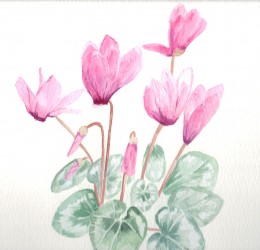
[Image by my sister]
Ruby and Rosie came inside and admired the kitchen where colanders in many colours hung from the wall into which someone had knocked a few dozen nails.
“”Why do you have sixteen colanders?”asked Rosie.
“Why do you think everything has a reason?”Stan replied.
“I can see you studied philosophy,” Ruby cried disconsolately as she loved an argument
“No,I have just read Ray Monk’s Life of Wittgenstein eight times,” he quipped merrily.
“Wow,is it not boring?” they murmured softly like two doves in spring time
“No.it’s so good it put me off reading lesser books.And I love to understand things,”
Just then Stan tripped on the rug and fell over. unconscious.
.Emile picked up his mobile with its full Qwerty key pad and texted 999.
“Why are you texting?”asked Ruby.
“Well,it difficult to mioaw down a phone and now I have this Blackberry it’s so easy…. why even a mouse could do it.”
“Do you know many mice,Emile?” enquired Ruby wistfully as she felt very lonely at times
Rosie slowly made some instant coffee, walking around poor Stan ,unconscious on the floor…and she and her twin sat down on some white Swedish chairs at the old oak table and drank it,gazing shyly at the huge weigelia blooming outside in the shed.
The front door opened and in ran Dave,the bisexual paramedic.
“Is it you,Emile.Have you lost your hankie again.Are you sad?” he moaned nervously.
“No,it’s Stan… but at least he’s not broken the chair”
Stan came too and looked up. at Dave.
“Oh, lovely,I feel much better for that nap” he said brightly as he was such a positive person..
“Don’t you have a bed to sleep in?” said Ruby querulously.”I like your mean expression,my dear man.”
“Now,look here said Stan,”I’m too old for any monkey business. Besides,I don’t know if you are real.”
“We just wondered why you slept on the floor.”
“A man has to do what a man has to do,” came the mystifying response.
“Now that Dave is here,he can take one of you and I’ll take the other.”
“Where will you take us”the twins asked delightedly.
“Do you fancy the cinema… they are showing Monsieur Hulot’s Holiday”
“Don’t tell me he’s still on his summer holiday!” riposted Ruby
“Let’s go in the ambulance.I’ll lie on the stretcher” offered Rosie generously..
“I’ll lie by you,”said Dave.” and Emile can drive.Stan and Ruby can lie on the floor.”
Sometimes life seems so simple,it’s rather like a dream controlled..
Controlled by what,asked Emile,clutching his Blackberry.
But answer came there none…
And that was very odd because.. they’d vanished every one…
To read more,why not take out a subscription?At just £100 a day,it’s value for money…as money no longer has any value!
D

https://archive.philosophersmag.com/susanne-k-langer-a-snapshot/
O
In her Philosophy in a New Key (1942) her intent was to authenticate a new notion of the “rational,” but how she does it is of fundamental importance. The classical tradition, Langer claimed, generally identified the rational with the “logical,” with discursive thought and objectivity. It then had the difficult task of explaining, or explaining away, such important human concerns as art, ritual, myth, and religion. Langer showed that these forms of meaning-making were embodied in vast sets of symbols and symbolic practices with their own distinctive “logic,” a non-discursive logic, quite different from the discursive logic of language and mathematics. They belonged to the domain of “presentational forms,” not “discursive forms,” a key distinction of her work. Presentational forms, Langer showed by an examination of their logic, are not mere effusions of an irrational subjectivity but articulations of the felt sense of things to which they give us unique access. They orient us in the world in the deepest existential manner, effecting participation in vital values and giving us visions, embodied in symbolic images, of our place in the cosmos. Langer, prior to extensive developments in semiotics, showed that they are worthy of philosophical study in their own right. Her work compares favourably in heuristic power with, and complements, C S Peirce’s great attempt to avoid logocentrism. We are a symbolic species at every level and not just language-endowed animals, although Langer held discursive symbols in the highest regard, as did her intellectual companion, Ernst Cassirer.
Langer was a devoted lover and practitioner of the arts, especially music, which she had studied in detail in Philosophy in a New Key. In 1953 she published Feeling and Form, a masterful generalisation and application to all the arts of the theory of music elaborated in that book. Its key idea was that feeling had a distinctive “morphology” that is exemplified in different ways in the different genres of art. Art works, she claimed, give us knowledge of or insight into ways of feeling the world in every shade of its expressiveness. They articulate feeling and are not mere expressions of personal feeling. They are presentational symbols and their meaning-contents are the “primary illusions” peculiar to each art form: virtual space in the pictorial and visual arts, virtual powers in dance, virtual experience and virtual memory in literature, virtual time in music, the ethnic domain in architecture, and so on. Langer showed art to be an authentic symbolic form and her notion of a “morphology of feeling” exhibited in the artwork is a permanent contribution to aesthetics.
In the last twenty-five years of her working life Langer attempted to develop the notion of feeling as a term to cover all the manifestations of minding. The result was Mind (1967-1982), published in three volumes over a fifteen year period, and which remained incomplete, due to her advancing age. It anticipated many of the current concerns in neuroscience, cognitive psychology, and philosophy of mind. Its central idea is that feeling is an emergent property of natural processes but that its paradigmatic manifestation is the rise of symbolisation and the proliferation of cultural forms and their attendant conflicts and permutations. Central chapters in this book carry out and reformulate Langer’s central insight and claim: symbolisation and the power of abstraction are the keys to what it means to be human. In a return to and deepening of her initial proposals in her first philosophical work, Langer distinguished between generalising abstraction and presentational abstraction, the two fountainheads of all those frames of meaning in which we live out our lives. It was the working out of the implications of this distinction, present at the beginning of her intellectual journey, that forms the connecting link of her whole remarkable philosophical career.
Robert E Innis is professor emeritus of philosophy at the University of Massachusetts Lowell and author of Susanne Langer in Focus: The Symbolic Mind (Indiana University Press).
SHARES
Copyright © 2023 · The Philosophers’ Magazine · Website by Anchored Design
Across the road I see a Tudor wall
In its cracks defiant flowers grow
The modern traffic sounds out a loud wail
From the East a freezing wind still blows
In between the natural world and man
The space provides a habitat,retreat
Ancient yew trees grow without a plan
And in each little bird a heart still beats
Concentrating on the green and ancient views
Ignoring the red buses as they pass
Ignoring strident music , find the clues
Down comes peace and joy, our Holy Mass
Reversal of the figure and the ground
Brings out a new world where love is found
The pain and beauty of the wild North sea
The coast of Norfolk where we used to be
The grief that rips the heart out from its cave
Throws it on the sea to ride the waves
The loss of you and love and all it means
With my inner eye I see these scenes
The snow that fell on Cromer Easter Day
The lifeboat on the pier, the words to say
Ancient churches guard the holy place
Hidden in the lightest inner space
Eagles do not live here but the birds
Sing from yellow gorse and know the words
What names might small bird call us as they watch?
The world is re created in a snatch
Stan was polishing the windows again with his blue cloth.The computer was on and as soon as he finished the sitting room windows he planned to look at a google document he was co-writing with his girl friend Annie.She only lived next door but they both liked sharing new techniques of various kinds .He sat down in front of his computer and looked at his mail.
There was an email from Annie.
“Hi Stan
I didn’t really want to keep some of those remarks you made at the bottom of our documents when we were both online having a chat,so I have deleted them. They were not related to the topic we were discussing so I know you won’t be interested.
with my love,Annie
Stan felt angry and cross. He went very red.What was so dreadfully wicked about his remarks?He had only asked Annie if her dead husband George might have been bisexual.Stan had once seen him kissing a man round in the park.Annie didn’t seem bothered last night.She never gave the impression me she didn’t like it.
Anyway she should not have deleted it completely without asking me first.
He sent her an email saying he was very angry with her for attacking his freedom of speech.It was unethical.It was too powerful .He must assert himself
So he was not going to work simultaneously with her on any more documents ever again nor chat on IM or Google chat
.
When Annie got the email she was stunned.She apologized to Stan immediately but her refused to accept it.Nothing she said could change his mind.So they were both feeling utterly dreadful.
Why did he want to know if George was bisexual?She wondered.Was he saying it to try to turn himself on or me?Or is he just interested in sex of all kinds like most people secretly are?
But it was not concerned with the document which was about ill treatment of prisoners in India under the British Empire
We have so little time together, with him being so busy.I wanted to talk about us,not poor dead George.Whatever George’s sex life,he’s dead now.So leave him in peace.
Meantime.Stan was thinking about how women were always interfering in his life,correcting him and improving his grammar.Making him cups of tea when he wanted brandy.He liked talking about bisexuality.
It made him feel a sense of wonder at the differing habits and desires of humans.Why couldn’t she just go along with it or at least say something then rather than deleting his words secretly when he was off-line?
He was a man .He was not going to let a woman ride over him like a steam roller. Annie must learn her place in the scheme of things.
Where is that,asked his tom cat Emile.
I’m not sure but it’s not above me.It’s either the same or lower.
Can’t you forgive her.she may be in another dimension,another space,another universe of discourse?
Certainly not no way.Stan answered,
But you love her,you said many times in here.I heard you
All the more reason to maintain some boundaries!Love is not the be all and end all of life
Next she’ll be cutting bits off me with her pinking shears,he cried in horror!
She’ll castrate me.She’ll turn me into a woman.
She won’t,she’s a woman,said Emile.She wouldn’t ever harm you.she’s very gentle.
She has invaded me,she has crossed my boundary.
Some people would be glad,mewed the cat.He was always hoping a lady cat would come by.
Meanwhile Annie was sitting sobbing wetly in her bedroom.She really enjoyed co-writing documents and letters with Stan.Now he won’t do it anymore,she whispered softly to herself
She had not cut anything from the document,just the little chatty remarks they had been indulging at the end, but still he was really mad at her.He must be feeling truly upset and aggravated beyond human endurance.She had assumed too much and now she was paying the price.She cried and sobbed loudly for a while.Her eyes were bright red and bloodshot. not attractive at all.She was so sad she had unwittingly distressed dear old Stan.Life is so tough she thought reluctantly.I wish I were somewhere else.
Still,there were those new neighbors who had just moved in across the road.Two brothers,both very handsome.I wonder if they like writing on the computer,she thought.That cheered her up a bit,though she was very fond of Stan.In fact she loved him greatly and had kissed him gently yet thoroughly many times though she had never actually gone to bed with him ;never known him in the biblical sense.Was that the problem?Too late now either way,she muttered balefully
So in her mind she was moving from loving and adoring Stan to being puzzled by him.Was he afraid of being dominated by a woman?What would he be like as a lover?
But why try to talk about bisexuality?Could he not have thought of something else?
There was a new book by Betty Dodson teaching women how to have orgasms.Would he have enjoyed discussing female anatomy and pleasuring her naked female body and its organs of love and all the rest,[she always liked a kiss on her throat]?
Well,she would never know now.That was certain.Definitely.
Thank God I’ve found out what he’s like before things went any further.He might be a little too dominating or perhaps not enough?
In fact she was so upset her thoughts began to turn towards women.
Would it be better all round to love a woman.Especially as I could show her how to have an orgasm having being studying this book for some weeks?Though she may already know,I guess.Still,a change is as good as a rest!
How do I find a woman who’s into other women, she thought.Can I find one on the internet?Will there be a club we can go to?How exciting!
So Annie grew more optimistic.A woman wouldn’t mind a few words deleted from a chat either.So a feeling of mild joy came over her and her sobbing died down.
Stan was sitting in his kitchen feeling superior and dominant.Except Annie had not come for coffee so it was hard being dominant all by himself.He began to feel depressed and morose.Should he change his mind?Would he lose his window of opportunity
Why is life so trying.Why are women so manipulative, why do they all turn out fakes,he asked Emile.
It’s partly one’s own character,Emile replied.
Hearing this Stan lost his temper and threw a cup at Emile.Luckily it missed but Emile stalked out and went off to the shed leaving Stan more alone than ever.
How hard life is Stan shouted. I feel like topping myself. i”ll jump off the roof.I’m going to ring the fucking Samaritans.
Just then his wife Mary walked in.What’s up Stan?
Nothing dear.I just dropped a brick on my toe
Why have you got a brick in here,in the lounge?
I was playing with it.
With a brick?
Well,it has a certain cold masculinity,he replied.
Shall I make some drinks?
Yes,please.
Oh,look there’s Annie walking past arm in arm with a woman.
I knew George was bisexual but now I see she is also or maybe she’s gay!Were they both gay?Is that why she only kissed him and never went further?
Well,it’s not our affair,said Mary quietly.
Aha,thought Stan.That’s what you think.If only you could see inside my mind.
Inside his mind though ,he was wondering if Annie would ever see him again.But I will not forgive her,I won’t.I won’t!
What he might have said more truthfully was “Can’t”
For indeed,it is hard to forgive people for trampling into one’s sacred space even if it is an accident or misjudgment not a deliberate attempt to dominate.but if not ………
Such is life,alas.
We are such fools as dreams are made of.
Iced water falls from the sky in beads
Leaving just the space
for fragile butterflies to court between the drops.
The geometry of love
fits any space
The butterfly is braver than the tiger.
The vital line was drawn with one brush stroke
The way the back leant curving into space
The dance and danger are thus well evoked
Like a play, a drama, fire and smoke
A dance performed so swiftly and with grace
The vital line was drawn with one brush stroke
The heavy bull is pounding,is provoked.
A threat, a man, intrudes into his space
The dance and danger both are still evoked
See, the matador throws out his cloak
A dash of black, and here we see his face
The vital line was drawn with one brush stroke
The mind needs just a hint to see the whole
We fill the present with our past distaste
The dance and danger, mirroring dark smoke
Acting both dramatic and displaced
The artist may still love what he forsakes
The vital line was drawn with one brush stroke
The dance and danger , life and death evoked


 How my heart speaks