

Oxford


Quote:
So what is helpful? What’s the cure for political depression? For one thing, liberal conservatives are going to have to borrow from some of the left’s irrepressible optimism. But if my last few months of lethargy and dark doctors’ waiting rooms have taught me anything, it’s that all those in search of a cure for our current political malaise could do well to look at recent advances in the mental health ward. Cognitive Behaviour Therapy, or CBT, is today’s wonder cure – but what does it actually entail, and can it save a country as well as it can a person?
CBT is all about breaking unhelpful mental patterns. It’s also about the art of the possible. Under pressure at work? Find one request you can reasonably make of your boss. Determined to run a marathon to feel better about being obese? Start by using the stairs instead of a lift.
In politics, focusing on the big picture can often seem overwhelming. The future is bleak; there are a lot of battles that the forces of liberalism seem unlikely to win. When I think of Trump in the White House, Erdogan imprisoning critics in Turkey, martial law in the Philippines – I could continue – I curl up and go back to bed. When I think about the two refugee friends who I’ve got coming to stay next week, I scurry up and start readying

https://www.theguardian.com/lifeandstyle/2016/aug/08/frugal-bloggers-budget-personal-finance-poverty
I have read this and agree there is a big difference between well off people being frugal and people who are really very poor and have little choice.There is no direct connection between frugality and holiness
Some ways I have found to save money
[Don’t go without a warm coat and wool hat in winter.Cold thickens your blood and can cause heart attacks or strokes.[
1.Switch to a digital subscription to a newspaper.For the Guardian it is £11.99 a month rather than buying in a shop… £65 a month.
The Guardian will let you read a lot for free
2 Use dishcloths and tea towels instead of kitchen paper.
Cut up old underwear and use for cleaning bathroom etc.
Try using cloth hankies except when you have a cold. Though you have to wash them well
3 Shower less and use a sponge to wash yourself while standing on a towel
4. Use a public convenience while you are out to save on your water bill.
5 In winter if you are not working sit in a public library and read the newspapers.The rooms are usually quite hot.
6 Wash your outer clothes less frequently.
7 Try soaking dry clean only clothes in cool water and then drip dry.I did this with a wool skirt I spilt milk on.
8 Food is a place you can save money.For example vegetarian recipes.Make your own yoghurt etc.
9.Ring your phone supplier and ask if they can do you a better offer as you are going to switch elsewhere if they refuse.I saved £20 pm
10.Meditate,listen to Radio 3, or 4 have tea with a neighbour…. all free.
11 Buy shoes in Sales.
12 Have people round but not the ones who expect a 3 course meal.Ones who like you and don’t mind what you feed them on,
13 Give some of your savings to charity.The RNIB is poor.Guide Dogs get loads of money ironically
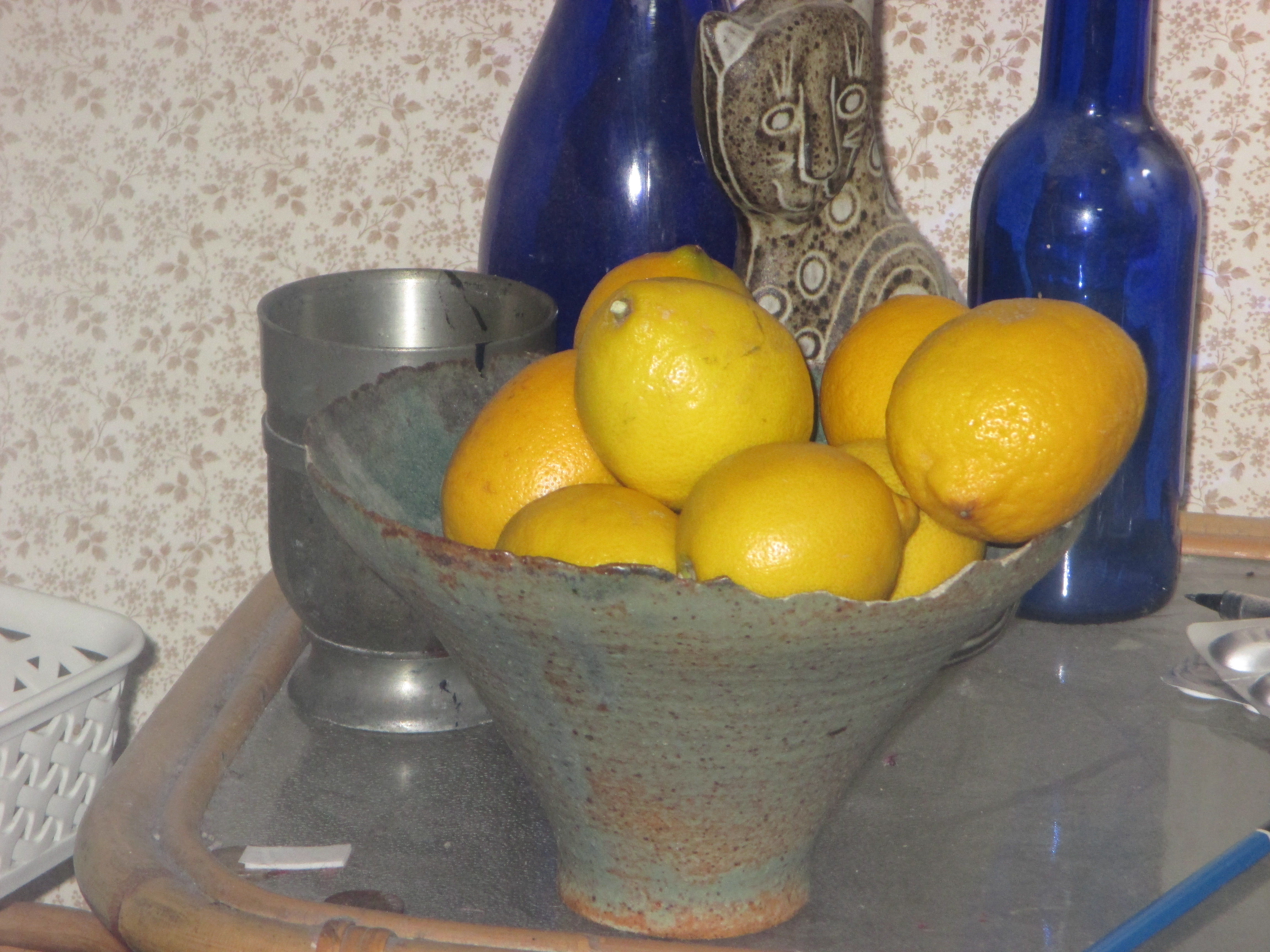
My photo
https://www.theguardian.com/global/2016/jun/18/poetry-can-heal-it-helped-me-through-depression
Extract:
For me, poetry is medicine. The poet Les Murray writes: “I’d disapproved of using poetry as personal therapy, but the Black Dog taught me better. Get sick enough, and you’ll use any remedy you’ve got.” In the 19th century, people in asylums were encouraged to write poetry, while William Cowper (1731-1800) wrote that, in his depressions, “I find writing, especially poetry, my best remedy.” Orpheus was both healer and poet and his lyre could vanquish melancholy.
https://www.latimes.com/books/la-et-jc-joyce-carol-oates-20160405-story.html
G
Yet our tendency to forget the haunting brilliance displayed in the short story “Where Are You Going, Where Have You Been?,” in the novel “Them,” the novella “Black Water,” the Marilyn Monroe novel “Blonde,” and to focus instead on her tweets or the sheer volume of her catalog seems fitting, because her latest novel, “The Man Without a Shadow” (Ecco: 384 pp., $27.99), is preoccupied with the act of forgetting. It tells the story of a charismatic amnesiac, Elihu Hoopes, whose short-term memory has been destroyed by encephalitis. Though Eli, his ailment and an image he can’t seem to shake — the disturbing anamnesis of a girl’s body floating just below the surface of a stream — are at its center, the book is as much the story of Margot Sharpe, a neuroscientist who enters Eli’s life as a graduate student but over time becomes much more entangled with her patient’s world. The novel wrestles with our complicated acts of remembrance and the various ways memory constructs and colors our emotions and ethics — our entire identity. After all, it’s memory that allows you to discern where you are going, where you have been.
Oates will appear at the Los Angeles Times Festival of Books on Saturday, April 9. This phone interview has been edited for length and clarity.
What carries you from one book to the next? Does an image come to you or a character or an idea you want to explore?
In a long work like a novel, a number of elements have to come together. It’s like a river into which many tributaries are flowing. The river builds with different smaller streams. You have one idea and then another and then another. I always start with characters about whom I care. I like to work with characters who are representational. I am interested in the personal, but I also want to write something that has a larger significance in terms of society.
“The Man Without a Shadow” is not only a fascinating portrait of its two main characters, Margot and Eli, but an examination of memory as the very bedrock of the edifices of our identities, our personalities.
I’m interested in how we fashion our personalities out of somewhat selective memory. We forget much. It is both very natural and very normal to forget a good deal. Things that we remember may have a certain cast. As in a movie, there’s a certain tone, of lighting, of music, of sound, so with our memories some people have a natural tone of melancholy and others have a more optimistic or cheerful tone. We all know people who are determined to be upbeat and other people who seem to be looking over their shoulders all the time, wounded and complaining. Personality to me is the ultimate fascination — how we’re all so different, and yet we’re very much alike in many ways.
How did the function of memory determine the book’s structural and aesthetic choices?
The novel is constructed as if it were notes on an amnesiac. A neuroscientist is keeping a personal journal and part of that is the novel, but then we’re also in Eli’s memory and imagination too. We see what he’s remembering of his past. He’s haunted by his past. That’s true of many people. There are seminal incidents in people’s lives that they keep returning to and thinking about. He’s tormented by something that happened when he was very small and didn’t have any ability to comprehend. He’s trying to comprehend it with his art.
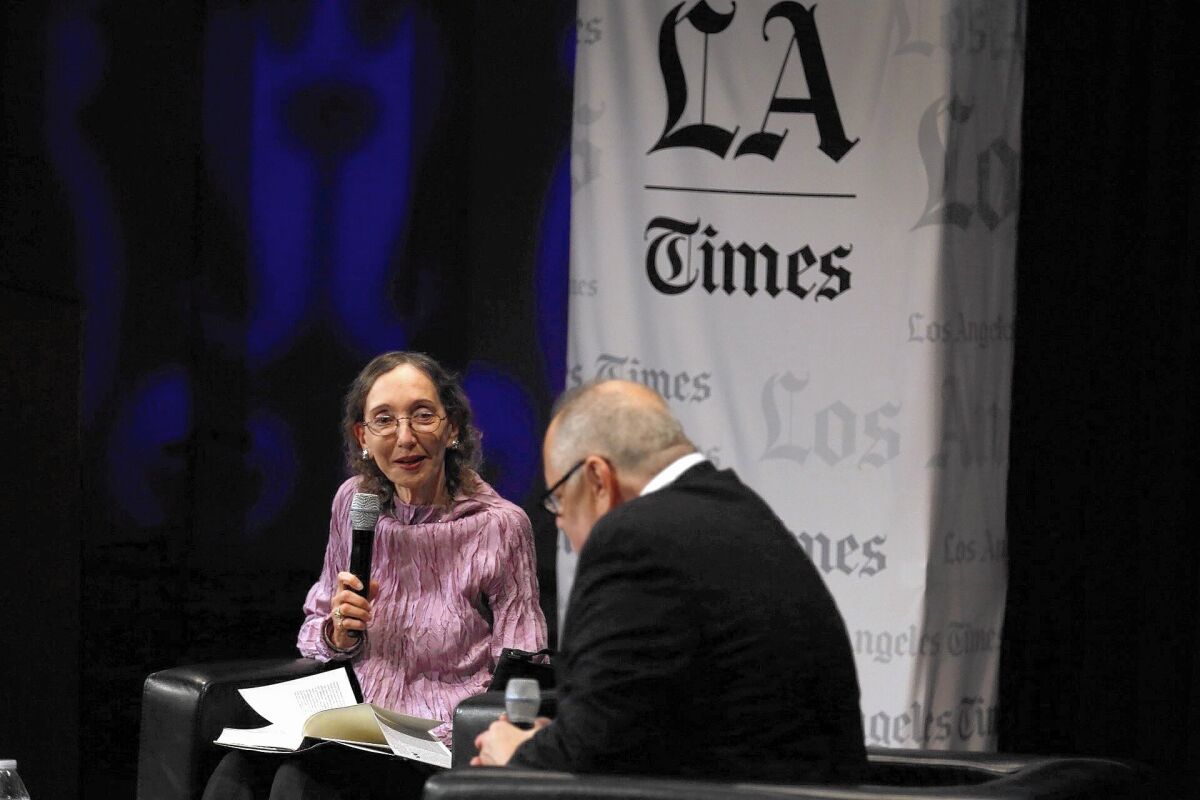
Author Joyce Carol Oates talks with Michael Silverblatt during the Los Angeles Times Festival of Books at USC on April 19, 2015.
(Francine Orr / Los Angeles Times)
Are there similarities between comprehension through art and science? You write of Margot, “She has always asked questions for which there are not ready answers. To be a scientist, Margot thinks, is to know which questions to ask.” Is that also in some way the definition of a writer?
A scientist is someone who is really looking at the causality of things. If you were a political scientist, let’s say, you would look at the current political situation with Donald Trump and the others in a very analytical way, seeing it maybe as part of a cycle of American politics. A scientist is always looking at the context, whereas most people just read the newspaper and throw it out. “Does this thing have consequences?” “What does it mean?” “Is there a precedent in history?” These are questions that a scientist would ask, and a novelist asks these questions as well.
Malone is a writer and professor of English. He is the founder and editor in chief of the Scofield and a contributing editor for Literary Hub.
 BOOKSHere are the longlist nominees for the 2022 National Book AwardsSept. 16, 2022
 ENTERTAINMENT & ARTSAnne Heche was working on another memoir before she died. It hits shelves next yearSept. 15, 2022
 BOOKSAt 9, Javier Zamora walked 4,000 miles to the U.S. At 29, he was ready to tell the storySept. 15, 2022
 BOOKSReview: A British cult favorite crosses over with a blistering novel about an inscrutable mumSept. 15, 2022
Join our community Book Club. Our mission is to get Southern California reading and talking.


Subscribe for unlimited access
Follow Us
Copyright © 2022, Los Angeles Times | Terms of Service | Privacy Policy | CA Notice of Collection | Do Not Sell My Personal Information
By continuing to use our site, you agree to our Terms of Service and Privacy Policy. You can learn more about how we use cookies by reviewing our Privacy Policy.Close


The doorbell rang and on the step was the Vicar of Knittingham South.
Hello,madam, he said pleasantly.
I’m a man,Stan muttered loudly
Yes,dear,of course you are.May I speak to your husband?
I am the husband,Stan screeched.
Oh,I see.You are gay then, I assume.
Stan pointed to his beard and said,
I am a man. Didn’t you hear me?
Please forgive me, the Vicar said
Some old ladies get quite hairy and with the skirt I thought it was rude to mention your beard.How do you find the skirt,by the way?
Well, it’s very cool having air on the legs and it’s definitely better than shorts.
But a cotton dress would be even better.Are you married?
Yes,said the Vicar but my wife is very intolerant of anything unusual.She’d be furious if I wore her old clothes.
My wife doesn’t know,Stan told him.I bet she’d be angry too because she’d have to iron it again.
Why don’t you wash and iron it before she comes home, the Vicar demanded.
Well, just between the two of us I am afraid of soap powder, irons,telephones, sprouts and making a mistake in a recipe.Also eye tests ,blue litmus paper ,Andrex and crisps
I’m afraid of dentists,fogs , bricks.Art,dogs and sausages the Vicar admitted.And doctors and fierce women who swear at me in the dark.
The two men stood pondering.Are they tarts angry with not getting aby notice from the dear old Vicar.After all Jesus mixed with them.
Come inside, said Stan after a few minutes.Let’s have a coffee.
They sat on the patio drinking their coffee and saw a wren fly past into the weigelia.
That’s the first I’ve seen recently.said Stan.
Emile was asleep again,this time in a woven willow bucket in the kitchen.
Anyway,why did you call,Stan asked the Vicar.We never got to that.
I can’t remember, the dear old man admitted.I’ll have to come back tonight.
Oh,dear Stan said
I think I’d better put some trousers on, he whispered
Yes,you had said Emile.I can see the Bishop outside.
We’ll have to move,cried Stan.
And so say all of us.
For he’s a hollow bowl mellow.
Why not pray for us?
I love you,oh,my little black dog.
Oh,yes!Bloop bong.
Thwack.
I love this pit,I do really.
Bang bong.
No, do not help me
I am
Fay
ted.
My narrative went wrong.
Oh,whoopla!
Now he has deleted me from his
Sto
Ry!
He wants me to disappear.
Mama meea Blong!
But I have my own narrative
La banko dio
Bloop bung.
My heart longs.
For his love alone
is a sad storee.
Oh eh a mama dip thong
Jer bum long
I love my white dove
But he hates me.
Ah,ah, it's time for some Wagner.
I hate it!
Screaming women
Get off me!
Oh,cupid!
I feel you are lucid.
He hates me
Blang


 How my heart speaks