Satan and the house fire

ECG
Catsby Katherine

Stan was standing on the patio behind his bijou home when a sudden heavy  downpour of water drenched him all over.
This is like a monsoon,he murmured to Emile who was also wet and drowned looking
A head  and neck appeared over the dark wooden fence.
I’m awfully sorry,old boy.A pipe has burst in Annie’s loft.I tried to fix it myself.
I don’t believe it.You are Stan Brown.It must be 50 years since I saw you.
Stan was hiding his surprise at seeing Rudolf Hairnet,his former logic tutor at an ancient foundation, in the garden of Annie,Stan’s beloved colourful mistress.
Why not pop in Rudolf,he said.I’ll leave the door open and go upstairs to change my clothes.Be with you in a moment.
Stan went upstairs and removed his clothes.His body was now as thin as when he reached his full height of 6 ft 6 inches but alas it had less muscle and more fat. nowadays.He gazed into his wife’s full length mirror.
To his surprise, he saw Satan looking out.Although he knew this was possible for Catholics he had never met Satan before.Not that he was keen to,exciting as it might be.
How do you get behind the mirror,he asked  Satan gently.
God only knows,said Satan morosely.
Why not ask him?
I’m too proud,the poor devil replied in a bleak voice.
Well,we all have our pride,Stan told him,though no doubt yours is the biggest in the universe.
Yes,indeed,Satan answered.It’s bigger than Everest
Are you here for any purpose,Stan enquired.
Yes,your home seems more intriguing than most and I like to watch you in bed with that flame haired woman… is she your paramour?
I see,said Stan,You are a voyeur par excellence
That’s one way of describing me,Satan said,No woman will come to bed with me so I am trapped here behind every mirror in the world.I can see it all but never take part.
You must be very lonely,said Stan
Yes,the dark spirit muttered painfully
Are there no she-devils about who might oblige you?Stan asked him thoughtfully.
I don’t seem to fancy them so much.They are all as bad a me,I want kindness and tenderness not just lust.After all,one might satisfy that with a vibrator… we have them in hell you know!We have many things but love and humility are not there.
Why,you are beginning to sound almost human,Stan told him.We want love too.If only you would apologise to God I am sure he would forgive you and let you come into the real world of others instead of being trapped in there
Stan heard a noise.He turned round displaying his bony frame and his  drooping organs to Rudolf.
Are you ok? I was worried that the drenching had knocked you off balance.I have out your kettle on the  fire to make you a hot drink and phoned 999 for aid.
But we don’t have a fire,Stan responded. loudly
Well,you do now said Rudolph
Oh,hell, cried Stan

How constraints can help in writing poetry

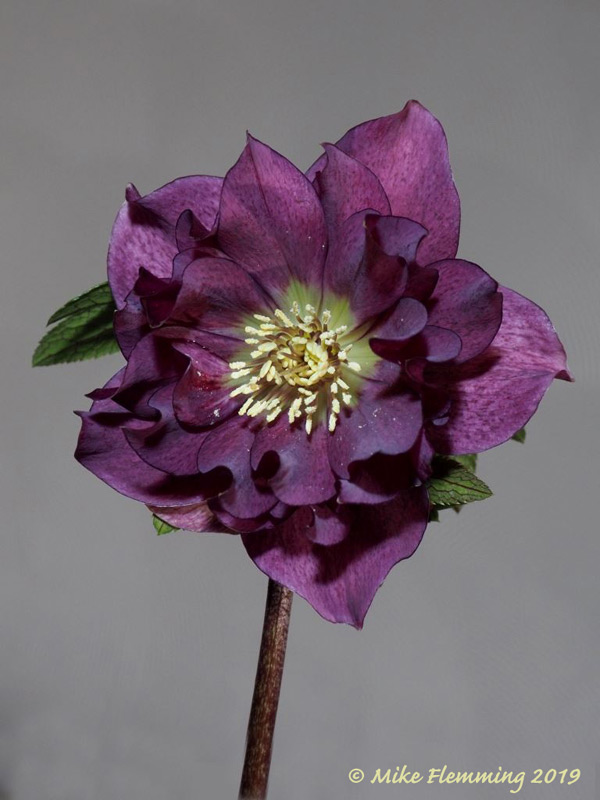
hellebore_2019-1

https://www.poetryfoundation.org/articles/145052/the-choice-of-constraint

EXTRACT

In constrained writing, one writes under a condition. That condition might mean not being allowed to do something—such as not using the letter e—or following a certain pattern. If this definition seems broad, it is. All formal writing operates under some kind of constraint; a traditional sonnet, for example, asks you to manage meter and a rhyme scheme in 14 lines. In this essay, we’ll look at less-familiar uses of constraint, ones that will challenge you in different ways. It may seem counterintuitive to put limitations on your writing, but you may find that a small constraint can make a big difference in soothing your fears of the blank page. It does so by taking some choices away and by demanding that you make new choices.

To illustrate this, I’d like to look at one of my favorite constraints—the abecedarian. Abecedarians are poems in which the first letter of each line or stanza follows the alphabet: A, then B, and so on. The abecedarian is an ancient form; it may be as old as the alphabet itself. You can find abecedarians in the Bible, though you’d have to see Psalm 119 in the original Hebrew to notice that each section is headed by a letter from the Hebrew alphabet (Aleph, Beth, Gimel …). Contemporary poets have used the alphabet constraint on a grand scale, creating long poems, such as Carolyn Forche’s “On Earth,” and even throughout entire books, such as Inger Christensen’s alphabetand Harryette Mullen’s Sleeping with the Dictionary.

Letters and alphabets

Agitated apples are falling all over Andover

Behave yourself or you will be banned before brewing tea

Catherine wheels coming back into crazy vashion.

Dalmatian dog darted down dead end drastically reducing is road speed

Everyone expects the end to be exciting but not when you have , Edema

Failure is not failure when you have already passed the exam via aegrotat

Growling goat goes good in grey gloom

Henry VIII had hairy hands. Oh Henry don’t harass .

Juniper tree just joined the junk outside the jail

Khaki looks good in the kitchen

Lend me your ear and your legs I can’t light the fire.

Mother makes children mad yet merry

No gnomes got eaten by gorillas or guerrillas.

Only oranges observe our outings often in a

People like peapods after praying on Sunday mornings

Quantity or quality Kwik Kwik quack

Round the rugby ball roll the rabbits

Sell silk and satin to shoppers

Toothbrushes tend to take time off to sweep the streets

When and where are we waiting? Why not

Xylophones and X rays

You looked youthful yesterday

Zebras are monochrome in the zoo zevi fed 2

I thought that I knew grief

I thought that I knew grief: I knew it not

I thought that I had walked its many roads.

But what we learn in pain we can forget

If  grief were a wild beast it’s not a pet

If it has a language there’s no code

I thought that I knew grief;I knew it not

Would I read the clues their alphabet?

If grief is just a trail,it is not broad

Yet what we learn in pain we can forget

Would I die by hanging or be shot?

On our shoulders we must bear the load

I thought that I knew grief I knew it not

See the devil gambling,shall I bet,?

What we learn in grief we can’t forge

Who inscribed our hearts with loves own laws?

Who will be the see and who the saw

I thought that I knew grief I knew it not

When it comes again I won’t forget