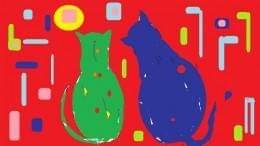
My red neighbour

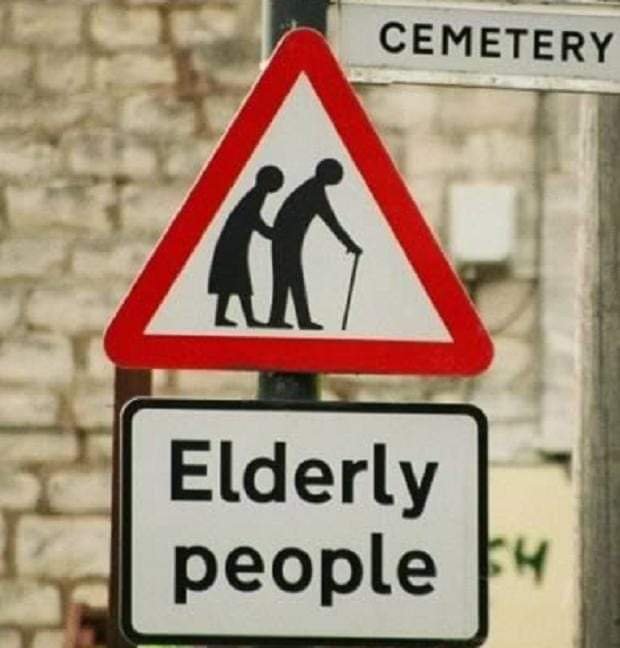
My red-haired neighbour  loved her high heeled shoes
She dressed in cream and black  when she went out

Her smart appearance called in many views

Even when she fell and was much bruised
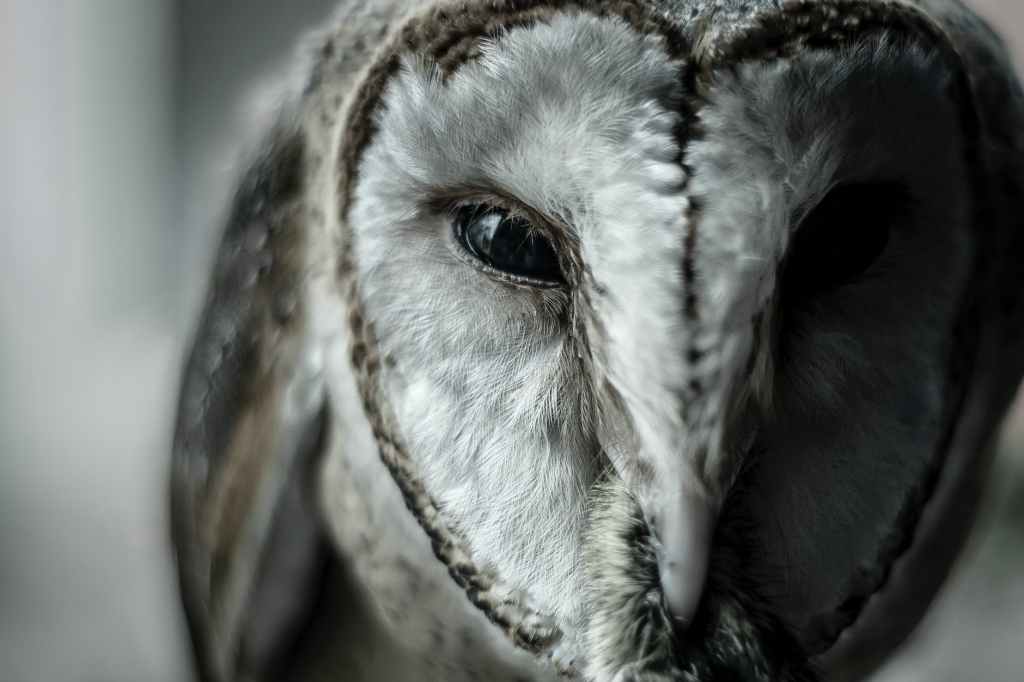
Her eyes so sharp  drove off   marauding louts
My red-haired  neighbour saved for grand cream shoes

She dyed her hair blood red, oh men confused!
Though she was ninety she was never stout
Her   dear appearance wondrous was well viewed

By the Daily Mail, she was bemused
She meditated, used it  to wrap sprouts
My  neighbour   dyed her hair and matched her shoes

Suddenly her blood  its power would lose
Her nights out and her cooking were in doubt
She so  stylish no more  could be viewed

She went to Mass on Sunday, sin to  rout
Her hair fresh dyed, she died where God’s about
My red-haired neighbour  loved her pretty shoes
In her coffin,   may  she be amused

We learned rigor and icy vision

What was so wrong about asking
About your absence from this world
And trying to grab you back
holding onto your coat tail
Eternity’s long enough already
We don’t need your vapour trails.
Was it a wicked thing to do
As you floated so far away
To reach out to touch you once more
I admit I never knew you kept score.
When I beat you at chess so long ago
Were you already packing bags
to throw out the door?
I knew it was the real thing
But some men never do.
You have your expectations
And your tests and rules
But we never learned those
In our higher math schools.
We learned rigour and icy vision
We learned definition and precision.
But what use are they in loving
I didn’t know how to steer with no maps
You were off anyhow.
The orchestra stoped playing
When they saw the gap.
You can’t fly forever
But I do be leaving you.
In the circumstances
What else does a woman like me do.
You can smile and squeeze your eyes tight
Suck in those cheeks and hide your love.
What’s coming after you’s an eagle or a crow
Not a dove…it’s black I know
When you toss it all away then
Seems like it’s long past time
and emotion to call it a day.
Come again…..you must be crazy
Love is clear to me now like the face of a new born daisy

‘Standing still is an art’: how to focus, by those who know – from heart surgeons to living statues

https://www.theguardian.com/lifeandstyle/2023/apr/21/how-to-focus-by-the-people-whose-jobs-depend-on-it?CMP=Share_AndroidApp_Other

We must be resigned

Oh ,Frances has got cancer and her husband had a stroke

Is brother had got Parkinson’s and died before he spoke

A lot of time to think again and pray for what is best

Life for human beings no seems to be a test

As we grow old and people die we learn we maybe next

God is not our mother so there’s no joy being vexed

My sister died when she lay down, how my brother cried

Now he’s in the hospital and seemed to be okay

He fell while walking down the ward that was yesterday

Q he broke his thigh bone when he fell, my sister could not cry

She’s got cancer in her lungs who’ll the first to dir?

The doctors were on strike last week they did not do the scan

Now they have he’s had a stroke,oh doctor strikes be damned.

Resign yourself and tell your sins the priest he’s waiting here.

Write a few apologies and drink a pint of beer.l

Is depression an illness like we are told it is

https://www.theguardian.com/commentisfree/2022/sep/06/psychologist-devastating-lies-mental-health-problems-politics

But there is another way to see this crisis – one that doesn’t place it firmly in the realm of the medical system. Doesn’t it make sense that so many of us are suffering? Of course it does: we are living in a traumatising and uncertain world. The climate is breaking down, we’re trying to stay on top of rising living costs, still weighted with grief, contagion and isolation, while revelations about the police murdering women and strip-searching children shatter our faith in those who are supposed to protect us.

As a clinical psychologist who has been working in NHS services for a decade, I’ve seen first hand how we are failing people by locating their problems within them as some kind of mental disorder or psychological issue, and thereby depoliticising their distress. Will six sessions of CBT, designed to target “unhelpful” thinking styles, really be effective for someone who doesn’t know how they’re going to feed their family for another week? Antidepressants aren’t going to eradicate the relentless racial trauma a black man is surviving in a hostile workplace, and branding people who are enduring sexual violence with a psychiatric disorder (in a world where two women a week are murdered in their own home) does nothing to keep them safe. Unsurprisingly, mindfulness isn’t helping children who are navigating poverty, peer pressure and competitive exam-driven school conditions, where bullying and social media harm are rife.

If a plant were wilting we wouldn’t diagnose it with “wilting-plant-syndrome” – we would change its conditions. Yet when humans are suffering under unliveable conditions, we’re told something is wrong with us, and expected to keep pushing through. To keep working and producing, without acknowledging our hurt.

In efforts to destigmatise mental distress, “mental illness” is framed as an “illness like any other” – rooted in supposedly flawed brain chemistry. In reality, recent research concluded that depression is not caused by a chemical imbalance of the brain. Ironically, suggesting we have a broken brain for life increases stigma and disempowerment. What’s most devastating about this myth is that the problem and the solution are positioned in the person, distracting us from the environments that cause our distress.‘I’m glowing’: scientists are unlocking secrets of why forests make us happy

Individual therapy is brilliant for lots of people, and antidepressants can help some people cope. But I worry that a purely medicalised, individualised understanding of mental health puts plasters over big gaping wounds, without addressing the source of violence. They encourage us to adapt to systems, thereby protecting the status quo. It is here that we fail marginalised people the most: Black people’s understandable expressions of hurt at living in a structurally racist society are too often medicalised, labelled dangerous and met with violence under the guise of “care”. Black people are more likely to be Taseredsectioned, restrained and over-medicated than anyone else in our mental health services today.

The UK could learn a lot from liberation psychology. Founded in the 1980s by the Salvadorian activist and psychologist Ignacio Martín Baró, it argues that we cannot isolate “mental health problems” from our broader societal structures. Suffering emerges within people’s experiences and histories of oppression. Liberation psychology sees people not as patients, but potential social actors in the project of freedom, valuing their own lineages, creativity and experience, rather than being forced into a white, eurocentric and individualistic idea of therapy. It directly challenges the social, cultural and political causes of distress through collective social action.

This framework makes complete sense when we hear that the pandemic in the UK has affected poor people’s mental health most. Does it mean wealthy, privileged white men don’t experience suffering? Of course they do. We’re still learning about the complicated ways these structural issues affect our everyday lives. For example, how the pressures of individualism and capitalism may lead to isolation and substance abuse, or how colonial violence towards immigrant families plays out within homes and on bodies.

Let me be clear, I’m not saying people in distress should be out there on the picket line. Pain can be debilitating. But those of us who are supporting people in distress, such as mental health workers, have a key role in social transformation. Social action is the medicine that relieves people’s personal and collective distress.

Instead of trying to change “mindsets” in therapy, we need to change race- and class-based hierarchies, the housing and economic system. Universal basic income has psychological benefits, and recent studies show how it improves the “crises of anxiety and depression”. As a clinical psychologist, some of my most powerful work has been not in the therapy room but in successfully advocating for secure housing for, or working in the community with, queer, black and brown facilitators in organisations such as Beyond Equality, to prevent gender-based violence. The network Psychologists for Social Change shows us a practical imagining of this work. We also need social change that is preventive, such as investing in young people and community-led services such as healing justice london and 4front. They work to shift trauma in marginalised communities through building social connectedness, social action and creativity, towards futures free of violence.

None of this is to dismiss the value of one-on-one therapy (that’s part of my job, after all). But therapy must be a place where oppression is examined, where the focus isn’t to simply reduce distress, but to see it as a survival response to an oppressive world. And ultimately, I’d like to see a world where we need fewer therapists. A culture that reclaims and embraces each other’s madness. Where we take the courageous (and sometimes skin-crawling) risk of turning to each other in our understandable, messy pain.

Meaningful structural transformation won’t happen overnight, though the pandemic taught us that big changes can happen pretty quickly. But change won’t happen without us: our distress might even be a sign of health – a telling indicator of where we can collectively resist the structures that are hurting so many of us.

  • Dr Sanah Ahsan is a clinical psychologist, poet, writer, presenter and educator
  • Do you have an opinion on the issues raised in this article? If you would like to submit a letter of up to 300 words to be considered for publication, email it to us at guardian.letters@theguardian.com

… as you’re joining us today from the UK, we have a small favour to ask. Tens of millions have placed their trust in the Guardian’s fearless journalism since we started publishing 200 years ago, turning to us in moments of crisis, uncertainty, solidarity and hope. More than 1.5 million supporters, from 180 countries, now power us financially – keeping us open to all, and fiercely independent.

Unlike many others, the Guardian has no shareholders and no billionaire owner. Just the determination and passion to deliver high-impact global reporting, always free from commercial or political influence. Reporting like this is vital for democracy, for fairness and to demand better from the powerful.

And we provide all this for free, for everyone to read. We do this because we believe in information equality. Greater numbers of people can keep track of the events shaping our world, understand their impact on people and communities, and become inspired to take meaningful action. Millions can benefit from open access to quality, truthful news, regardless of their ability to pay for it.

Every contribution, however big or small, powers our journalism and sustains our future.Support the Guardian from as little as £1 – it only takes a minute.
SingleMonthlyAnnual£6 per month£12 per monthOther

ContinueRemind me in Novemberhttps://6bd2070874e8cb4fdc70397ff773cf80.safeframe.googlesyndication.com/safeframe/1-0-38/html/container.html?n=0

But there is another way to see this crisis – one that doesn’t place it firmly in the realm of the medical system. Doesn’t it make sense that so many of us are suffering? Of course it does: we are living in a traumatising and uncertain world. The climate is breaking down, we’re trying to stay on top of rising living costs, still weighted with grief, contagion and isolation, while revelations about the police murdering women and strip-searching children shatter our faith in those who are supposed to protect us.

As a clinical psychologist who has been working in NHS services for a decade, I’ve seen first hand how we are failing people by locating their problems within them as some kind of mental disorder or psychological issue, and thereby depoliticising their distress. Will six sessions of CBT, designed to target “unhelpful” thinking styles, really be effective for someone who doesn’t know how they’re going to feed their family for another week? Antidepressants aren’t going to eradicate the relentless racial trauma a black man is surviving in a hostile workplace, and branding people who are enduring sexual violence with a psychiatric disorder (in a world where two women a week are murdered in their own home) does nothing to keep them safe. Unsurprisingly, mindfulness isn’t helping children who are navigating poverty, peer pressure and competitive exam-driven school conditions, where bullying and social media harm are rife.

If a plant were wilting we wouldn’t diagnose it with “wilting-plant-syndrome” – we would change its conditions. Yet when humans are suffering under unliveable conditions, we’re told something is wrong with us, and expected to keep pushing through. To keep working and producing, without acknowledging our hurt.

In efforts to destigmatise mental distress, “mental illness” is framed as an “illness like any other” – rooted in supposedly flawed brain chemistry. In reality, recent research concluded that depression is not caused by a chemical imbalance of the brain. Ironically, suggesting we have a broken brain for life increases stigma and disempowerment. What’s most devastating about this myth is that the problem and the solution are positioned in the person, distracting us from the environments that cause our distress.‘I’m glowing’: scientists are unlocking secrets of why forests make us happy

Individual therapy is brilliant for lots of people, and antidepressants can help some people cope. But I worry that a purely medicalised, individualised understanding of mental health puts plasters over big gaping wounds, without addressing the source of violence. They encourage us to adapt to systems, thereby protecting the status quo. It is here that we fail marginalised people the most: Black people’s understandable expressions of hurt at living in a structurally racist society are too often medicalised, labelled dangerous and met with violence under the guise of “care”. Black people are more likely to be Taseredsectioned, restrained and over-medicated than anyone else in our mental health services today.

The UK could learn a lot from liberation psychology. Founded in the 1980s by the Salvadorian activist and psychologist Ignacio Martín Baró, it argues that we cannot isolate “mental health problems” from our broader societal structures. Suffering emerges within people’s experiences and histories of oppression. Liberation psychology sees people not as patients, but potential social actors in the project of freedom, valuing their own lineages, creativity and experience, rather than being forced into a white, eurocentric and individualistic idea of therapy. It directly challenges the social, cultural and political causes of distress through collective social action.

This framework makes complete sense when we hear that the pandemic in the UK has affected poor people’s mental health most. Does it mean wealthy, privileged white men don’t experience suffering? Of course they do. We’re still learning about the complicated ways these structural issues affect our everyday lives. For example, how the pressures of individualism and capitalism may lead to isolation and substance abuse, or how colonial violence towards immigrant families plays out within homes and on bodies.

Let me be clear, I’m not saying people in distress should be out there on the picket line. Pain can be debilitating. But those of us who are supporting people in distress, such as mental health workers, have a key role in social transformation. Social action is the medicine that relieves people’s personal and collective distress.

Instead of trying to change “mindsets” in therapy, we need to change race- and class-based hierarchies, the housing and economic system. Universal basic income has psychological benefits, and recent studies show how it improves the “crises of anxiety and depression”. As a clinical psychologist, some of my most powerful work has been not in the therapy room but in successfully advocating for secure housing for, or working in the community with, queer, black and brown facilitators in organisations such as Beyond Equality, to prevent gender-based violence. The network Psychologists for Social Change shows us a practical imagining of this work. We also need social change that is preventive, such as investing in young people and community-led services such as healing justice london and 4front. They work to shift trauma in marginalised communities through building social connectedness, social action and creativity, towards futures free of violence.

None of this is to dismiss the value of one-on-one therapy (that’s part of my job, after all). But therapy must be a place where oppression is examined, where the focus isn’t to simply reduce distress, but to see it as a survival response to an oppressive world. And ultimately, I’d like to see a world where we need fewer therapists. A culture that reclaims and embraces each other’s madness. Where we take the courageous (and sometimes skin-crawling) risk of turning to each other in our understandable, messy pain.

Meaningful structural transformation won’t happen overnight, though the pandemic taught us that big changes can happen pretty quickly. But change won’t happen without us: our distress might even be a sign of health – a telling indicator of where we can collectively resist the structures that are hurting so many of us.

To return to the plant analogy – we must look at our conditions. The water might be a universal basic income, the sun safe, affordable housing and easy access to nature and creativity. Food could be loving relationships, community or social support services. The most effective therapy would be transforming the oppressive aspects of society causing our pain. We all need to take whatever support is available to help us survive another day. Life is hard. But if we could transform the soil, access sunlight, nurture our interconnected roots and have room for our leaves to unfurl, wouldn’t life be a little more livable?

  • Dr Sanah Ahsan is a clinical psychologist, poet, writer, presenter and educator
  • Do you have an opinion on the issues raised in this article? If you would like to submit a letter of up to 300 words to be considered for publication, email it to us at guardian.letters@theguardian.com

… as you’re joining us today from the UK, we have a small favour to ask. Tens of millions have placed their trust in the Guardian’s fearless journalism since we started publishing 200 years ago, turning to us in moments of crisis, uncertainty, solidarity and hope. More than 1.5 million supporters, from 180 countries, now power us financially – keeping us open to all, and fiercely independent.

Unlike many others, the Guardian has no shareholders and no billionaire owner. Just the determination and passion to deliver high-impact global reporting, always free from commercial or political influence. Reporting like this is vital for democracy, for fairness and to demand better from the powerful.

And we provide all this for free, for everyone to read. We do this because we believe in information equality. Greater numbers of people can keep track of the events shaping our world, understand their impact on people and communities, and become inspired to take meaningful action. Millions can benefit from open access to quality, truthful news, regardless of their ability to pay for it.

Every contribution, however big or small, powers our journalism and sustains our future.Support the Guardian from as little as £1 – it only takes a minute.
SingleMonthlyAnnual£6 per month£12 per monthOther

ContinueRemind me in Novemberhttps://6bd2070874e8cb4fdc70397ff773cf80.safeframe.googlesyndication.com/safeframe/1-0-38/html/container.html?n=0

The face within your face

You revealed the face within your face
Human,lowly,humbler than an ant
The pathos in your eyes made sad my gaze
The other face, defended, has no grace
With it ,you appear quite confident.
Yet you revealed to me your hidden face
I know now of the suffering of your days
A fear of tragic pasts feared imminent
The pathos in your eyes made sad my gaze
The mental torment heavy all your days.
Yet you must hide from men intolerant
You revealed the face within your face
Like martyrs, you were tortured and disgraced
You wandered feebly,lost, itinerant
The pathos in your eyes makes sad my days
If Love exists then would that not embrace
The lost, the lonely, even the vagrant?
You revealed the face within your face
The pathos in your eyes made me feel base

Jigsaw

My heart is like a jigsaw incomplete

Who stole the pieces,turned joy to defeat?

When you went away it cracked in two

How can I be me when there’s no you?

Turn me into metal melt me down

Recreate me.Let me be unknown

Let me start again for love of God

A pilgrimage of grace I can afford

What a child learned in religious lessons

We had to learn in school what our religion was about so I’ll try to put down the main ideas.
It’s good to take thorns out of lions’ paws.
Men should never cut their hair nor anyone else’s.
Sausages are rude because they look like penises.That’s why some folk can’t eat pork,I think.
When we receive Communion and bite the bread,Jesus can feel it.That worried me
Candles can help the soles in purgatory as they can see others then
If you have no sins to confess,you should be ashamed of yourself as you are too proud.
Jesus was God’s son but God’s name was not on his birth certificate so Mary was on child benefit and housing benefit too.And it was not wrong because God told us to help each other and the poor.And it was a test.Which we have failed.
God can sew because Jesus liked needles with small eyes. and did embroidery.
God didn’t want Jesus to die but human beings are cruel and tend to attack the good… like God’s own chosen people who were given the ten commandments to pass on.There were more than ten but they lost a few in the desert when their tablets’ batteries went flat.
God likes to hear us sing but not rock music as it makes his head ache.
God has his own Spirit to fortify him but he doesn’t smoke every day.He’s like a dragon,you see.
After we die we can be improved by being roasted in a hot fire and eaten by cannibals.It’s called the Inferno and Dante wrote the script before God made the film which seems hard to find but we kept looking.
When we are in heaven we will never have sex again.Or in some cases leave out the “again”.

The blind man hiding

I saw the blind man hiding in the doorway of a shop

I went over to him quickly to find out what was up

The noisy drills were violent as men dug up the road.

Noise confused the Old man’s mind

He didn’t know where to go

Gently then I took his hand and we began to walk.

The workmen in their ragged clothes turned the drill right off

They stood in silence watching us,

While the sparrows laughed

After we had crossed the road he said he was ok.

I pressed his hand with my own hand. Then we went our ways

I’ve never seen this man again but I shall not forget

The special silence we walked in that holiday we met

Blindness does not benefit the blind

Suffering does not benefit mankind.

Retaliation causes further horm

Blindness does not benefit the blind.

Brooding will embitter suffering minds.

bitter are the lessons we must learn

Suffering does not benefit mankind

God the artist plays with shape and lines

It’s we who have to distribute the alms

Blindness does not benefit the blind

We try to find what Jesus left behind

Perception is more moving when we’re calm

Suffering does not benefit our minds

Remember Blythburgh church and angels’ arms.

Even demons can’t resist their charms

Suffering does not benefit mankind

Blindness does not benefit the blinds

From the bitter winter of the heart


We  feel the bitter winter of the heart
The icy hand ,the cruel teeth’s sharp bite
When close friends die, when lovers break apart

Terse,cruel words can make our deep self smart
The weak have  little power to make things right
So feel the bitterest winter of their hearts

Humans may like fruit be much too tart
Thus fantasied revenge  can  blind with light
As close friends die or false lovers depart

While we suffer, we seek maps and charts
Which path to  follow,which leads us aright
From  the bitter winter of the heart?

The muscles clench, the ligaments are taut
Faces frown, in mirrors demons  shriek
If close friends die or lovers haste to part

The pain of loss, the tears that agitate
The mental functions,all have gone on strike
Stricken in  the  winter of the heart

Retaliation , bitter, wants to fight.
Yet we have little time to see the Light
We   curse the bitter winter of the heart
Instinct, humbler. finds for us new charts

What do you say to a teapot?

What do you say to a new teapot?
We’re all going to be in hot water soon

What do you say when you are thirsty?
Show me a photo of Warren Beatty.He makes my mouth water

Why don’t we drink sea water?
Fish pee into it.Whales drown in it

What do you say to a coffee mug?
Won’t you at least try this tea?

What do you say to a rabbit?
Have you no warren of your own to go to?

What do you feel for when you get a text message at 3 am
My husband

What kind of flour do you use?
It depends on how strong the bombs need to be

Why do you like hand writing?
We can’t afford writing paper

Which pens are the best?
The ones with ink inside.

Is it hard to write a poem?
No, it’s only 5 letters.Maybe A should be capital?

Are you autistic?
Is it so black and white?

Why do you like maths?
It stops me going mad

Did you work on differential equations
No they were too dirty for women to sit on

How did you find the University?
We had maps then.. much cheaper than phones

I mean how did you feel?
With maths you don’t need to feel

So what does make you feel?
Love, glue and hot water

What advice would you give to a person now?
Never give advice.

What do you think of the Corona virus?
It makes no difference what I think.It’s what we do that matt

Are you too positive?

Near my house

My phone was very expensive

Yes therly are expensive narrados

It’s not just the phone’s price you have to buy a car so you can use it in car charger

Surely there must be some other way. Have you not have you not got electricity in your house?

But I want to drive around talking on my phone

One of my neighbors and then he spent six months in prison.

I wouldn’t mind six months in prison because I’m very short of money.

Well how could you possibly buy a car?

Can’t you get a loan for buying a car?

But how will you pay off the loan?

Why are you so negative?

It’s you who is too positive

Talking about eggs


What do you say to 21 eggs?
Where are the other three?

Why do eggs come in boxes of six
Because hens can’t count past six!

Why do Sainsburys sell eggs in fifteens?
Their hens are more intelligent than the others

Will egg boxes be decimalised?
Hens don’t see the point

Why are eggs good for the hair?
Because it takes longer to shampoo them out

How many eggs are in an omelette?
None,they are on the outside.

Is it a sin to steal eggs?
Yes, if they are human.

Are eggs used in warfare?
Their atoms are.

Can we measure the velocity and position of eggs?
No, but we feel it when they hit us

The sun bleeds upwards.

If I could not see
I’d miss the bare black branches
Against dim burgundy.

Trees nod heads gently
Accepting night fall and moon
Neon light, vulgar

Dark blue,plum, soft grey
The sun dies bleeding , upwards.
As it sinks to darkness

Would I notice skies
If I wasn’t alone searching?
I found more wool gloves

I found wrist warmers
It is no longer freezing cold
But no warmth

Darker and darker
Now the branches join the sky
All plum velvet deep

Mary,Annie and Dave

IMG_1509

Watercolour by E.Limbrey 2019 copyright


When Mary woke up, it was very sunny and bright.  Then, she realised, she had forgotten to turn off the light over her bed, when she went to sleep. So, it was not sunny at all; in fact, it was the middle of the night!


“Oh dear,” said Mary to herself. “Shall I make a cup of tea or, since the landing light is not working, maybe I should stay here.” She closed her eyes and began to think about whether there was any space in the house to store the hundreds of chargers and USB cords that she seemed to have acquired over the last 20 years.


Soon, she was thinking about what she was going to wear, because Annie and she were going to a poetry reading in the Civic Centre at 4 p.m. and, before that, she had to do some shopping.  It was much easier in the 1960s and 70s, when everybody wore denim all the time, whatever they were doing, except of course in bed. “We don’t actually know whether anybody did wear denim in bed but I would not recommend it, because denim is very stiff when you are in bed.” Mary mused.


Before long, Mary fell asleep again and started dreaming about Stan, her dear husband. They were in the kitchen, scrubbing the gas cooker with Brillo pads.  Stan did not speak to her, nor did she ask him why he had never cleaned the cooker during the many years of their marriage. There was no point in dwelling or ruminating over what has gone.


On the other hand, it would have been nice if she had dreamed that they were staying in a hotel overlooking Poole Harbour and, from there, were magically transported to Corfe Castle, to have lunch in a beautiful restaurant.  Stan and Mary had been for a walk along the top of a hill overlooking Poole Harbour, when they were younger, and it is one of the most beautiful places she had ever seen; certainly, more beautiful than Torremolinos.


When Mary woke up again, it was 8 o’clock and Emile was mewing on the landing, as he wanted his breakfast.  Once she was down in the kitchen, eating her Weetabix, Mary heard a noise and, when she turned around, she saw her neighbour, Annie, dressed in purple velvet, standing at the back door


“Why are you up and dressed so early, Annie?” Mary cried “and why are you wearing velvet in January? It doesn’t look very warm to me.”


“Don’t worry,” said Annie “I am feeling very hot.”


“In what sort of manner are you feeling hot?” said Mary, quizzically


“You have got a vulgar mind, Mary!”


“Well, you may be 72 but you look stunning and I am sure that men will be staring at you, as you walk down the street.”


“I don’t want men to stare at me” Annie retorted


“Well, in that case, why are you wearing the foundation cream from Rummel St Quarantine, silver beige, and that purple mascara that you bought in Wigan last summer.  By the way, why did you go to Wigan last summer?”


“I was following a man on Facebook.”


“But you don’t literally follow them, do you?  I thought you just read what they wrote on Facebook. Did he know that you were following him?  He might have reported you to the police and said that you were a stalker.”


“No, he wouldn’t do that; he was very nice.  Actually, he introduced me to his wife and she took me shopping in this amazing pharmacy, where they had wonderful make-up: mascara in 20 colours and lipsticks in 40 colours!”


“I see,” said Mary “why did you not send me a postcard?”


Just then, they heard a noise by the front door. It was the post and, there on the door mat, was a big picture postcard of Wigan Pier


“Good heavens!” said Annie “why does it take the whole year for my postcard to arrive”


“Don’t ask me,” said Mary “I could understand differential operators but I cannot understand the so called Royal Mail”


She picked up the postcard when, suddenly, she felt dizzy and fell over, clutching at the banisters with her left hand.  Emile was very worried; he sobbed and sobbed.
“I think I’d better ring 999.” he said. “we need some help!”


“I think I’m alright.” said Mary “It’s just my hand is a bit painful but I haven’t broken anything.”
But it was too late, as Emile had already phoned.


The doorbell rang and Annie opened the door. In ran Dave, the trans-sexual paramedic, wearing a purple velvet trouser suit and a green silk scarf.


“Is that your new uniform?” Annie asked him politely


“No, I’m not on duty officially but, when I heard it was you phoning, I thought I would come.”


“Well, you see, Mary fell over in the hall.”


“Why?”


“Well, she had just seen a postcard that I sent to her when I was in Wigan last summer and it’s only just arrived.”


“Did you see the Pier?” Dave asked her.


“You know the Pier’s not real; it is a figment of somebody’s imagination, like George Orwell, for example”


“Well, I’ve often heard people talk about Wigan Pier.” Dave muttered nervously.


“Well, Wigan is not on the coast.” Annie told him.


“Don’t test me!  I didn’t even do O-level Geography.”


Mary stood up and said “All you need to do is look at a road atlas.”


“I am afraid you are behind the times.  People do not have road atlases, because they use a sat-nav.”


“Well,” said Mary “even if I were to use sat nav on my bicycle, I would still like to see where I’m going before I leave home and then I would know if Wigan was on the coast and whether Southport was at the bottom of the Langdale Pikes, if you see what I mean.”


“Yes, I do see what you mean.” Dave said “Let me take your pulse.”


“Where are you going to take it?” Mary asked him, anxiously.

“I will use your wrist but not the left one, because I know you have just hurt it on the stairs …Your pulse seems quite normal, Mary, so I won’t bother to take your blood pressure, because you might get ‘White Coat’ syndrome.”


“But you are not wearing a white coat.” Mary joked.


”That doesn’t matter. I am a Medical Professional, so you can imagine I am wearing a white coat in your unconscious mind, even though I am not”


“My goodness, Dave, you seem to be getting very clever these days; you sound like a Professor from Oxford.”


“I’ve never had the good fortune to meet a Professor in Oxford,“ Dave replied “but I have seen your Professor here in Knittingham, because there is a University here; actually, there are two Universities here now.”


“Yes, I know.” said Mary. “Let’s all go into the living room and have a cup of tea.  My cat needs to have his breakfast.”


.Emile crawled out from under the kitchen table, he was shivering with nerves.


“Oh dear!, Emile, I am sorry that I frightened you when I fell over”


“Oh, mama, I thought that you were going to die!”


“Well, I’m not dead yet.” she replied tersely.


“Thank the lord!” cried Dave.


“You sound like an evangelical Christian,” Annie told him.

“Well, I might be an evangelical Christian.” he said, in a rude tone of voice.


“Don’t be so rude, Jesus would not like it.” said Annie, bluntly.


“How do you know?  He lived 2000 years ago; they must have been very rude then.  I do know that the Jews are very ‘in your face’ and they like arguments” the paramedic replied.


“But that is not the same as being rude to people.”


“And I don’t like arguing; it makes me get migraine.  Thank the Lord I never married a Jew,” Annie cried.


“But  the Lord  was a Jew, himself.” Dave whispered.


“Very true. They are very clever people, you know, and they have been persecuted so much; it’s a miracle that there are any left at all,”  Mary told them, uneasily as it caused her anguish to think of the Holocaust and the Museum in Prague


“Well they enjoy their bodies; they are told that the body is good and that sex is good, both for procreation or for recreation or, hopefully, both at once, now and then.” he lectured her


“You seem to know a lot about Jews.” the women said  “Are you Jewish?”


“No, I am not Jewish, although my mother was, I believe, but she died when I was only 3 years old and I never learnt anything about that religion … but I know they can’t eat pork”


“Who brought you up?”  said Annie.


“My father and his sister brought me up and I like both of them, and that is why I am a trans-sexual dresser, because I like women’s clothes and men’s clothes, depending on the weather …You have never asked me before about my background.”


“You just seem so British.” Mary told him.


“Well, I am British; I was born in Clapton.”


“What a shame it was not Clacton-on-Sea, because there was a pier there, unlike Wigan, and I am sure that you would have liked to grow up by the sea.”


“Yes, but Clapton was also an interesting place to grow up; there are people from all ethnic groups, including Jews, Muslims, black, brown, white, Irish people, Catholics, Protestants, evangelical missionaries …….”


“For God’s sake, stop!” Annie told him “I have had quite enough.  How are you feeling, Mary?”


“I was feeling alright, actually, until you began asking Dave about his background.  Mind you, it is very interesting because, if your mother is Jewish you are too, so Dave is actually Jesus.”


“I don’t believe it.” said Dave “I am not the Messiah.”


“But would you know, if you were the Messiah?”


“Yes, I’d imagine so, but we can never be absolutely sure about anything.  Perhaps my time has not yet come.”


“And I hope it never does!” cried Emile


And so say all of us


See the face, how watercolour flies

The gravity  and grace of those who’ve  died
Make us pause and take a deeper breath
The distant look of  almost closed , dear eyes

Now the nerves and muscles do not try
Their life has gone and they are on the path
The gravity  and grace of those who’ve  died

The larynx closes. we  hear no  more cries
Nor  yet is there any mourners’ wrath
See distant look in  almost closed , dark eyes

Space and peace and caring are allies
Somehow we shall know what is the best
The gravity  and grace of those who’ve  died

See the face, how watercolour flies
Seized is the hand  when put to its new task
Catch his look ,his  almost shuttered eyes

No longer to face challenges and risks
No longer do the fingers urge his wrist
The grace of those who have just  gone  survives
The   holy  soul ,the weeping of mine eyes

Avez vou time?

Aujourd’hui, nous allons étudier des nombres rationnels
et irrationnels
Du moins, c’est ce que j’espère dans cette
c’est que vous soyez peut-être un peu plus intelligent
Avez-vous pensé que nous serions très stupides
Pas du tout, je ne peux que de mon expérience
en supposant que c’est quelque
que vous n’avez jamais connu auparavant
comment pourrais-je savoir?
Voulez-vous dire que vos mécanismes de défense
bloquent le bois?
oui c’est ce que je veux dire très bien
Nous ne voyons pas même l’infini
Je ne sais pas
Saurais-je comment saurais-je comment sauriez-vous

Je donnerai des documents la semaine prochaine
qui marque la fin de la conférence de cette semaine
Veuillez signer le formulaire
par la porte en disant que vous ne direz rien
à personne que j’ai dit dans cette conférence

Si vous ne souhaitez pas signer,
veuillez écrire sans nom et mettre une croix
C’est pas mal pour quelqu’un avec
un QI de 65. après tout un mathématicien
français célèbre a 55 alors je dois être brillant

For Hamburg, devastated by allied bombing, King Charles’s visit is so much more than a photo-op

https://www.theguardian.com/commentisfree/2023/mar/30/hamburg-allied-bombing-king-charles-visit-uk-german?CMP=Share_AndroidApp_Other

Hamburg Fire Storm ihow it affected the Jews in particular

Hamburg was largely reduced to rubble and nearly a million people fled the city. Among the victims of the attacks were thousands of forced labourers from central and eastern Europe who had been deported by the Nazis to Hamburg for work and who, like the remaining Jews in the city, were not allowed to take cover in the air raid shelters. After the attack, entire districts of Hamburg were walled off and declared as “death zones”. The Nazis then forced inmates of the nearby Neuengamme concentration camp to find and defuse unexploded bombs, clear the rubble, and remove and bury the dead bodies. Hundreds of them died during this extremely dangerous and traumatic mission.

Hamburg in 1943, after Operation Gomorrah.

The absent face of one I loved

Absent now is your dear face

But still I long for your embrose

In your arms I felt secure

The pains of life I could endure

But now you’re gone and I’m alone

My smiling face is blank as stone

As lost as seashells on the sands

A refugee in a-strange land

I cried out in the gnawing pain

But summer will not come again

The sharp eyes of the human being

Your eyes are sharp as razors boiled in wrath
It’s easy to provoke but less to soothe
My hair is protein, do not rip it off

You think you are above us yet we laugh
Your hair curls tightly. men don’t like it smooth
Your eyes are sharp as razors boiled in wrath

Though my hair is tangled I’ve no moths
I have no lice, nor eggs,so do not brood
My hair is protein, do not cut it off

You’ll catch nineteen germs if someone coughs
Stay in Lockdown, banish those who feud
Your eyes are sharp as needles boiled in wrath


,

Take your steely look and make it love
Our eyes can with such kindness be imbued
My hair is protein,I must be a Goth

Life is wasted when we start to feud
Or stick like needles in the rounded gtoove
Your eyes are sharp as hawks sent up in wrath
O tragic world,men hate more than they
love

Pebbles and gay shingle

The shining pebbles on the sea shore sing

The sun rides on the water’s gleaming lines

The tide will beat with pebbles on the groynes.

No good thing can happen by design

Further down is shingle minced and scarred

The faceless little stones push shells about

In a storm the sound is fearful noise

Late at night the lifeboat might go out.

The sea runs on the sand transparent clear

Little children paddle with delight

Like the Wash is, estuaries are you wild

In a moment a girl can disappear.

The little stones the pebbles and the sand

Have no faces, do not understand

Sacred human love is kind

Your face is etched upon my heart.

I knew you in the morning light

Love is wise but never smart.

We have no need of others’ charts

In the mornings and the night

Your face is etched upon my heart.

As we wake from deep sleep dark

To see your face is my delight

Love is wise and sometimes smart

Intuition, craft is art

Love is silent, hatred fights

Your face is etched upon my heart

Human Love can see in part

Face to face we’ll see all’s right

Love is wise love is not smart

Your face is etched upon my heart.

Love is wise but never smart

Is love blind? Who etched the lines?

Sacred, human, love is kind