Such marvelled worlds can’t be designed

Looking at the garden as a world
The overgrown becomes a rich terrain
Where myriad living forms seem uncontrolled
But  make a balanced whole in shades of green

What I hear are calls from nesting birds
The sway of  breeze among forsythia’s gold
The patterned  snails, the slugs cannot be heard
Nor can the slow worm’s wiser words be told

The  pattern is a natural life, a wood
Where Cambridge monks had ponds  and trees
Ten Cedars tall were chopped till dead
But still remain their long striped bees

Small in your eyes, infinite in mine
Such marvelled worlds can’t be designed


Great quotations about the writing process

14440649_776415159165031_3908335990492769132_n.jpghttp://inventingrealityeditingservice.typepad.com/inventing_reality_editing/2015/08/five-great-quotations-about-the-writing-process.html


From Rob Bignell’s Blog

Undervaluing sleep,darkness and reverie

_92576100_angus

BBC News image

http://www.vancouverobserver.com/blogs/betweenus/writer-urges-us-reclaim-our-sleep


At issue here is our inner life. In a chapter called “The Social Divide,” Duff describes the widening gap between sleep and waking consciousness. She briefly traces the history of the marginalization of not only our own subjective experience, but also the mythologies that once provided its context.

“I was most familiar with Greek mythology,” she explained. “[The Greeks] paid a lot of attention to sleep and dreams and how that material is worked in us. I was surprised to find out how my Eastern philosophical traditions had studied sleep. Three or four thousand years [later], we think we’ve just discovered it. But there’s so much folklore and cultural life passed down from generation to generation. Everything that mothers learn from their mothers to promote sleep [like] lullabies.

“With the Enlightenment we sort of erased our awareness. Darkness became aligned with [what] we were tying to rise above—emotions, feelings. We wanted rational control, and you can’t control sleep. Sleep is one of the ways we return to nature. By responding to alternating phases of light and darkness, we return to our natural cycles, and join with all of life.”

Sleep and health

It’s no news that regular sleep is important to our overall health.  In her work as a counsellor, Duff has found increasingly that a good night’s sleep is instrumental—even essential—to our emotional well-being. As part of her intake process, she routinely asks her clients how they are sleeping.

“Once they got more sleep,” she said, “their issues became more manageable. Even bipolar disorder and major depression are often preceded by six months of sleep problems.”

On the other hand, as she states in the book, the “effects of sleep disruption on mood, perception, and behavior are so strong” physicians sometimes misdiagnose patients as having psychiatric disorders when those patients “simply need better sleep.”

Along with diagnoses come medications. In a chapter on the commercialization of sleep, Duff notes: “The use of sleeping pills among adults between twenty and forty-five doubled between 2000 and 2004. In 2011, 60 million Americans filled prescriptions for sleep medications, up from 46 million in 2006.”

Statistics that I find deeply disturbing.

The problem is not so much the amount of sleep we get or how we get it, as it is our relationship with sleep.

“We want to commodify it,” said Duff. “[We want sleep to] help our days be better rather than offering its own vantage point. It’s about productivity. We keep going over the day’s events, but we process them with a different mind, much more associative, which works more by Gestalt. That’s why people will come up with solutions [when they’re asleep]. It’s non-conscious processing, which goes on when we’re awake as well. But we don’t pay attention to that either.”

Duff points out that the problem isn’t with science, but with “scientism”. She is glad that scientists are paying attention to sleep and making serious studies, but she worries about them “jumping on the bandwagon of making money—selling us machines and pills.”

She encourages us to take back our sleep, which she likens to a “n

And poignancy

For three years I’ve not seen the apple tree
Although it must be there, I cannot look.
It’s full of blossom in its industry

My heart  has faltered,  memories besiege
I cannot escape into  my  books
For three years I’ve not seen the apple tree

I might pray for life  or be deceived
By guests who want to sample what I cook
It’s full of butter, cream  and poignancy

When will my watch be over, when my plea?
I hate to read the papers.see the crooks
This year I shall  see my apple tree

Can I  be consoled in my deep grief
In meadows full of poppies and corn stooks?
Apple blossom  shows the trees’ belief

When he died,  the pillars  marble shook
We bent down and kissed the Holy Book
For three years I’ve not seen the apple tree
Eve is  weeping  in deep mystery


To Walberswick we went in that old boat

Th broken lamp   once lit our little night
In silent harmony, we read, or sewed and wrote
The smaller cheaper  lamp now  gives  me light

I wish the shining lamp was in my sight
Oh, your  mellow voice. I miss its notes
The broken lamp   once lit our little night

God does not assist me in my plight
Nor does he send me Joseph’s coloured coat
A smaller cheaper  lamp now  gives  me light

Remember Southwold and the river Blythe?
To Walberswick we went in that old boat
There we bought the lamp and blue bowls bright

Now memory is  of  teal green seas at Hythe
The burning  stubble, Saxon cliffs well-wrought
My smaller  world  seems withered, over scythed

Joy and sorrow twined teach  nothing’s bought
The sacred flame extinguished can’t be caught
The broken lamp   brings sorrow   to my sight
But shadowed memories  of our life  ignite


As we are poets


I wear my heart displayed upon my face.
Attentive readers find their meaning there..
Where feelings thought too deep to be expressed
Can shine demurely where they do not scare.

As Freud observed we're never quite disguised
Betrayal is our body's real motif
The message comes conspicuous from the eyes..
Bright sparkles or your tears of blackest grief.

The answer to a question seems to leap
 Yes or No is visibly revealed.
The blush that spreads so fast across the cheeks
Both bold and shy unable to conceal.

Your face tells me you lied when Love you wrote.
Yet let us sing our songs as we are poets.

The gold forsythia gleams like holy fire

The gold forsythia gleams like  holy fire
Deep within its heart  rest  nesting birds
Sun so bright is free and not for hire

We need new Spring when  human  tongues turn liars
As politicians  prance  with gun and sword
The gold forsythia gleams like  hellish fire

The natural world is  breath and so inspired
But where is God and where the sacred Word?
Sun so bright is free and not for hire


Sleeping Beauty lay within deep briars
Yet  silent bombs destroy    the heart unheard
The gold forsythia gleams like    warning fire

For the risen God, we join the choir
Singing for creation with  new words
Sun  delights, is free and  makes no pyre

Glory in the little nesting birds
Singing blackbirds, love is everywhere
The gold forsythia gleams like   undreamed fire
Sun so well endowed  makes well our eyes

Slighter than a cobweb’s weave of silk

Chiloschista-parishii_2018-2
Orchid copyright Mike Flemming published with permission
When our skin feels  vulnerable and frail
Slighter than a cobweb’s weave of silk
Then doubt may hold us back like iron rails

Fearful of bad news in our new mail
Our mood swings like a seesaw at fast tilt
Then our hearts feel vulnerable and frail

Like a frightened dog with drooping tail
Bad news  strikes like a  sword plunged to the hilt
Pain may hold us back like  prison rails

We sentence our own souls  and give no bail
Fearful of the strong, from iron built
Oh, how our hearts feel vulnerable and frail

Like a shoe encumbered with a nail
Our being harms us  through our own bad will
Pain  imprisons us like iron rails

Fear of judgement and our end term bill
Takes from us our goodness and goodwill
When our skin feels  delicate and frail
Then doubt may trap us in our self-made jails


The mirror crackles

The sun  enfolds me  in its wealth of  light
Caressing eyes and making  love seem right
Forgot,the  lonely darkness in a trance
When spring begins its equinoxal dance
Forgotten too is  how the frost can bite
And how warm lethargy  turns day to night
As we lie indoors like parasites
Into  lighted windows, I will glance
A minor crime when  brightness   draws my sight
Here’s a drying rack with clothes  mutant
Here’s a sill entirely filled with plants
Imagine you’re  a spy and see our plight
The mirror crackles, full of long-held spite


The politics of poetry

14344115_771415966331617_8026319798659632806_n

https://www.poetryfoundation.org/poetrymagazine/articles/69080/the-politics-of-poetry


“Many objections can be made to these assumptions, but it’s important to note first that poetry and politics are both matters of verbal persuasion—that is, both have strong connections to the art of rhetoric. Admittedly, poets and politicians are typically trying to persuade us of very different things, yet the two worlds have far more in common with each other than either does with, for instance, the world of Brazilian jujitsu. In light of that, one would think poets might get a little more respect from political speakers, and that political speakers might refrain from comparing their purely verbal existence to the decidedly non-verbal world of physical violence.

But they don’t. Instead, the relationship between American poetry and American politics is confused and confusing, with politicians sometimes describing the highest moments in political life as “poetic” (“I have a dream”), and other times offering up poetry as a symbol of empty talk. And of course, American poets are even more conflicted. Rare is the poet who doesn’t view himself as deeply invested in political life, and yet the sloppy, compromised, and frequently idiotic business of democracy—which is, for all its flaws, the way most political changes occur in this country—rarely attracts the attention of our best poets. Is this the inevitable order of things? Or are all the talkers simply talking past each other?

* * *
We might first ask: Why are they talking about each other at all? We don’t spend much time wondering what poetry has to do with neuroscience or television writing or college basketball, yet these are important areas of American life that involve assertions about truth, form, morality, and the nature of culture—all subjects regularly claimed as poetry’s turf. Yet the connection between poetry and politics interests us in ways that the arguably more obvious connection between poetry and linguistics does not. Why? ”


Read the article

Poignant images

23559617_1025322080941003_5487127458570330672_n.jpg14907045_803614796445067_2351021488420284915_n14955824_803614813111732_7547346713969399247_nThe lamp here has caused me pain because I loved it.My husband fell over and broke it just before he died.It snapped off and the neck is very narrow so I can’t remove the fitting to replace it

After all this time, I have decided to keep it just as a  piece of pottery  to show the fragility of life

I thought it was a disability

Chiloschista-parishii_2018.jpgI
told the teacher I was very tense so I can’t learn puncturation,She said I might be schizophrenic so I offered her my largactil but she grows her own
You get put into a psychiatric unit if you  annoy or frighten a lot of people.It’s easy to do it so how come the FB chap Zuckerman is still at large?
You have to give people what they want otherwise they put you out with the cat
For success in life , keep  dreaming
My mother took me down a peg or two but my coat has no hanger up loop.
The teacher gave me some sweets and I said,I hope it’s   contextual wrecks for both  of us
I never resented  his advances.I thought it was a disability
If men like women, why do they  trespass onto them?
Forgive us our trespasses, that’s for men only


Unreliable sin is when the other person won’t join you

He emits sin daily
Go to Expression
What,Amass?
Can sin be mortal and where do I die after it?
Convenient sin is not as bad as Borstal
Menial sin is lowering to the pride of the  sinner
Remedial sin classes on Fri 8 pm weekly
Agreeable sin list £5 this week
Undeniable sin is public
Unreliable sin is when the other person won’t join you.
You are liable for sin tax if you are of working age.
Did you know God permits sin so we can have  free wills
Do not omit a sin on Sundays before Mass
Confirmation bias is worrying the Bishop
We’ll confirm you  unless you use tampax,Then we will throw you out!You little bleeders
They say the Bishop is more humble than I am and after greeting him I think that is  the clue
He  sexually abused the mop in the kitchen as its head reminded  him of women’s hair.Is it legal?
He  never watches porn as  he can fantasise, you see.Well, you can’t actually see it but you do understand my dreaming?
Isn’t the alphabet great? It helps us to mate daily

A puncture in my mind

26165960_1051146255025252_3890137923569168038_n
Collage from sketches by Katherine

I saw he had a puncture in his self esteem
She was too depressed to benefit from the gifts of depression
I saw three ladies in the hall, so I said,Is this a public convenience?
Then there was a man in the kitchen with a gas mask.I said,I don’t speak Russian so how did you get in?
Secretly I believe I am so important that I am the only person here who the government are protecting,including themselves.I will feel lonely though.
He fell into the bog and learned to swim in it
“Make friends with your inner enemy.” the best book of 2018
“How to fool yourself “is a rather silly title for a novel,
I saw a sign:Please leave the grass. [But where?]
I thought Shakespeare was a sonnet
To sum up, algebra leads to  the atom bomb so what will geometry lead to?
How I married a maths-phobic and learned to love him anyway
Finally,self esteem is more easily punctured than humility

For in his own lone wishes he is trapped


No  human woman  can be what he dreams

Nor can  they give comfort on the road.

Yet every night he plots and thinks and schemes.

And rarely does he ever go abroad.

No food he eats will satisfy his tongue.

The best wine is as naught to mother’s milk.

He grumbles and will not admit to wrong.

I‘ve known more men than him of this same ilk.

No bed can be the right one for his sleep.

No sheets and pillows suit his wary skin.

He often has made gentle maidens weep

Crying out they’re fat or boney thin.’

Beware the man who never can adapt

For in his own lone wishes he is trapped

I am silent in the space where once dwelt two

I wonder what I would have said to you
Trivial,important or sincere
I´ḿ silent in the space where once dwelt two

One day I may find the sentence new
To speak about the one who was so dear
I wonder what I would have said to you

Many  mourners feel  bereft and blue
Pure panic  and confusion may appear
I´ḿ silent in the space where once dwelt two

The conversation cannot be renewed
Unless I make believe  or am a liar
I wonder what I shall have said to you

How many little incidents we rue
Self hatred can burn souls like a wild fire
I´ḿ silent in the space where once dwelt two

To happiness, we feel we should aspire
Like children singing in a Christmas choir
I wonder what we would be saying now.
I´ḿ silent in the space where once dwelt two

Would you believe it?

snow_2018-2


Sarcasm is bad for your relationships!
And don’t use it  with your partner,children  or siblings  just because you think that at home you can be  free to say whatever you like

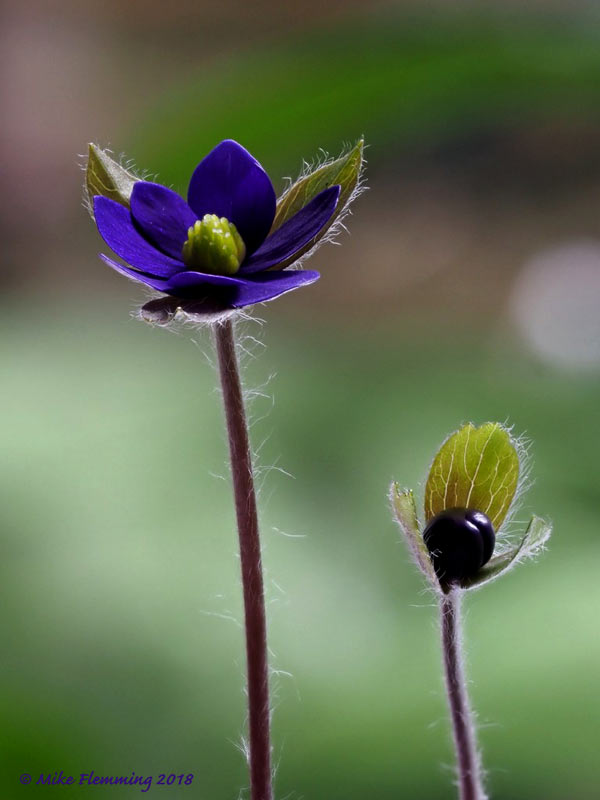
HepaticaMillstreamMerlin_2by

Photo Mike Flemming

Well, stone the crows.You don’t need a Ph.D in psychology to work out that cruel remarks  or humour will not make you popular.These days you can get a doctorate in all sorts of  odd subjects.How to lose friends and irritate people might be one!

The word laundry

The “word laundry” is very busy now:
The “non involved,” the children “used as shields”
Creating euphemisms and bloody how!

Certain words we cannot yet allow
Tampax,blood and women who, paid,  yield
The word laundry is very busy now

With a tiger’s cruelty we’re endowed
You should have seen the  rows of” disappeared”
We’re using euphemisms,it’s bloody you.

Relationships are more than  winning rows
We saw the soldiers lying in the fields
The word laundry is sadly busy now

The sheep and goats will give you bible’s clues
The politicians lied, contempt revealed
We’re using euphemisms and Oh,God, how


In our minds we keep some facts concealed
Yet self  deception greys our days unreal
Your “word laundry” is hyper-busy now:
Creating euphemisms like ” blood is dew.”


Emile eats the cheese

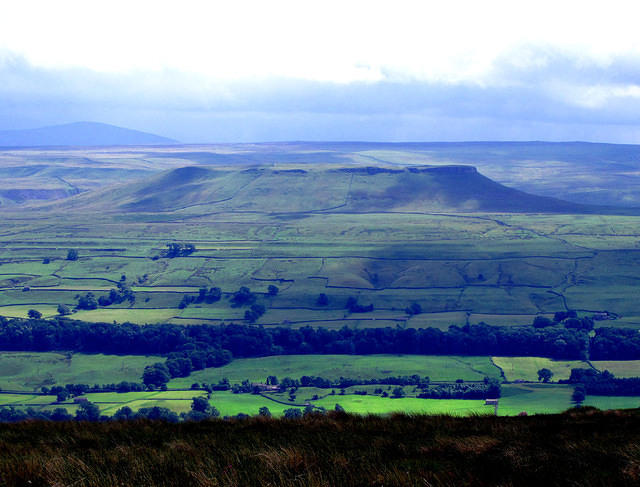
2010 07 15  Yorkshire Dales  over Wensleydale to Addleborough and beyond

North Yorkshire


Mary was sitting at her table reading a piece in the Guardian Family section When she had finished the sad interview with a woman whose son had shot dead 5 children in a school,she tried to get up but the decorative buttons on her shoes had become entangled and her feet were tied together..
What shall I do ? she asked herself nervously.Very soon the answer came.. to slip her shoes off and then pick the linked pair up.How stupid it is,she told herself,to make crossing one’s ankles so dangerous.But with her brilliant yet anxious mind she had solved the problem and not died at her laptop.Perhaps in that case nobody would have realised  her shoes had caused her death implemented by her stupidity at not recalling she could take them off!
She went into the kitchen where Emile had knocked over the pedal bin to get a piece of chicken left over from dinner.He had also got a large ball of rough twine and knocked it round the room creating a big tangled mess.
Just wait till Stan comes back,she told the wicked cat.You know quite well the bin is out of bounds.Look at the floor!The doctor will  blame me for this mess.
How will the doctor know? asked Emile politely.
Well,it’s just he seems to be around quite a lot nowadays.I think he liked my Earl Grey Tea.Or else he is anxious about me.He thinks I am too thin…

Is he planning to hug you,asked the little black cat.
Oh,no.He can’t do that.I believe it is forbidden  by the Zippocratic Code even though my blood pressure falls if he holds my hand.
I’d have thought it might rise,mewed the naughty animal.
Now then ,Emile.I am beyond caring about men.Or women.I have no desire for desire if you understand me.
I don’t understand ,cried Emile, because cats  never lose their desire!
Well,one thing I know for sure,I am not a cat,Mary informed him .I am  human being.
Well,may I sit on your lap , asked  the cat.
Mary sat by the window watching the trees sway against the grey mauve sky.Emile rubbed against her bosom as if expecting milk to flow.
Stop that Emile. she shouted.I am getting aroused.And you are no use to me in that way.You are getting beyond the boundary of taste.
Maybe it’s good for your circulation,the cheeky animal whispered.Anyway I am stuck.Your necklace has hooked onto my collar.
Oh,my Lord  said Mary.
Don’t say you will be hanging round my neck forever.What shall we do now?There are a few possible answers,Emile said.
1.Take off your necklace

What and leave you dragging it round the garden.I’ll have you  know it cost 15 and six,Mary said mournfully

Was that before decimalisation or is it some other mathematical model? Emile said noisily.

2.Undo my collar and take it off me then we can try to separate them.

3.We could lie on the bed and gaze into each others eyes all day,he finished.Unless you need the bathroom .I am happy

Well, charming thought that sounds I am  not willing,Mary shouted foolishly.She tore off the necklace and by some miracle it came away from the collar and freed Emile who was not totally happy at this quick release
So you are not in love with me,he yelped like a small  but jealous god.~
Well,I do love you,sweetheart,But I am not expecting marriage.In any case  you would have to be  trans-species first and I don’t recommend it Even the most demanding folk in Britain have not yet requested to be made into cats,she told him half consciously.

Emile began to cry softly

Whatever’s wrong,dearest,she asked him mindfully.
I was hoping you could become a cat like me,Emile said in his Cockney accent which had picked up from the TV.
That is very sweet,dear but how would we pay the Council Tax and get books from the Library?
We would go to the old greenwood and live the life of freedom,he said.
Well,you are used to it,said Mary,but I like to think about Wittgenstein.I wonder if he’d like to be a cat if he were not dead.Would Sylvia Plath have been happier as a cat? We shall never know.But it could have helped her a great deal if Ted were just a randy tom.
Thus Mary , lounging in her red chair fell  fast asleep  in her   warm blue woolly dress with Emile on the dining table beside her eating some Wensleydale cheese she had forgotten to put away.
Mm very nice Emile mewed.I hope  the people in Wensleydale have made some more.

And so say all of us.

For it’s a jolly good seller.

The psychology of the Israel/Palestine conflict

WP_20171005_09_12_45_Pro (2)t rrrrr.jpg

Click to access 9Lacey_2011_.pdf


“According to Volkan (2001), some ethnic groups have a major traumatic experience
that has become part of their cultural identity. This experience may have been a
defeat in battle, or a genocide, or a major loss of prestige or status. The humiliation
of this event lives on in the collective memory, and it becomes the job of the next
generation to either resolve the loss or reverse the humiliation. No attempt to set
the historical record straight will have any effect, as it is not the facts of the event
that are relevant, but its mythologized nature as handed down the generations. For
example, in Blood Lines, Volkan (1998) describes how the Serb obsession with their
defeat by the Ottoman Turks at the Battle of Kosovo in 1389 became conflated with
their war against the Bosnian Muslims. Mladic, Karadzic and Milosevic saw
themselves as bearing the responsibility of restoring Serb pride, lost centuries ago.
Mourning has been described as the psychological process through which an
individual learns to bear a traumatic loss through repeated and painful
remembering (Mitscherlich-Nielsen, 1989, p. 405). There are many ways in which
the mourning process can go awry and the final resolution phase remain
incomplete. Most common is chronic mourning (Herman, 1997, p. 86), where the
acute symptoms of separation anxiety persist interminably. There remains a
continual obsession with the loss, life gets stuck in a futile attempt to reunite with it,
and all other priorities become insignificant. There is also a sense that the loss is
very recent, though it may have occurred years ago”

Hinting that she knew my secret thoughts

Curious about  my silent thoughts
Her tongue was wagging as her ears pricked up
She needled me with steel that she had brought

Her eyes glared like some fish that had been caught
Her face grew wrinkled , straining to pick up
Curious about  my secret thoughts

Her hair stood up on end at my strange plight
Yet  rudeness  made her tongue  and lips slip up
She fondled me with steel that she had brought

She looked as if she’d just encountered Light
She handed me some paper she’d ripped up
Hinting that she knew my secret thoughts

She baited me and  cursed, I did not  bite
I merely drank the tea  from my own cup
She  pitied me with   condescension’s blight

Why was she so keen  to  offer me her traps
In places that she knew were off the map?
Curious about  my silent thoughts
She  stitched me up with  needles  she had brought

‘No Man is an Island by John Donne


https://web.cs.dal.ca/~johnston/poetry/island.html

‘No Man is an Island’

No man is an island entire of itself; every man 
is a piece of the continent, a part of the main; 
if a clod be washed away by the sea, Europe 
is the less, as well as if a promontory were, as 
well as any manner of thy friends or of thine 
own were; any man's death diminishes me, 
because I am involved in mankind. 
And therefore never send to know for whom 
the bell tolls; it tolls for thee. 


Olde English Version
No man is an Iland, intire of itselfe; every man
is a peece of the Continent, a part of the maine;
if a Clod bee washed away by the Sea, Europe
is the lesse, as well as if a Promontorie were, as
well as if a Manor of thy friends or of thine
owne were; any mans death diminishes me,
because I am involved in Mankinde;
And therefore never send to know for whom
the bell tolls; It tolls for thee.

MEDITATION XVII
Devotions upon Emergent Occasions
John Donne 

Filled with long dark dramas from its wealth

We suffer the ill fortune of   a brain
A mind that gives attention to ourself
We think and think and then we think again

In evil times the mind becomes a drain
Filled with long dark dramas from its wealth,
Oh, curse misfortune   caused by  human brains

It makes us into islands,not the main
And does it coldly, cruelly by stealth
We think and think and then we think again

How this hyperactive mind gives pain
Causes sadness and decline in health.
We curse misfortune, thinking and our brain

Surely we must tell ourselves quite plain
Monologues internal tend to bolt
We think and think and then we think again

How we love to suffer and find fault
How treacherously we hurl  ourselves to guilt
We suffer the misfortune of  a brain
We think and think unless our mind is tamed

Seamus Heaney on Poetry and Politics

Snow_2018-1.jpghttps://


https://blog.bookstellyouwhy.com/nobel-laureate-seamus-heaney-poetry-and-politics


“Seamus Heaney has always had a complex relationship with the political. The author of such beloved collections as The Haw Lantern(1987) and Human Chain (2010) has from his earliest works taken a very personal view of the Irish conflict. Fast forwarding to his Nobel Lecture, ‘Crediting Poetry,’ more than forty years after his first poems were published, the poet lauds the capacity of poetry (Yeats’ in particular) to be both “equal to and true at the same time” (a reference to Archibald MacLeish’s dictum that poetry “should be equal to/not true). A great poem, for Heaney, can access truth, whether it be political or otherwise, through aesthetic beauty. Meanwhile, critic Blake Morrison suggests that Heaney has “shown signs of deeply resenting this (political) role.” For a Northern Irish, working class, mid-century family, the personal can become deeply political, but that doesn’t mean one has to like it.

That Heaney has won not just the Nobel Prize, but each and every major award for poetry from the T.S. Eliot Prize (named, of course, for one of Heaney’s fellow laureates) to the PEN Translation Prize in 1985 for his edition of Old English epic poem Beowulf, strongly suggests that whatever balance the lauded wordsmith has struck between the personal and the political is a winning one. Upon his death in 2013, Heaney was eulogized not just by the literati but by presidents (Bill Clinton), universities (Harvard, Emory, and Oxford, at each of which he taught), and, frankly, entire nations (the people of Northern Ireland had, by then, taken to calling him, affectionately, ‘Famous Seamus’). So many and enthusiastic were the fans of Heaney’s poetry, that they were given the moniker ‘Heaneyboppers,’ a reference to the teenyboppers of yore.

One of Heaney’s most-cited and most-loved poems, ‘Digging,’ from his first collection, Death of a Naturalist (1966), may provide some insight into the role of poets and poetry as Heaney sees them. The closest thing the writer ever produced to an aesthetic manifesto, the poem recalls his father and grandfather cutting turf in bogs and digging for potatoes, ending with the career-sparking declaration, “But I’ve no spade to follow men like them./Between my finger and my thumb/The squat pen rests./I’ll dig with it.”

The great poet makes it clear that his is a continuation of his father’s vocation: a hard-fought struggle for sustenance, a backbreaking and unfinishable endeavor. But he does not see himself as trading up. He writes, rather, because he ‘has no spade.’ Poetry, he seems to suggest, abhors a vacuum, and must suffice where other things are lacking, from garden implements to peace and enlightenment. Even the fact that the pen rests ‘between’ his fingers, rather than upon, evokes a certain liminality; a propensity to permeate the impermeable.

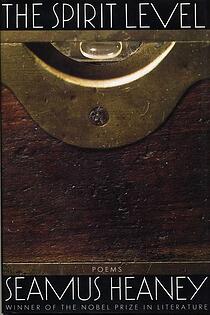
An addendum to thiTheSpiritLevels aesthetic proclamation might be found in a poem published thirty years later in The Spirit Level (1996), entitled, fittingly, ‘Postscript.’

“Known and strange things,” its final lines read, “pass/as big soft buffetings come at the car sideways/and catch the heart off guard and blow it open.” Not only do Heaney’s poems fill the vacuums they meet, but they blow the heart open. Where they are political, they are so only to prevent a hardening of the heart. They create and preserve the vulnerability, the permeability, of the human soul and with that permeability comes the opportunity for true contact. This was the only opportunity Heaney’s poetry would ever need to work its way into the hearts and minds of nearly half a century of readers.     ”

Browse books by Seamus Heaney